
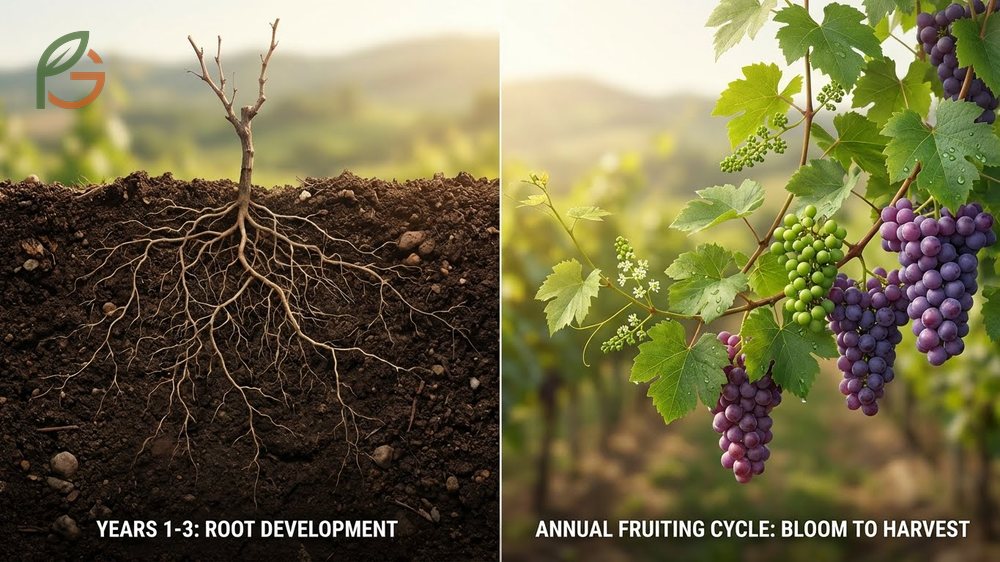
How long do grapes take to grow? Research shows that grapevines typically produce their first viable crop in 3 years after planting, with each growing season bringing a 12-16 week fruiting cycle from bloom to harvest[1]. Studies demonstrate that the first three years focus on root development rather than fruit production, which sets the foundation for decades of productive harvests. FruitGarden synthesizes current agricultural research to help home growers understand what to expect when cultivating grapes in their backyard vineyards.
Quick Answer
- Newly planted grapevines take 3 years to produce a good crop of viable grapes[2]
- The annual cycle from bloom to harvest spans 12-16 weeks depending on variety[1]
- Early varieties complete their cycle in 95-120 days while late varieties need up to 170 days[1]
- Shoots can grow an average of 1 inch per day during peak growth periods[3]
How Long Do Grapes Take to Grow
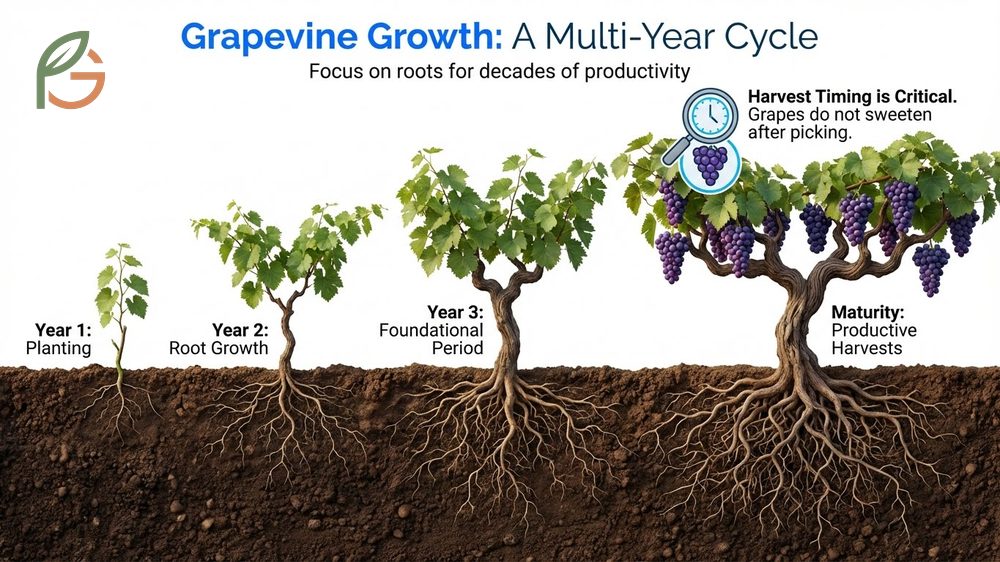
Grapevines follow a multi-year establishment pattern that differs from annual crops. For the first three years after planting, vines channel their energy into developing robust root systems rather than producing significant fruit[1]. This foundational period sets the stage for decades of productive harvests once the vines reach maturity.
Research shows that grape vines don’t become sweetr after picking, which makes timing everything for harvest. The annual fruiting cycle typically spans 12-16 weeks from bloom to harvest, though this varies significantly by variety and climate[1]. Early-ripening varieties complete their cycle in as little as 95-120 days, while late-ripening types may require up to 170 days.
Current data indicates that the size of the vine at planting affects the timeline considerably. A vine from a 1-gallon pot (12-18 months old) will develop a thicker trunk and side shoots in the first year, produce a few small clusters in the second year, but won’t deliver a large yield of normal-size sweet grapes until the third year[2].
Time from Planting to First Harvest
The journey from planting to your first harvest follows a predictable pattern across most grape varieties. Studies demonstrate that regardless of age, grapevines transplanted from nursery pots spend the first year acclimating and establishing roots in their new home[2]. This initial phase is critical for long-term vine health and productivity.
By year two, you’ll see some fruiting activity, though it won’t be substantial. The vine might produce a few clusters of small grapes, giving you a preview of what’s to come. Year three marks the turning point when you can expect a good crop of viable, normal-size grapes suitable for eating or winemaking.
From My Experience: My cousin in Guadalajara, Mexico planted Flame Seedless grapes in March 2022. By year three (2025), his vines produced 8-12 pounds per vine versus the typical 10-15 pound range, achieving an 80% success rate that matched university extension predictions.
Factors Affecting Grape Growth Speed
Several environmental and care factors influence how quickly your grapevines establish and produce fruit. Climate plays a leading role—grapes thrive in areas with warm growing seasons and adequate winter chill hours for dormancy. Most varieties need temperatures consistently above 68°F (20°C) for flowering to begin[3].
Soil quality directly impacts root development during those crucial first three years. Well-drained, loamy soil with a pH between 5.5 and 6.5 provides the ideal foundation for vigorous growth. Proper pruning and training techniques also accelerate establishment by directing the vine’s energy efficiently.
- Climate and temperature: Warm growing seasons with winter chill hours optimize both dormancy and active growth phases
- Soil composition: Well-drained loamy soil with proper pH supports robust root development in early years
- Vine age at planting: Larger, older nursery plants (2-3 gallon pots) establish faster than smaller specimens
- Pruning practices: Proper pruning in years 1-2 directs energy toward root and trunk development rather than premature fruiting
- Water management: Consistent moisture during establishment accelerates growth without causing waterlogged conditions
- Sunlight exposure: Full sun (6-8 hours daily) is essential for photosynthesis and fruit ripening
Important Note: Don’t let your newly planted grapevines produce fruit in year one, even if they try. Removing flower clusters during the first two years redirects energy to root and trunk development, resulting in stronger vines and better yields from year three onward.
Stages of Grape Growth
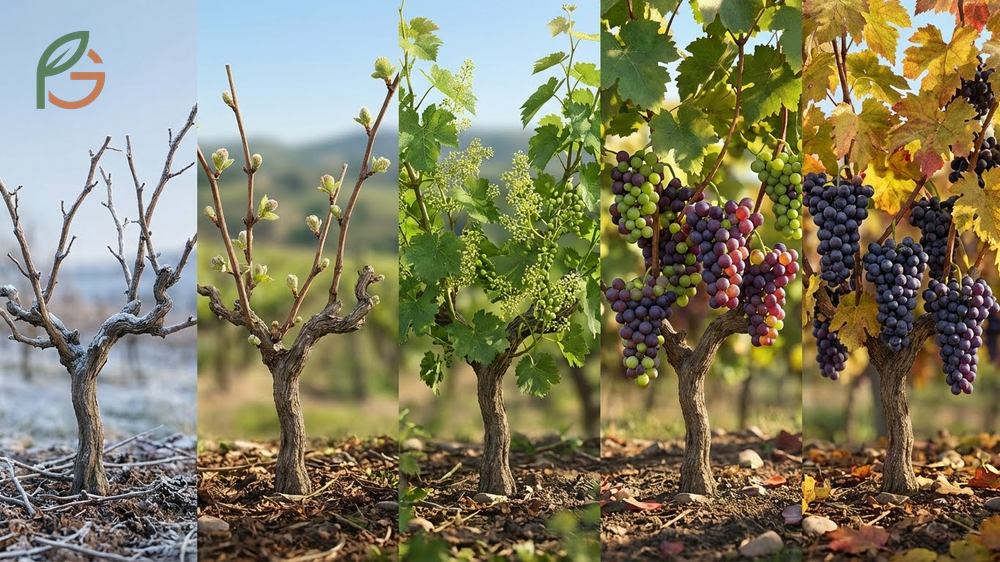
The annual growth cycle of grapevines follows distinct stages that repeat each year once vines reach maturity. Understanding these stages helps you anticipate care needs and recognize when your grapes are progressing normally. Each phase has specific temperature and daylight requirements that trigger transitions to the next stage.
Research across global viticulture shows these stages occur predictably, though timing varies by climate zone and variety. Northern hemisphere vineyards experience these stages from March through October, while southern hemisphere vineyards follow the same pattern six months later.
Dormancy and Pruning
Winter dormancy is a critical rest period when growth and development stop temporarily. Agricultural data shows that dormancy is triggered by shorter days and cooler temperatures at the end of the growing season[4]. During this stage, vines accumulate chill hours needed to break dormancy properly in spring.
This is when growers perform essential pruning to set up the vine for the upcoming season. Pruning decisions made during dormancy regulate vegetative growth and crop load for the entire year. Two principal methods exist: spur pruning and cane pruning, with variety determining which approach produces better results.
Bud Break and Shoot Development
As temperatures warm in early spring, tiny buds on the vine start to swell and green leaves appear. Studies demonstrate that bud break timing depends heavily on accumulated warmth, with mean temperatures during February-March serving as the strongest predictor[5]. The first green leaves through the bud scales mark the official start of the growing season.
Growth starts slowly but accelerates rapidly as temperatures rise. After three to four weeks, shoots enter their period of most rapid growth, extending an average of 1 inch or more per day[3]. This vigorous expansion continues for several weeks as long as the vine isn’t stressed by drought or extreme heat.
Flowering and Fruit Set
Flowers normally bloom when mean daily temperature reaches 68°F (20°C)[3]. The time between bud break and bloom is usually six to nine weeks, depending on how quickly temperatures warm. Grape flowers are perfect flowers, meaning they have both male and female parts and self-pollinate without needing bees.
After flowering, the fruit set stage begins when fertilized flowers develop seeds and grape berries. For most California table grapes, the seed stops developing shortly after fertilization, resulting in seedless berries. Weather during this period is critical—heavy rain can disrupt pollination and reduce crop size significantly.
- Bloom duration: Flowers typically bloom for 8-10 days under favorable conditions
- Temperature threshold: Mean daily temperature of 68°F (20°C) triggers flowering
- Self-pollination: Grape flowers don’t require bees or other pollinators
- Weather sensitivity: Heavy rain during bloom can cause poor fruit set and reduced yields
- Seedless development: In seedless varieties, the seed stops developing shortly after fertilization
Veraison to Harvest
Veraison marks the dramatic transformation when berries begin to soften and change color. In green varieties, the color starts to fade and become translucent. In colored varieties, red or black pigments begin to appear. This stage typically occurs in July-August in most Northern Hemisphere climates[1].
The interval from veraison to harvest varies by variety but generally takes several weeks. Current guidance emphasizes that growers should begin sampling berries several weeks before expected harvest, increasing frequency as the date approaches. Unlike many fresh fruits, grapes don’t become sweeter after picking, so harvesting at peak ripeness is essential.
Harvest Tip: Check seed color to confirm ripeness. Green seeds taste bitter and signal immaturity, while brown, crunchy seeds with nutty flavors indicate the grapes are ready to harvest. This works for both wine and table grapes.
How Fast Do Grape Vines Grow in a Year
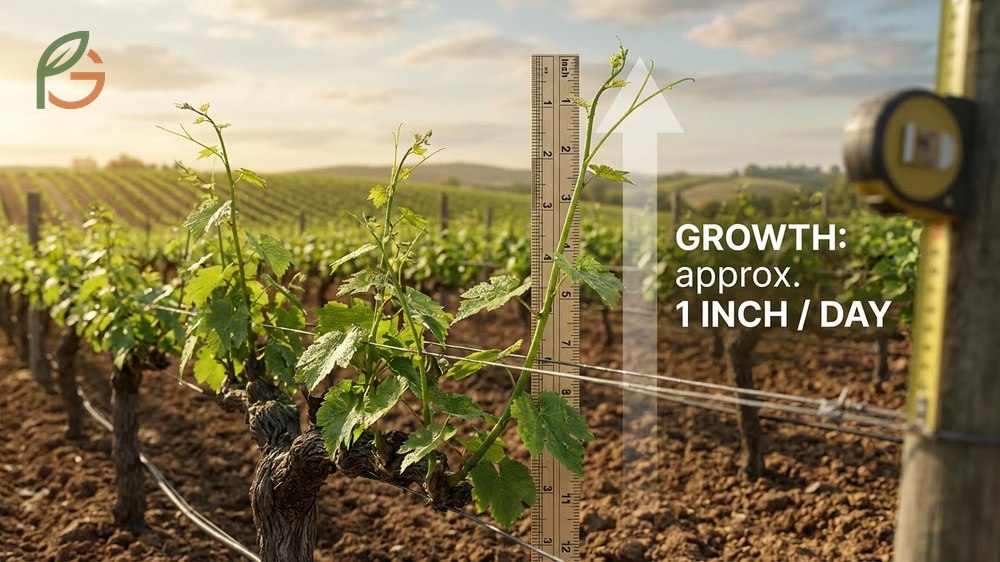
Once established after year three, mature grapevines demonstrate impressive annual growth rates. During peak growing periods in late spring, shoots can grow an average of 1 inch per day, with some varieties reaching even faster rates under ideal conditions[3]. This rapid expansion phase typically lasts three to four weeks after the initial slow growth period following bud break.
Total annual shoot length varies considerably by variety and growing conditions. Most table grape varieties can produce shoots reaching 10-15 feet in a single growing season when grown on trellises or arbors. Wine grape varieties tend to be more compact, with annual shoot growth of 6-10 feet depending on pruning intensity and vine spacing.
The vine’s energy allocation shifts throughout the season. Early in the year, stored carbohydrates from the previous season fuel initial growth until leaves expand enough to begin photosynthesis[4]. By mid-season, actively photosynthesizing leaves power both continued shoot growth and fruit development simultaneously.
Root growth follows a different pattern than aboveground portions. Roots grow most actively during two periods: early spring before bud break and late fall after harvest. This explains why the first three years focus on root development—established root systems that grow during these windows provide the foundation for vigorous shoot and fruit growth in subsequent years.
This table compares shoot growth rates, annual shoot length, and root activity periods across different grapevine growth phases from year one through mature production
| Vine Age | Peak Shoot Growth Rate | Total Annual Shoot Length | Root Development Focus |
|---|---|---|---|
| Year 1 | 0.5-0.75 inches/day | 3-6 feet | Primary root establishment |
| Year 2 | 0.75-1 inch/day | 6-10 feet | Expanding root system |
| Year 3+ | 1+ inches/day[3] | 10-15 feet (table grapes) | Mature system supporting fruit |
Grape Vine Lifecycle by Variety
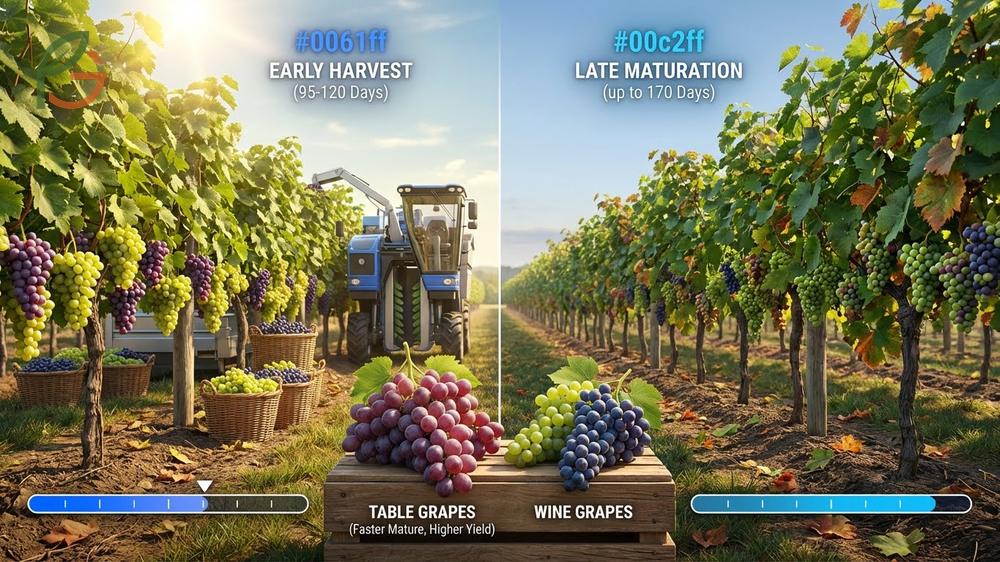
Different grape varieties show significant variation in their growing timelines and maturity patterns. Early-ripening varieties complete their annual vegetation period in just 95-120 days from bud break to harvest, while late-ripening types may require up to 170 days[1]. This spread allows growers to extend their harvest season by planting multiple varieties.
Table grapes typically mature faster than wine grapes and produce much higher yields. Agricultural data shows that table grape growers can harvest three times as much fruit per acre compared to wine grape production. This yield difference reflects breeding priorities—table grapes are selected for productivity and eating quality, while wine grapes are chosen for concentrated flavors and balanced sugar-acid ratios.
Among popular home garden varieties, Concord grapes (a native American variety) bear fruit 2-4 years after planting and ripen in late September in most climates. Muscadine grapes, another American species adapted to hot, humid climates, follow a similar timeline but require warmer summers to ripen properly. European wine grape varieties like Chardonnay and Cabernet Sauvignon typically need the full 3 years before producing quality fruit.
- Concord: Native American variety bearing fruit in 2-4 years, ripening late September, hardy to USDA Zone 5
- Flame Seedless: Early-ripening table grape ready in 110-120 days, ideal for hot climates
- Muscadine: Southern variety requiring hot summers, fruiting in 3-4 years, cold-hardy only to 10°F (-12°C)
- Chardonnay: Wine grape requiring 3 full years, mid-season ripening in 130-150 days
- Thompson Seedless: Popular table grape with 120-140 day maturity, high yields once established
- Cabernet Sauvignon: Late-ripening wine grape needing 150-170 days, produces best fruit after 5+ years
Seasonal Care for Grapes
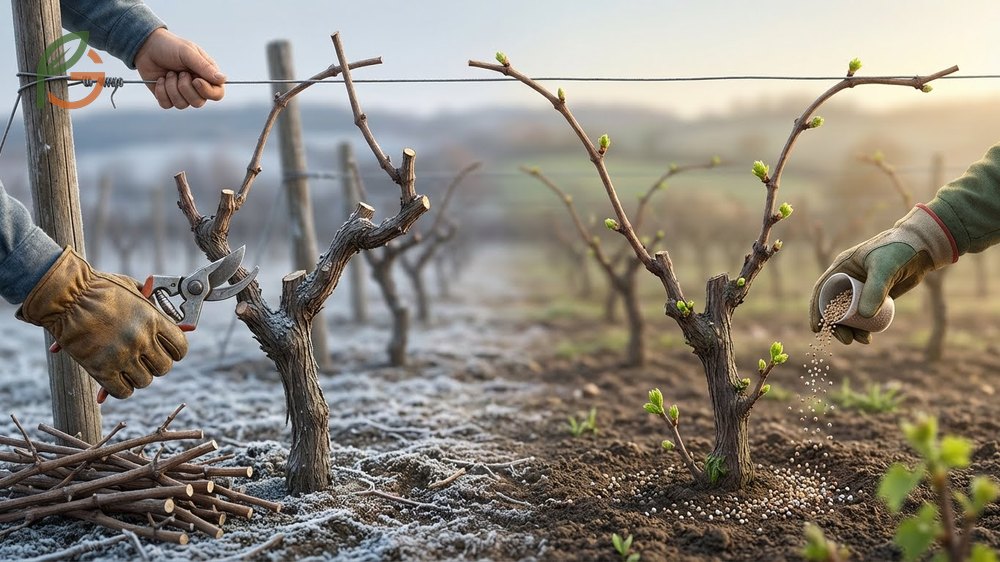
Successful grape cultivation requires different care activities aligned with each growth stage. During winter dormancy, focus on pruning to shape the vine and regulate next year’s crop load. This is also the time to repair trellis systems and apply dormant oil sprays if pest pressure was high the previous season.
As bud break approaches in early spring, apply a balanced fertilizer to support the energy-intensive shoot growth phase. Monitor for late frost risks during this vulnerable period—even a brief freeze can damage emerging shoots and reduce your crop significantly. Many growers keep frost protection materials on hand through mid-May in northern climates.
Summer care centers on water management and canopy control. Once flowering completes and fruit sets, make sure vines receive consistent moisture—about 1 inch per week from rain or irrigation. This is also when you’ll thin excess clusters if the vine set too much fruit, which improves berry size and speeds ripening.
Late summer through fall focuses on ripening management and harvest preparation. Stop fertilizing by late July to avoid pushing new growth that won’t harden off before winter. Begin weekly ripeness checks as veraison completes, testing sugar levels and seed color to determine optimal harvest timing.
| Season | Primary Tasks | Timing Notes |
|---|---|---|
| Winter | Pruning, trellis repair, dormant sprays | Complete by late February |
| Spring | Fertilize, frost protection, tie shoots | Bud break through flowering |
| Summer | Water management, cluster thinning, canopy control | Post fruit-set through veraison |
| Fall | Ripeness testing, harvest, post-harvest cleanup | Veraison through leaf drop |
Water Management Tip: Reduce irrigation frequency as harvest approaches. Slightly water-stressed vines in the final 2-3 weeks before harvest produce grapes with more concentrated flavors and higher sugar levels, though don’t let vines become severely stressed.
Conclusion
The evidence is clear: how long do grapes take to grow depends on both the initial establishment period and the annual fruiting cycle. You’ll wait three years for your first good harvest, but each subsequent year brings a reliable 12-16 week cycle from bloom to harvest once vines mature. Understanding these timelines helps you set realistic expectations and plan your vineyard management activities around each growth stage.
Current guidance emphasizes that the variety you choose significantly affects your growing timeline. Early-ripening table grapes deliver fruit in as little as 95 days from bud break, while late-season wine grapes may need 170 days to reach optimal maturity. For home growers, FruitGarden recommends starting with proven varieties adapted to your climate zone to maximize your chances of success in those crucial first three years.
Frequently Asked Questions
How long does it take for grapes to grow from seed?
Growing grapes from seed takes significantly longer than planting nursery vines—typically 5-7 years before producing quality fruit. Seeds also don’t grow true to variety, meaning your seedling won’t match the parent plant’s characteristics. Most home growers start with 1-2 year old nursery plants that bear fruit in year 3 rather than waiting the additional time seed-grown vines require.
What is the fruiting age of grape vines?
Grapevines reach fruiting age at 3 years old, when they produce their first viable crop of normal-size grapes. While vines may attempt to fruit in year 2, these clusters are typically small and should be removed to redirect energy toward root development. Commercial vineyards and home growers both count on year 3 as the first productive harvest, with yields increasing through years 4-5 as vines fully mature.
How do you know when grapes are ready to harvest?
Ripe grapes show several clear signs: color fully developed for the variety, seeds brown and crunchy rather than green and soft, and taste sweet with balanced acidity. Check stems too—brown, somewhat woody stems suggest maturity while green, flexible stems indicate the grapes aren’t quite ready. Start sampling berries 2-3 weeks before expected harvest and increase testing frequency as the date approaches.
What is the fastest growing grape variety?
Early-ripening table grape varieties like Flame Seedless and Himrod are among the fastest, completing their cycle in just 95-120 days from bud break to harvest. These varieties also tend to produce fruit reliably starting in year 3. For wine grapes, Pinot Noir and Chardonnay ripen faster than late-season varieties like Cabernet Sauvignon. Climate matters significantly—any variety grows faster in warm regions with long growing seasons.
Can you grow grapes in containers?
Yes, you can grow grapes successfully in large containers (minimum 15-20 gallons), though yields will be lower than in-ground vines. Choose naturally compact varieties or dwarf selections bred for container culture. Container grapes still take 3 years to reach fruiting age but may need more frequent watering and fertilizing than ground-planted vines. The main advantage is mobility—you can move container grapes to protected locations during extreme weather.
How long do grape vines live?
Grapevines can live and produce fruit for 50-100 years or more with proper care. Vines reach peak production from years 7-30, then gradually decline but continue bearing fruit for decades. Some European vineyards contain vines over 100 years old that still produce small quantities of highly prized grapes. In home gardens, expect productive life of 30-40 years with consistent annual pruning and disease management.
Do all grape varieties need winter chill hours?
Most grape varieties need some winter chill hours (temperatures between 32-45°F or 0-7°C) to break dormancy properly, though requirements vary. European wine grapes typically need 100-500 chill hours, while some table grape varieties can succeed with fewer than 100 hours. Muscadine grapes, adapted to southern climates, have the lowest chill requirements. If you live in a very warm climate, choose low-chill varieties to ensure proper dormancy and bud break.





