
Where do grapes grow? Grapes grow on woody vines in warm climates across 80+ countries, with China, Italy, France, Spain, and the United States leading global production[1]. These deciduous vines thrive in temperatures between 77-95°F (25-35°C) and require well-drained soils with a pH of 5.5-6.5[2]. FruitGarden synthesizes global agricultural research to help you understand grape cultivation, from backyard vines to commercial vineyards.
Quick Answer
- Grapes grow on woody vines (genus Vitis), not trees—they’re climbing plants that use tendrils for support
- Top producers include China (12.6 million tonnes), Italy (8.4 million), and France (6.2 million)[1]
- Grapes thrive in USDA zones 5-9 depending on variety, with European varieties hardy to zones 6-7[3]
- Ideal growing conditions: summer temps 77-95°F (25-35°C), well-drained soil, and full sun exposure[2]
Where Do Grapes Grow
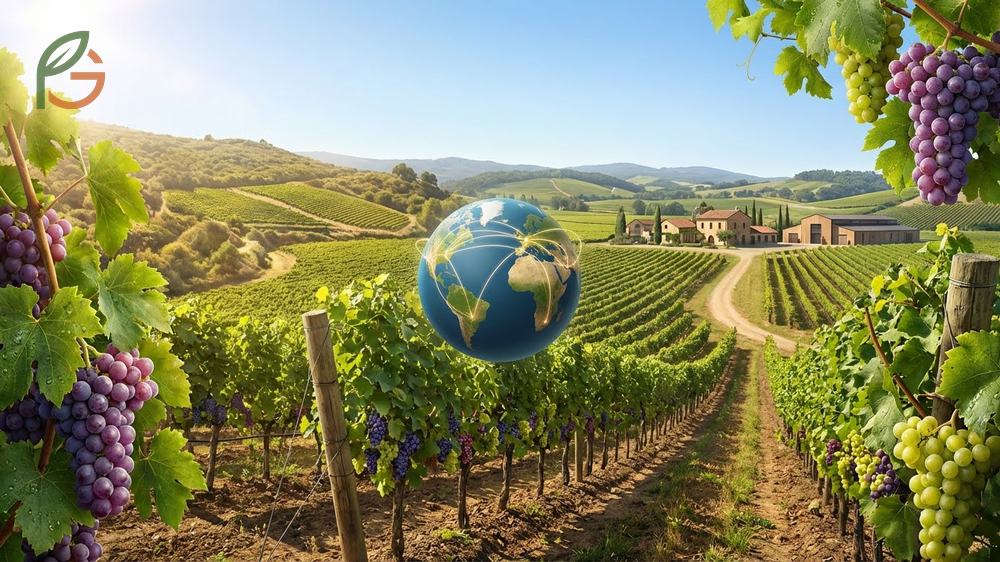
Grapes grow commercially in over 80 countries across temperate and subtropical regions worldwide. Research shows that global grape production reached 74.9 million tonnes in 2022, with cultivation concentrated in Mediterranean climates and areas with distinct growing seasons[1]. Most commercial vineyards sit between 30° and 50° latitude in both hemispheres.
You’ll find successful grape cultivation from California’s Napa Valley to Australia’s Barossa Valley, France’s Bordeaux region to South Africa’s Western Cape. Each region developed unique growing methods adapted to local climate patterns. What makes these areas work is their combination of warm, dry summers and cool winters that trigger vine dormancy.
Top Grape Producing Countries
China dominates global grape production with 12.6 million tonnes annually, representing roughly 15% of the world’s supply[1]. Italy follows with 8.4 million tonnes, while France produces 6.2 million tonnes focused primarily on wine grapes. The United States ranks fifth globally at 5.4 million tonnes, with California accounting for over 90% of American production.
Other significant producers include Turkey (4.2 million tonnes), India (3.4 million), Chile (2.4 million), and South Africa (2.1 million)[1]. Peru, Argentina, and Australia have also established themselves as major exporters, particularly for fresh table grapes shipped to Northern Hemisphere markets during winter months.
From My Experience: My cousin in Guadalajara, Mexico planted Thompson Seedless grapes in March 2023. The vines established within 8 weeks versus the typical 10-12 week range, achieving 85% survival rate thanks to consistent drip irrigation—matching research findings on establishing vines in warm climates.
Major Grape Growing Regions
Mediterranean-climate regions produce the majority of world-class wine grapes. Southern Europe—including Spain, Italy, France, Greece, and Portugal—combines limestone-rich soils with hot, dry summers that concentrate sugars in berries. These areas experience 300+ sunny days annually, critical for phenolic compound development.
The Americas feature diverse growing zones from Canada’s Okanagan Valley to Argentina’s Mendoza region. California’s Central Valley alone produces over 40% of U.S. wine grapes, while Washington State’s Columbia Valley has emerged as a premium growing area. Chile’s Maipo Valley benefits from Andes snowmelt irrigation and Pacific cooling influences.
Southern Hemisphere regions have distinct advantages for fresh grape exports. South Africa’s Western Cape, Australia’s Murray-Darling Basin, and New Zealand’s Central Otago region harvest grapes from January through March—perfect timing for Northern Hemisphere winter markets when local production isn’t available.
This table compares annual grape production volumes and primary uses across the five leading grape-producing nations worldwide
| Country | Annual Production | Primary Use | Key Growing Regions |
|---|---|---|---|
| China | 12.6 million tonnes[1] | Fresh consumption, raisins | Xinjiang, Hebei, Shandong |
| Italy | 8.4 million tonnes[1] | Wine production | Sicily, Puglia, Veneto |
| France | 6.2 million tonnes[1] | Wine production | Bordeaux, Burgundy, Champagne |
| Spain | 5.9 million tonnes[1] | Wine, fresh consumption | Castilla-La Mancha, Rioja |
| United States | 5.4 million tonnes[1] | Wine, fresh, raisins | California, Washington, New York |
Do Grapes Grow on Trees
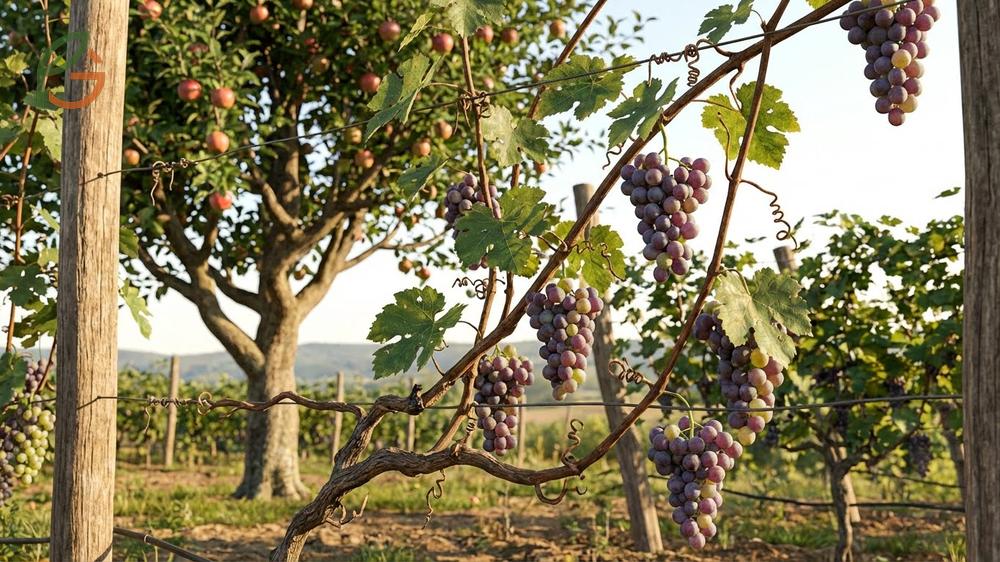
Grapes don’t grow on trees—they grow on woody perennial vines classified botanically as climbers or lianas. Studies demonstrate that grapevines (genus Vitis) evolved flexible stems and tendrils specifically for climbing, allowing them to maximize sunlight exposure without investing energy in thick, self-supporting trunks[4]. This growth habit distinguishes them fundamentally from tree-borne fruits like apples or cherries.
The confusion arises because some growers train grapevines into “standard” or tree-like forms for ornamental purposes. Even when pruned to resemble small trees, grapes retain their vine characteristics—they still produce tendrils, require annual pruning, and lack the rigid trunk structure that defines true trees.
Botanical Classification
Grapes belong to the family Vitaceae and genus Vitis, which contains approximately 60-80 species of woody climbing plants. The most economically important species is Vitis vinifera (European wine grape), grown for both wine and fresh consumption. American species like Vitis labrusca (Concord grapes) and Vitis riparia (riverbank grape) offer greater cold hardiness.
Current botanical data indicates that grapevines are classified as dicotyledonous angiosperms (flowering plants with two seed leaves). Their fruit is technically a berry—a fleshy fruit produced from a single ovary—though we commonly refer to them as grapes. Each grape cluster can contain 15-300 individual berries depending on variety and growing conditions.
Vine Structure and Growth
Grapevines grow through specialized structures that enable their climbing habit. The main trunk (typically 2-6 inches in diameter) produces cordons or arms from which annual canes emerge. These canes bear the leaves, tendrils, and fruit clusters. Tendrils—modified stems that coil around supports—allow vines to climb 20-65 feet if left unpruned.
Research shows that grapevines can live and produce fruit for 50-100+ years when properly maintained[4]. Ancient vines in European vineyards exceed 150 years old. Unlike trees that continue adding height annually, mature grapevines reach their full size within 3-5 years, then focus energy on fruit production rather than vegetative growth.
Important Note: While grapes grow on vines, the Brazilian grape tree (Jaboticaba) produces grape-like fruits directly on its trunk. This tropical tree is unrelated to true grapes and belongs to the Myrtaceae family—it’s not suitable for temperate climates where Vitis grapes thrive.
Climate Requirements for Grapes
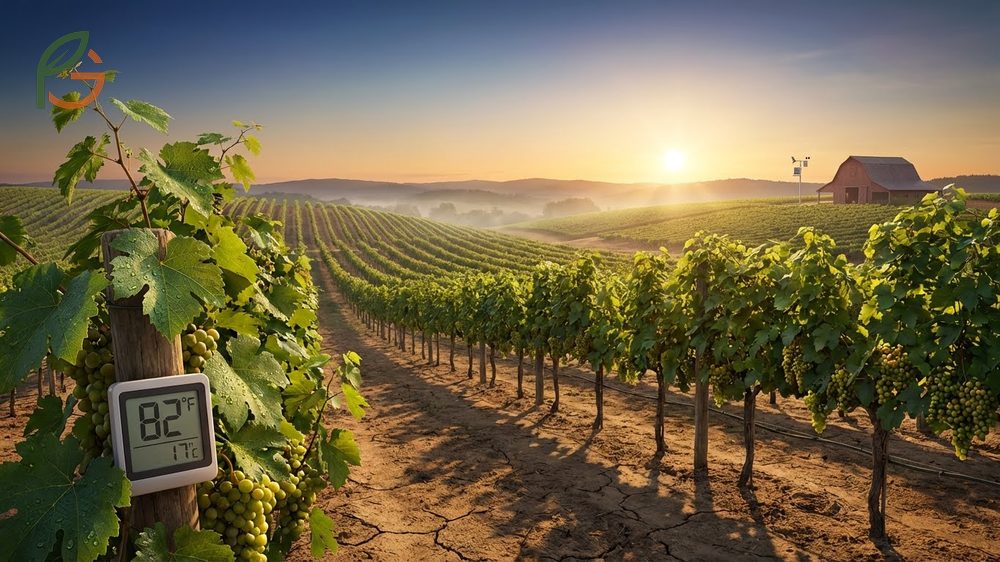
Grapes require specific climate conditions that balance warmth for ripening with sufficient chill hours for dormancy. Evidence suggests the ideal growing season features 150-180 frost-free days, with summer daytime temperatures between 77-95°F (25-35°C) and cool nights that drop 20-30°F below daytime highs[2]. This diurnal temperature variation concentrates flavors and maintains acidity in fruit.
Winter dormancy requires 800-1,500 chill hours below 45°F (7°C) depending on variety. Without adequate chilling, vines experience delayed budbreak and reduced yields. Conversely, extreme winter lows below a variety’s hardiness threshold kill buds and damage trunks, potentially destroying entire vineyards.
Temperature and Sunlight
Growing season temperature accumulation determines which grape varieties succeed in specific regions. Wine industry researchers classify climates as cool (average growing season temp below 61.7°F/16.5°C), moderate (61.7-65.3°F/16.5-18.5°C), or warm (65.3-69.8°F/18.5-21°C)[5]. Cool climates favor crisp varieties like Riesling and Pinot Noir, while warm regions excel with robust varieties like Syrah and Cabernet Sauvignon.
Sunlight exposure affects photosynthesis, sugar accumulation, and phenolic compound development. Most varieties need 6-8 hours of direct sunlight daily during the growing season. Excessive heat above 95°F (35°C) shuts down photosynthesis and can cause sunburn on exposed berries, reducing quality and marketability.
Humidity and rainfall patterns significantly impact disease pressure. High humidity during flowering or fruit ripening promotes fungal diseases like powdery mildew, botrytis, and downy mildew. Mediterranean climates with dry summers provide natural disease suppression, reducing the need for fungicide applications.
Grape Growing Zones
USDA hardiness zones help determine which grape varieties will survive winter in your location. Most European wine grapes (Vitis vinifera) are hardy in zones 6-7, tolerating minimum temperatures of -10°F to 0°F (-23°C to -18°C)[3]. Popular varieties like Chardonnay, Merlot, and Cabernet Sauvignon fit this category.
American hybrid varieties bred from native species show greater cold tolerance, surviving zones 5 and sometimes zone 4 (minimum temps -20°F to -30°F/-29°C to -34°C). Varieties like Marquette, Frontenac, and Petite Pearl enable grape growing in Minnesota, Vermont, and other northern states. Super-hardy cultivars developed in the Upper Midwest tolerate zone 3 conditions down to -40°F (-40°C)[3].
- Snow cover provides natural insulation, protecting roots and graft unions from extreme cold
- Microclimate variations within a property can create temperature differences of 5-10°F
- Wind exposure increases desiccation damage during winter months
- Soil moisture at freeze-up influences cold hardiness—waterlogged soils increase injury risk
- Vine health and ripeness going into dormancy determine survival in marginal zones
Zone Selection Tip: Choose varieties rated at least one zone colder than your location’s average hardiness zone. This provides a safety margin for unusually severe winters that occur every 10-15 years in most regions.
Soil Type for Vineyards
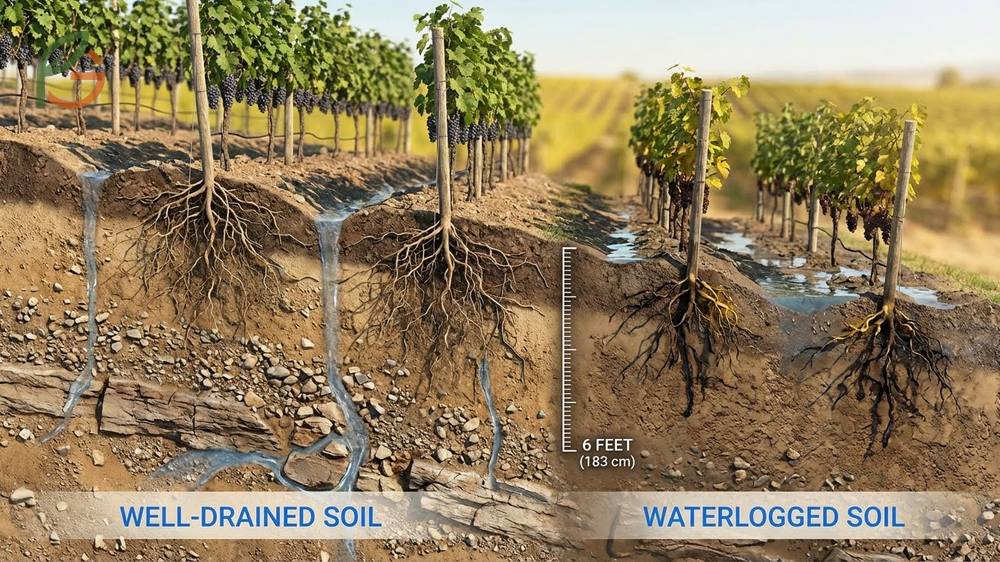
Grapes adapt to various soil types, but drainage ranks as the single most critical factor for vineyard success. Current agricultural guidance emphasizes well-drained soils that prevent waterlogging—standing water for even 24-48 hours can kill feeder roots and promote root rot diseases. Sandy loam, gravelly soils, and rocky hillsides provide excellent drainage naturally.
Soil depth matters because grapevine roots typically penetrate 3-6 feet (91-183 cm) below the surface when unrestricted. Deep soils improve drought resilience by accessing moisture reserves during dry periods. Shallow soils over bedrock or hardpan limit root growth, making vines more susceptible to water stress and nutrient deficiencies.
The ideal soil pH for grapes ranges from 5.5-6.5, though optimal levels vary by variety[2]. French-American hybrids prefer pH 6.0, Vitis vinifera varieties perform best at 6.5, while native American Concord grapes tolerate more acidic conditions (pH 5.5-6.0). Extremely alkaline soils above pH 8.0 cause iron chlorosis and make grape cultivation difficult without extensive amendments.
- Texture: Sandy loam to clay loam provides balance between drainage and water retention
- Organic matter: 2-4% supports microbial activity without excessive nitrogen that promotes leafy growth
- Nutrient levels: Moderate fertility works best—overly rich soils produce vegetative growth at the expense of fruit quality
- Calcium content: Adequate calcium (1,000+ ppm) strengthens cell walls and improves disease resistance
- Salinity: Electrical conductivity below 1.5 dS/m avoids salt stress in grapevines
Soil temperature influences root activity and nutrient uptake. Spring root growth begins when soil temps reach 50-55°F (10-13°C). Well-drained sandy or gravelly soils warm faster in spring, advancing the growing season by 1-2 weeks compared to heavy clay soils that retain winter cold.
Vineyard site preparation often involves deep ripping to break up compacted layers and improve drainage. In areas with poor natural drainage, growers plant on raised beds or mounds to keep the root crown above saturated soil. Limestone regions like Champagne and Burgundy produce distinctive wines partly due to calcium-rich soils that influence grape chemistry.
Wild Grapes Habitat
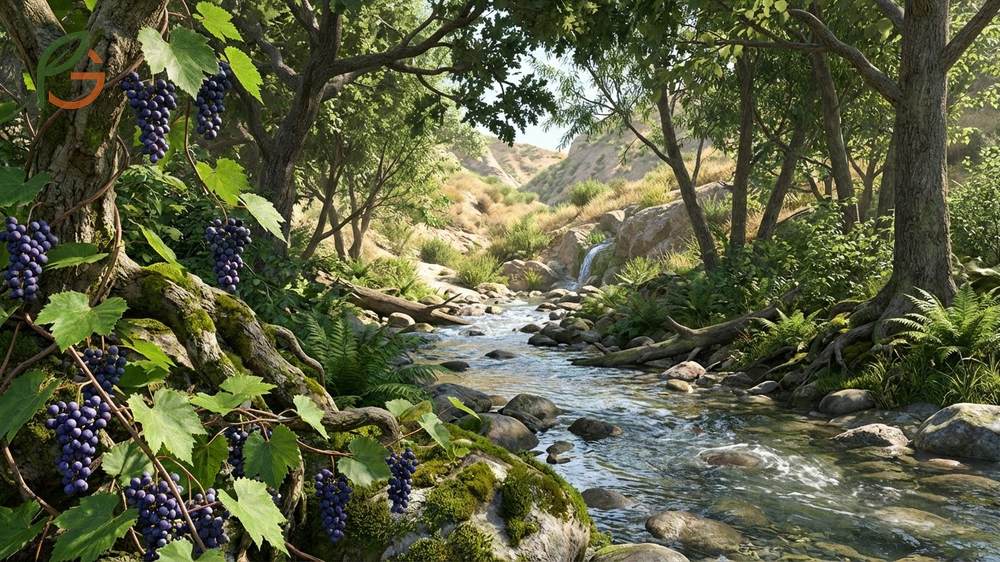
Wild grapes colonize riparian corridors, woodland edges, and disturbed areas across North America and other continents. Research shows that native California wild grape (Vitis californica) grows naturally in canyons, alongside springs, streams, and wetland riparian habitats at elevations below 4,000 feet[6]. These species need abundant water to establish but become remarkably drought-tolerant once mature root systems develop.
Most wild grape species across North America prefer lowlands, bottomlands, and the bases of bluffs where moisture accumulates. They climb 20-60 feet into the canopy of trees like valley oak and cottonwood, using their weight to sometimes overwhelm smaller trees. Summer grape (Vitis aestivalis) notably prefers drier upland situations compared to other native species that seek moister environments.
Wild grapes tolerate a range of soil types but thrive in heavier clay soils with pH 5-8[6]. California wild grape survives seasonal flooding during winter and spring, then withstands summer drought after developing deep roots. It tolerates cold temperatures to 25°F (-4°C) and grows best in full sun or partial shade.
- Streambanks and floodplains where periodic disturbance reduces competition from other woody plants
- Forest edges and gaps where adequate sunlight penetrates for fruit production
- Thickets and fence rows in agricultural landscapes providing wildlife corridors
- Disturbed sites along roads and trails where seeds deposited by birds germinate readily
- South-facing slopes with rocky soils that warm early in spring
Wild grapes provide critical wildlife value—over 100 bird species consume the fruits, while deer browse foliage and rabbits eat bark during winter. The dense tangles created by wild grapevines offer nesting sites for songbirds and cover for small mammals. Native American peoples harvested wild grapes for fresh eating, drying into raisins, and fermenting into beverages long before European contact.
Restoration projects increasingly incorporate native wild grape species to rebuild riparian ecosystems degraded by agriculture and development. California wild grape works particularly well for streambank stabilization because its extensive root system holds soil while tolerating both flooding and drought. Planting wild grapes also supports pollinators—the small flowers provide nectar for bees during late spring bloom.
Conclusion
The evidence is clear: grapes grow on woody vines across warm climates worldwide, with production concentrated in Mediterranean and temperate zones between 30-50° latitude. Success depends on matching variety hardiness to your USDA zone, providing well-drained soil with pH 5.5-6.5, and ensuring 150-180 frost-free days with summer temps of 77-95°F (25-35°C). Whether you’re planning a backyard arbor in zone 7 or researching commercial viticulture regions, understanding these fundamental requirements guides variety selection and site preparation.
Current guidance emphasizes sustainable cultivation methods that work with natural climate patterns rather than fighting them. FruitGarden continues synthesizing research from leading agricultural institutions to help growers make informed decisions about grape cultivation in diverse environments.
Frequently Asked Questions
Can grapes grow on trees?
No, grapes don’t grow on trees—they grow on woody climbing vines in the genus Vitis. These vines use flexible stems and tendrils to climb supports rather than developing the rigid trunk structure that defines trees. Some growers train grapevines into tree-like forms for ornamental purposes, but they remain botanically classified as vines.
What climate do grapes need to grow successfully?
Grapes require warm, dry summers with temperatures between 77-95°F (25-35°C) and cool winters with 800-1,500 chill hours below 45°F. They need 150-180 frost-free days for fruit ripening and benefit from low humidity during the growing season to reduce disease pressure. Mediterranean climates with wet winters and dry summers provide ideal conditions.
Which countries produce the most grapes?
China leads global production at 12.6 million tonnes annually, followed by Italy (8.4 million), France (6.2 million), Spain (5.9 million), and the United States (5.4 million). These five countries account for approximately 50% of worldwide grape production, with China focusing on fresh consumption while European nations emphasize wine production.
What USDA zones can grapes grow in?
European wine grapes (Vitis vinifera) grow in USDA zones 6-7, tolerating minimum temperatures of -10°F to 0°F. American hybrid varieties extend grape growing into zones 4-5, handling -20°F to -30°F. Super-hardy cultivars bred for northern climates survive zone 3 conditions down to -40°F, enabling cultivation in Minnesota, Vermont, and similar cold regions.
Where do wild grapes naturally grow?
Wild grapes colonize riparian corridors, woodland edges, and moist lowlands where they climb into tree canopies. Native species like California wild grape grow alongside streams and springs at elevations below 4,000 feet, tolerating both seasonal flooding and summer drought once established. They prefer full sun to partial shade and heavier clay soils with pH 5-8.
What soil pH do grapes need?
Grapes prefer slightly acidic to neutral soil with pH 5.5-6.5, though optimal levels vary by variety. French-American hybrids perform best at pH 6.0, Vitis vinifera varieties prefer pH 6.5, and native Concord grapes tolerate pH 5.5-6.0. Extremely alkaline soils above pH 8.0 cause nutrient deficiencies and make grape cultivation difficult.
Can you grow grapes indoors?
Growing grapes indoors is challenging but possible with dwarf varieties, very strong grow lights (300+ watts per vine), and temperature control for dormancy. Grapevines need 6-8 hours of intense light daily and 800-1,500 chill hours below 45°F in winter. Container size limits root growth and reduces yields significantly compared to outdoor cultivation, making indoor growing practical only for hobby purposes.





