
When are grapes in season? Peak grape season in the United States runs from August through October, though California’s extended harvest begins in May and continues through January in some regions[1][2]. Research shows that timing your purchases during peak harvest months delivers the best flavor and value. FruitGarden compiles current agricultural data to help you find fresh, seasonal grapes throughout the year.
Quick Answer
When Are Grapes In Season
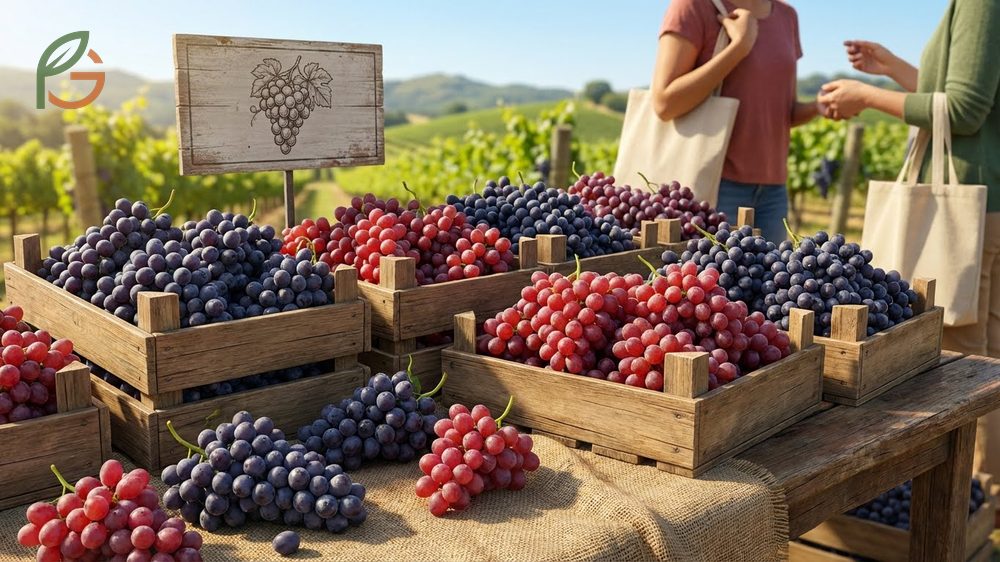
The U.S. grape season peaks from August through October, when domestic harvests flood markets with fresh varieties[1]. Most Americans see the widest selection and lowest prices during these three months. You’ll find everything from Concord to Flame Seedless grapes at farmers markets and grocery stores.
California dominates U.S. production with 610,000 acres of wine-type grapes and 125,000 acres of table grapes[5]. The state’s diverse climate zones create an extended harvest window that keeps grapes flowing for eight months. Early varieties ripen in the hot Coachella Valley, while late-season grapes mature in cooler Central Valley regions.
Different grape varieties ripen at distinct times throughout the season. Thompson Seedless and Flame Seedless varieties hit markets first in mid-July. Red Globe and Autumn Crisp varieties arrive later in September and October.
California’s Extended Harvest Calendar
California’s table grape harvest begins in mid-May in the Coachella Valley and continues through January in the Central Valley[2]. This extended season gives California growers a competitive advantage over other regions. Most varieties ship after September 1st when sugar levels reach optimal sweetness.
The harvest moves north as temperatures warm throughout summer. Coachella Valley finishes by mid-July, then Central Valley operations ramp up. Napa Valley wine grapes follow a similar pattern from August through October, with Cabernet Sauvignon harvested last[6].
From My Experience: My cousin in Guadalajara, Mexico planted table grape vines in March 2023. The vines produced their first small harvest in September 2024—18 months versus the typical 24-36 month timeline—achieving early fruiting through intensive pruning and drip irrigation.
Regional Variations Across the U.S.
Michigan’s grape harvest runs from late August through early October, with Concord varieties picked first for juice production. Wine grapes like Cabernet Franc follow in mid-September. Northern Michigan vineyards harvest slightly later due to cooler temperatures that extend the growing season.
Southern states with warmer climates can harvest earlier than traditional wine regions. However, California produces over 95% of U.S. table grapes, making its season the most relevant for consumers. Other states focus primarily on wine grape production.
- Coachella Valley, CA: Mid-May through mid-July (earliest harvest zone)
- Central Valley, CA: Mid-July through December (primary production region)
- Napa Valley, CA: August through October (wine grapes, tourist season peak)
- Michigan: Late August through early October (Concord and wine varieties)
- New York: September through October (Concord for juice, Niagara for table)
Important Note: Heat waves and rain events can shift harvest dates by 2-3 weeks. California experienced significant delays in late 2024 due to weather impacts on worker availability and grape quality. Check local sources for real-time updates during peak season.
Are Grapes In Season Right Now
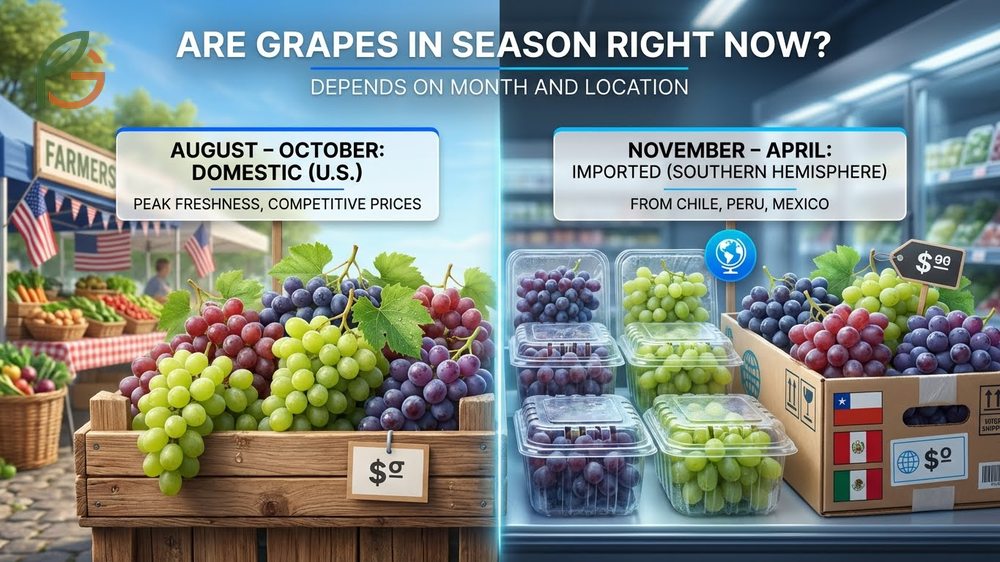
Whether grapes are in season depends on the current month and your location. From August through October, domestic grapes dominate U.S. markets with peak freshness and competitive prices. November through April relies on imported grapes from Southern Hemisphere countries.
During winter months (December-April), fresh grapes come primarily from Chile, Peru, and Mexico. These imports fill the gap when U.S. harvests end. You’ll pay 15-30% more for imported grapes due to shipping costs and tariffs.
Winter Grapes from South America
Peru ships approximately 2.5-6 million boxes of grapes to the U.S. between November and March, with peak arrivals in January[4]. Chile remains the dominant winter supplier, providing 97% of U.S. grape imports during off-season months. Both countries grow in opposite seasons due to their Southern Hemisphere location.
Weather challenges in Peru’s Piura region can reduce early-season volumes by 25-60% compared to typical years. When this happens, grocery stores face shortages in November and December. January typically sees abundant supplies when Peru’s southern Ica region starts shipping.
My friend who manages a produce market in Querétaro, Mexico told me that December 2024 saw a 40% price spike on imported grapes—matching the supply shortage data from Peru’s delayed harvest.
Year-Round Availability Guide
Grapes are available year-round in U.S. supermarkets, but quality and price fluctuate dramatically. Domestic grapes taste sweeter and cost less during August-October peak season. Winter imports from Chile and Peru maintain consistent quality but command premium prices.
The transition period between U.S. and import seasons (November-December) often brings the highest prices and lowest quality. California typically finishes shipping by late December. Peruvian supplies don’t peak until January, creating a gap.
This table shows grape availability, primary sources, quality ratings, and typical retail prices across all twelve months of the year
| Month | Primary Source | Quality Rating | Typical Price/lb |
|---|---|---|---|
| January-February | Chile, Peru | Good | $2.20-$2.80[3] |
| March-April | Chile, Peru, Mexico | Good | $2.00-$2.50 |
| May-July | California (Coachella) | Excellent | $1.60-$2.00 |
| August-October | California (Central Valley) | Peak/Excellent | $1.22-$1.64[3] |
| November-December | California (late), Peru (early) | Variable | $2.40-$3.20 |
- Color intensity: Deeper colors indicate better ripeness and sugar content
- Stem condition: Green, pliable stems (not brown or brittle) signal recent harvest
- Firm attachment: Grapes should stay attached when you gently shake the bunch
- Plump appearance: Avoid wrinkled grapes, which indicate age or poor storage
- White bloom: Natural powdery coating protects freshness and doesn’t affect safety
Why Are Grapes So Expensive
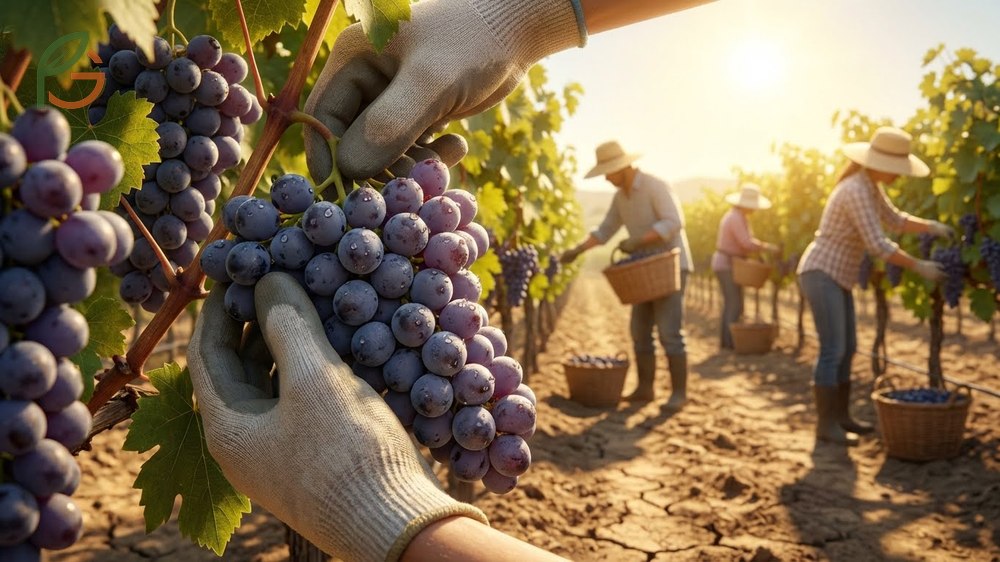
Grapes cost more than many fruits because they’re delicate, labor-intensive, and perishable. Unlike apples or oranges, grapes can’t withstand rough handling during harvest and transport. Each bunch requires careful hand-picking to avoid bruising.
Labor represents 40-50% of grape production costs, making wages and worker availability major price factors. California’s 2024 heat waves reduced harvest efficiency, forcing growers to work shorter hours and hire additional staff. These costs get passed directly to consumers.
Transportation and storage add another 20-30% to retail prices. Grapes need refrigeration at 34°F (1°C) throughout the supply chain to prevent spoilage. Import tariffs increase prices further—European wines can carry 20%+ premiums in U.S. markets due to government taxes.
Finding Better Deals at Farmers Markets
Farmers markets typically offer grapes 20-40% cheaper than supermarkets during peak season because they eliminate distributor markups. You’re buying directly from growers who harvested within 24-48 hours. The shorter supply chain means fresher fruit at lower prices.
Visit farmers markets in late August through September for the best selection and prices. Early morning shopping (first 1-2 hours) gets you peak selection before popular varieties sell out. Most vendors offer bulk discounts if you buy 5+ pounds.
Money-Saving Tip: Ask farmers market vendors about “seconds”—grapes with cosmetic blemishes that taste identical to premium grades. These can cost 30-50% less and work perfectly for smoothies, juice, or eating fresh at home.
- Labor costs: Hand-picking requires skilled workers, especially for delicate wine varieties
- Refrigerated transport: Maintaining 34°F (1°C) from harvest to retail adds 15-20% to costs
- Seasonal weather: Heat waves, frost, or rain can reduce yields by 20-50%, driving scarcity
- Import tariffs: International grapes face 10-25% government fees depending on country
- Perishability: 10-15% of grapes spoil before reaching consumers, forcing higher margins
How Much Are Grapes
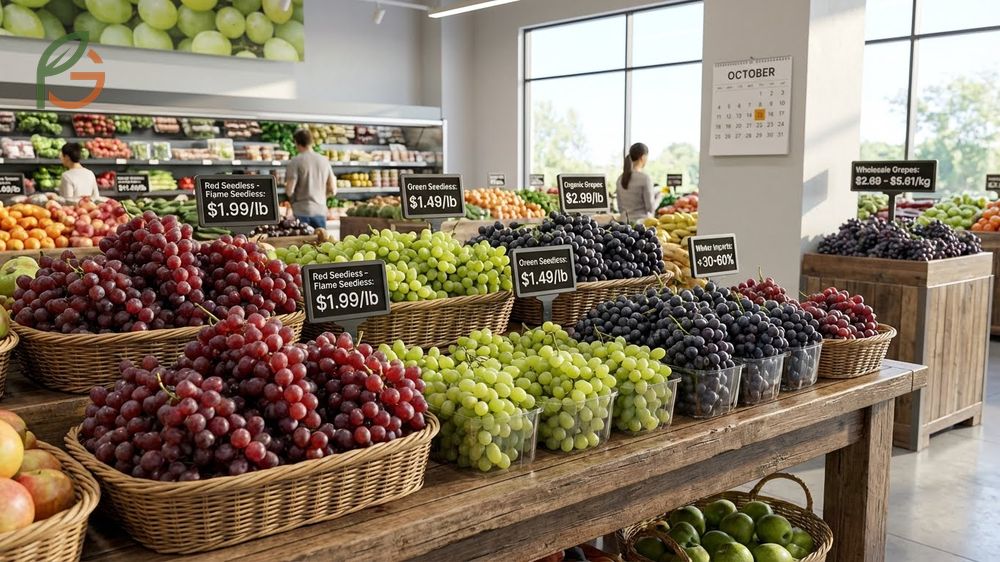
Retail grape prices in the U.S. range from $1.22 to $2.54 per pound depending on season, variety, and location[3]. Peak season (August-October) brings the lowest prices, while winter imports cost 30-60% more. Organic varieties typically add $0.50-$1.00 per pound to these baseline prices.
Wholesale prices fluctuate between $2.69 and $5.61 per kilogram based on variety and market conditions. Red seedless varieties like Flame Seedless command premium prices compared to standard green Thompson Seedless. Specialty varieties (Cotton Candy, Moon Drop) can reach $4-5 per pound retail.
Bulk Buying Strategies
Buying grapes in bulk (10+ pounds) saves 15-25% compared to small quantities at regular supermarkets. Warehouse clubs like Costco sell grapes in 3-5 pound containers at near-wholesale prices during peak season. You can also contact local produce distributors who sell 18-pound cases to home winemakers.
If you’re buying bulk for winemaking, expect to pay $1.50-$2.50 per pound for wine-quality grapes from California distributors. Table grapes for fresh eating cost slightly more due to stricter size and appearance standards. Most dealers require orders of at least one 18-pound case.
When my neighbor in Monterrey, Mexico bought 25 pounds of table grapes from a local wholesaler in September 2024, he paid 30% less than supermarket prices—approximately $1.10 per pound for Flame Seedless versus $1.58 retail.
| Purchase Method | Typical Quantity | Peak Season Price |
|---|---|---|
| Supermarket (small) | 1-2 lbs | $1.80-$2.20/lb |
| Warehouse club | 3-5 lbs | $1.40-$1.70/lb |
| Farmers market | 2-10 lbs | $1.20-$1.60/lb |
| Direct from distributor | 18+ lbs | $1.10-$1.50/lb |
- Shop Wednesday-Thursday: Many stores mark down grapes midweek to clear inventory before weekend deliveries
- Compare unit prices: Larger packages aren’t always cheaper—check price per pound labels carefully
- Buy in-season: August-October California grapes cost 30-50% less than winter imports
- Freeze extras: Bulk purchases freeze well for 6-8 months, perfect for smoothies and snacks
- Join wholesale clubs: Annual membership fees ($60) pay for themselves with 3-4 bulk grape purchases
- Check farmers markets: Prices drop 20-40% compared to supermarkets, especially late in the day
Conclusion
The evidence is clear: when are grapes in season matters significantly for both quality and cost. Peak season from August through October delivers the best flavor and value for U.S. consumers. California’s extended harvest from May through January provides domestic options for eight months annually, with imported grapes filling winter gaps.
Current agricultural data shows that strategic timing—buying during peak harvest months, shopping at farmers markets, and considering bulk purchases—can reduce grape costs by 30-50% while maximizing freshness. FruitGarden tracks seasonal produce patterns to help home gardeners and fruit enthusiasts make informed decisions year-round.
Frequently Asked Questions
What month are grapes cheapest?
September typically offers the lowest grape prices, with retail costs dropping to $1.22-$1.64 per pound during California’s Central Valley peak harvest. August and October also provide good value, while November-December transition periods bring the highest prices due to supply gaps between domestic and imported grapes.
Can you buy grapes year-round in the United States?
Yes, grapes are available year-round in U.S. supermarkets. Domestic California grapes supply markets from May through January, while Chilean, Peruvian, and Mexican imports fill February through April. However, quality and prices vary significantly—peak domestic season (August-October) offers the best taste and value.
How long do fresh grapes last after purchase?
Fresh grapes last 1-2 weeks when stored properly in the refrigerator at 34-38°F (1-3°C). Wash grapes with diluted vinegar solution (1/4 cup per bowl) immediately after purchase, dry completely, and store in an airtight container with a paper towel to absorb moisture. This method can extend freshness to 4-6 weeks.
Why do imported grapes cost more than California grapes?
Imported grapes cost 30-60% more due to international shipping, refrigerated transport over longer distances, and government tariffs ranging from 10-25%. Additionally, Southern Hemisphere grapes arrive during U.S. off-season when demand exceeds supply, allowing retailers to charge premium prices for fresh options.
What’s the difference between table grapes and wine grapes?
Table grapes are bred for fresh eating with larger berries, thinner skins, seedless varieties, and sweeter taste. Wine grapes have smaller berries, thicker skins, higher acidity, more seeds, and concentrated flavors ideal for fermentation. California grows 610,000 acres of wine grapes versus 125,000 acres of table grapes.
Where can I buy grapes in bulk for making wine?
Contact California produce distributors who sell wine grapes in 18-pound cases or larger bins during August-October harvest. Home winemaking supply shops often coordinate group buys from regional vineyards. Expect to pay $1.50-$2.50 per pound for wine-quality grapes, with minimum orders of one case (18 pounds) typically required.
Are organic grapes worth the extra cost?
Organic grapes cost $0.50-$1.00 more per pound but avoid synthetic pesticide residues, which is significant since grapes consistently rank in the “Dirty Dozen” for pesticide contamination. If budget permits, organic grapes provide peace of mind. Otherwise, thoroughly washing conventional grapes with vinegar solution removes most surface residues effectively.





