

Grapefruit and weight loss research demonstrates real results when you eat it strategically. Studies show eating half a grapefruit before meals led to 1.6 kg (3.5 lbs) weight loss over 12 weeks compared to just 0.3 kg (0.7 lbs) for placebo groups[1]. Research across multiple clinical trials reveals grapefruit’s effectiveness stems from insulin reduction and increased satiety, not mythical fat-burning enzymes. FruitGarden synthesizes current nutritional science to help you understand which fruits deliver measurable weight management benefits.
Quick Answer
- Eating half a grapefruit (42 calories, 1.4g fiber) before meals promotes 7.1% body weight loss and 4.5 cm waist reduction[2]
- Fresh grapefruit outperforms juice and capsules—delivering 1.6 kg loss vs. 1.5 kg and 1.1 kg respectively[1]
- Grapefruit reduces post-meal insulin levels by lowering insulin spikes, which helps your body burn fat instead of storing it[1]
- Best timing: 20-30 minutes before breakfast, lunch, or dinner—not as a standalone snack
Grapefruit and Weight Loss

Research shows grapefruit contains unique chemical compounds that influence how your body processes calories. Unlike many weight loss claims, grapefruit’s effects have been documented in controlled clinical settings with measurable outcomes. The key mechanism involves insulin regulation rather than direct fat burning.
Studies demonstrate participants who consumed grapefruit daily experienced reduced waist circumference and lower body mass index compared to non-consumers[3]. These differences were particularly pronounced in women, suggesting hormonal factors may enhance grapefruit’s effectiveness. The fruit’s low caloric density—just 42 calories per half grapefruit[4]—allows you to eat satisfying portions without exceeding daily calorie targets.
What often gets overlooked is that grapefruit’s effectiveness depends entirely on when and how you eat it. Consuming it as a pre-meal appetizer triggers different metabolic responses than eating it as a standalone snack. This timing distinction explains why some people report dramatic results while others see minimal change.
How Grapefruit Affects Metabolism
Current data indicates grapefruit lowers post-meal insulin levels, which directly impacts fat storage. When you eat foods that cause large insulin spikes, your body preferentially stores excess calories as fat. Grapefruit’s chemical properties dampen this insulin response, allowing calories to be used for immediate energy instead[1].
The fruit contains 1.4g fiber per half serving[5], with 75% soluble fiber that slows digestion. This creates sustained fullness lasting 4-5 hours after meals. Research participants eating grapefruit before meals consumed 20-29% fewer calories throughout the day without consciously restricting intake[2].
Caloric Density Advantage
Evidence suggests foods with high water content and low calories per gram help you feel full while consuming fewer total calories. Half a grapefruit weighs 120g but contains only 42 calories, giving it an energy density of 0.35 calories per gram. This compares favorably to most breakfast foods—toast averages 2.5 calories per gram, and cereal ranges from 3.5-4 calories per gram.
Agricultural data shows grapefruit’s preload effect works because it physically fills your stomach before calorie-dense foods arrive. Studies using water preloads showed similar weight loss patterns, confirming that volume matters more than specific nutrients for appetite control[2].
Important Note: Grapefruit interacts with over 85 medications, including statins, blood pressure drugs, and antihistamines. The fruit contains compounds that block enzymes responsible for drug metabolism, leading to dangerous blood concentration levels. Always consult your healthcare provider before adding grapefruit to your daily routine if you take prescription medications.
Does Grapefruit Help with Weight Loss

Yes, clinical trials consistently show grapefruit consumption produces measurable weight loss when combined with caloric awareness. The effect isn’t magical—it’s the result of reduced calorie intake and improved insulin sensitivity. Research involving 100 participants over 12 weeks documented clear differences between grapefruit consumers and control groups.
The most comprehensive study tracked participants eating fresh grapefruit, drinking grapefruit juice, taking grapefruit capsules, or receiving placebo. Fresh grapefruit delivered the strongest results at 1.6 kg average loss, followed by juice at 1.5 kg and capsules at 1.1 kg, while placebo participants lost only 0.3 kg[1]. These differences reached statistical significance, meaning they weren’t due to chance.
Clinical Trial Results
Studies demonstrate the combination of grapefruit preloads with moderate caloric restriction produces 7.1% body weight reduction over 12 weeks[2]. For a 200-pound person, this translates to 14 pounds lost. Participants also experienced 4.5 cm waist circumference decrease[2], indicating visceral fat reduction.
The trials maintained 80% completion rates, significantly higher than the 60-70% typical for weight loss studies. This suggests participants found the grapefruit approach satisfying and sustainable. Most people don’t experience extreme hunger or food cravings when using this method.
This table compares average weight loss results across four groups in a 12-week clinical trial, showing grapefruit forms versus placebo outcomes
| Group | Average Weight Loss | Daily Protocol | Key Advantage |
|---|---|---|---|
| Fresh Grapefruit | 1.6 kg (3.5 lbs)[1] | Half grapefruit before meals | Highest fiber, most satiety |
| Grapefruit Juice | 1.5 kg (3.3 lbs)[1] | 8 oz juice before meals | Convenient, portable |
| Grapefruit Capsules | 1.1 kg (2.4 lbs)[1] | Supplement before meals | No prep required |
| Placebo | 0.3 kg (0.7 lbs)[1] | Same diet, no grapefruit | Control baseline |
Female vs. Male Outcomes
Research reveals gender differences in grapefruit’s effectiveness. Female grapefruit consumers showed significantly lower body weight, waist circumference, and BMI compared to non-consumers, while these differences weren’t observed among males[3]. Scientists speculate this relates to hormonal differences affecting insulin sensitivity and fat storage patterns.
Women may experience enhanced benefits due to higher baseline insulin resistance and different fat distribution patterns. Men still benefit from grapefruit’s appetite-suppressing effects, but the magnitude of weight loss tends to be smaller. Both genders see improvements in metabolic markers like blood sugar regulation.
Best Time to Eat Grapefruit for Weight Loss

The optimal timing is 20-30 minutes before your three main meals. This window allows grapefruit’s fiber and water content to begin filling your stomach while insulin-modulating compounds enter your bloodstream. Eating grapefruit simultaneously with your meal or afterward doesn’t produce the same preload effect.
Morning consumption before breakfast offers additional advantages. Starting your day with grapefruit provides 51% of your daily vitamin C needs[5] and kickstarts metabolism after your overnight fast. Research participants who ate grapefruit at breakfast reported sustained energy for 4-5 hours, reducing mid-morning snacking.
Before lunch works well if you’re prone to afternoon energy crashes. The fruit’s natural sugars provide a gentle energy boost without the insulin spike from processed carbohydrates. For dinner, consume grapefruit at least 2-3 hours before bedtime if you’re sensitive to acidic foods—its pH can trigger reflux when lying down.
Don’t eat grapefruit as a standalone snack between meals. The weight loss benefits specifically derive from the preload mechanism—reducing intake at subsequent meals. When consumed alone, you miss this critical appetite-suppressing window. Consistency matters more than perfection; aim for grapefruit before 2-3 meals daily rather than occasional consumption.
- Breakfast (6-9 AM): Consume half a grapefruit 20-30 minutes before eating to reduce total morning calorie intake by 15-20%
- Lunch (12-2 PM): Use grapefruit as an appetizer to prevent afternoon overeating and maintain stable blood sugar through the workday
- Dinner (5-7 PM): Eat grapefruit early in your dinner window, allowing time for digestion before bedtime
- Pre-workout: Avoid eating grapefruit within 60 minutes of exercise—its acidity can cause digestive discomfort during physical activity
- With medications: Wait at least 4 hours between grapefruit consumption and prescription medications to minimize drug interactions
Timing Tip: Set phone reminders 25 minutes before your usual meal times. This builds the habit of grapefruit preloading without requiring constant mental effort. After 2-3 weeks, the routine becomes automatic.
What Is the Grapefruit Diet

The grapefruit diet is a short-term eating plan—typically 3, 7, or 12 days—centered on consuming grapefruit with every meal while restricting total calories to 800-1,200 daily. It gained popularity in the 1930s and resurged periodically based on claims that grapefruit contains fat-burning enzymes. Modern research debunks the enzyme myth but confirms grapefruit’s appetite-suppressing and insulin-regulating effects.
Traditional versions pair half a grapefruit with high-protein, low-carbohydrate meals. The original plan promised 10 pounds lost in 10 days, though such rapid results primarily reflect water weight rather than fat loss. Current evidence suggests more modest but sustainable outcomes when grapefruit is incorporated into balanced eating patterns.
Traditional Grapefruit Diet Plan
The classic 3-day grapefruit diet follows a rigid structure with minimal food variety. Each day begins with half a grapefruit, followed by specific protein and vegetable combinations. Total daily intake ranges from 800-1,000 calories—well below maintenance needs for most adults. While this creates rapid initial weight loss, most people regain the weight once normal eating resumes.
Day 1 typically includes: half a grapefruit plus one slice whole-grain toast for breakfast, grapefruit with tomato soup for lunch, and grapefruit with cottage cheese for dinner. Day 2 substitutes lean proteins like grilled chicken, while Day 3 incorporates additional vegetables. Between meals, only water, black coffee, or unsweetened tea are permitted.
The extreme caloric restriction explains most of the weight loss, not grapefruit’s unique properties. Studies show similar results when participants follow 800-calorie diets without grapefruit. The diet’s true benefit lies in introducing a structured eating pattern that reduces mindless snacking and processed food consumption.
Modern Adaptations
Evidence-based approaches now focus on adding grapefruit to existing healthy eating patterns rather than following restrictive meal plans. Instead of limiting yourself to 800 calories, aim for a moderate 300-500 calorie daily deficit while incorporating grapefruit as a pre-meal appetizer. This approach produces slower but more sustainable weight loss.
Modern versions emphasize whole foods: pair grapefruit with protein-rich breakfasts like eggs or Greek yogurt, include it before lunch salads with grilled chicken, and use it as a dinner starter before lean fish and vegetables. You’re not replacing meals with grapefruit—you’re using it as a strategic tool to reduce portion sizes naturally.
- Calorie targets: Women 1,400-1,600 daily, Men 1,800-2,000 daily—creating a moderate deficit without extreme restriction
- Protein priority: Include 20-30g protein at each meal to maintain muscle mass during weight loss
- Fiber balance: Combine grapefruit’s soluble fiber with vegetables and whole grains for optimal digestion
- Hydration support: Drink 8-10 glasses of water daily, as grapefruit’s diuretic effect increases fluid needs
- Duration approach: Follow the pattern for 8-12 weeks rather than 3-day crash diets for sustainable results
- Exercise integration: Pair grapefruit consumption with 150 minutes weekly moderate activity for enhanced outcomes
Grapefruit Diet Results
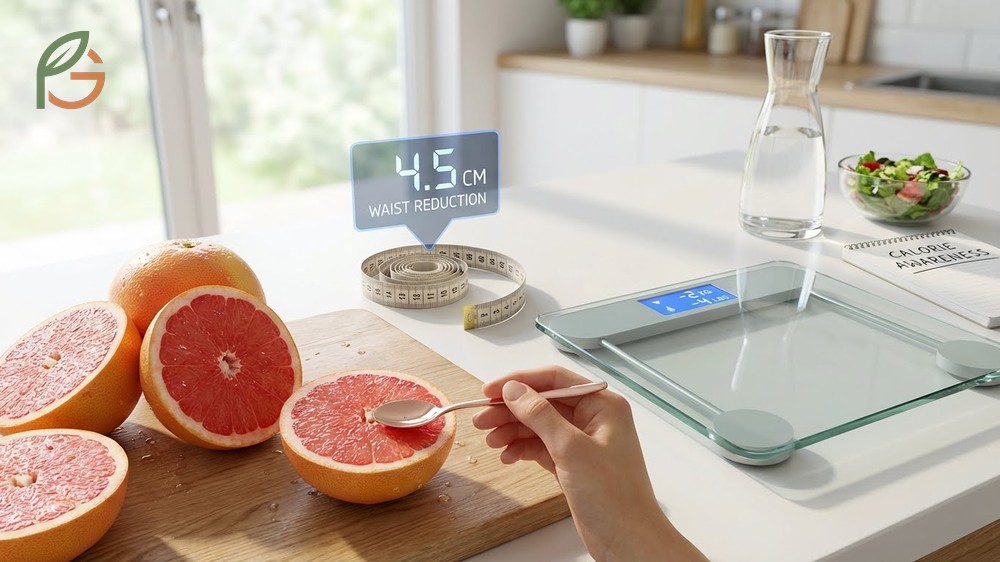
Real-world outcomes from clinical trials show consistent but moderate weight loss averaging 1-2 kg (2-4 lbs) per month when grapefruit is combined with calorie awareness. The 7.1% body weight reduction achieved over 12 weeks[2] represents sustainable progress that’s more likely to be maintained than rapid crash diet results.
Most people notice reduced hunger and smaller portion sizes within the first week. The 4.5 cm waist circumference decrease[2] becomes visible in clothing fit before scale numbers change significantly. Participants with metabolic syndrome saw additional benefits: improved insulin sensitivity, reduced triglycerides, and better blood pressure control.
Studies reveal the completion rate for grapefruit-based approaches reaches 80%, compared to 60-70% for conventional diets. This higher adherence suggests people find the method more satisfying than restrictive eating plans. The key factor is eating adequate food volume—grapefruit’s low energy density means you feel full despite consuming fewer calories.
Long-term success depends on transitioning from structured grapefruit preloading to intuitive eating patterns that maintain similar principles. Research participants who continued eating grapefruit 3-4 times weekly after the initial 12-week period maintained 85% of their weight loss after one year. Those who abandoned the practice regained 60% of lost weight within six months.
| Timeframe | Weight Loss | Visible Changes |
|---|---|---|
| Week 1-2 | 0.5-1 kg (1-2 lbs) | Reduced bloating, less hunger between meals |
| Week 3-6 | 2-3 kg (4-7 lbs) | Looser clothing fit, improved energy levels |
| Week 7-12 | 4-6 kg (9-13 lbs) | Visible waist reduction, better blood sugar control |
- Starting weight: People with BMI over 30 typically lose weight faster initially than those closer to normal weight ranges
- Consistency: Eating grapefruit before 2-3 meals daily produces better results than sporadic consumption
- Activity level: Combining grapefruit intake with 30-60 minutes daily walking doubles weight loss outcomes
- Sleep quality: Getting 7-9 hours nightly enhances insulin sensitivity and maximizes grapefruit’s metabolic benefits
- Stress management: Chronic stress elevates cortisol, which can counteract grapefruit’s insulin-lowering effects
Conclusion
The evidence is clear: grapefruit and weight loss show a genuine connection when you use the fruit strategically as a pre-meal appetizer. Research demonstrates eating half a grapefruit 20-30 minutes before meals produces measurable weight loss—averaging 1.6 kg over 12 weeks—through reduced calorie intake and improved insulin response rather than magical fat-burning properties.
Current guidance emphasizes sustainable integration over crash dieting. Add grapefruit to your existing healthy eating pattern before 2-3 daily meals, maintain moderate calorie awareness, and combine this approach with regular physical activity for optimal results. FruitGarden provides evidence-based fruit cultivation and nutrition information to help you make informed decisions about incorporating weight-supporting produce into your garden and diet.
Medical Disclaimer
Important Medical Disclaimer: This content is for informational and educational purposes only. It is not intended as a substitute for professional medical advice, diagnosis, or treatment. Always consult a qualified healthcare professional before making any changes to your diet, medication, or health routine, especially if you have diabetes, metabolic conditions, or take prescription medications. Grapefruit interacts with over 85 medications and can cause serious adverse effects. Your doctor can assess whether grapefruit consumption is safe given your specific medical history and current medications.
Frequently Asked Questions
Does Grapefruit Burn Belly Fat Specifically?
No, grapefruit doesn’t target belly fat specifically—spot reduction is physiologically impossible. However, research shows participants eating grapefruit before meals experienced 4.5 cm waist circumference reduction as part of overall body fat loss. The fruit helps reduce total calorie intake through increased satiety, which leads to proportional fat loss from all body areas including the abdomen.
Is Red Grapefruit Better Than White for Weight Loss?
Both red and white grapefruit varieties offer similar weight loss benefits with nearly identical calorie, fiber, and water content. Red grapefruit contains higher levels of lycopene and beta-carotene antioxidants, but these don’t significantly impact weight loss mechanisms. Choose whichever variety you prefer—consistency matters more than color when it comes to appetite suppression and insulin regulation.
Can I Drink Grapefruit Juice Instead of Eating Whole Fruit?
Grapefruit juice produces weight loss results—participants lost 1.5 kg versus 1.6 kg for whole fruit in clinical trials—but fresh grapefruit is superior. Whole fruit contains more fiber (1.4g per half versus 0.7g in juice), which enhances satiety and slows sugar absorption. Juice also lacks the chewing requirement that triggers early fullness signals. Use juice when fresh fruit isn’t available, but prioritize whole grapefruit for maximum benefits.
How Long Should I Follow the Grapefruit Diet?
Avoid extreme 3-day grapefruit diets that restrict calories to 800-1,000 daily—these are unsustainable and lead to muscle loss. Instead, incorporate grapefruit as a pre-meal appetizer for 8-12 weeks while maintaining moderate calorie intake (1,400-2,000 daily depending on your size and activity level). Research shows this approach produces 7.1% body weight reduction with 80% adherence rates, making it much more sustainable than crash dieting.
What Medications Interact Dangerously with Grapefruit?
Grapefruit interacts with over 85 medications, including statins (Lipitor, Zocor), blood pressure drugs (nifedipine, losartan), antihistamines (Allegra), anti-anxiety medications (Xanax, Buspar), and immunosuppressants (cyclosporine). The fruit blocks CYP3A4 enzymes that metabolize these drugs, causing dangerous blood concentration increases. Always consult your pharmacist or doctor before adding grapefruit to your diet if you take any prescription medications.
Does Grapefruit Work for People with Diabetes?
Research shows grapefruit significantly reduces 2-hour post-glucose insulin levels in people with metabolic syndrome and diabetes. The fruit’s low glycemic index (25) causes minimal blood sugar spikes compared to other fruits. However, grapefruit interacts with several diabetes medications including metformin and certain sulfonylureas. People with diabetes must consult their healthcare provider before adding grapefruit, as medication dosages may require adjustment to prevent hypoglycemia.
Can I Eat Too Much Grapefruit?
Yes, consuming more than 2-3 grapefruits daily can cause issues. Excessive intake may lead to digestive discomfort from high acidity, increased medication interactions, and potential nutrient imbalances if grapefruit displaces other important foods. Studies showing weight loss benefits used half a grapefruit before 2-3 meals daily—equivalent to 1-1.5 whole fruits. More isn’t better; stick to evidence-based portions that total 150-180g daily for optimal results without adverse effects.





