
When are grapes harvested? Grapes are typically harvested between August and October in the Northern Hemisphere, and February to April in the Southern Hemisphere[1]. Unlike most fruits, grapes don’t ripen after picking, so timing is everything for achieving optimal sweetness and flavor[2]. FruitGarden brings you this comprehensive guide to help you determine the perfect harvest window for your backyard grapes or understand commercial grape production better.
Quick Answer
- Most grapes ripen 100 days after flowering, typically from late August through October[1]
- California table grapes harvest from mid-May through December, starting in Coachella Valley[3]
- Grapes are non-climacteric fruits—they won’t sweeten once picked from the vine[2]
- Wine grapes typically need sugar levels of 19-25 Brix before harvest begins[4]
When Are Grapes Harvested
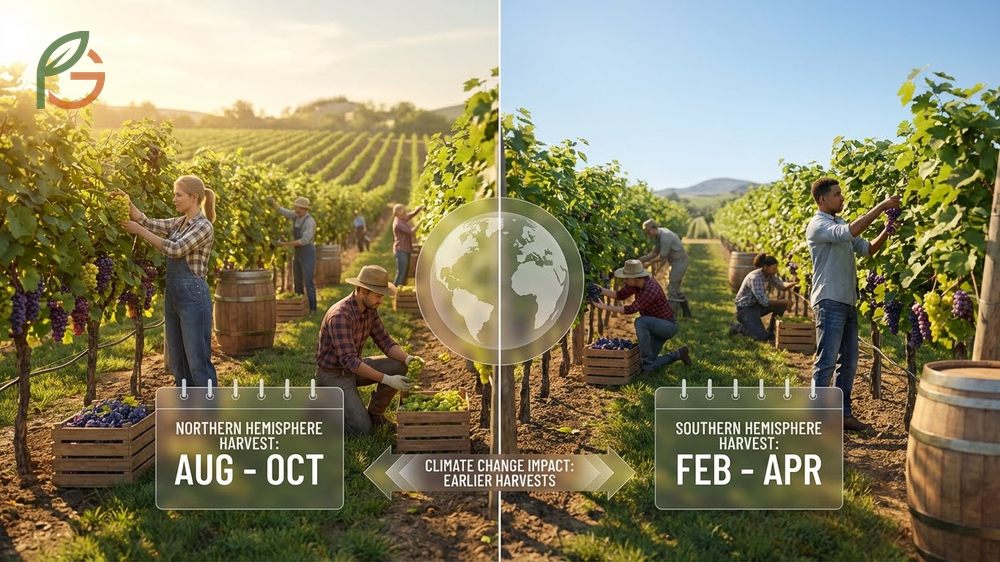
The timing for grape harvest depends heavily on location, variety, and intended use. Research shows that most vineyards in the Northern Hemisphere harvest between August and October, while Southern Hemisphere regions pick from February through April[1]. This window can shift by several weeks depending on weather patterns and grape maturity.
Current data indicates that climate change has shifted harvest dates earlier in many regions. What used to start in mid-September now often begins in late August for the same grape varieties[1]. Growers monitor three key maturity types: technological (sugar and acid), phenolic (tannins and color), and aromatic (flavor compounds).
The harvest window is surprisingly narrow—often just a few days to one week for optimal quality. Once grapes reach peak ripeness, you can’t delay, because overripe grapes develop excessive sugar and lose the acid balance needed for quality wine or fresh eating[5].
From My Experience: My cousin in Guadalajara, Mexico grew Flame Seedless table grapes and started harvesting in early July 2024. The clusters reached full color 95 days after flowering versus the typical 100-105 day range, showing how warmer microclimates can accelerate ripening.
Grape Harvest Season by Region
Different regions across the United States harvest grapes at varying times based on climate and grape varieties. California dominates U.S. production with nearly 90% of the nation’s grapes and harvests table grapes from May through December[6]. The earliest harvests begin in mid-May in Southern California’s Coachella Valley, then shift north to the San Joaquin Valley through December.
Michigan vineyards typically harvest from late August through early October, with Concord grapes picked first and wine grapes following in mid-September[7]. Northern Michigan’s cooler temperatures extend the growing season slightly later into fall, which actually improves fruit quality by enhancing sugars and balancing acidity.
This table compares grape harvest timing across different U.S. regions, showing when early, main, and late season varieties are picked throughout the year
| Region | Early Season | Main Harvest | Late Season |
|---|---|---|---|
| Southern California | Mid-May[3] | June – July | Mid-July |
| Central California | Late July | August – October[1] | November – December |
| Michigan | Late August | September[7] | Early October |
| New York | Early September | Mid-September – October | Late October |
The 100-Day Rule from Flowering
Growers traditionally use the 100-day rule as a starting point for harvest planning. This means grapes typically ripen about 100 days after the vines flower and the first blooms appear[1]. However, this is just an estimate—actual maturity varies significantly based on grape variety, weather conditions, and terroir.
White wine grapes and sparkling wine varieties often get picked earlier than this timeline, sometimes at 80-90 days to maintain higher acidity. Red wine grapes might hang longer, reaching 110-120 days for fuller flavor development. Table grapes fall somewhere in between, with seedless varieties like Thompson often ready at 95-105 days.
Testing Grape Ripeness
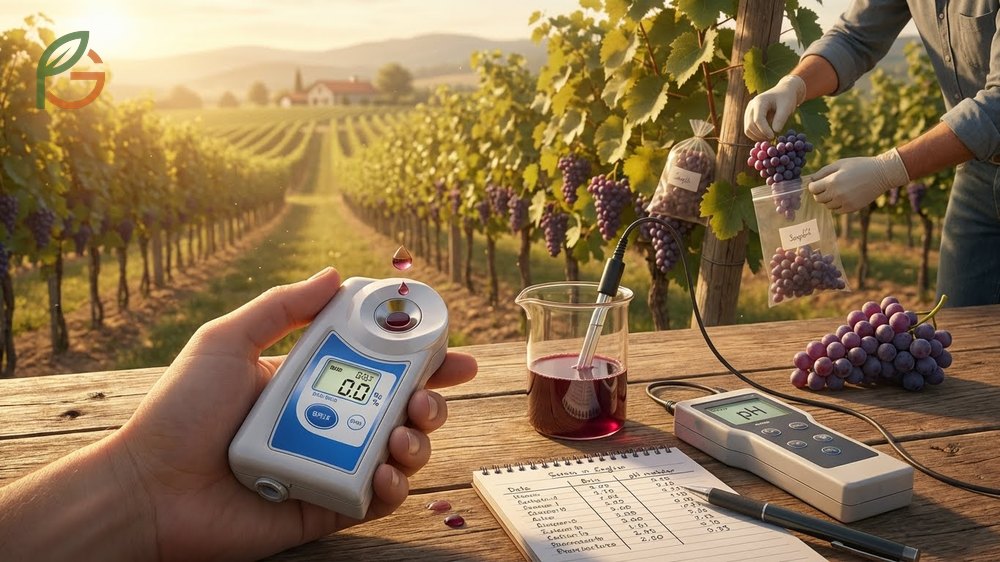
Determining when grapes are ready involves multiple testing methods beyond just looking at color. Commercial growers measure sugar content (Brix), pH levels, and acidity to make precise harvest decisions[4]. Home growers can rely on simpler visual cues and taste tests, but understanding the science helps improve your timing.
The key is sampling grapes from different parts of your vineyard or vine over several weeks. Take samples at the same time of day from sun-exposed and shaded clusters. This gives you a true picture of ripening progress across your whole crop.
Start testing three to four weeks before your expected harvest date. Grapes undergo a color change called veraison, when they shift from green to their final color, and this signals that ripening has begun—but they still need two to three more weeks after this point[2].
Signs of Ripe Grapes
Visual and physical indicators provide quick assessments without special equipment. Studies demonstrate that uniformity matters most—look for consistent coloring across entire clusters rather than patchy ripening[5]. Uneven color means the grapes need more time on the vine.
Ripe grapes separate easily from the stem with gentle pressure. The stem itself changes from bright green to brown and begins to dry out slightly. Seeds turn from green to brown, and the fruit feels less firm when you squeeze gently.
- Full color development—purple, red, or golden yellow depending on variety
- Uniform coloring across the entire cluster without green patches
- Brown, dried stems at the attachment point
- Easy separation from the vine with light pulling
- Brown seeds visible when you cut a berry open
- Sweet taste with balanced acidity, not sour or flat
- Slightly softened texture compared to hard, unripe berries
Measuring Sugar and Acid Levels
Professional viticulturists rely on quantitative measurements for precision timing. A refractometer measures Brix (sugar content), with wine grapes typically harvested at 19-25 Brix depending on the style being produced[4]. Table grapes usually hit optimal sweetness at 16-20 Brix.
pH testing helps determine acid balance, which affects both flavor and wine stability. Most wine grapes target a pH between 3.0 and 3.6. You can use inexpensive pH strips for field measurements, though they’re less precise than laboratory equipment and can be tricky to read with dark-colored grape juice[8].
Important Note: Weather plays a huge role in the final days before harvest. Rain on ripe grapes can cause splitting and spoilage, so many growers rush to harvest if heavy rain is forecast[4]. Similarly, extreme heat can push ripening too fast, forcing earlier harvest than planned.
Do Grapes Ripen Off the Vine
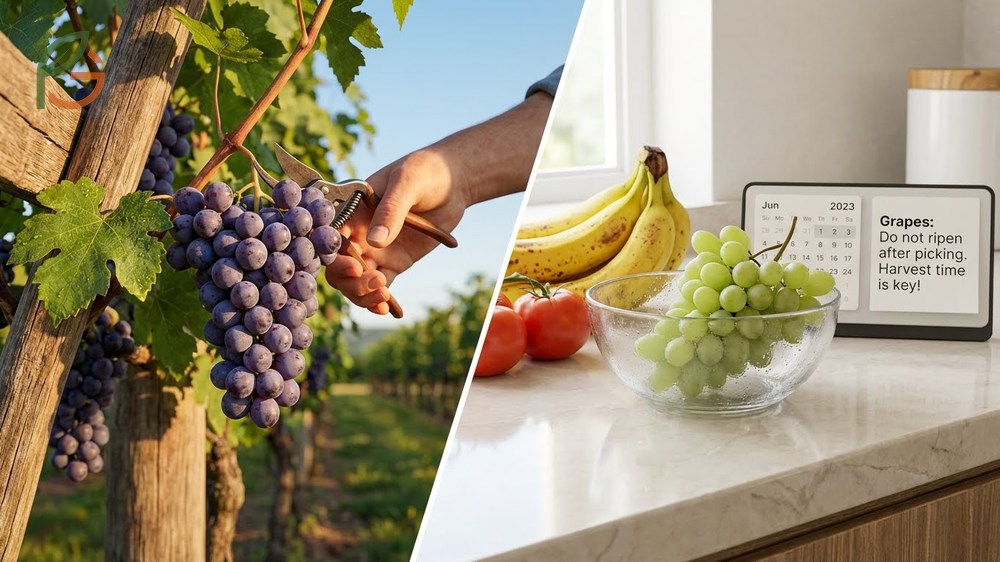
No, grapes don’t continue to ripen after you pick them. Research shows grapes are non-climacteric fruits, meaning they stop all ripening processes once separated from the vine[2]. This makes harvest timing absolutely critical—what you pick is what you get.
This differs drastically from climacteric fruits like bananas, tomatoes, or avocados that continue developing sugars and softening after harvest. If you pick grapes too early hoping they’ll sweeten on your counter, you’ll end up with sour, tart fruit that never improves[4]. That’s why tasting multiple times before harvest is so important.
The vine supplies the energy and nutrients needed for sugar development and flavor concentration. Once that connection breaks, the grape’s chemistry locks in place. Color might deepen slightly as chlorophyll breaks down, but sweetness, acidity, and flavor compounds won’t change.
For home growers, this means patience pays off. Wait until grapes taste uniformly sweet across different clusters before you start cutting. It’s better to harvest a few days late than too early—though waiting too long brings its own problems with bird damage, splitting, or excessive sugar.
How Are Grapes Harvested
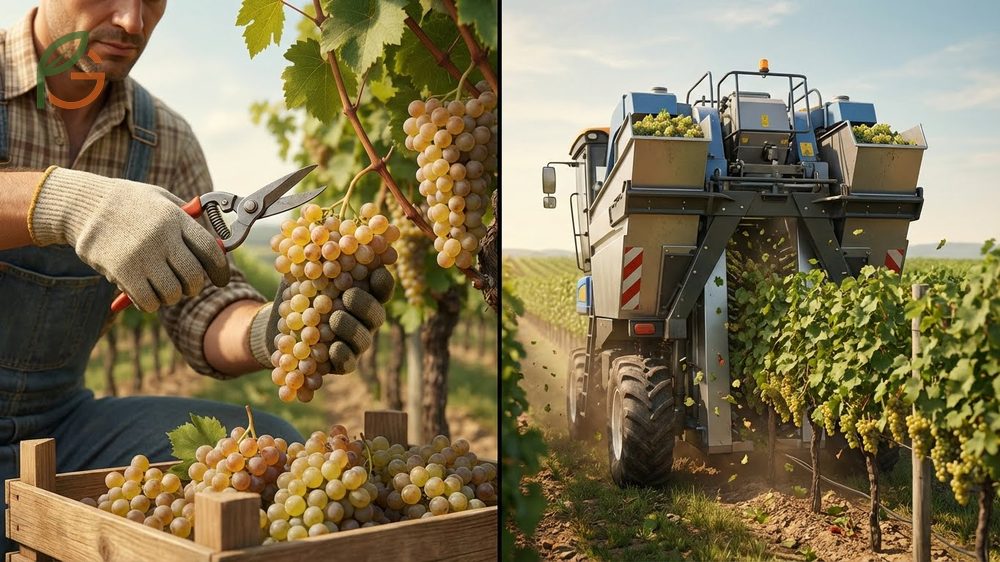
Grapes are picked using either hand harvesting or mechanical harvesters, depending on the scale of production and grape type. Hand picking remains the gold standard for premium wine grapes and delicate table varieties, allowing careful selection and minimal damage to the fruit[9]. Workers use specialized shears to clip entire clusters from the vine.
Mechanical harvesting has transformed large-scale grape production since the 1960s. These machines work by beating the vine with rubber rods to shake fruit onto conveyor belts, then depositing grapes into large bins[1]. A single harvester can pick 80-200 tons per day compared to 1-2 tons for an experienced hand picker.
The choice between methods involves tradeoffs. Mechanical harvesters run 24 hours a day and can pick during cool nighttime temperatures, which preserves grape quality in hot climates. However, they can’t distinguish between ripe and unripe bunches, requiring additional sorting at the winery. Hand pickers provide better selectivity but cost significantly more in labor.
Harvest Tools for Grapes
Hand harvesting requires several essential tools to work efficiently and safely. Grape-specific equipment differs from general pruning tools because it’s designed for speed, clean cuts, and worker comfort during long harvest days. The most important tool is sharp, dedicated harvest shears.
Professional harvesters prefer bypass-style grape shears with curved blades and serrated counter-blades. The serrations prevent grape stems from slipping out while cutting[10]. Popular brands include Bahco, Zenport, and specialized models like the CAP grape shear.
- Thinning shears or bypass-style grape shears with serrated blades
- Harvest bins or lugs for collecting clusters
- Grape knives with hook-shaped blades for traditional harvesting
- Sharpening stones or Speedy Sharps to maintain blade edges
- Harvest carts for transporting filled containers down rows
- Gloves to protect hands during extended picking sessions
- Headlamps or flashlights for early morning or night harvesting
Pro Tip: Keep your harvest shears sharp throughout the season. Dull blades crush stems rather than cutting cleanly, which can introduce bacteria and damage the remaining vine. Sharpen your tools every few hours during peak harvest.
Harvesting Wine Grapes vs Table Grapes
Wine grapes and table grapes follow different harvest protocols based on their end use. Wine grapes are typically hand-harvested to ensure careful handling and optimal condition at the winery, especially for premium organic and biodynamic producers[9]. Some bunches with imperfect berries might still make excellent wine after sorting.
Table grapes require more visual perfection since consumers eat them fresh. They’re often machine-harvested for efficiency, then sorted at field-side packing stations where workers remove damaged or undersized fruit. In California’s table grape regions, harvest crews pick clusters and immediately bring them to portable packing tables in the vineyard.
Yield differences are significant: table grapes produce three times more fruit per acre than wine grapes in a single growing cycle[11]. Wine grape growers deliberately prune aggressively to limit yields and concentrate flavors, while table grape producers maximize cluster size and quantity.
Protecting Grapes from Birds
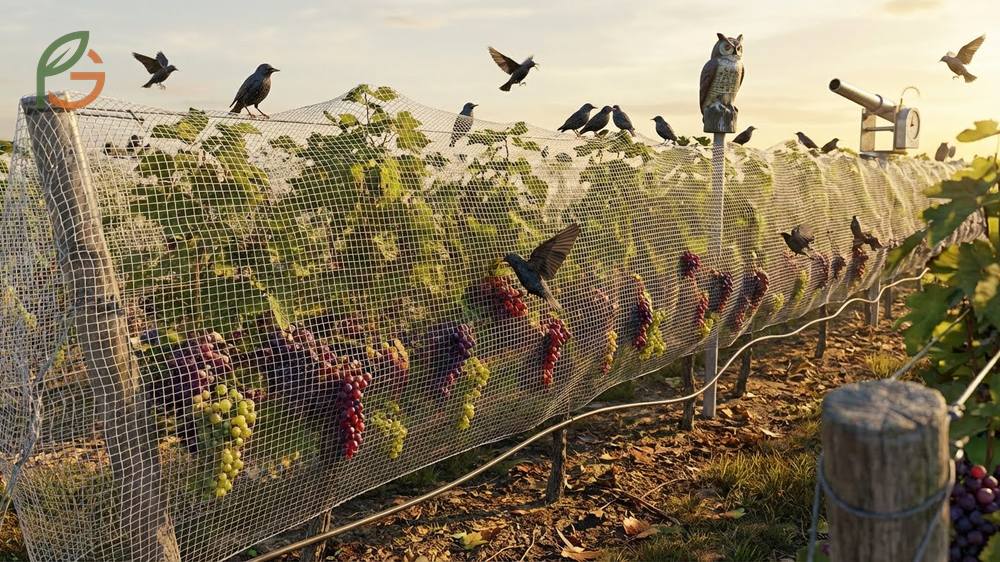
Bird protection becomes critical once grapes enter veraison and change color. Research demonstrates that netting remains the most effective method for reducing bird damage to grapes[12]. When grapes shift from green to purple or red, they become highly visible to birds like starlings, which can decimate a crop in days.
Visual and audio deterrents provide temporary relief but aren’t as reliable as physical barriers. Some vineyards use gas cannons, fake owls, inflatable tube men, or even rangers on quad bikes firing starting pistols. These methods work briefly until birds adapt and ignore them.
Bird netting installation takes effort but delivers consistent protection. Fruit zone netting covers just the grape clusters rather than entire vines, making it easier to install and remove. You’ll want to apply netting as soon as color change begins, typically 2-3 weeks before harvest.
- Physical netting over fruiting zones—most effective method available
- Black or colored mesh nets that reduce sun exposure while blocking birds
- Predator decoys like fake owls or hawks (limited short-term effectiveness)
- Audio deterrents including bird distress calls or gas cannons
- Visual scare devices such as reflective tape or balloons
- Encouraging insectivorous birds (bluebirds) with nesting boxes—they don’t eat grapes
Different net colors can provide multiple benefits beyond bird protection. Studies from Italy show that colored shade nets reduce wind speed by up to 85% and protect against climate extremes while still allowing adequate photosynthesis[12]. However, netting does limit access for late-season sprays and can trap birds if not installed properly.
Storing Fresh Grapes
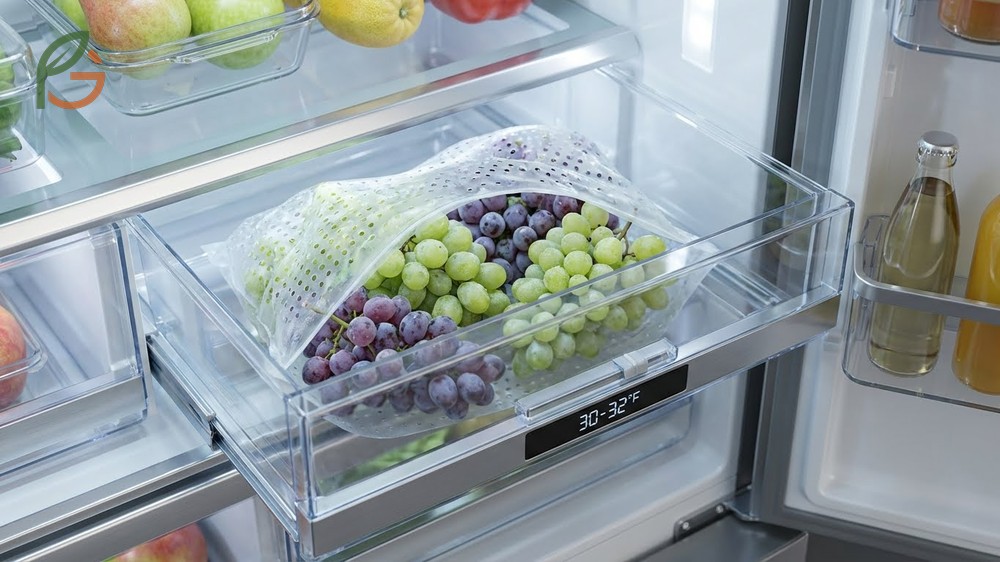
Proper storage extends fresh grape shelf life significantly after harvest. The best approach is refrigeration immediately after picking—grapes stored correctly in the fridge last 7-14 days compared to just 1-2 days at room temperature[13]. Grapes are highly perishable and soften rapidly when left out.
Store unwashed grapes in their original perforated bag or a breathable container. The crisper drawer set to high humidity provides the ideal environment—grapes thrive at 30-32°F (-1 to 0°C) with 90-95% relative humidity[14]. Don’t wash grapes until right before eating, because moisture promotes mold growth.
For extended storage beyond two weeks, some growers wash grapes in a water-vinegar solution, dry them completely, and store in airtight glass containers with paper towels at the bottom. This method can preserve grapes for up to six weeks if you remove any moldy berries immediately and wipe out condensation regularly.
Keep grapes away from strong-smelling foods like onions in your refrigerator—they absorb odors easily. If you transfer grapes from their original packaging, make sure the new container has adequate ventilation. Avoid sealed glass containers unless grapes are completely dry, because trapped moisture causes rapid spoilage.
- Refrigerate immediately—don’t leave grapes at room temperature
- Store unwashed in original perforated packaging until ready to eat
- Place in the crisper drawer set to high humidity settings
- Keep away from ethylene-producing fruits like apples or bananas
- Turn packages daily if storing large quantities for even air circulation
- Remove any soft, moldy, or damaged grapes to prevent spread
- Use breathable containers if transferring from original packaging
Conclusion
The evidence is clear: successful grape harvesting hinges on precise timing, proper testing, and understanding that grapes won’t ripen once picked. When are grapes harvested? Typically between August and October in Northern regions, but your specific harvest date depends on variety, location, and careful monitoring of ripeness indicators. Current agricultural guidance emphasizes sampling grapes multiple times in the weeks before harvest and using both taste tests and scientific measurements to pinpoint the optimal picking window.
Whether you’re growing backyard vines or managing commercial vineyards, the principles remain the same: wait for uniform color development, test for sweetness, protect from birds during ripening, and act quickly once grapes reach peak maturity. FruitGarden synthesizes the latest research and grower experiences to help you master grape harvest timing and enjoy the sweetest, most flavorful fruit possible.
Frequently Asked Questions
Can grapes ripen off the vine?
No, grapes cannot ripen off the vine because they’re non-climacteric fruits. Once you cut grapes from the plant, all sugar development and flavor improvement stops immediately. This is why harvest timing is so critical—you must wait until grapes reach full ripeness on the vine before picking.
What’s the best time of day to harvest grapes?
Early morning or nighttime harvesting is ideal, especially in warm climates. Grapes picked during cool temperatures maintain better quality and don’t deteriorate as quickly. Many commercial vineyards harvest between midnight and 6 AM when grapes are coolest, which helps preserve flavor and reduces the need for additional cooling.
How long does grape harvest season last?
Individual vineyard harvests typically last 8-15 days for a single variety. However, if you’re growing multiple grape types, your total harvest season could extend 4-8 weeks. California’s table grape industry harvests continuously from May through December by starting in southern regions and moving north as grapes ripen.
What tools do I need to harvest grapes?
You’ll need sharp bypass-style grape shears with serrated blades, harvest bins or buckets for collecting clusters, and a sharpening stone to maintain blade edges. For larger harvests, consider harvest carts, gloves for hand protection, and headlamps if you’re picking during early morning hours.
How do I know when my grapes are sweet enough to pick?
Taste grapes from multiple clusters across your vines 3-4 weeks before expected harvest and continue sampling every few days. Look for uniform sweetness without tartness, full color development, and brown stems. For precision, use a refractometer to measure 16-20 Brix for table grapes or 19-25 Brix for wine grapes.
What happens if I harvest grapes too early?
Early-harvested grapes will taste excessively tart and underdeveloped because they haven’t accumulated enough sugars. Wine made from underripe grapes becomes overly herbaceous and acidic with poor structure. Since grapes don’t ripen after picking, early harvest results in permanently inferior fruit that won’t improve.
How do I protect grapes from birds before harvest?
Physical netting provides the most reliable protection against bird damage. Install fruit zone netting over grape clusters as soon as they change color during veraison, typically 2-3 weeks before harvest. While scare tactics like fake owls or noise makers offer temporary relief, birds quickly adapt and ignore these deterrents.





