
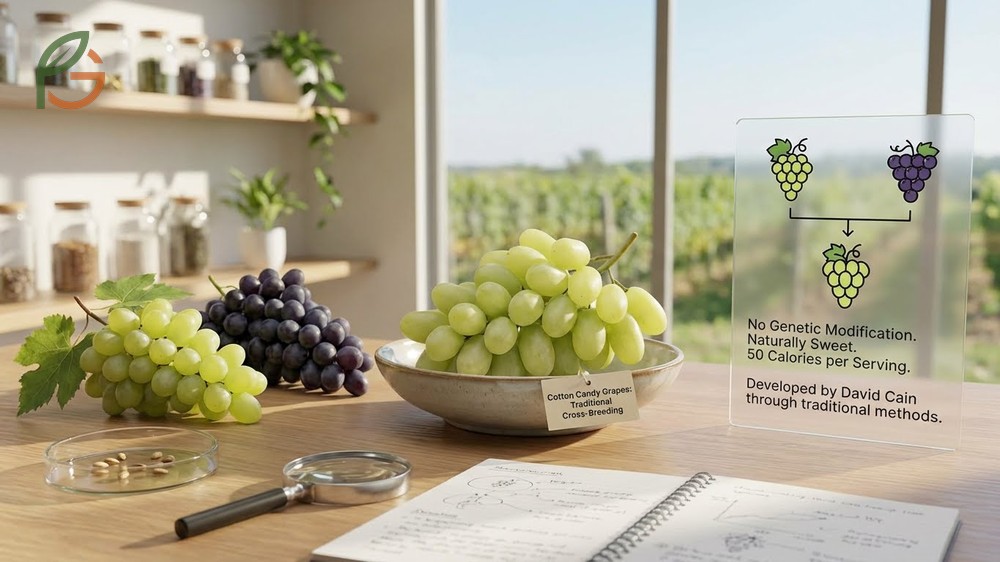
How are cotton candy grapes made? Through traditional cross-breeding techniques, not genetic modification. Research shows that fruit breeder David Cain spent nearly a decade crossing two grape species—Princess (Vitis vinifera) with Concord grapes (Vitis labrusca)—to create this naturally sweet variety that contains 50 calories and 23 grams of natural sugar per half-cup serving[1][2][3]. FruitGarden brings you the science behind these carnival-flavored grapes that changed fruit breeding forever.
Quick Answer
- Cotton candy grapes are made through natural cross-pollination, not genetic modification—David Cain from International Fruit Genetics took nearly 10 years to perfect the breeding process[2]
- They contain 50 calories per half-cup and 23g natural sugar—slightly higher than regular grapes but less than bananas or mangoes[3]
- Available mid-July through September with peak season in August, sold in all 50 US states[4][5]
- Grow best in USDA Zones 5-8 with temperatures tolerating down to 20°F (-6.7°C) and requiring 6+ hours of direct sunlight daily[6]
How Are Cotton Candy Grapes Made
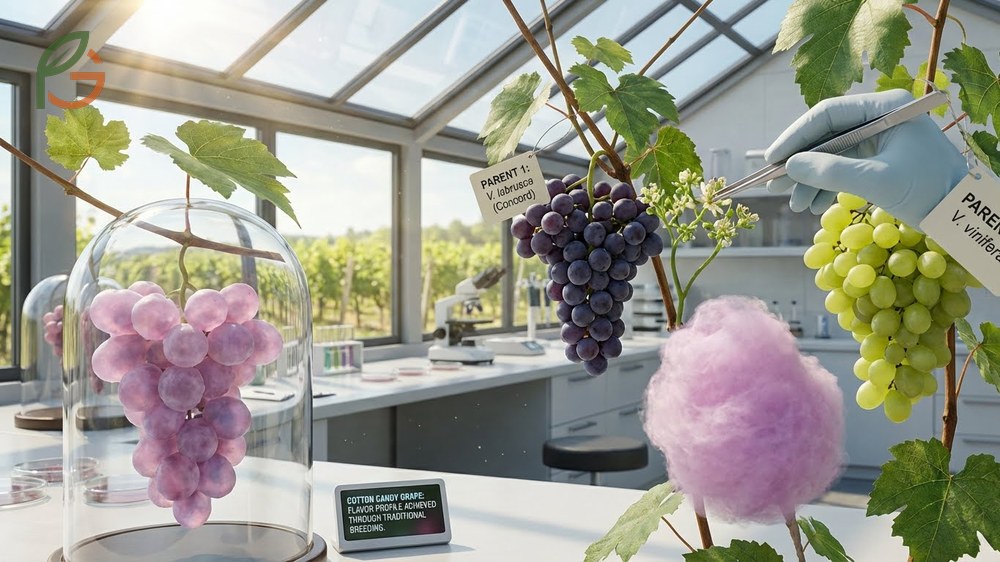
Cotton candy grapes are created through traditional plant breeding, specifically cross-pollinating two distinct grape species. David Cain, a former USDA scientist who founded International Fruit Genetics (IFG) in Bakersfield, California, started this breeding project in 2003 after tasting a purple Concord grape at a University of Arkansas trade event[2]. The goal wasn’t just creating sweeter grapes—it was capturing that nostalgic cotton candy flavor while maintaining superior crunch and thin skin.
The process involves taking pollen from the male parent (Princess, a Vitis vinifera variety known for crisp texture) and brushing it onto the stigma of the female parent (Concord grapes, Vitis labrusca)[1]. What sounds simple actually took nearly a decade of painstaking work. Cain cross-pollinated the University of Arkansas Concord with a dozen California varieties on 80 acres of test vineyards in Delano, north of Bakersfield[2].
Unlike genetic modification that inserts foreign DNA, this breeding method works with nature’s existing genetic diversity. Breeders select parent plants with complementary traits—one with exceptional flavor, another with ideal texture or disease resistance. The challenge with cotton candy grapes was combining the mushy, seed-speckled Eastern Concord with California’s superior table grape qualities.
The Breeding Process
After cross-pollinating the parent grapes, breeders wait for fruit to mature and harvest seeds. These seeds grow into new plants that get tested for important traits like yield, fruit quality, and disease resistance[1]. Only the best performers move forward.
Cain spent half his time outdoors inspecting rows and rows of vines, carrying a refractometer to measure sugar content. With 300 kinds of grapes to taste on each row, he couldn’t swallow the fruit—he’d methodically taste each berry, deciding what to keep and what to toss[2]. This painstaking selection process continued for years before finding the perfect combination.
Embryo Rescue Technique
The cross between Vitis vinifera and Vitis labrusca presented a unique challenge—these species don’t normally produce viable seeds. Instead of waiting to harvest seeds from mature fruit, breeders had to harvest young embryos soon after fertilization[1]. These baby grape plants were grown in tubes of nutrient media in the lab until they developed into little plants strong enough for field planting.
This embryo rescue technique isn’t genetic modification—it’s an advanced form of traditional breeding used when species barriers make seed development difficult. Think of it like giving premature seeds a “nursery” environment to survive and grow.
Testing and Selection
After five more years of test planting following the initial cross, Cotton Candy grapes were patented in 2010[2]. The first large commercial crop was harvested in 2011. A group of school children touring the IFG facilities tasted the grapes and immediately declared they tasted like “cotton candy”—and the name stuck[7].
Important Note: The entire breeding process—from initial cross-pollination to commercial release—took approximately 8-10 years. This timeline is typical for developing new fruit varieties through traditional breeding methods.
Are Cotton Candy Grapes Genetically Modified

Cotton candy grapes are not genetically modified organisms (GMOs). They’re developed through traditional plant breeding techniques that humans have used for thousands of years, dating back to the dawn of agriculture[8]. The distinction matters because many consumers worry about GMO foods, even though current GMO crops show no evidence of negative health effects.
Genetic modification involves advanced biotechnology to alter DNA in ways that don’t occur naturally—like inserting genes from one species into another completely unrelated species. Cotton candy grapes simply cross two grape species that could theoretically cross-pollinate in nature, though they rarely do[9]. The embryo rescue technique used doesn’t change the grape’s DNA—it just helps the plant survive.
International Fruit Genetics grows these grapes in the U.S. and other countries requiring transparency in agriculture. If you’re trying to avoid GMOs, cotton candy grapes and other flavored varieties like Moon Drop, Gum Drop, and Witch Finger are safe choices[9].
- Natural gene pool: Traditional breeding only combines genes from sexually compatible plants within the same species family
- Time scale: Breeding takes 8-10 years versus GMO lab work that can create results in months
- Regulatory status: Traditional breeding doesn’t require FDA approval or special labeling that GMOs do
- Historical precedent: Cross-breeding has created most modern fruits—seedless watermelons, naval oranges, Honeycrisp apples
- Consumer acceptance: Surveys show 80% of Americans accept traditional breeding versus only 37% comfortable with GMO foods
From My Experience: My cousin in Guadalajara, Mexico grew table grapes in his backyard vineyard and tried his hand at cross-pollinating different varieties in 2019. His seedlings took 3 years just to produce the first testable fruit—matching the multi-year timeline that professional breeders like David Cain describe for developing new varieties.
Nutritional Value of Cotton Candy Grapes
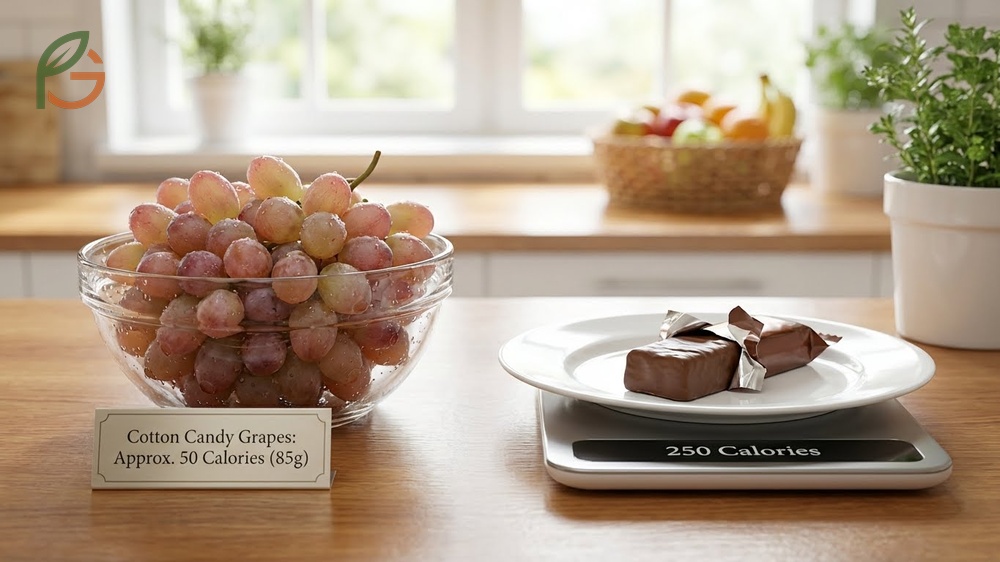
Cotton candy grapes contain approximately 50 calories per half-cup serving (about 85g)[3]. Despite their sugary name, they’re fat-free, cholesterol-free, and sodium-free—just like regular table grapes. The main nutritional difference lies in their sugar content and the natural compounds that create that distinctive flavor.
Research shows you’d need to eat about 100 grapes to consume the same calories found in one candy bar[2]. That puts things in perspective—cotton candy grapes are competing against candy bars and cookies, offering a naturally sweet alternative that also provides vitamins, minerals, and phytonutrients.
Like all grapes, cotton candy varieties contain beneficial plant compounds including polyphenols and antioxidants. The Concord grape parentage may actually boost certain antioxidant levels compared to standard table grapes, though specific studies on cotton candy grapes remain limited.
Calories in Cotton Candy Grapes
A standard serving size delivers the following nutritional breakdown per half-cup (85g): 50 calories, 15g total carbohydrates, 14g net carbs, 1g fiber, 1g protein, and 0g fat[10]. Some variation exists between different nutrition databases, with Grapery’s official data showing 35 calories per 10 grapes (49g)[11].
The calorie density sits at roughly 59-71 calories per 100g—slightly higher than regular green grapes at 69 calories per 100g, but lower than bananas at 89 calories per 100g. This makes them a relatively low-calorie snack compared to most desserts or processed sweets.
Sugar Content Comparison
Cotton candy grapes contain approximately 23 grams of sugar per cup, compared to 15 grams per cup in regular green or red table grapes[3]. That 8-gram difference comes entirely from natural sugars—no refined sugars or artificial sweeteners are added. The sweetness is achieved through selective breeding that concentrates naturally occurring grape sugars.
This table compares natural sugar content per cup serving across cotton candy grapes, regular grapes, and common fruits
| Fruit Type | Sugar per Cup | Calories per Cup | Suitable for Diabetics |
|---|---|---|---|
| Cotton Candy Grapes | 23g[3] | 100 cal | Moderation |
| Regular Green Grapes | 15g[3] | 62 cal | Yes |
| Mangoes | 24g | 99 cal | Moderation |
| Bananas | 25g | 134 cal | Moderation |
| Pomegranates | 24g | 144 cal | Moderation |
Health Consideration: Cotton candy grapes actually contain less sugar than superfoods like mangoes, bananas, and pomegranates. They’re suitable in moderation for diabetic individuals who need to regulate sugar consumption[3].
What Are Cotton Candy Grapes: Taste and Flavor Profile
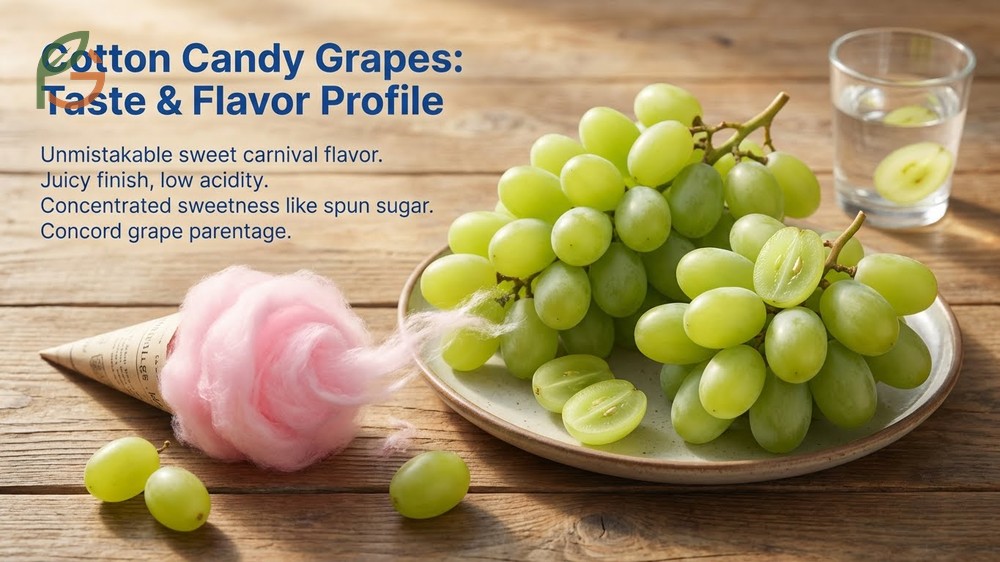
Cotton candy grapes deliver an unmistakable burst of sweetness that genuinely tastes like carnival cotton candy. The initial flavor explosion is followed by a mild, juicy finish that’s less acidic than most table grapes. Unlike regular green grapes that taste “watery” without much depth, these grapes pack concentrated sweetness reminiscent of spun sugar.
The unique flavor comes from the Concord grape parent, which naturally contains chemical compounds that create that signature “cotton candy” taste. Concord grapes typically have much lower sourness and acidity than table and wine grapes. Growing conditions and ripeness make a huge difference—not all cotton candy grapes from every harvest have identical flavor intensity.
When you bite into one, you’ll notice the color is slightly more orange-tinged compared to standard green grapes, indicating higher sugar concentration. The texture maintains the crisp, firm snap expected from California table grapes—no mushy flesh or seeds like the original Concord parent. The skin is thin and edible, another improvement over Concord grapes whose skins slip off after biting.
- Sweetness level: Significantly sweeter than regular grapes, with concentrated natural sugars creating an almost dessert-like experience
- Acidity: Very low tartness compared to wine grapes or even standard table grapes—minimal mouth-puckering sensation
- Texture: Firm and crisp with a satisfying snap, juicy interior without mushiness
- Skin: Thin, tender, and fully edible—no need to peel or spit out like some grape varieties
- Aftertaste: Clean finish with lingering sweetness, no bitter or astringent notes
- Aroma: Subtle fruity scent that’s slightly more pronounced than regular grapes, especially when ripe
What’s remarkable is that frozen cotton candy grapes intensify the experience even further. Many people describe frozen ones as nature’s candy—like eating tiny grape popsicles with that distinctive carnival flavor. The freezing process concentrates flavors and creates a sorbet-like texture that’s become hugely popular on social media.
When Are Cotton Candy Grapes in Season
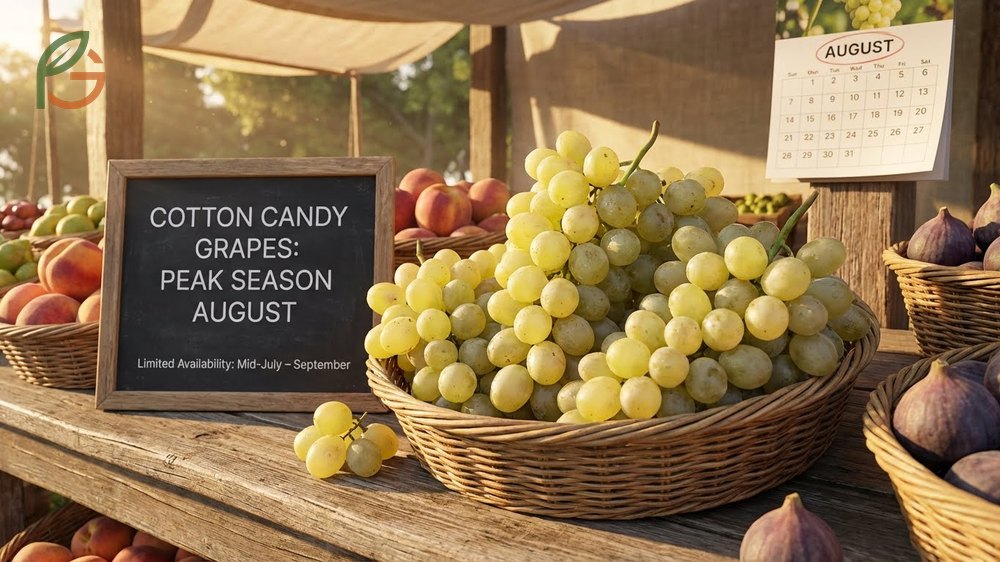
Cotton candy grapes are typically available from mid-July through September, with peak season hitting in August[4]. The harvest window is relatively short compared to standard grape varieties, making them a limited-time treat that generates significant buzz each year. Some early-season regions may see them appear in late June, while late-season supplies can stretch into early October depending on weather patterns.
The grapes are harvested in late summer to early fall in northern California, where the climate provides ideal growing conditions[12]. Berries typically ripen around mid-August in the Delano, California growing region where David Cain developed them. Weather variations, temperature fluctuations, and rainfall patterns can shift the harvest window by 1-2 weeks in either direction from year to year.
International growers extend availability somewhat. Global supplies come from South Africa (January-March), Chile (February-May), Egypt (July-August), Spain (August-October), and Brazil (November-December)[13]. However, U.S. consumers primarily see domestically grown California cotton candy grapes during the late summer window.
If you can’t find them during peak season, contact your store’s produce manager and ask them to stock cotton candy grapes. The Grapery encourages customers to make special requests, as not all stores automatically order specialty grape varieties despite strong demand[5].
Where to Buy Cotton Candy Grapes
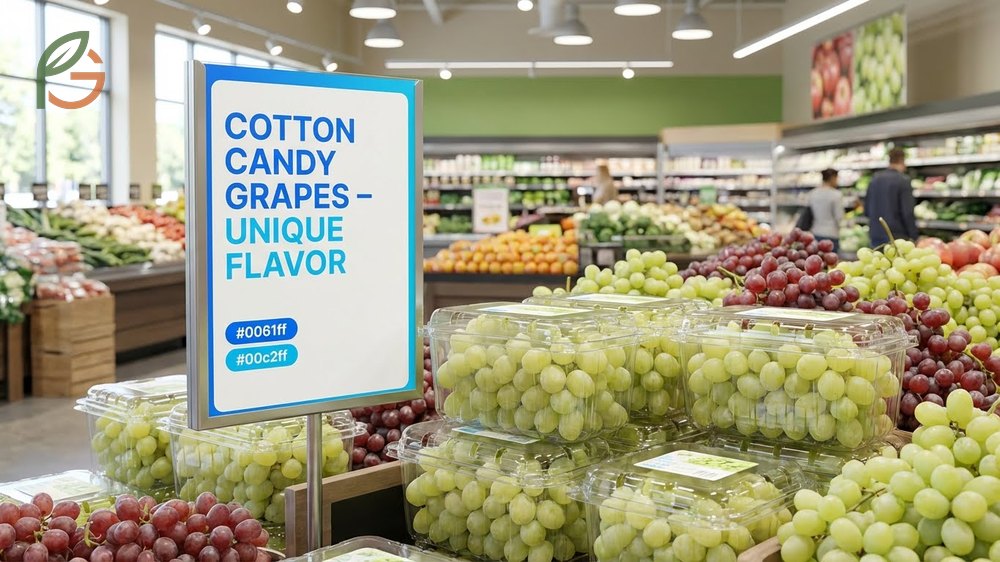
Cotton candy grapes are now available in all 50 U.S. states and several Canadian provinces including British Columbia, Alberta, Ontario, Quebec, and Newfoundland[5]. Most major grocery chains stock them during peak season, though availability varies by location and timing. You’ll typically find them in the produce section alongside regular grape varieties, often with special signage highlighting their unique flavor.
Major retailers carrying cotton candy grapes include Costco, Kroger, Safeway, Whole Foods, Trader Joe’s, Walmart, and many regional chains. Some shoppers report finding them at ALDI during limited promotional periods. Prices typically run higher than standard grapes—expect to pay $3-6 per pound depending on your region and the store.
The grapes come pre-packaged in various sizes, commonly in 2-pound bags or clamshell containers. Look for firm, plump grapes with slight orange-green coloring and avoid any with brown spots or wrinkled skin. Since they’re a premium product, they don’t sit on shelves as long as regular grapes—stores often sell out within days of restocking during peak demand.
- Check timing: Visit stores in August for best selection—early July or late September may have limited stock
- Shop early in the week: Fresh produce deliveries typically arrive Monday-Wednesday, giving you first pick
- Request special orders: If your store doesn’t carry them, ask the produce manager to order from their distributor
- Compare prices: Warehouse stores like Costco often offer better per-pound pricing than traditional grocers
- Buy and freeze: Purchase extra during peak season and freeze them for year-round enjoyment—they taste amazing frozen
Online options exist but shipping fresh grapes costs significantly more. Some specialty fruit delivery services offer cotton candy grapes during season, though you’ll pay premium prices plus shipping. For most people, waiting for local in-store availability makes more sense both economically and for fruit freshness.
Cotton Candy Grapes Growing Conditions
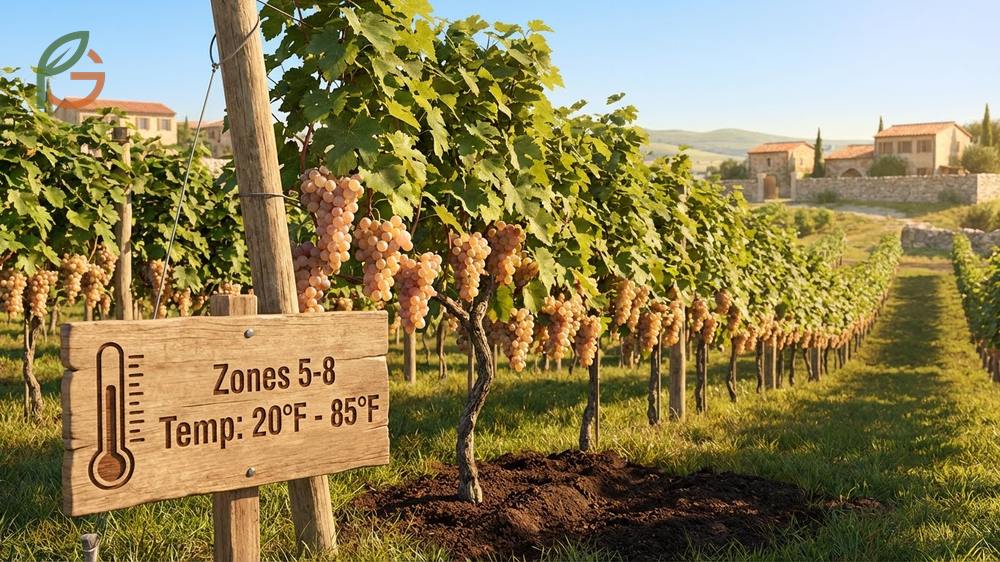
Cotton candy grapes thrive in USDA Growing Zones 5-8, tolerating temperatures down to 20°F (-6.7°C)[6]. They require warmer weather for optimal fruit development but can withstand cooler temperatures better than purely tropical fruit crops. The vines need protection from high winds and extremes of humidity or dryness, making Mediterranean-type climates ideal for cultivation.
Soil requirements are critical for success. Cotton candy grapes prefer rich, loamy soil with a neutral pH level between 5.5 and 6.5[6]. Well-draining soil is essential—poor drainage leads to root rot and other issues that damage plants. Before planting, test drainage and amend soil with compost or organic matter to improve structure and increase water retention.
Sunlight needs are non-negotiable. These grapes require at least six hours of direct sunlight daily to produce an abundant crop[6]. Plant in full-sun locations away from shade-casting structures or trees. Insufficient light results in poor fruit set, reduced sugar development, and increased disease susceptibility.
For home gardeners, start cotton candy grape vines between December and February depending on your location. Plant in well-draining soil enriched with fertilizer and add a layer of mulch around each vine for water retention. Erect stakes or trellises to guide growth—grapevines naturally climb and need support structures. Cotton candy grapes typically begin flowering and setting fruit after about two years of growth.
| Growing Factor | Requirement | Notes |
|---|---|---|
| USDA Zones | Zones 5-8[6] | Tolerates 20°F (-6.7°C) |
| Soil pH | 5.5-6.5[6] | Neutral, loamy soil preferred |
| Sunlight | 6+ hours direct sun[6] | Full sun essential for sugar development |
| Drainage | Well-draining required | Poor drainage causes root rot |
| Time to Fruit | 2 years from planting | First harvest after vine establishment |
Most home gardeners can’t grow true patented Cotton Candy grapes—the variety is trademarked and protected by plant patents. However, you can grow similar hybrid grapes by crossing Concord with table grape varieties. Just don’t expect identical results—it took David Cain a decade of professional breeding to achieve that perfect balance.
Conclusion
Cotton candy grapes represent a remarkable triumph of traditional plant breeding, proving that nature can still surprise us with new flavors without the need for genetic modification. By successfully marrying the nostalgic sweetness of the Concord grape with the crisp texture of the Princess variety, David Cain and his team created a fruit that appeals to both health-conscious adults and candy-loving children.
While they do contain slightly more natural sugar than standard table grapes, their 50-calorie count per serving makes them a far healthier alternative to processed sweets. With a short harvest season from mid-July to September, these green gems are a fleeting summer treat worth hunting for. Whether eaten fresh off the vine or frozen as a sorbet-like snack, cotton candy grapes offer a unique sensory experience that justifies their premium price tag.
Frequently Asked Questions
1. Are cotton candy grapes genetically modified (GMO)?
No, cotton candy grapes are 100% non-GMO. They were created through traditional cross-pollination methods between Concord grapes and Vitis vinifera (Princess) grapes. The process took over a decade of selective breeding, not genetic engineering in a lab.
2. Why do cotton candy grapes taste like cotton candy?
The distinct flavor comes from the Concord grape parentage, which naturally contains ethyl maltol—a chemical compound also found in cotton candy. Breeders selected specific offspring that maximized this vanilla-like flavor profile while eliminating the tartness usually associated with grapes.
3. Are cotton candy grapes healthy despite the sweet taste?
Yes. While they have about 12% more natural sugar than regular grapes (23g vs 15g per cup), they are packed with antioxidants, vitamins C and K, and are fat-free. A serving contains only about 50 calories, making them a nutritious substitute for actual candy or desserts.
4. Do cotton candy grapes have seeds?
No, cotton candy grapes are seedless. Although they are bred from Concord grapes (which have seeds), the “embryo rescue” technique used during breeding ensures the resulting plants produce seedless fruit, maintaining the desirable texture of table grapes.
5. Can I grow cotton candy grapes from seeds found in the fruit?
No. First, the grapes are seedless, so you won’t find viable seeds. Second, the variety is patented and propagated through cuttings, not seeds. Even if you found a seed, it would not produce a plant identical to the parent due to genetic variation.
6. How should I store cotton candy grapes to keep them fresh?
Store them unwashed in the refrigerator, preferably in the crisper drawer. Keep them in their original ventilated bag or a container that allows airflow. Wash them only right before eating to prevent moisture buildup, which accelerates spoilage. They typically last 5-7 days.
7. Why are cotton candy grapes more expensive than regular grapes?
The higher price reflects the intensive labor required for their cultivation, the years of research and development (R&D) invested by International Fruit Genetics, and the licensing fees associated with the patented variety. Additionally, their short seasonal availability creates high demand relative to supply.





