
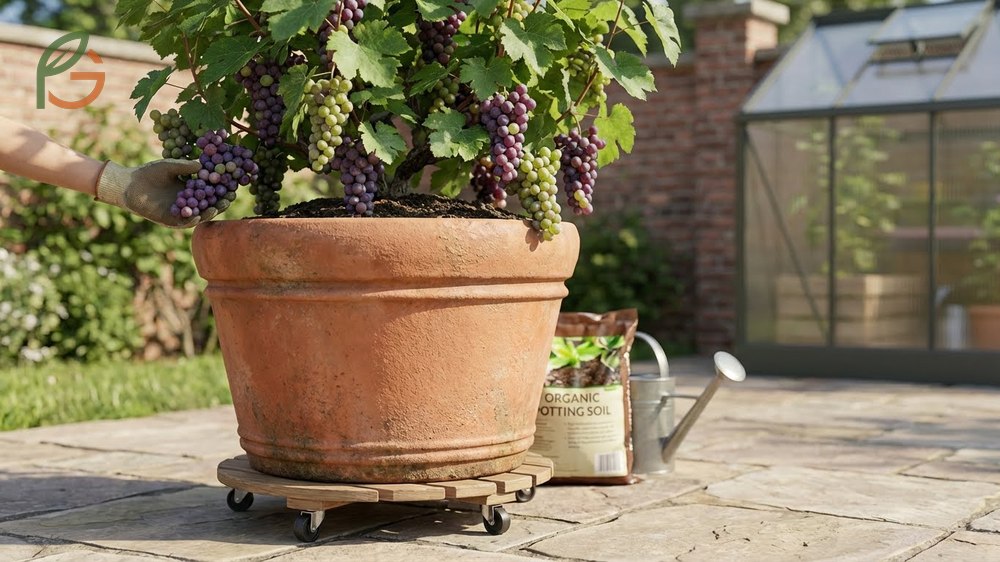
Growing grapes in pots is entirely achievable with the right container size and variety selection. Research from Michigan State University demonstrates that grapevines thrive in containers of at least 15-20 gallons[1], measuring 16-18 inches deep and 18-24 inches wide. What often gets overlooked is that container cultivation actually offers advantages over in-ground planting, including mobility for winter protection and better soil control. FruitGarden synthesizes current horticultural research to help you successfully grow grapes in limited spaces.
Quick Answer
- Use containers that are 15-20 gallons[1] minimum (16-18 inches deep, 18-24 inches wide)
- Choose compact varieties like Pixie grapes (18-24 inches tall[1]) or self-pollinating types like Somerset Seedless
- Plant in light, well-draining potting mix—never use garden soil[1]
- Water when soil dries slightly between waterings to prevent root rot
Growing Grapes in Pots
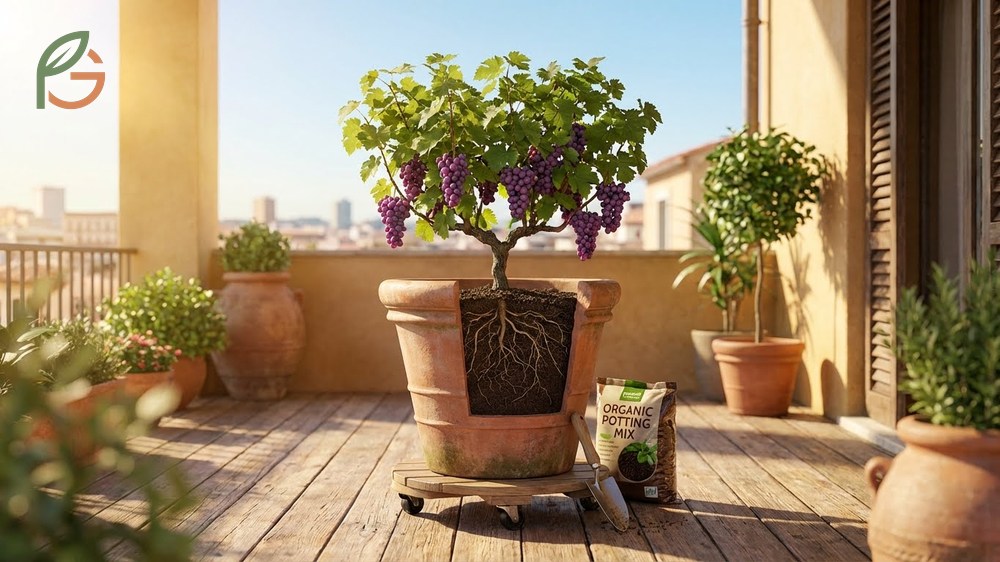
Container grape cultivation works because vines adapt their root systems to confined spaces. Most grape varieties don’t require dwarf genetics to succeed in pots—you can prune standard varieties back annually to fit your needs. Studies show that grapes tolerate a range of soil types as long as drainage remains excellent[2].
The key advantage of container growing is mobility. You can move pots to capture maximum sunlight throughout the day. In colder climates, you’ll also protect vines more easily by relocating containers to sheltered areas during winter.
Containers restrict root growth, which naturally controls vine size. This makes pruning less intensive compared to in-ground vines that can spread aggressively. You’ll still need to provide vertical support, but on a smaller scale.
Best Grape Varieties for Pots
Pixie grapes represent the most container-friendly option available. These naturally dwarfing vines grow only 18-24 inches tall and wide[1], producing fruit the size of currants[3]. A genetic mutation flips their growth switches so tendrils become reproductive cells instead of vegetative ones, resulting in everbearing harvests throughout the season[3].
For traditional-sized grapes, select self-pollinating varieties with moderate height and spread. Somerset Seedless produces medium-sized grapes with strawberry-like flavor and reaches up to 70 inches in height[4]. Mars Seedless offers good pest resistance and stays shorter, making it ideal for smaller patios.
- Pixie (Pinot Meunier) – Dwarf wine grape, 18-24 inches tall, everbearing, zone 5-tolerant in pots[1]
- Somerset Seedless – Medium-sized fruit, strawberry flavor, moderate height (up to 70 inches)[4]
- Mars Seedless – Purple grapes, compact growth, excellent pest resistance[4]
- Concord – Classic flavor, adapts well to containers with annual pruning
- Centennial – Productive, tolerates container restrictions, requires 20+ gallon pots
From My Experience: My cousin in Guadalajara, Mexico tried growing Flame grapes in containers on his sunny patio in spring 2024. The vines produced their first small clusters by late summer—about 4 months after planting—which matched the accelerated fruiting typical of container cultivation.
Pot Size for Grapes
Minimum container size is 15-20 gallons[1], with dimensions of at least 16-18 inches deep and 18-24 inches wide. This provides adequate root space for healthy growth. Some experienced growers recommend 30 liters (approximately 8 gallons) as an absolute minimum, though 75 liters (approximately 20 gallons) produces better results[5].
Material matters as much as size. Avoid dark-colored pots that absorb excessive sunlight and heat, which can damage roots[1]. Wood containers work optimally because they insulate roots from temperature extremes. Terracotta and light-colored plastic also perform well.
Drainage holes are non-negotiable. You’ll need multiple holes in the bottom to prevent waterlogging. Place a small piece of screen over each hole before adding stones to prevent soil from washing through.
Important note: Don’t upsize containers too quickly. Grapes establish better when slightly root-bound initially, then can be repotted to larger containers after 2-3 years when root systems fill the space.
Planting Grapes in Containers
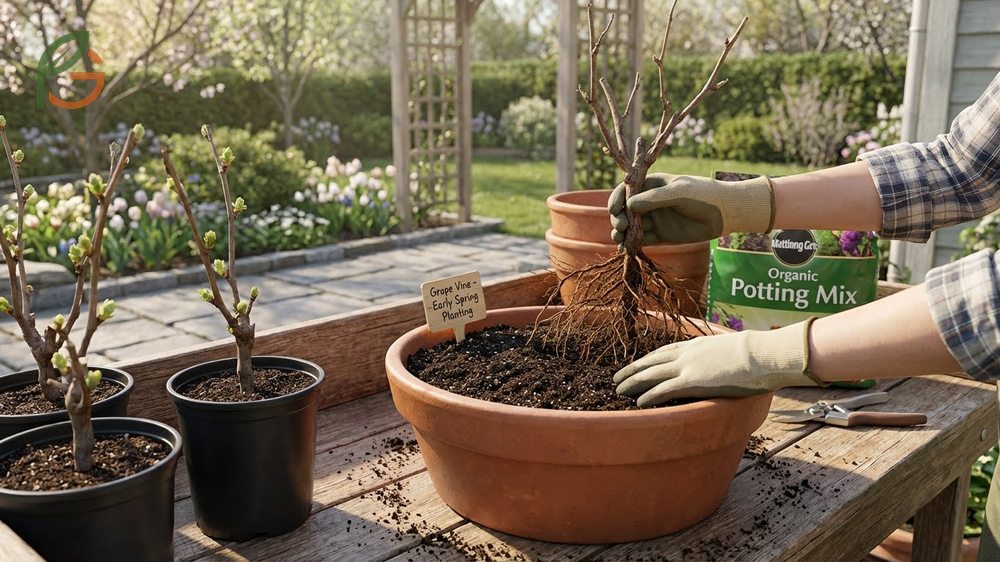
Proper planting sets the foundation for years of production. Start with healthy, bare-root or containerized grape plants from reputable nurseries. Bare-root vines should show no signs of mold or dried-out roots.
Timing matters—plant in early spring after the last frost when vines are still dormant. This gives roots the entire growing season to establish before winter arrives. Fall planting works in mild climates but increases cold damage risk in zones 6 and colder.
Soil Mix for Container Grapes
Never use garden soil in containers. It compacts too densely, blocking oxygen from reaching roots[1]. Instead, choose a light potting mix specifically formulated for containers.
The Royal Horticultural Society recommends loam-based potting media like John Innes No. 3[2] for optimal results. Successful growers often use planter mix containing coconut coir combined with perlite for enhanced drainage.
Add compost annually to replenish nutrients. A 2-inch layer of organic mulch like pine straw or aged wood chips helps retain moisture and enriches soil over time. Avoid fresh wood chips initially as they may temporarily reduce available nitrogen.
Planting Steps
- Cover the bottom of your pot with small stones until fully covered—this improves drainage[1]
- Add potting mix to fill the container about halfway, leaving room for the root ball
- Remove the grape plant from its nursery container and gently fan out the roots—spread them outward to prevent girdling as the plant matures[1]
- Position the vine at the same depth it grew at previously—don’t bury the crown deeper than the original planting line[1]
- Fill around roots with potting mix, firming gently to eliminate air pockets but avoid compacting too heavily
- Water thoroughly until water runs from drainage holes—you may need to add more soil as it settles[1]
- Apply 2-3 inches of mulch evenly across the surface, keeping it pulled back slightly from the trunk[1]
- Install your support stake or small trellis system immediately after planting
Caring for Potted Grapes
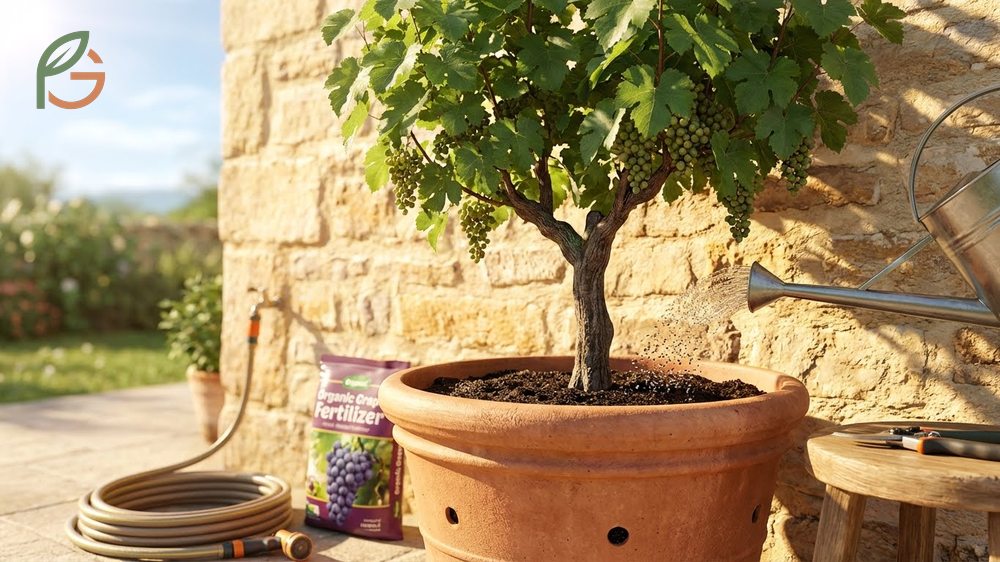
Container grapes require consistent attention to watering and feeding since pots lose moisture and nutrients faster than ground soil. Position containers where they’ll receive full sun—at least 6-8 hours daily. Against south or southwest-facing walls works ideally, providing heat reflection and wind protection[2].
Pruning becomes simpler with container cultivation. During the first year, focus on developing a strong single trunk. In subsequent years, prune annually in late winter while vines remain dormant. This controls size and encourages fruiting wood development.
Watering Potted Grapes
Grapevines are moderately drought-tolerant but perform best with consistently moist soil that never becomes waterlogged. During the first growing season after planting, water only when the top 2 inches of soil feels dry. Allow slight drying between waterings to prevent root rot.
Increase watering frequency during active fruit production. Grapes need more moisture when berries are swelling and ripening. However, reduce watering as the harvest season ends to discourage tender new growth that won’t harden off before frost.
Deep, infrequent watering works better than frequent shallow applications. Water until it flows from drainage holes, ensuring the entire root zone gets saturated. Container grapes in hot climates may need daily watering during peak summer.
Watering tip: Check moisture by inserting your finger 2-3 inches into the soil. If it feels dry at that depth, it’s time to water. Morning watering reduces disease risk by allowing foliage to dry before evening.
Fertilizing Container Grapes
Container grapes need regular feeding because nutrients leach quickly with each watering. Apply balanced fertilizer at half-strength every 2-3 weeks during active growth[6]. Flush pots monthly with plain water to prevent salt buildup from accumulated fertilizers.
Switch to high-potassium fertilizer like tomato feed when fruit begins developing. The Royal Horticultural Society recommends feeding dessert grapes every two weeks with tomato fertilizer from one month after spring growth starts until grapes begin ripening[2].
Stop fertilizing 6-8 weeks before your area’s first expected frost. This allows vines to harden off properly for winter. Late-season feeding encourages soft growth vulnerable to cold damage.
- Early spring (February-March) – Apply general-purpose fertilizer like Growmore as growth begins
- Active growth phase (April-July) – Feed every 2-3 weeks with balanced liquid fertilizer at half-strength[6]
- Fruit development (June-August) – Switch to high-potassium tomato feed biweekly[2]
- Late season (September-October) – Stop fertilizing to promote hardening off
- Winter (November-January) – No feeding required during dormancy
Trellis for Potted Grapes
Most grape varieties need vertical support even in containers. A simple four-foot stake works for compact varieties like Pixie[1]. Standard varieties require more substantial support systems.
For larger container vines, install a simple two-wire system. Attach the first wire 36-40 inches above the soil line and a second wire at 60-72 inches. This provides adequate space for vertical shoot positioning and fruit development.
Attach vines to supports using soft ties like Velcro garden straps or cloth strips. Don’t tie tightly—allow room for trunk expansion[1]. Zip ties work but check them regularly and loosen as needed to prevent girdling.
Alternative support includes decorative metal obelisks or fan-shaped trellises attached to walls. These work particularly well on patios where aesthetics matter. Ensure any support is secured firmly—mature vines with fruit can become quite heavy and act like sails in strong winds.
Winterizing Potted Grapes
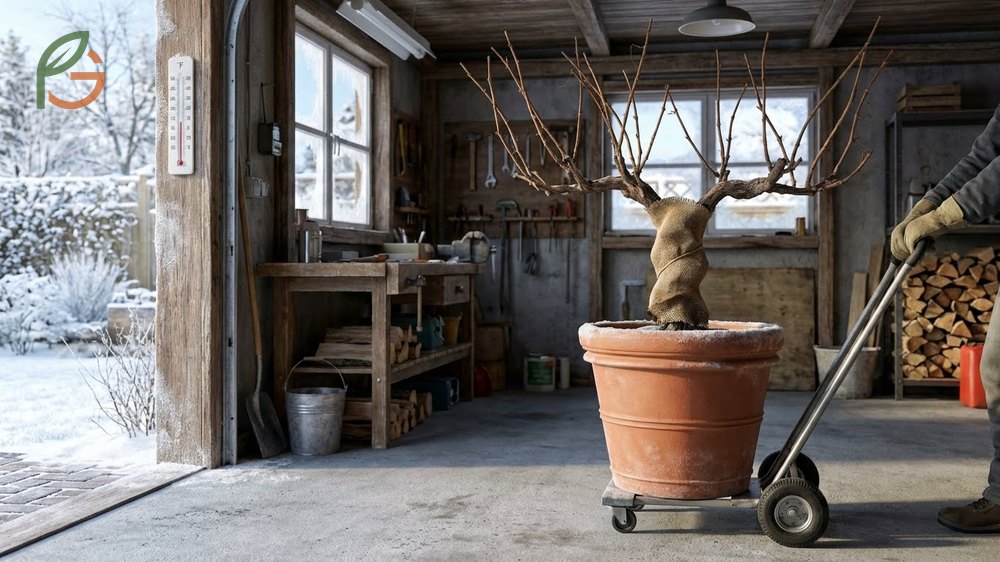
Container grapes face greater winter risk than in-ground vines because roots freeze faster in exposed pots. Pixie grapes tolerate zone 5 temperatures when grown in containers[3], while most standard varieties need protection below 15-20°F (-9 to -7°C).
The simplest protection method involves moving containers to sheltered locations. Unheated garages, sheds, or covered porches work well. Vines can tolerate near-freezing temperatures during dormancy but roots shouldn’t experience repeated freeze-thaw cycles.
If you can’t move pots indoors, insulate them in place. Wrap containers with burlap, bubble wrap, or old blankets secured with twine. This moderates temperature swings. For extra protection, group multiple pots together and surround them with bags of leaves or straw bales.
For cold-hardy varieties in zones 5-7, you can protect vines using the air-layer covering method. After pruning in late fall, lay vines down and create hoops over them using flexible wire or plastic tubing about 2 feet high. Cover with two layers of horticultural frost cloth. The trapped air insulates vines, keeping temperatures 10-15°F (6-8°C) warmer than ambient air even when outside temperatures drop to 5°F (-15°C).
- Stop fertilizing 6-8 weeks before first frost to allow hardening off
- Reduce watering in late fall but don’t let soil dry completely—hydrated plants handle cold better
- Prune vines after leaves drop but before temperatures consistently stay below freezing
- Move containers to protected locations like unheated garages or against south-facing walls
- Insulate pots with bubble wrap, burlap, or styrofoam sheets if leaving outdoors
- Mulch soil surface heavily (4-6 inches) with straw or shredded leaves for root insulation
- For extremely cold zones (4 and below), consider bringing containers into cool basements where temperatures stay 35-45°F (2-7°C)
Winter watering: Check containers monthly during winter. Water lightly if soil becomes bone-dry, but only when temperatures are above 40°F (4°C). Frozen wet soil expands and can crack containers.
Conclusion
The evidence is clear: growing grapes in pots succeeds when you match container size to variety needs, use proper potting mix, and provide consistent care. Container cultivation offers unique advantages including mobility for winter protection, better drainage control, and the ability to grow grapes in spaces where in-ground planting isn’t possible.
Current horticultural guidance emphasizes starting with appropriate containers of 15-20 gallons, selecting self-pollinating varieties suited to your climate, and maintaining regular watering and feeding schedules. FruitGarden provides research-based information to help you cultivate productive grapevines regardless of your available space.
Frequently Asked Questions
Can you grow grapes in a pot successfully?
Yes, you can successfully grow grapes in pots. Research from Michigan State University confirms that grapevines adapt well to containers of at least 15-20 gallons with proper drainage. Most grape varieties don’t require dwarf genetics—standard varieties work when pruned annually to manage size. Container growing actually offers advantages like mobility for winter protection and easier soil management.
What size pot do you need to grow grapes?
Grape containers should be at least 15-20 gallons in volume, measuring 16-18 inches deep and 18-24 inches wide. Some growers use 8-gallon pots as an absolute minimum, but 20-gallon containers produce better results. Avoid dark-colored pots that absorb too much heat. Wood, terracotta, and light-colored plastic work best for root temperature regulation.
How often should you water grapes in containers?
Water potted grapes when the top 2 inches of soil feels dry to the touch. During hot summer months, containers may need daily watering. During fruit development, increase watering frequency but reduce it in late fall. Deep watering until water flows from drainage holes works better than frequent shallow applications. Consistently moist but never waterlogged soil produces the best results.
What are the best grape varieties for growing in pots?
Pixie grapes are ideal for containers, growing only 18-24 inches tall with everbearing harvests. For traditional-sized grapes, choose self-pollinating varieties like Somerset Seedless (strawberry-flavored), Mars Seedless (compact with pest resistance), or Concord (classic flavor). All these varieties adapt well to container restrictions when pruned annually.
How do you winterize potted grape vines?
Winterize potted grapes by moving containers to sheltered locations like unheated garages where temperatures stay above 15°F (-9°C). If moving isn’t possible, wrap pots with burlap or bubble wrap for insulation. Mulch the soil surface heavily with 4-6 inches of straw. Reduce watering but don’t let soil dry completely. For zones 4 and below, bring containers into cool basements maintained at 35-45°F (2-7°C).
What type of soil should you use for container grapes?
Use light, well-draining potting mix specifically formulated for containers—never garden soil, which compacts too densely. Loam-based mixes like John Innes No. 3 work optimally. Many successful growers combine planter mix containing coconut coir with perlite for enhanced drainage. Add compost annually to replenish nutrients and apply 2-3 inches of organic mulch to retain moisture.
Do potted grape vines need a trellis?
Most grape varieties need vertical support even in containers. Compact varieties like Pixie require only a simple four-foot stake. Standard varieties need more substantial support like a two-wire system with wires at 36-40 inches and 60-72 inches above the soil. Use soft ties like Velcro straps or cloth to attach vines, leaving room for trunk expansion. Secure supports firmly since mature vines with fruit can become heavy.





