
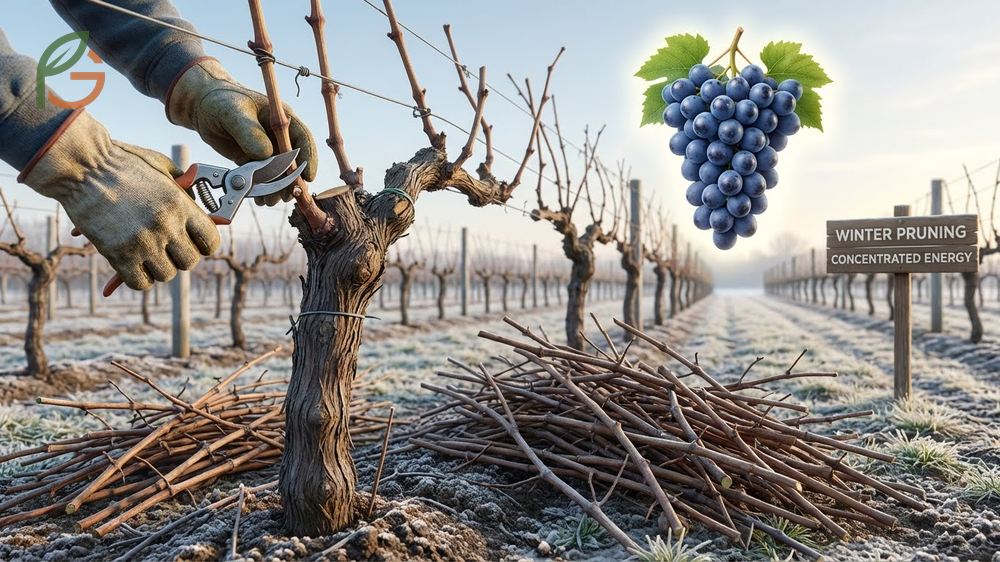
How to prune grape vines effectively requires removing 90% of last year’s growth during winter dormancy, typically between late January and March. Research shows that proper pruning concentrates the vine’s energy into fewer, higher-quality grape clusters while preventing disease and maintaining manageable vine size. FruitGarden combines university extension research with practical growing experience to help you master this essential vineyard skill.
Quick Answer
- Prune during late winter dormancy (January-March) before buds swell to minimize sap bleeding[1]
- Remove 90% of last year’s growth, leaving only 40-60 buds per mature vine[2]
- Choose between cane pruning (flexible, labor-intensive) or spur pruning (faster, easier to mechanize)[3]
- Use sharp bypass pruners for cuts up to 0.75 inches and loppers for larger canes up to 2 inches[4]
How to Prune Grape Vines
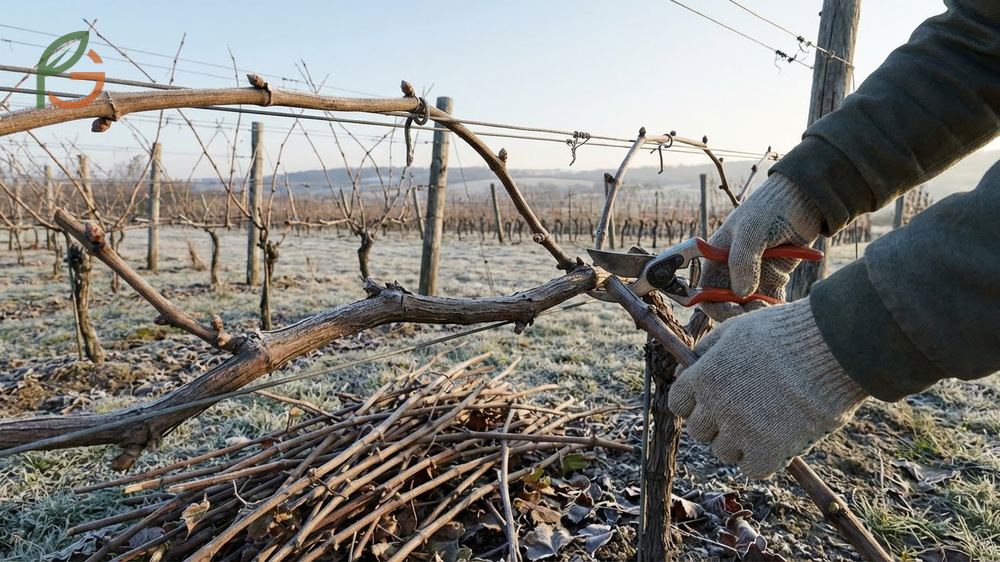
Pruning grape vines isn’t just about cutting back growth—it’s about directing the plant’s energy toward producing high-quality fruit. Each winter, mature vines produce extensive cane growth that must be reduced by roughly 90% to maintain vine balance and fruit quality. This dramatic reduction might seem extreme, but it’s essential for preventing overcropping and disease while ensuring grapes receive adequate sunlight and airflow.
The pruning process focuses on removing most of the previous year’s growth while retaining specific canes or spurs that’ll produce this season’s fruit. You’ll identify one-year-old canes by their smooth, tan bark, which differs from older wood’s darker, peeling texture. These young canes contain the buds that’ll develop into fruit-bearing shoots.
Research across Eastern U.S. vineyards demonstrates that pruning should occur during the dormant season, typically spanning November through April depending on your region[3]. Most growers target late winter (January-March) because earlier pruning increases frost damage risk, while later pruning causes vines to “bleed” sap—though this bleeding doesn’t harm established plants.
Understanding Grape Vine Lifecycle
Grape vines follow a predictable annual cycle that dictates when and how you should prune. During spring, buds break and shoots emerge, developing leaves and flower clusters. Summer brings active growth as shoots elongate, grapes form, and vines undergo veraison (color change).
Fall marks harvest time and the beginning of dormancy as leaves drop and vines redirect energy to their root systems. Winter dormancy is when pruning makes the most sense—the vine’s above-ground portions are inactive, wounds heal slowly but cleanly, and you can clearly see the vine’s structure without foliage obscuring your view.
Essential Tools for Pruning
Quality tools make pruning faster, easier, and healthier for your vines. Sharp, well-maintained equipment creates clean cuts that heal quickly, while dull or incorrect tools crush stems and invite disease.
- Bypass hand pruners: Your primary tool for cuts up to 0.75 inches diameter. Bypass blades (which slide past each other like scissors) create cleaner cuts than anvil-style pruners that crush stems
- Bypass loppers: Two-handed cutters for canes 0.75-2 inches thick. Look for 24-26 inch handles for leverage without excessive weight[5]
- Pruning saw: Curved or straight blade for removing old trunks and extra-thick canes that exceed lopper capacity
- Sharpening stone: Regular sharpening maintains cutting performance and reduces effort
- Rubbing alcohol or bleach solution: Disinfect tools between vines to prevent disease spread, especially if you’ve cut diseased wood
- Gloves and safety glasses: Protect hands from thorns and eyes from flying debris
Important Note: Always choose bypass-style blades over anvil-style for grape pruning. Bypass blades create clean, scissor-like cuts that heal faster and reduce infection risk, while anvil blades crush tissue and leave ragged wounds[4].
Cane Pruning vs Spur Pruning
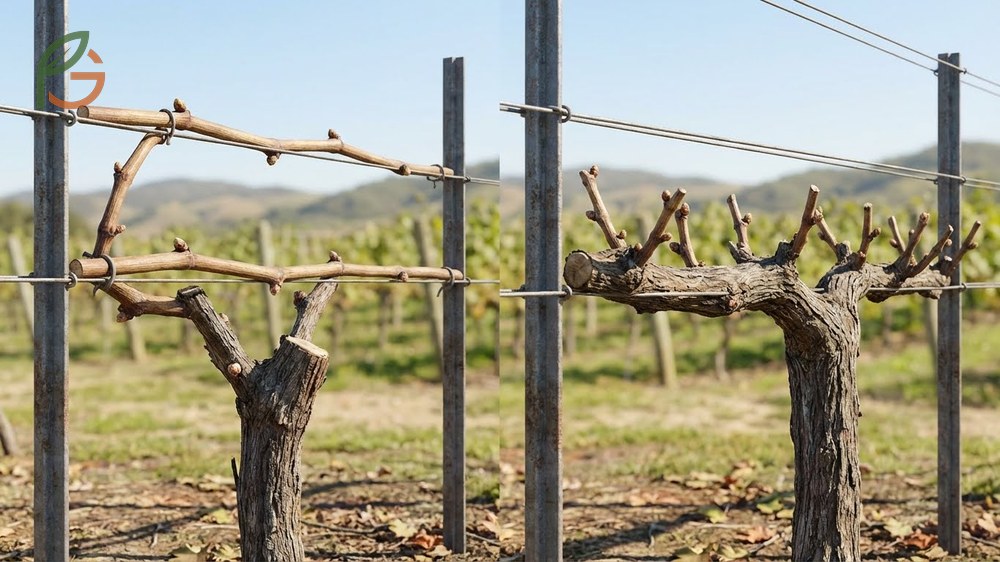
The two primary pruning methods—cane pruning and spur pruning—each offer distinct advantages depending on your grape variety, trellis system, and available labor. While both remove roughly 90% of last year’s growth, they differ in execution and the resulting vine structure.
Cane pruning involves selecting 2-4 entire canes from last year’s growth, retaining 10-15 buds per cane, and removing everything else. Spur pruning keeps a permanent cordon (horizontal arm) and cuts all canes back to 2-3 bud spurs distributed along this cordon. Neither method produces dramatically different yields across most varieties, so the choice often comes down to practical considerations[3].
This table compares cane pruning and spur pruning across labor requirements, mechanization potential, cluster positioning, and ideal vineyard spacing to help growers select the appropriate method
| Factor | Cane Pruning | Spur Pruning |
|---|---|---|
| Labor Hours per Acre | 41 hours[6] | 25-30 hours (fewer decisions per vine) |
| Mechanization Potential | Difficult to mechanize | Easily mechanized or semi-mechanized |
| Decision Complexity | Fewer, more critical decisions (selecting 2-4 best canes) | Many simple decisions (cutting to uniform spur length) |
| Cluster Position | More variable, clusters may overlap | Better separation, easier harvesting[6] |
| Best for Vineyard Spacing | Closer-spaced plantings | Wider spacing (rows >5 feet)[3] |
Cane Pruning Method
Start by identifying the healthiest canes from last year’s growth—look for smooth, pencil-thick to finger-thick wood with tight bud spacing. Select 2-4 canes depending on vine vigor, choosing ones that originate close to the trunk or head for easier management.
Cut selected canes to retain 10-15 buds each (typically 4-6 feet long), then remove all other canes completely. Leave 2-4 renewal spurs (short canes cut back to 2 buds) near the trunk—these’ll provide next year’s fruiting canes. Tie retained canes to your trellis wire, positioning them horizontally or at a slight upward angle.
Spur Pruning Method
Spur pruning works with an established cordon—a permanent horizontal arm extending along the trellis wire. Once your cordon is established (usually by year 3-4), pruning becomes a straightforward process of cutting all canes back to uniform 2-3 bud spurs.
Space spurs 4-6 inches apart along the cordon, removing weak or poorly positioned shoots entirely. Each spur should originate from the top or sides of the cordon, not the bottom where shoots grow downward. This method’s simplicity makes it popular for commercial vineyards where labor efficiency matters, and growers report it maintains vine balance better by allowing higher bud counts without overcropping[6].
From My Experience: My cousin in Guadalajara, Mexico switched from cane to spur pruning on his 2-acre Flame Seedless vineyard in February 2023. Pruning time dropped from 6 days to 3.5 days, and cluster spacing improved noticeably—matching the research findings about better fruit separation with spur systems.
When to Prune Grape Vines
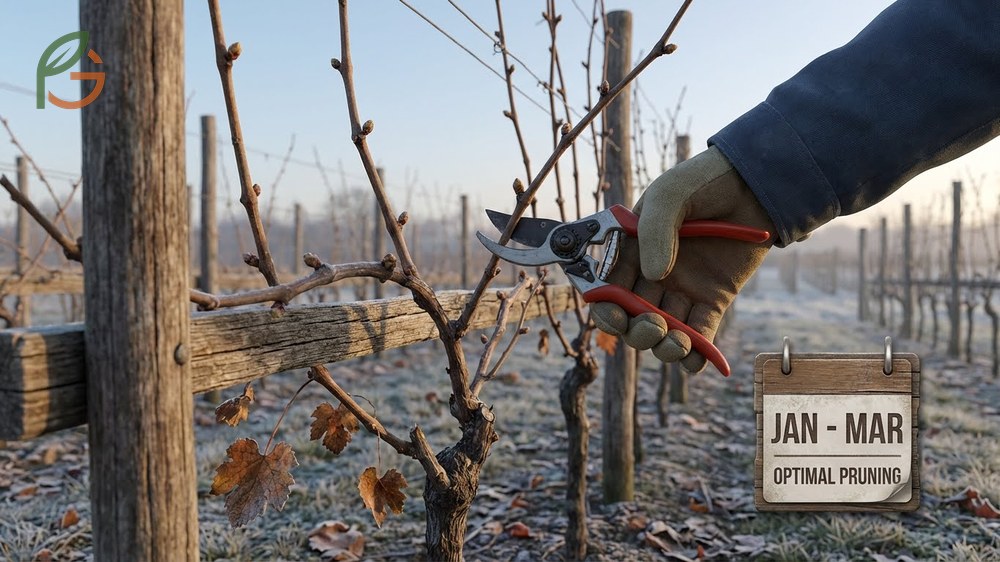
Timing your pruning correctly protects vines from cold damage while avoiding excessive sap loss. The traditional window runs from leaf drop in late fall through bud break in spring, but most experienced growers narrow this to late January through March for optimal results[1].
Earlier pruning (November-December) increases vine vulnerability to winter injury, while very late pruning (after buds swell) causes dramatic sap bleeding from cuts. This bleeding won’t kill mature vines, but it wastes stored energy and creates a mess. Regional climate plays a huge role—cold-climate growers wait until March to avoid the worst cold, while warm-region vineyards can start in January.
Winter Dormancy Pruning
Winter dormancy pruning is your main annual intervention, removing 90% of last year’s growth to set up this year’s crop. Wait until temperatures consistently stay above -10°F to -15°F, as colder conditions make wood brittle and increase breakage during cutting[2].
Begin by removing dead, diseased, or damaged wood. Next, eliminate weak, thin canes (smaller than pencil diameter) since these won’t produce quality fruit. Then apply your chosen method (cane or spur pruning) to establish the fruiting wood for the upcoming season.
In frost-prone areas, consider “double-pruning”—prune canes long during winter (leaving extra buds), then after bud break, cut back to final length. This delays bud break on basal buds by several days, potentially dodging late spring frosts[1].
Summer Thinning Grapes
Summer pruning addresses issues that emerge during active growth. While you can’t do major structural work in summer, targeted thinning improves fruit quality and vine health. Focus on removing suckers (shoots emerging from below the graft union or from the trunk), water sprouts (vigorous vertical shoots), and excessive foliage that blocks sunlight from fruit clusters[7].
Thin foliage around developing grape clusters to improve air circulation, which reduces fungal disease pressure like powdery mildew and botrytis. Don’t overdo it—leaves power photosynthesis and ripen fruit. Remove just enough to create dappled sunlight on clusters, not full sun exposure.
Timing Tip: Schedule summer pruning for late June through early August when shoots are semi-hardened but still flexible. Avoid pruning within 3-4 weeks of expected harvest, as this can stress vines during the critical ripening period.
Pruning Mature Grape Vines
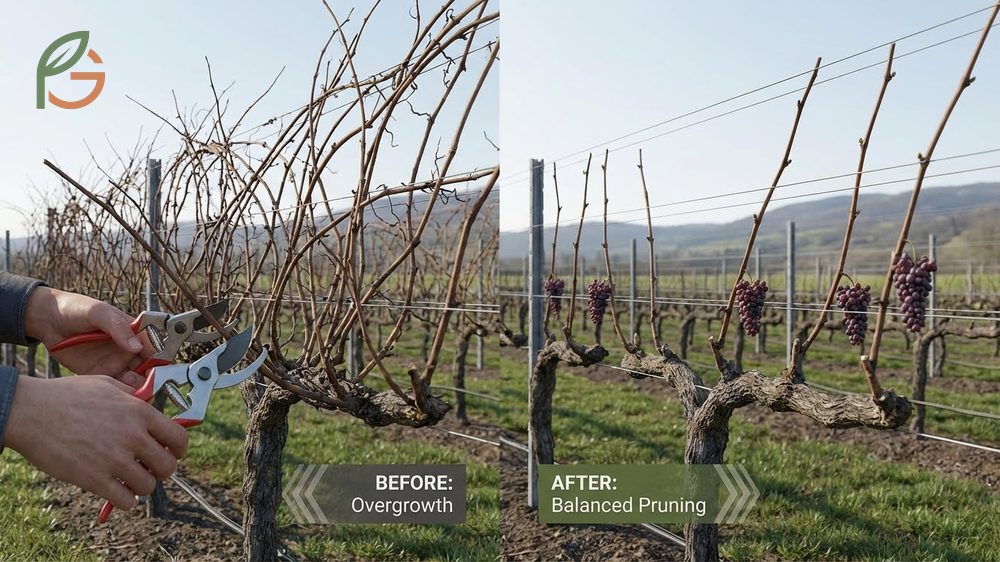
Mature vines (4+ years old) require consistent annual pruning to maintain productivity and prevent overgrowth. The fundamental approach remains the same—remove 90% of last year’s growth—but you’ll also watch for signs that pruning levels need adjustment.
Balanced vines produce shoots 4-6 feet long with clusters positioned in the lower third of shoots. If shoots consistently grow beyond 8 feet, you’re leaving too many buds and should prune harder next winter. Conversely, if shoots barely reach 3 feet, you’ve over-pruned and should retain more buds.
Age eventually affects even well-maintained vines. After 15-20 years, trunks develop thick, gnarly bark and cordons may show dead sections. Renewal pruning rejuvenates aging vines by selecting a vigorous young shoot near the base, training it as a new trunk, and gradually removing the old trunk over 2-3 seasons.
- Excessive shoot growth (>8 feet): Reduce bud count by 20-30% to redirect energy into fruit quality rather than vegetative growth
- Stunted shoots (<3 feet): Increase retained buds by 10-20% or improve soil fertility and irrigation to boost vine vigor
- Small, sparse grape clusters: Often indicates over-cropping from leaving too many buds; prune harder next winter
- Dead sections on cordons: Cut back to live wood and retrain new cordons from vigorous shoots, or switch to head training
- Dense, tangled canopy: Increase spur spacing or switch pruning methods to create better shoot positioning and airflow
Grape Vine Pruning Mistakes
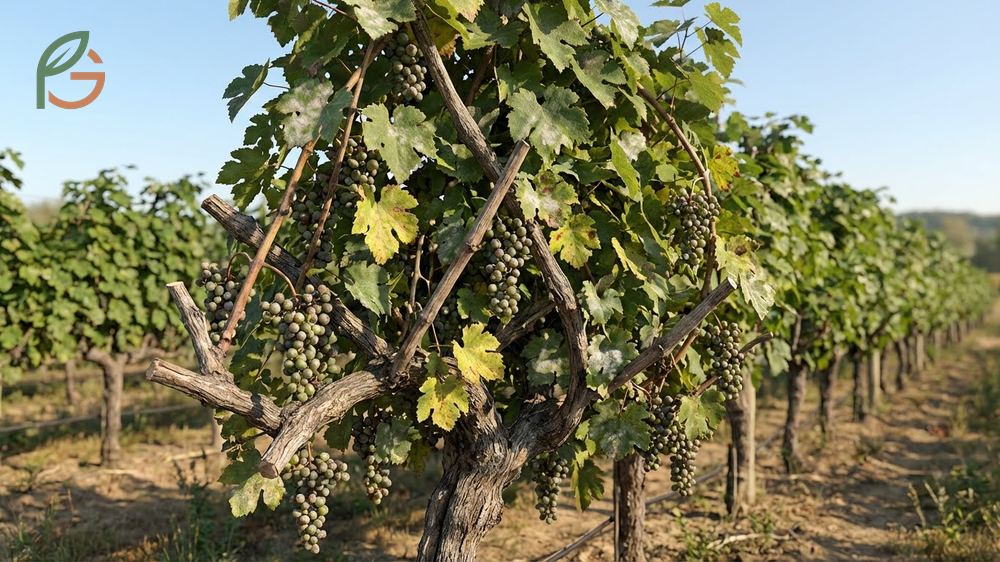
Even experienced growers fall into common pruning traps that reduce yields, invite disease, or create long-term structural problems. Recognizing these mistakes helps you avoid years of reduced productivity.
Leaving too much wood is the most frequent error—beginners often can’t believe they should remove 90% of growth, so they prune conservatively. This leads to overcropping (too many small, low-quality grape clusters) and dense canopies prone to fungal diseases. Trust the research and cut aggressively.
Using dull or dirty tools creates ragged cuts that heal slowly and spread diseases between vines. Irregular cuts from poor-quality shears expose plant tissues to infections and stress vines unnecessarily[4]. Sharpen pruners every 4-6 hours of use and disinfect between vines if you encounter diseased wood.
- Skipping annual pruning: Uncontrolled growth compromises production, grape quality, and vine health. Missing even one year creates years of recovery work[4]
- Pruning too early (November-December): Increases cold injury risk and exposes fresh cuts to winter’s harshest temperatures
- Leaving weak, thin canes: Pencil-thin or smaller canes produce poor fruit; remove these entirely and keep only robust, well-positioned growth
- Incorrect cut placement: Cut just above buds at a slight angle; cutting too far above (>0.5 inches) leaves stubs that die back and invite rot
- Changing training systems mid-vine life: Altering established structure stresses vines severely. If you must switch, do it gradually over 2-3 seasons[4]
- Ignoring vine balance: Adjust pruning based on last year’s shoot growth; don’t blindly follow formulas without observing vine response
Can You Kill a Grape Vine by Pruning? It’s nearly impossible to kill an established grape vine through over-pruning alone. Vines are incredibly resilient and will regrow vigorously even if cut to the ground. However, severe pruning combined with other stresses (drought, disease, extreme cold immediately after cutting) can weaken vines significantly.
Conclusion
The evidence is clear: successful grape growing depends on aggressive annual pruning that removes 90% of last year’s growth and concentrates vine energy into producing high-quality fruit. Whether you choose cane or spur pruning, timing your cuts for late winter dormancy and using sharp bypass tools will set you up for productive harvests year after year.
Master these fundamentals and you’ll develop the confident eye needed to assess each vine’s needs. FruitGarden continues tracking the latest university extension research to bring you practical, science-based growing guidance for backyard and small-scale vineyards.
Frequently Asked Questions
When should you prune grape vines?
Prune grape vines during winter dormancy, ideally between late January and March before buds begin swelling. This timing minimizes cold damage risk while avoiding excessive sap bleeding that occurs with later pruning. In frost-prone areas, wait until after the coldest temperatures pass to reduce winter injury potential.
How much should you cut back grape vines?
Remove approximately 90% of last year’s growth, leaving 40-60 buds total on a mature vine depending on its vigor. This dramatic reduction seems extreme but it’s essential for concentrating energy into fewer, higher-quality grape clusters while maintaining manageable vine size and preventing disease.
What’s the difference between cane and spur pruning?
Cane pruning retains 2-4 long canes with 10-15 buds each while removing everything else, requiring more skilled decisions and labor. Spur pruning maintains permanent cordons and cuts all growth back to short 2-3 bud spurs, making it faster and easier to mechanize. Both produce similar yields across most varieties.
What tools do you need for pruning grape vines?
Essential tools include bypass hand pruners for cuts up to 0.75 inches, bypass loppers (24-26 inch handles) for canes up to 2 inches thick, a pruning saw for extra-thick wood, sharpening equipment, and disinfectant solution. Always choose bypass-style blades over anvil types for cleaner cuts and faster healing.
Can you prune grape vines in summer?
Summer pruning focuses on managing active growth rather than major structural work. Remove suckers, water sprouts, and excessive foliage blocking sunlight from fruit clusters between late June and early August. Avoid heavy summer pruning within 3-4 weeks of harvest, as this stresses vines during critical ripening.
How do you prune neglected grape vines?
For badly overgrown vines, spread renovation over 2-3 years to avoid shocking the plant. Year one, remove dead wood and establish basic structure by selecting the best trunk(s). Year two, implement your chosen training system (cane or spur). Year three, fine-tune to standard maintenance pruning levels.
Why do grape vines bleed sap after pruning?
Sap bleeding occurs when you prune late in dormancy as root pressure increases before bud break. While dramatic-looking, this bleeding doesn’t harm established vines—it simply wastes some stored energy. To minimize bleeding, complete pruning by early March or accept that late pruning will involve some sap loss.





