
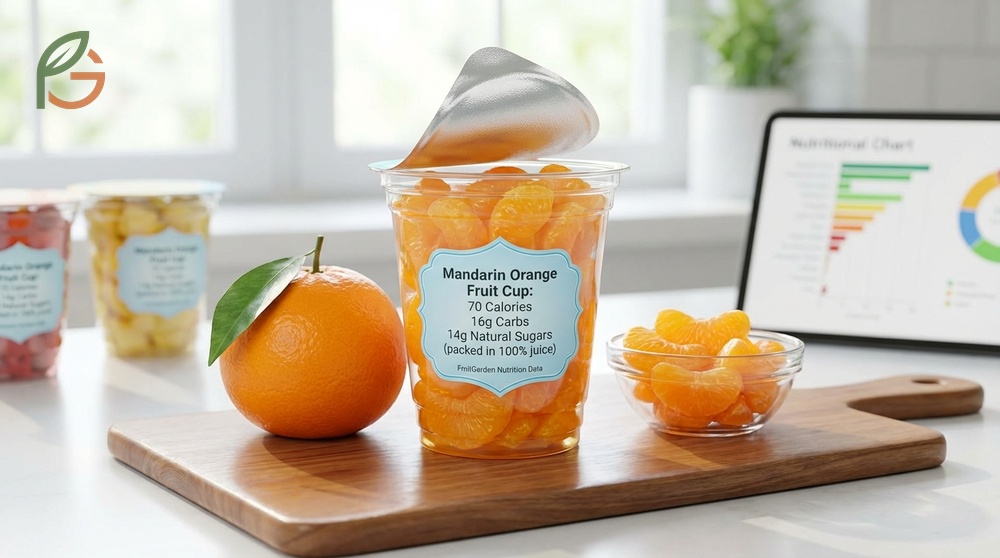
A mandarin orange fruit cup provides a convenient snack with 70 calories, 16g carbohydrates, and 14g natural sugars when packed in 100% juice[1]. Studies show that fruit cups packed in juice retain more vitamins than those in heavy syrup, though they contain less fiber than fresh mandarins. FruitGarden synthesizes current nutrition research to help you make informed choices about packaged fruit options.
Quick Answer
Mandarin Orange Fruit Cup
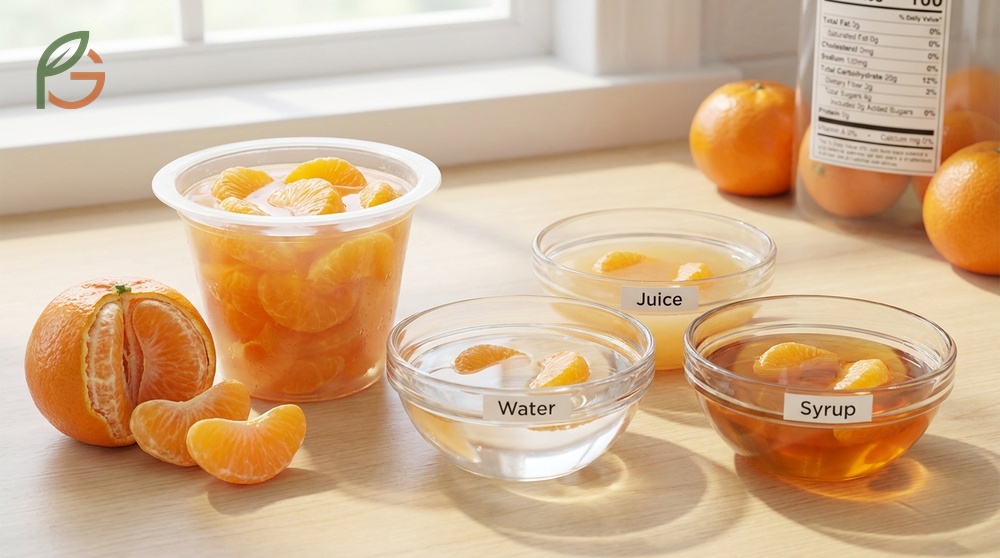
Research shows that mandarin orange fruit cups offer a convenient alternative to fresh fruit, with nutrition profiles varying significantly by packing liquid. Current data indicates that a standard 4 oz (113g) serving delivers between 50-100 calories depending on whether it’s packed in water, juice, or syrup[3][2]. The fruit segments retain most vitamins during canning, though some heat-sensitive nutrients decrease.
Most people don’t realize that timing and packing method matter more than brand when selecting fruit cups. For instance, choosing juice-packed over syrup-packed versions cuts added sugar to zero grams while maintaining the same vitamin C content[1]. This simple switch reduces calories by 30 per serving.
The processing method involves peeling fresh mandarins, removing membranes, and packing segments in liquid before heat-sealing. Evidence suggests that manufacturers pick mandarins at peak ripeness to maximize sweetness, though the fiber content drops compared to eating whole fresh fruit.
What Is a Mandarin Orange Fruit Cup
A mandarin orange fruit cup consists of peeled citrus segments preserved in water, juice, or syrup within a sealed container. The product provides ready-to-eat convenience without requiring refrigeration until opened.
Major brands like Dole package mandarins in single-serve 4 oz cups or multi-pack bowls. The fruit comes from varieties including Clementines and Satsumas, selected for their naturally sweet flavor and easy-to-separate segments.
- Peeled mandarin orange segments (70-80% of cup content)
- Packing liquid: 100% juice, light syrup, or water (20-30%)
- Natural flavors in some brands for enhanced taste
- Citric acid for preservation and tartness balance
- No artificial colors or preservatives in premium brands
Nutritional Profile
Agricultural data shows that a 4 oz fruit cup in juice contains 70 calories with zero fat and less than 1g protein[1]. The macronutrient breakdown is nearly 100% carbohydrates, making it a quick energy source.
Vitamin C stands out as the primary micronutrient, providing 27mg (30% daily value) per serving[1]. This antioxidant supports immune function and collagen production. The fruit also delivers 120mg potassium (2% DV) for heart health.
Important Note: Canned mandarins contain less fiber than fresh oranges because the peeling process removes the membrane that holds most dietary fiber. You’ll get 1g fiber per cup versus 1.8g in fresh mandarins[4].
Calories in Mandarin Orange Fruit Cup
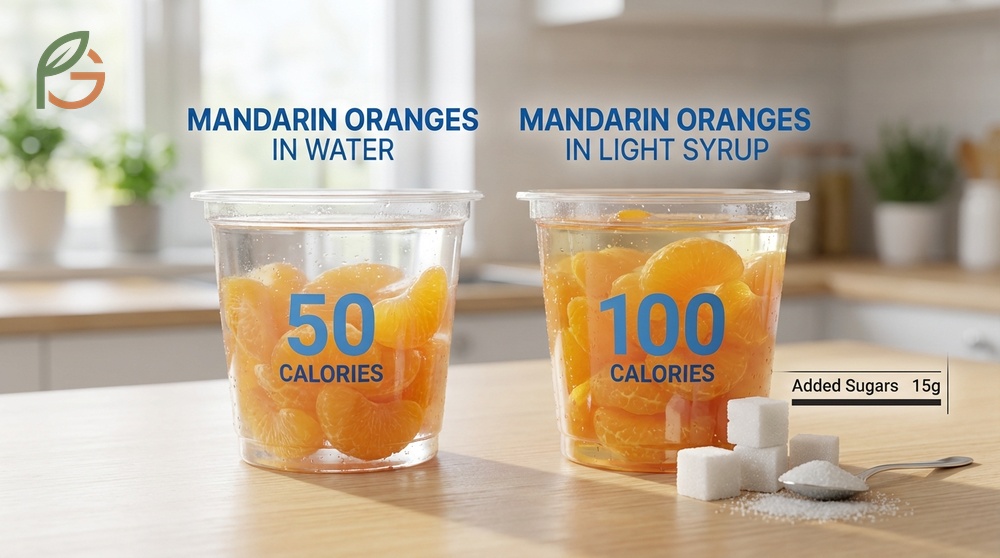
Studies demonstrate that calorie content varies dramatically based on the packing medium. Water-packed cups contain the fewest calories at 50 per serving[3], while light syrup versions jump to 100 calories[2]. The difference comes entirely from added sugars in the syrup.
Current nutrition guidance emphasizes reading labels carefully since “light syrup” still adds 15g sugar per half-cup serving[2]. For perspective, that’s nearly 4 teaspoons of added sugar in a single snack portion.
Most brands standardize their juice-packed versions at 70 calories per 4 oz serving. This consistency makes meal planning easier when you’re counting calories or managing portion sizes for weight control.
Calorie Breakdown by Brand
Research across major grocery brands reveals similar calorie counts for juice-packed options. Dole, Del Monte, and store brands all hover around 70 calories per 4 oz cup when using 100% juice as the packing medium.
This table compares calories, sugar content, and vitamin C levels across different mandarin orange fruit cup brands and packing methods
| Brand/Type | Serving Size | Calories | Total Sugars | Added Sugars | Vitamin C |
|---|---|---|---|---|---|
| Dole (100% Juice) | 4 oz (113g) | 70[1] | 14g[1] | 0g[1] | 30% DV[1] |
| Del Monte (100% Juice) | 4 oz (113g) | 70[5] | 17g[5] | 0g | 100% DV[5] |
| Generic (Water Pack) | 1 cup (113g) | 50[3] | 5g[3] | 0g | 67% DV[3] |
| Dole (Light Syrup) | 1/2 cup (123g) | 100[2] | 20g[2] | 15g[2] | 8% DV[2] |
Portion Size Impact
What often gets overlooked is that serving sizes aren’t standardized across all package types. Single-serve cups typically contain 4 oz (113g), while canned varieties list nutrition for 1/2 cup servings that may weigh slightly more at 123g.
The calorie difference between 4 oz and 1/2 cup servings can confuse shoppers comparing labels. A 4 oz juice-packed cup has 70 calories, but eating a full half-cup from a can adds about 10% more volume and calories.
- Single-serve bowls (4 oz): ideal for portion control, 70 calories
- Snack packs (3.5 oz): slightly smaller, around 60 calories
- Canned half-cup (123g): larger portion, up to 100 calories in syrup
- Family-size cans: require measuring to track accurate intake
- Dual-pack cups: two servings total 140 calories if eaten together
Mandarin Oranges in Syrup vs Juice
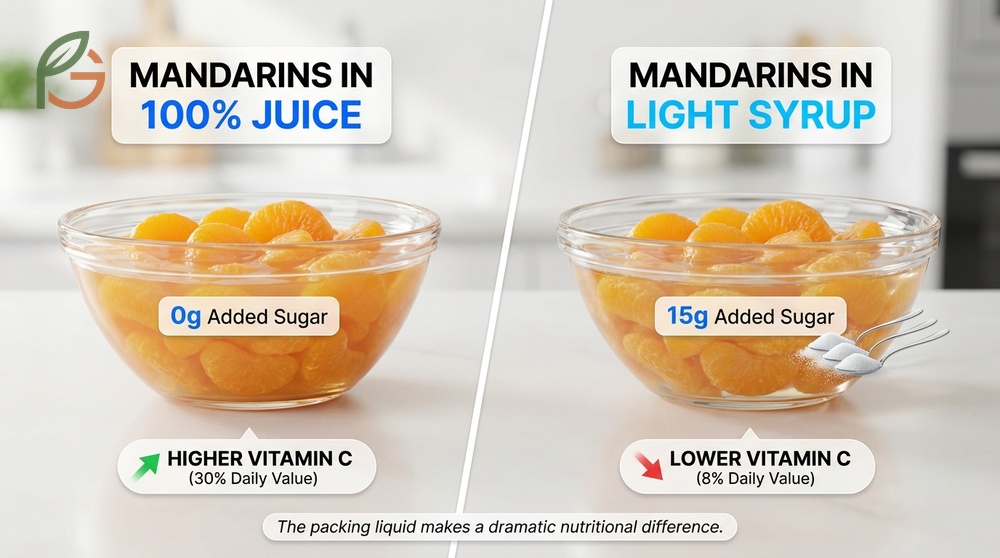
The packing liquid makes a dramatic nutritional difference. Mandarins in 100% juice contain zero added sugars, while light syrup versions add 15g of sugar per serving[2]. This represents 30% of the recommended daily limit for added sugars in just one small fruit cup.
Nutrition experts point out that juice-packed versions preserve more vitamin C during processing. Research shows that syrup-packed mandarins retain only 8% of daily vitamin C needs[2] compared to 30% in juice-packed varieties[1]. The high sugar content in syrup appears to degrade heat-sensitive vitamins.
Current dietary guidelines emphasize limiting added sugars to reduce diabetes and obesity risk. Water-packed options offer the cleanest choice with minimal processing, though many consumers find them less sweet than juice versions.
The reason is simple: natural fruit juice provides sweetness from fructose already present in citrus, while syrup adds refined sugars. Both taste sweet, but juice delivers vitamins alongside the sugar whereas syrup contributes empty calories.
Smart Shopping Tip: Check the ingredient list, not just the front label. “In juice” should list orange juice or pineapple juice as the second ingredient. If you see “corn syrup” or “sugar” listed, it’s actually a syrup pack despite marketing claims.
- Juice-packed: 0g added sugar, 70 calories, 30% vitamin C retention
- Light syrup: 15g added sugar, 100 calories, 8% vitamin C retention
- Heavy syrup: 20-25g added sugar, 120+ calories, minimal vitamins
- Water-packed: lowest calories at 50, best for diabetics
- Draining syrup reduces but doesn’t eliminate absorbed sugars
Sugar in Mandarin Cups
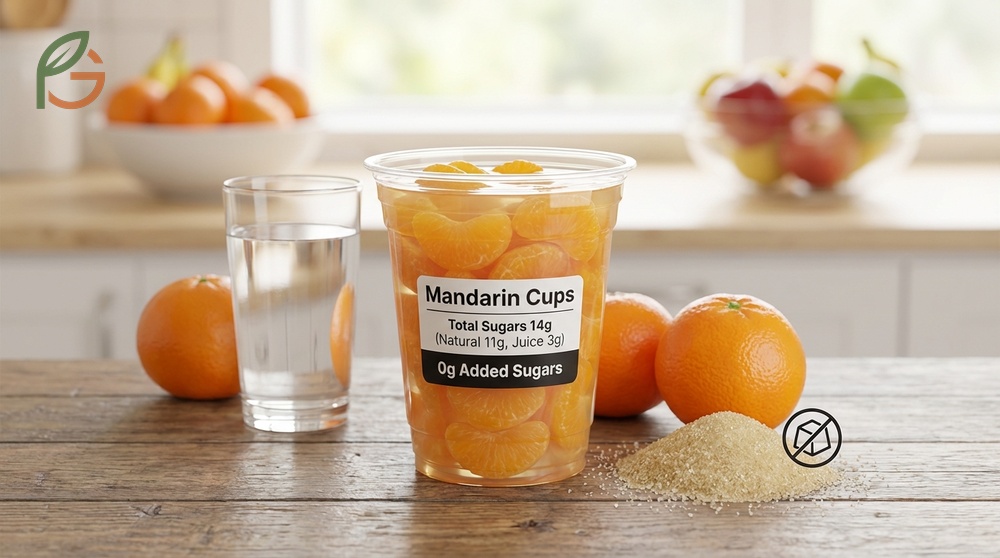
Agricultural data indicates that mandarins naturally contain about 10-11g sugar per 100g of fruit[4]. When you see 14g total sugar on a juice-packed cup label[1], that includes both the fruit’s natural fructose plus sugars from the packing juice. Critically, this version shows 0g added sugars.
The distinction between “total sugars” and “added sugars” matters for health. Your body processes natural fruit sugars alongside fiber, vitamins, and minerals, creating a slower blood sugar response. Added sugars in syrup hit your bloodstream faster without nutritional benefits.
For breakfast or post-workout snacks, the 14g natural sugar provides quick energy that won’t spike blood glucose as sharply as candy. Pairing the fruit cup with protein like Greek yogurt slows sugar absorption further.
| Packing Type | Total Sugars | Added Sugars | Natural Fruit Sugars |
|---|---|---|---|
| Water Pack | 5g[3] | 0g | 5g |
| 100% Juice | 14g[1] | 0g[1] | 14g |
| Light Syrup | 20g[2] | 15g[2] | 5g |
Unlike processed snacks, mandarin cups provide vitamins C and A alongside sugars. This nutrient density makes them a better choice than cookies or candy when you’re craving something sweet between meals.
Healthy Fruit Cup Snacks
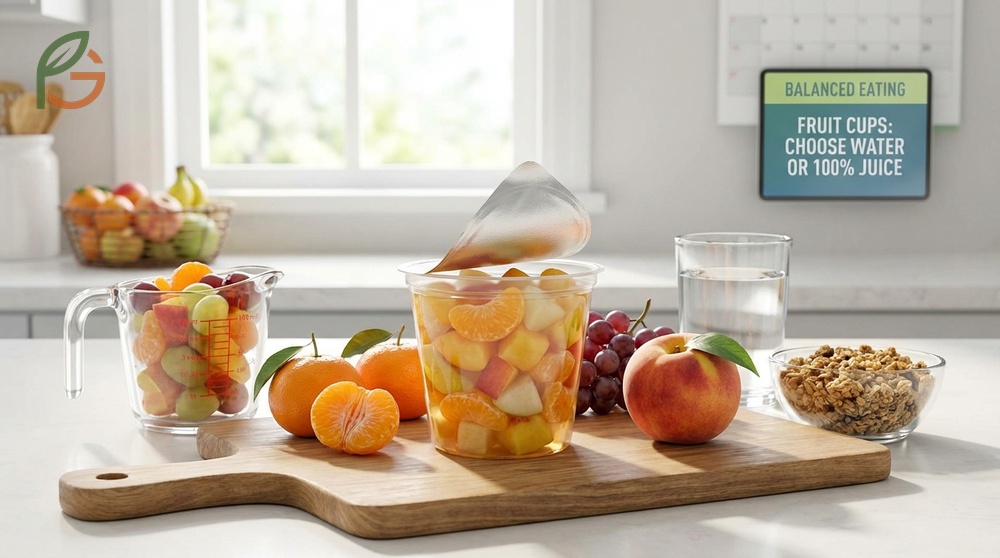
Evidence indicates that fruit cups can fit into balanced eating patterns when chosen wisely. The key is selecting varieties packed in water or 100% juice while watching portion sizes. A 70-calorie mandarin cup provides less than 4% of a 2,000-calorie daily diet.
Research across mixed fruit cup varieties shows they deliver essential vitamins and minerals that support immunity, skin health, and digestion[6]. The fiber content from whole fruit, though reduced during processing, still aids digestive regularity.
Convenience makes fruit cups particularly valuable for busy Americans. Pre-portioned servings eliminate guesswork about serving sizes and require no preparation. They’re shelf-stable for pantries, lunchboxes, and emergency food supplies.
For breakfast, pairing a mandarin cup with whole-grain toast and almond butter creates a balanced meal with protein, complex carbs, and natural sugars. As an afternoon snack, the vitamin C boost can help iron absorption if eaten with nuts or seeds.
- Mix with plain Greek yogurt for protein-balanced parfaits (adds 15-20g protein)
- Top oatmeal or overnight oats instead of using refined sugar
- Freeze for a refreshing sorbet-like treat on hot days
- Add to spinach salads for sweetness and vitamin C
- Pack in school lunches as a whole-fruit alternative
- Use liquid from juice-packed cups to flavor smoothies
For Weight Management: Fruit cups work best when eaten as part of a meal rather than alone. The natural sugars can cause energy crashes if consumed without protein or healthy fats to stabilize blood glucose.
Mandarin Orange Shelf Life
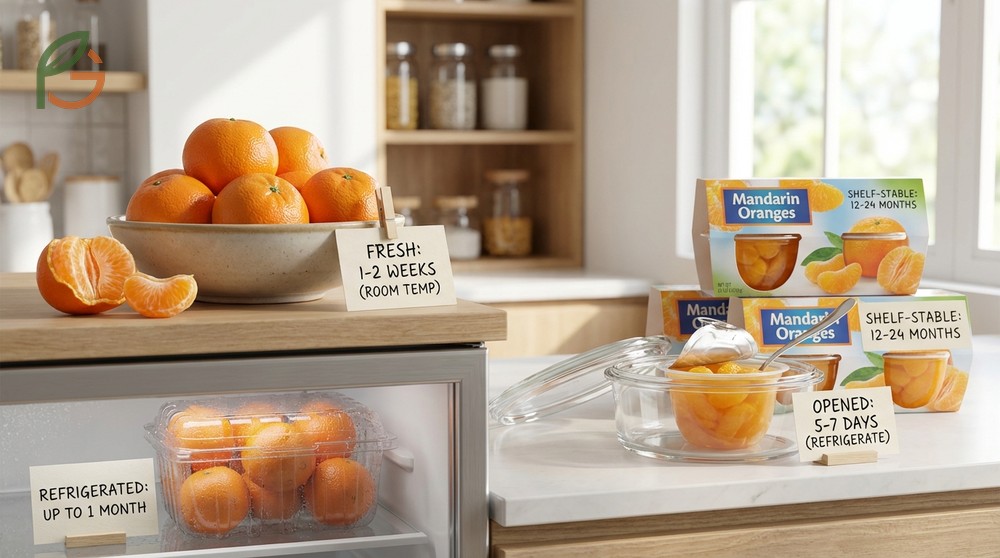
Fresh mandarins last 1-2 weeks at room temperature and up to one month refrigerated[7]. In contrast, commercially canned fruit cups remain shelf-stable for 12-24 months before opening. This extended preservation makes them practical for stocking pantries.
Once opened, fruit cups require refrigeration and should be consumed within 5-7 days for optimal quality. The fruit segments start breaking down and the liquid can ferment if left too long. Transfer unused portions to airtight containers rather than leaving them in the original packaging.
Storage conditions matter for both fresh and canned varieties. Fresh mandarins should be kept in breathable bags in the refrigerator’s crisper drawer at 41-45°F (5-7°C)[8]. Unopened fruit cups need cool, dry storage away from direct sunlight to prevent can degradation.
- Fresh mandarins (room temp): 1 week in single layer, cool dark place
- Fresh mandarins (refrigerated): 2-4 weeks at 41-45°F (5-7°C)
- Unopened fruit cups: 12-24 months in pantry below 75°F (24°C)
- Opened fruit cups: 5-7 days refrigerated in sealed container
- Frozen mandarin segments: up to 6 months in freezer-safe bags
The long shelf life of canned mandarins comes from heat sterilization that eliminates bacteria and enzymes causing spoilage. This processing slightly reduces vitamin C but preserves the fruit’s structure and flavor for extended periods.
Conclusion
The evidence is clear: mandarin orange fruit cups provide a convenient, nutritious snack option when you choose juice-packed versions over syrup. With 70 calories, 30% daily vitamin C, and zero added sugars, they fit well into balanced eating patterns for most Americans. Current nutrition guidance emphasizes reading labels carefully to distinguish between natural and added sugars.
FruitGarden synthesizes the latest agricultural research to help you make informed fruit choices that support your health goals while enjoying the convenience of shelf-stable options.
Frequently Asked Questions
How many calories are in a Dole mandarin orange fruit cup?
A Dole mandarin orange fruit cup contains 70 calories per 4 oz serving when packed in 100% juice. This includes 16g carbohydrates, 14g natural sugars, and 1g fiber with no added sugars or fat.
Are mandarin oranges in syrup healthier than in juice?
No, juice-packed mandarins are healthier than syrup versions. Light syrup adds 15g of refined sugar and 30 extra calories per serving while reducing vitamin C content by 75% compared to juice-packed options.
Can I eat mandarin fruit cups every day?
Yes, you can eat mandarin fruit cups daily as part of a balanced diet. One cup counts toward your daily fruit servings and provides 30% of vitamin C needs. Pair with protein sources to balance the natural sugars.
How long do opened mandarin fruit cups last in the fridge?
Opened mandarin fruit cups last 5-7 days when refrigerated in a sealed container. The fruit segments begin to break down and the liquid can ferment if stored longer than one week after opening.
What’s the difference between fresh and canned mandarin nutrition?
Fresh mandarins contain slightly more fiber (1.8g vs 1g per serving) and vitamin C than canned versions. However, juice-packed canned mandarins retain most nutrients and offer greater convenience with 12-24 month shelf life.
Are water-packed mandarin cups better for diabetics?
Yes, water-packed mandarin cups work best for diabetics because they contain only 5g natural fruit sugars versus 14g in juice-packed versions. This lower sugar content causes smaller blood glucose spikes when eaten in moderation.
Do mandarin fruit cups count as processed food?
Mandarin fruit cups are minimally processed foods. The fruit undergoes peeling and heat sterilization but retains most vitamins and minerals. Juice-packed varieties without added sugars qualify as nutritious convenience foods rather than ultra-processed items.





