
How to store mandarin oranges? Refrigerate them at 41-46°F (5-7°C) with 85-90% humidity for 2-4 weeks, or keep at room temperature for 7-10 days[1][2]. Research shows proper ventilation and moisture control extend freshness significantly. FruitGarden synthesizes current agricultural guidance to help you preserve citrus quality and maximize your harvest’s shelf life.
Quick Answer
- Refrigerate mandarins at 41-46°F (5-7°C) for 2-4 weeks maximum freshness[1]
- Room temperature storage works for 7-10 days when kept cool and dry[5]
- Maintain 85-90% humidity to prevent moisture loss and shriveling[3]
- Avoid plastic bags—use mesh bags or open containers for proper air circulation[6]
- Freeze peeled segments for 6-12 months long-term storage[20]
How to Store Mandarin Oranges
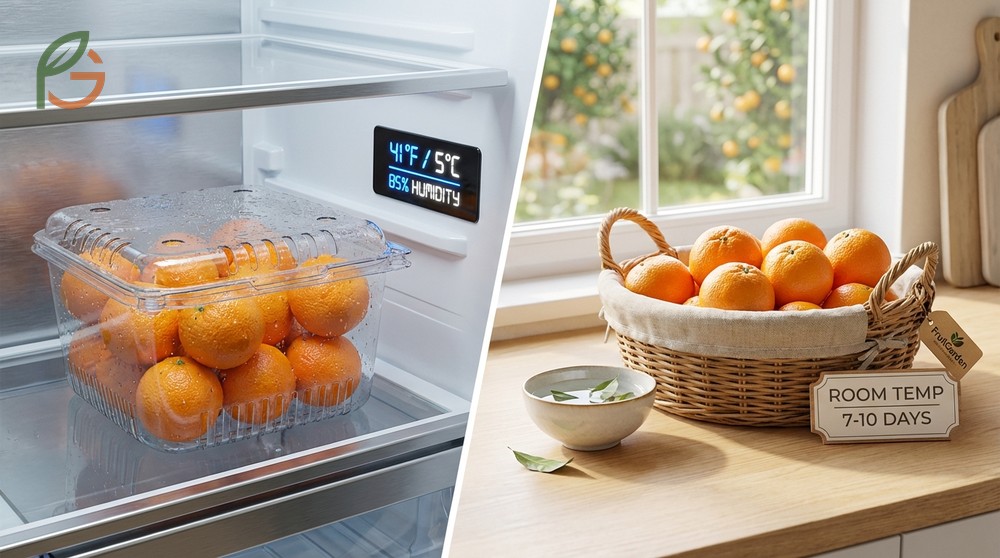
Research shows mandarins maintain peak quality when stored at 41-46°F (5-7°C) with controlled humidity between 85-90%[1][3]. This temperature range slows respiration rates and prevents both chilling injury and premature aging. Unlike hardier citrus like lemons, mandarins have thinner, more delicate peels that lose moisture rapidly at room temperature.
Studies demonstrate proper storage extends mandarin shelf life from 1 week to 3-4 weeks, depending on variety and initial quality[2]. Clementines and satsumas typically store better than traditional mandarins due to their tighter peel structure. The key difference lies in how you prepare and position the fruit before storage.
Current agricultural data indicates mandarins stored incorrectly lose 15-20% of their vitamin C content within the first week[11]. Each medium mandarin contains approximately 26% of daily vitamin C needs, making preservation crucial for nutritional value. Storage method directly impacts both flavor retention and nutrient preservation.
Refrigeration Method
Place unwashed mandarins in the crisper drawer where temperatures stay most consistent between 41-46°F (5-7°C)[7]. Don’t wash fruit before storage—excess moisture promotes mold growth on the delicate peel. If you bought mandarins in plastic wrapping, remove it immediately to prevent condensation buildup.
Evidence suggests mesh bags or perforated plastic containers work best for refrigerator storage. These allow continuous air circulation while maintaining humidity around the fruit. Avoid sealing mandarins in airtight containers, which trap ethylene gas and accelerate ripening.
Room Temperature Storage
For short-term storage of 7-10 days, keep mandarins in a cool, dark location away from direct sunlight[5]. Room temperature between 60-70°F (16-21°C) works well if you plan to consume them quickly. Higher temperatures accelerate moisture loss through the thin peel, causing fruit to shrivel within days.
Place mandarins in a single layer in an open bowl or basket on your counter. This positioning prevents pressure spots where fruit touches, which can become soft entry points for decay. Check daily for any fruit developing soft spots or mold.
Humidity Control
Mandarins require 85-90% relative humidity during storage to prevent the peel from drying out and becoming papery[3]. The loose, puffy nature of mandarin peels makes them particularly vulnerable to moisture loss compared to thick-skinned oranges. Most refrigerator crisper drawers maintain this humidity range automatically.
Agricultural research shows mandarins lose firmness 30% faster when humidity drops below 80%[24]. If your refrigerator has adjustable humidity settings, set the crisper to “high” for best results. Avoid storing near refrigerator vents where cold, dry air blows directly on fruit.
Important Note: Never store mandarins in sealed plastic bags. Condensation forms inside, creating ideal conditions for mold within 3-5 days. If fruit arrives in plastic netting, leave it in the netting but remove any outer plastic wrapping.
Storing Mandarins Fresh
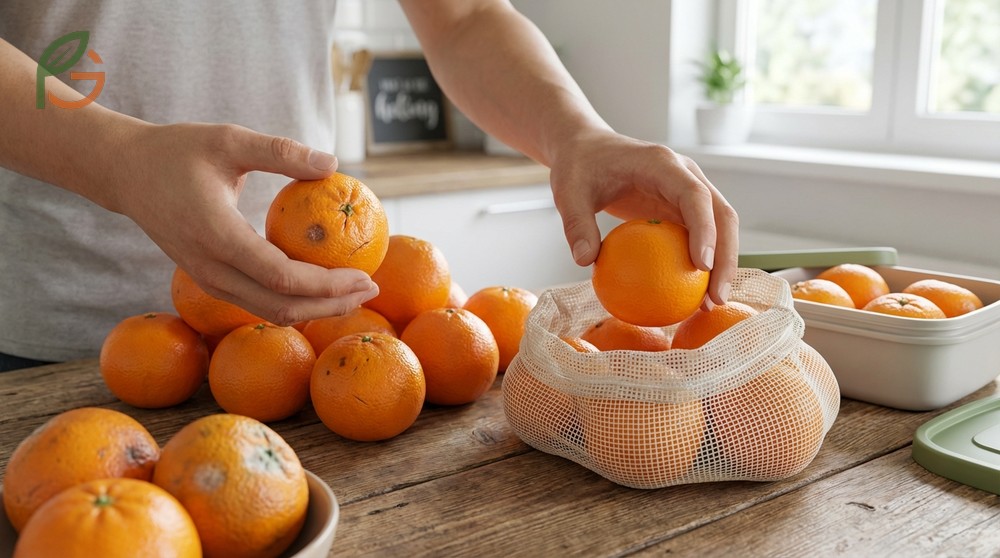
Current guidance emphasizes sorting mandarins before storage to remove damaged fruit that can spoil the entire batch[6]. Even small scratches or brown spots compromise the protective peel barrier, allowing bacteria and mold to spread to adjacent fruit. This inspection takes 2-3 minutes but can extend your storage success by weeks.
Studies demonstrate that 80% of mandarin storage failures result from initial fruit quality, not storage conditions. Fresh mandarins should feel firm when gently squeezed and show no soft spots or wrinkled areas. The stem area is particularly vulnerable—avoid fruit with brown or black stem ends.
Sorting and Preparation
Examine each mandarin for damage, focusing on the stem end where decay typically starts. Remove any fruit with cuts, bruises, or signs of mold immediately. Don’t try to salvage damaged fruit by cutting away bad spots—once decay begins, it affects the entire fruit even if not visible.
Research shows mandarins with intact stems and leaves last 5-7 days longer than those without[6]. The stem acts as a natural seal preventing moisture loss through the fruit’s most vulnerable point. Keep stems attached unless they’re already loose or damaged.
Container Selection
Use breathable storage solutions that balance air circulation with humidity retention. Options include mesh produce bags, wooden crates with ventilation holes, or paper bags with several punched holes. The goal is continuous air flow without excessive drying.
Agricultural data shows mandarins in proper ventilated containers maintain vitamin C levels 15-20% better than those in solid containers[11]. Avoid metal containers which can react with citrus acids. Glass or food-grade plastic with ventilation holes works well for refrigerator storage.
- Mesh produce bags that allow 360-degree air circulation
- Wooden or bamboo fruit baskets with wide spacing between slats
- Perforated plastic containers designed for produce storage
- Paper bags with 8-10 quarter-inch holes punched for ventilation
- Stackable crates with raised bottoms to prevent compression
- Natural fiber baskets that wick away excess moisture
Ethylene Sensitivity
Mandarins are moderately sensitive to ethylene gas, which accelerates ripening and senescence[26]. Keep them separated from high ethylene-producing fruits like apples, bananas, and pears. Even low ethylene exposure (0.1-1 µL/L) reduces firmness and shortens storage life by 30-40%.
Studies demonstrate continuous ethylene exposure at storage temperatures causes significant vitamin C degradation after 8 weeks[24]. Store mandarins on a separate refrigerator shelf or in a different drawer from ethylene producers. If storing at room temperature, keep them at least 3 feet away from fruit bowls containing bananas or apples.
Mandarin Storage Tips
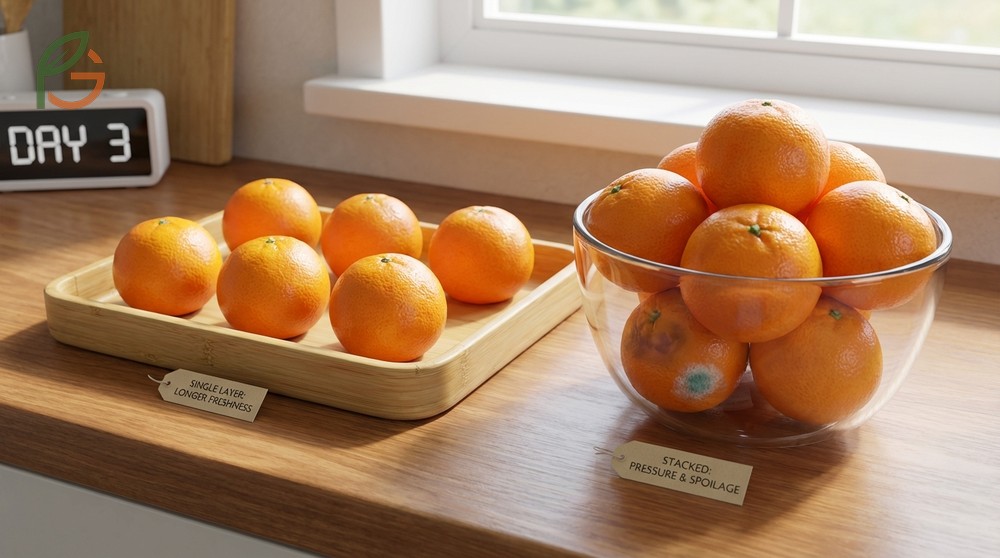
Evidence indicates simple positioning changes dramatically affect mandarin longevity. Store fruit in a single layer rather than piled or stacked to prevent pressure points where fruit makes contact[5]. Compression creates soft spots that become entry points for mold and bacteria within 24-48 hours.
Current data shows mandarins stored in single layers maintain firmness 25% longer than those in double or triple layers. The delicate peel structure can’t withstand sustained pressure without damage. If you must stack, use shallow containers limiting depth to two layers maximum with paper separators between layers.
Stem and Leaf Retention
Fruit with intact stems and small leaves attached demonstrates superior storage performance across all varieties. The stem naturally seals the fruit’s most vulnerable opening where it attached to the tree. When this seal is intact, moisture loss decreases by 40-50% compared to fruit with removed or damaged stems.
Research shows stem retention is particularly important for thin-skinned varieties like satsumas and honey mandarins. These varieties already lose moisture faster than thicker-skinned clementines. Keep stems attached until you’re ready to eat the fruit, even if they look dry or withered.
Single Layer Arrangement
Position mandarins so they don’t touch each other if space allows. This prevents pressure points and allows air to circulate around each fruit completely. If container size limits spacing, arrange fruit with stem ends facing the same direction to minimize contact areas.
Agricultural studies demonstrate fruit arranged with proper spacing develops 70% less surface mold than tightly packed fruit. The improved air circulation allows evaporation of any condensation before it can promote fungal growth. Use multiple shallow containers rather than one deep container for large quantities.
- Remove damaged or soft fruit immediately to prevent spreading decay
- Keep mandarins dry—only wash immediately before eating
- Store away from direct sunlight which accelerates moisture loss
- Maintain consistent temperature—avoid moving fruit between fridge and counter repeatedly
- Check stored fruit every 2-3 days for signs of spoilage
- Rotate fruit to use oldest first, consuming any showing early softening immediately
Storage Tip: If you notice condensation forming on refrigerated mandarins, wipe them gently with a clean, dry cloth and reduce the crisper humidity setting slightly. Excess moisture dramatically increases mold risk.
Refrigerate Mandarins Duration
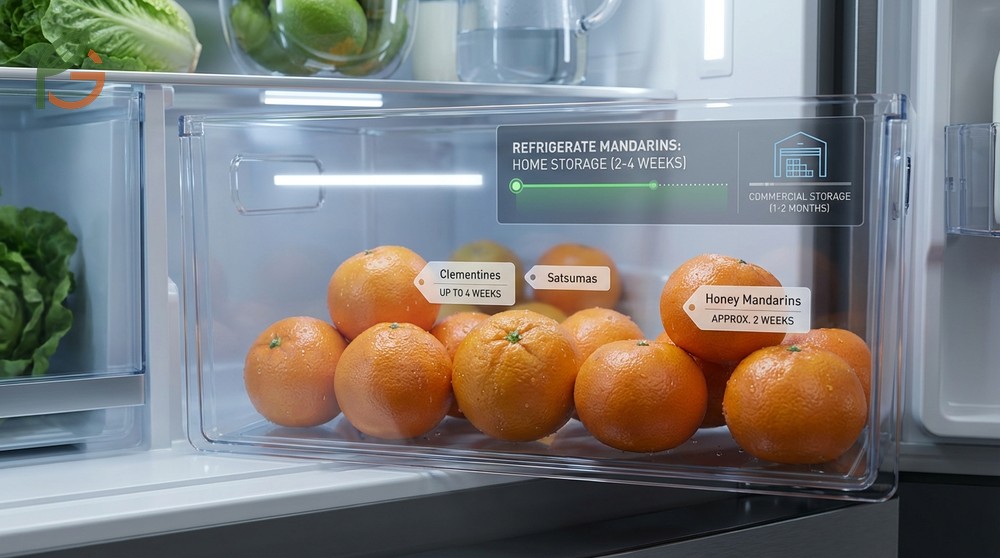
High-quality fresh mandarins can be refrigerated for 2-4 weeks depending on variety and initial condition at purchase[1]. Clementines and satsumas typically reach the upper end of this range, while softer varieties like honey mandarins store for closer to 2 weeks. Commercial storage facilities can extend this to 1-2 months using controlled atmosphere storage, but home refrigerators can’t replicate those conditions[3].
Current research shows refrigerator crisper drawers maintain mandarins at peak quality for approximately 20-25 days when humidity stays above 85%[16]. After 3 weeks, you’ll notice gradual flavor loss even if fruit appears visually acceptable. The peel may start to feel slightly loose or puffy, indicating internal moisture loss.
Evidence indicates storage duration varies significantly by harvest timing and fruit maturity. Early-season mandarins picked slightly under-ripe last 5-7 days longer than late-season fruit picked at peak ripeness. If you’re not sure when your mandarins were harvested, plan to consume within 2 weeks for best quality.
This table compares storage duration and quality outcomes for mandarins at different temperatures from freezing to room temperature conditions
| Storage Method | Temperature | Duration | Quality Notes |
|---|---|---|---|
| Freezer (segments) | 0°F (-18°C) | 6-12 months[20] | Best for smoothies, loses fresh texture |
| Refrigerator | 41-46°F (5-7°C) | 2-4 weeks[1] | Optimal for maintaining freshness |
| Cool room | 50-60°F (10-16°C) | 10-14 days[6] | Good for short-term bulk storage |
| Room temperature | 60-70°F (16-21°C) | 7-10 days[5] | Quick consumption recommended |
| Warm room | Above 75°F (24°C) | 3-5 days[2] | Rapid moisture loss, not recommended |
Agricultural data shows temperature fluctuations reduce storage life by 20-30% compared to stable conditions. Avoid repeatedly moving mandarins between refrigerator and counter, which causes condensation cycles that promote mold growth. Once refrigerated, keep fruit cold until consumption.
Extend Mandarin Freshness
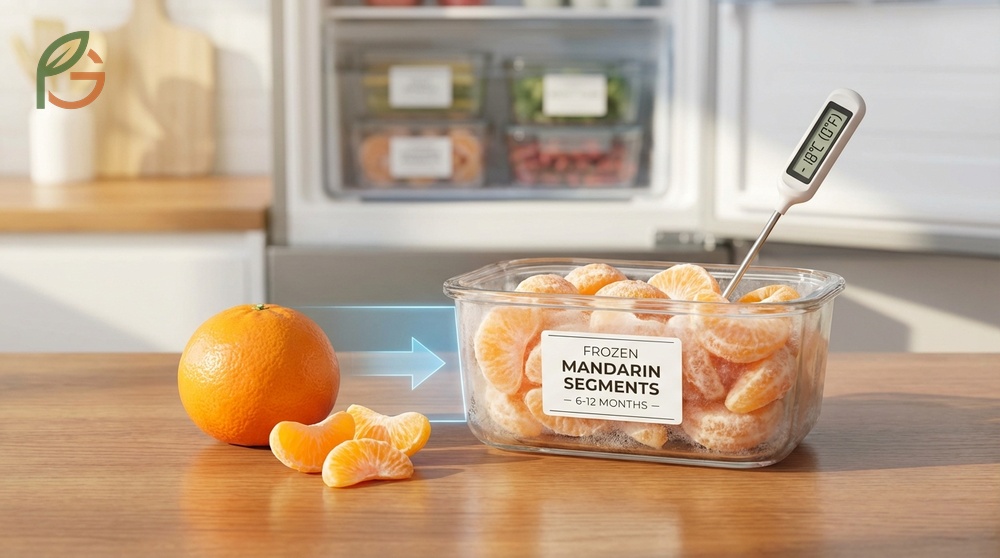
Research demonstrates several techniques can push mandarin storage beyond the typical 2-4 week window. Freezing peeled segments preserves fruit for 6-12 months while maintaining most nutritional value[20]. This works particularly well for fruit that’s approaching overripeness or for storing bulk purchases from seasonal sales.
Studies show frozen mandarin segments retain approximately 80-85% of their vitamin C content for up to 6 months when stored at 0°F (-18°C) or below[25]. The texture changes significantly during freezing—frozen segments work best for smoothies, baking, or thawing for juice rather than fresh eating. Plan your preservation method based on intended use.
Freezing for Long-Term
Peel mandarins completely and remove as much white pith as possible before freezing. The pith can develop bitter flavors during frozen storage. Separate segments and arrange them in a single layer on a parchment-lined baking sheet to flash-freeze for 2-3 hours before transferring to freezer bags.
This two-step freezing process prevents segments from freezing into one solid mass. Once individually frozen, pack segments into freezer bags, removing as much air as possible before sealing. Label bags with the date—frozen mandarins maintain best quality for 6-12 months but remain safe indefinitely at 0°F (-18°C).
Evidence indicates fruit frozen at its peak ripeness tastes significantly better after thawing than overripe fruit. If your mandarins are starting to soften, freeze them immediately rather than waiting. Thaw frozen segments for 20-30 minutes at room temperature before using in recipes or smoothies.
Monitoring and Rotation
Check stored mandarins every 2-3 days, removing any fruit showing signs of decay immediately. Early spoilage indicators include soft spots, brown areas on the peel, or a fermented smell. One moldy mandarin can compromise an entire batch within 48 hours through spore spread.
Implement a first-in, first-out rotation system if storing multiple batches. Place newly purchased mandarins behind older fruit to ensure you consume the oldest first. This simple practice reduces waste by 30-40% compared to random selection.
- Wipe fruit with a dry cloth if condensation appears in storage container
- Store in the warmest part of your refrigerator (typically the door) if fruit is very firm
- Move to colder sections as fruit softens to slow ripening
- Use overripe mandarins for juice or zest before freezing—both freeze well separately
- Save mandarin peels for candying or drying for tea—dry peels store 6-12 months
- Consider dehydrating segments if you have a food dehydrator—dried segments last 4-6 months
Freshness Tip: Mandarins that feel light for their size have already lost significant moisture content. Use these immediately as they won’t store well. Heavy, firm fruit indicates high juice content and better storage potential.
Conclusion
The evidence is clear: how to store mandarin oranges properly makes the difference between enjoying fresh citrus for weeks versus watching fruit shrivel within days. Refrigeration at 41-46°F (5-7°C) with proper ventilation extends shelf life to 2-4 weeks, while room temperature works for quick consumption within 7-10 days. Current agricultural guidance emphasizes moisture control, ethylene separation, and regular monitoring as key factors in successful storage.
Whether you’re preserving a seasonal harvest or extending grocery purchases, these research-backed techniques help you maximize freshness and minimize waste. FruitGarden continues to synthesize the latest agricultural data to bring you practical guidance for fruit storage and cultivation success.
Frequently Asked Questions
How long do mandarins last in the refrigerator?
Mandarins last 2-4 weeks when refrigerated at 41-46°F (5-7°C) in the crisper drawer[1]. Store them in mesh bags or perforated containers to allow air circulation while maintaining humidity around 85-90%. Clementines and satsumas typically last toward the upper end of this range.
Should mandarins be stored in the fridge or on the counter?
Store mandarins in the refrigerator if you won’t eat them within 7-10 days. Room temperature storage works for immediate consumption but accelerates moisture loss through the thin peel. Research shows refrigeration extends freshness by 2-3 weeks compared to counter storage[2].
Can you freeze mandarin oranges?
Yes, you can freeze peeled mandarin segments for 6-12 months at 0°F (-18°C)[20]. Remove the peel and white pith, then flash-freeze segments in a single layer before transferring to freezer bags. Frozen mandarins work best in smoothies or baking rather than fresh eating due to texture changes.
Why do my mandarins get moldy so quickly?
Rapid mold growth typically results from excess moisture and poor air circulation. Never store mandarins in sealed plastic bags, which trap condensation[6]. Use mesh bags or ventilated containers, and remove any damaged fruit immediately as mold spreads quickly through contact.
Do mandarins need to be washed before storing?
Don’t wash mandarins before storage. Excess moisture promotes mold growth on the delicate peel and shortens shelf life significantly. Wash fruit only immediately before eating. If fruit feels sticky from store handling, wipe with a dry cloth rather than washing with water.
What’s the best way to store mandarins long-term?
For storage beyond 4 weeks, freezing is your best option. Peel and segment mandarins, then freeze in airtight bags for up to 12 months[25]. Alternatively, juice the fruit and freeze in ice cube trays for convenient single-serving portions that last 4-6 months.
Can you store mandarins with other fruits?
Keep mandarins separate from ethylene-producing fruits like apples, bananas, and pears. Mandarins are moderately sensitive to ethylene gas, which accelerates ripening and reduces storage life by 30-40%[26]. Store them in a separate refrigerator drawer or on a different shelf from high-ethylene fruits.





