
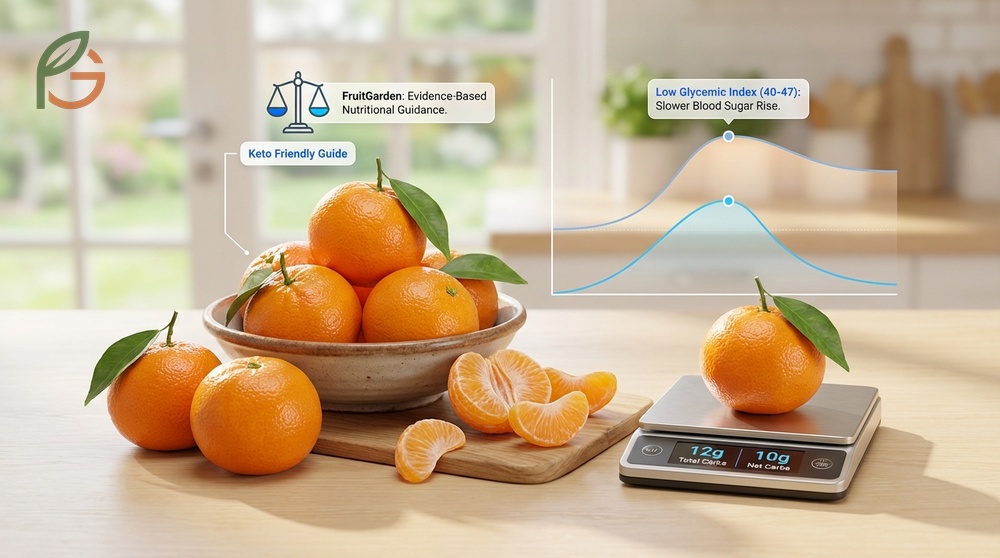
Carbs in mandarin oranges total 12 grams per medium fruit, with 10 grams of net carbs after subtracting fiber[1]. This amount represents half the daily carb limit for strict keto dieters[2], making mandarins challenging for ketogenic diets but workable for flexible low-carb plans. Research shows the low glycemic index of 40-47 means mandarins cause slower blood sugar rises compared to processed carbs[3]. FruitGarden provides evidence-based nutritional guidance to help you make informed decisions about incorporating fruits into your dietary goals.
Quick Answer
- One medium mandarin contains 10g net carbs[1] (12g total carbs minus 2g fiber)
- Standard keto diets limit carbs to 20-50g daily[2]—one mandarin uses 20-50% of this allowance
- Mandarins aren’t ideal for strict keto but fit flexible low-carb diets (50-100g carbs/day)[4]
- Small mandarins (clementines) contain fewer carbs—around 7-8g net carbs per fruit[5]
Carbs in Mandarin Oranges
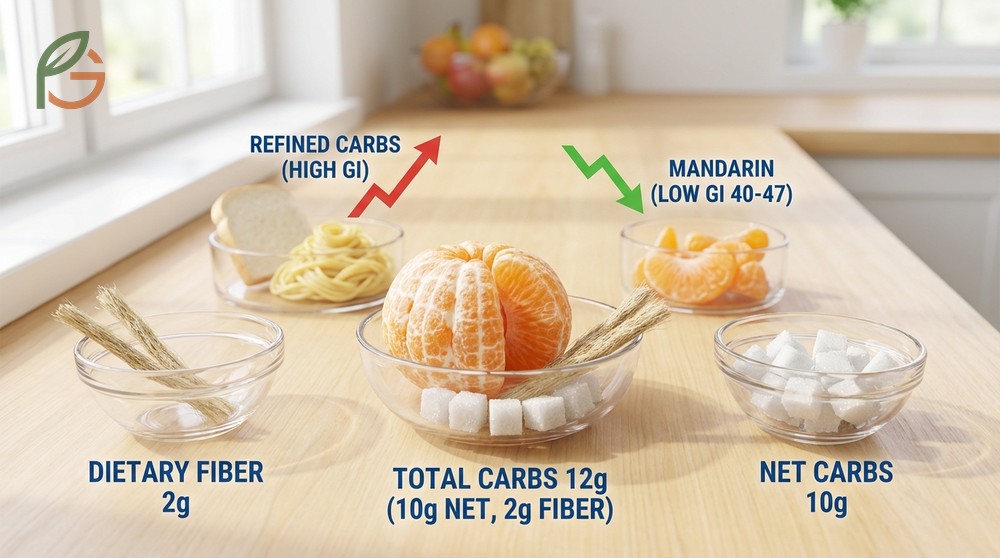
A medium mandarin orange (approximately 88 grams) delivers 12 grams of total carbohydrates[1]. This includes 2 grams of dietary fiber, which your body doesn’t digest or convert to blood glucose[6]. The remaining 10 grams are net carbs—the number that matters most for keto dieters.
Studies show mandarin oranges rank lower on the glycemic index (40-47) compared to refined carbohydrates[3]. This means they cause slower blood sugar increases than bread or pasta. The fiber content helps moderate this response even further.
Most people don’t realize portion size dramatically affects carb intake. Two medium mandarins contain approximately 20 grams of net carbs—the entire daily limit for strict ketogenic diets[2]. This makes careful measurement essential.
Total vs Net Carbs Explained
Total carbohydrates include all carb types in food—sugars, starches, and fiber. Net carbs subtract fiber (and sugar alcohols if present) because these don’t raise blood glucose or interfere with ketosis[6]. For mandarins, you calculate net carbs as: 12g total carbs – 2g fiber = 10g net carbs.
Current nutritional guidance emphasizes tracking net carbs rather than total carbs for ketogenic diets. This approach allows slightly more food variety while maintaining metabolic benefits. You can consume foods with higher fiber content without exceeding your carb targets.
Important Note: Food labels in the United States list total carbohydrates and fiber separately. You’ll need to subtract fiber manually to determine net carbs—it’s not automatically calculated on packaging.
Carb Content by Mandarin Size
Mandarin varieties range significantly in size and carb content. Clementines (a small mandarin type) contain approximately 7-8 grams of net carbs per fruit, while larger tangerines can reach 12-13 grams[5]. This 40-50% difference matters substantially for strict low-carb plans.
Choosing smaller varieties strategically extends your carb budget. Three small clementines (21-24g net carbs) provide more eating satisfaction than two large tangerines (24-26g net carbs) for roughly the same carb cost. The extended eating time also improves satiety signals.
Mandarin Carbohydrate Content
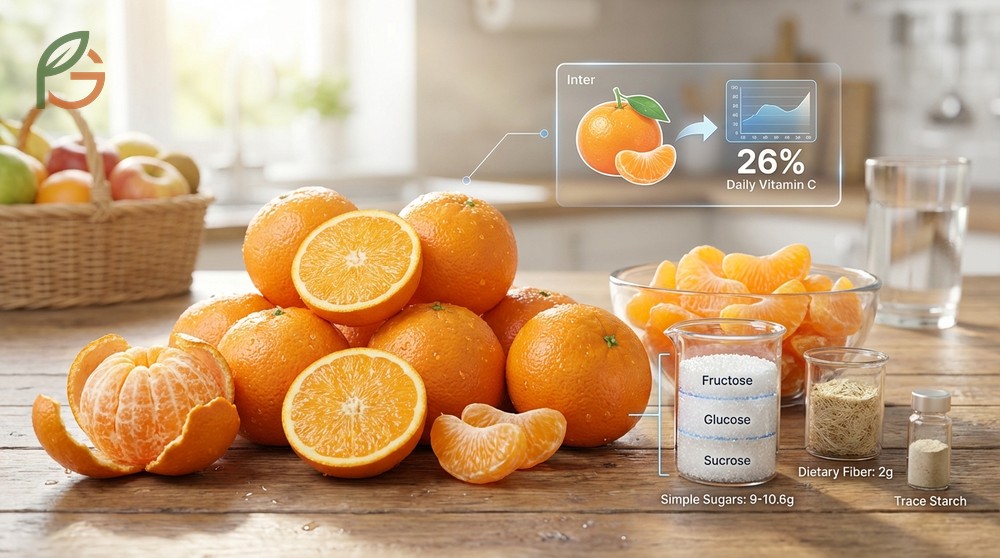
Research demonstrates mandarin oranges contain predominantly simple carbohydrates in the form of natural sugars—fructose, glucose, and sucrose[5]. These sugars account for approximately 9-10.6 grams per medium fruit. The remaining carbohydrates come from dietary fiber (2 grams) and trace amounts of starch.
Unlike processed foods with added sugars, mandarins package their carbohydrates with beneficial compounds. Studies show mandarins deliver 26% of your daily vitamin C requirement and significant amounts of beta-cryptoxanthin[7]. These nutrients support immune function and cellular health, partially offsetting the carb impact.
Agricultural data indicates mandarins are naturally fat-free and contain minimal protein (0.7-0.8g per fruit)[1]. This macronutrient profile means nearly all their 47 calories come from carbohydrates. For comparison, an equivalent-calorie portion of cheese provides 1g carbs versus 12g from mandarins.
Complete Nutrition Profile
Beyond carbohydrates, mandarins offer a concentrated micronutrient package in a low-calorie format. One medium fruit delivers this nutritional profile in just 47 calories[1]. The vitamin C content (approximately 27mg) exceeds what you’d find in many fortified supplements.
Evidence indicates mandarins contain higher levels of beta-carotene and beta-cryptoxanthin compared to standard oranges[7]. These carotenoid compounds convert to vitamin A in your body. They also function as antioxidants, protecting cells from oxidative damage.
- Vitamin C: 27mg (26% daily value) for immune support and collagen production
- Fiber: 2g (7% daily value) supporting digestive health and blood sugar moderation
- Potassium: 166mg (5% daily value) for heart function and blood pressure regulation
- Folate: 16mcg (4% daily value) essential for DNA synthesis and cell division
- Magnesium: 12mg (2.5% daily value) supporting over 300 enzymatic reactions
Sugar and Fiber Breakdown
The 9-10.6 grams of sugar in mandarins come entirely from natural fruit sugars—no added sweeteners[1]. Fructose comprises roughly 2.4 grams per 100 grams of fruit, with glucose and sucrose making up the remainder[5]. This natural sugar composition differs metabolically from high-fructose corn syrup.
The 2 grams of dietary fiber includes both soluble and insoluble types. Soluble fiber slows sugar absorption, preventing rapid blood glucose spikes. Current dietary guidelines recommend 25-30 grams of total fiber daily—one mandarin provides approximately 7% of this target.
Timing Tip: Consuming mandarins with protein or healthy fats (like almonds or cheese) further slows sugar absorption. This pairing strategy works better than eating fruit alone, especially for blood sugar management.
Are Mandarin Oranges Keto Friendly

Mandarin oranges don’t qualify as keto-friendly for strict ketogenic diets. One medium fruit’s 10 grams of net carbs consumes 40-50% of the typical 20-25 gram daily carb limit[2]. This leaves minimal room for other carb-containing foods throughout the day, making meal planning extremely challenging.
Research on ketogenic diet adherence shows most successful participants limit individual food items to 3-5 grams of net carbs per serving[6]. Mandarins exceed this threshold by 200-300%, making them incompatible with strict keto meal plans. Two mandarins would completely exhaust your daily carb allowance, leaving zero grams for vegetables, nuts, or incidental carbs.
However, flexible low-carb approaches (50-100g net carbs daily) can accommodate mandarins more easily[4]. At 50 grams per day, one mandarin represents 20% of your carb budget—manageable when you plan other meals carefully. This moderate approach still delivers many metabolic benefits without the extreme restriction.
Keto Diet Carb Requirements
The standard ketogenic diet restricts net carbohydrates to less than 50 grams daily, with most practitioners targeting 20-30 grams[8]. This severe restriction forces your body into ketosis—a metabolic state where fat becomes the primary fuel source instead of glucose. Studies demonstrate ketosis typically begins after 2-4 days of carb restriction below 50 grams.
Different keto variations allow different carb ranges. The standard ketogenic diet (SKD) maintains consistent low-carb intake daily, while targeted and cyclical versions permit higher carbs around workouts or on specific days. Even the most flexible keto protocols rarely exceed 50 grams of net carbs without disrupting ketosis.
- Strict keto: 20-25g net carbs daily—primarily for therapeutic purposes or rapid weight loss
- Standard keto: 25-50g net carbs daily—the most common approach for general ketosis
- Modified keto: 50-75g net carbs daily—allows more vegetables and occasional fruit
- Low-carb (not keto): 75-150g net carbs daily—provides metabolic benefits without ketosis
- Moderate-carb: 150-225g net carbs daily—standard “healthy eating” with some restriction
Fitting Mandarins into Keto
If you’re determined to include mandarins on keto, strategic approaches exist. Splitting one mandarin across two meals reduces the single-serving carb impact from 10g to 5g—more manageable within strict limits. You’ll need to pair these half-portions with zero-carb proteins and fats to prevent hunger.
Another option involves choosing the smallest available mandarins (clementines under 60 grams). These miniature varieties contain approximately 6-7 grams of net carbs—still significant but more workable. Evidence suggests eating them post-workout may improve tolerance, as exercise depletes muscle glycogen and temporarily increases carb capacity.
Most keto experts recommend prioritizing lower-carb fruits entirely rather than forcing high-carb options into your plan. Berries (raspberries, blackberries, strawberries) deliver 3-6 grams of net carbs per half-cup serving—similar satisfaction with 40-60% fewer carbs than mandarins.
Low Carb Citrus Alternatives

Several citrus fruits contain fewer carbs than mandarins while delivering similar flavors and nutrients. Lemons and limes lead this category, with just 5-6 grams of net carbs per whole fruit[5]. However, their intense tartness limits direct consumption—most people use them as flavor enhancers rather than eating them whole.
Grapefruit offers a middle ground with approximately 8-9 grams of net carbs per half fruit (standard serving). This represents 20% fewer carbs than a medium mandarin. Current agricultural data shows pink and red grapefruit varieties contain slightly more sugar than white varieties, though the difference remains minimal (about 0.5g per serving).
Research demonstrates you can create citrus flavor satisfaction using zest and juice rather than whole fruit. Two tablespoons of mandarin juice contain only 2-3 grams of net carbs—75% less than eating the whole fruit. This strategy works well for recipes, beverages, and salad dressings where you want citrus essence without the full carb load.
This table compares net carbohydrate content, serving sizes, and keto compatibility ratings across six common citrus fruits
| Citrus Type | Serving Size | Net Carbs | Keto Rating |
|---|---|---|---|
| Lime (whole) | 1 fruit (67g) | 5g[5] | Best (rarely eaten whole) |
| Lemon (whole) | 1 fruit (58g) | 6g[5] | Best (rarely eaten whole) |
| Grapefruit (half) | ½ fruit (123g) | 9g[5] | Moderate |
| Mandarin/Clementine (small) | 1 fruit (74g) | 7-8g[5] | Difficult |
| Mandarin (medium) | 1 fruit (88g) | 10g[1] | Not Recommended |
| Orange (medium) | 1 fruit (131g) | 12g[5] | Not Recommended |
- Use lemon or lime wedges in water—provides citrus flavor with less than 1g net carbs per glass
- Add citrus zest to recipes—the peel contains oils and flavor compounds with negligible carbs
- Choose grapefruit over oranges or mandarins when you want whole citrus fruit—20-30% fewer carbs
- Dilute mandarin juice with sparkling water (1:3 ratio)—stretches flavor while reducing carb density
- Try citrus-flavored herbal teas or extracts—deliver taste without carbohydrates or calories
Mandarin Sugar Content
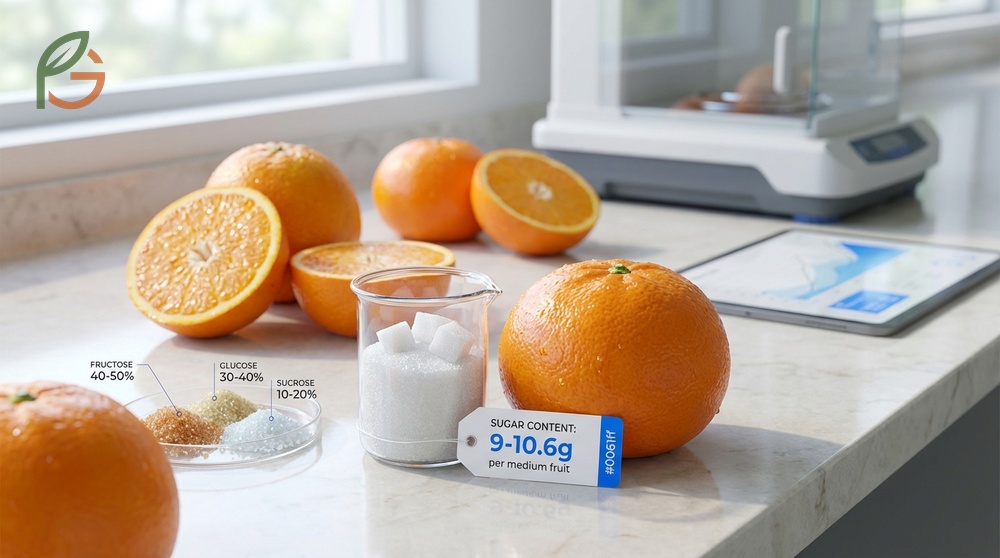
The sugar content in mandarin oranges ranges from 9 to 10.6 grams per medium fruit, depending on variety and ripeness[1]. This represents approximately 75-85% of the total carbohydrate content. Sweeter-tasting varieties like Satsumas and Honey mandarins fall at the higher end, while tart varieties contain slightly less sugar.
Studies demonstrate mandarin sugar composition includes roughly 40-50% fructose, 30-40% glucose, and 10-20% sucrose[5]. This natural blend differs metabolically from table sugar (100% sucrose) or high-fructose corn syrup. The fructose component doesn’t trigger insulin release directly, though your liver must process it first.
Research shows ripeness significantly impacts sugar levels. Fully ripe mandarins contain 15-25% more sugar than under-ripe ones. You can identify lower-sugar specimens by choosing firmer fruits with less intense sweetness when sampled. This selection strategy reduces carb intake by 1-2 grams per fruit.
Agricultural data indicates canned mandarin oranges in syrup contain dramatically more sugar—up to 18-20 grams per half-cup serving. The added corn syrup or sugar solution doubles the carb content compared to fresh fruit. Even “light syrup” versions exceed fresh mandarins by 30-40%. Always choose fresh or water-packed varieties for carb control.
Label Reading Alert: Many “no sugar added” mandarin products still contain concentrated fruit juice for sweetness. This adds 3-5 extra grams of carbs per serving compared to fresh fruit. Check the nutrition label’s total carbohydrate line, not just the marketing claims.
- Variety type—Honey and Satsuma mandarins contain 10-15% more sugar than Clementines
- Ripeness stage—fully ripe fruit has 20-25% higher sugar than under-ripe specimens
- Growing conditions—warmer climates and more sun exposure increase sugar development
- Storage time—sugar content doesn’t change significantly during refrigerated storage
- Processing method—canning in syrup doubles sugar content compared to fresh fruit
Conclusion
The evidence is clear: carbs in mandarin oranges (10g net carbs per medium fruit) make them incompatible with strict ketogenic diets but workable for flexible low-carb approaches. Your daily carb target determines whether you can include them—20g limits exclude mandarins, while 50-100g allowances provide room for occasional consumption when paired with low-carb meals.
Current dietary guidance emphasizes choosing smaller mandarin varieties, controlling portions through half-servings, and timing consumption after exercise to maximize metabolic flexibility. FruitGarden synthesizes nutritional research to help you balance enjoyment of natural fruits with your specific dietary goals, whether strict keto, moderate low-carb, or general health optimization.
Medical Disclaimer
Important Medical Disclaimer: This content is for informational and educational purposes only. It is not intended as a substitute for professional medical advice, diagnosis, or treatment. Always consult a qualified healthcare professional or registered dietitian before making any changes to your diet, especially if you have diabetes, metabolic disorders, or other medical conditions. Ketogenic diets may not be appropriate for everyone, and individual carbohydrate tolerance varies significantly. Your healthcare provider can help determine the optimal dietary approach for your specific health status and goals.
Frequently Asked Questions
How many carbs are in one mandarin orange?
One medium mandarin orange contains 12 grams of total carbohydrates and 10 grams of net carbs (after subtracting 2 grams of fiber). Small mandarins like clementines contain approximately 7-8 grams of net carbs, while larger tangerine varieties can reach 12-13 grams per fruit.
Can you eat mandarin oranges on a keto diet?
Mandarin oranges aren’t recommended for strict ketogenic diets because one fruit consumes 40-50% of the typical 20-25g daily carb limit. They work better for flexible low-carb diets (50-100g carbs daily). If you choose to include them on keto, limit portions to half a small mandarin and pair with protein or fat to slow sugar absorption.
What’s the difference between total carbs and net carbs in mandarins?
Total carbs (12g per mandarin) include all carbohydrates—sugars, starches, and fiber. Net carbs (10g) subtract the 2 grams of fiber because fiber doesn’t raise blood sugar or interfere with ketosis. Most keto dieters track net carbs rather than total carbs, allowing slightly more food variety.
Which has fewer carbs: mandarins or regular oranges?
Mandarins contain fewer carbs than regular oranges. A medium mandarin has 10g net carbs versus 12g for a medium orange—approximately 20% less. However, small clementines (a mandarin variety) offer the best carb savings with just 7-8g net carbs per fruit.
Do canned mandarin oranges have more carbs than fresh?
Yes, canned mandarins in syrup contain dramatically more carbs—up to 18-20g per half-cup versus 10g for fresh fruit. The added sugar solution doubles carb content. Even “light syrup” versions exceed fresh by 30-40%. Choose fresh mandarins or water-packed canned varieties to minimize carbs.
What’s the glycemic index of mandarin oranges?
Mandarin oranges have a glycemic index (GI) between 40-47, classified as low to medium. This means they cause slower blood sugar increases compared to refined carbohydrates like white bread (GI 75). The 2 grams of fiber per fruit helps moderate this blood sugar response even further.
Are there lower-carb citrus fruits than mandarins for keto?
Yes, grapefruit offers the best option with 9g net carbs per half fruit—10% fewer than mandarins. Lemons and limes contain only 5-6g per whole fruit but are too tart to eat directly. For practical keto purposes, using lemon or lime juice (1-2g carbs per tablespoon) or choosing grapefruit provides better carb management than mandarins.





