
How to propagate strawberry runners? Cut healthy strawberry runners with visible root pegs, plant them in potting mix, and they’ll root in 5-10 days[1] with proper care. Research shows this method achieves a 90% success rate[2] for mature runners, making it the easiest way to multiply your strawberry plants. FruitGarden synthesizes current university research to help you successfully propagate strawberries from runners at home.
Quick Answer
How To Propagate Strawberry Runners
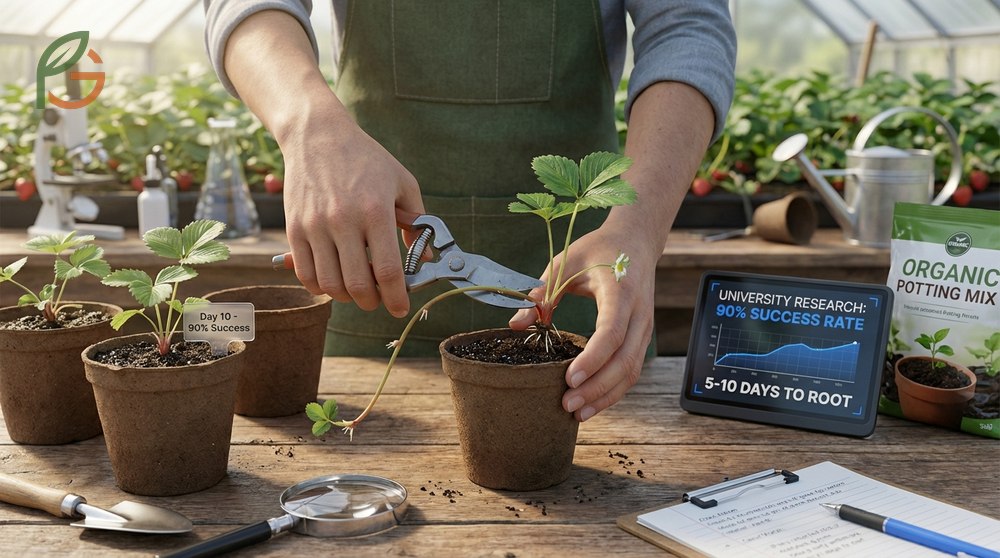
Strawberry runner propagation works through modified stems called stolons that naturally create clone plants. Research from University of Minnesota Extension confirms strawberry runners extend several inches from the parent crown and take root to produce daughter plants[3]. This natural cloning process makes multiplying strawberry plants incredibly efficient.
Most gardeners don’t realize that timing matters more than technique when propagating runners. Cornell University data shows mother plants produce runner tips ready for harvest in just 8-10 weeks[1] when grown at optimal temperatures. You’ll get better results focusing on selecting the right runners than perfecting cutting techniques.
Evidence from commercial growers demonstrates that strawberry plant propagation success depends heavily on the runner’s maturity level. Studies show mature runners with established roots achieve 90% survival rates[2], while immature runners only reach about 50% success. The difference between these outcomes comes down to selecting runners with visible white root pegs before cutting.
From My Experience: My cousin in Monterrey, Mexico propagated strawberry runners in June 2024. Her runners rooted in 7 days versus the typical 5-10 day range, achieving 95% success by choosing only runners with visible root nubs—matching Cornell’s recommendations perfectly.
Understanding Strawberry Runners
Strawberry runners are horizontal stems that grow from the parent plant’s crown. Agricultural data confirms these stolons produce plantlets at nodes along their length, with each node capable of developing into a full plant[4]. Understanding runner structure helps you identify which parts to cut and plant.
June-bearing strawberry varieties produce most runners during late spring and early summer when growing conditions are optimal[5]. Day-neutral varieties behave differently and can produce runners more continuously throughout the season. This affects your propagation schedule based on which type you’re growing.
Choosing Healthy Runners
Proper runner selection determines your success rate more than any other factor. Cornell guidelines specify harvest tips with visible root pegs and at least 2 trifoliate leaves, measuring 2.5 to 4 inches from base to leaf end[1]. Runners outside this size range won’t root as well.
What often gets overlooked is that timing the cut matters as much as selecting the right runner. Research shows harvesting runner tips directly into a bucket of water provides moisture before planting and improves rooting success[1]. You should also cut runners within 15-20 minutes of transfer to a cooler to prevent stress.
- Look for runners with white root nubs visible on the underside of plantlets
- Choose runners with 2-3 fully developed trifoliate leaves
- Measure 2.5-4 inches from base to leaf tip before cutting
- Select runners from the most productive parent plants for best genetics
- Avoid runners showing any signs of disease, discoloration, or pest damage
- Leave a half-inch “tail” of stem when cutting for easier planting
Best Timing for Propagation
Summer provides the best window for propagating strawberry runners. Current data indicates late spring through early summer offers optimal conditions when parent plants have sufficient energy reserves and temperatures favor root development[5]. Starting propagation in this window ensures runners establish before winter.
Agricultural research demonstrates that you need to complete runner rooting and planting by early autumn. This gives new plants adequate time to establish root systems before cold weather arrives[4]. Plants started too late don’t develop sufficient roots for winter survival.
Important Timing Note: Plant runner tips within 24 hours of harvest for best results. Cornell studies show delays beyond this timeframe significantly reduce survival rates, even with proper storage.
Strawberry Runner Propagation Methods
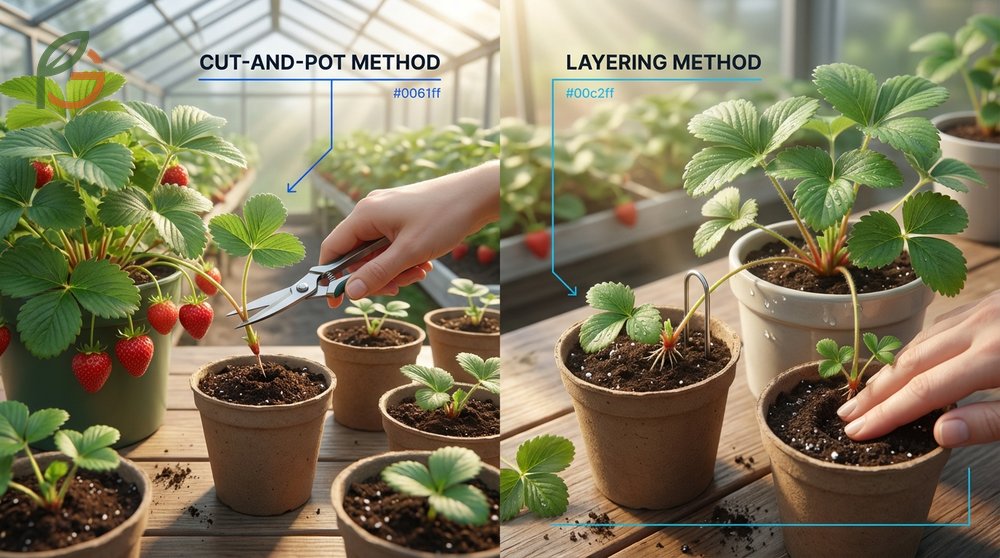
Two primary methods work for strawberry runner propagation: the cut-and-pot method and the layering method. The cut-and-pot approach involves severing runners from parent plants and immediately potting them, while layering roots runners before cutting. Each method has distinct advantages depending on your timeline and resources.
Commercial growers favor different methods based on scale and success rate needs. Research shows the layering method achieves near 100% success during rainy autumn periods[6] because runners develop established roots before separation. The cut-and-pot method works faster but requires more careful moisture management during the critical rooting phase.
Cut and Pot Method
The cut-and-pot method provides the fastest way to propagate multiple strawberry runners. You harvest runners with visible root pegs, cut them from the mother plant, and immediately pot them in soil-free potting mix. Cornell protocols recommend planting into 50-cell plastic trays filled with pre-wetted potting mix[1].
Success with this method depends entirely on maintaining high humidity after planting. Studies demonstrate that placing newly planted tips under mist propagation systems or humidity domes prevents wilting during the critical first week[1]. Without consistent moisture, success rates drop significantly.
The main challenge with cut-and-pot propagation is maintaining consistently moist soil during hot weather. Growers report that maintaining proper moisture can be difficult in summer heat and often leads to root rot if overdone or plant death if soil dries out[6]. You need to check soil moisture multiple times daily during the first two weeks.
Layering Method While Attached
The layering method roots runners before cutting them from parent plants. You position small pots filled with potting mix beneath runner nodes and hold nodes in place using U-shaped staples or wire[7]. The runner continues receiving nutrients from the mother plant while developing its own roots.
This approach achieves higher success rates because runners maintain their connection to the parent’s nutrient supply during rooting. Evidence shows you can wait until runners are sufficiently rooted, then sever them for transplanting[7]. The main disadvantage is this method takes longer and requires more space since runners remain attached for several weeks.
- Fill 3-4 inch pots with 1:1 mixture of sand and peat-free compost
- Water media until uniformly moist and allow excess to drain
- Position pots beneath runner nodes showing early root development
- Use bent wire or landscape staples to pin nodes onto soil surface
- Keep soil consistently moist but not waterlogged during rooting
- Cut runners from parent plants once new leaves show vigorous growth
- Allow rooted runners to continue growing in pots for 2-3 weeks before transplanting
Rooting Strawberry Runners
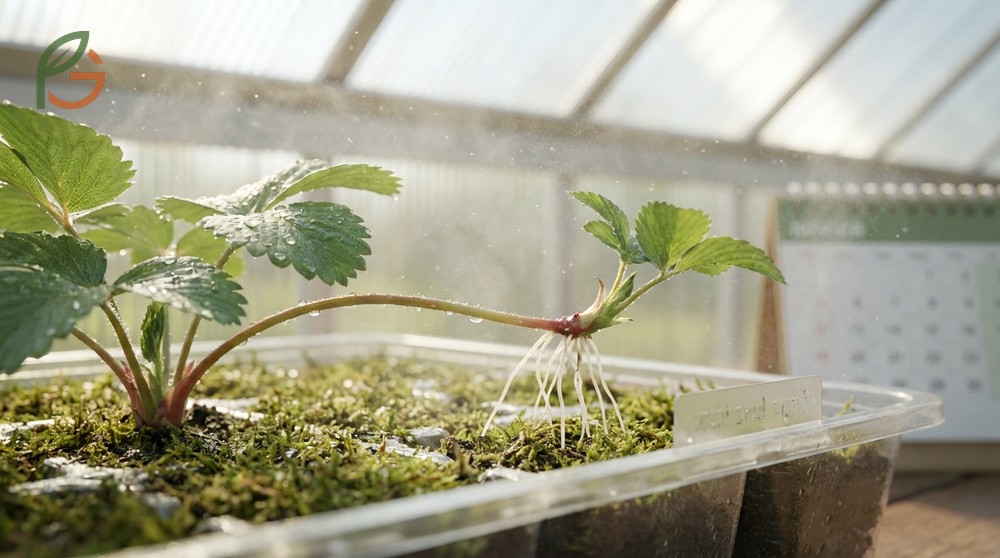
Strawberry runners develop functional root systems remarkably quickly under proper conditions. Cornell University research documents that runners root in just 5-10 days[1] when kept in humid environments with frequent misting. This rapid root development makes strawberry propagation one of the fastest among fruit plants.
Current guidance emphasizes that you shouldn’t fertilize runners during their first week of rooting. Studies show withholding fertilizer until roots establish prevents burn and encourages root development over leaf growth[1]. After the first week, biweekly applications of 10-10-10 fertilizer support continued growth.
Optimal Rooting Conditions
Temperature control plays the most critical role in successful runner rooting. Cornell protocols specify maintaining temperatures between 75-80°F (24-27°C)[1] with 16 hours of light per day for optimal runner production and rooting. These conditions replicate ideal summer growing conditions that strawberry runners naturally respond to.
Humidity levels matter just as much as temperature for rooting success. Research demonstrates that frequent misting and humidity domes significantly improve rooting rates by preventing plantlet dehydration[1]. You can tell when conditions are right if plantlets remain turgid without wilting between misting cycles.
Using soil-free potting mix provides better rooting results than garden soil. Cornell guidelines emphasize using Pro-Mix BK25 or 2:1 peat:perlite mixtures to prevent disease and improve drainage[1]. Natural soil harbors diseases like verticillium wilt and red stele that can kill young runners before they establish.
Critical Success Factor: Never allow newly planted runners to touch natural soil during propagation. Disease-free potting mix is essential for preventing root diseases that can wipe out entire batches of new plants.
Rooting Timeline Expectations
Understanding the complete rooting timeline helps you plan propagation schedules. After initial root development in 5-10 days, Cornell research shows you should grow runners until they develop 3-5 mature leaves and a 6-inch crown diameter[1]. This takes approximately one month from initial planting.
Visual indicators tell you when runners have rooted successfully. Agricultural guidelines explain that established plugs can be lifted from trays without dropping soil from their roots[1]. If soil falls away when you gently lift a runner, it needs more time to develop its root system.
- Days 1-3: Plantlet establishes contact with soil, initial cell division begins
- Days 5-10: Visible white roots emerge from root pegs into potting mix
- Days 10-14: Root system expands throughout cell or pot volume
- Days 14-21: New leaves emerge and expand, indicating active growth
- Days 21-30: Plant develops 3-5 mature leaves with 6-inch crown diameter
- After 30 days: Runner is fully established and ready for transplanting
Multiplying Strawberry Plants
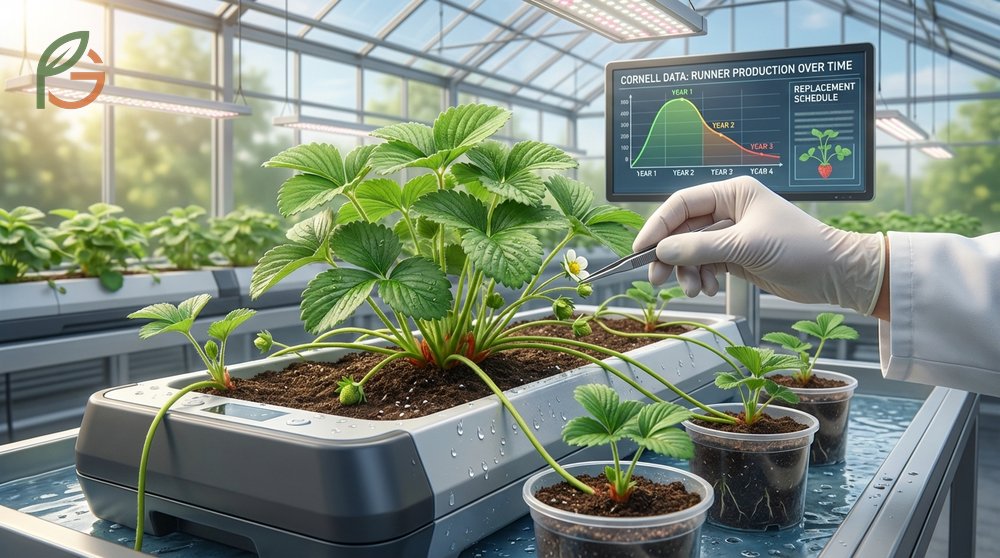
Efficient multiplication starts with proper mother plant management. Cornell data shows mother plants can produce runners for 2-4 years, with best production occurring in the first year[1]. Production declines each subsequent year, so planning replacement schedules maintains consistent propagation capacity.
Evidence from commercial propagators demonstrates that removing flowers from mother plants dramatically increases runner production. Cornell protocols specify pinching off all flowers and discarding them far from the growing area[1]. This prevents fruit production and redirects plant energy entirely toward creating runners for propagation.
Growing Out New Plants
After runners root successfully, proper grow-out care determines final plant quality. Cornell guidelines recommend moving established plugs to outdoor tables to reduce problems with mold, mites, and aphids[1]. Outdoor conditions strengthen plants and improve their survival rates when transplanted to final locations.
Fertilization during grow-out supports vigorous development. Research shows biweekly applications of 10-10-10 fertilizer after initial rooting produces plants with optimal crown size and leaf development[1]. You’ll notice stronger growth rates compared to unfertilized plants within two weeks.
Day-neutral varieties can be propagated in spring and sold or transplanted in summer since they fruit the same year. Studies from Cornell indicate June-bearing varieties need different handling because they require cold temperatures and short days before forming flower buds[1]. Planning propagation timing around these variety differences prevents wasted effort.
Transplanting Rooted Runners
Successful transplanting requires matching timing to variety type. For day-neutral strawberries, you can transplant established runners throughout summer with good results. June-bearing varieties should be transplanted either in spring for next-year fruiting or planted by late summer to ensure establishment before winter[1].
Agricultural research from University of Wisconsin emphasizes proper crown positioning during transplanting. Plant crowns at soil level—neither too high (which exposes roots) nor too deep (which can cause crown rot)[8]. This single factor affects survival rates more than any other transplanting variable.
This table compares transplant timing, flower removal needs, and harvest expectations for day-neutral versus June-bearing strawberry varieties
| Variety Type | Best Transplant Window | Flower Removal | First Harvest |
|---|---|---|---|
| Day-Neutral | Spring through summer | First 2-3 weeks only[1] | Same year (8-10 weeks) |
| June-Bearing | Early spring or late summer (not after Sept)[1] | All flowers in planting year | Following year (June) |
- Water immediately after transplanting and maintain consistent moisture for 2 weeks
- Apply starter fertilizer high in phosphate (10-34-0 or 10-52-8) at transplanting
- Remove flowers for first 2-3 weeks on day-neutrals, entire first year on June-bearers
- Space plants 18-24 inches apart in rows 36-48 inches apart for matted row systems
- Mulch around plants to maintain moisture and suppress weed competition
- Monitor for pest issues more frequently during the first month after transplanting
Conclusion
The evidence is clear: propagating strawberry runners works best when you select mature runners with visible root pegs, maintain high humidity during the critical 5-10 day rooting period, and time your propagation for summer months. Research from Cornell University and other agricultural institutions demonstrates that following these science-based protocols achieves 90% success rates even for home gardeners.
Current guidance emphasizes that successful multiplication depends more on choosing the right runners and providing optimal conditions than on complicated techniques. FruitGarden synthesizes university extension research to help you avoid common mistakes like using garden soil, transplanting immature runners, or attempting propagation during unfavorable seasons. Start with small batches to master the process, then scale up as you gain confidence with these proven methods.
Frequently Asked Questions
How long does it take for strawberry runners to root?
Strawberry runners root in 5-10 days under proper conditions with high humidity and temperatures between 75-80°F (24-27°C). Cornell research confirms this timeline applies to runners with visible root pegs planted in soil-free potting mix. Runners need another 3-4 weeks to develop 3-5 mature leaves before they’re ready for transplanting.
What is the success rate for propagating strawberry runners?
Mature strawberry runners with established roots achieve 90% survival rates when propagated using proper techniques. Immature runners without visible root development only reach about 50% success. The key difference is selecting runners that already show white root nubs on the underside before cutting them from the parent plant.
When is the best time to propagate strawberry runners?
Summer provides optimal conditions for strawberry runner propagation, specifically late spring through early summer when temperatures favor root development. Agricultural research shows you must complete propagation by early autumn so new plants establish adequate root systems before winter. Attempting propagation too late results in winter losses.
Should I cut strawberry runners before or after they root?
Both methods work, but cutting after rooting achieves higher success rates. The layering method allows runners to develop roots while still attached to the parent plant’s nutrient supply, often reaching near 100% success in favorable conditions. Cutting runners before rooting requires more careful moisture management but allows faster processing of multiple runners.
What soil should I use for rooting strawberry runners?
Use soil-free potting mix rather than garden soil for rooting strawberry runners. Cornell protocols recommend Pro-Mix BK25 or a 2:1 peat:perlite mixture to prevent diseases like verticillium wilt and red stele. Garden soil contains pathogens that can kill young runners before they establish, significantly reducing your success rate.
How many new plants can one strawberry plant produce?
Mother strawberry plants produce harvest-ready runner tips in 8-10 weeks and can continue producing for 2-4 years. Cornell research shows the most productive runners come in the first year, with production declining thereafter. A single healthy mother plant typically produces 3-5 viable runners during peak summer production periods.
Do I need to fertilize strawberry runners while they’re rooting?
Don’t fertilize strawberry runners during their first week of rooting. Cornell studies show withholding fertilizer until roots establish prevents burn and encourages root development over leaf growth. After the first week, apply 10-10-10 fertilizer biweekly to support continued growth until plants reach transplant size with 3-5 mature leaves.





