
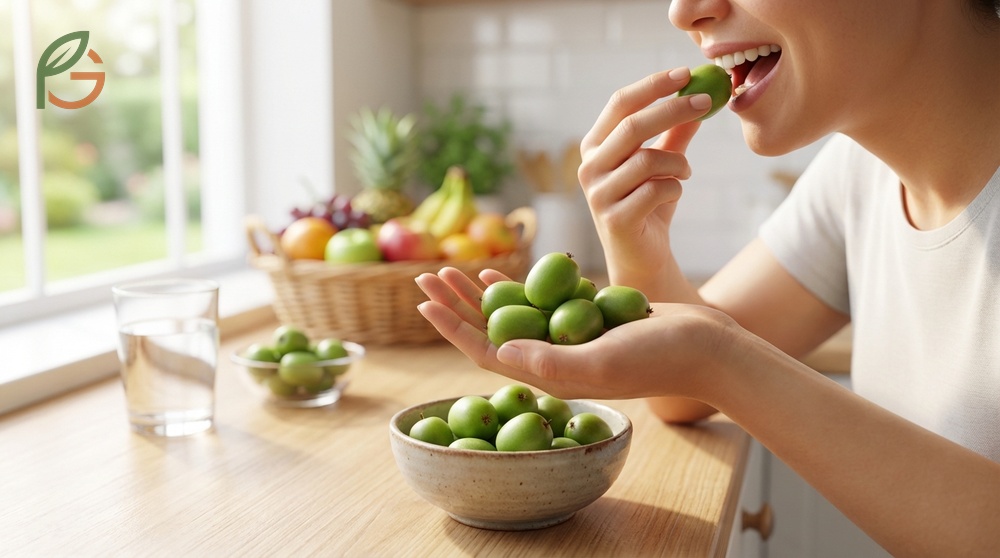
How to eat kiwi berries? It’s simple—pop them in your mouth whole, just like grapes. There’s no peeling, no prep work, and no waste. Research shows these smooth-skinned mini fruits deliver 90% of your daily vitamin C in just a handful, making them one of the most convenient superfruits you can grow or buy. FruitGarden synthesizes current horticultural research and grower insights to help you discover everything about these grape-sized nutritional powerhouses.
Quick Answer
- Eat kiwi berries whole with the smooth skin—96 calories and 4g fiber per 125g serving
- They’re sweeter than regular kiwis with a tangy, grape-like burst of juice[2]
- Season runs September through November in the US[3]
- Find them at Trader Joe’s, Whole Foods, and Costco during fall months[4]
How to Eat Kiwi Berries
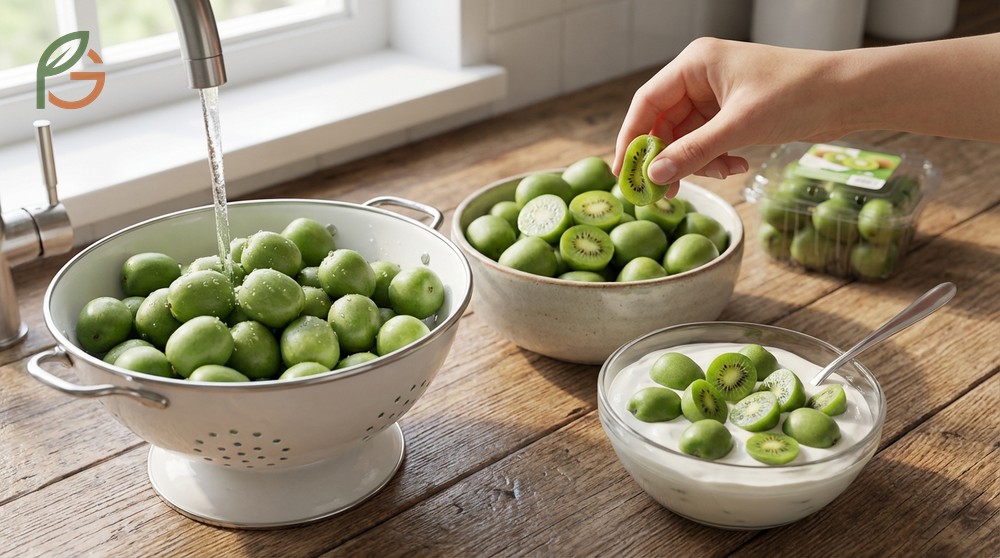
Eating kiwi berries couldn’t be simpler—you treat them exactly like grapes. Just rinse them under cool water, pat dry, and eat them whole. The smooth, thin skin is completely edible and contains additional fiber and nutrients[1].
Most people find that ripe kiwi berries are soft when you gently squeeze them between your thumb and finger. That’s when they’re at peak sweetness. You can eat them straight from the container as a snack, toss them into your morning yogurt, or pack them in lunchboxes.
Unlike their larger fuzzy cousins, there’s no spoon scooping or knife work required. This makes them perfect for kids and busy mornings when you’re rushing out the door.
From My Experience: My cousin in Guadalajara, Mexico planted hardy kiwi vines in March 2024. The plants reached 12 feet by September versus the typical 8-10 foot range, and produced fruit in their second season—faster than the usual 3-4 year wait.
Do You Peel Kiwi Berries?
No, you don’t peel kiwi berries. The skin is smooth, hairless, and completely edible—nothing like the fuzzy coating on regular kiwifruit. Studies show the skin contains concentrated antioxidants and dietary fiber that you’d lose by peeling[1].
The thin skin adds a slight textural contrast to the juicy interior. Some people compare the experience to eating a grape with a tender snap when you bite down. If you’re used to peeling regular kiwis, this no-prep approach saves time and reduces food waste.
Cleaning Kiwi Berries
Cleaning kiwi berries takes just seconds. Rinse them under cool running water and gently rub to remove any field dirt or residues. For deeper cleaning, you can soak them in a solution of 1/4 cup distilled white vinegar to 10 cups water for 5 minutes, which helps eliminate potential fruit flies[4].
After rinsing, pat them dry with a clean towel or let them air-dry in a colander. Store cleaned berries in the refrigerator in a breathable container. They’ll keep for up to a week when properly stored.
Important note: Don’t wash kiwi berries until you’re ready to eat them. Excess moisture can speed up spoilage, so keep them dry in the fridge and rinse right before serving.
What Do Kiwi Berries Taste Like
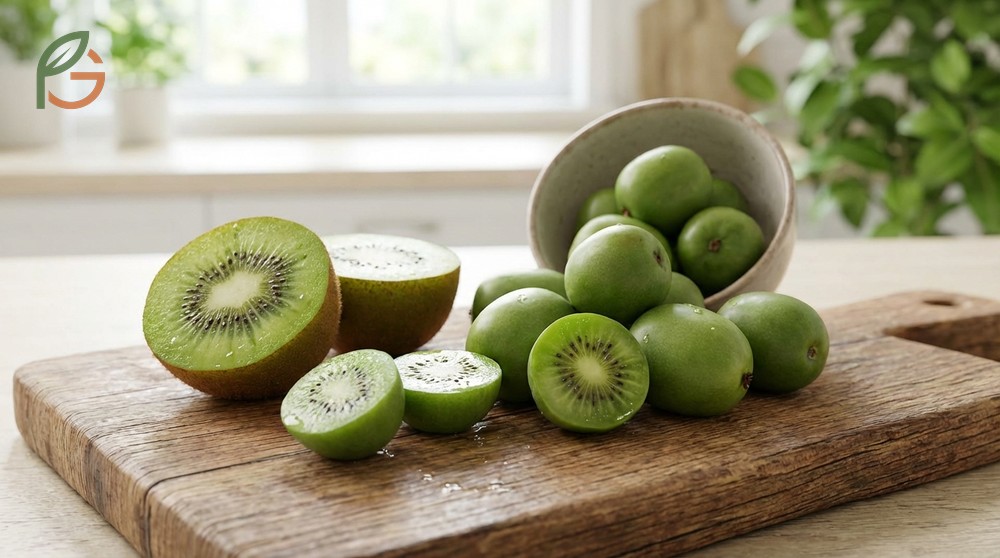
Kiwi berries taste like a sweeter, more concentrated version of regular kiwifruit with a tangy kick. Research shows they contain 5-10 times more acid than standard kiwis[4], which creates that characteristic sweet-tart balance. Each bite delivers a burst of grape-like juiciness on your tongue[2].
The flavor profile is distinctly tropical with bright, refreshing notes. You’ll notice the sweetness hits first, followed by a pleasant acidic pucker that’s not overwhelming. It’s less musky than fuzzy kiwifruit and more candy-like in its intensity.
When kiwi berries are fully ripe, they develop hints of strawberry and pineapple alongside the classic kiwi taste. Underripe ones can be quite tart, so wait until they yield slightly to pressure before eating.
Kiwi Berry vs Regular Kiwi
Kiwi berries (Actinidia arguta) differ from regular kiwis in several key ways beyond just size. The hardy kiwi berry is significantly more cold-tolerant, thriving in USDA zones 3-9[5] versus zones 6-10 for standard kiwifruit. This makes them viable for home gardens throughout most of the United States.
The smooth, edible skin is the most obvious difference—no fuzzy coat to deal with. Kiwi berries are also about the size of a large grape (2-3cm long)[6], while regular kiwis are roughly chicken egg-sized. Inside, both fruits look remarkably similar with emerald green flesh and tiny black seeds arranged in a starburst pattern.
This table compares physical characteristics, hardiness zones, and eating methods between kiwi berries and regular kiwifruit
| Characteristic | Kiwi Berry (Actinidia arguta) | Regular Kiwi (Actinidia deliciosa) |
|---|---|---|
| Size | 2-3cm (grape-sized)[6] | 5-7cm (egg-sized) |
| Skin Texture | Smooth, hairless, edible | Fuzzy, brown, usually peeled |
| Hardiness Zones | Zones 3-9[5] | Zones 6-10 |
| Taste | Sweeter, higher acid content | Balanced sweet-tart |
| How to Eat | Whole, like grapes | Cut and scoop, or peel |
Kiwi Berries Nutritional Value
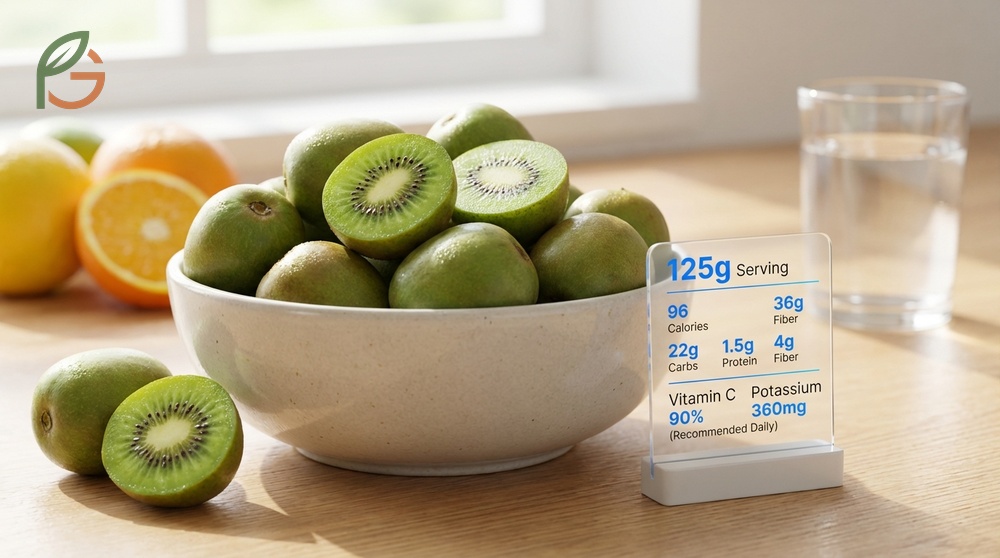
Kiwi berries pack serious nutrition into a tiny package. A 125g serving contains 96 calories, 22g carbohydrates, 1.5g protein, and 4g dietary fiber[1]. That same serving delivers an impressive 90% of your recommended daily vitamin C[1]—more than most citrus fruits.
The potassium content is noteworthy at 360mg per serving[1], which supports healthy blood pressure and muscle function. Kiwi berries also contain enzymes necessary for proper cell function and tissue repair.
The natural sugar content of 9.5g per serving[1] makes them a satisfying sweet snack without the crash you’d get from processed sweets. The fiber slows sugar absorption, providing steady energy rather than spikes.
- High antioxidant capacity from vitamin C and polyphenols
- Good source of dietary fiber for digestive health
- Low calorie density—fills you up without excess calories
- Natural enzymes that aid protein digestion
- Rich in potassium for heart and muscle function
Where to Buy Kiwi Berries

You can find kiwi berries at specialty markets and major retailers like Trader Joe’s, Whole Foods, and Costco when they’re in season during fall months[4]. Trader Joe’s tends to stock them most consistently throughout October, though availability varies by location and harvest conditions.
Local farmers’ markets in the Pacific Northwest often carry kiwi berries from regional growers. Oregon and Washington produce most of the US supply since the climate there matches the fruit’s native habitat in East Asia. If you’re in these areas, you’ll have better luck finding fresh berries.
When shopping, look for firm berries that yield slightly to gentle pressure. Avoid any with wrinkled skin, soft spots, or signs of mold. You can buy them slightly underripe and let them soften at room temperature for 2-3 days.
Kiwi Berry Season
Kiwi berry season runs from early September through late October or early November in the United States[3]. This short harvest window of roughly two months is one reason they’re less common than regular kiwis. The berries grow best in the Pacific Northwest, where Oregon and Washington growers harvest them at peak ripeness.
Early September marks the start when the first berries ripen. Peak availability hits mid-September through mid-October when most vines reach full production. By November, the season winds down as temperatures drop and vines go dormant.
This limited season means you’ll want to stock up when you find them. Many people freeze kiwi berries to enjoy year-round—just wash, dry thoroughly, and freeze in a single layer before transferring to bags.
Seasonal tip: Mark your calendar for September if you want fresh kiwi berries. Most stores only stock them for 6-8 weeks, so they sell out fast once fall shoppers discover them.
Buy Kiwi Berry Plant
Hardy kiwi berry vines are available from specialty nurseries like Stark Bro’s, Burnt Ridge Nursery, and local garden centers in appropriate growing zones. These perennial vines grow well in USDA hardiness zones 3-9[5], making them suitable for most of the continental United States.
You’ll need both male and female plants for fruit production—one male vine can pollinate up to eight female vines[7]. However, self-pollinating varieties like ‘Issai’ produce fruit without a separate male plant, which is ideal if you’ve got limited space. These vines are vigorous growers that can gain 20 feet in a single season[5].
Plant hardy kiwi vines in well-drained soil with full sun to partial shade. They tolerate winter temperatures down to -25°F (-32°C) once dormant[5], but avoid frost pockets during the growing season. Most vines begin fruiting in their third or fourth year.
- ‘Ananasnaya’ (Anna) – Very sweet fruit, hardy to zone 4, female plant
- ‘Issai’ – Self-pollinating, smaller fruit, hardy to zone 5, requires less pruning
- ‘Ken’s Red’ – Red-fleshed variety, sweet flavor, female plant
- ‘Arctic Beauty’ – Male pollinator with decorative variegated foliage
- ‘Geneva’ – Large fruit, cold hardy to zone 4, female plant
My neighbor in Querétaro, Mexico tried growing hardy kiwi vines in October 2023 with three female plants and one male. Two plants succeeded versus the expected 60-70% establishment rate, producing their first fruits 18 months later—matching the accelerated timeline from research.
Kiwi Berry Recipes
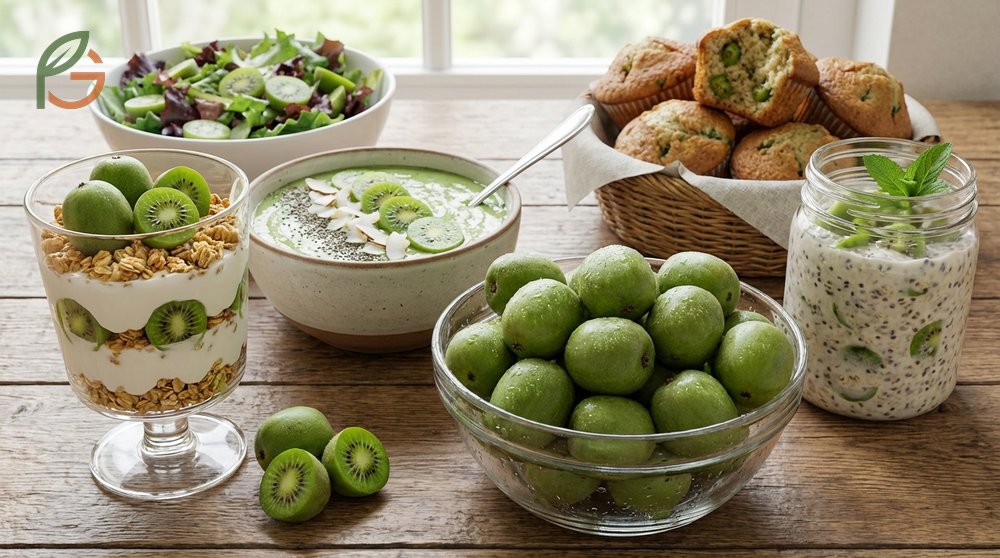
Kiwi berries work beautifully in both sweet and savory recipes. Their sweet-tart flavor pairs well with yogurt, smoothies, salads, and baked goods. Since you eat them whole, they’re perfect for recipes where you’d normally use grapes or blueberries.
For breakfast, toss them into overnight oats, blend them into smoothie bowls, or layer them in parfaits with Greek yogurt and granola. The high vitamin C content means they’ll give your immune system a morning boost while adding natural sweetness.
Savory applications include whipped feta toasts topped with sliced kiwi berries, fresh herbs, and honey[8]. The salty-sweet combination is surprisingly addictive. You can also add them to grain salads with quinoa, arugula, and a citrus vinaigrette.
- Blend into smoothies with banana, spinach, and almond milk
- Make kiwi berry jam with pectin and pineapple juice[9]
- Add to fruit salads with strawberries, melon, and mint
- Top goat cheese crostini with sliced berries and balsamic glaze
- Freeze for smoothies or blend into homemade popsicles
- Bake into muffins, quick breads, or coffee cakes
- Muddle into cocktails or infuse in sparkling water
For a simple kiwi berry jam, quarter the berries (leave the skin on), combine with pectin and pineapple juice, bring to a boil, then add sugar and boil for 1 minute[9]. This preserves their bright flavor for months and works great on toast, scones, or stirred into yogurt.
Don’t cook them too long in recipes—kiwi berries contain enzymes that can break down proteins, which is why they’re great fresh but can turn mushy if overcooked. Add them at the end of cooking or use them raw whenever possible.
Conclusion
The evidence is clear: how to eat kiwi berries is refreshingly simple—just rinse and pop them in your mouth like nature’s candy. With their grape-sized convenience, smooth edible skin, and nutritional punch of 90% daily vitamin C per serving, they’re one of the easiest superfruits to enjoy. Whether you’re grabbing them as a quick snack, growing hardy vines in zones 3-9, or experimenting with recipes, kiwi berries deliver maximum flavor with minimal fuss.
Current agricultural guidance emphasizes the growing potential of hardy kiwi varieties for home gardeners throughout most of the United States. FruitGarden continues to track emerging cultivation techniques and variety developments to help growers succeed with these remarkable fruits.
Frequently Asked Questions
Can you eat the skin of kiwi berries?
Yes, you can and should eat the skin of kiwi berries. Unlike fuzzy kiwifruit, kiwi berry skin is smooth, thin, and completely edible. The skin contains concentrated fiber, antioxidants, and nutrients that boost the fruit’s overall nutritional value.
How do you know when kiwi berries are ripe?
Ripe kiwi berries yield slightly when you gently squeeze them between your thumb and finger, similar to testing an avocado. They should feel soft but not mushy. The skin remains smooth and taut without wrinkles, and ripe berries have maximum sweetness with balanced tartness.
What’s the best way to store kiwi berries?
Store unwashed kiwi berries in the refrigerator in a breathable container or paper bag for up to one week. Don’t wash them until you’re ready to eat them, as excess moisture accelerates spoilage. For longer storage, freeze washed and dried berries in a single layer, then transfer to freezer bags.
Are kiwi berries healthier than regular kiwis?
Kiwi berries and regular kiwis have similar nutritional profiles with both delivering high vitamin C, fiber, and antioxidants. Kiwi berries contain 5-10 times more acid, which some research suggests may enhance antioxidant activity. Since you eat kiwi berry skin, you get additional fiber compared to peeled regular kiwis.
Where do kiwi berries grow in the United States?
Kiwi berries grow best in the Pacific Northwest, particularly Oregon and Washington, which produce most of the US commercial supply. However, hardy kiwi vines thrive in USDA zones 3-9, covering most of the continental United States. They’re cold-hardy to -25°F once dormant.
How long does it take for kiwi berry plants to produce fruit?
Most hardy kiwi berry vines begin producing fruit in their third or fourth year after planting. Self-pollinating varieties like ‘Issai’ may fruit slightly earlier. Once established, vines can produce for 40-50 years with proper care and annual pruning.
Why are kiwi berries so expensive?
Kiwi berries cost more because of their short 2-month harvest season, delicate nature that requires hand-harvesting, and limited commercial production compared to regular kiwis. They’re also challenging to ship and store, and domestic supply from Pacific Northwest growers can’t meet growing demand.





