
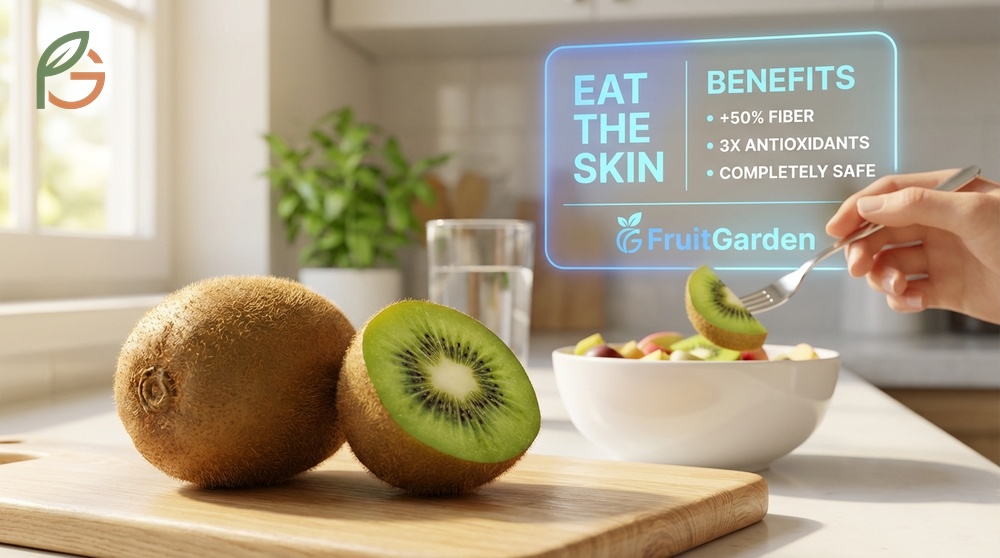
Can you eat kiwi skin? Yes, kiwi skin is completely safe to eat and packed with nutrients. Research shows that eating the whole kiwi with its skin increases fiber content by 50% and delivers three times more antioxidants than the flesh alone[1]. FruitGarden synthesizes current nutritional research to help you make informed decisions about eating fruit with confidence.
Quick Answer
- Kiwi skin is safe to eat and boosts fiber by 50% (green kiwi with skin has 3.5g fiber)[1]
- The skin contains 3x more antioxidants than the flesh, including vitamins C and E[1]
- Eating gold kiwi skin increases folate intake by 34%[2]
- Wash kiwis under running water to remove surface pesticides—no special wash needed[3]
Can You Eat Kiwi Skin
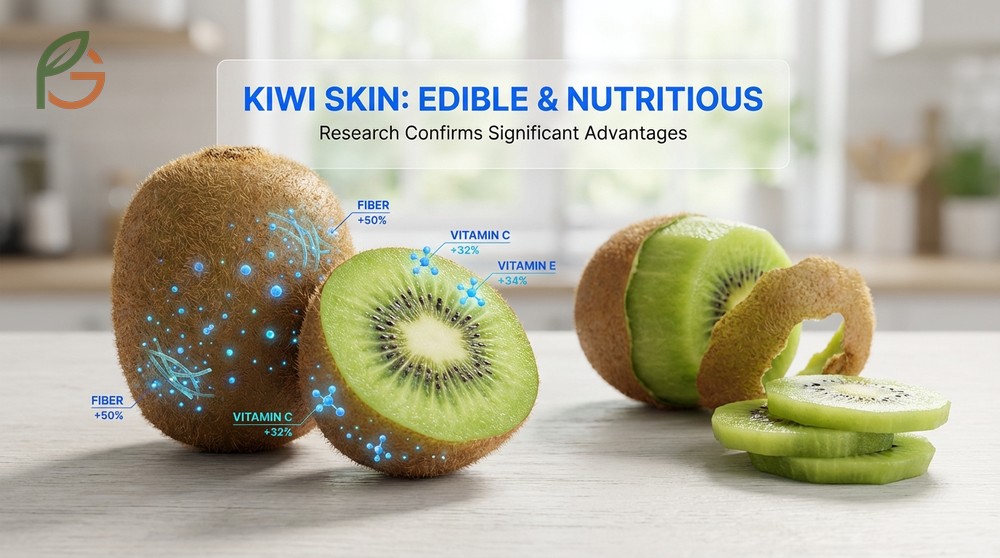
Research confirms that kiwi skin is completely edible and provides significant nutritional advantages over eating the flesh alone. The skin is rich in dietary fiber, vitamins E and C, and powerful antioxidants that support overall health[2]. Most people don’t realize that discarding the skin means missing out on half the fiber content.
Studies demonstrate that consuming whole kiwifruit with the skin increases fiber by 50%, vitamin E by 32%, and folate by 34%[2]. The USDA recognizes kiwi skin as safe to eat and notes it contributes approximately 2 grams of dietary fiber per serving[4].
Safety of Eating Kiwi Skin
Current data indicates that kiwi skin poses no health risks for most people when properly washed. The skin itself is non-toxic and digestible, though some individuals may need to avoid it due to allergies or texture preferences. Evidence suggests washing kiwis under running water effectively removes surface contaminants and pesticide residues[3].
For people with kiwi allergies, symptoms can range from mild oral irritation to severe reactions affecting breathing. Allergic reactions typically occur within 30 minutes of consumption and may include tongue swelling, hives, or wheezing[5]. If you’ve never eaten kiwi skin before, start with a small amount to test your tolerance.
Important Note: If you have a latex allergy, you’re more likely to react to kiwi due to cross-reactivity. Consult your healthcare provider before trying kiwi skin for the first time.
Texture Differences
The fuzzy texture of kiwi skin can feel unfamiliar at first but becomes less noticeable after a few bites. Many people compare it to eating a peach with its skin on. You can rub off some of the fuzz with a clean cloth or soft brush if the texture bothers you, though this removes some beneficial compounds.
Blending kiwi with the skin into smoothies eliminates texture concerns entirely while preserving all nutritional benefits. The blender breaks down the skin’s fibers, creating a smooth consistency you won’t even notice.
Is Kiwi Skin Good for You
The nutritional profile of kiwi skin surpasses the flesh in several key areas. Research published in peer-reviewed journals confirms that kiwi peels demonstrate superior antioxidant activity compared to the pulp, with green kiwi peels showing particularly high phenolic compound concentrations[6]. These compounds provide anti-inflammatory and cellular protection benefits that support long-term health.
Eating kiwi skin delivers measurable increases in vitamin C levels in both blood and skin tissue. A recent study found that consuming two whole kiwis daily for eight weeks raised skin vitamin C concentrations and improved skin firmness through enhanced collagen production[7].
Fiber Content
One green kiwi eaten with its skin provides 3.5 grams of dietary fiber, while a gold kiwi with skin contains about 3 grams[1]. This represents a 50% increase compared to eating peeled kiwi. For context, that’s more fiber than you’d get from two medium bananas.
This fiber boost supports digestive health by promoting regular bowel movements and feeding beneficial gut bacteria. It also helps you feel fuller longer, which can assist with weight management efforts.
- Promotes healthy digestion and regular bowel movements
- Feeds beneficial gut bacteria that support immune function
- Helps control blood sugar levels by slowing glucose absorption
- Increases satiety, reducing overall calorie intake throughout the day
- Supports heart health by helping lower cholesterol levels
Antioxidants and Vitamins
Kiwi skin contains three times more antioxidants than the fruit’s flesh, with vitamins C and E leading the charge[1]. These antioxidants neutralize free radicals—unstable molecules that accelerate aging and contribute to chronic disease development.
Gold kiwi skin specifically boosts folate intake by 34%, providing essential vitamin B9 that helps your body convert carbohydrates into energy[1]. Folate plays a critical role in cell division and DNA synthesis, making it particularly important during pregnancy.
- Vitamin C: Supports immune function and collagen production for healthy skin
- Vitamin E: Protects cell membranes from oxidative damage
- Folate (B9): Essential for DNA synthesis and red blood cell formation
- Lutein and zeaxanthin: Support eye health and protect against age-related vision decline
- Phenolic compounds: Provide anti-inflammatory effects and cellular protection
Pro Tip: Pairing kiwi skin with healthy fats like nuts or yogurt enhances absorption of fat-soluble vitamins E and lutein, maximizing nutritional benefits.
How to Wash Kiwi Fruit

Washing kiwis properly removes dirt, bacteria, and surface pesticide residues without requiring special produce washes or vinegar solutions. Plain running water combined with gentle scrubbing proves just as effective as commercial cleaners[3]. Most pesticide residues sit on the surface rather than penetrating deep into the skin.
For kiwis, use a soft vegetable brush or clean cloth to scrub the fuzzy skin under cool running water for 15-20 seconds. This mechanical action removes more contaminants than soaking alone. If you prefer organic kiwis, you’ll find minimal pesticide residues, though washing remains important for removing environmental dirt and handling residues.
Research on pesticide removal methods shows that washing with 2% salt water removes most contact pesticide residues from fruit surfaces. For better results, wash your kiwis 2-3 times under running water[8]. Don’t worry about using special solutions—plain water works remarkably well.
- Rinse kiwis under cool running water immediately before eating
- Use a soft brush or clean cloth to gently scrub the fuzzy skin
- Rub the entire surface for 15-20 seconds to remove debris
- Pat dry with a clean towel to remove excess moisture
- For extra cleaning, wash 2-3 times if purchasing conventionally grown kiwis
You don’t need to wash kiwis until you’re ready to eat them. Washing too early can trap moisture against the skin, potentially promoting mold growth during storage. Keep unwashed kiwis in the refrigerator and rinse them just before consumption.
Gold vs Green Kiwi Skin
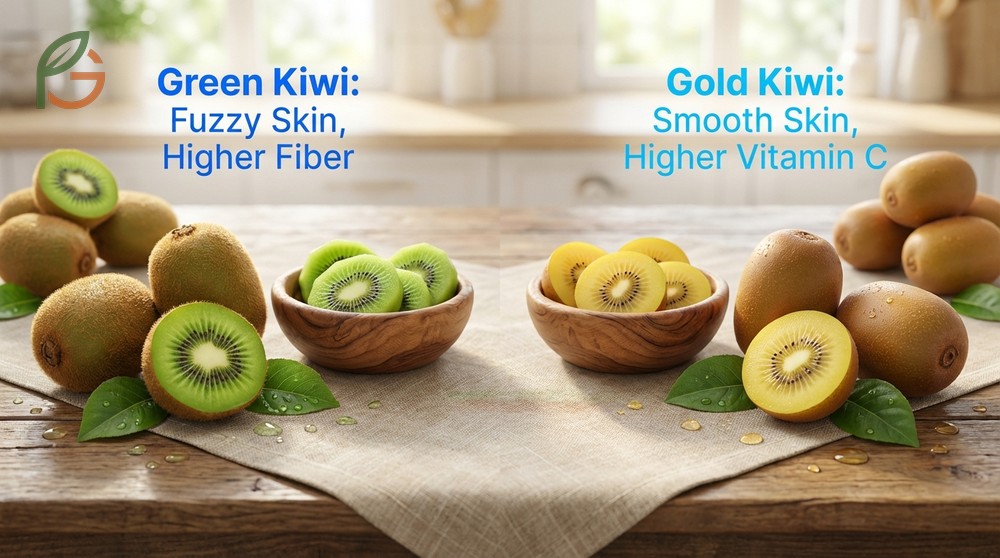
The skin texture and nutritional content differ noticeably between gold and green kiwi varieties. Green kiwis feature fuzzy brown skin with coarse texture, while gold kiwis have smooth or lightly fuzzy skin that’s easier to eat[9]. Many people who dislike green kiwi skin find gold kiwi skin more palatable.
Nutritionally, green kiwis provide about 1.5 times more dietary fiber than gold kiwis, making them better for digestive health. However, gold kiwis contain nearly twice as much vitamin C as green varieties[10]. Your choice depends on whether you prioritize fiber intake or vitamin C content.
This table compares skin texture, fiber content, vitamin C levels, and taste characteristics between green and gold kiwi varieties
| Characteristic | Green Kiwi Skin | Gold Kiwi Skin |
|---|---|---|
| Skin Texture | Fuzzy, coarse brown skin[9] | Smooth or lightly fuzzy, golden-brown[9] |
| Fiber Content (with skin) | 3.5g per kiwi[1] | 3g per kiwi[1] |
| Vitamin C Content | Moderate levels | Nearly 2x more than green[10] |
| Taste Profile | Tart-sweet, tangy | Sweeter, hints of mango and berry |
| Best For | Digestive health, salads | Immunity boost, smoothies |
Green kiwis also contain actinidin, a unique enzyme that aids protein digestion and may help relieve symptoms of irritable bowel syndrome. This enzyme isn’t present in the same concentrations in gold kiwis. If digestive support is your primary goal, green kiwis eaten with their fiber-rich skin offer the most benefit.
For people new to eating kiwi skin, gold kiwis provide an easier starting point due to their smoother texture and sweeter taste. Once you adjust to the concept, you can transition to green kiwis if you want to maximize fiber intake.
Conclusion
The evidence is clear: eating kiwi skin delivers substantial nutritional advantages that you shouldn’t miss. You’ll get 50% more fiber, triple the antioxidants, and significant increases in vitamins E and folate simply by eating the whole fruit. Current guidance emphasizes consuming whole fruits with their skins whenever safe to maximize nutrient density and minimize food waste.
Whether you choose fuzzy green kiwis or smooth gold varieties, washing them thoroughly under running water makes the skin perfectly safe to eat. FruitGarden helps you make evidence-based decisions about fruit consumption that support your health goals while reducing unnecessary food waste.
Medical Disclaimer
Important Medical Disclaimer: This content is for informational and educational purposes only. It is not intended as a substitute for professional medical advice, diagnosis, or treatment. Always consult a qualified healthcare professional before making any changes to your diet, especially if you have food allergies, digestive conditions, or other medical concerns. Individual nutritional needs vary, and what works for most people may not be appropriate for your specific situation.
Frequently Asked Questions
Should You Eat Kiwi Skin?
Yes, you should eat kiwi skin if you can tolerate the texture. Research shows it increases your fiber intake by 50% and provides three times more antioxidants than the flesh alone. The skin is safe to eat when properly washed and contains valuable nutrients like vitamin E, folate, and phenolic compounds that support overall health.
Is It Safe to Eat Kiwi Skin?
Yes, kiwi skin is safe to eat for most people when washed under running water to remove surface contaminants. The skin is non-toxic and digestible, though individuals with kiwi allergies or latex sensitivity should avoid it. Start with a small amount if you’re trying it for the first time to test your tolerance.
Can You Eat Kiwi Peel?
Yes, kiwi peel is completely edible and nutritious. The peel contains higher concentrations of fiber, antioxidants, and vitamins than the flesh. While the fuzzy texture may feel unusual at first, you can rub off some of the fuzz with a cloth or blend the whole kiwi into smoothies for easier consumption.
How Do You Eat Kiwi With Skin?
To eat kiwi with skin, wash it thoroughly under running water using a soft brush to remove fuzz and debris. Slice the kiwi into rounds or wedges and eat it like an apple, or blend the whole fruit into smoothies. You can also cut it in half and scoop out the flesh and skin together with a spoon.
Is Gold Kiwi Skin Easier to Eat Than Green?
Yes, gold kiwi skin is generally easier to eat because it has a smoother, less fuzzy texture compared to green kiwi skin. Gold kiwis also taste sweeter with less tartness, making them a better starting point for people new to eating kiwi skin. However, green kiwis provide more fiber if digestive health is your priority.
Does Kiwi Skin Have Pesticides?
Some conventionally grown kiwis may have surface pesticide residues, but washing thoroughly under running water removes most of them. Studies show that plain water combined with gentle scrubbing effectively eliminates surface contaminants. Organic kiwis contain minimal pesticide residues if you prefer to avoid them entirely.
What Are the Benefits of Kiwi Skin?
Kiwi skin benefits include 50% more fiber for digestive health, three times more antioxidants for cellular protection, and increased vitamins E and folate. The skin’s phenolic compounds provide anti-inflammatory effects, while its fiber helps control blood sugar and supports heart health by lowering cholesterol levels.





