
Can rabbits eat kiwi? Yes, rabbits can eat kiwi fruit, but only in small amounts as an occasional treat. Research shows that kiwi’s high sugar content makes it unsuitable for daily feeding—you’ll need to limit portions to prevent digestive upset and obesity[1]. This guide from FruitGarden covers safe serving sizes, which parts of the kiwi are safe, and how to incorporate this vitamin-rich fruit into your bunny’s balanced diet without compromising their health.
Quick Answer
- Rabbits can eat kiwi flesh in moderation—limit to 1 teaspoon per 2 lbs body weight daily[1]
- Green kiwi contains 9g sugar per 100g while gold kiwi has 12.3g sugar per 100g[2]
- Kiwi skin is safe but should be thoroughly washed to remove pesticides and can irritate sensitive digestive systems
- Feed kiwi only once or twice per week as a treat, never as a diet staple—hay should comprise 80-85% of your rabbit’s diet[1]
Can Rabbits Eat Kiwi
Rabbits can safely eat kiwi fruit as an occasional treat, but it shouldn’t become a regular part of their diet. Studies show that mature rabbits develop an increased ability to digest fructose (fruit sugar) after weaning, which means they can process kiwi more efficiently than other sugary foods[3]. This doesn’t mean unlimited kiwi is safe—quite the opposite.
The key concern with kiwi is its high natural sugar content. Green kiwi contains approximately 9g of sugar per 100g, while the sweeter gold varieties pack 12.3g per 100g[2]. When rabbits consume too much sugar, undigested sugars reach the cecum and encourage harmful bacteria growth, potentially causing serious illness.
Research-based feeding guidelines recommend limiting kiwi to no more than 1 teaspoon per 2 pounds of body weight per day[1]. What’s more important is frequency—offer kiwi only once or twice weekly, not daily. Most rabbit owners find that rotating different safe fruits keeps bunnies interested without overloading their system with sugar.
Nutritional Benefits of Kiwi for Rabbits
Kiwi delivers impressive nutritional value when fed appropriately. Green kiwifruit provides 92.7mg of vitamin C per 100g, while gold varieties contain an even higher 161.3mg per 100g[2]. Though rabbits synthesize their own vitamin C and don’t require dietary sources like humans do, the antioxidants in kiwi can still support overall health.
Beyond vitamin C, kiwi offers 3g of fiber per 100g in green varieties and 312mg of potassium[2]. The fiber content provides a minor digestive benefit, though it’s nowhere near sufficient to replace hay. Rabbits need unlimited grass hay—which should comprise 80-85% of their total diet—to maintain proper gut motility and dental health[1].
Sugar Content Concerns
Current veterinary guidance emphasizes that fruit’s high sugar content makes it inappropriate as anything more than an occasional treat. When rabbits eat excessive sugar, their digestive system struggles to process it efficiently. Sugars that the small intestine can’t digest end up in the cecum, where they fuel toxin-producing bacteria[3].
This bacterial imbalance can trigger soft stools, diarrhea, bloating, and decreased appetite. Over time, regular overconsumption of sugary fruits like kiwi contributes to obesity, dental problems, and shortened lifespan. Evidence shows that rabbits receiving too many treats often reduce their hay intake, which compounds health issues.
Important Note: Never feed kiwi to baby rabbits under 12 weeks old. Their digestive systems aren’t developed enough to handle sugary or acidic foods safely. Stick exclusively to hay and age-appropriate pellets until they’re at least 7 months old before introducing any fruit treats.
Can Rabbits Have Kiwi Skin
Kiwi skin isn’t toxic to rabbits, but it presents several practical concerns that make it less than ideal. The fuzzy exterior of green kiwifruit can irritate a rabbit’s sensitive digestive tract, particularly the tiny hairs that cover the skin. Gold kiwi varieties have smoother, thinner skin that’s less likely to cause problems, but caution is still warranted.
If you choose to offer kiwi with skin attached, you’ll get a modest nutritional boost. Research indicates that consuming whole gold kiwifruit including the skin increases fiber content by 50%, vitamin E by 32%, and folate by 34% compared to flesh alone[2]. However, these benefits must be weighed against potential digestive upset.
Washing and Preparation
Thorough washing is non-negotiable if you’re feeding kiwi skin to your rabbit. Kiwi peels often carry pesticide residues, waxes, and other agricultural chemicals that can harm your bunny. Scrub the fruit under running water for at least 30 seconds, using a produce brush to remove surface contaminants.
Organic kiwis reduce but don’t eliminate the need for washing—they can still harbor dirt, bacteria, and natural contaminants from handling. After washing, pat the kiwi dry and cut it into appropriate portion sizes. Most rabbit owners find it easier to simply peel the kiwi and feed only the flesh to avoid any risk.
Digestive Considerations
Watch your rabbit closely after their first kiwi skin exposure. Some bunnies tolerate it without issues, while others develop soft stools or show signs of digestive discomfort within 6-12 hours. The high fiber content in kiwi skin—while beneficial in theory—can be too much of a good thing for rabbits with sensitive stomachs.
If you notice changes in your rabbit’s droppings, reduced appetite, or lethargy after feeding kiwi skin, discontinue it immediately. Stick to peeled kiwi flesh for future treats. Current feeding recommendations from rabbit welfare organizations suggest removing the skin as the safest approach for most pet rabbits.
Can Rabbits Have Kiwi Seeds
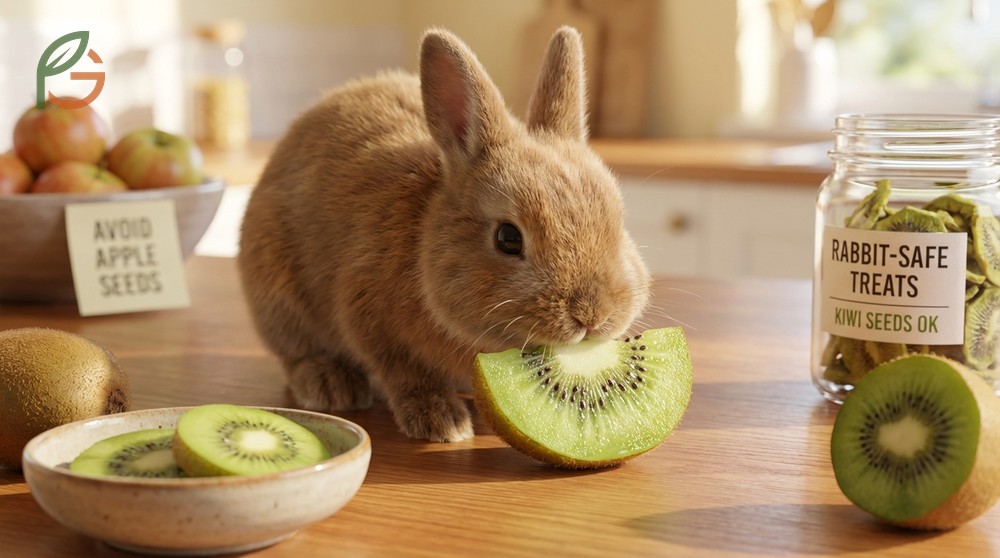
Unlike many other fruits, kiwi seeds are completely safe for rabbits to eat. The tiny black seeds embedded throughout kiwi flesh don’t contain the toxic compounds found in apple seeds, cherry pits, or peach stones. You don’t need to remove them before offering kiwi to your bunny.
This makes kiwi preparation significantly easier compared to other rabbit-safe fruits. Apple seeds contain cyanogenic compounds that release cyanide when digested, making them dangerous to rabbits[4]. Stone fruit pits present similar risks. Kiwi seeds, in contrast, pass harmlessly through the digestive system.
The seeds themselves contribute a small amount of additional fiber and healthy fats to the treat. Most rabbits don’t even notice them while eating. You can serve kiwi slices or chunks without any seed-related concerns—just focus on proper portion control rather than seed removal.
Safety Tip: While kiwi seeds are safe, always remove seeds and pits from other fruits like apples, pears, cherries, peaches, plums, and apricots. These contain cyanide compounds that can poison rabbits even in small quantities. When in doubt, remove all seeds before feeding any fruit to your bunny.
Can Rabbits Eat Yellow Kiwi
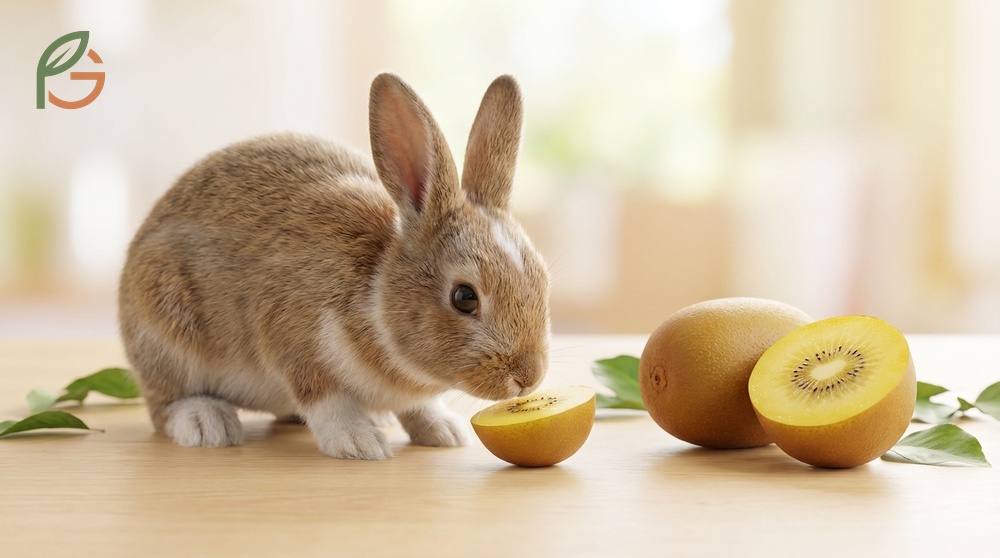
Yellow kiwi—also called gold kiwi—is safe for rabbits but requires even stricter portion control than green varieties. Gold kiwi contains significantly more sugar at 12.3g per 100g compared to 9g in green kiwi[2]. This 37% increase in sugar content means you’ll need to reduce serving sizes accordingly.
What yellow kiwi offers is a smoother eating experience—the skin is hairless and less fibrous, and the flesh tends to be sweeter and less acidic. Many rabbits prefer the taste of gold kiwi over green. However, that preference can lead to overfeeding if you’re not careful. Stick to portions slightly smaller than what you’d offer for green kiwi.
Gold kiwi does provide exceptional vitamin C content at 161.3mg per 100g, nearly double the 92.7mg found in green kiwi[2]. It’s also lower in fiber at 1.4g versus 3g per 100g. These nutritional differences don’t change the fundamental feeding advice—treat yellow kiwi as an occasional indulgence, not a dietary staple. Offer no more than a thin slice once weekly to prevent sugar-related health issues.
- Reduce portion size by about 25% compared to green kiwi due to higher sugar content
- Offer yellow kiwi less frequently—once per week maximum rather than twice weekly
- Watch for soft stools or increased thirst after feeding, which signal too much sugar
- Don’t mix yellow kiwi with other high-sugar fruits on the same day
- Always pair fruit treats with plenty of fresh hay to maintain digestive balance
How Much Fruit for Rabbits
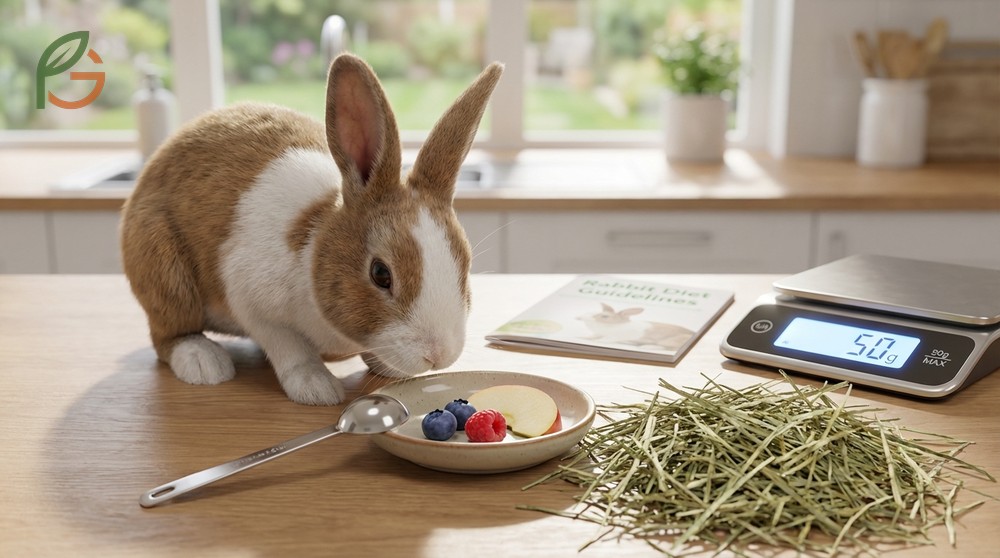
Current dietary guidelines for rabbits establish clear limits on fruit consumption to prevent health problems. Adult rabbits should receive no more than 2 tablespoons (approximately 2 oz or 50g) of fruit per day per 6 pounds of body weight[1]. This represents the absolute maximum—most veterinarians recommend treating this as a weekly allowance rather than a daily target.
Agricultural extension specialists emphasize that fruit should constitute less than 5% of a rabbit’s total diet[5]. The bulk of nutrition must come from unlimited grass hay (80-85%), fresh leafy greens (10-15%), and a small amount of pellets (5%). Fruits fall into the “treats” category alongside carrots, which are also surprisingly high in sugar.
What matters more than daily limits is frequency and variety. Offering small amounts of different fruits throughout the week provides enrichment without overloading your rabbit’s system with sugar. You’ll get better results feeding a thin slice of kiwi on Monday, a small strawberry on Thursday, and a slice of apple on Saturday than giving the same fruit daily.
Age-Based Feeding Guidelines
Age dramatically affects how much fruit rabbits can safely handle. Baby rabbits under 12 weeks old should receive absolutely no fruit—their digestive systems lack the enzymes needed to process sugary foods effectively. Between 12 weeks and 7 months, you can introduce tiny amounts (a few small bites) once weekly to test tolerance.
Adult rabbits from 7 months to 5 years can follow standard fruit guidelines of up to 2 tablespoons per 6 pounds body weight, distributed across the week. Senior rabbits over 6 years may need adjusted portions based on their activity level and weight. Overweight or sedentary seniors should receive less fruit, while underweight older rabbits might benefit from slightly more to maintain body condition.
Portion Size Examples
Translating guidelines into practical portions helps you feed the right amount. For kiwi specifically, one teaspoon of diced kiwi per 2 pounds of body weight represents a safe daily maximum. This means a 4-pound rabbit could have 2 teaspoons, while a 6-pound rabbit could have 3 teaspoons—but only if kiwi is the only fruit offered that day.
Visual comparisons make portion control easier. One thin slice of kiwi (about 1/4 inch thick) equals roughly 1-2 teaspoons depending on fruit size. For a 6-pound rabbit, you’d offer 1-2 thin slices maximum. Most rabbit owners find it helpful to prepare fruit treats in advance, cutting them into weekly portions and refrigerating them in separate containers.
- Kiwi: 1-2 thin slices (3 teaspoons) maximum, once or twice weekly
- Apple: 1/4 of a medium apple, seeds removed, once or twice weekly
- Banana: 2-3 thumb-width slices, once weekly due to very high sugar content
- Strawberry: 1-2 medium berries, 2-3 times weekly
- Blueberries: 5-7 berries, 2-3 times weekly
- Grapes: 2-3 grapes cut in half, once or twice weekly
Fruits Safe for Bunnies
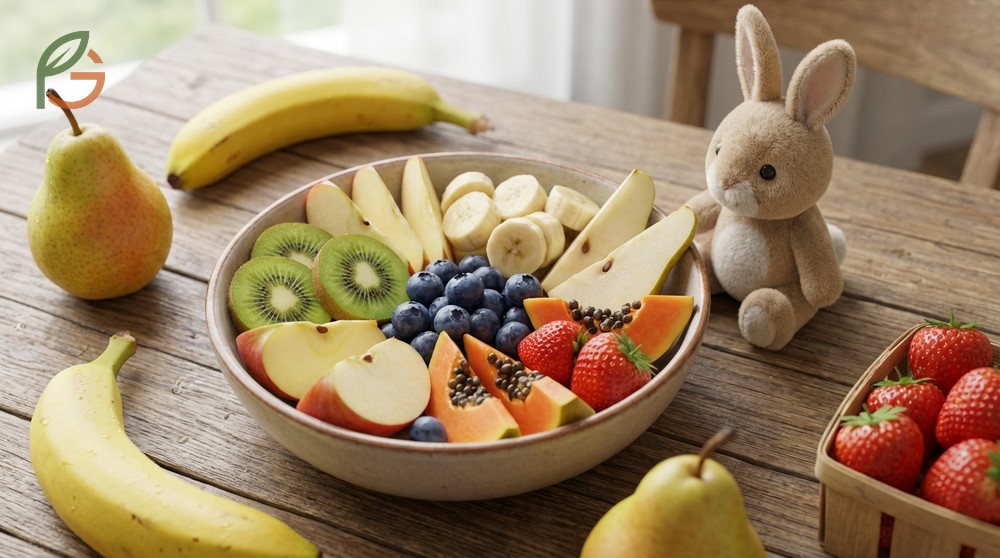
Beyond kiwi, rabbits can safely enjoy a variety of fruits when fed in appropriate portions. Extension service guidelines identify several fruits as acceptable treats, including apples (without seeds), bananas, pears, blueberries, papayas, and strawberries[5]. Each fruit brings different nutritional benefits and sugar levels, so rotation provides both variety and balance.
The safest fruits tend to be berries and melons, which have relatively lower sugar concentrations and higher water content. Strawberries, blueberries, raspberries, and small amounts of watermelon work well for most rabbits. Stone fruits like peaches and plums are safe if you completely remove the pit and limit portions due to higher sugar levels.
Tropical fruits require extra caution—pineapple, mango, and papaya are safe but extremely sweet. Feed these even more sparingly than kiwi. What’s crucial is always removing seeds, pits, and cores that might contain toxic compounds. Never assume a fruit is safe without researching it first, and always introduce new fruits gradually while monitoring your rabbit’s reaction.
- Apples (remove all seeds and core—seeds contain cyanide compounds)
- Bananas (very high in sugar and potassium, limit to once weekly)
- Blueberries (lower in sugar, excellent antioxidant source, can offer more frequently)
- Strawberries (remove green tops, moderate sugar, 2-3 times weekly is safe)
- Raspberries (leaves are also safe and have astringent properties that aid digestion)
- Pears (remove seeds and core, similar sugar content to apples)
- Peaches and plums (must remove pits completely—pits are toxic)
- Watermelon (remove seeds, high water content makes it refreshing in summer)
- Cantaloupe and honeydew melon (moderate sugar, good hydration source)
- Papaya and pineapple (tropical fruits with digestive enzymes but very sweet)
Feeding Reminder: Thoroughly wash all fruits before feeding to remove pesticides, even organic varieties. Introduce only one new fruit at a time with a 3-day waiting period to identify any digestive reactions. If your rabbit develops soft stools or behavioral changes after trying a new fruit, eliminate it from their diet permanently.
Foods Toxic to Rabbits
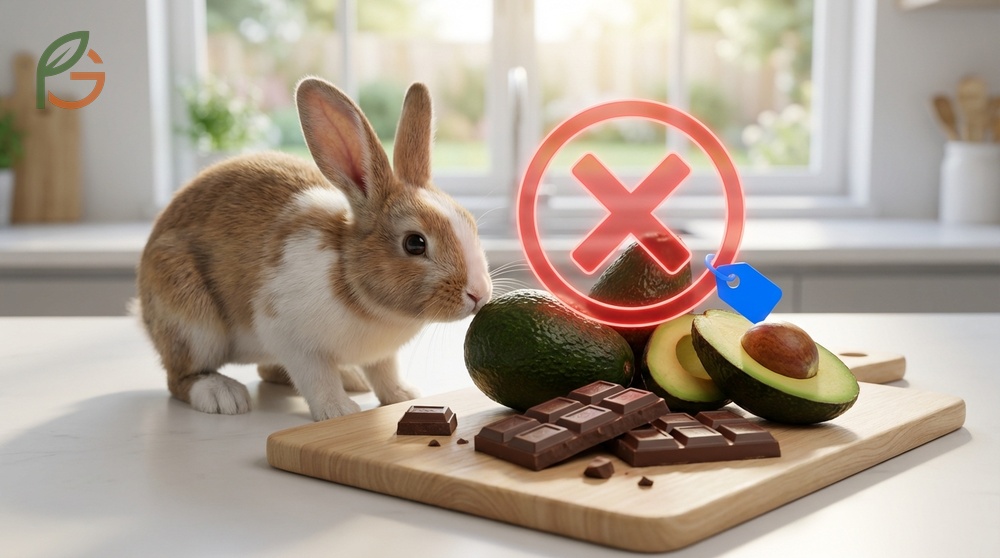
While many fruits are safe, certain foods pose serious health risks to rabbits and should never be offered. Veterinary toxicology data identifies avocados as extremely dangerous—they contain persin, a compound that can cause behavioral abnormalities, breathing difficulties, and potentially fatal congestive heart failure in rabbits[4]. Every part of the avocado—skin, pit, flesh, and leaves—contains this toxin.
Chocolate represents another critical danger due to theobromine content, which rabbits cannot metabolize. Even small amounts can cause seizures, heart problems, and death. Other toxic foods include raw onions, garlic, leeks, and shallots, which cause red blood cell breakdown and potentially fatal anemia[4].
Rhubarb deserves special mention—while the stalks are safe for humans when cooked, all parts contain oxalic acid that’s toxic to rabbits. This compound causes severe mouth swelling, pain, bloating, diarrhea, and lethargy in bunnies[4]. Similarly, iceberg lettuce—often mistakenly thought safe—contains lactucarium, which can cause dangerous diarrhea and weakness, particularly in young rabbits.
- Avocados (all parts contain persin, which causes heart failure)
- Chocolate (theobromine is toxic to rabbit nervous and cardiovascular systems)
- Onions, garlic, leeks, and shallots (cause anemia through red blood cell destruction)
- Rhubarb (oxalic acid causes mouth pain, digestive upset, and kidney issues)
- Fruit seeds and pits from apples, cherries, peaches, plums, and apricots (contain cyanide)
- Iceberg lettuce (lactucarium causes severe diarrhea and dehydration)
- Raw potatoes (contain solanine, toxic to rabbits in both raw and green potatoes)
- Mushrooms (many varieties are toxic, never risk feeding any mushrooms)
- Nuts and seeds (too high in fat, can cause digestive blockages and obesity)
- Processed foods including bread, pasta, crackers, cereal, and cookies (cause digestive problems)
- Dairy products and eggs (rabbits can’t digest lactose or process animal proteins)
- Dried fruits (concentrated sugar content leads to obesity and gut imbalances)
Emergency Warning: If your rabbit ingests any toxic food, contact your veterinarian immediately—don’t wait for symptoms to appear. Time is critical with many poisons. Keep the ASPCA Animal Poison Control Center number (888-426-4435) handy. Monitor your rabbit closely and note exactly what they ate, how much, and when.
Conclusion
The evidence is clear: rabbits can eat kiwi safely when you follow proper portion control and frequency guidelines. Limit servings to 1 teaspoon per 2 pounds of body weight, offered only once or twice weekly. Research shows that kiwi’s high sugar content—particularly in gold varieties—makes it unsuitable for daily feeding despite its impressive vitamin C and antioxidant profile.
Current guidance from rabbit health experts emphasizes that hay must always remain the foundation of your bunny’s diet, comprising at least 80-85% of their food intake. Kiwi and other fruits serve as enrichment treats rather than nutritional necessities. Whether you choose green or yellow kiwi, remove the skin for most rabbits, keep the safe seeds intact, and always pair fruit treats with unlimited access to fresh grass hay and water. When you’re thoughtful about portions and frequency, kiwi can be a healthy, enjoyable addition to your rabbit’s varied treat rotation while supporting their long-term health and happiness through FruitGarden‘s evidence-based feeding approach.
Medical Disclaimer
Important Medical Disclaimer: This content is for informational and educational purposes only. It’s not intended as a substitute for professional veterinary advice, diagnosis, or treatment. Always consult a qualified veterinarian before making any changes to your rabbit’s diet, medication, or health routine, especially if your rabbit has existing medical conditions, is pregnant, nursing, elderly, or has shown previous sensitivities to new foods. Individual rabbits may have unique dietary needs or restrictions that require personalized veterinary guidance.
Frequently Asked Questions
Can Baby Rabbits Eat Kiwi?
No, baby rabbits under 12 weeks old should never eat kiwi or any other fruit. Their digestive systems haven’t developed the enzymes needed to process sugary or acidic foods safely. Stick exclusively to unlimited grass hay and age-appropriate pellets until your rabbit reaches at least 7 months old. Between 7-12 months, you can introduce tiny amounts of kiwi—just a few small bites once weekly—to test tolerance while monitoring for soft stools or digestive upset.
How Often Can I Give My Rabbit Kiwi?
Feed kiwi to your rabbit only once or twice per week as an occasional treat. Daily kiwi feeding leads to excessive sugar intake, which disrupts cecal bacteria balance and causes soft stools, obesity, and dental problems over time. Rotate kiwi with other safe fruits throughout the week to provide variety without overloading your rabbit’s digestive system. For example, offer kiwi on Monday, strawberries on Thursday, and apple on Saturday—never multiple fruits on the same day.
What Happens if My Rabbit Eats Too Much Kiwi?
Excessive kiwi consumption typically causes soft stools or diarrhea within 6-24 hours due to sugar overload in the cecum. You might notice decreased appetite, lethargy, bloating, and reduced hay consumption. In severe cases, sugar fermentation encourages harmful bacteria growth that produces toxins, leading to gastrointestinal stasis—a potentially fatal condition. If your rabbit shows these symptoms after eating too much kiwi, remove all treats, offer only hay and water, and contact your veterinarian if symptoms persist beyond 24 hours or worsen.
Is Green or Gold Kiwi Better for Rabbits?
Green kiwi is slightly better for rabbits because it contains less sugar—9g per 100g versus 12.3g in gold kiwi—and more fiber at 3g compared to 1.4g. However, both varieties are safe when fed in appropriate portions. Gold kiwi’s smoother, hairless skin may be easier on sensitive digestive systems, but the higher sugar content requires smaller portions. Choose based on your rabbit’s preference and digestive tolerance, but always prioritize portion control over variety selection.
Do I Need to Remove Kiwi Seeds Before Feeding?
No, you don’t need to remove kiwi seeds—they’re completely safe for rabbits to eat. Unlike apple seeds, cherry pits, or peach stones that contain toxic cyanide compounds, kiwi seeds are harmless and pass through the digestive system without causing problems. This makes kiwi preparation easier compared to other fruits. Simply wash the fruit, peel if desired, cut into appropriate portion sizes, and serve with seeds intact.
Can Rabbits Eat Dried Kiwi?
No, never feed dried kiwi to rabbits. The dehydration process concentrates sugar content to dangerous levels—dried kiwi can contain 3-4 times the sugar of fresh kiwi. This concentrated sugar overwhelms the rabbit’s digestive system, rapidly causing cecal dysbiosis, soft stools, and weight gain. Additionally, dried fruits’ chewy texture can stick to teeth and promote dental disease. Always offer fresh kiwi instead, and apply the same rule to all dried fruits including raisins, dried cranberries, and banana chips.
What Should I Do if My Rabbit Refuses to Eat Kiwi?
If your rabbit refuses kiwi, don’t worry—it’s perfectly fine. Rabbits don’t need fruit in their diet; it’s purely optional enrichment. Some rabbits dislike kiwi’s acidity or texture. Never force-feed treats or try to entice a rabbit to eat fruit they’ve rejected. Instead, offer alternative safe fruits like berries, apple slices, or banana. Focus on providing unlimited grass hay, fresh leafy greens, and clean water—these essentials matter far more than whether your rabbit enjoys kiwi.





