
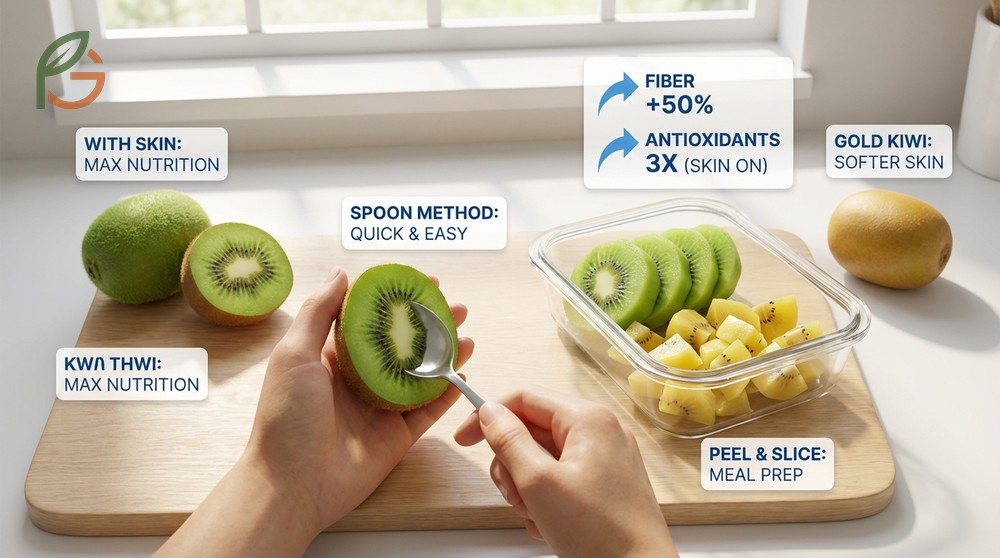
How to eat kiwi? You’ve got three main options: eat it with the skin on for maximum nutrition, use the quick spoon method to scoop out the flesh, or peel and slice it for meal prep. Research shows that eating kiwi with its fuzzy skin increases your fiber intake by 50% and delivers 3 times more antioxidants than the flesh alone[1]. What many people don’t realize is that the skin’s texture softens significantly on gold kiwi varieties, making them easier to bite into than the hairier green types. FruitGarden synthesizes current nutrition research and practical preparation techniques to help you enjoy this vitamin C-packed fruit in ways that fit your lifestyle.
Quick Answer
- Green kiwis contain 92.7mg vitamin C per 100g, while gold varieties pack 161.3mg[2]
- Eating the skin boosts fiber from 2g to 3g per kiwi (green variety)[3]
- The spoon method takes just 30 seconds: cut both ends, slide spoon under skin, rotate around fruit
- Store cut kiwi in the fridge for 1-2 days maximum in an airtight container[4]
How to Eat Kiwi
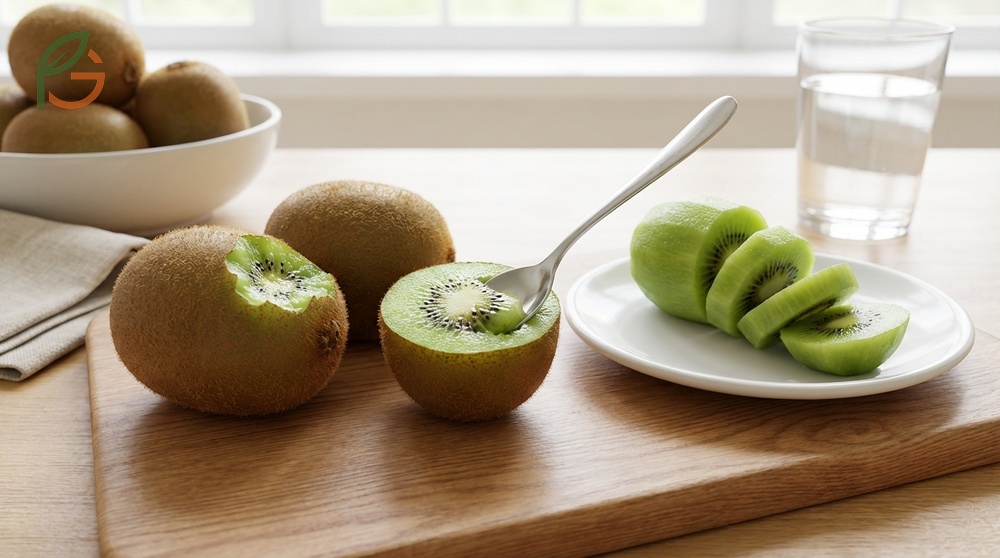
Studies demonstrate that kiwifruit ranks among the most nutrient-dense fruits you can eat, delivering more vitamin C per serving than oranges[2]. You’ve got three practical ways to enjoy this fuzzy tropical fruit, each offering different convenience levels and nutritional benefits.
The simplest approach is biting into a ripe kiwi like an apple, skin and all. If that sounds too intense, you can halve the fruit and scoop out the flesh with a spoon, using the skin as a natural bowl. For meal prep or recipes, peeling and slicing gives you ready-to-use pieces that’ll last in the fridge.
Most Americans don’t realize that kiwi ripeness affects both flavor and ease of eating. A perfectly ripe kiwi yields slightly to gentle pressure, similar to a ripe avocado. Underripe kiwis taste tart and feel rock-hard, while overripe ones turn mushy with fermented flavors.
Eating Kiwi with Skin
Current data indicates that consuming whole kiwis with their fuzzy exterior unlocks significantly more nutrients than eating the flesh alone. The skin concentrates antioxidants, delivering triple the amount found in the fruit’s interior[1].
Here’s what you’re getting extra when you don’t peel: a 50% increase in fiber content, 32% more vitamin E, and 34% more folate[2]. That fiber boost matters because it helps with digestion and keeps you feeling full longer.
To eat kiwi with the skin, rinse it thoroughly under running water and rub gently to remove any dirt or residue. Pat it dry, then bite into it whole or slice it into rounds. Gold kiwis work better for beginners since they’ve got thinner, smoother skin compared to the hairier green varieties.
Important note: Some people experience mild mouth irritation from kiwi skin due to tiny hairs and natural enzymes. If you’ve got sensitive oral tissues, start with gold varieties or try removing most fuzz by rubbing the kiwi gently with a clean kitchen towel.
Nutrition Benefits
Evidence suggests that a single medium-sized green kiwi delivers your entire daily requirement of vitamin C, providing 92.7mg per 100g of fruit[2]. Gold kiwis go even further with 161.3mg in the same serving size. For context, that’s nearly double what you’d get from an equivalent amount of orange.
Beyond vitamin C, kiwis pack 3g of dietary fiber per 100g (with skin), 312mg of potassium, and just 61 calories[3]. This nutrient profile makes kiwi excellent for supporting immune function, maintaining healthy blood pressure, and managing weight.
- Vitamin C: Supports immune system and collagen production for healthy skin
- Vitamin K: Essential for blood clotting and bone health (40.3mcg per 100g in green kiwi)
- Vitamin E: Acts as antioxidant protecting cells from damage
- Folate: Critical for DNA synthesis and cell division
- Potassium: Helps regulate blood pressure and heart function
- Dietary fiber: Promotes digestive health and blood sugar control
How to Peel a Kiwi
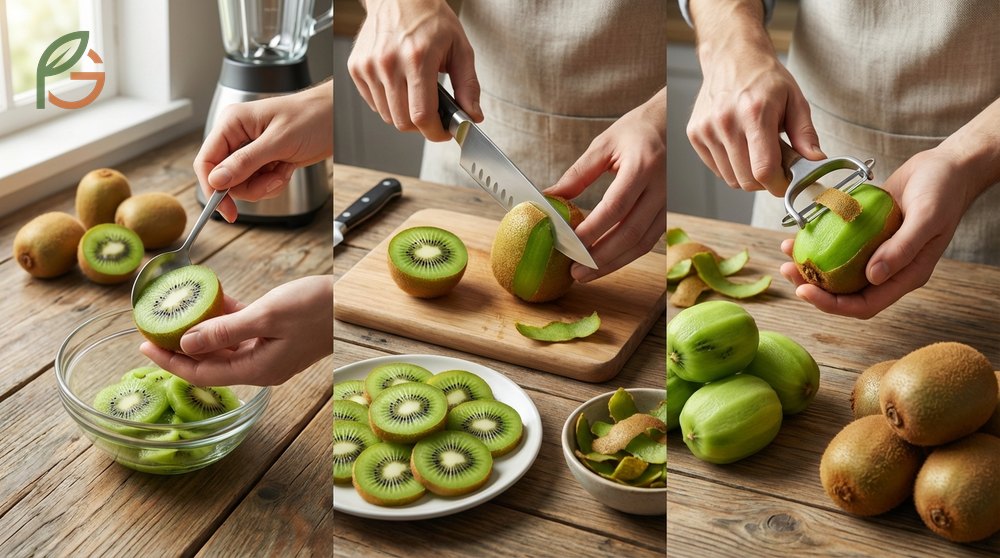
If you’re not ready to eat kiwi skin, you’ll want an efficient peeling method that doesn’t waste fruit. The spoon technique wins for speed and minimal mess, while knife and vegetable peeler methods give you more control for perfect presentation.
Each approach works best in specific situations. The spoon method excels for quick snacks and smoothie prep. Knife peeling suits recipes where you need precise shapes. Vegetable peelers work when you’re processing multiple kiwis at once.
The Spoon Method
This technique revolutionizes kiwi prep with its simplicity. Research across culinary guides confirms it’s the fastest way to separate flesh from skin while keeping the fruit intact[5].
Start by cutting off both ends of the kiwi with a sharp knife, removing about 1/4 inch from each side. You’ll see the green or gold flesh clearly at the cut surfaces. Slide a regular tablespoon between the skin and flesh at one cut end, with the spoon’s curved side facing the fruit.
Push the spoon gently downward toward the opposite end while keeping it pressed against the inside of the skin. Rotate the kiwi as you go, working the spoon around in a circular motion until you complete a full rotation. The whole fruit should pop out cleanly, leaving the skin behind like an empty tube.
From My Experience: My cousin in Guadalajara, Mexico grows both green and gold kiwis in her backyard. She taught me to use the spoon method for making batches of kiwi agua fresca in summer 2024—we processed 20 kiwis in under 10 minutes versus the 30+ minutes knife-peeling would’ve taken.
Pro tip: You can skip peeling entirely by cutting the kiwi in half and eating it straight from the skin with a spoon, treating each half like a natural fruit cup. This works brilliantly for on-the-go snacks.
Knife and Peeler Methods
For precise cuts or when you’re preparing kiwi for garnishes, knife peeling gives you maximum control. Cut both ends off first, then stand the kiwi upright on your cutting board. Slice downward from top to bottom, following the fruit’s curve and removing thin strips of skin.
Rotate the kiwi after each cut, taking care not to remove too much flesh. You’ll end up with a slightly faceted surface, but that’s fine for most uses. A sharp paring knife works better than a chef’s knife for this task.
Vegetable peelers offer a middle ground between speed and precision. After removing both ends, hold the kiwi firmly and run the peeler down its length in smooth strokes. The fruit can get slippery, so work slowly to avoid accidents. This method leaves a cleaner surface than knife peeling but takes longer than the spoon technique.
- Spoon method: Fastest option (30 seconds), minimal waste, best for immediate eating or smoothies
- Knife peeling: Most control, ideal for decorative cuts, requires knife skills
- Vegetable peeler: Middle speed (60-90 seconds), smooth finish, fruit becomes slippery
- No peeling: Zero prep time, maximum nutrition, requires ripe fruit with minimal fuzz
How to Cut Kiwi
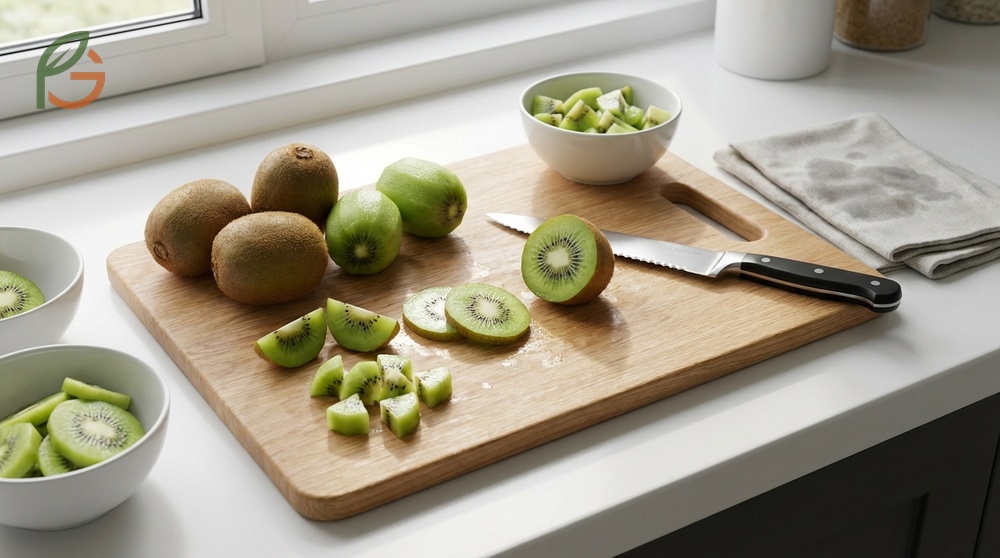
Once you’ve peeled your kiwi (or decided to keep the skin on), cutting techniques determine how the fruit looks and functions in different dishes. Round slices showcase kiwi’s beautiful star-burst pattern, while wedges and chunks work better for fruit salads and toppings.
The key is using a sharp serrated knife, which cuts through kiwi’s soft flesh without crushing it. Dull knives turn ripe kiwis into mush. If you’re cutting multiple kiwis, wipe your blade between fruits to prevent slippage from accumulated juice.
Basic Slicing Techniques
For classic round slices, lay your peeled kiwi on its side on a cutting board. Cut straight down through the fruit, creating coins about 1/4 inch thick. These circles reveal kiwi’s distinctive pattern—a pale center surrounded by radiating lines and tiny black seeds arranged in a ring.
Thicker slices (1/2 inch) hold up better in fruit salads and maintain their shape when tossed with other ingredients. Thinner slices (1/8 inch) work perfectly for garnishing desserts, cocktails, or layering in parfaits. They’ll be more delicate but create elegant presentations.
For wedges, cut your peeled kiwi in half lengthwise first. Place each half cut-side down and slice into quarters or sixths, depending on the fruit’s size. Wedges are easier to eat with fingers and fit nicely alongside other fruits on breakfast plates or cheese boards.
Fancy Cuts for Presentation
When you’re preparing fruit platters or garnishes for special occasions, decorative kiwi cuts make impressive visual impacts. The flower cut is easiest: make a zigzag pattern around the kiwi’s equator by angling your knife at 45 degrees and cutting toward the center. Work your way around, then pull the halves apart to reveal two flower-shaped pieces.
For fan cuts, slice a peeled kiwi half into thin parallel cuts, stopping about 1/4 inch from the end so slices remain connected. Gently press and spread the slices to create a fan shape. This technique works beautifully for plating desserts.
- Rounds: Classic 1/4-inch circles showing star pattern, perfect for fruit pizza and smoothie bowls
- Wedges: Quarter or sixth slices ideal for snacking and fruit salads
- Cubes: Dice peeled kiwi into 1/2-inch chunks for salsa, yogurt parfaits, or fruit cups
- Flower cuts: Zigzag around middle creates two decorative halves for garnishing plates
- Fan slices: Connected thin cuts spread into fan shape for elegant dessert presentation
- Ribbons: Use vegetable peeler on peeled kiwi to create thin curls for cocktail garnishes
Best Ways to Serve Kiwi
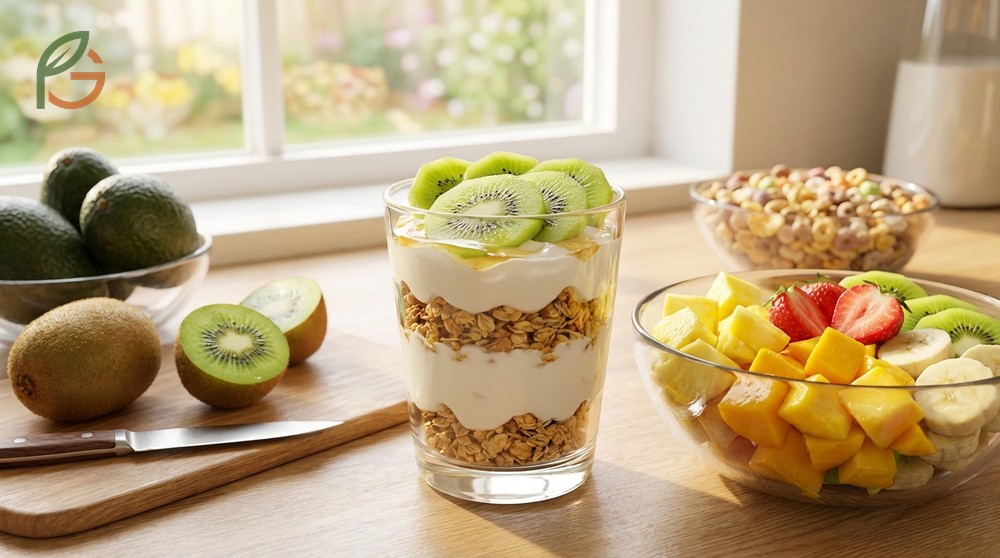
Kiwi’s sweet-tart flavor and bright green color make it versatile for everything from breakfast to desserts. The fruit pairs exceptionally well with tropical flavors like mango and pineapple, creamy elements like yogurt and avocado, and contrasting fruits like strawberries and bananas.
For breakfast, layer sliced kiwi into Greek yogurt parfaits with granola and honey. The vitamin C in kiwi helps your body absorb iron from fortified cereals when you combine them in the same meal. Blend kiwis into smoothies with spinach, banana, and coconut water for a nutrient-dense green drink that doesn’t taste overwhelmingly “green.”
Savory applications work surprisingly well too. Dice kiwi into fresh salsa with tomatoes, cilantro, lime, and jalapeño—the fruit’s tartness balances spicy foods beautifully. Use thin kiwi slices to top grilled fish or chicken, where the fruit’s enzymes actually help tenderize the protein while adding bright flavor.
For desserts and snacks, kiwi shines in fruit salads, tarts, pavlovas, and as a topping for ice cream or cheesecake. You can also dehydrate kiwi slices at low temperature to make tangy, chewy chips that’ll last for weeks in an airtight container.
- Smoothie bowls: Blend 2 kiwis with frozen banana and top with sliced kiwi, coconut flakes, and chia seeds
- Tropical smoothies: Combine kiwi with mango, pineapple, Greek yogurt, and spinach for balanced nutrition
- Fruit salads: Mix kiwi cubes with strawberries, blueberries, grapes, and a squeeze of lime juice
- Yogurt parfaits: Layer sliced kiwi with vanilla Greek yogurt and granola for protein-packed breakfasts
- Kiwi salsa: Dice kiwi with red onion, cilantro, lime, and jalapeño to serve with grilled fish tacos
- Garnishes: Float thin kiwi slices in cocktails, mocktails, or sparkling water for visual appeal
- Dessert toppings: Arrange kiwi rounds on tarts, cakes, or pavlova for color and fresh flavor
Serving tip: Don’t mix fresh kiwi into gelatin-based desserts unless you cook the fruit first. Kiwi contains actinidin, an enzyme that prevents gelatin from setting properly. Heating kiwi to 140°F (60°C) or higher deactivates this enzyme.
Storage Tips
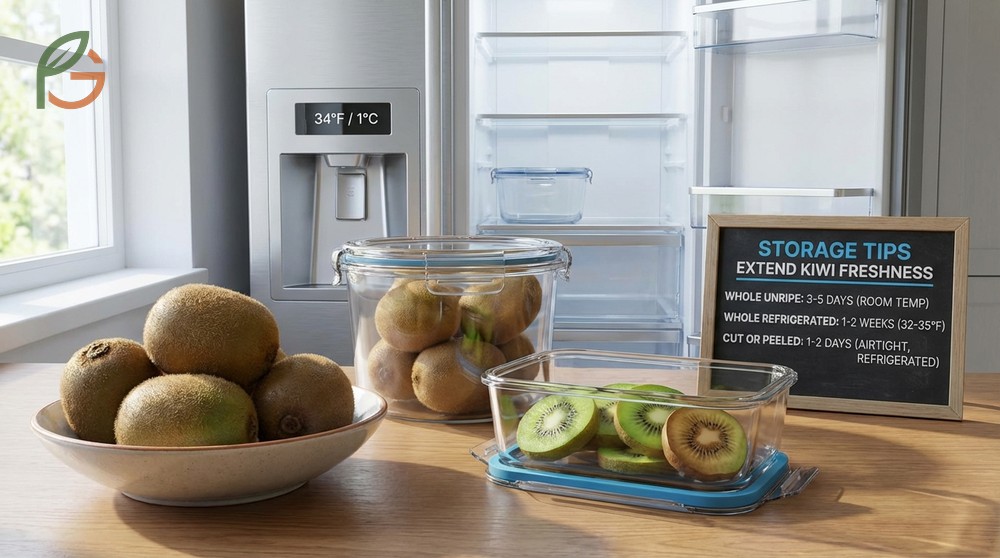
Proper storage extends kiwi freshness significantly and prevents premature spoilage. Whole unripe kiwis can sit at room temperature for 3-5 days to ripen, while refrigerated whole kiwis last 1-2 weeks at 32-35°F (0-2°C)[4].
Once you cut into a kiwi, the clock starts ticking fast. Peeled or sliced kiwi lasts only 1-2 days in the refrigerator, even in airtight containers[4]. The exposed flesh oxidizes quickly, turning brown and losing flavor. Store cut kiwi in sealed containers or resealable bags with as much air pressed out as possible.
For longer storage, freezing works well if you don’t mind texture changes. Frozen kiwi won’t maintain its fresh firmness after thawing, but it’s perfect for smoothies, baking, or making kiwi juice. Slice kiwis into rounds, arrange them on a parchment-lined tray without touching, and freeze for 2-3 hours. Transfer frozen slices to freezer bags—they’ll keep for up to 10-12 months.
Speed up ripening by placing unripe kiwis in a paper bag with an apple or banana. These fruits release ethylene gas that triggers ripening. Check daily—kiwis can go from perfectly ripe to overripe in just 1-2 days at room temperature.
- Whole unripe kiwis: Store at room temperature for 3-5 days until they yield to gentle pressure
- Whole ripe kiwis: Refrigerate in crisper drawer for 1-2 weeks in ventilated plastic bag
- Cut or peeled kiwis: Refrigerate in airtight container, use within 1-2 days maximum
- Kiwi puree or juice: Refrigerate in sealed container, consume within 2-3 days
- Frozen kiwi slices: Store in freezer bags for up to 10-12 months, best for smoothies
Conclusion
The evidence is clear: how to eat kiwi comes down to your priorities and situation. If you’re after maximum nutrition, eat the whole fruit with its skin for 50% more fiber and triple the antioxidants. When you need speed, the spoon method gets you from whole fruit to ready-to-eat in 30 seconds. For meal prep and recipes, peeling and slicing gives you versatile pieces that work in everything from smoothies to salads.
Current guidance emphasizes choosing ripe kiwis that yield slightly to pressure, storing them properly to extend freshness, and experimenting with both green and gold varieties to find your preference. FruitGarden synthesizes nutrition research and practical techniques to help you maximize both the health benefits and enjoyment of this vitamin C powerhouse—whether you’re eating it straight from the skin or incorporating it into creative recipes.
Frequently Asked Questions
Can you eat the skin of a kiwi?
Yes, kiwi skin is completely edible and significantly boosts nutritional value. Eating the skin increases fiber by 50%, vitamin E by 32%, and delivers 3 times more antioxidants than flesh alone. Gold kiwis have thinner, smoother skin that’s easier to eat than fuzzy green varieties. Just rinse thoroughly before eating to remove dirt and residue.
What’s the easiest way to peel a kiwi?
The spoon method is fastest and creates minimal waste. Cut both ends off the kiwi, then slide a tablespoon between the skin and flesh with the curved side facing the fruit. Push the spoon down toward the opposite end while rotating the kiwi—the whole fruit pops out cleanly in about 30 seconds, leaving the skin behind.
How do you know when a kiwi is ripe enough to eat?
A ripe kiwi yields slightly to gentle pressure, similar to a ripe avocado. The fruit should feel slightly soft but not mushy when you press it gently with your thumb. Rock-hard kiwis taste overly tart and need 3-5 days at room temperature to ripen, while mushy ones have gone past their prime and may taste fermented.
How long does cut kiwi last in the refrigerator?
Cut or peeled kiwi lasts only 1-2 days in the fridge, even in airtight containers. The exposed flesh oxidizes quickly, turning brown and losing flavor. Store cut kiwi in sealed containers with as much air removed as possible. Whole uncut kiwis last much longer—1-2 weeks when refrigerated properly at 32-35°F (0-2°C).
What’s the best way to cut kiwi for a fruit platter?
For impressive presentations, use the flower cut technique: make a zigzag pattern around the kiwi’s middle by angling your knife at 45 degrees and cutting toward the center. Work around the entire fruit, then pull the halves apart to reveal two flower-shaped pieces. Alternatively, slice peeled kiwis into 1/4-inch rounds to showcase the beautiful star-burst pattern with radiating lines and seed rings.
Can you freeze kiwi fruit?
Yes, kiwis freeze well for 10-12 months, though they lose their firm texture after thawing. Slice kiwis into rounds, arrange them on a parchment-lined tray without touching, and freeze for 2-3 hours. Transfer frozen slices to freezer bags for storage. Frozen kiwi works perfectly in smoothies, baked goods, or for making juice—just don’t expect it to maintain fresh-fruit firmness when thawed.
What does kiwi pair well with in recipes?
Kiwi’s sweet-tart flavor pairs excellently with tropical fruits (mango, pineapple, coconut), berries (strawberries, blueberries), creamy elements (Greek yogurt, avocado, coconut milk), and proteins for savory dishes (grilled fish, chicken). For smoothies, combine kiwi with banana and spinach. In desserts, it complements vanilla, lime, and honey. The fruit’s natural enzymes also help tenderize meat when used in marinades or salsas.





