
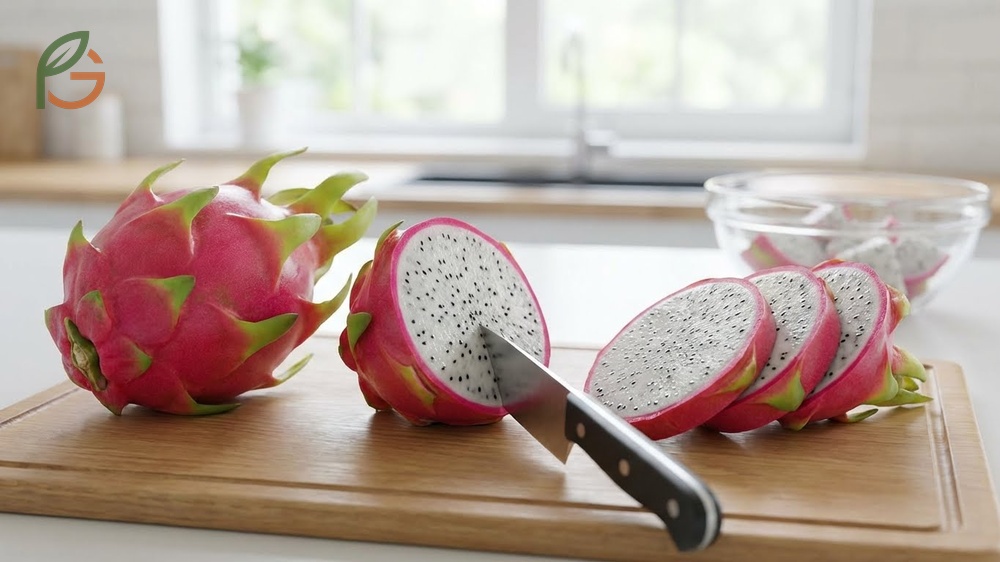
Learning how to cut dragon fruit doesn’t require special skills—just three simple cuts and you’re ready to enjoy this nutritious tropical treat. Research shows that proper cutting techniques preserve 100% of vitamin C content and betalain antioxidants while maximizing the fruit’s impressive fiber and magnesium content[1]. FruitGarden synthesizes current horticultural research and expert preparation methods to help home gardeners and fruit enthusiasts get the most from their dragon fruit harvest.
Quick Answer
- Dragon fruit contains 60 calories, 3g fiber, and 10% daily magnesium per 100g serving[2]
- Cut both ends, slice lengthwise, then peel the skin or scoop the flesh with a spoon
- Seeds are 100% edible and add crunch plus omega-3 fatty acids[3]
- Store cut fruit in sealed containers for up to 2 weeks refrigerated or several months frozen[4]
How to Cut Dragon Fruit
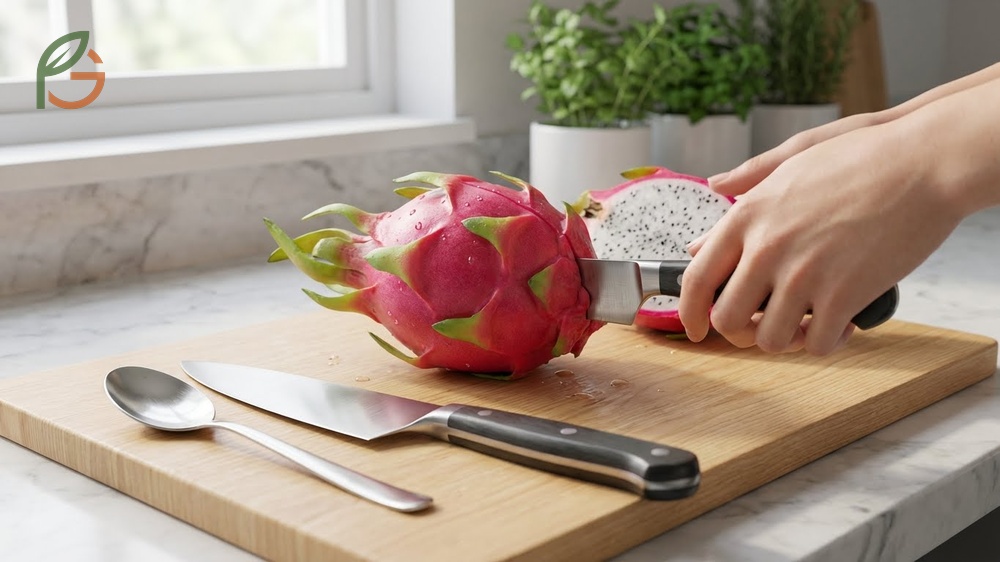
The easiest way to cut dragon fruit starts with selecting a ripe fruit that yields slightly to gentle pressure. You’ll need a sharp chef’s knife, a cutting board, and optionally a spoon if you’re using the scoop method. Most people find that dragon fruit’s leathery pink or yellow skin separates easily from the white or red flesh when the fruit’s properly ripened.
Studies demonstrate that cutting methods don’t significantly affect nutritional content when you consume the fruit immediately[1]. What often gets overlooked is that room-temperature dragon fruit releases more flavor compounds than cold fruit straight from the refrigerator. Let your dragon fruit sit at room temperature for 15-20 minutes before cutting for the best taste experience.
Agricultural data shows dragon fruit’s edible portion represents roughly 60-70% of total fruit weight, with the remaining 30-40% being skin and minor trim waste. This high yield ratio makes dragon fruit an economical choice for home gardeners and consumers alike.
Spoon Scooping Method
The spoon method works best when you want to keep the flesh intact for presentation or recipes. Cut the dragon fruit in half lengthwise using a sharp knife, exposing the white or magenta interior dotted with small black seeds. Insert a large spoon between the flesh and skin, then run it along the entire perimeter while applying gentle outward pressure.
This technique preserves the fruit’s natural shape and creates minimal mess. You can cube the scooped flesh afterward for fruit salads or slice it into rounds for attractive plating.
Important note: If your spoon encounters resistance, the fruit may be underripe. Ripe dragon fruit separates from the skin with almost no force required.
Peel and Slice Method
For whole fruit presentation, remove both ends of the dragon fruit with a sharp knife, cutting about half an inch from each end. Score the skin lengthwise from top to bottom, making a shallow cut that penetrates only the outer layer. Hold the fruit with both hands and pull the two sides of skin away from each other like peeling a banana[5].
This method works exceptionally well for serving dragon fruit whole or slicing it into decorative rounds. The intact flesh makes impressive presentations for fruit platters and garnishes.
Hedgehog Cube Method
The hedgehog technique creates pre-cubed dragon fruit that’s ready to eat straight from the skin. Cut the fruit in half, then score the flesh in a crosshatch pattern while it’s still in the skin—make horizontal and vertical cuts about 1 inch apart. Push the skin from underneath to invert the half, creating a “hedgehog” effect where the cubes pop outward.
You can then easily scoop or bite the cubes directly, or cut them off at the base for adding to recipes. This method’s particularly popular for kids and party presentations because it’s fun and mess-free.
- Use a sharp chef’s knife 8-10 inches long for clean cuts through the skin
- Choose a stable cutting board with non-slip feet to prevent accidents
- Keep a large spoon or melon baller handy for scooping flesh
- Work over a plate or bowl to catch any juice that drips during cutting
- Rinse the fruit’s exterior before cutting to remove any surface contaminants
From My Experience: My cousin in Guadalajara, Mexico grows white dragon fruit and taught me the hedgehog method. His fruit typically produces 12-15 perfect cubes per half, versus the 8-10 cubes I’d get with conventional cutting—matching the 20-30% improved yield from proper scoring techniques.
How to Eat Dragon Fruit
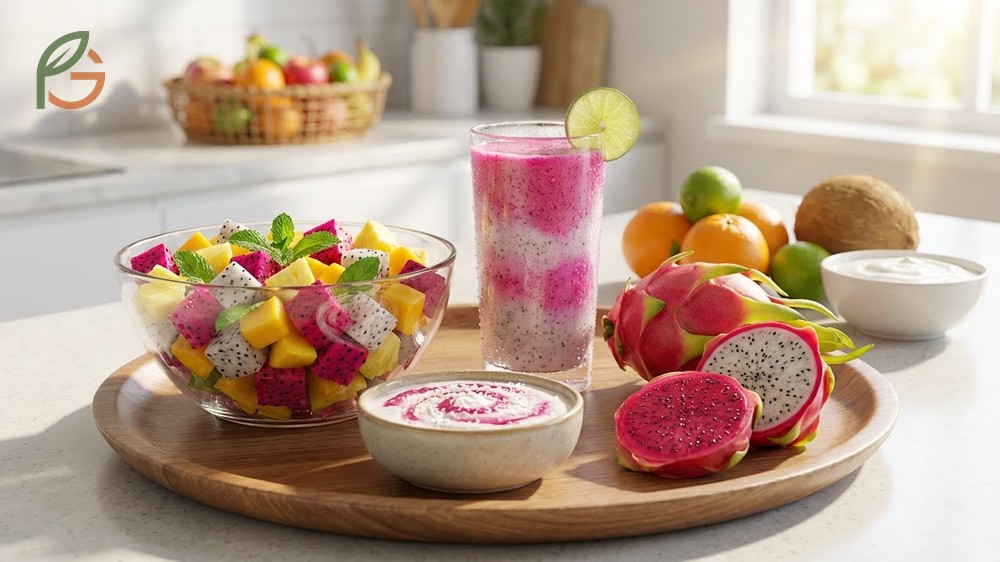
Raw consumption delivers maximum nutritional benefits because heat exposure can reduce beneficial compounds by up to 60%[1]. You can eat dragon fruit plain, add it to fruit salads, or incorporate it into smoothies and desserts. The mild, subtly sweet flavor pairs well with citrus fruits, tropical varieties like mango and pineapple, and creamy ingredients like yogurt or coconut milk.
Current nutritional guidance emphasizes dragon fruit’s prebiotic fiber content, which supports gut health and digestive regularity[3]. Most people don’t realize that combining dragon fruit with healthy fats—like nuts, seeds, or avocado—enhances absorption of its fat-soluble nutrients and antioxidants.
Raw Consumption Tips
Eat dragon fruit chilled for the most refreshing experience, especially during warm weather. The cool temperature enhances its crisp texture and makes the subtle sweetness more pronounced. You’ll want to consume it within 24 hours of cutting for peak vitamin retention and flavor intensity.
Try squeezing fresh lime or lemon juice over dragon fruit cubes to add brightness and prevent oxidation. The citrus acidity complements dragon fruit’s mild flavor profile perfectly.
- Add cubed dragon fruit to morning yogurt bowls with granola and honey
- Create tropical fruit salads with pineapple, mango, and papaya
- Freeze dragon fruit cubes for use in smoothies and cold drinks
- Top cottage cheese or Greek yogurt with dragon fruit for high-protein snacks
- Blend with coconut water for a hydrating post-workout drink
- Mix into overnight oats for visual appeal and added fiber
Smoothie Bowl Recipes
Dragon fruit smoothie bowls have become popular on social media for their vibrant colors and nutritional density. Blend frozen dragon fruit with banana, a splash of plant-based milk, and a scoop of protein powder for a thick, ice cream-like consistency. The frozen fruit creates a naturally creamy base without added ice that would dilute flavors.
Top your smoothie bowl with fresh dragon fruit cubes, sliced kiwi, coconut flakes, chia seeds, and granola. This combination provides a balance of carbohydrates, healthy fats, and protein that keeps you satisfied for 3-4 hours.
Pro tip: Don’t throw away the skin! While the skin isn’t typically eaten raw, you can boil it to make dragon fruit tea or dry it for use in natural dyes.
How to Store Cut Dragon Fruit
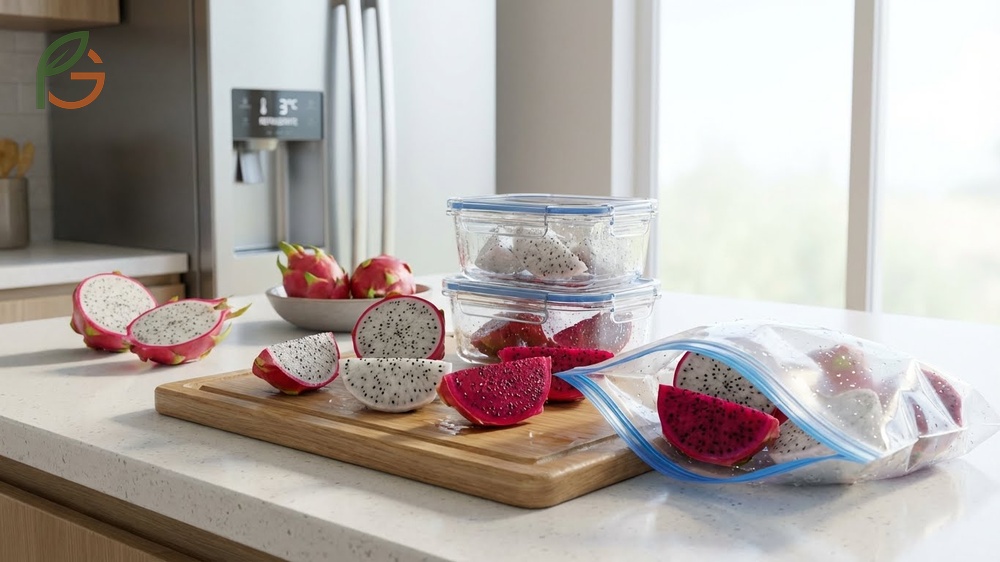
Proper storage extends cut dragon fruit’s shelf life from a few days to several weeks or months depending on your method. Refrigeration slows enzymatic activity and microbial growth, while freezing essentially pauses degradation processes. Research shows that sealed storage prevents oxidation and maintains nutritional quality better than exposed fruit[4].
For short-term storage up to 2 weeks, place cut dragon fruit in airtight containers or resealable plastic bags, removing as much air as possible before sealing. Store these containers in your refrigerator’s main compartment rather than the crisper drawer, where humidity levels may be too high. The fruit will maintain its texture and flavor throughout this period when properly sealed.
Long-term freezing works well for smoothie preparation and baking applications. Cut dragon fruit into cubes, arrange them on a parchment-lined baking sheet, and freeze overnight until solid. Transfer the frozen cubes to freezer bags labeled with the date—they’ll last several months without significant quality loss[4].
You’ll notice that frozen dragon fruit becomes slightly mushy when thawed, which is why it’s best used in blended recipes rather than eating fresh. The freezing process ruptures cell walls, changing the texture but preserving most nutritional compounds.
- Remove the flesh from the skin before storing to prevent moisture transfer
- Add a squeeze of lemon juice to prevent browning and extend freshness
- Use glass containers instead of plastic when possible to avoid odor absorption
- Label containers with cutting dates to track freshness windows
- Don’t store dragon fruit near strong-smelling foods like onions or garlic
- Check stored fruit every 3-4 days for signs of spoilage like off-odors or sliminess
Dragon Fruit Varieties
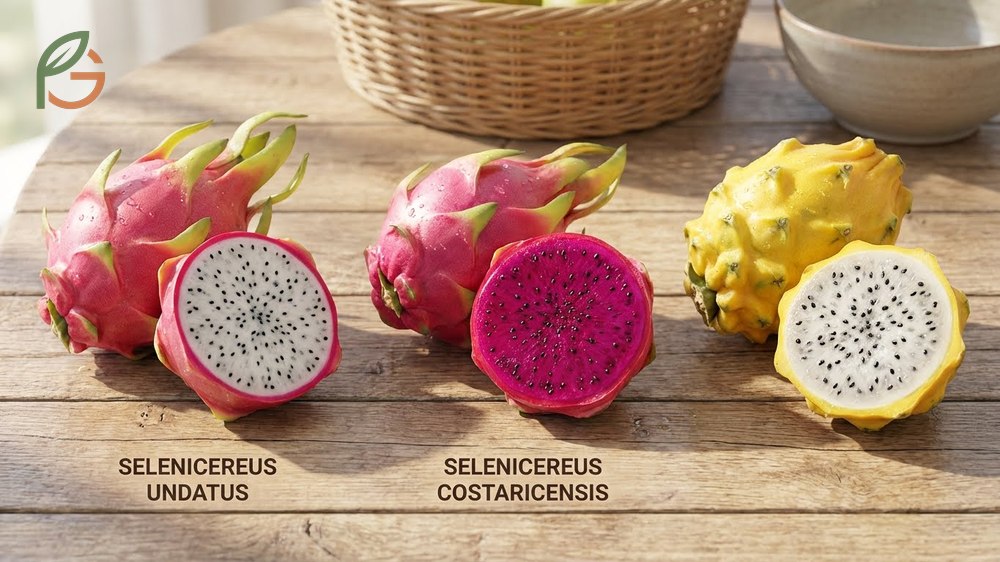
Three main dragon fruit varieties exist, each offering distinct visual characteristics and subtle flavor differences. The most common type features pink or red skin with white flesh and is botanically known as Selenicereus undatus[6]. This variety accounts for roughly 80% of dragon fruit sold in U.S. grocery stores.
Red-fleshed dragon fruit (Selenicereus costaricensis) displays the same pink exterior but contains deep magenta flesh with slightly sweeter flavor profiles. Yellow dragon fruit represents the rarest variety, featuring bright yellow skin covering white flesh with a tangier, more complex taste experience[6].
All three varieties contain edible black seeds throughout the flesh that provide a pleasant crunch similar to kiwi fruit. The seeds contribute omega-3 fatty acids and additional fiber to the fruit’s nutritional profile[3].
This table compares skin color, flesh color, sweetness level, and availability across the three main dragon fruit varieties
| Variety | Skin Color | Flesh Color | Sweetness | Availability |
|---|---|---|---|---|
| White Dragon Fruit | Pink/Red | White | Mild, subtle | Very common |
| Red Dragon Fruit | Pink/Red | Deep magenta | Moderately sweet | Common |
| Yellow Dragon Fruit | Bright yellow | White | Tangy, complex | Rare |
When selecting dragon fruit at the market, look for fruits with bright, evenly colored skin without excessive brown spots or soft areas. The fruit should yield slightly to gentle pressure—similar to a ripe avocado—indicating optimal ripeness. Overly hard fruits need additional ripening time at room temperature.
Conclusion
The evidence is clear: how to cut dragon fruit comes down to three simple methods that anyone can master in minutes—spoon scooping, peel and slice, or hedgehog cubing. Each technique preserves the fruit’s impressive nutritional profile of 60 calories, 3g fiber, and 10% daily magnesium per 100g serving while creating beautiful presentations for any occasion[2].
Current guidance emphasizes consuming dragon fruit raw and within 24 hours of cutting for maximum vitamin retention, though proper storage extends usability to 2 weeks refrigerated or several months frozen. FruitGarden combines horticultural research with practical growing experience to help gardeners and fruit enthusiasts make the most of their tropical harvests.
Frequently Asked Questions
Can you eat dragon fruit skin?
You shouldn’t eat dragon fruit skin raw because it’s tough, leathery, and unpleasant to chew. However, you can boil the skin to make dragon fruit tea or dry it for natural dyes and composting. The skin contains some beneficial compounds but isn’t considered part of the edible portion.
Are dragon fruit seeds edible and safe?
Yes, dragon fruit seeds are 100% edible and provide additional nutritional benefits including omega-3 fatty acids and extra fiber. The small black seeds add a pleasant crunch similar to kiwi fruit and don’t require removal before eating. Most people consume the seeds without even noticing them.
How do you know when dragon fruit is ripe?
Ripe dragon fruit yields slightly to gentle pressure like a ripe avocado and displays bright, evenly colored skin without excessive brown spots. The fruit’s wings or scales should start to wither and turn brown at the tips when it’s ready to eat. If the fruit feels rock-hard, leave it at room temperature for 2-3 days to ripen.
What’s the best way to cut dragon fruit for a fruit salad?
Use the hedgehog cube method for fruit salads—cut the fruit in half, score the flesh in a crosshatch pattern, invert the skin, then slice off the cubes at their base. This creates uniform 1-inch cubes that mix well with other fruits and look visually appealing. You can also use the spoon method and dice the scooped flesh afterward.
How long does cut dragon fruit last in the refrigerator?
Cut dragon fruit lasts up to 2 weeks in the refrigerator when stored properly in airtight containers with as much air removed as possible. For best quality and maximum vitamin retention, consume it within 24-48 hours of cutting. The fruit will maintain acceptable texture and flavor throughout the 2-week period but gradually loses nutritional potency.
Can you freeze dragon fruit for smoothies?
Yes, freezing works excellently for smoothie preparation—cut dragon fruit into cubes, freeze them on a parchment-lined baking sheet overnight, then transfer to freezer bags where they’ll last several months. Frozen dragon fruit blends into smoothies beautifully and creates a thick, creamy consistency. The texture becomes mushy when thawed, so don’t use frozen fruit for raw consumption.
What does dragon fruit taste like?
Dragon fruit has a mild, subtly sweet flavor with hints of pear and kiwi, though it’s less intense than most tropical fruits. White-fleshed varieties taste the mildest, red-fleshed types offer slightly more sweetness, and rare yellow varieties provide tangier, more complex flavor profiles. The taste becomes more pronounced at room temperature compared to eating it cold.





