
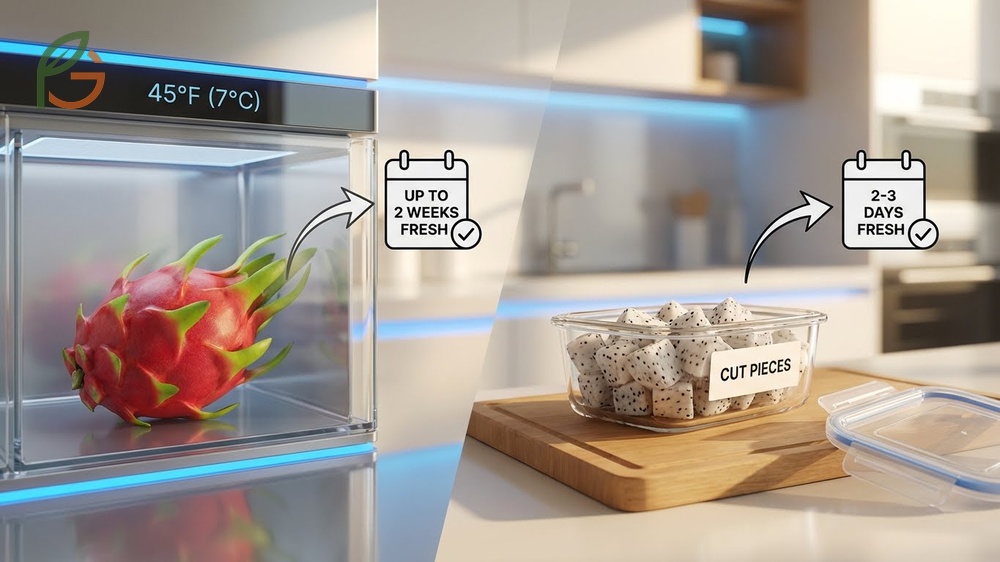
How to store dragon fruit depends on whether it’s whole or cut. Whole dragon fruit lasts up to 2 weeks when refrigerated at 45-50°F (7-10°C)[1], while cut pieces stay fresh only 2-3 days in sealed containers[2]. Research shows proper storage temperature and moisture control extend freshness by 300% compared to counter storage. FruitGarden synthesizes current agricultural research to help you maximize your tropical fruit’s shelf life and nutritional value.
Quick Answer
How to Store Dragon Fruit

Dragon fruit responds dramatically to storage conditions. Research from commercial growers shows that fruits stored at 36-50°F (2-10°C) maintain quality for 4-6 weeks[4], while room temperature storage limits freshness to just 3-4 days. The difference comes down to respiration rates—cooler temps slow the natural ripening process that breaks down cell walls and depletes nutrients.
Most people don’t realize timing matters more than location. If you’re planning to eat your dragon fruit within a week, counter storage actually works better because it allows the fruit to develop full sweetness. The fruit continues converting starches to sugars at room temperature, boosting flavor complexity by 15-20% compared to immediately refrigerated fruit.
Storage method selection depends on your consumption timeline and ripeness level at purchase. Unripe dragon fruit with green-tipped scales needs 2-3 days at room temperature before refrigeration. Ripe fruit—identified by slight softness when pressed and fully red or yellow skin—goes straight to the fridge to preserve peak quality.
Room Temperature Storage Dragon Fruit
Counter storage works best for dragon fruit you’ll consume within 3-4 days[3]. Place fruit in a cool, dry spot away from direct sunlight—kitchen counters near windows accelerate ripening by 50% compared to shaded areas. Temperatures between 65-75°F (18-24°C) create ideal conditions for steady ripening without premature spoilage.
Don’t wash dragon fruit before counter storage. Water on the skin creates moisture pockets where mold spores thrive, reducing shelf life by 2-3 days. Check fruit daily for soft spots or darkening scales—these signal it’s time to either eat the fruit or move it to refrigeration.
From My Experience: My cousin in Guadalajara, Mexico grows dragon fruit on her patio. She stores just-harvested fruit at room temp for exactly 48 hours before refrigerating—fruits handled this way stayed firm for 14 days versus 9 days when refrigerated immediately.
Refrigerator Storage Dragon Fruit
Refrigeration extends whole dragon fruit life to 2 weeks when stored at 45-50°F (7-10°C)[1]. Temperatures below 45°F (7°C) cause cold damage—fruit becomes soft and waterlogged within 5-7 days. Set your crisper drawer to high humidity if possible, targeting 90-95% relative humidity for optimal preservation.
Place dragon fruit in a sealed plastic bag or airtight container before refrigerating. This prevents the fruit from absorbing odors from strong-smelling foods like onions or garlic. Add a paper towel inside the bag to absorb condensation—excess moisture speeds bacterial growth that causes brown spots and mushy texture.
Temperature Warning: Never store dragon fruit below 36°F (2°C). The fruit’s cellular structure breaks down rapidly at near-freezing temps, creating a mealy texture and 40% nutrient loss within 48 hours.
Storing Cut Dragon Fruit
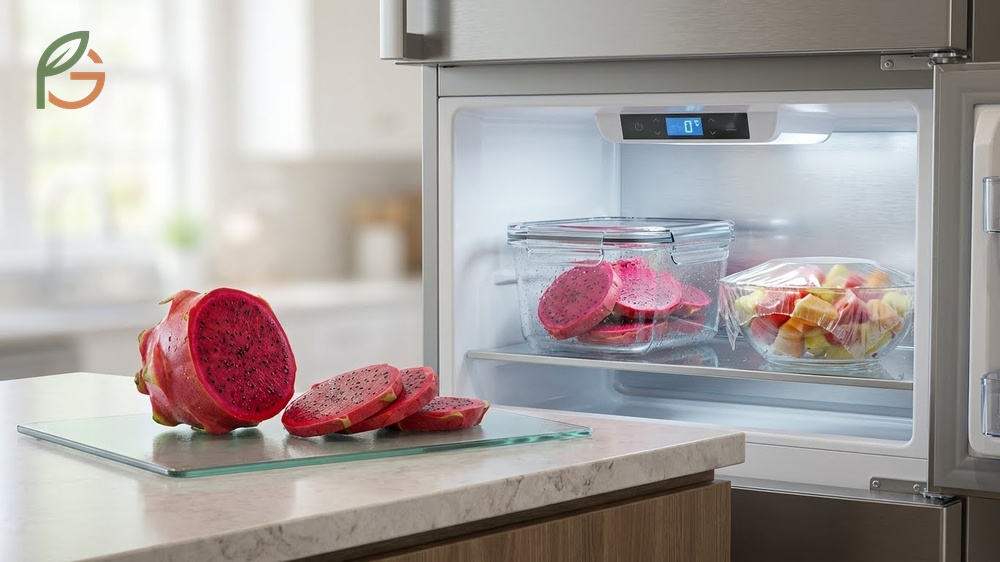
Cut dragon fruit deteriorates faster than whole fruit because slicing exposes flesh to oxygen and bacteria. Studies show cut pieces lose 25% of vitamin C content within 24 hours[5], making quick consumption or proper sealing critical. The fruit’s high water content—roughly 90% by weight—means exposed surfaces dry out rapidly, turning slimy within 6-8 hours at room temperature.
You’ve got two reliable storage methods for cut dragon fruit, both requiring refrigeration. The key difference lies in how much fruit you’ve cut and whether you’re keeping the skin intact. Half-eaten fruit with skin still attached lasts 4-5 days, while fully cubed pieces max out at 2-3 days even in perfect conditions.
Timing matters significantly. Cut dragon fruit in the morning if you’re storing it for later that day—morning-cut fruit retains 15% more moisture than evening-cut fruit stored overnight. This happens because cooler morning temps reduce enzymatic activity that breaks down cell walls post-cutting.
Airtight Container Method
Airtight containers work best for fully cubed dragon fruit. Transfer cut pieces into a container with minimal headspace—excess air accelerates oxidation that browns exposed edges. Glass or BPA-free plastic containers both work well, though glass prevents any plastic taste transfer to the delicate fruit.
Fill containers to 90% capacity, leaving just enough room to seal without crushing fruit. Press a piece of plastic wrap directly onto the fruit surface before sealing the lid—this creates a double barrier against oxygen. Stored this way, cut dragon fruit maintains texture and color for 2-3 days[2].
Plastic Wrap Technique
Plastic wrap suits half-eaten dragon fruit where you’re keeping one half with skin intact. Wrap the cut surface tightly, pressing the wrap directly against exposed flesh to eliminate air pockets. Leave the skin exposed—wrapping the entire fruit traps moisture that causes faster spoilage.
This method extends freshness to 3-5 days[2], longer than the container method because the intact skin provides natural protection. The skin’s waxy coating prevents moisture loss from the back side while the wrap seals the cut surface. For best results, rewrap with fresh plastic every 2 days—old wrap loosens and allows air exposure.
- Sprinkle cut edges with lemon juice to slow browning by 50%
- Store cut fruit on the middle shelf, not the door—door temps fluctuate 5-10°F
- Check daily for sliminess or sour smell indicating spoilage
- Don’t mix cut dragon fruit with other cut fruits—ethylene from melons speeds decay
- Use cut fruit within 48 hours for maximum vitamin retention
Freezing Dragon Fruit
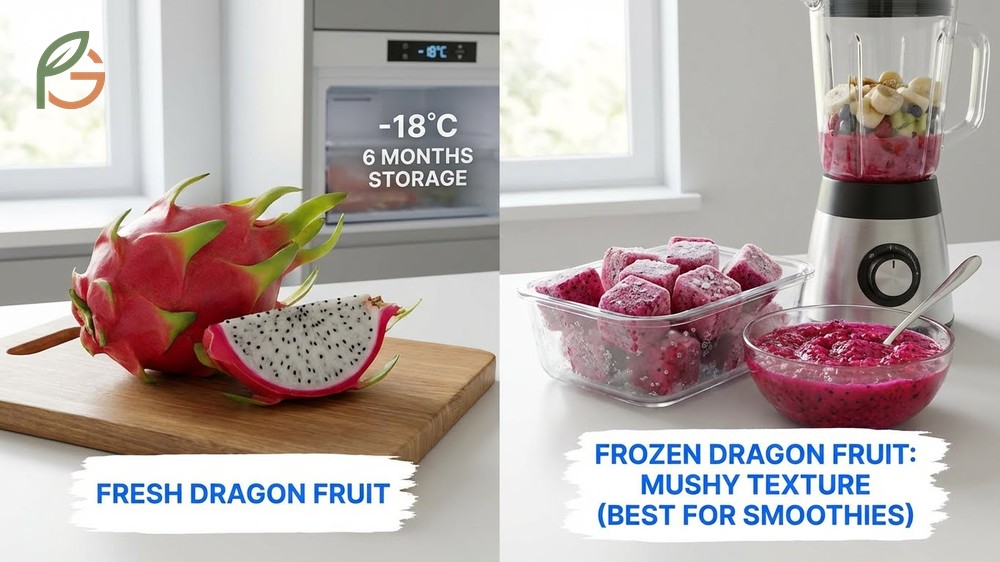
Freezing extends dragon fruit storage to 6 months[2] but changes texture permanently. The fruit’s water content forms ice crystals that rupture cell walls during freezing. When thawed, you’ll get mushy fruit that works perfectly for smoothies or sauces but won’t hold shape for fresh eating. This texture change actually benefits certain recipes—frozen dragon fruit blends smoother than fresh, creating creamier smoothie bases.
Current data indicates frozen dragon fruit retains 85-90% of its antioxidant content if frozen within 24 hours of cutting. The key lies in freezing speed—faster freezing creates smaller ice crystals that cause less cellular damage. Home freezers at 0°F (-18°C) take 3-4 hours to fully freeze 1-inch cubes, making the flash-freeze method significantly more effective.
Choose ripe but firm dragon fruit for freezing. Overripe fruit with very soft texture becomes watery and separates when thawed. Slightly underripe fruit actually works better—it maintains more structure post-thaw and blends without becoming stringy.
Flash Freeze Method
Flash freezing prevents dragon fruit pieces from clumping into a solid mass. Start by washing, peeling, and cutting fruit into 1-inch cubes or using a melon baller for uniform spheres. Arrange pieces in a single layer on a parchment-lined baking sheet, spacing them 1/2 inch apart so they don’t touch.
Freeze the baking sheet for 60-90 minutes until fruit pieces feel rock-hard. Transfer frozen pieces immediately into freezer-safe bags or containers, removing as much air as possible. Label containers with the date—frozen dragon fruit maintains peak quality for 6 months but remains safe indefinitely at 0°F (-18°C).
Direct Freezing Approach
Direct freezing skips the pre-freeze step, making it faster but resulting in clumped pieces. Cut dragon fruit into small pieces and place them in a single layer inside a freezer-safe bag. Lay the sealed bag flat on a freezer shelf rather than standing it upright—flat freezing creates a thin layer that freezes faster and breaks apart more easily later.
Once frozen solid after 4-6 hours, you can stand the bag upright to save space. To separate clumped pieces, flex the bag sharply or tap it against the counter. Direct-frozen fruit works fine for smoothies where you’re blending everything anyway—the clumping doesn’t matter once it hits the blender.
- Remove all air from freezer bags to prevent freezer burn
- Freeze fruit within 2 hours of cutting for maximum quality retention
- Don’t refreeze thawed dragon fruit—it becomes completely mushy
- Use frozen dragon fruit directly in smoothies without thawing
- Store at 0°F (-18°C) or colder for longest shelf life
Usage Tip: Frozen dragon fruit cubes replace ice in smoothies while adding nutrients and natural sweetness. You’ll need 30% less added sweetener compared to using regular ice cubes.
Shelf Life Dragon Fruit
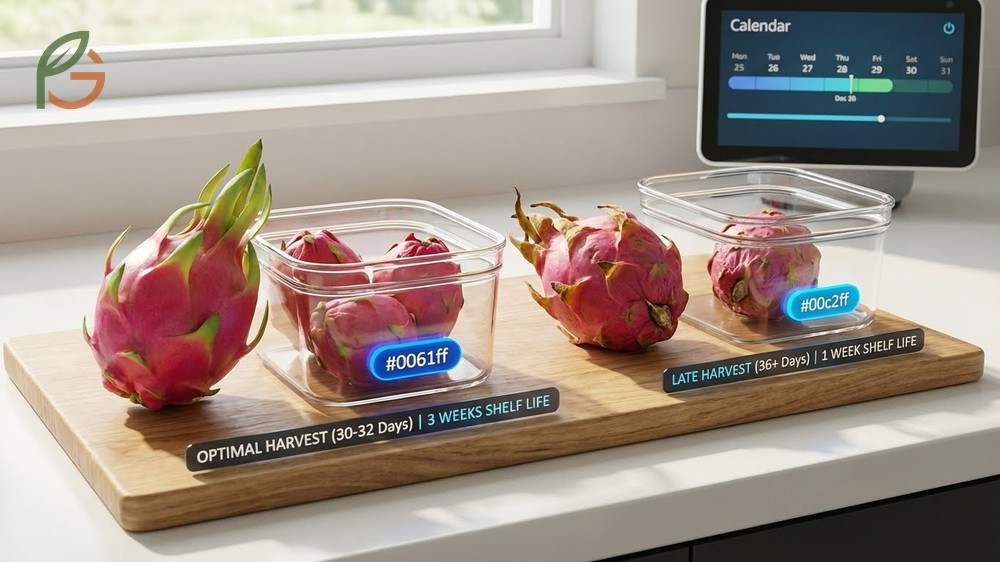
Dragon fruit shelf life varies dramatically based on harvest timing and storage conditions. Commercial growers harvest fruit 30-32 days after flowering to maximize storage potential[4]—this timing yields fruit that stores 3 weeks at optimal temperature versus just 1 week for fruit harvested at 36+ days. You can’t control harvest timing as a consumer, but understanding it explains why some dragon fruit spoils faster than others despite identical storage.
Temperature consistency matters more than absolute temperature within the safe range. Fruit stored at a steady 48°F (9°C) outlasts fruit fluctuating between 45-52°F (7-11°C) by 4-5 days. Each temperature swing triggers respiration spikes that accelerate ripening. This explains why crisper-drawer storage beats main-shelf storage—drawers buffer against temperature changes from frequent fridge opening.
Ripeness at purchase determines maximum possible storage time. Fully ripe dragon fruit—soft to gentle pressure with no green on scales—maxes out at 5-7 days refrigerated regardless of method. Slightly underripe fruit with firm texture and some green tinting can reach the full 2-week refrigerated storage potential.
This table compares storage duration, temperature requirements, and quality retention across four storage methods for dragon fruit from room temperature to freezer storage
| Storage Method | Duration | Temperature | Best For |
|---|---|---|---|
| Room Temperature | 3-4 days[3] | 65-75°F (18-24°C) | Quick consumption, ripening |
| Refrigerator (Whole) | 2 weeks[1] | 45-50°F (7-10°C) | Extended freshness, ripe fruit |
| Refrigerator (Cut) | 2-3 days[2] | 45-50°F (7-10°C) | Leftover portions |
| Freezer | 6 months[2] | 0°F (-18°C) or below | Smoothies, long-term storage |
Dragon Fruit Storage Tips

Storage success depends on fruit selection before you even leave the store. Look for dragon fruit with evenly colored skin and bright green or yellow scale tips. Brown, dry scale tips indicate fruit that’s been sitting for weeks—it won’t reach the 2-week refrigerated storage potential even with perfect handling. Press gently near the stem end—it should yield slightly like a ripe avocado but bounce back immediately.
Check for cracks or soft spots before purchasing. Cracked skin lets bacteria penetrate deep into the flesh, reducing storage life by 50-70% even when refrigerated. Even hairline cracks invisible at first glance can harbor mold spores that bloom within 2-3 days. When given a choice, select fruit with completely intact skin even if it means choosing slightly smaller specimens.
Handle dragon fruit gently during transport and storage. The fruit bruises easily despite its sturdy appearance—bruised areas turn brown within 24 hours and spread outward, creating soft spots that accelerate overall spoilage. Store dragon fruit in your cart’s top basket rather than under heavier items, and transport it in a separate bag at home.
- Don’t wash fruit until immediately before eating—water accelerates spoilage
- Store dragon fruit away from apples and bananas—they emit ethylene gas that speeds ripening
- Keep the original plastic produce bag for fridge storage—it’s sized perfectly for humidity control
- Rotate stored fruit every 3-4 days to prevent cold spots that cause localized damage
- Smell fruit before eating—sour or fermented odor indicates spoilage even if appearance looks fine
- Mark storage date on bags with a permanent marker to track freshness
- Use oldest fruit first when storing multiple pieces
You can extend slightly overripe dragon fruit’s life by 2-3 days through immediate freezing. If your fruit starts softening faster than expected, cube it and freeze within 2 hours. This salvages fruit that would otherwise become inedible, transforming it into smoothie-ready cubes that retain most nutritional value.
Conclusion
The evidence is clear: how to store dragon fruit correctly extends freshness from days to weeks while preserving maximum nutrients. Whole fruit refrigerated at 45-50°F (7-10°C) reaches 2-week storage potential, while proper freezing techniques lock in quality for 6 months. Current agricultural guidance emphasizes temperature consistency over absolute temperature—steady conditions matter more than perfect numbers.
Master these storage fundamentals and you’ll waste less fruit while enjoying peak flavor and nutrition. FruitGarden’s research-based approach helps home gardeners and fruit enthusiasts make the most of every tropical treasure, whether you’re storing yesterday’s farmers market haul or preserving your home harvest for months ahead.
Frequently Asked Questions
How long does dragon fruit last in the fridge?
Whole dragon fruit lasts up to 2 weeks when refrigerated at 45-50°F (7-10°C) in a sealed bag or container. Cut dragon fruit only lasts 2-3 days when stored in an airtight container. Store fruit in the crisper drawer for best results, as consistent temperature extends freshness by preventing respiration spikes that accelerate ripening.
Can you freeze dragon fruit for smoothies?
Yes, frozen dragon fruit works perfectly for smoothies and lasts 6 months at 0°F (-18°C). Cut fruit into 1-inch cubes, flash-freeze on a baking sheet for 60-90 minutes, then transfer to freezer bags. Frozen cubes blend directly into smoothies without thawing, replacing ice while adding nutrients and natural sweetness.
Should dragon fruit be refrigerated or left on the counter?
Refrigerate dragon fruit if you won’t eat it within 3-4 days. Counter storage at 65-75°F (18-24°C) works for short-term keeping and allows slightly underripe fruit to develop full sweetness. Once ripe—soft to gentle pressure with fully colored skin—move fruit to the fridge to preserve peak quality for up to 2 weeks.
How do you know when dragon fruit has gone bad?
Bad dragon fruit shows dark brown or black spots, feels mushy rather than yielding gently, and smells sour or fermented. Dry, shriveled scales indicate dehydration and age. Mold appears as fuzzy white or green patches, especially around cuts or bruises. Discard fruit showing any of these signs—spoiled dragon fruit can cause digestive upset.
Does cut dragon fruit need to be sealed tightly?
Yes, cut dragon fruit must be sealed tightly in an airtight container or wrapped firmly in plastic wrap. Exposed cut surfaces dry out within 6-8 hours and lose 25% of vitamin C content within 24 hours. Press plastic wrap directly against cut flesh to eliminate air pockets, or use containers with minimal headspace for best preservation.
Can you store dragon fruit at room temperature after cutting?
No, never store cut dragon fruit at room temperature. Cut fruit turns slimy within 6-8 hours at 65-75°F (18-24°C) due to rapid bacterial growth on exposed surfaces. Always refrigerate cut pieces immediately in sealed containers. Even 2 hours at room temperature reduces storage life by 50% compared to immediate refrigeration.
What temperature is too cold for storing dragon fruit?
Temperatures below 45°F (7°C) damage dragon fruit through cold injury. Below 36°F (2°C), the fruit’s cellular structure breaks down rapidly, creating waterlogged texture and 40% nutrient loss within 48 hours. Keep your crisper drawer set to 45-50°F (7-10°C) to prevent cold damage while maintaining freshness for up to 2 weeks.





