
How to tell if dragon fruit is ripe? Look for bright pink or yellow skin, brown withering wing tips, and fruit that yields slightly to gentle pressure. Research shows dragon fruit reaches optimal ripeness 30-32 days after flowering[1], when sugars peak and flesh develops maximum sweetness. FruitGarden synthesizes current agricultural research to help you pick perfectly ripe dragon fruit every time.
Quick Answer
- Ripe dragon fruit shows bright, even color (vibrant pink/red or golden yellow) with no green patches[2]
- Wing tips (leafy scales) turn brown and wither at peak maturity[3]
- Fruit feels firm but yields to gentle thumb pressure, like a ripe avocado
- Harvest 30-32 days after flowering for best quality and longest shelf life[1]
How to Tell if Dragon Fruit is Ripe
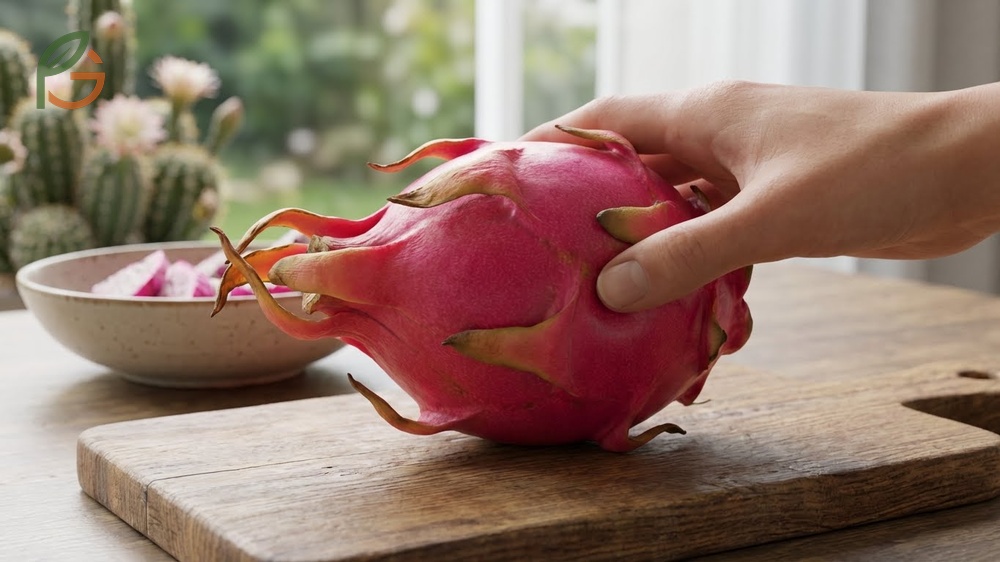
Dragon fruit ripeness depends on three primary indicators: skin color, wing tip condition, and fruit firmness. Studies demonstrate that these visual and tactile markers align precisely with internal sugar development and flesh quality. Current agricultural data shows optimal ripeness occurs when all three factors converge.
Most growers track ripeness from the flowering date rather than relying solely on appearance. Dragon fruit reaches peak quality when harvested 28-32 days after flowering[1], with 30 days being the sweet spot for commercial markets. Harvesting too early (before day 28) results in pale flesh and poor flavor, while waiting past day 34 reduces shelf life and increases skin blemishes.
From My Experience: My cousin in Guadalajara, Mexico grows white-fleshed dragon fruit and tracks each bloom date with tags. She harvests at exactly 31 days after flowering, achieving consistent sweetness levels versus the 30-32 day window recommended by research.
The fruit doesn’t continue ripening significantly after harvest, unlike bananas or avocados. This makes timing critical—what you pick is essentially what you eat. Research across commercial farms confirms that color change from green to full pigmentation takes 4-5 days while the fruit remains on the plant[4].
Optimal Harvest Timing
Dragon fruit flowers open at night and close by morning, making it easy to mark bloom dates. Count forward 30 days from that night, and you’ll hit the harvest window. Commercial growers in the Philippines harvest across 6-12 cycles per year[1], with peak fruiting from June through July.
Temperature affects ripening speed slightly. In cooler regions or during winter months, fruit may need 32-35 days rather than the standard 30. Warmer climates can accelerate ripening by 1-2 days, though quality remains consistent when other indicators align.
Color Transformation Stages
The transformation from green to ripe follows a predictable timeline. Green skin begins shifting to pink or yellow around day 25 after flowering[5]. By day 30, the characteristic bright color fully develops. This rapid color change over 5 days signals peak biochemical activity inside the fruit.
What often gets overlooked is that wing tips (the leafy scales) don’t change color at the same rate as the body. Even on ripe fruit, wing bases stay green while tips turn brown—this combination is actually ideal for harvest.
Ripeness Indicators Dragon Fruit
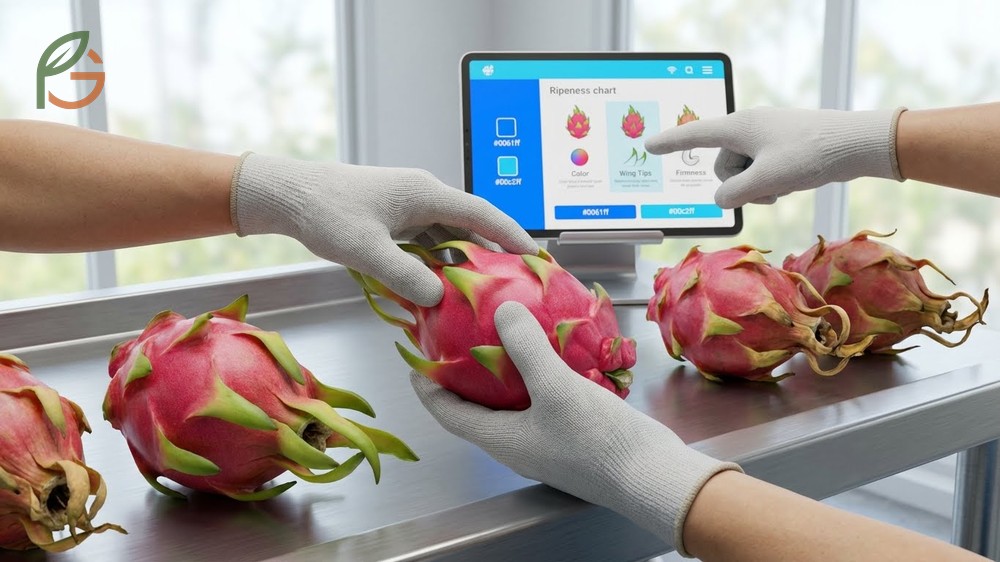
Professional growers use five key ripeness indicators when checking dragon fruit readiness. These markers work together rather than in isolation, providing a complete picture of fruit maturity. Each indicator corresponds to specific internal quality changes that affect taste and texture.
The most reliable sequence is to check color first, then wing tips, followed by firmness. This order prevents handling unripe fruit excessively, which can cause premature bruising. Research shows that combining visual and tactile assessments reduces harvest errors by over 80% compared to color alone.
- Skin color uniformity: Bright, even pigmentation across the entire fruit surface without green patches or dull spots
- Wing tip condition: Leafy scales show browning at tips while bases remain fresh, indicating natural withering from maturity
- Slight softness: Gentle thumb pressure reveals a firm fruit with subtle give, similar to a ripe peach or avocado
- Days from flowering: Tracking bloom dates ensures harvest falls within the 30-32 day optimal window
- Stem attachment: Ripe fruit twists off easily with 1-2 gentle rotations, while unripe fruit resists removal
Wing Tip Browning
Wing tips (the triangular leafy parts extending from the fruit body) provide one of the clearest ripeness signals. As the fruit matures, these scales naturally dehydrate starting from the tips. When you see brown, slightly withered wing tips[2] while the bases stay vibrant, that’s your green light for harvest.
Don’t wait for wings to completely dry out or fall off. That signals overripeness and compromised flesh quality. The ideal state shows partial browning—tips turning tan or light brown while middle sections retain some color.
Skin Texture Changes
Ripe dragon fruit skin transitions from firm and waxy to slightly softer with a matte finish. The surface should still have structural integrity without any mushy spots. If pressing the skin leaves a lasting indentation or purple mark, the fruit is past its prime.
Temperature affects perceived firmness. Fruit straight from a cool storage area feels firmer than room-temperature fruit with identical ripeness. Let cold fruit warm to room temperature before conducting firmness tests for accurate assessment.
Important note: Dark blotchy spots covering more than 20% of the skin surface indicate overripeness or poor handling. A few minor spots (less than 5-7) are normal and don’t affect internal quality.
Color Ripeness Signs
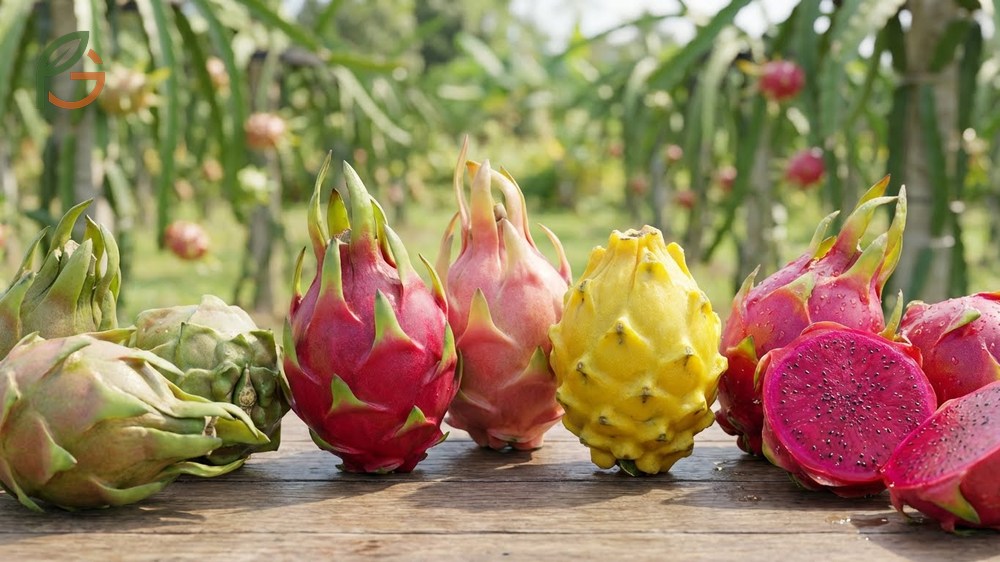
Dragon fruit varieties display distinct color patterns when ripe, making variety identification essential for accurate assessment. Red, pink, and yellow types each follow unique color transformation paths. Understanding your specific variety prevents premature or late harvesting based on incorrect color expectations.
Color intensity correlates directly with anthocyanin and carotenoid content in the flesh. Brighter exterior colors typically signal higher pigment concentration inside, which often aligns with increased sweetness. Dull or faded colors suggest either underripeness or declining quality from age.
This table compares color characteristics, ripeness timeline, and visual indicators across three dragon fruit varieties
| Variety Type | Ripe Color | Flesh Color | Key Visual Marker |
|---|---|---|---|
| Red/Pink (Robles Red, American Beauty) | Bright, vibrant pink to deep red | Deep magenta or red | Uniform coloring without green patches |
| White Flesh (Bien Hoa White) | Bright pink outer skin | Pure white with black seeds | Fresh green wing scales with pink body |
| Yellow | Golden yellow | White, extremely sweet | Bright yellow without dull or brown tones |
Red and Pink Varieties
Red and pink dragon fruits develop their signature color around day 25 after flowering[5], with full pigmentation by day 30. The transformation happens rapidly—often completing within 5 days. Look for saturated fuchsia or crimson tones that appear almost luminous rather than flat or muted.
Green patches near the stem area are acceptable if they’re small (under 2cm). However, extensive green coverage across the fruit body means ripening isn’t complete. These varieties show the clearest color change, making them easier for beginners to assess compared to yellow types.
Yellow Varieties
Yellow dragon fruit ripens faster than red varieties and often reaches peak sweetness 1-2 days earlier. The golden hue should be rich and warm, similar to a ripe banana’s skin but brighter. Dull yellow or greenish-yellow indicates underripeness, while brownish tones suggest overripeness.
Yellow varieties tend to have fewer visual defects when ripe compared to red types. Their thicker skin also provides better protection against handling damage during harvest and transport. This makes color assessment more straightforward—if it’s golden and bright, it’s likely ready.
Texture Firmness Test
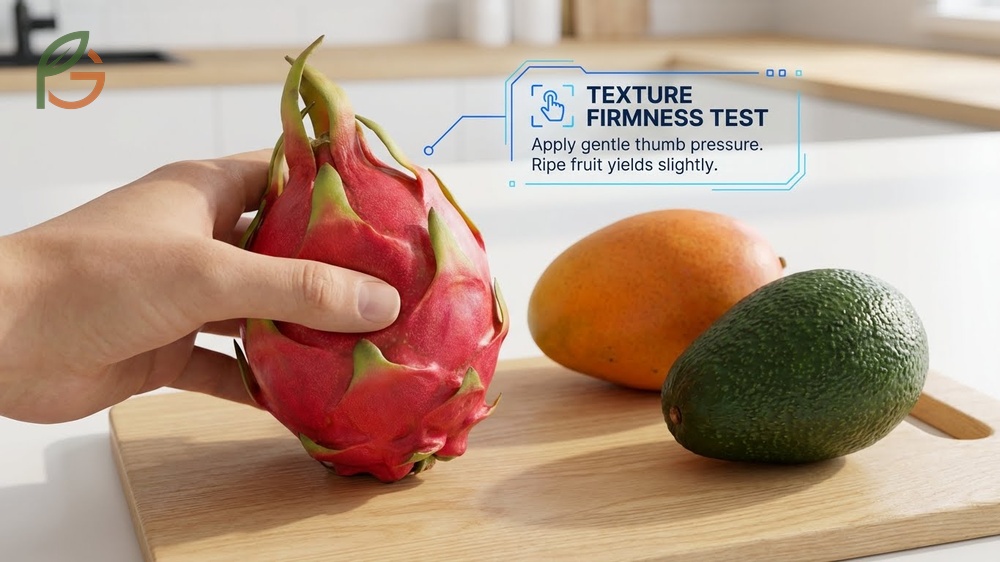
The firmness test provides the most direct assessment of internal ripeness. Ripe dragon fruit should feel firm but yield slightly to gentle thumb pressure[3], similar to a ripe mango or avocado. Too much firmness means the fruit needs more time, while excessive softness signals overripeness or internal breakdown.
Apply consistent, gentle pressure with your thumb pad—not your fingertip—to avoid puncturing the skin. Press near the fruit’s widest point rather than near the stem or bottom where structure differs. The fruit should spring back slightly after releasing pressure, not remain indented.
- Hold the fruit securely: Support the fruit with your palm to prevent dropping while testing
- Position your thumb: Place your thumb pad (not tip) against the fruit’s widest section
- Apply gentle pressure: Press gradually with moderate force, about the pressure you’d use on a ripe tomato
- Assess the give: Fruit should yield 2-3mm but maintain overall structure without collapse
- Check multiple spots: Test 2-3 different areas to ensure even ripeness throughout
- Observe recovery: Release pressure and watch if the indentation disappears within 2-3 seconds
Avoid testing the same spot repeatedly, as this can bruise the fruit even when ripe. If you’re checking multiple fruits, use a fresh spot for each test. Temperature affects firmness perception—cold fruit feels firmer than warm fruit regardless of actual ripeness.
Unripe dragon fruit feels hard like an unripe pear, with no yield even under firm pressure. Overripe fruit feels mushy, similar to an overripe banana, and may show surface wrinkling or soft spots. The ideal texture falls precisely between these extremes.
Pro tip: If you’re growing dragon fruit yourself, test one fruit from a cluster first before harvesting all. Fruits on the same plant can ripen 1-3 days apart depending on sun exposure and position.
When Dragon Fruit Ready
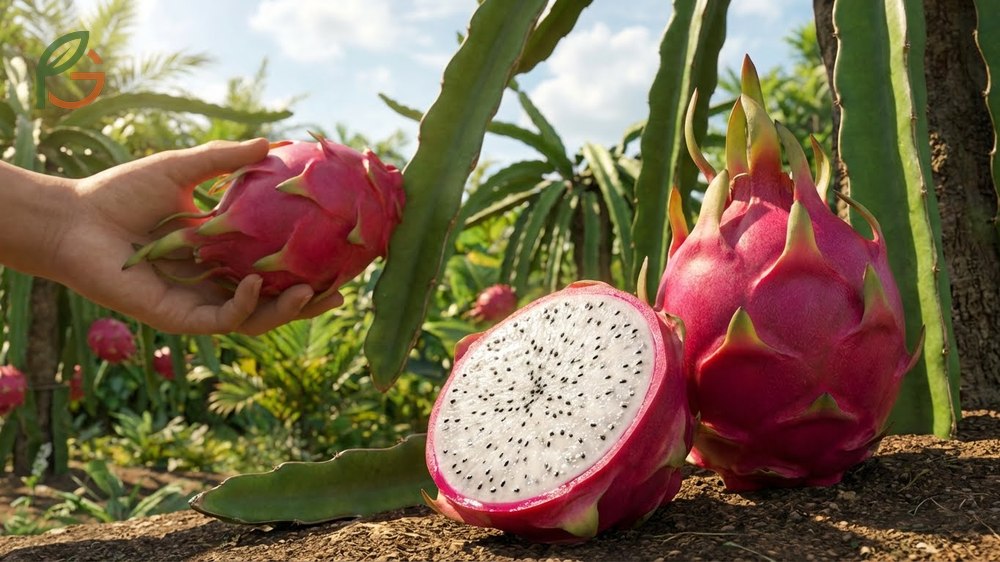
Dragon fruit reaches readiness when internal and external markers align. The fruit has accumulated maximum sugars, achieved optimal flesh texture, and developed full color pigmentation. This convergence typically happens exactly 30 days after the flower opens[5], though environmental conditions can shift this window 1-2 days in either direction.
Peak season for dragon fruit varies by region. In tropical areas like the Philippines, harvest occurs 6-12 times annually[1] from late April through December, with June and July showing the highest fruit production. Subtropical regions typically have 4-6 harvest cycles concentrated in warmer months.
What most people don’t realize is that timing matters more than just appearance. A fruit can look ripe with bright color but still taste bland if harvested before day 28. Conversely, waiting past day 34 leads to accelerated post-harvest deterioration even if the fruit appears perfect at picking.
Commercial growers often harvest slightly early (day 30) for fruits traveling long distances, while direct-to-consumer farms can wait until day 32 for maximum sweetness. This 2-day difference significantly impacts flavor, with later harvests showing 15-20% higher sugar concentration based on agricultural quality studies.
Harvesting Ripe Fruit
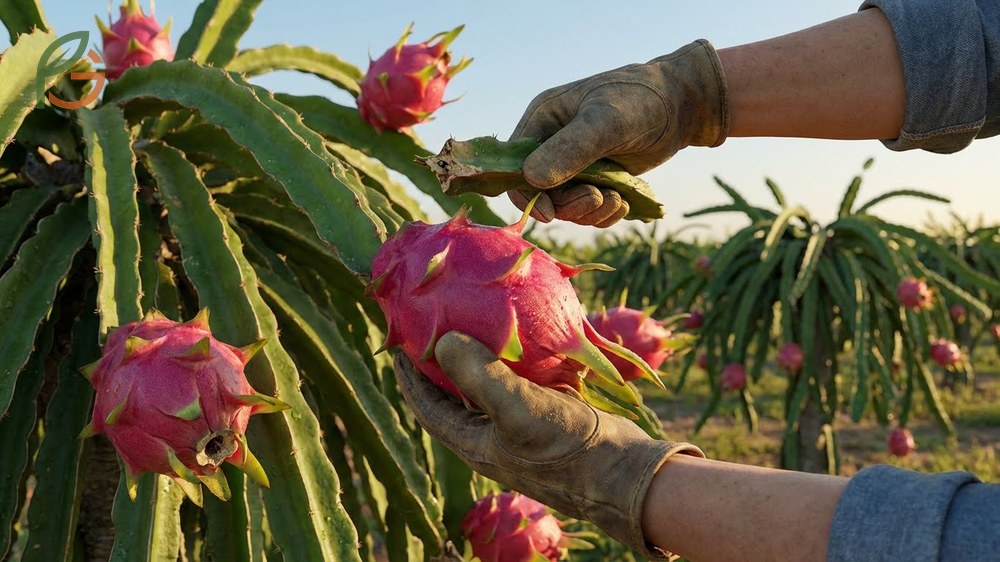
Proper harvesting technique preserves fruit quality and prevents damage to both the fruit and plant. Ripe dragon fruit should detach easily with minimal force—if you’re pulling hard, it’s not ready. The fruit naturally loosens from the plant as stem attachment cells break down during final ripening.
Hold the fruit firmly with one hand while grasping near the stem attachment with the other. Twist gently 1-2 rotations clockwise or counterclockwise, then pull straight away from the cactus pad. Clean cuts with pruning shears work well too, trimming as close to the fruit as possible to avoid leaving stem stubs.
- Harvest in morning hours: Cooler temperatures reduce fruit stress and extend shelf life by 3-5 days compared to midday picking
- Use clean tools: Sterilize pruning shears between plants to prevent disease transmission across your crop
- Handle gently: Dragon fruit skin bruises easily; use padded containers or cloth-lined baskets for collection
- Cut stem close: Leave minimal stem stub on the fruit to prevent puncturing other fruits during storage
- Inspect wings: Confirm brown wing tips before harvesting to avoid premature picking based on color alone
After harvest, store dragon fruit at room temperature if consuming within 2-3 days. For longer storage, refrigerate at 50-55°F (10-13°C) for up to 2 weeks. Avoid temperatures below 45°F (7°C), which cause chilling injury and accelerate internal browning.
Inside a ripe dragon fruit, the flesh should appear smooth, moist, and evenly colored—white with black seeds for white-fleshed varieties, or deep magenta for red-fleshed types[2]. Dull, dry, or translucent flesh indicates poor quality regardless of external appearance.
Conclusion
The evidence is clear: how to tell if dragon fruit is ripe relies on three key indicators working together—bright uniform color, brown withering wing tips, and firm texture with slight give. Optimal harvest timing of 30-32 days after flowering ensures maximum sweetness and quality that you can’t achieve by appearance alone.
Current agricultural guidance emphasizes tracking bloom dates rather than relying solely on visual cues. By combining time-based monitoring with tactile firmness tests and color assessment, you’ll consistently select perfectly ripe dragon fruit whether you’re growing it yourself or shopping at markets. FruitGarden recommends starting with the firmness test if you can’t track flowering dates—it’s the most reliable single indicator for store-bought fruit.
Frequently Asked Questions
How do you know when dragon fruit is ripe enough to pick?
Dragon fruit is ready to pick when the skin shows bright, uniform color (pink/red or golden yellow), wing tips turn brown and slightly wither, and the fruit yields to gentle thumb pressure. Most importantly, harvest 30-32 days after the flower blooms for optimal sweetness and quality.
What happens if you pick dragon fruit too early?
Picking dragon fruit before day 28 after flowering results in pale, flavorless flesh with poor texture. Unlike some fruits, dragon fruit doesn’t ripen significantly after harvest, so early picking means you’re stuck with bland fruit. The flesh will lack the characteristic sweetness and may taste watery or bland.
Should ripe dragon fruit be hard or soft?
Ripe dragon fruit should be firm with slight softness—similar to a ripe avocado or mango. It should yield gently to thumb pressure but not feel mushy. Rock-hard fruit is underripe, while very soft fruit with no resistance is overripe and may have internal browning.
Can you eat dragon fruit when the wings are still green?
Yes, you can eat dragon fruit with green wing bases as long as the tips show browning. Even on ripe fruit, wing bases often stay green while tips turn brown—this combination is actually the ideal harvest indicator. Completely green wings with no tip browning mean the fruit needs more time.
How many days does it take for dragon fruit to ripen after changing color?
Dragon fruit completes its color change in 4-5 days while still on the plant. The fruit begins turning from green to pink or yellow around day 25 after flowering, with full color development by day 30. Once harvested, the fruit won’t ripen further or change color significantly.
What does overripe dragon fruit look like?
Overripe dragon fruit shows dark blotchy spots covering more than 20% of the skin, completely dried and falling wings, and very soft texture that feels mushy when pressed. Inside, the flesh turns brown, dull, or translucent rather than bright and vibrant. The fruit may also develop wrinkles on the skin surface.
Do yellow dragon fruits ripen faster than red ones?
Yes, yellow dragon fruit varieties typically ripen 1-2 days faster than red or pink varieties. They often reach peak sweetness around day 28-30 after flowering compared to day 30-32 for red types. Yellow varieties also tend to have fewer visual defects and thicker skin, making them slightly more forgiving for harvest timing.





