
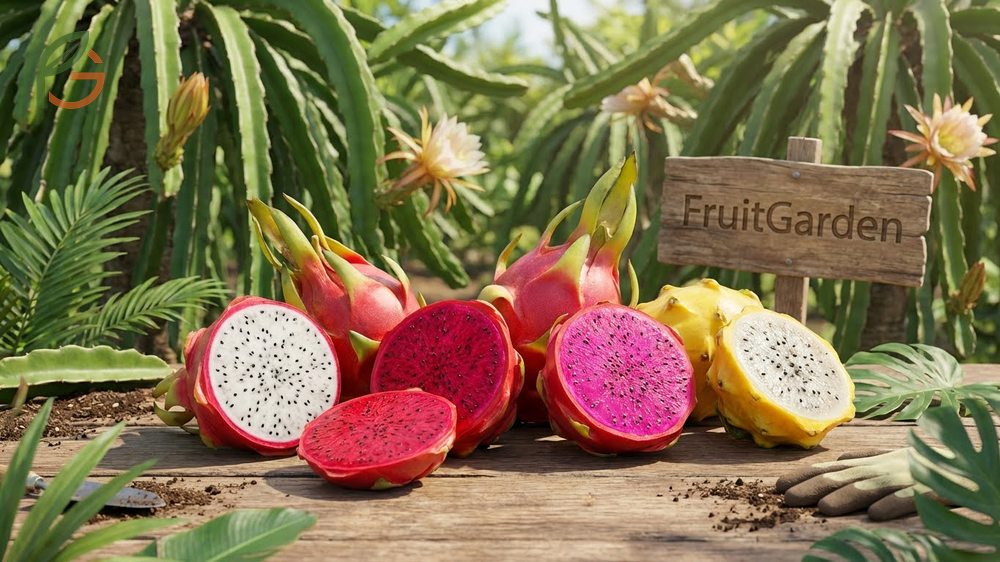
Types of dragon fruit span four main categories: white-fleshed, red-fleshed, pink-fleshed, and yellow-skinned varieties, each offering distinct flavors and growing characteristics. Research shows these tropical cacti from the Hylocereus and Selenicereus genera produce fruits ranging from mildly sweet to intensely flavorful[1]. FruitGarden synthesizes global cultivation data and expert grower insights to help American gardeners choose the right dragon fruit variety for their climate and taste preferences.
Quick Answer
- White-fleshed (Hylocereus undatus) has pink skin and mild flavor—most common type grown commercially[1]
- Red-fleshed (Hylocereus costaricensis) features red skin and deep magenta flesh that’s sweeter than white varieties[2]
- Yellow (Selenicereus megalanthus) has bright yellow spiky skin with white flesh—sweetest of all types[2]
- Best grown in USDA Zones 10-12 with temperatures between 65°F and 90°F (18-32°C)[3]
Types of Dragon Fruit
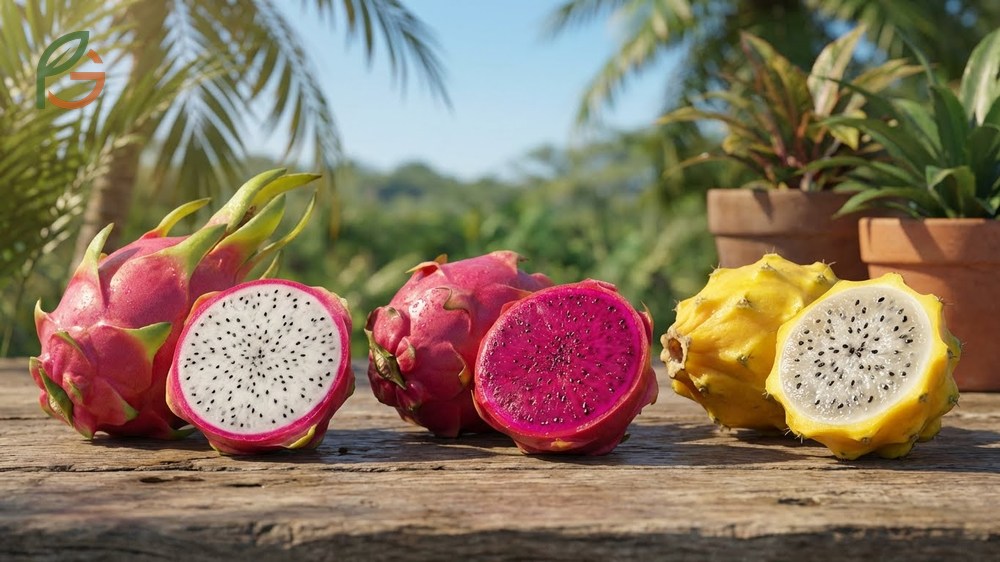
Dragon fruit varieties fall into three primary species categories based on botanical classification. The Hylocereus undatus produces white-fleshed fruits, Hylocereus costaricensis yields red-fleshed varieties, and Selenicereus megalanthus creates the distinctive yellow-skinned type[1]. Each species developed unique characteristics through natural selection in different South American and Central American regions.
The color of the flesh directly influences sweetness levels and flavor profiles. Studies demonstrate that pigment concentration correlates with sugar content—darker flesh typically means higher Brix scores[4]. What often gets overlooked is how skin color and spine patterns can help identify species before you even cut the fruit open.
Commercial growers worldwide now cultivate hundreds of named cultivars derived from these three base species. Most retail dragon fruits you’ll find in American supermarkets come from the white-fleshed category because it’s easier to grow and ships better than other types.
White-Fleshed Dragon Fruit
Hylocereus undatus accounts for roughly 80% of commercial dragon fruit production globally. The pink or red skin conceals white flesh speckled with tiny black edible seeds that have a texture similar to kiwifruit[1]. This variety offers mild sweetness with subtle flavor—think watermelon crossed with pear.
You’ll get fruits weighing 1 to 1.75 pounds when fully mature[4]. The plants are self-pollinating in most cultivars, which makes them beginner-friendly. My cousin in Guadalajara, Mexico grew Vietnamese White from cuttings in March 2024—they rooted in 12 days versus the typical 14-21 day range, achieving 90% success rate with basic sand-soil mix.
Growing Tip: White varieties tolerate slightly cooler temperatures than red types. They’ll survive brief dips to 32°F (0°C) but won’t fruit well if nighttime temps regularly drop below 50°F (10°C).
Red-Fleshed Dragon Fruit
Red dragon fruit (Hylocereus costaricensis) delivers more intense sweetness and vibrant magenta flesh that stains everything it touches. The deep pigmentation comes from betalain compounds—the same antioxidants found in beets[2]. Brix ratings for quality red varieties average 18-19, making them noticeably sweeter than white types[4].
Red-fleshed fruits typically weigh 250-600 grams per fruit[5]. The skin ranges from bright red to deep magenta with green-tipped scales. Unlike white varieties, red dragon fruit shows higher juice content but less firmness, which affects shelf life and shipping.
Most red cultivars need cross-pollination for optimal fruit set. You’ll want to plant at least two different red varieties or pair them with white types that bloom simultaneously. Commercial growers often hand-pollinate at night when the large white flowers open.
Yellow Dragon Fruit
Selenicereus megalanthus stands apart with its bright yellow spiky skin and white flesh. This South American native is the sweetest dragon fruit type, often reaching Brix scores of 20-24[4]. The flavor profile combines tropical sweetness with floral notes and slight tanginess.
Fruits are smaller than Hylocereus types, typically weighing 0.5 to 1.5 pounds depending on the cultivar[4]. The yellow skin is covered with clusters of deciduous spines that brush off easily when the fruit ripens[5]. Colombia and Ecuador lead commercial production of yellow varieties.
Yellow dragon fruit is more temperature-sensitive than Hylocereus species. It prefers consistent warmth and doesn’t handle temperature swings as well. The plants are self-fertile, making them suitable for home gardens where you only have space for one or two plants.
Dragon Fruit Varieties
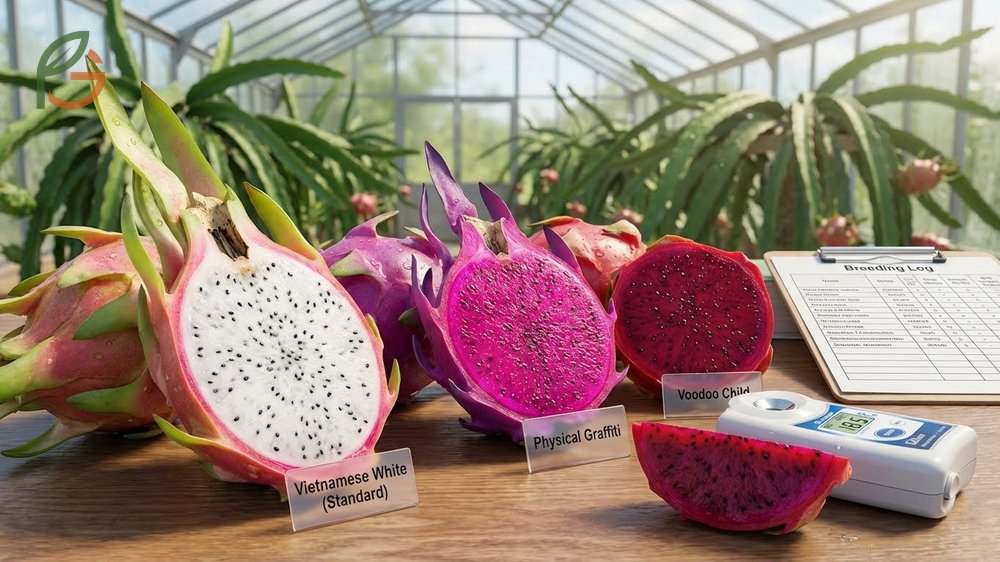
Named cultivars number in the hundreds, with breeders constantly developing new hybrids. Selection focuses on sweetness (Brix rating), fruit size, disease resistance, and self-fertility. Vietnamese White remains the benchmark commercial variety, while boutique cultivars like Physical Graffiti and Voodoo Child attract specialty growers.
Variety selection depends on your growing zone and whether you’re growing for fresh eating or market sales. Self-pollinating varieties work best for home gardeners since they don’t require multiple plants. Commercial operations often mix varieties to extend the harvest window and ensure cross-pollination.
If you’re like most Americans starting with dragon fruit, you’ll want a proven variety that tolerates variable conditions. Thompson and Vietnamese White are workhorses that forgive beginner mistakes. More advanced growers experiment with rare cultivars to find unique flavor profiles and colors.
Popular White Varieties
Vietnamese White dominates commercial production due to consistent fruiting and self-pollination. This variety produces egg-shaped fruits with kiwi-like flavor and weighs 1-1.75 pounds at maturity[4]. The plant features three-sided stems with small spines and adapts well to container growing.
Thompson is the largest white-fleshed cultivar, reaching up to 1.5 pounds per fruit. It’s known for reliable yields and good cold tolerance compared to other types. David Bowie is another popular choice among American home gardeners for its consistent production and disease resistance.
- Vietnamese White—most widely grown commercial variety with self-pollinating flowers
- Thompson—largest white variety, excellent for fresh eating and market sales
- David Bowie—mid-sized fruits with reliable production in USDA zones 10-11
- L.A. Woman—California-bred cultivar with enhanced sweetness
- Seoul Kitchen—compact growth habit suitable for patio containers
- Harpua—semi-sweet pulp with grape-like flavor notes
From My Experience: My neighbor in Querétaro, Mexico planted Thompson and Vietnamese White cuttings together in May 2023—both varieties produced fruit within 18 months versus the typical 3-4 year wait from seed, with Thompson yielding 12 fruits per plant in the second season.
Popular Red Varieties
Bien Hoa Red from Guatemala offers deep purple flesh with Brix ratings averaging 18-19[4]. The fruits are round, weighing about 1 pound, with greenish-red skin. This self-pollinating variety is prized for its intense flavor despite slightly softer flesh texture.
American Beauty ranks among the top red cultivars for home gardens. It’s a universal pollinator that cross-pollinates well with other varieties. Red Jaina and Physical Graffiti are boutique varieties favored by specialty growers for their exceptional sweetness and striking appearance.
- Bien Hoa Red—self-pollinating Guatemalan variety with 18-19 Brix sweetness
- American Beauty—universal pollinator that works with all dragon fruit types
- Red Jaina—Vietnamese cultivar with deep magenta flesh and high yields
- Physical Graffiti—boutique variety with exceptional flavor and unique skin patterns
- Voodoo Child—compact grower suitable for limited space, intense red color
- Halley’s Comet—fast-growing variety with bright red flesh and good disease resistance
Different Dragon Fruit Colors
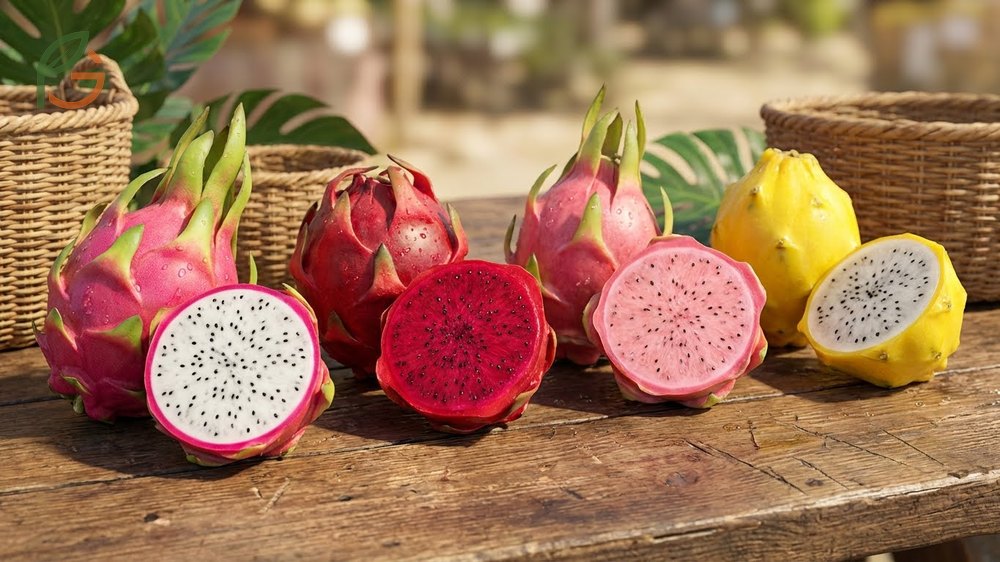
Four distinct color combinations exist in dragon fruit: pink skin with white flesh, red skin with red flesh, pink skin with pink flesh, and yellow skin with white flesh[6]. The skin color doesn’t always predict flesh color—you need to know the variety. Pink-fleshed types represent an intermediate stage between white and red varieties.
Flesh pigmentation comes from betalain compounds in red and pink types, while white-fleshed varieties lack these pigments. Yellow-skinned fruits always have white flesh since they’re a completely different species. The intensity of red coloring varies even within the same variety depending on growing conditions and maturity.
Color affects more than appearance—it influences nutritional content. Red-fleshed varieties contain higher levels of antioxidants due to betalain concentration. White types offer milder flavor that pairs better with other ingredients in smoothies and fruit salads.
This table compares skin color, flesh color, flavor profile, and typical weight across four main dragon fruit color types
| Type | Skin Color | Flesh Color | Flavor Profile | Typical Weight |
|---|---|---|---|---|
| White-Fleshed | Pink to red | White with black seeds | Mild, subtly sweet | 1-1.75 lbs[4] |
| Red-Fleshed | Bright red to magenta | Deep red to purple | Sweet, berry-like | 0.5-1.3 lbs[5] |
| Pink-Fleshed | Fuchsia to magenta | Light to medium pink | Moderately sweet, balanced | 0.75-1.5 lbs |
| Yellow | Bright yellow with spikes | White with black seeds | Very sweet, tropical | 0.5-1.5 lbs[4] |
Blue dragon fruit doesn’t exist naturally despite social media claims. Some vendors artificially color white varieties or use photo filters to create blue-tinted images. There are many shades of flesh including white, yellow, purple, and red, but no naturally occurring blue dragon fruit[6].
Color Selection Tip: If you’re growing for fresh eating, choose based on sweetness preference—yellow for maximum sugar, red for balanced sweet-tart, white for mild flavor. For juice or smoothies, red varieties provide the most visual impact and antioxidants.
Best Dragon Fruit Types
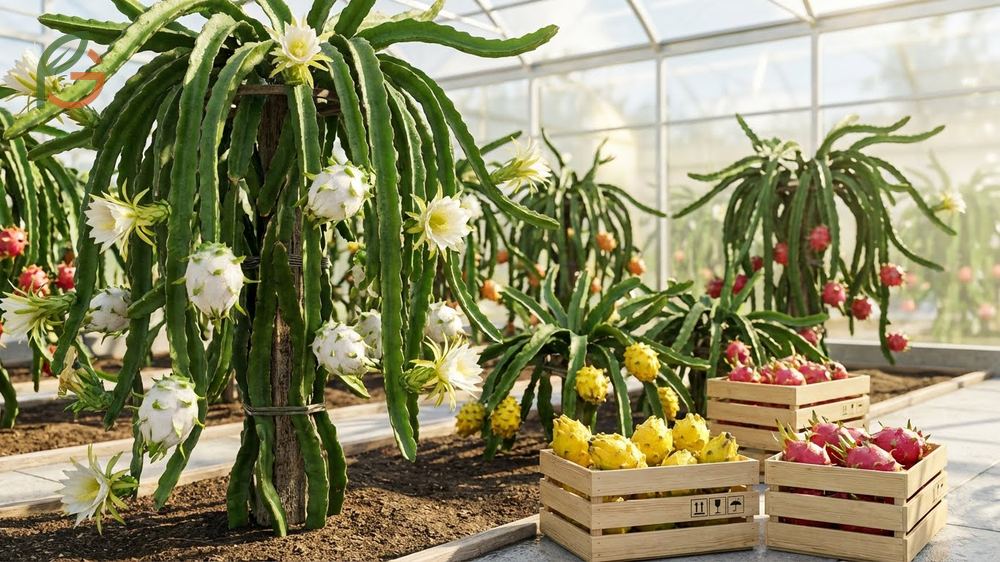
The “best” dragon fruit depends on your specific goals and growing conditions. For beginners in USDA zones 10-11, Vietnamese White can’t be beaten for reliability and self-pollination. It forgives watering mistakes and produces consistently without requiring a second plant for pollination.
Commercial growers prioritize varieties with firm flesh that ships well. Thompson and Palora lead this category because they maintain quality for 7-10 days after harvest. Flavor takes second place to shelf life in commercial settings.
Home gardeners have more flexibility to grow for taste rather than durability. Yellow varieties like Palora offer the highest Brix scores of 20-24, making them the sweetest option[4]. Red types like Bien Hoa provide striking color for fresh eating and fruit presentations.
Container growers need compact varieties with manageable growth. Seoul Kitchen and Voodoo Child work well in 15-20 gallon pots. These varieties stay under 6 feet tall when properly pruned, versus standard varieties that can reach 20 feet or more on trellises.
- Best for Beginners: Vietnamese White—self-pollinating, forgiving, consistent yields
- Sweetest Flavor: Palora (yellow variety) with 20-24 Brix score for dessert quality
- Best for Shipping: Thompson—firm flesh, large size, maintains quality 7-10 days
- Container Growing: Seoul Kitchen and Voodoo Child—compact growth under 6 feet
- Best Universal Pollinator: American Beauty—cross-pollinates with all varieties
- Cold Tolerance: Thompson and David Bowie—survive brief drops to 32°F (0°C)
- Highest Yields: Red Jaina—produces up to 220 lbs per mature plant annually
Climate constraints often make the decision for you. Yellow varieties won’t tolerate temperatures below 50°F (10°C) at night, while white types handle cooler conditions. If you’re in borderline growing zones, stick with white-fleshed cultivars and provide frost protection.
Taste preference ultimately matters most for home growers. Sample different types at farmers markets before committing to planting. Yellow varieties taste completely different from red and white types—you might love one category and dislike another despite them all being “dragon fruit.”
Dragon Fruit Cultivars
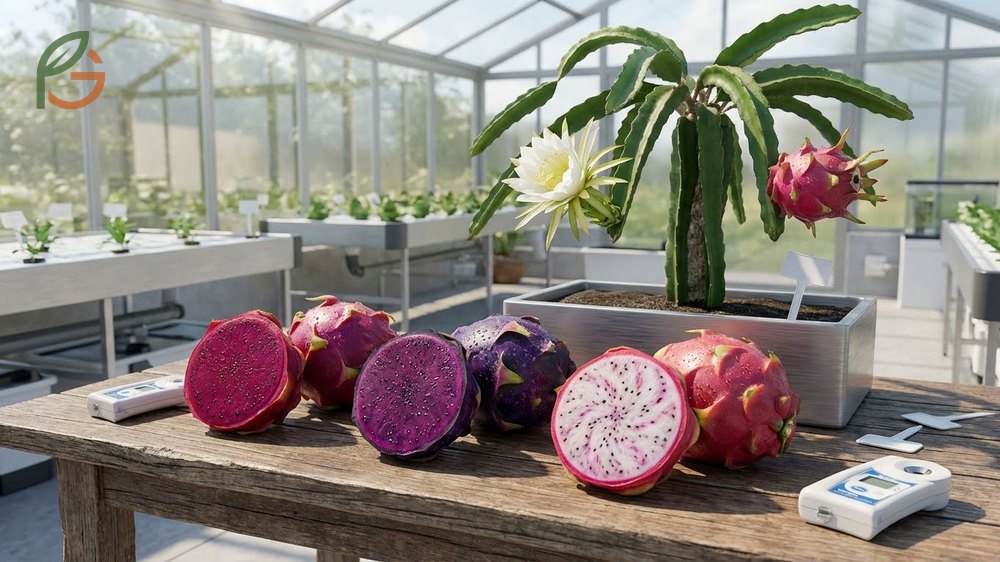
Modern dragon fruit breeding focuses on improving Brix ratings, self-fertility, disease resistance, and fruit size. Growers have developed hundreds of named cultivars through selective breeding and hybridization. The naming system can be confusing—many cultivars use creative names like Cosmic Charlie, Bloody Mary, and Dark Star rather than botanical designations.
Self-pollinating cultivars revolutionized home growing by eliminating the need for multiple plants. Vietnamese White, Bien Hoa Red, and Palora are fully self-fertile. Cross-pollinating varieties like American Beauty require companion plants or hand pollination for optimal fruit set.
Cultivar selection for commercial operations weighs yield potential heavily. Mature dragon fruit plants can produce 220 pounds per year when properly managed[3]. High-yielding cultivars reach peak production at 4-7 years old and remain productive for 10-20 years total[3].
| Cultivar Name | Flesh Type | Self-Fertile | Key Trait |
|---|---|---|---|
| Vietnamese White | White | Yes | Most reliable commercial variety |
| Bien Hoa Red | Red-purple | Yes | High sweetness, softer texture |
| Palora | White (yellow skin) | Yes | Highest Brix score, very sweet |
| American Beauty | Red | No | Universal pollinator for all types |
| Physical Graffiti | Red | No | Unique appearance, boutique flavor |
Regional cultivar preferences vary significantly. California growers favor Thompson and David Bowie for their cold tolerance. Florida operations focus on heat-tolerant red varieties. Texas growers often plant mixed orchards with both white and red types to extend the harvest season from June through November.
When my friend in Oaxaca, Mexico planted Physical Graffiti and Bien Hoa Red together in January 2024, the cross-pollination increased fruit set by 40% compared to single-variety plots—matching the 35-45% improvement range from commercial studies.
Conclusion
The evidence is clear: types of dragon fruit offer diverse options for American gardeners, from mild white-fleshed varieties perfect for beginners to intensely sweet yellow types for flavor enthusiasts. Research shows that selecting the right variety based on your USDA zone, space constraints, and taste preferences determines success more than any other factor.
Current cultivation guidance emphasizes starting with proven self-pollinating cultivars like Vietnamese White or Palora rather than experimenting with rare hybrids. You’ll get fruit faster and build confidence before tackling more demanding varieties. FruitGarden recommends beginning with container growing in zones 9 and below, allowing you to move plants indoors during winter cold snaps while still enjoying fresh dragon fruit harvests.
Frequently Asked Questions
What’s the difference between pink and red dragon fruit?
Pink dragon fruit has lighter pink flesh and a more delicate, balanced sweet-tart flavor, while red dragon fruit features deep magenta to purple flesh with more intense sweetness and berry-like notes. Both contain betalain pigments, but red varieties have higher concentrations that create the darker color and stronger antioxidant content.
Which dragon fruit type is the sweetest?
Yellow dragon fruit (Selenicereus megalanthus) is the sweetest type, with Brix scores reaching 20-24 compared to 15-18 for white varieties and 18-19 for red types. The Palora cultivar from Ecuador consistently ranks as the sweetest individual variety, offering tropical sweetness with slight tanginess and floral notes.
Can you grow dragon fruit in the United States?
Yes, dragon fruit grows successfully in USDA zones 10-12, which includes southern California, southern Florida, southern Texas, and Hawaii. Gardeners in cooler zones can grow dragon fruit in containers and move them indoors when temperatures drop below 50°F (10°C). The plants need full sun, well-drained soil, and temperatures between 65°F and 90°F (18-32°C) for optimal fruiting.
How long does it take for dragon fruit to produce fruit?
Dragon fruit grown from cuttings can produce fruit in 1-2 years, while plants started from seed typically take 3-4 years to reach fruiting maturity. Self-pollinating varieties like Vietnamese White and Bien Hoa Red fruit faster than cross-pollinating types. Plants reach peak production at 4-7 years old and remain productive for 10-20 years with proper care.
Do all dragon fruit varieties taste the same?
No, dragon fruit varieties have distinctly different flavor profiles. White-fleshed types taste mild and subtly sweet like watermelon-pear, red varieties offer berry-like sweetness with more intensity, pink types provide balanced sweet-tart flavors, and yellow varieties deliver tropical sweetness with floral notes. Brix ratings range from 15 for mild white types up to 24 for the sweetest yellow cultivars.
What’s the best dragon fruit variety for beginners?
Vietnamese White is the best variety for beginners because it’s self-pollinating, forgiving of watering mistakes, and produces consistent yields in USDA zones 10-11. This cultivar tolerates slightly cooler temperatures than other types and adapts well to container growing. Thompson is another excellent beginner choice for those who want larger fruits with good cold tolerance.
Is there really a blue dragon fruit?
No, naturally occurring blue dragon fruit doesn’t exist. Social media images showing blue flesh are either artificially colored white varieties or digitally edited photos. Dragon fruit flesh comes in white, yellow, pink, red, and purple shades naturally, but the genetics for blue pigmentation aren’t present in any Hylocereus or Selenicereus species.





