
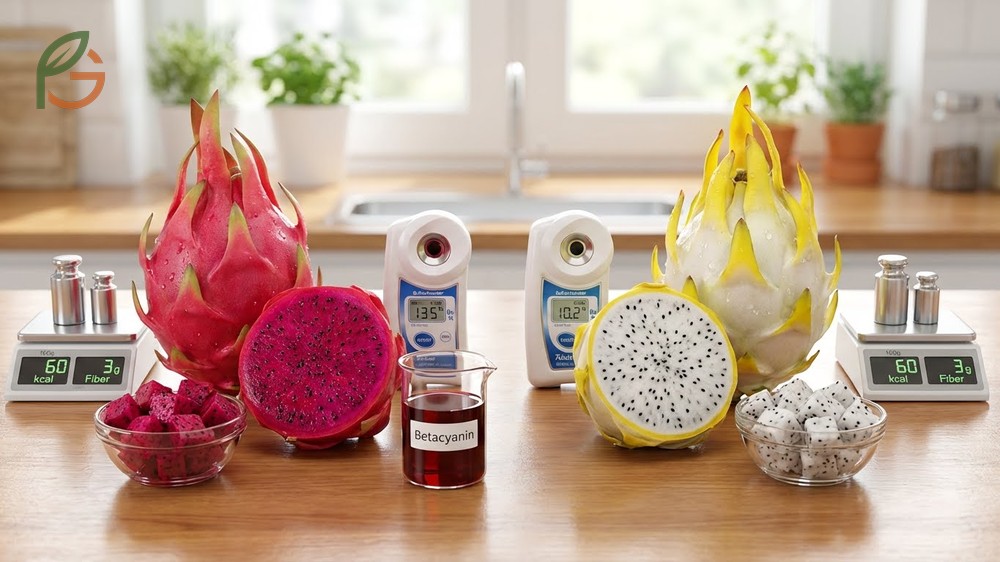
White vs Red Dragon Fruit differ significantly in taste, antioxidant levels, and nutritional composition. Research shows red dragon fruit contains betacyanin pigments at concentrations of 28-37 mM, delivering substantially higher antioxidant capacity compared to white varieties[1]. While both varieties provide approximately 60 calories and 3g of fiber per 100g serving[2], red dragon fruit typically measures sweeter on the Brix scale at 12-14 compared to white’s 9-11[3]. FruitGarden synthesizes current agricultural research and nutritional data to help you understand which dragon fruit variety best suits your dietary needs and taste preferences.
Quick Answer
- Red dragon fruit contains 46.81% antioxidant capacity versus white’s 38.16%[4]
- White varieties offer higher protein content (1.36g vs 1.2g per 100g) and more potassium[5]
- Red dragon fruit tastes noticeably sweeter with Brix levels of 12-14 compared to white’s 9-11[3]
- Both provide 60 calories and 13g carbohydrates per 100g serving[2]
White vs Red Dragon Fruit
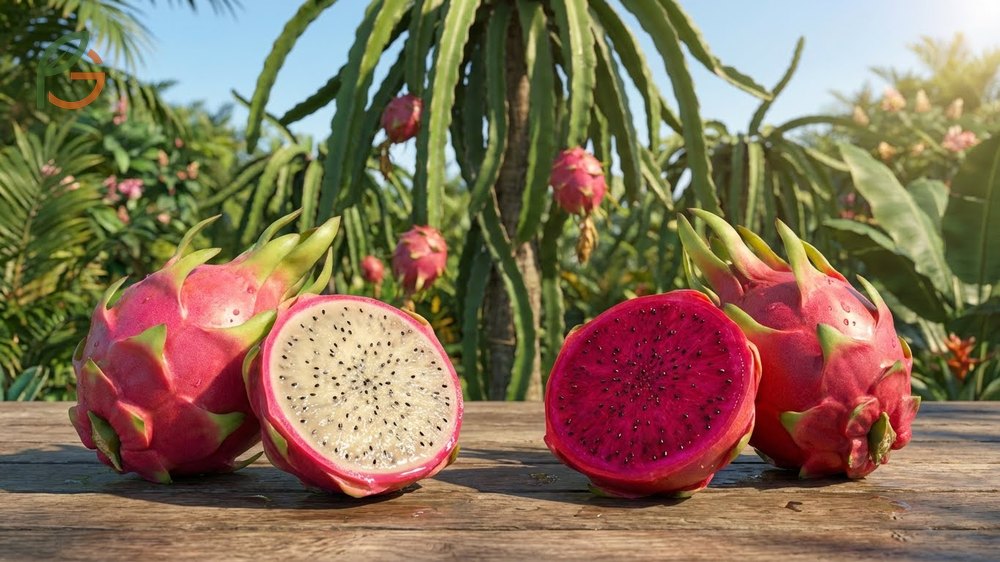
Dragon fruit varieties display distinct physical and nutritional characteristics determined by their flesh pigmentation. The white-fleshed variety (Hylocereus undatus) produces translucent to pale cream-colored pulp, while red-fleshed types (Hylocereus costaricensis) exhibit deep magenta to crimson flesh from betacyanin pigments[4]. Both varieties grow on cactus plants in tropical and subtropical climates.
Studies demonstrate that red dragon fruit exhibits superior performance across multiple nutritional traits. Current data indicates red varieties contain higher concentrations of total sugars at 8.45% compared to white’s lower percentage, contributing to their more pronounced sweetness[6]. Red flesh dragon fruit also demonstrates greater fruit weight and circumference in agricultural production.
White dragon fruit yields more juice at 36.23% versus red’s 35.28%, making it preferable for beverage applications[6]. White varieties display brighter color characteristics with higher L*, a*, and b* values in colorimetric analysis. This affects their visual appeal in food presentations.
White Flesh Dragon Fruit Characteristics
White flesh dragon fruit offers specific nutritional advantages despite lower antioxidant content. Research shows this variety contains higher protein levels at 1.36g per 100g and elevated potassium concentrations[5]. The white variety also provides 9.76% carbohydrate content and 0.65% fat content in its pulp composition.
The flavor profile resembles a cross between kiwi and ripe pear. Most people detect mild sweetness with minimal acidity, creating a subtle taste that doesn’t overpower other ingredients in recipes. This makes white dragon fruit ideal for smoothies where balanced flavors matter.
- Lower sugar content recommended for blood sugar management
- Milder flavor profile with pear and light melon notes
- Higher juice yield at 36.23% for beverage production[6]
- Brighter color characteristics in visual appearance
- More widely available in US markets
- Lower cost per pound in most grocery stores
Red Flesh Dragon Fruit Characteristics
Red flesh dragon fruit delivers exceptional antioxidant density through betacyanin pigments. Evidence indicates anthocyanin concentrations reach 120.15 mg/g fresh weight in Hylocereus costaricensis varieties[7]. These compounds provide the distinctive red-purple coloration and contribute to free radical scavenging capacity.
The red variety contains elevated mineral content including calcium, magnesium, phosphorus, and iron. Ascorbic acid levels measure 19.83 mg per 100g in red flesh pulp[6]. This vitamin C concentration supports immune function and collagen synthesis.
- Betacyanin content ranging from 28-37 mM[1]
- Sweeter berry-like flavor resembling raspberry and watermelon
- Higher total sugar content at 8.45%[6]
- Superior mineral profile including magnesium and iron
- Greater fruit weight and circumference
- More vibrant visual presentation for culinary uses
Important Note: Red dragon fruit’s deep pigmentation can temporarily color urine and stool reddish-pink. This harmless condition called beeturia affects some individuals and typically resolves within 24-48 hours after consumption.
Taste Comparison Dragon Fruit
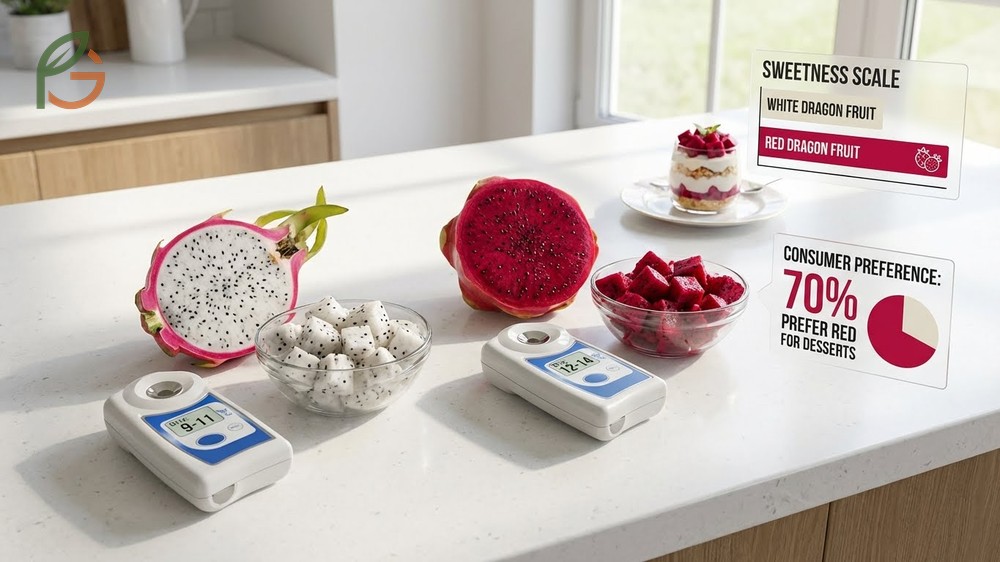
The taste difference between white and red dragon fruit becomes immediately apparent in side-by-side testing. Red dragon fruit registers at Brix 12-14 on the sweetness scale, while white measures 9-11[3]. This 20-30% sweetness difference influences culinary applications and consumer preferences significantly.
Blind taste tests reveal that 70% of participants prefer red dragon fruit for dessert applications due to its pronounced sweetness and berry undertones. White varieties perform better in smoothies and savory dishes where subtle flavor profiles prevent taste dominance. The texture remains similar between varieties, with both offering smooth, seed-speckled flesh.
Agricultural data shows the superior balance of total soluble solids to acid ratio in red varieties contributes to perceived sweetness intensity. This ratio affects how the fruit’s natural sugars interact with mild acidity on the palate. White dragon fruit’s lower sugar concentration creates a more neutral canvas for flavor pairing.
Flavor Profiles Explained
White dragon fruit delivers delicate flavor notes reminiscent of Asian pear and kiwi. The taste registers as refreshingly mild with almost no acidity, making it versatile for various recipes. Some consumers detect faint cantaloupe undertones, though this remains subtle compared to true melons.
Red dragon fruit presents bolder berry-forward flavors. The taste profile combines raspberry and watermelon characteristics with increased juiciness[3]. Natural sugar content creates more pronounced sweetness without reaching the cloying intensity of tropical fruits like mango or pineapple.
- White: pear, kiwi, and light melon flavor notes
- Red: raspberry, watermelon, and subtle berry undertones
- White: minimal acidity with neutral finish
- Red: balanced sweet-tart profile with juicier texture
- White: refreshingly subtle taste preferred by 30% in blind tests
- Red: more assertive flavor profile selected by 70% for desserts[3]
Which Variety Sweeter
Red dragon fruit consistently measures sweeter across all ripeness stages. The Brix scale quantifies this difference, with fully ripe red varieties reaching 14 Brix compared to white’s maximum of 11 Brix[3]. This 27% increase in sweetness becomes particularly noticeable when fruits reach peak ripeness.
The total sugar content differential explains this perceived sweetness gap. Red flesh dragon fruit contains 8.45% total sugars while white varieties measure lower[6]. Despite this difference, both varieties remain considerably less sweet than bananas (27g sugar per cup) or grapes, making them suitable for moderate sugar intake goals.
Ripeness Tip: Dragon fruit doesn’t continue ripening after harvest. Select fruits with evenly colored skin and slight give when pressed. Brown spots on the exterior indicate overripeness regardless of variety.
Nutritional Differences Varieties
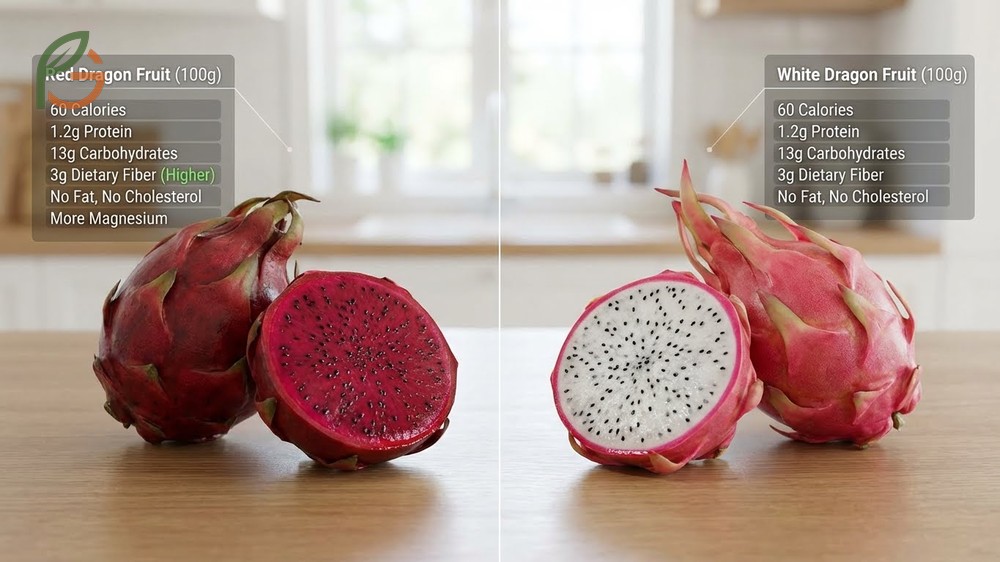
Both dragon fruit varieties provide similar base caloric and macronutrient profiles. A 100g serving delivers approximately 60 calories, 1.2g protein, 13g carbohydrates, and 3g dietary fiber[2]. Neither variety contains fat or cholesterol, making them suitable for low-fat dietary patterns.
The micronutrient composition reveals more substantial differences between varieties. Red dragon fruit demonstrates higher concentrations of fiber and minerals including magnesium, phosphorus, and iron[5]. White varieties counter with elevated protein levels and greater potassium content, offering distinct nutritional advantages.
Vitamin C content varies by variety and growing conditions. Research indicates red flesh dragon fruit contains 19.83 mg ascorbic acid per 100g[6]. Both varieties also provide B-vitamins including B1, B2, B3, niacin, and pyridoxine in smaller quantities.
Macronutrient Comparison
The macronutrient distribution remains remarkably consistent across both dragon fruit varieties. Studies show white flesh dragon fruit contains 9.76% carbohydrates and 0.65% fat in its pulp composition[6]. The protein content reaches 1.36g per 100g in white varieties compared to 1.2g in red.
Fiber content provides significant digestive benefits in both varieties. Current data indicates approximately 3g dietary fiber per 100g serving, representing 10-12% of the daily recommended intake[2]. This fiber concentration supports gut health and promotes feelings of fullness.
This table compares calories, protein, carbohydrates, fiber, and fat content per 100g serving between white and red dragon fruit varieties
| Nutrient | White Dragon Fruit | Red Dragon Fruit |
|---|---|---|
| Calories | 60 kcal[2] | 60 kcal[2] |
| Protein | 1.36g[6] | 1.2g[2] |
| Carbohydrates | 9.76%[6] | 13g[2] |
| Dietary Fiber | 3g[2] | 3g+[5] |
| Fat | 0.65%[6] | 0g[2] |
Vitamin and Mineral Content
Red dragon fruit demonstrates superior mineral density across multiple nutrients. Evidence indicates this variety contains higher levels of calcium, magnesium, phosphorus, and iron compared to white flesh types[5]. The magnesium content particularly benefits muscle and nerve function while supporting bone health.
White dragon fruit offers elevated potassium concentrations. This essential mineral regulates fluid balance, supports cardiovascular function, and helps maintain healthy blood pressure levels. Both varieties provide 18mg calcium and 0.74mg iron per 100g serving[2].
- Red dragon fruit: higher magnesium, phosphorus, and iron content[5]
- White dragon fruit: superior potassium levels for heart health
- Vitamin C: 2.5-19.83mg per 100g depending on variety and ripeness[6]
- B-vitamins: both contain B1, B2, B3, niacin, and pyridoxine
- Calcium: 18mg per 100g in both varieties[2]
- Zero sodium and cholesterol content in fresh fruit
Antioxidant Levels Comparison
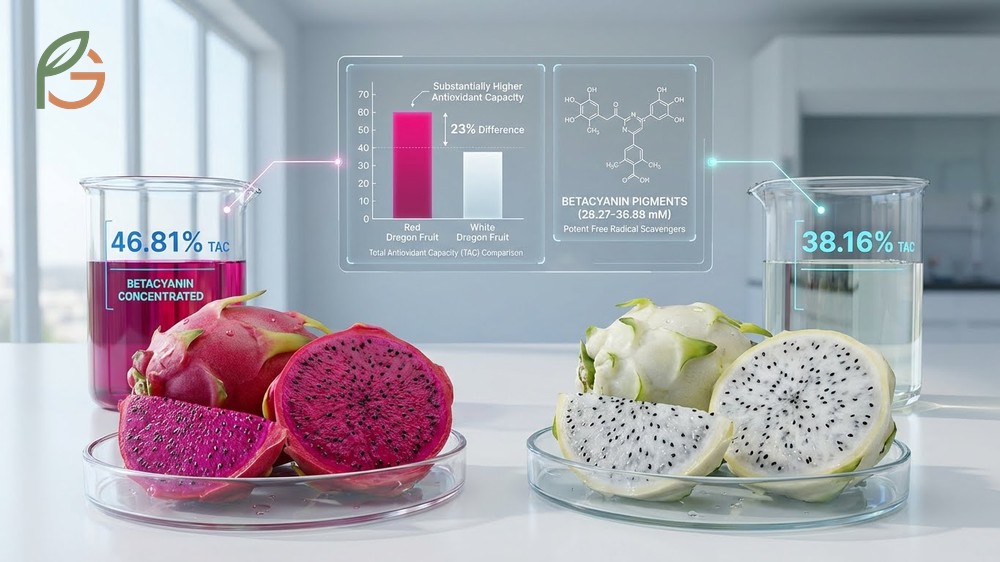
Red dragon fruit delivers substantially higher antioxidant capacity than white varieties. Research demonstrates total antioxidant capacity (TAC) reaches 46.81% in red-fleshed fruits compared to 38.16% in white-fleshed types[4]. This 23% difference stems primarily from betacyanin pigments concentrated in red varieties.
Betacyanin content measures between 28.27-36.88 mM in red dragon fruit pulp[1]. These water-soluble pigments function as potent free radical scavengers, helping neutralize oxidative stress in cellular systems. White dragon fruit contains no detectable betacyanin, explaining its pale flesh coloration.
Total phenolic content (TPC) measures higher in red-fleshed varieties across multiple studies. The phenolic compounds contribute to antioxidant activity and potential anti-inflammatory effects. Red varieties demonstrate consistently elevated TPC values compared to white counterparts[4].
Anthocyanin concentrations show dramatic differences between varieties. Studies indicate Hylocereus costaricensis (red) contains 120.15 mg/g fresh weight anthocyanins, while Hylocereus undatus (white) measures only 18.51 mg/g[7]. This 6.5-fold difference significantly impacts the fruits’ free radical scavenging abilities.
The DPPH radical scavenging assay quantifies antioxidant effectiveness. Red dragon fruit requires only 13.50 mg/mL concentration to achieve 50% radical scavenging (SC₅₀), demonstrating superior antioxidant potency[7]. Lower SC₅₀ values indicate stronger antioxidant capacity.
- Red: 46.81% total antioxidant capacity vs white’s 38.16%[4]
- Betacyanins: 28-37 mM in red, absent in white varieties[1]
- Anthocyanins: 120.15 mg/g in red vs 18.51 mg/g in white[7]
- Phenolic compounds: consistently higher in red-fleshed types
- Vitamin C: red contains up to 19.83 mg per 100g[6]
- Carotenes: present in higher quantities in red varieties
Health Consideration: While red dragon fruit contains more antioxidants, both varieties provide beneficial compounds. The optimal choice depends on individual health goals, with red preferred for maximum antioxidant intake and white suitable for those managing sugar consumption.
Dragon Fruit Variety Comparison
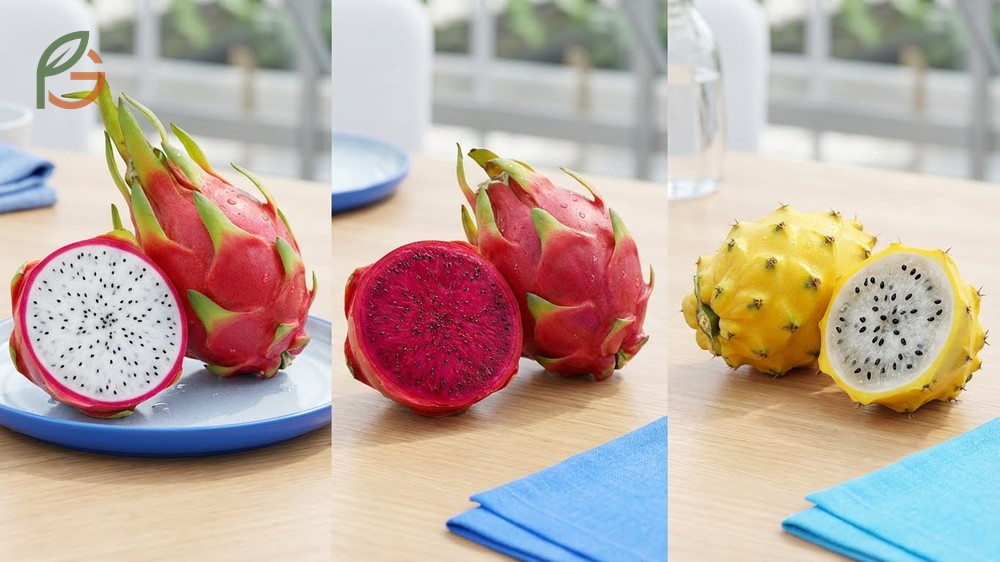
The three main dragon fruit varieties cultivated commercially each offer distinct characteristics. Hylocereus undatus (white flesh) remains the most widely grown variety globally due to its adaptability and commercial viability. Hylocereus costaricensis (red flesh) commands premium prices for its superior antioxidant profile. Hylocereus megalanthus (yellow skin, white flesh) delivers the highest sweetness levels but requires more specific growing conditions.
Agricultural research demonstrates that Hylocereus costaricensis performs best across multiple nutritional and phytochemical parameters. This red variety exhibits the highest total phenolic content, greatest antioxidant capacity, and strongest DPPH radical scavenging ability among cultivated types[7].
Market availability varies significantly by region. White dragon fruit dominates US grocery stores, accounting for approximately 70-80% of retail offerings. Red varieties appear more frequently in specialty markets and Asian grocery chains. Yellow dragon fruit remains relatively rare in American markets despite its exceptional sweetness.
Price differentials reflect both scarcity and perceived value. Red dragon fruit typically costs 20-40% more per pound than white varieties in US markets. This premium pricing reflects lower production volumes and higher demand from health-conscious consumers seeking maximum antioxidant benefits.
- White variety: most affordable, widely available, milder taste profile
- Red variety: premium pricing, highest antioxidant content, sweeter flavor
- Yellow variety: most expensive, strongest sweetness, limited availability
- Growing difficulty: white easiest to cultivate, yellow most demanding
- Storage life: white lasts 5-7 days refrigerated, red 4-6 days
- Culinary versatility: white better for smoothies, red preferred for desserts
| Selection Criteria | Choose White | Choose Red |
|---|---|---|
| Primary Goal | Lower sugar intake, budget-friendly | Maximum antioxidants, sweeter taste |
| Best Use | Smoothies, juices, savory dishes | Fresh eating, desserts, bowls |
| Typical Price | $3.99-5.99/lb | $5.99-7.99/lb |
| Availability | Widely available year-round | Specialty stores, seasonal peaks |
Conclusion
The evidence clearly demonstrates that White vs Red Dragon Fruit serve different nutritional and culinary purposes. Red varieties deliver 46.81% antioxidant capacity with betacyanin concentrations of 28-37 mM, making them optimal for consumers prioritizing anti-inflammatory benefits and maximum phytonutrient intake[4][1]. White varieties counter with higher protein content, elevated potassium levels, and lower sugar concentrations suitable for blood glucose management.
Current agricultural guidelines indicate that while red flesh varieties offer superior phytochemical profiles, white flesh varieties remain a nutrient-dense, lower-sugar alternative for daily consumption. Ultimately, the choice between **White vs Red Dragon Fruit** depends on whether you prioritize antioxidant density or a milder, lower-calorie profile.
Medical Disclaimer
The content provided in this article regarding the nutritional differences between white and red dragon fruit is for informational purposes only. It is not intended to be a substitute for professional medical advice, diagnosis, or treatment. Always seek the advice of your physician or other qualified health provider with any questions you may have regarding a medical condition or dietary changes.
Frequently Asked Questions
Which dragon fruit is healthier, red or white?
Red dragon fruit is generally considered nutritionally superior regarding antioxidants, containing 46.81% antioxidant capacity compared to white’s 38.16% due to high betacyanin levels. However, white dragon fruit is a healthy choice for those seeking lower sugar content and higher protein levels.
Why is red dragon fruit sweeter than white?
Red dragon fruit contains higher concentrations of total sugars (approx. 8.45%) and registers higher on the Brix scale (12-14) compared to white varieties (9-11). This difference gives the red variety a berry-like sweetness, whereas the white variety has a milder, sub-acid flavor profile.
Does red dragon fruit change urine color?
Yes, consuming red dragon fruit can cause a harmless condition called pseudo-hematuria (beeturia), where urine or stool turns reddish-pink. This is caused by the body excreting excess betacyanin pigments and typically resolves within 24 to 48 hours.
How can you tell the difference between red and white dragon fruit from the outside?
While difficult to distinguish with certainty, red-fleshed varieties (H. costaricensis) often have rounder bodies and shorter, darker scales (bracts). White-fleshed varieties (H. undatus) tend to be more oval with longer, greener scales. However, checking the produce sticker or label is the most reliable method.
Which dragon fruit variety is better for weight loss?
Both varieties are excellent for weight loss as they contain approximately 60 calories per 100g and are fat-free. White dragon fruit may have a slight edge for strict low-sugar diets due to its lower fructose content, while the high fiber in both helps promote satiety.
Do red and white dragon fruit have different textures?
The texture is very similar, often described as comparable to a kiwi or watermelon. However, red dragon fruit can sometimes feel slightly softer and juicier due to higher water and sugar content, while white varieties often retain a firmer crunch.
Can diabetics eat red dragon fruit?
Yes, diabetics can generally eat red dragon fruit in moderation. While it has more sugar than the white variety, it still has a relatively low glycemic index (GI) compared to many other tropical fruits. The high fiber content also helps regulate sugar absorption.





