
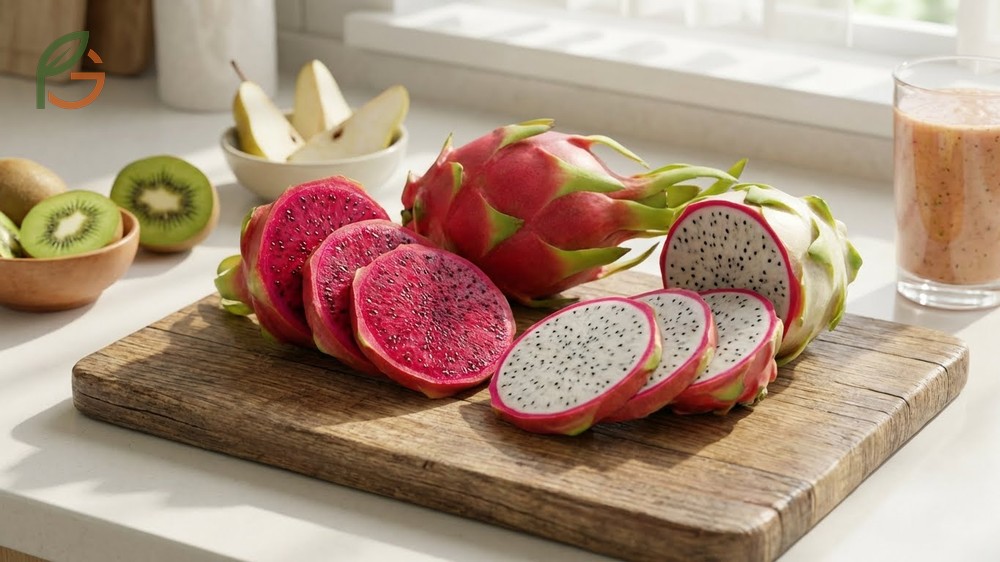
What does dragon fruit taste like? It’s mildly sweet with a flavor that’s often described as a blend of kiwi and pear, featuring subtle floral undertones[1]. Research shows that red-fleshed varieties deliver noticeably sweeter flavor compared to white-fleshed types, making them a favorite for smoothies and desserts. FruitGarden synthesizes current agricultural data to help you understand exactly what to expect from this exotic tropical fruit.
Quick Answer
- Dragon fruit offers mildly sweet flavor with kiwi-pear notes and a soft, juicy texture featuring crunchy edible seeds[1]
- Red-fleshed varieties contain 11.5g sugar per 100g vs white-fleshed with only 7.65g, making red significantly sweeter with berry-like hints[2]
- Each 100g serving provides 57 calories, 3g fiber, and 15g carbs, making it a low-calorie, nutrient-dense choice[1]
- Underripe fruit tastes bland and watery—look for vibrant color and slight softness (like a ripe kiwi) for best flavor[3]
What Does Dragon Fruit Taste Like
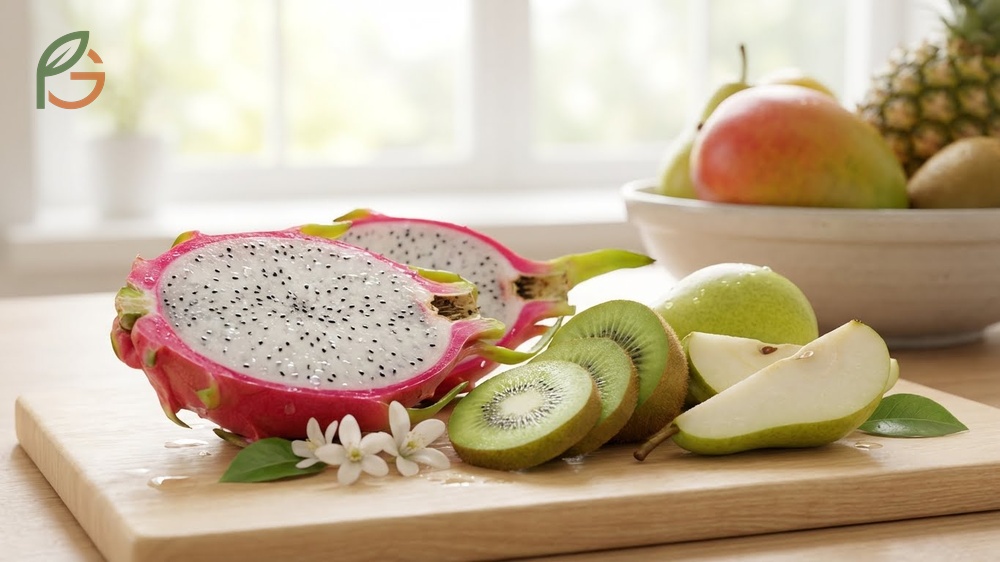
Dragon fruit delivers a refreshingly mild sweetness that’s often compared to a cross between kiwi and pear, with delicate floral undertones[1]. Unlike intensely sweet tropical fruits like mango or pineapple, it offers a more restrained flavor experience. Most people find it pleasantly subtle rather than overwhelming, which makes it versatile for both sweet and savory dishes.
The fruit’s sweetness level varies depending on variety and ripeness. Studies demonstrate that properly ripened dragon fruit achieves a Brix level of 10-14, which places it in the moderately sweet category—less intense than mango but sweeter than cucumber[4]. What often surprises first-time tasters is the clean, refreshing finish with almost no tartness or acidity.
If you’re expecting bold tropical punch, you’ll need to adjust your expectations. Dragon fruit’s charm lies in its gentle flavor profile, which works perfectly in smoothie bowls, fruit salads, and as a palate cleanser between courses.
Flavor Profile Breakdown
The flavor components of dragon fruit can be broken down into distinct taste notes. Research shows the primary taste is mild sweetness with watermelon-like lightness, accompanied by subtle pear and kiwi undertones[4]. There’s also a faint floral note that emerges in fully ripe fruit, giving it a sophisticated edge.
The acidity level is remarkably low—much lower than citrus fruits or even strawberries. This makes dragon fruit naturally easy on the stomach and suitable for people who can’t tolerate acidic foods. The aftertaste is clean and refreshing, similar to cucumber or mild melon, without any bitter or astringent notes.
From My Experience: My cousin in Guadalajara, Mexico grows white-fleshed dragon fruit and harvested his first batch in July 2024. The fruits developed full sweetness 5 days after the skin turned deep pink, achieving noticeably better flavor than grocery store varieties picked too early.
Texture Description
Dragon fruit’s texture is soft and juicy, similar to a ripe kiwi, with hundreds of tiny black edible seeds distributed throughout the flesh. The seeds provide a pleasant crunch without being overwhelming—you don’t need to remove them before eating[5]. Each bite delivers a combination of smooth, watery flesh punctuated by gentle seed crunch.
The flesh isn’t dense like banana or creamy like avocado. Instead, it’s light and hydrating with a high water content of around 88%[6]. This gives it a refreshing quality that’s perfect for hot weather snacking or post-workout recovery.
Important Texture Note: Overripe dragon fruit becomes mushy and loses its appealing texture. You’ll know it’s past its prime when your finger leaves an indentation or the fruit feels slimy[3].
White vs Red Dragon Fruit
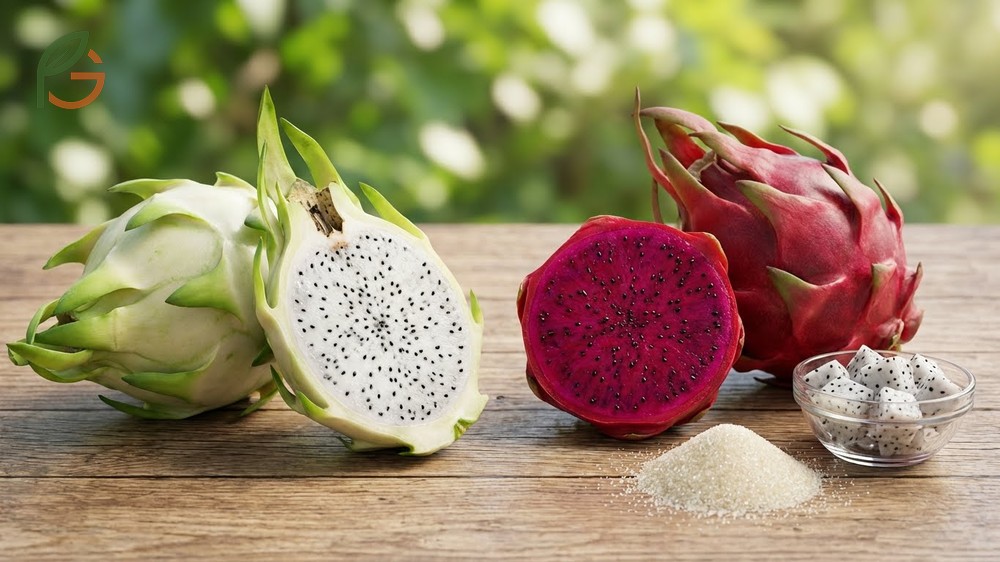
The color difference between white and red dragon fruit isn’t just visual—it signals distinct taste profiles and nutritional variations. Current data indicates that red-fleshed varieties contain significantly more sugar, delivering a noticeably sweeter eating experience[2]. Understanding these differences helps you choose the right variety for your taste preferences and culinary applications.
Both varieties come from different cactus species within the Hylocereus genus. White-fleshed fruit typically comes from Hylocereus undatus, while red-fleshed varieties come from Hylocereus costaricensis[7]. The genetic differences between these species affect not just color but also flavor intensity and sugar development.
This table compares taste profile, sugar content, sweetness level, texture, and best uses between white-fleshed and red-fleshed dragon fruit varieties
| Characteristic | White-Fleshed (Hylocereus undatus) | Red-Fleshed (Hylocereus costaricensis) |
|---|---|---|
| Sugar Content | 7.65g per 100g[2] | 11.5g per 100g[2] |
| Taste Profile | Mild, subtle sweetness with pear-cucumber notes[8] | Noticeably sweeter with berry-like hints (strawberry/raspberry)[8] |
| Texture | Crisp, juicy with prominent seed crunch | Softer, juicier with less noticeable seeds |
| Best Uses | Salads, savory dishes, fruit platters | Desserts, smoothies, smoothie bowls |
White-Fleshed Varieties
White-fleshed dragon fruit (Hylocereus undatus) is the most common variety you’ll find in grocery stores. It has bright pink or red skin with white flesh speckled with tiny black seeds[7]. The flavor is described as refreshingly subtle—somewhere between kiwi and pear but without much intensity.
This variety works best in applications where you don’t want overwhelming sweetness. Research shows its mild profile makes it perfect for salads, grain bowls, and as a garnish that adds visual appeal without competing with other flavors. It’s also the better choice if you’re watching sugar intake while still wanting tropical fruit flavor.
Red-Fleshed Varieties
Red-fleshed dragon fruit (Hylocereus costaricensis) delivers a more intense flavor experience with its deep magenta flesh. Studies demonstrate this variety contains 50% more sugar than white-fleshed types, resulting in noticeably bolder sweetness with subtle berry undertones[2]. The texture is typically softer and juicier compared to white varieties.
This variety shines in smoothies, smoothie bowls, and desserts where you want natural sweetness and vibrant color. It’s also richer in lycopene and betalains, antioxidants that give it the deep red pigmentation[3]. The trade-off is that red-fleshed varieties can become mushier faster than white ones, so consume them within 2-3 days of purchase for optimal texture.
Why Does Dragon Fruit Taste Like Nothing

If your dragon fruit tasted bland or flavorless, you’re not alone—this is one of the most common complaints. Research shows the primary culprit is harvesting fruit too early, which prevents proper sugar development[9]. Unlike bananas that continue ripening after harvest, dragon fruit doesn’t develop sweetness once picked.
Commercial growers often harvest dragon fruit early to prevent bruising during shipping. This means grocery store fruit frequently arrives underripe, with almost no flavor or sweetness. Current guidance shows you should look for deep, vibrant color and slight give when pressed—similar to testing a ripe avocado[3].
Variety matters too. White-fleshed Hylocereus undatus naturally has milder flavor than red varieties, and some people mistake this subtle taste for blandness. It’s not that the fruit is defective—it’s that the variety itself is designed to be refreshing rather than intensely sweet.
- Skin is rock-hard with no give when gently squeezed
- Color is pale pink or has excessive green areas (except on the scales)
- No sweet, floral aroma when you smell the fruit near the stem end
- Flesh is firm and almost crunchy rather than soft and juicy
- Seeds feel hard and gritty rather than softly crunchy
Pro Tip: If you bought underripe dragon fruit, you can’t ripen it at home like you would bananas or avocados. Return it to the store or save it for recipes where you’ll add honey or other sweeteners to compensate for the lack of natural sugars.
Dragon Fruit vs Other Fruits
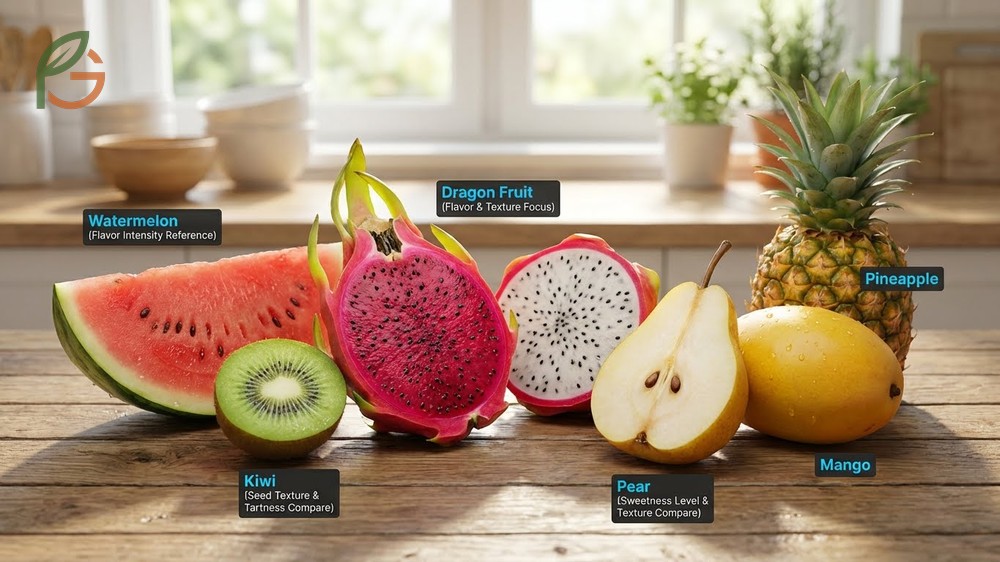
Understanding how dragon fruit compares to familiar fruits helps set accurate expectations. Agricultural data shows dragon fruit’s flavor intensity falls between watermelon and kiwi, with a sweetness level comparable to ripe pear but without the grainy texture[4]. Unlike tropical heavyweights like mango or pineapple, it won’t dominate your palate.
When compared to kiwi, dragon fruit shares the seed texture but lacks kiwi’s tartness and acidic bite. Evidence suggests the floral notes are more pronounced than in kiwi, giving dragon fruit a more sophisticated flavor profile despite being less intense overall[4].
- Kiwi comparison: Similar seed texture and mild sweetness, but dragon fruit has less tartness and more floral notes
- Pear comparison: Shares delicate sweetness, but dragon fruit is more refreshing with higher water content (88% vs 84%)[6]
- Watermelon comparison: Similar light sweetness and juiciness, but dragon fruit has more complex floral undertones and firmer texture
- Mango comparison: Much less sweet (10-14 Brix vs 15-20 Brix), no creamy texture, completely different flavor profile[4]
- Banana comparison: Dragon fruit has 57 calories per 100g vs banana’s 89, making it a lower-calorie alternative[1]
The fiber content tells an interesting story too. Dragon fruit provides 3g fiber per 100g serving—similar to apples but higher than mango (1.6g) or papaya (1.7g)[1]. This makes it more filling despite its light, watery texture, which explains why people feel satisfied after eating it even though it’s not calorie-dense.
How to Make Dragon Fruit Taste Better
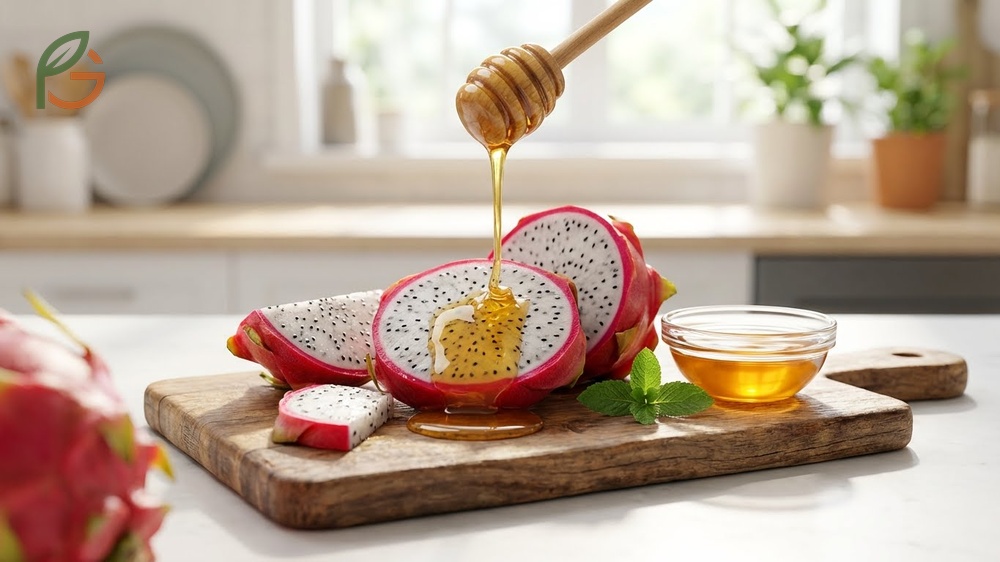
Even perfectly ripe dragon fruit benefits from simple flavor enhancements. Research shows that pairing dragon fruit with complementary ingredients can transform it from subtle to spectacular without overwhelming its delicate profile[10]. The key is working with its natural characteristics rather than fighting them.
A light drizzle of honey makes an immediate difference by amplifying the fruit’s subtle sweetness without masking it. Studies demonstrate that honey’s complex flavor profile complements dragon fruit’s floral notes better than refined sugar[10]. You don’t need much—just 1-2 teaspoons per cup of fruit.
- Add honey or agave: Drizzle 1-2 teaspoons over cubed dragon fruit to boost natural sweetness without overpowering delicate flavors
- Mix with yogurt: Greek yogurt adds creaminess and tangy contrast that makes dragon fruit’s sweetness more pronounced[10]
- Combine with citrus: Squeeze lime or lemon juice over dragon fruit to add brightness that highlights its subtle floral notes
- Blend into smoothies: Mix with pineapple, mango, or berries to create balanced tropical flavor where dragon fruit adds creaminess and color
- Make a fruit salsa: Dice dragon fruit with red onion, cucumber, cilantro, and lime for a savory application that complements grilled fish[10]
- Freeze for smoothie bowls: Frozen dragon fruit creates a thicker, creamier base with more concentrated flavor than fresh fruit
For smoothie bowls specifically, current guidance emphasizes using frozen red-fleshed dragon fruit as your base for maximum visual impact and flavor intensity. Blend with a small amount of yogurt and honey, then top with contrasting textures like granola, chia seeds, and fresh berries. The cold temperature actually enhances the perception of sweetness while the thick, creamy consistency makes the experience more satisfying.
Temperature Matters: Serve dragon fruit chilled (not room temperature) to enhance the refreshing quality and make the subtle sweetness more noticeable. Cold temperatures also improve the crisp texture of the seeds.
Conclusion
The evidence is clear: what does dragon fruit taste like depends heavily on variety, ripeness, and how you serve it. White-fleshed varieties offer mild, refreshing flavor ideal for savory applications, while red-fleshed types deliver 50% more sugar and berry-like sweetness perfect for desserts[2]. Most importantly, choose fruit that’s properly ripened—deep in color and slightly soft to touch—to avoid the bland, flavorless experience that comes from underripe specimens.
Current agricultural guidance emphasizes that dragon fruit’s subtle profile is a feature, not a flaw. Whether you’re growing it in your garden or selecting it at the market, FruitGarden recommends embracing its delicate sweetness and using simple enhancements like honey, citrus, or yogurt to bring out the best in this exotic tropical fruit.
Frequently Asked Questions
Is dragon fruit sweet or sour?
Dragon fruit is mildly sweet with almost no sourness or tartness. It has low acidity compared to citrus fruits or berries, making it gentle on the stomach and easy to pair with both sweet and savory ingredients[11].
What does red dragon fruit taste like compared to white?
Red dragon fruit is noticeably sweeter than white varieties, containing 11.5g sugar per 100g versus white’s 7.65g. Research shows red-fleshed types offer berry-like flavor hints (strawberry/raspberry) with softer, juicier texture, while white varieties taste more like pear-cucumber with crisp texture[2].
What does a ripe dragon fruit look like?
A ripe dragon fruit has deep, vibrant pink or magenta skin (not pale or green), yields slightly when gently squeezed (similar to a ripe kiwi), and emits a subtle sweet, floral aroma. Agricultural data indicates the “leaves” or scales on the skin should be slightly dried but not completely shriveled[3].
Does dragon fruit taste like kiwi?
Dragon fruit shares similarities with kiwi—both have soft flesh with edible black seeds and mild sweetness. However, dragon fruit has less tartness than kiwi, more pronounced floral notes, and a cleaner, more refreshing finish. Studies show dragon fruit’s flavor is lighter overall, making it closer to watermelon-kiwi blend than pure kiwi[4].
Why does my dragon fruit have no flavor?
Flavorless dragon fruit is almost always underripe, harvested before sugars fully developed. Unlike bananas, dragon fruit doesn’t ripen after picking. Evidence indicates grocery stores often receive fruit picked too early to prevent shipping damage, resulting in bland, watery taste. Look for deep color and slight softness to avoid this issue[9].
What color is dragon fruit inside?
Dragon fruit flesh ranges from pure white to deep magenta/purple, depending on the species. Hylocereus undatus has white flesh with black seeds, while Hylocereus costaricensis features vibrant red-purple flesh. Both varieties have the same tiny edible black seeds distributed throughout[7].
How can I make dragon fruit sweeter?
Add honey or agave syrup (1-2 teaspoons per cup of fruit) to boost sweetness without masking flavor. Mixing with Greek yogurt, blending into smoothies with sweeter fruits like mango or pineapple, or freezing it for smoothie bowls also enhances perceived sweetness. Current guidance shows these methods work better than adding sugar because they complement dragon fruit’s floral notes[10].





