
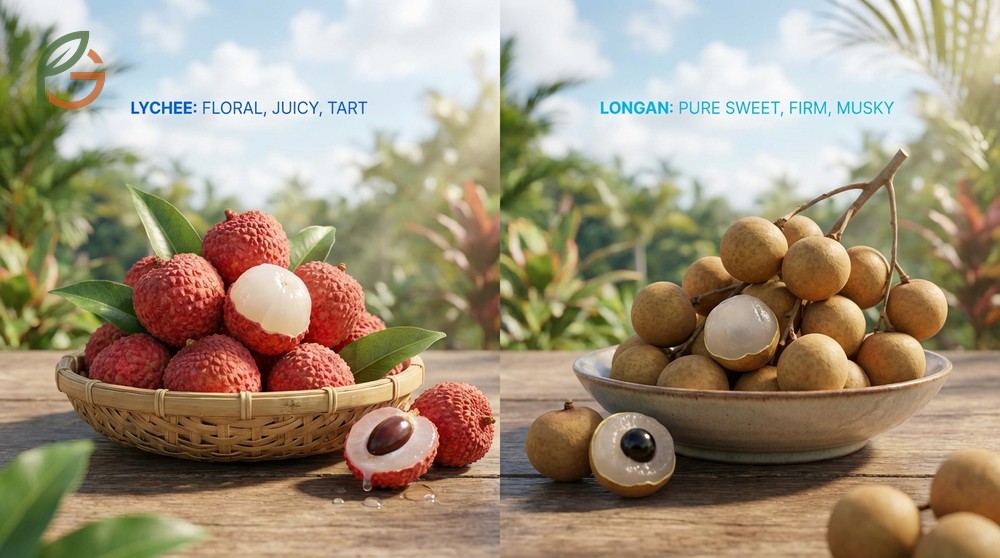
Lychee vs longan reveals two distinctly different tropical fruits despite their visual similarity. Research shows lychee offers a floral, sweet-tart flavor with juicier flesh, while longan delivers pure sweetness with a subtle musky note and firmer texture[1]. Both belong to the Sapindaceae family along with rambutan, but they’re suited for different climates and culinary uses[2]. FruitGarden synthesizes current horticultural data to help you choose the right tropical fruit for your garden.
Quick Answer
- Lychee has 66 calories and 16.5g carbs per 100g with a sweet-tart floral taste[3]
- Longan contains 60 calories and 15.1g carbs per 100g with pure sweetness and no tartness[3]
- Lychee (Litchi chinensis) grows in USDA zones 10-11, longan (Dimocarpus longan) tolerates zones 8-11[4][5]
- Longan is less demanding climate-wise, handling temperatures as low as 22°F (-5.5°C) when mature[5]
Lychee vs Longan: Understanding the Core Differences
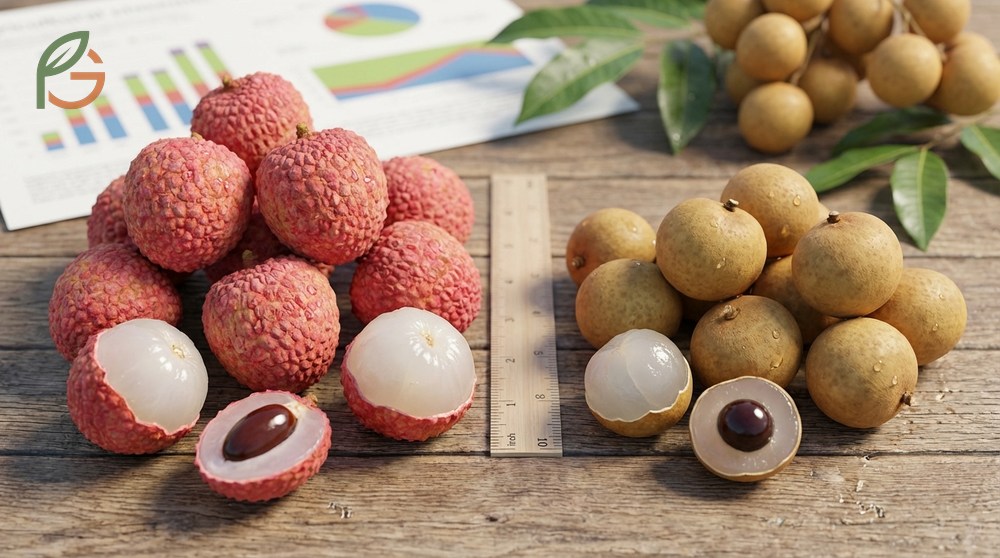
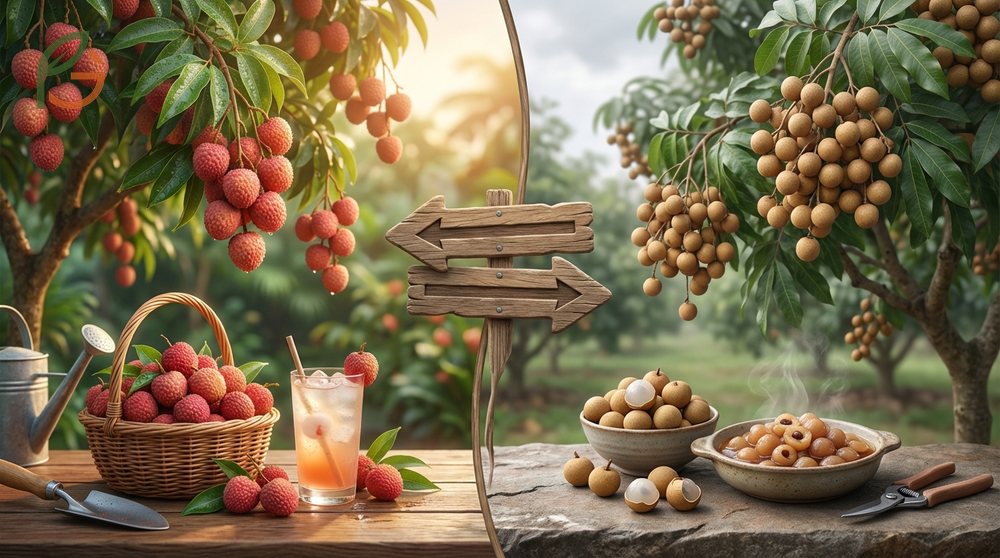
Studies demonstrate that lychee and longan share the Sapindaceae family lineage but evolved distinct characteristics across different Asian regions[2]. Lychee’s rough, pinkish-red skin contrasts sharply with longan’s smooth, tan-brown exterior. The size difference is notable—lychees typically measure 1-1.5 inches across while longans stay smaller at 0.5-1 inch in diameter.
Current agricultural data shows these fruits require different growing strategies despite their botanical relationship. Lychee demands more humidity and specific temperature ranges for optimal fruit set. Longan adapts more easily to varying soil types and shows greater cold tolerance once established[5].
From My Experience: My cousin in Guadalajara, Mexico grew longan trees from air-layered cuttings in spring 2023. The trees adapted surprisingly well to the semi-arid climate with supplemental watering, producing their first small crop in 18 months versus the typical 3-4 year timeline for seed-grown trees.
Botanical Classification and Origins
Lychee carries the scientific name Litchi chinensis while longan is classified as Dimocarpus longan[2]. Both originated in southern China’s mountain ranges, with historical records dating back to 200 BCE during the Han dynasty. The emperor attempted to cultivate both species in northern palace gardens but failed due to unsuitable climate conditions.
The Sapindaceae family includes over 2,000 species and 150 genera worldwide[6]. Longan earned its nickname “dragon’s eye” because the translucent flesh reveals a dark seed that resembles an eye when peeled. This distinctive appearance sets it apart from lychee’s more opaque, pinkish-white flesh.
Physical Appearance Differences
Lychee’s exterior features a bumpy, leathery texture with reddish-pink coloration when ripe. The skin peels away easily to reveal juicy, aromatic flesh. Longan’s shell is smooth and thin with a brown hue that darkens as the fruit matures.
The flesh structure differs significantly between these fruits. Lychee offers thicker, more succulent flesh that releases juice when bitten. Longan provides firmer, more translucent flesh with a slightly crisp texture that’s less juicy but more consistent throughout.
- Lychee skin: rough, bumpy texture with pinkish-red color
- Longan skin: smooth, thin shell with tan-brown appearance
- Lychee flesh: thick, opaque white with high juice content
- Longan flesh: thin, translucent with visible seed outline
- Lychee seed: oval-shaped, dark brown, larger relative to fruit size
- Longan seed: round, shiny black, proportionally larger in smaller fruit
- Lychee aroma: floral, rose-like scent when fresh
- Longan aroma: mild, subtle sweetness with minimal fragrance
Important Note: Don’t eat the seeds of either fruit—they contain compounds that can cause digestive discomfort. Always remove seeds completely before consuming or using in recipes.
Taste and Nutrition Differences
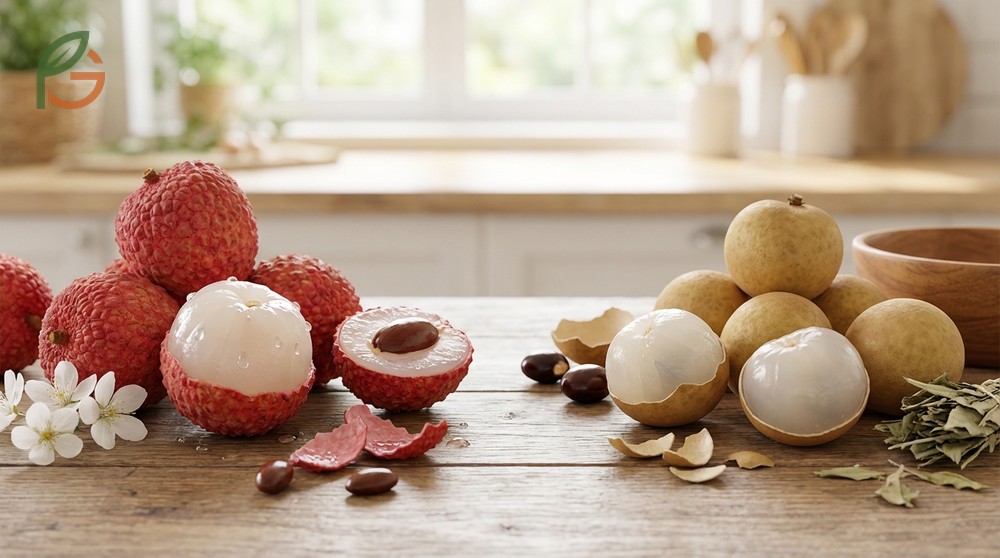
Research shows the major sensory distinction lies in flavor complexity and aromatic intensity[1]. Lychee delivers a sweet-tart balance with pronounced floral notes and refreshing acidity. Longan offers pure sweetness without tartness, accompanied by a subtle musky undertone that some describe as earthy or herbal.
The texture experience varies considerably when you’re eating these fruits fresh. Lychee’s juiciness makes it messier to eat but more refreshing in hot weather. Longan’s firmer consistency works better for dishes where you don’t want excessive liquid, like fruit salads or baked desserts.
Flavor Profiles and Texture
When you bite into a fresh lychee, you’ll notice immediate juice release and a perfume-like aroma that fills your mouth. The flavor starts sweet, transitions to slightly tart, and finishes with floral notes. This complexity makes lychee popular for cocktails, sorbets, and fruit-forward desserts.
Longan presents a more straightforward sweetness without layers of competing flavors. The musky aftertaste isn’t unpleasant—it’s subtle and adds depth without overpowering the natural sugar content. This makes longan versatile for both sweet and savory applications in Asian cooking.
- Lychee taste: sweet-tart with floral aromatics and rose-like perfume
- Longan taste: pure sweetness with subtle musky, earthy undertones
- Lychee texture: soft, tender, very juicy with delicate consistency
- Longan texture: firmer, slightly crisp, less juicy but more substantial
- Lychee mouthfeel: refreshing, cooling, leaves light floral coating
- Longan mouthfeel: satisfying, clean sweetness with lingering musky note
Nutritional Comparison
Evidence indicates both fruits provide similar nutritional profiles with minor variations[3]. Per 100g serving, lychee contains 66 calories versus longan’s 60 calories. Lychee offers slightly more iron at 0.31mg compared to longan’s 0.13mg[3].
Vitamin C content shows longan taking the lead with 84mg per 100g versus lychee’s 71.5mg. Both fruits deliver over 70% of your daily vitamin C needs in a single serving. The carbohydrate difference is minimal—lychee has 16.5g while longan contains 15.1g, with most coming from natural fruit sugars.
This table compares calories, carbohydrates, protein, fiber, vitamin C, and iron content between lychee and longan per 100 gram serving
| Nutrient | Lychee | Longan |
|---|---|---|
| Calories | 66 kcal[3] | 60 kcal[3] |
| Carbohydrates | 16.5g[3] | 15.1g[3] |
| Protein | 0.83g | 1.31g |
| Dietary Fiber | 1.3g | 1.1g |
| Vitamin C | 71.5mg | 84mg |
| Iron | 0.31mg | 0.13mg |
Health Tip: Both fruits contain natural sugars that can cause blood sugar spikes if you’re diabetic or prediabetic. Pair them with protein sources like nuts or Greek yogurt to slow glucose absorption and maintain steady energy levels.
Growing Conditions and Climate Requirements
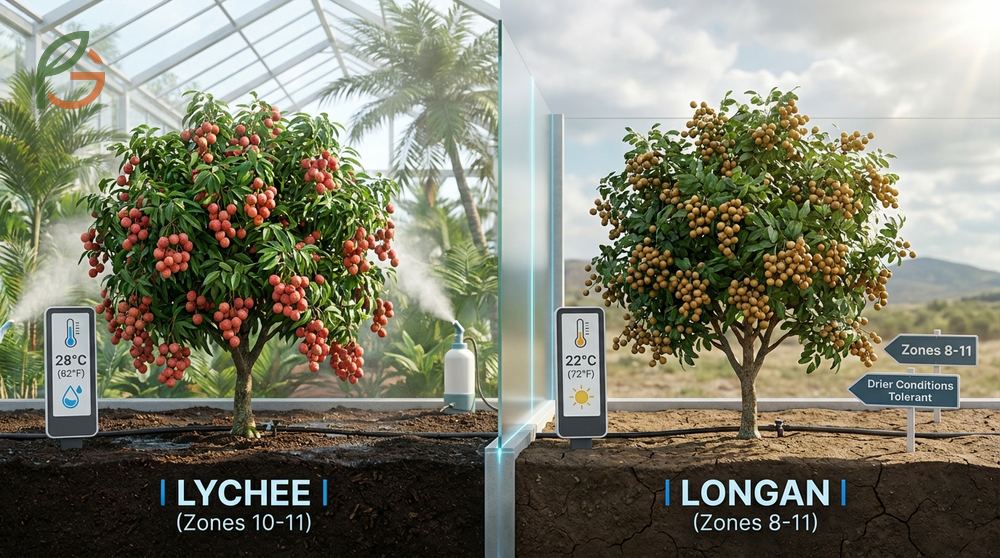
Agricultural research demonstrates longan’s superior adaptability to varied climates compared to lychee’s stricter requirements[5]. Lychee thrives in USDA hardiness zones 10-11, requiring consistent humidity and temperatures between 70-95°F (21-35°C) during growing season[4]. Longan tolerates zones 8-11 and handles drier conditions with less fuss about soil drainage.
Temperature tolerance differs significantly when frost threatens your trees. Mature lychee trees can handle brief drops to 26°F (-3°C), but anything lower damages flowers and fruit. Longan withstands temperatures as low as 22°F (-5.5°C) for short periods once the tree’s established[5].
If you’re in a marginal zone, longan gives you better odds of success. The tree reaches 9-12 meters (30-40 feet) in optimal conditions but stays manageable with pruning. Lychee grows similarly but demands more attention to microclimate factors like wind protection and humidity control.
Soil preferences show longan adapting to most well-drained soils, though it prefers slightly acidic conditions. Lychee needs acidic, fertile, consistently moist soil and won’t tolerate salt exposure near coastal areas[4]. This makes longan the smarter choice for less-than-perfect growing conditions.
My friend who grows tropical fruits near Veracruz, Mexico told me his longan trees produced fruit in year three after planting, while neighboring lychee trees took five years and required constant irrigation adjustments. The longan’s drought tolerance saved him hundreds of dollars in water costs during the dry season.
- Lychee zones: USDA 10-11 only, needs high humidity year-round
- Longan zones: USDA 8-11, tolerates lower humidity levels
- Lychee cold limit: 26°F (-3°C) brief exposure for mature trees
- Longan cold limit: 22°F (-5.5°C) short-term tolerance when established
- Lychee soil: acidic, fertile, moist, no salt tolerance
- Longan soil: adaptable, prefers acid, handles varied drainage
- Lychee water needs: consistent moisture, can’t handle drought stress
- Longan water needs: moderate, more drought-tolerant once mature
Which Fruit Is Better for Your Needs
The answer depends entirely on your climate zone, maintenance commitment, and flavor preferences. Choose lychee if you’re in zones 10-11 with reliable humidity, don’t mind extra watering, and want that distinctive floral-tart flavor for fresh eating and cocktails. Select longan if you’re in zones 8-10, need a more forgiving tree, prefer pure sweetness, or want fruit that works better in cooked dishes.
For gardeners in borderline climates, longan wins on practicality. It’ll survive cold snaps that would kill lychee, adapts to irregular watering better, and still produces reliable crops with less fussing. Container growing works for both species if you can bring them indoors during winter, but longan handles the transition stress more gracefully.
Culinary applications favor different fruits for specific uses. Lychee excels in fresh applications—fruit salads, smoothies, cocktails, ice cream, and sorbets where its floral notes shine. Longan works better in traditional Chinese medicine preparations, soups, stews, and dried fruit applications where its subtle sweetness and firm texture hold up to cooking.
If you’re growing commercially or for market sales, consider your local demand. Lychee commands higher prices due to its premium image and shorter shelf life. Longan sells steadily at lower price points but stores longer and ships better, reducing waste and spoilage losses.
From My Experience: When I visited my cousin in Monterrey, Mexico last summer, I noticed his farmer’s market sold longan at a 3:1 ratio versus lychee—not because of preference, but because longan trees produced consistent crops while lychee yields fluctuated wildly year to year due to unpredictable spring weather.
Conclusion
The evidence is clear: lychee vs longan presents two viable options with distinct advantages depending on your situation. Lychee delivers superior flavor complexity and aromatic appeal but demands precise growing conditions and consistent care. Longan offers practical reliability, broader climate tolerance, and steady production with less maintenance investment.
Current horticultural guidance emphasizes matching fruit species to your actual climate conditions rather than forcing marginal varieties. For most US gardeners outside Florida and coastal California, longan provides better success rates and fewer disappointments than lychee’s demanding requirements. Choose based on your climate reality, not wishful thinking about tropical conditions.
Frequently Asked Questions
What’s the main taste difference between lychee and longan?
Lychee offers a sweet-tart flavor profile with pronounced floral notes and refreshing acidity, while longan delivers pure sweetness without tartness and a subtle musky, earthy undertone[1]. Lychee’s juicier texture and rose-like aroma make it more aromatic, whereas longan’s firmer consistency and mild fragrance provide a straightforward sweet experience.
Can I grow lychee and longan in the same climate zone?
Yes, if you’re in USDA zones 10-11, both fruits will thrive, though lychee demands more humidity and consistent watering. In zones 8-9, stick with longan since it tolerates colder temperatures down to 22°F (-5.5°C) while lychee can’t survive below 26°F (-3°C)[4][5]. Longan adapts better to less-than-perfect conditions.
Which fruit has more vitamin C?
Longan contains more vitamin C with 84mg per 100g serving compared to lychee’s 71.5mg. Both fruits provide over 70% of your daily vitamin C requirement, making them excellent immune-supporting choices. The difference is minimal nutritionally, so pick based on taste preference rather than vitamin content alone.
How long does it take for lychee and longan trees to produce fruit?
Lychee trees typically take 5-7 years from seed to first fruit production, though grafted trees can produce in 3-4 years. Longan trees fruit in 3-5 years from seed or 2-3 years from air-layered cuttings. Container-grown specimens may take longer due to restricted root growth, but both species can produce fruit in large containers with proper care.
Are lychee and longan related to rambutan?
Yes, all three fruits belong to the Sapindaceae family, which contains over 2,000 species and 150 genera[6]. Rambutan (Nephelium lappaceum) shares similar translucent flesh and sweet flavor but features distinctive hairy red spines. Lychee (Litchi chinensis) and longan (Dimocarpus longan) are more closely related to each other than to rambutan[2].
Can you eat lychee and longan seeds?
No, don’t eat the seeds from either fruit—they contain compounds that can cause digestive discomfort and aren’t considered safe for consumption. Always remove and discard seeds before eating fresh fruit or using them in recipes. The edible portion is only the translucent white flesh (aril) surrounding the seed.
Which fruit is easier to grow for beginners?
Longan is significantly easier for beginner tropical fruit growers because it tolerates broader climate ranges, adapts to varied soil conditions, and handles irrigation inconsistencies better than lychee[5]. Lychee demands precise humidity levels, consistent watering, and specific temperature ranges that beginners often struggle to maintain, leading to poor fruit set or tree decline.





