

Can dogs eat strawberries? Yes, dogs can safely eat strawberries in moderation. Research shows these berries provide vitamin C, fiber, and antioxidants that support immune health and digestion[1]. FruitGarden synthesizes current veterinary guidance to help you safely share this sweet fruit with your canine companion.
Quick Answer
- Strawberries are non-toxic and safe for dogs when served fresh and plain[1]
- One medium strawberry contains 4 calories and 58.8mg vitamin C per 100g[2]
- Remove stems and leaves—they’re hard to digest and may cause stomach upset[3]
- Follow the 10% treat rule: strawberries shouldn’t exceed 10% of daily calorie intake[4]
Can Dogs Eat Strawberries

Dogs can safely consume strawberries as an occasional treat. The American Kennel Club confirms these berries are non-toxic and won’t harm your pet when served properly[1]. Unlike grapes or raisins—which are toxic to dogs—strawberries pose no poisoning risk[5].
Fresh strawberries contain 91% water, making them a hydrating snack during warm weather[2]. The natural sugars in strawberries total about 4.9g per 100g, which remains manageable for most healthy dogs[2]. However, moderation remains key—too much natural sugar can lead to weight gain or dental issues over time.
Always wash strawberries thoroughly before serving to remove pesticides and surface contaminants. Cut the berries into bite-sized pieces appropriate for your dog’s size to prevent choking hazards. Remove all stems and leaves, as these parts don’t offer nutritional value and may cause digestive discomfort[3].
Important Note: If your dog has diabetes, pancreatitis, or a history of digestive issues, consult your veterinarian before introducing strawberries. The natural sugar content may not suit dogs with these conditions.
Are Strawberries Good for Dogs

Strawberries deliver several health benefits when incorporated into your dog’s diet responsibly. These berries contain antioxidants that combat free radicals and support cellular health[1]. The fiber content aids digestion and promotes regular bowel movements, making strawberries useful for dogs with mild constipation.
Current veterinary guidance emphasizes strawberries as a low-calorie alternative to commercial dog treats. With only 32 calories per 100g, they won’t significantly impact your dog’s daily calorie budget[2]. For a 30kg dog requiring 1,700 calories daily, 80g of strawberries provides just 1.5% of their caloric needs[6].
Strawberries contain malic acid, a natural enzyme that may help whiten dogs’ teeth when consumed regularly. This component works by breaking down surface stains and promoting oral health. Most dogs find the sweet taste appealing, making strawberries an effective training reward or medication disguise.
Vitamin and Mineral Content
The vitamin C in strawberries supports immune function and collagen production. While dogs synthesize vitamin C naturally, supplemental amounts from fresh fruit can boost overall health during stress or illness. Each 100g serving provides 58.8mg of vitamin C[2].
Strawberries also contain small amounts of manganese, which supports bone development and wound healing. The potassium content helps regulate fluid balance and nerve signals. These minerals work synergistically with vitamins to maintain your dog’s physiological functions.
Digestive Health Benefits
The 2g of fiber per 100g serving promotes healthy gut bacteria and improves stool consistency[2]. Dogs with sensitive stomachs should start with just one or two small pieces to assess tolerance. Watch for signs of gas, diarrhea, or bloating after the first serving—these indicate your dog may need smaller portions or should avoid strawberries entirely.
The water content in strawberries adds moisture to your dog’s diet, which proves especially beneficial for dogs who don’t drink enough water independently. This natural hydration supports kidney function and helps prevent urinary tract issues. During hot summer months, chilled strawberries can help regulate body temperature while providing refreshment.
Can Dogs Eat Strawberry Tops

Dogs shouldn’t eat strawberry tops, including the stems and leaves. While these plant parts aren’t toxic, they’re difficult for dogs to digest and offer no nutritional value[3]. Veterinary experts warn that strawberry stems can cause stomach upset or become choking hazards[7].
The leaves have a bitter taste that most dogs naturally avoid. If your dog accidentally ingests a small amount of strawberry greenery, they’ll likely experience mild digestive discomfort rather than serious harm. However, larger quantities could lead to intestinal blockages, particularly in smaller breeds.
Always hull strawberries completely before offering them to your pet. Cut away the white core near the top as well—while not harmful, it’s tougher and less palatable than the red flesh. The seeds embedded in the strawberry’s surface are perfectly safe and contain beneficial nutrients.
Preparation Tip: Slice strawberries lengthwise into quarters for large dogs, or into smaller pieces for toy breeds. This reduces choking risk and makes the treat easier to chew and digest.
Safe Serving Sizes for Strawberries

The appropriate serving size depends on your dog’s weight and overall diet. Veterinary professionals recommend following the 10% rule—treats shouldn’t exceed 10% of your dog’s daily caloric intake[4]. This guideline helps prevent obesity, which affects 28% of dogs according to veterinary surveys[4].
Small dogs weighing up to 20 pounds should eat no more than 1-2 strawberries daily. Medium dogs between 21-50 pounds can handle 3-5 strawberries per day. Large dogs over 51 pounds may safely consume 5-6 strawberries as an occasional treat[2].
This table shows recommended strawberry serving amounts per week based on dog size categories, from small dogs under 20 pounds to large dogs over 51 pounds
| Dog Size | Weight Range | Strawberries per Week | Serving Frequency |
|---|---|---|---|
| Small | Up to 20 lbs | 1-2 strawberries[2] | 2-3 times weekly |
| Medium | 21-50 lbs | 3-5 strawberries[2] | 3-4 times weekly |
| Large | 51+ lbs | 5-6 strawberries[2] | 4-5 times weekly |
Don’t feed strawberries daily—rotate them with other dog-safe fruits like blueberries or apple slices. This variety prevents digestive upset and ensures your dog receives diverse nutrients. Monitor your dog’s weight and body condition regularly, adjusting treat portions if you notice weight gain.
- Loose stools or diarrhea within 6-12 hours of eating strawberries
- Excessive gas or bloating that causes visible discomfort
- Decreased appetite for regular meals due to treat overconsumption
- Weight gain of more than 5% over a four-week period
- Increased dental issues or tartar buildup from sugar exposure
Can Puppies Eat Strawberries

Puppies can safely eat strawberries once they transition to solid food, typically around 3-4 weeks of age[8]. Start with tiny portions—no more than one or two small pieces—to assess your puppy’s digestive tolerance. Watch closely for signs of stomach upset, including excessive gas, soft stools, or appetite changes.
Puppies have higher caloric needs than adult dogs during their first five months due to rapid growth. However, treats still shouldn’t exceed 10% of their total daily food intake[8]. Prioritize complete puppy food formulas that meet AAFCO standards—strawberries serve only as occasional enrichment, not nutritional staples.
Cut strawberries into pieces smaller than your puppy’s kibble to prevent choking. Young dogs often gulp treats without proper chewing, especially when excited. Supervise all treat sessions and remove any uneaten pieces after 10 minutes to prevent bacterial growth.
- Wait until your puppy reaches 6 weeks old before introducing any fruits
- Mash or puree strawberries for puppies under 8 weeks to ease digestion
- Introduce only one new food every 3-4 days to identify potential allergies
- Keep portions to ¼ of a medium strawberry for puppies under 5 pounds
- Stop feeding strawberries if your puppy shows signs of diarrhea or vomiting
Frozen Strawberries for Dogs

Dogs can safely eat frozen strawberries as a refreshing summer treat. Freezing doesn’t diminish the nutritional value—frozen berries retain their vitamin C, fiber, and antioxidant content. The cold temperature provides additional benefits during hot weather, helping dogs cool down and stay hydrated[9].
Slice frozen strawberries before serving to prevent dental damage. Whole frozen berries are too hard and may crack teeth or cause jaw strain. Cutting them into quarters or smaller pieces makes them safer while maintaining the cooling effect. Never give frozen strawberries to puppies under six months—their developing teeth can’t handle the hardness.
Check frozen strawberry packaging carefully before sharing with your dog. Some commercial frozen fruits contain added sugar or syrup, which increases calorie content unnecessarily. Buy plain frozen strawberries without any additives or sweeteners. You can also freeze fresh strawberries at home after washing and hulling them.
Summer Treat Idea: Freeze individual strawberry pieces on a baking sheet before storing in containers. This prevents them from clumping together, making it easier to portion out single servings for your dog.
Xylitol Warning for Dogs
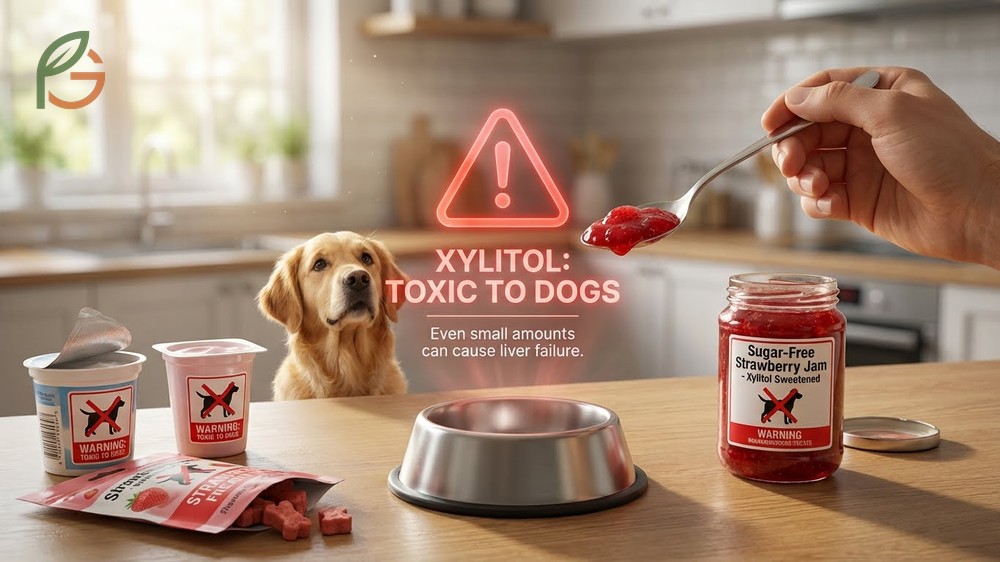
Never feed your dog processed strawberry products that may contain xylitol, an artificial sweetener extremely toxic to canines. Xylitol appears in sugar-free jams, jellies, yogurts, and flavored products[10]. Even small amounts can cause rapid insulin release, leading to hypoglycemia within 30 minutes of ingestion.
Symptoms of xylitol poisoning include vomiting, lethargy, loss of coordination, seizures, and liver failure. If you suspect your dog consumed anything containing xylitol, contact your veterinarian or pet poison hotline immediately—this constitutes a medical emergency. The toxic dose can be as little as 0.1g per kilogram of body weight.
Canned strawberries pose similar risks due to heavy syrups and potential sweetener additives. These products contain excess sugars and calories that contribute to obesity and dental disease[11]. Stick to fresh or plain frozen strawberries without any processing or added ingredients.
- Strawberry jelly or jam containing xylitol or high fructose corn syrup
- Strawberry yogurt with artificial sweeteners or excess added sugars
- Strawberry-flavored candies or lollipops marketed with xylitol[10]
- Canned strawberries packed in heavy syrup or sweetened juice
- Strawberry pie filling containing preservatives and thickening agents
- Dried strawberries with added sugar or sulfites as preservatives
Dog Strawberry Treats Recipe

Homemade strawberry treats let you control ingredients while providing healthy snacks your dog will love. These simple recipes use whole food ingredients without artificial preservatives or excessive sugars. Always use xylitol-free peanut butter and verify all ingredients are dog-safe before preparing.
The following recipe makes approximately 24 treats suitable for dogs of all sizes. Store finished treats in an airtight container in the refrigerator for up to one week, or freeze them for up to three months. Thaw frozen treats at room temperature for 10-15 minutes before serving.
Strawberry Banana Dog Biscuits
This recipe combines strawberries with banana for natural sweetness and potassium. The oats provide additional fiber and create a crunchy texture dogs enjoy. Preparation time takes about 30 minutes including baking.
- 1 cup whole wheat flour (or almond flour for grain-free option)
- ½ cup rolled oats
- ½ cup fresh strawberries, finely chopped or mashed
- ½ cup ripe banana, mashed
- ⅓ cup natural peanut butter (xylitol-free)
- 1 large egg
Preheat your oven to 350°F (175°C) and line a baking sheet with parchment paper. Mix the mashed strawberries, banana, peanut butter, and egg in a large bowl until well combined. Gradually add the flour and oats, stirring until a thick dough forms.
Roll the dough to ¼-inch thickness on a floured surface. Cut into shapes using cookie cutters or a knife, then place pieces on the prepared baking sheet. Bake for 20-25 minutes until golden brown and firm to touch. Allow treats to cool completely before serving—they’ll harden as they cool, creating the crunchy texture dogs prefer.
Frozen Strawberry Yogurt Bites
These no-bake treats require just two ingredients and take five minutes to prepare. Use plain, unsweetened yogurt without artificial sweeteners. Greek yogurt works well due to its higher protein content and thicker consistency.
Blend ½ cup fresh strawberries with 1 cup plain yogurt until smooth. Pour the mixture into silicone molds or ice cube trays. Freeze for 3-4 hours until solid. Pop out individual portions and serve as cooling treats on hot days.
Conclusion
The evidence is clear: can dogs eat strawberries safely when you follow proper serving guidelines and preparation methods. These berries offer valuable nutrients including vitamin C, fiber, and antioxidants that support your dog’s overall health[1]. Current veterinary guidance emphasizes moderation, proper preparation, and awareness of your individual dog’s health status.
Remove all stems and leaves before serving, cut berries into appropriate sizes for your dog’s breed, and stick to the 10% treat rule. Always choose fresh or plain frozen strawberries over processed products that may contain harmful sweeteners like xylitol. FruitGarden encourages pet owners to consult their veterinarian before introducing any new foods, especially for dogs with existing health conditions.
Medical Disclaimer
Important Medical Disclaimer: This content is for informational and educational purposes only. It’s not intended as a substitute for professional veterinary advice, diagnosis, or treatment. Always consult a qualified veterinarian before making any changes to your dog’s diet, especially if your pet has diabetes, pancreatitis, food allergies, or other medical conditions. Individual dogs may react differently to new foods, and what’s safe for one dog may not suit another.
Frequently Asked Questions
Can Dogs Eat Strawberries and Blueberries Together?
Yes, dogs can safely eat strawberries and blueberries together as both fruits are non-toxic and nutritious[12]. This combination provides variety in antioxidants and flavors while keeping treats interesting. Just ensure the total fruit quantity stays within the 10% treat guideline for your dog’s daily calorie intake.
Are Strawberries Poisonous to Dogs?
No, strawberries are not poisonous to dogs and contain no toxic compounds like those found in grapes or raisins[5]. Fresh strawberries are completely safe when served plain without added sugars or sweeteners. However, processed strawberry products containing xylitol are extremely dangerous and should never be given to dogs.
Can Dogs Have Freeze Dried Strawberries?
Yes, dogs can eat freeze-dried strawberries if they contain no added sugars, sweeteners, or preservatives. Check the ingredient list carefully—the only ingredient should be strawberries. Freeze-dried berries are more concentrated than fresh ones, so reduce serving sizes accordingly to account for the lower water content and higher calorie density.
Can Dogs Have Strawberry Jelly?
No, dogs shouldn’t eat strawberry jelly due to high sugar content, artificial sweeteners, and preservatives. Many jellies contain xylitol, which causes life-threatening toxicity in dogs[10]. Even xylitol-free jellies provide no nutritional value and contribute to obesity and dental disease. Stick to fresh strawberries instead.
How Many Strawberries Can a 50-Pound Dog Eat?
A 50-pound dog can safely eat 3-5 strawberries per serving, offered 3-4 times weekly[2]. This amount stays within the 10% treat rule while providing nutritional benefits. Cut the berries into quarters and remove all stems before serving. Monitor your dog’s weight and adjust portions if needed.
Can Strawberries Give Dogs Diarrhea?
Yes, too many strawberries can cause diarrhea in dogs due to the fiber and natural sugar content. Start with small portions to test your dog’s tolerance—one or two pieces for the first serving. If your dog develops loose stools, gas, or bloating after eating strawberries, reduce the portion size or eliminate them from the diet entirely.
Do Strawberries Help Clean Dogs’ Teeth?
Strawberries contain malic acid, a natural enzyme that may help reduce surface stains on dogs’ teeth when consumed regularly[13]. However, they don’t replace proper dental care including brushing and professional cleanings. The natural sugars in strawberries can also contribute to plaque buildup if oral hygiene is neglected, so maintain regular teeth-brushing habits.





