
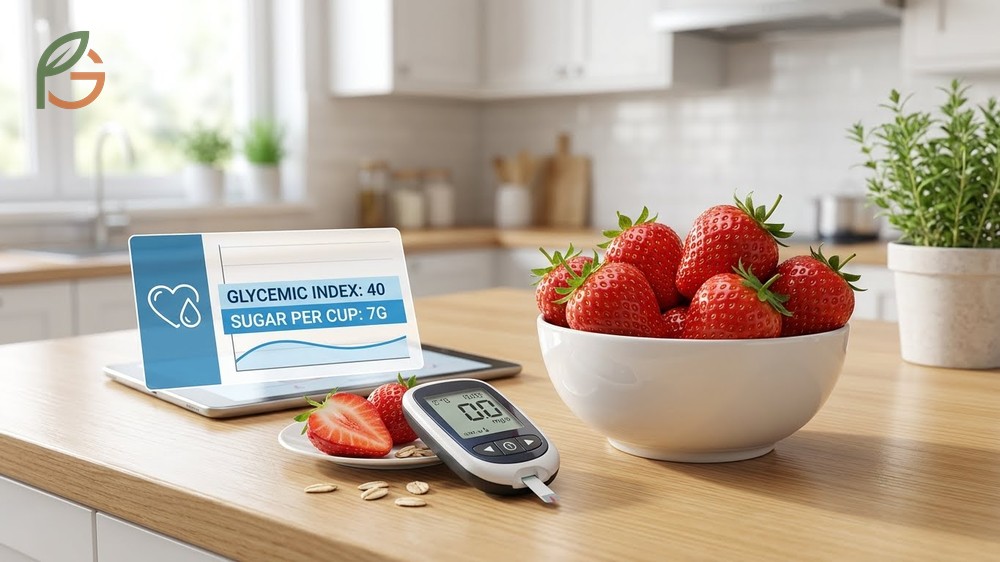
Are strawberries good for diabetics? Yes, they’re an excellent choice. Research shows strawberries have a low glycemic index of 40 and contain only 7 grams of sugar per cup, making them one of the safest fruits for blood sugar management[1][2]. Studies demonstrate that consistent strawberry consumption can lower blood sugar levels in prediabetic patients[3]. FruitGarden provides evidence-based guidance to help you make informed decisions about growing and consuming fruits for optimal health.
Quick Answer
- Strawberries have a low glycemic index of 40[1] and glycemic load of only 3 per cup[4]
- Each cup contains just 7g sugar[2] and 12.7g carbohydrates[2] with 3.32g fiber[2]
- Recommended serving size for diabetics is 1 to 1.25 cups[5] (approximately 15g carbs)
- Research shows 25 prediabetic patients returned to normal glucose levels after 12 weeks of daily strawberry consumption[3]
Are Strawberries Good for Diabetics
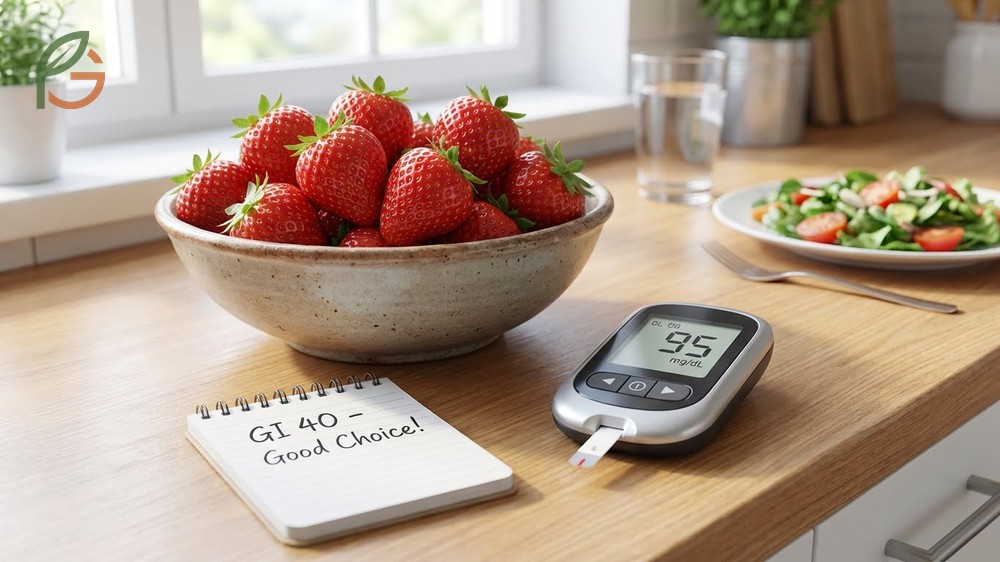
Strawberries rank among the best fruit choices for people with diabetes. Their low glycemic index of 40 means they won’t cause rapid blood sugar spikes[1]. Research from OMRF involving 25 prediabetic patients found that consuming the equivalent of 2.5 cups of strawberries daily for 12 weeks lowered blood glucose levels, with many participants returning to normal ranges[3].
The combination of fiber, polyphenols, and antioxidants in strawberries works together to slow carbohydrate digestion. This creates a more gradual glucose response compared to high-glycemic fruits. Current data indicates that strawberries may improve insulin sensitivity when consumed alongside high-carb foods[4].
One cup of strawberries contains just 45 calories and provides 98% of your daily vitamin C needs[2]. Unlike processed snacks, strawberries deliver natural sugars balanced by 3.32 grams of fiber per serving, which helps stabilize blood sugar levels throughout the day[2].
How Strawberries Affect Blood Sugar
Strawberries have a glycemic load of only 3 per cup, which is exceptionally low[4]. Glycemic load measures both the quality and quantity of carbohydrates in a food, giving you a more accurate picture of blood sugar impact. Any GL under 10 is considered low and unlikely to cause significant glucose spikes.
The fiber in strawberries slows down your body’s absorption of natural sugars. Studies demonstrate that their polyphenols can reduce insulin spikes after meals, especially when you pair strawberries with protein or healthy fats[4]. This makes them ideal for breakfast with Greek yogurt or as an afternoon snack with almonds.
Fiber and Nutrient Benefits
Each cup of strawberries provides 3.32 grams of dietary fiber, which accounts for about 11% of your daily requirement[2]. This fiber content helps with glucose metabolism and can improve insulin sensitivity over time. Research shows high-fiber diets benefit people with type 2 diabetes by supporting better blood sugar control.
Strawberries contain powerful antioxidants like anthocyanins and ellagic acid. These compounds have been linked to reducing inflammation and improving insulin response. One cup delivers 58.8mg of vitamin C (98% of daily value), plus manganese, folate, and potassium[4][2].
Important Note: The glucose-lowering benefits require consistent consumption. Research shows blood sugar levels returned to original readings 12 weeks after participants stopped eating strawberries[3].
Sugar Content in Strawberries
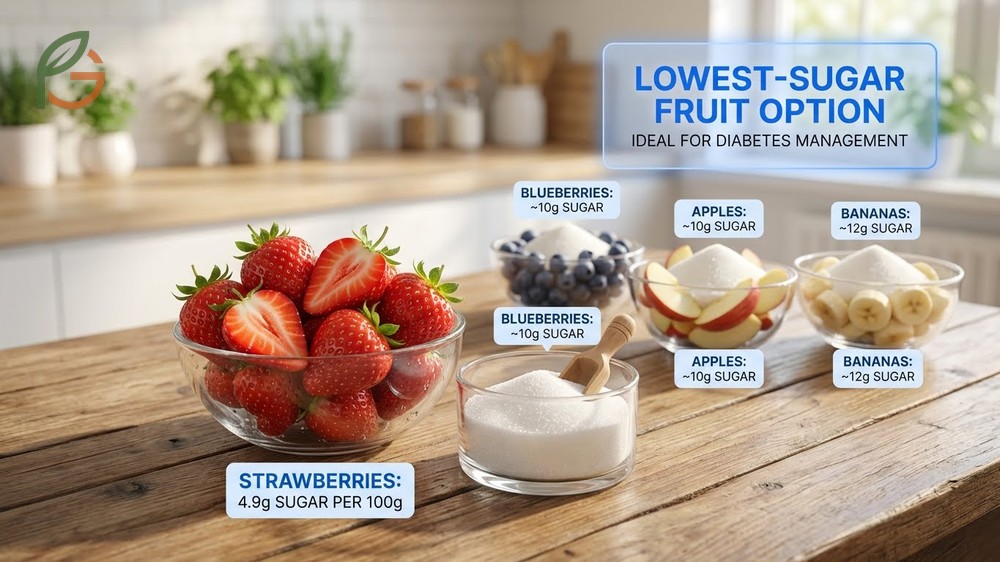
Fresh strawberries contain approximately 7 grams of sugar per cup, making them one of the lowest-sugar fruits available[2]. This natural sugar content is significantly lower than many popular fruits. For comparison, strawberries contain less sugar than blueberries, apples, and bananas, which makes them particularly suitable for diabetes management.
Per 100 grams, strawberries contain just 4.9 grams of sugar[4]. The total carbohydrate content is 7.7 grams per 100 grams, with 2 grams coming from fiber, resulting in 5.7 grams of net carbs. This low net carb count makes strawberries compatible with low-carb eating patterns while still providing essential nutrients.
Natural vs Added Sugars
Strawberries contain zero added sugars when consumed fresh or frozen without additives[2]. All the sugar is naturally occurring fructose, which your body processes differently than table sugar. The fiber in strawberries slows this absorption, preventing rapid blood glucose increases.
Be mindful of processed strawberry products. Strawberry jam has a higher glycemic index of 51, and many strawberry yogurts contain added sugars that increase their impact on blood sugar[1]. Always opt for fresh or frozen strawberries without syrup when managing diabetes.
Comparing Strawberries to Other Fruits
Research shows strawberries contain even less sugar than many other berries. While blueberries are healthy, they pack more sugar per serving. Strawberries stand out as exceptionally low in both sugar and total carbohydrates compared to popular fruit choices.
This table compares sugar content, total carbohydrates, and calories across seven common fruits per standard serving size
| Fruit | Serving Size | Sugar (g) | Total Carbs (g) | Calories |
|---|---|---|---|---|
| Strawberries | 1 cup | 7[2] | 12.7[2] | 45 |
| Blackberries | 1 cup | 7 | 14 | 62 |
| Raspberries | 1 cup | 5 | 15 | 64 |
| Blueberries | 1 cup | 15 | 21 | 84 |
| Apple | 1 medium | 19 | 25 | 95 |
| Banana | 1 medium | 14 | 27 | 105 |
| Mango | 1 cup | 23 | 25 | 99 |
Glycemic Index of Strawberries
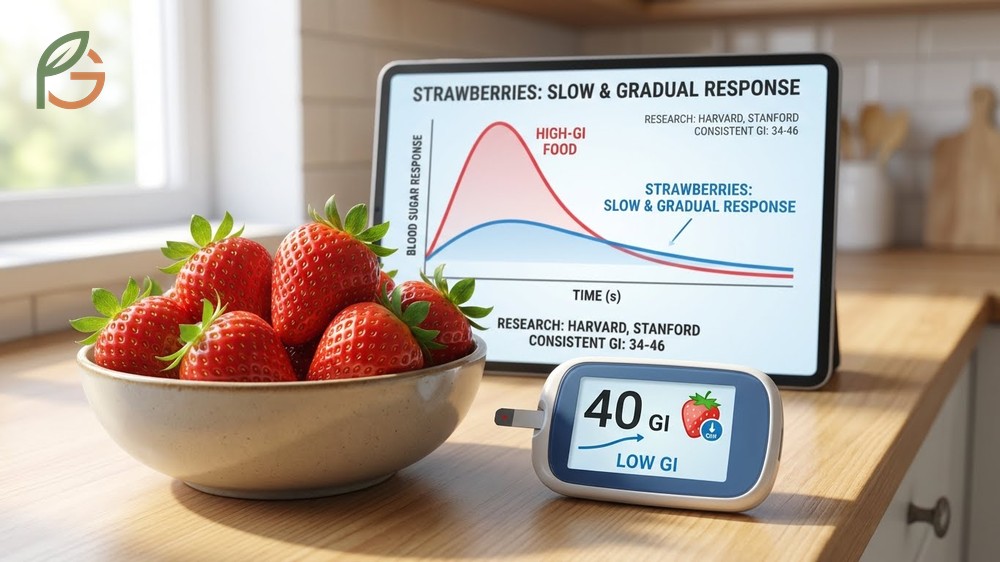
The glycemic index of strawberries is 40, placing them firmly in the low-GI category (values under 55)[1]. Research from Harvard and Stanford found a consistent GI range of 34-46 for strawberries across multiple studies, with the average rounding to 40. This consistency across research makes strawberries a reliable choice for blood sugar management.
Foods with a low glycemic index cause slower, more gradual increases in blood glucose. This matters because rapid spikes can lead to insulin resistance over time. Strawberries won’t cause the same blood sugar rollercoaster you’d get from high-GI foods like white bread (GI of 75) or watermelon (GI of 72).
The glycemic load provides even more useful information for diabetics. While GI measures how quickly a food raises blood sugar, GL accounts for serving size. Strawberries have a GL of just 3 per cup, which is exceptionally low[4]. Values under 10 are considered low-impact.
Research shows the water and fiber content in strawberries work together to minimize blood glucose impact. Despite their sweet taste, their natural sugar is balanced by compounds that slow digestion. This makes strawberries suitable for morning meals, snacks, or desserts without significantly affecting daily blood sugar patterns.
- High water content (91% by weight) dilutes natural sugars
- Fiber content of 3.32g per cup slows carbohydrate absorption[2]
- Polyphenols and anthocyanins improve insulin response[4]
- Low total carbohydrate density compared to other fruits
- Natural acids in strawberries help moderate glucose release
Tip: Pairing strawberries with protein or healthy fats (like Greek yogurt or almonds) can further reduce their glycemic impact. This combination slows digestion even more and provides sustained energy.
Strawberry Serving Size for Diabetics
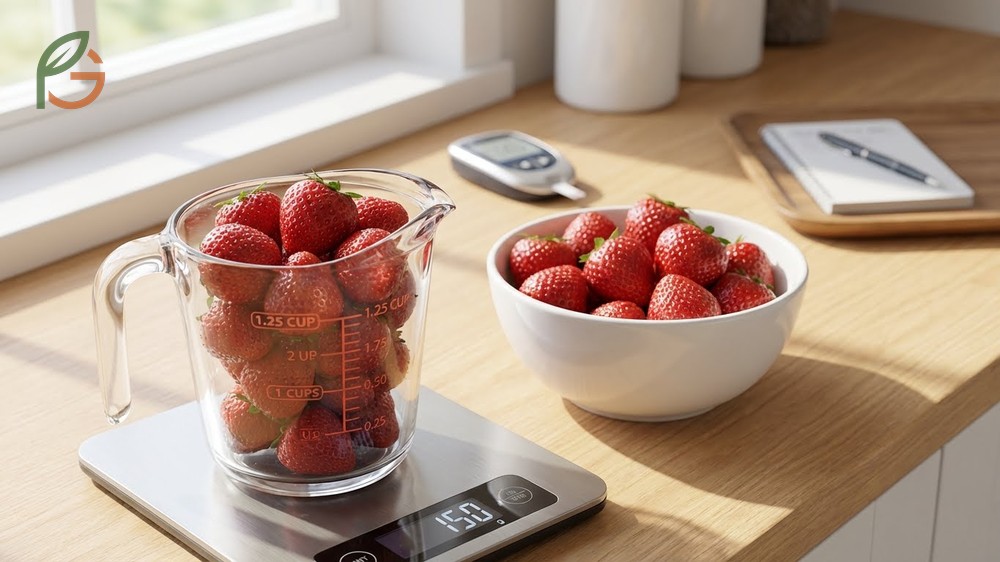
The recommended serving size of strawberries for people with diabetes is 1 to 1.25 cups of whole berries, which equals approximately 15 grams of carbohydrates[5]. This standard serving provides the sweet satisfaction you’re craving without risking blood sugar spikes. Most diabetes guidelines suggest aiming for 15 grams of carbs per fruit serving to maintain stable glucose levels throughout the day.
One cup of whole strawberries weighs about 150 grams and contains 12.7 grams of total carbohydrates[2]. If you’re following a stricter carb-counting plan, you can adjust portions accordingly. For those on low-carb diets (under 50g daily carbs), half a cup provides satisfaction while leaving room for other nutrients.
Portion size matters more than you might think. Eating more than one serving at a time may raise your blood sugar levels, even with low-GI fruits. Research shows spreading fruit consumption throughout the day works better than consuming multiple servings in one sitting. This approach keeps your blood glucose steadier and prevents the insulin surges that contribute to long-term complications.
Current guidance emphasizes quality over quantity. It’s better to eat one cup of fresh strawberries than to avoid fruit entirely out of fear of blood sugar effects. The nutrients, antioxidants, and fiber in strawberries provide health benefits that extend beyond glucose management, including heart health and inflammation reduction.
- Stick to 1-1.25 cups per serving to stay within 15g carb limit[5]
- Pair strawberries with protein sources like Greek yogurt or cottage cheese
- Spread fruit servings throughout the day rather than eating multiple portions at once
- Choose fresh or frozen berries without added sugars or syrup
- Monitor your individual blood sugar response and adjust portions if needed
- Include strawberries as part of balanced meals, not as standalone snacks on an empty stomach
Strawberry Smoothie for Diabetics
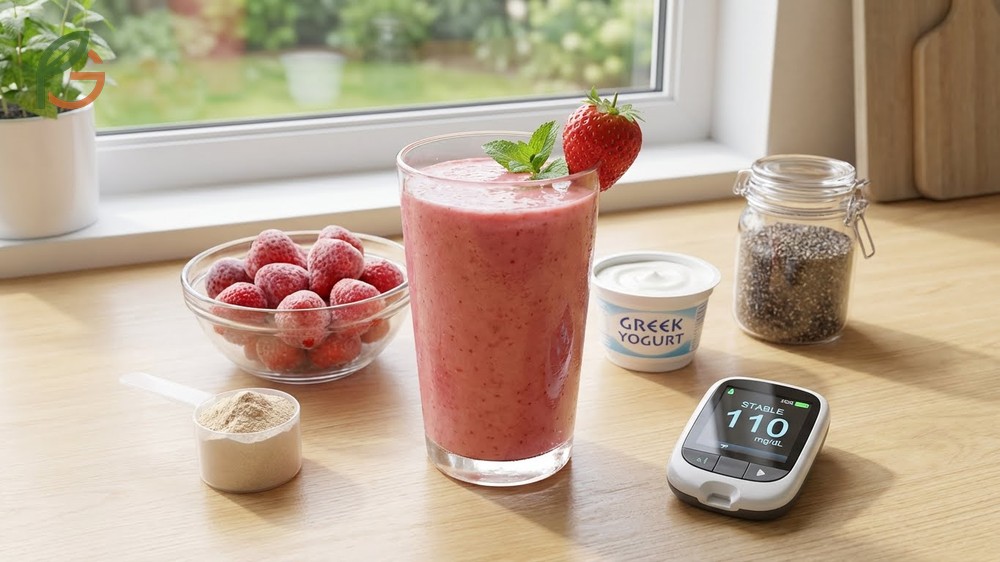
Diabetes-friendly strawberry smoothies can be a nutritious breakfast or snack when you balance carbohydrates with protein and healthy fats. The key is avoiding added sugars and including ingredients that slow glucose absorption. Research shows smoothies designed for diabetics should combine low-GI fruits, quality protein, and fiber to prevent blood sugar spikes.
A well-balanced diabetic strawberry smoothie typically includes 1 cup of frozen strawberries (12.7g carbs), protein powder or Greek yogurt (20-25g protein), and healthy fats like peanut butter or almond butter[6]. Adding rolled oats or chia seeds provides extra fiber to further stabilize blood sugar response.
Most people find that timing matters when drinking smoothies. Consuming them as part of breakfast works better than having them on an empty stomach. The protein and fat slow down carbohydrate digestion, creating a more gradual glucose response throughout the morning.
Diabetes-Friendly Smoothie Recipe
This balanced recipe provides approximately 36 grams of carbohydrates, 23 grams of protein, and 11 grams of healthy fats per serving. The combination keeps you full for 4-5 hours while minimizing blood sugar impact. Blend all ingredients on high for 1-2 minutes until smooth and creamy.
- 1 cup frozen strawberries (no added sugar)
- 2 scoops vanilla protein powder (50g)
- 2 tablespoons natural peanut butter
- 2 tablespoons rolled oats
- 1.5 cups unsweetened almond milk
- Optional: ½ frozen banana for extra creaminess (adds 12g carbs)
Warning: Avoid store-bought smoothies and juice bars, which often contain 50-80 grams of sugar per serving. Making smoothies at home gives you complete control over ingredients and portions.
Fruits for Diabetics to Avoid
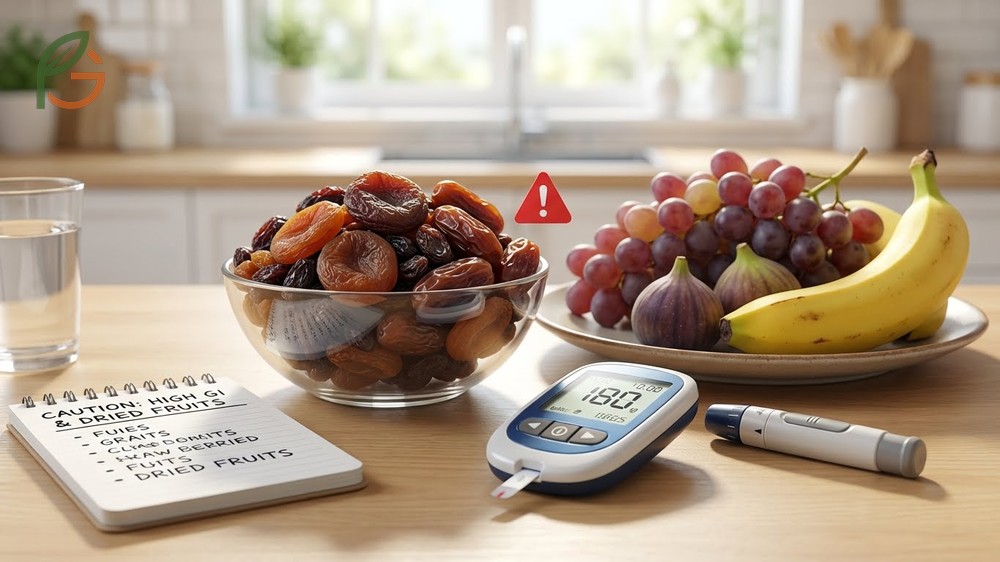
Not all fruits work equally well for diabetes management. High-glycemic fruits can cause rapid blood sugar spikes, especially when eaten alone or in large quantities. Research shows certain fruits have glycemic index values above 60, placing them in the moderate to high-GI category that requires caution.
Dried fruits pose particular problems for diabetics. The dehydration process concentrates sugars, turning a healthy snack into a blood sugar bomb. One tablespoon of dried fruit contains 20.8 grams of carbs and 20.8 grams of sugar—more than an entire cup of fresh strawberries[7]. Dates, raisins, and dried figs should be limited or avoided entirely.
Tropical fruits often have higher sugar content and glycemic indexes. While they’re rich in vitamins, they can disrupt blood sugar control when consumed in typical serving sizes. Current guidance emphasizes choosing temperate-climate fruits like berries over tropical options for better glucose management.
- Watermelon (GI: 72) – high glycemic index despite low calories per serving
- Pineapple (GI: 59-66) – causes rapid blood sugar increases
- Mango (GI: 51-60) – significant sugar content at 23g per cup[7]
- Bananas (GI: 51-55) – 24g net carbs per fruit, less suitable for strict control[7]
- Grapes (GI: 45-53) – 19g carbs per half cup, easy to overeat[7]
- Dried fruits (dates: 36g, raisins: 31g per ¼ cup) – extremely concentrated sugars[7]
- Fruit juices and canned fruits in syrup – stripped of fiber, loaded with added sugars
Low Carb Fruits List
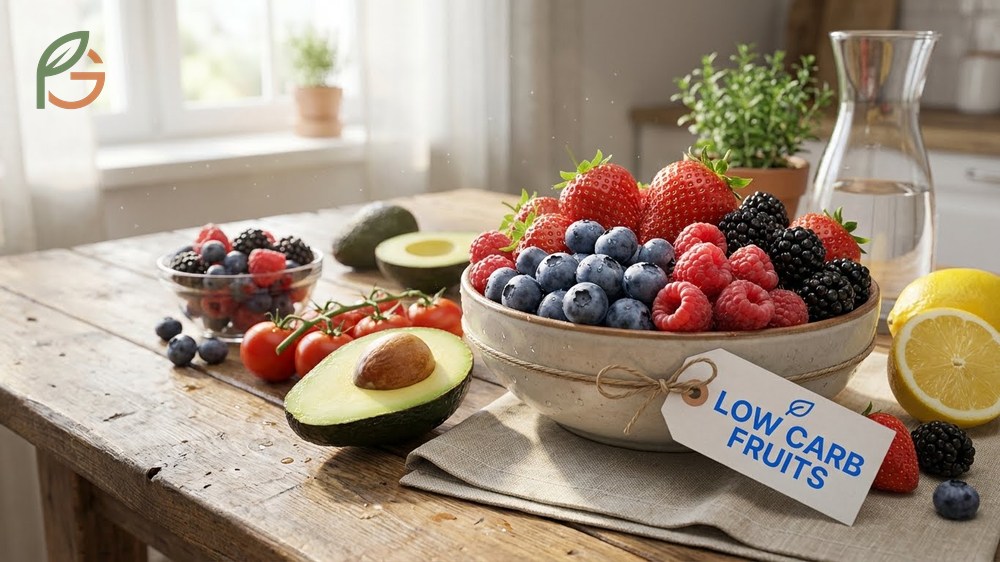
Low-carb fruits contain less than 15 grams of net carbohydrates per standard serving, making them ideal choices for diabetics and anyone following carb-restricted diets. These fruits provide essential vitamins, minerals, and antioxidants without significantly impacting blood sugar. Evidence suggests that choosing low-carb fruits helps maintain stable glucose levels while still delivering the health benefits associated with fruit consumption.
Berries consistently rank as the best low-carb fruit options. They’re packed with fiber, which reduces their net carb count and slows sugar absorption. Most berries also contain powerful antioxidants that combat inflammation and support overall health. What often gets overlooked is that berry ripeness affects carbohydrate content—fully ripe berries have slightly more sugar than less-ripe ones.
Citrus fruits offer another low-carb category worth considering. Lemons and limes contain just 5 grams of net carbs per fruit and provide 32% of your daily vitamin C[7]. While you won’t eat them whole, their juice adds flavor to meals and drinks without adding significant carbohydrates.
| Fruit | Serving Size | Net Carbs (g) | Glycemic Index |
|---|---|---|---|
| Starfruit | 1 medium fruit | 3.5[7] | Low |
| Blackberries | 1 cup | 6[7] | 25 |
| Raspberries | 1 cup | 7[7] | 32 |
| Strawberries | 1 cup | 9 | 40[1] |
| Plums | 1 medium fruit | 6.5[7] | 40 |
| Cantaloupe | 1 cup diced | 11 | 65 |
- Avocado – technically a fruit, contains just 2g net carbs per half and provides healthy fats
- Coconut (shredded, unsweetened) – 6g net carbs per ounce, high in beneficial MCT fats
- Blueberries – 17g net carbs per cup, higher than other berries but still reasonable
- Peaches – 13g net carbs per medium fruit, good fiber content
- Cantaloupe – despite moderate GI, low carb density makes it acceptable in portions
Conclusion
The evidence is clear: strawberries are excellent for diabetics, offering a low glycemic index of 40, minimal sugar content of 7 grams per cup, and powerful nutrients that support blood sugar management[1][2]. Research demonstrates that consistent consumption can lower blood glucose levels in prediabetic individuals[3]. Stick to 1-1.25 cups per serving, pair them with protein for best results, and choose fresh or frozen varieties without added sugars.
Current agricultural and nutritional guidance emphasizes that fruit doesn’t need to be feared when managing diabetes—it’s about making informed choices. FruitGarden provides evidence-based information to help you grow, select, and enjoy fruits that support your health goals while satisfying your taste for nature’s sweetness.
Medical Disclaimer
Important Medical Disclaimer: This content is for informational and educational purposes only. It’s not intended as a substitute for professional medical advice, diagnosis, or treatment. Always consult a qualified healthcare professional before making any changes to your diet, medication, or health routine, especially if you have diabetes or other medical conditions. Individual responses to foods can vary, and blood sugar management requires personalized guidance from your healthcare team.
Frequently Asked Questions
Can Diabetics Eat Strawberries Every Day?
Yes, diabetics can safely eat strawberries every day in appropriate portions. Research from OMRF found that consuming 2.5 cups of strawberries daily for 12 weeks improved blood glucose levels in prediabetic patients[3]. Stick to 1-1.25 cups per serving and monitor your individual blood sugar response.
Do Strawberries Spike Blood Sugar?
No, strawberries don’t spike blood sugar when eaten in recommended portions. They have a low glycemic index of 40 and a glycemic load of only 3 per cup[1][4]. Their fiber and polyphenols slow carbohydrate absorption, creating a gradual glucose response rather than a spike.
Are Frozen Strawberries Good for Diabetics?
Frozen strawberries without added sugar are just as good as fresh ones for diabetics. They retain the same nutritional profile, including the 7 grams of sugar and 3.32 grams of fiber per cup[2]. Always check labels to ensure no sweeteners or syrup have been added during processing.
What’s the Best Time to Eat Strawberries for Blood Sugar Control?
The best time to eat strawberries is with or after meals, not on an empty stomach. Pairing them with protein sources like Greek yogurt, cottage cheese, or nuts at breakfast or as an afternoon snack provides better blood sugar stability. Studies show combining strawberries with protein and fat further reduces their glycemic impact[4].
How Many Strawberries Equal 15 Grams of Carbs?
Approximately 1.25 cups of whole strawberries equals 15 grams of carbohydrates, which is the standard fruit serving for diabetics[5]. This translates to roughly 10-12 large strawberries or 15-18 medium berries. One cup contains about 12.7 grams of carbs[2].
Are Strawberries Better Than Blueberries for Diabetics?
Strawberries are slightly better than blueberries for strict blood sugar control because they contain less sugar—7 grams per cup versus 15 grams in blueberries. Both berries are healthy choices with low glycemic indexes, but strawberries provide more volume for fewer carbohydrates. Research shows strawberries can improve insulin sensitivity when consumed regularly[4].
Can You Eat Strawberries at Night With Diabetes?
Yes, you can eat strawberries at night with diabetes, but pair them with protein to prevent overnight blood sugar fluctuations. A small bowl of strawberries with cottage cheese or a handful of almonds makes a satisfying evening snack that won’t disrupt your fasting glucose readings. Keep portions to 1 cup or less to stay within carbohydrate limits[5].





