
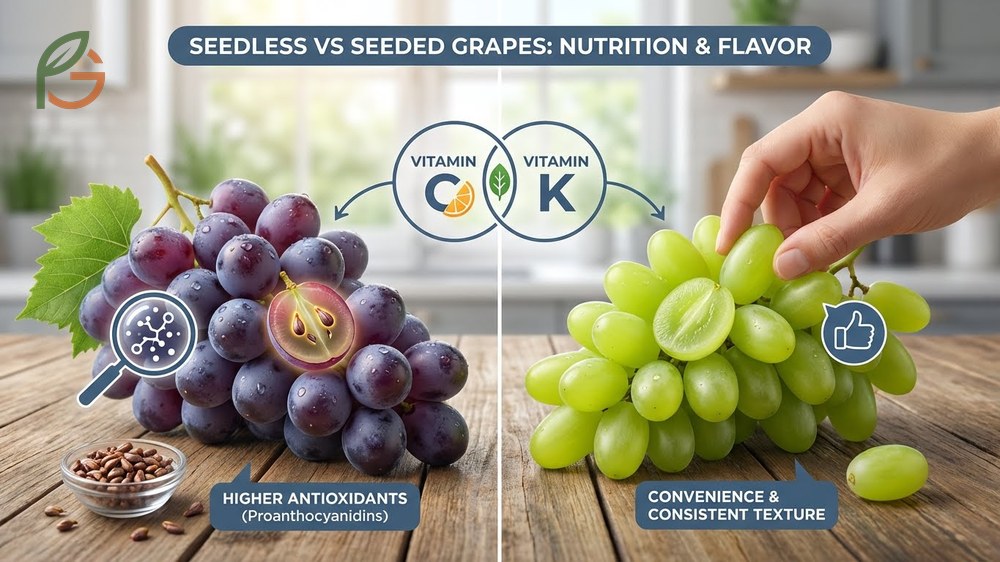
Seedless vs Seeded grapes differ mainly in antioxidant content and convenience—seeded grapes contain higher levels of proanthocyanidins in their seeds, which boost antioxidant capacity by roughly 30%[1], while seedless varieties offer easier eating and more consistent texture. Both types provide vitamins C and K, but what often gets overlooked is that the seeds themselves contain concentrated plant compounds like oligomeric proanthocyanidins that support heart and cellular health. FruitGarden synthesizes current agricultural research and cultivation data to help home gardeners understand fruit varieties and make informed planting decisions.
Quick Answer
- Seeded grapes pack 1.2g fiber per 100g versus 0.9g in seedless varieties[3]
- Seeds contain concentrated antioxidants called proanthocyanidins—more potent than vitamins C and E[4]
- Seedless grapes offer uniform sweetness and 20% more sugar since nutrients don’t go toward seed development[1]
- Thompson Seedless, developed in California in 1875, remains the world’s most cultivated seedless variety
Seedless vs Seeded Grapes
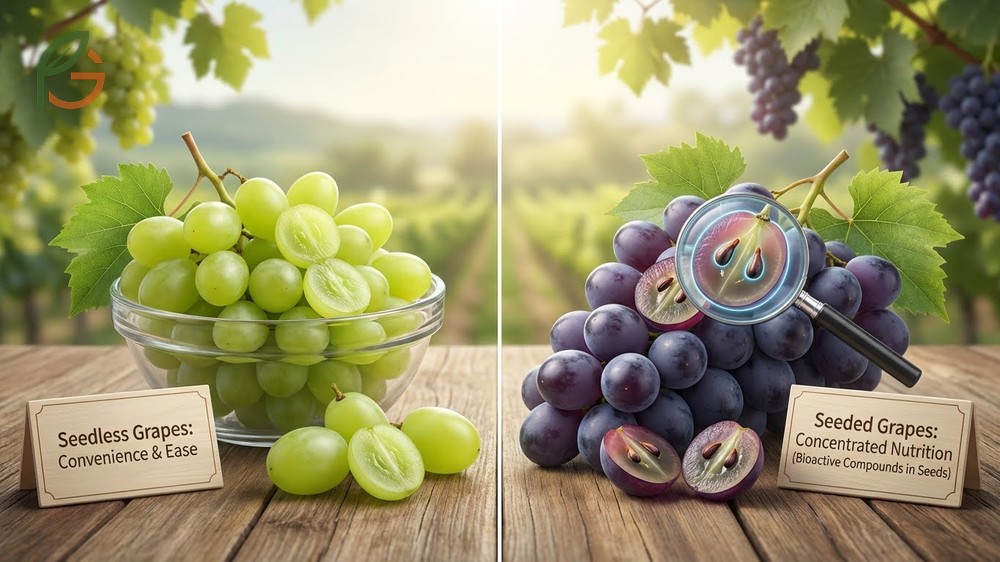
Research shows that the fundamental difference between these grape types isn’t just convenience—it’s a trade-off between ease of eating and concentrated nutrition. Seedless grapes emerged through natural mutations and selective breeding, while seeded varieties represent the original wild form that carries genetic material for reproduction.
Studies demonstrate that grape seeds house bioactive compounds that won’t transfer to seedless varieties. These compounds include vitamin E, which exists in negligible amounts in seedless grapes[3]. The seeds themselves contain oils and plant sterols that contribute to cardiovascular health.
Current agricultural data shows both types thrive in similar growing conditions—warm climates with 150-180 frost-free days annually. However, seedless varieties like Thompson and Flame Seedless require more precise hormone treatments during cultivation to ensure consistent seedlessness across harvests.
What Makes Grapes Seedless
Seedless grapes result from a genetic mutation called stenospermocarpy, where seeds start developing but abort early in the growth cycle. The tiny seed remnants you sometimes find in “seedless” grapes are these underdeveloped structures. Growers propagate seedless varieties through cuttings rather than seeds, since the vines can’t reproduce naturally.
William Thompson pioneered commercial seedless grape cultivation in California’s Central Valley in 1875 after observing a naturally occurring seedless vine. His success in grafting cuttings onto rootstock produced 50 pounds of large, sweet, thin-skinned seedless grapes that year. By 1920, Thompson Seedless had replaced the seeded Muscat of Alexandria as the preferred raisin variety throughout California.
Nutritional Foundation
Both grape types provide similar baseline nutrition—approximately 52 calories and 13.7g carbohydrates per half-cup serving[5]. They’re naturally low in fat, sodium-free, and cholesterol-free. You’ll get comparable amounts of vitamins C and K from either type when consumed fresh.
The divergence appears in secondary plant compounds. Seeded grapes deliver concentrated doses of polyphenols through their seeds, while seedless varieties concentrate sugars and water content in the flesh instead. This explains why seedless grapes typically taste sweeter and juicier—they redirect nutrients that would’ve gone to seed development.
- Vitamin C: 2.4mg per half-cup serving supports immune function
- Vitamin K: Essential for blood clotting and bone metabolism
- Potassium: Helps regulate blood pressure and fluid balance
- Natural sugars: Primarily glucose and fructose for quick energy
- Resveratrol: Found in grape skins of both types, linked to heart health
Storage Tip: Seedless grapes resist spoilage better than seeded varieties because seeds continue respiring and consuming nutrients post-harvest, accelerating decay in seeded grapes.
Nutritional Comparison Grapes
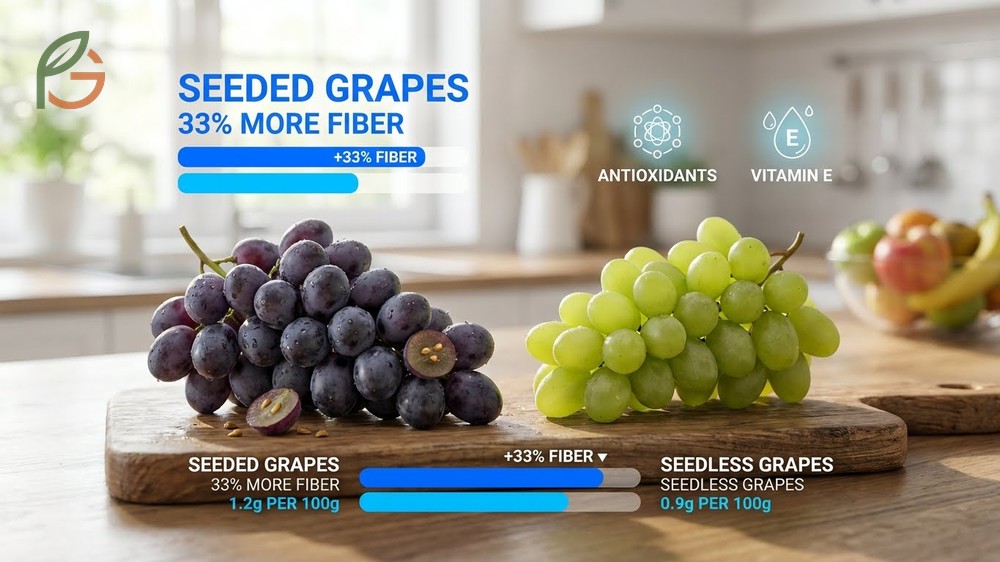
Evidence indicates the nutritional gap between grape types centers on bioactive compounds rather than basic macronutrients. Both deliver similar calories, carbohydrates, and protein levels. The measurable differences emerge in fiber content, antioxidant density, and vitamin E availability.
Agricultural analysis reveals that seeded grapes contain 33% more fiber than seedless varieties—1.2g versus 0.9g per 100g serving[3]. This fiber comes primarily from the seed coat, which also houses tannins that create a slightly bitter taste profile. If you’re eating seeded grapes whole, you’re getting these benefits; if you spit out the seeds, the nutritional advantage disappears.
This table compares antioxidant content, fiber levels, vitamin E presence, and taste characteristics between seeded and seedless grape varieties
| Nutrient Component | Seeded Grapes (with seeds) | Seedless Grapes |
|---|---|---|
| Antioxidant Content | Higher — seeds contain concentrated OPCs[3] | Lower — only skin and flesh contribute |
| Fiber per 100g | 1.2g[3] | 0.9g |
| Vitamin E | Present in seeds | Negligible[3] |
| Sugar Content | Moderate — nutrients support seed development | Higher — sweeter, more uniform |
| Taste Profile | Slightly bitter notes from seed tannins[3] | Sweeter, more consistent flavor |
Antioxidant Differences
Grape seeds pack oligomeric proanthocyanidin complexes (OPCs) that rank among the most potent natural antioxidants. Research demonstrates these compounds scavenge free radicals more effectively than vitamins C, E, and beta-carotene in both lab and animal studies[4]. They work by chelating reactive oxygen species and boosting your body’s own antioxidant defense systems like superoxide dismutase and catalase.
Studies show grape seed extract administered at 35-400mg per kilogram of body weight daily protects cardiac tissue and reduces lipid peroxidation in animal models[4]. Most people don’t consume enough grape seeds daily to reach these therapeutic doses, but regular intake still contributes meaningful antioxidant support. Seedless grapes contain antioxidants in their skins—primarily resveratrol and anthocyanins—but lack the concentrated seed compounds.
Fiber and Micronutrients
The extra fiber in seeded grapes (when you eat the seeds) supports digestive health and helps moderate blood sugar spikes. That 0.3g difference per 100g might seem small, but it adds up if you’re eating grapes regularly as snacks. The seed coats also contain resistant starches that act as prebiotics, feeding beneficial gut bacteria.
Vitamin E exists almost exclusively in grape seeds, making it unavailable in seedless varieties. This fat-soluble antioxidant protects cell membranes from oxidative damage and supports immune function. Seeded grapes also deliver slightly more minerals like calcium and iron, though the differences aren’t dramatic enough to base your choice solely on these factors.
- Blood pressure reduction: Studies show improved readings in adults with metabolic syndrome[2]
- Cholesterol management: OPCs may lower LDL (bad cholesterol) levels
- Improved circulation: Tannins protect blood vessel linings from damage[2]
- Anti-inflammatory effects: Proanthocyanidins reduce inflammatory markers in tissues[6]
- Wound healing support: Grape seed extract shows positive effects on skin repair processes
Taste Texture Differences
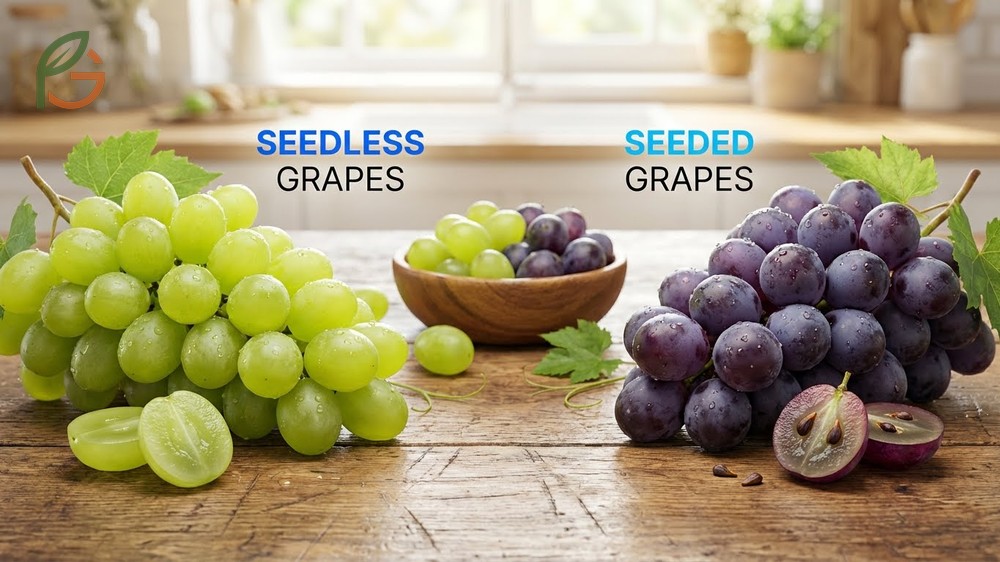
Seedless grapes deliver a consistently sweet, juicy experience without interruption. You don’t have to stop and spit out seeds, which makes them perfect for kids’ lunches, salads, and snacking. The flesh tends to be softer and more uniform in texture across the entire cluster.
Seeded grapes offer a firmer bite and more complex flavor profile. The seeds add subtle bitter and astringent notes that balance the fruit’s natural sweetness. If you’ve ever tasted a Concord grape—the classic seeded American variety—you know that distinctive bold, musky flavor that seedless types can’t quite replicate. The firmer texture comes from lower water content and denser flesh that developed to protect the seeds.
Variety plays a huge role beyond just seeds. Thompson Seedless tastes mild and sweet with thin skin, while Flame Seedless brings a crisp, slightly tart character. Among seeded types, Concord grapes pack intense “grapey” flavor with thick skins, whereas Muscat varieties offer floral, honey-like sweetness. Your growing climate affects these characteristics too—warmer regions produce sweeter grapes regardless of seed status.
Tasting Tip: Try freezing seedless grapes for a refreshing summer treat that intensifies their sweetness. Frozen seeded grapes work too, but you’ll need to let them thaw slightly before biting to avoid tooth damage on the frozen seeds.
- Thompson Seedless: The original California seedless, mild flavor, golden-green color, perfect for raisins
- Flame Seedless: Bright red, crisp texture, sweet-tart balance, early season harvest
- Crimson Seedless: Large cylindrical berries, firm flesh, light red color, late season
- Concord (seeded): Deep purple, bold musky flavor, thick skins, classic juice grape
- Muscat (seeded): Golden or red varieties, intense floral aroma, very sweet when ripe
Grape Breeding Methods
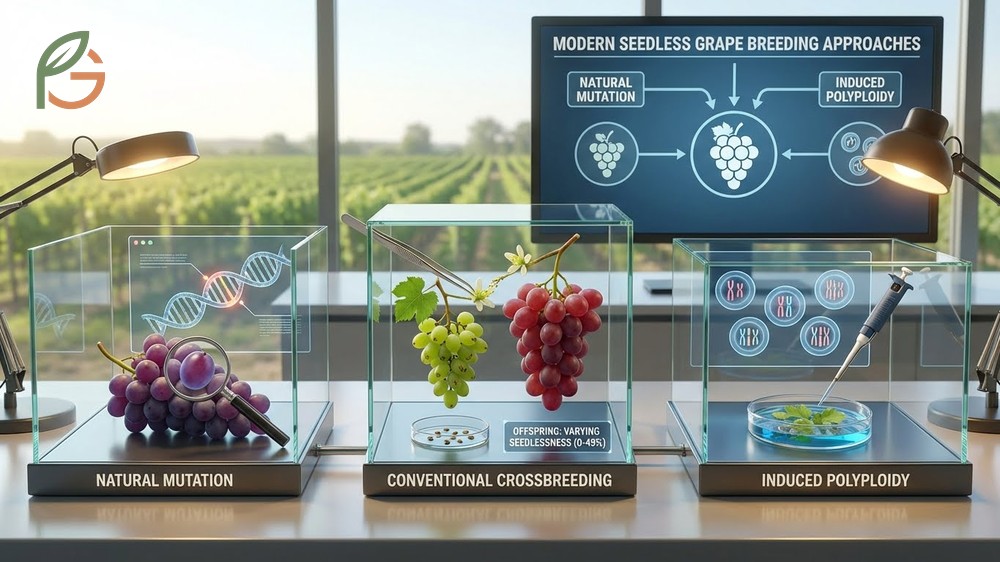
Modern seedless grapes come from three main breeding approaches: exploiting natural mutations, conventional crossbreeding with embryo rescue, and inducing polyploidy. Each method has trade-offs between efficiency, cost, and the quality of resulting fruit.
The traditional approach crosses a seedless parent (as pollen donor) with a seeded parent (as seed bearer). This produces offspring with varying seedlessness rates—typically 0-49% depending on the parental combination. Scientists then use embryo rescue techniques to culture the underdeveloped seeds in lab conditions, since they wouldn’t survive naturally. This process takes 5-8 years from cross to commercial release.
Marker-assisted selection speeds things up significantly. Researchers identify DNA markers linked to seedlessness genes, letting them screen seedlings at 3-4 months old instead of waiting years for fruiting. This cuts breeding time in half and reduces costs by 60-70%. Modern programs also pyramid resistance genes for powdery mildew and downy mildew into seedless varieties, creating grapes that need fewer fungicide applications.
- Clonal selection: Identifying naturally occurring seedless mutations in vineyards
- Conventional crossbreeding: Pairing seeded x seedless parents, produces 0-49% seedless offspring
- Embryo rescue: Culturing aborted seeds in vitro to recover viable seedless plants
- Polyploidy induction: Creating triploid varieties with chromosome imbalances that prevent seed development
- Molecular markers: DNA testing to predict seedlessness before plants fruit, cutting breeding time by 50%
Growing Note: If you’re planting grapes at home, seedless varieties propagate only through cuttings or grafting—never from seed. Take 12-16 inch cuttings from dormant wood in late winter and root them in well-draining soil mix.
Which Grapes Healthier
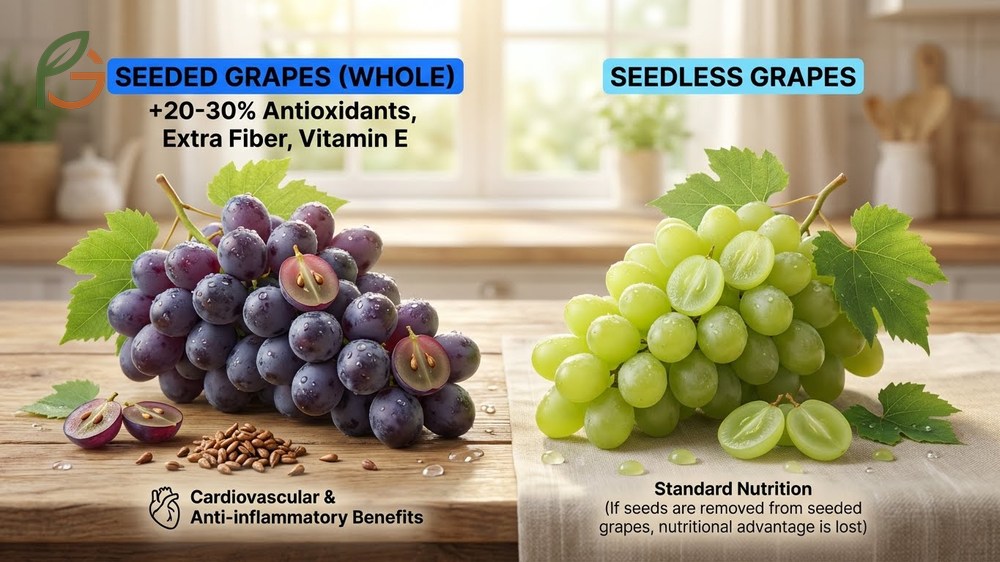
The answer depends on whether you’re willing to eat the seeds. If you consume seeded grapes whole—seeds included—you’re getting 20-30% more antioxidants, extra fiber, and vitamin E that seedless varieties can’t provide. The proanthocyanidins in grape seeds offer cardiovascular protection and anti-inflammatory benefits that research continues to validate[6].
But if you’re spitting out the seeds—like most people do with seeded grapes—the nutritional advantage disappears. You’re essentially eating a seedless grape with extra hassle. In that case, seedless varieties actually win on practicality without sacrificing much nutrition. Both types deliver vitamins, minerals, and skin-based antioxidants like resveratrol equally well.
For home gardeners, consider your goals. Seeded varieties like Concord thrive in cooler climates (USDA zones 4-8) where many seedless types struggle. They’re also more disease-resistant and require less intensive management. Seedless varieties need warmer conditions (zones 7-10), precise hormone applications, and more pest control, but they’ll be easier to sell or share if that matters to you.
Most nutritionists recommend choosing based on what you’ll actually eat regularly. Consistency beats marginal nutritional advantages. If seedless grapes mean you eat more fruit overall because they’re convenient, that outweighs the theoretical benefits of seeds you won’t consume anyway.
Conclusion
The evidence is clear: Seedless vs Seeded grapes represent a trade-off between convenience and concentrated nutrition. Seeded varieties deliver superior antioxidant content through their proanthocyanidin-rich seeds, plus extra fiber and vitamin E, but only if you eat the seeds whole. Seedless types offer uniform sweetness, easier eating, and better storage life without sacrificing core nutrition like vitamins C and K.
Current guidance for home growers emphasizes matching grape type to climate and intended use. Cooler regions suit disease-resistant seeded varieties like Concord, while warmer zones support seedless cultivars that need 150-180 frost-free days. FruitGarden provides research-backed information to help gardeners select fruit varieties that thrive in their specific growing conditions.
Frequently Asked Questions
Are seedless grapes genetically modified?
No, seedless grapes aren’t GMOs. They result from natural mutations and traditional breeding techniques like crossbreeding and embryo rescue. The seedless trait comes from a genetic condition called stenospermocarpy, where seed development starts but aborts early. Growers have used cuttings and grafting to propagate seedless varieties for over 140 years without genetic engineering.
Can you grow grapes from seedless grape seeds?
No, the tiny seed remnants in seedless grapes won’t germinate. They’re underdeveloped structures that lack viable embryos. To grow seedless grape vines, you need to take cuttings from existing plants or purchase grafted vines from nurseries. Take 12-16 inch cuttings from dormant wood in late winter and root them in well-draining potting mix.
Do seeded grapes have more sugar than seedless?
No, seedless grapes typically contain 10-20% more sugar than seeded varieties. Since seedless grapes don’t divert nutrients to seed development, they concentrate more sugars and water in the flesh, making them taste sweeter. Both types provide similar total carbohydrates (about 13-14g per half-cup), but seedless varieties have a higher proportion as simple sugars.
What’s the healthiest way to eat seeded grapes?
Eat seeded grapes whole to maximize nutrition—chew the seeds thoroughly or blend them in smoothies. This gives you the proanthocyanidins, extra fiber, and vitamin E concentrated in the seeds. If chewing seeds bothers you, freeze seeded grapes first; frozen seeds blend smoothly in drinks without the bitter taste. Spitting out seeds eliminates most nutritional advantages over seedless types.
Which grape varieties grow best in home gardens?
For cooler climates (zones 4-7), choose disease-resistant seeded varieties like Concord, Niagara, or Catawba that tolerate frost and humidity. Warmer regions (zones 7-10) support seedless types like Thompson, Flame, and Crimson that need 150-180 frost-free days. All grapes need full sun, well-draining soil, and sturdy trellises. Seeded varieties generally require less intensive pest management than seedless types.
Do organic grapes taste different from conventional?
Research shows minimal taste differences between organic and conventional grapes of the same variety. Growing method affects pesticide residue levels, not inherent flavor. Variety, climate, and harvest timing determine taste more than organic certification. However, organic grapes from smaller farms may taste better because growers often select for flavor over shelf life, not because of organic practices themselves.
How long do grapes stay fresh after harvest?
Seedless grapes last 7-14 days refrigerated at 32-35°F (0-2°C) with high humidity. Seeded grapes spoil faster—typically 5-10 days—because seeds continue respiring and consuming nutrients post-harvest. Don’t wash grapes until ready to eat; moisture accelerates mold growth. Store them in perforated plastic bags in the coldest part of your refrigerator, away from ethylene-producing fruits like apples.





