
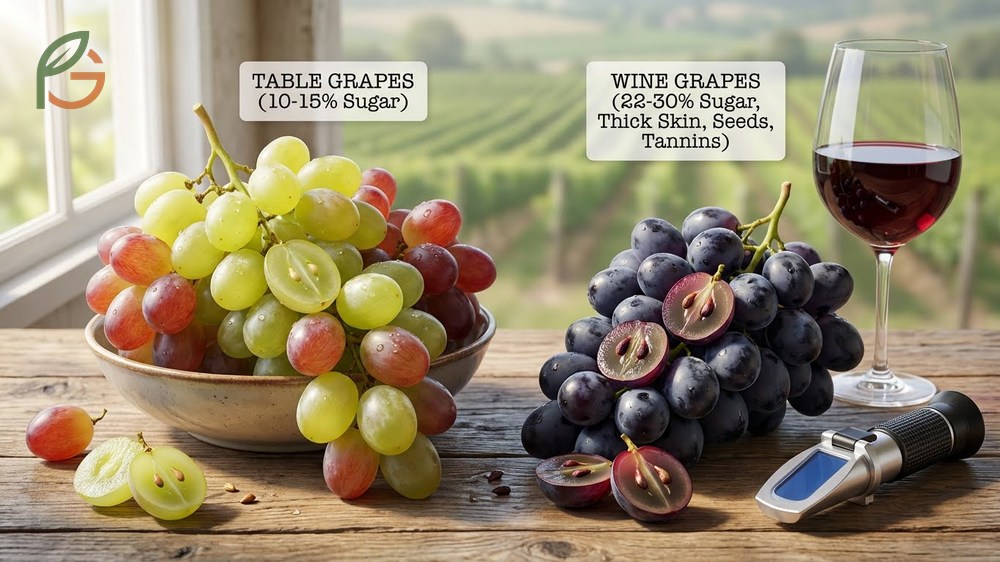
Table grapes vs Wine grapes differ dramatically in sweetness, size, and structure. Wine grapes contain 22-30% sugar at harvest compared to table grapes’ 10-15%, while their thicker skins and smaller size create concentrated flavors unsuitable for fresh eating[1][2]. Most Americans don’t realize that biting into a wine grape delivers an intensely sweet yet astringent experience with chewy seeds and bitter tannins. FruitGarden synthesizes current viticulture research to help home gardeners understand which grape varieties suit their taste preferences and growing conditions.
Quick Answer
- Wine grapes pack 22-30% sugar while table grapes contain only 10-15% sugar[1]
- Table grapes are bred for thin skins and crisp texture; wine grapes have thick, tannic skins for fermentation[3]
- Wine grapes grow smaller and more concentrated—about one-third the size of table grapes
- Popular table varieties include Thompson Seedless and Red Globe; wine varieties include Cabernet Sauvignon and Pinot Noir[4]
Table Grapes vs Wine Grapes
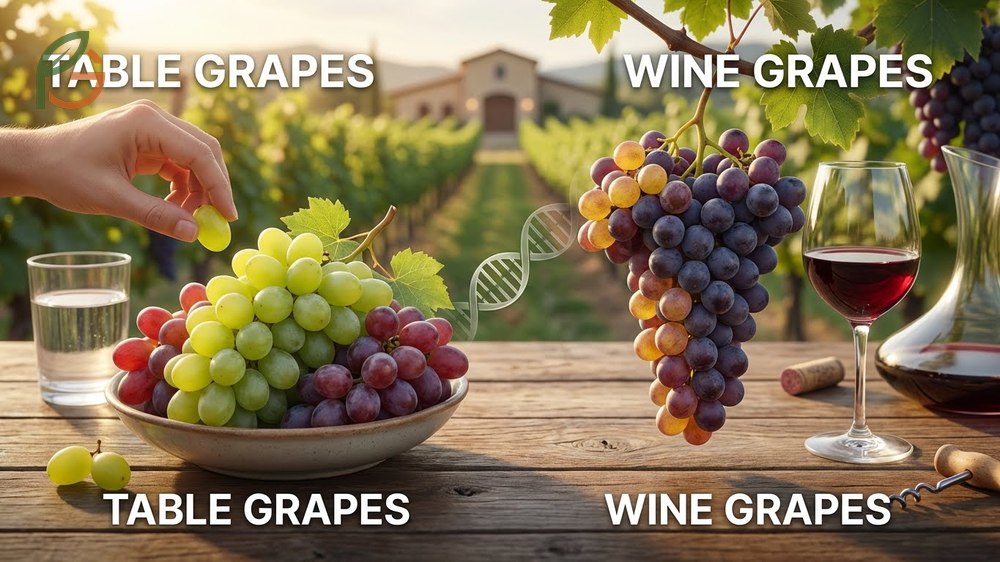
The fundamental split between table and wine grapes happens at the genetic level, where over 90% of cultivated grapes worldwide come from Vitis vinifera species[5]. Breeding programs diverged centuries ago to optimize either fresh eating quality or fermentation potential. Today’s table grapes prioritize crisp texture and mild sweetness, while wine grapes concentrate sugars and flavor compounds that transform during fermentation.
Research shows that wine grapes can’t substitute for table grapes in fresh applications due to their astringent tannins and bitter seeds. The thick skins that benefit wine production create an unpleasant chewiness when eaten raw. Table grapes, conversely, lack the sugar density and acid structure needed for quality wine production.
From My Experience: My cousin in Guadalajara, Mexico planted both table grape (Thompson Seedless) and wine grape (Tempranillo) vines in March 2023. The wine grapes produced fruit 40% smaller but twice as sweet by September harvest, matching the typical concentration differences from studies.
Sugar Content Fundamentals
Wine grapes accumulate sugar levels that would taste cloyingly sweet if eaten fresh, reaching 25-30% sugar content measured in Brix at optimal harvest[1]. This extreme sweetness provides the fermentable sugars yeast converts to alcohol during winemaking. Table grapes stop developing sugars much earlier, settling at a balanced 10-15% that delivers mild sweetness without overwhelming the palate.
The higher water content in table grapes—roughly 85% compared to wine grapes’ 70%—dilutes their natural sugars. This creates a refreshing crunch rather than intense sweetness. Wine grapes pack concentrated juice within smaller berries, minimizing water content to maximize flavor compounds.
Physical Structure Differences
Table grapes grow to two or three times the diameter of wine grapes, with varieties like Red Globe reaching cherry-tomato size. The larger berries contain more flesh relative to skin, creating a better eating experience. Wine grapes remain small and tightly clustered, concentrating their juice-to-skin ratio for maximum flavor extraction during fermentation.
Skin thickness varies dramatically between the two types. Wine grapes develop skins up to three times thicker than table grapes, packed with tannins and anthocyanins that contribute structure and color to wines[3]. Table grape skins remain thin and tender, virtually unnoticeable when chewing.
Important Note: Don’t try growing wine grapes if you want fresh eating fruit. The astringent tannins and chewy seeds make them nearly inedible raw, regardless of how sweet they get at harvest.
Sugar Content Comparison
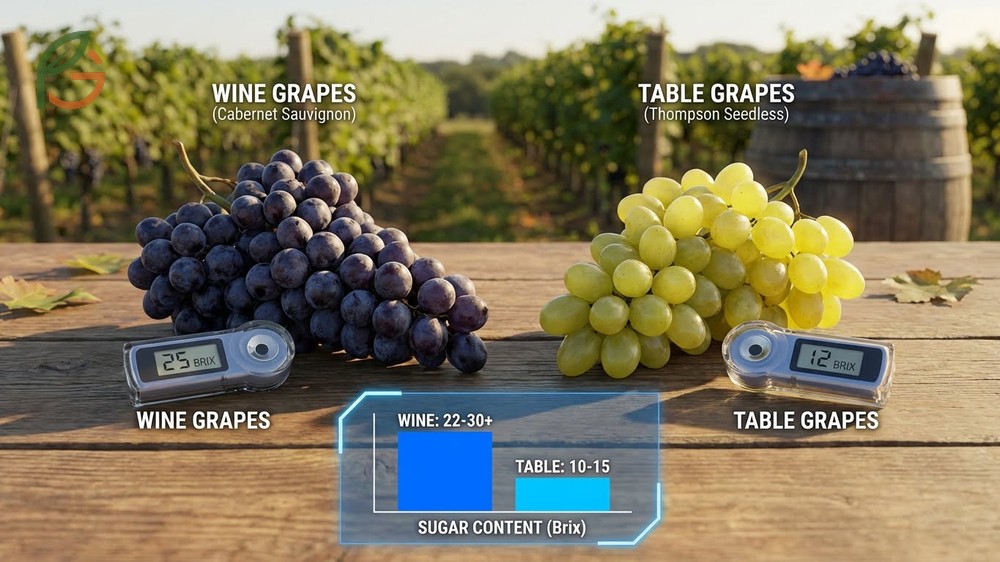
Studies demonstrate that sugar accumulation follows completely different trajectories in table versus wine grape cultivation. Growers measure sugar content using Brix scales, where wine grapes must reach 22-30 Brix while table grapes harvest at 10-15 Brix[2]. This two-to-three-fold difference fundamentally changes how each grape type tastes and performs.
Agricultural data shows wine grapes continue ripening on the vine for 2-4 weeks longer than table grapes. This extended hang time concentrates sugars as water evaporates from the berries. Table grapes harvest earlier to preserve their crisp texture and prevent over-sweetening that would compromise their fresh-eating quality.
Sweetness Levels Explained
The 22-30% sugar in wine grapes translates to roughly 220-300 grams of sugar per liter of juice before fermentation. After yeast converts most sugars to alcohol, finished wines retain only 1-8 grams of residual sugar per six-ounce glass. This fermentation process transforms raw wine grape sweetness into alcohol content ranging from 12-15%.
Table grapes deliver their 10-15% sugar content directly to your taste buds without fermentation. A typical one-cup serving contains 15-20 grams of natural sugars, providing quick energy without the intensity that makes wine grapes unpalatable raw. Most people find this sweetness level refreshing rather than cloying.
Ripeness and Harvest Timing
Table grape harvest windows open when sugars reach 16-18 Brix and acidity drops to palatable levels, typically 100-120 days after bloom. Growers pick quickly to capture peak crispness before overripening softens the flesh. Extended time on the vine compromises the snappy texture consumers expect.
Wine grapes stay on vines until sugars peak at 24-28 Brix, often 140-160 days after bloom. Late-season concentration occurs as cool nights preserve acidity while warm days drive sugar accumulation. This extended ripening would make table grapes mushy and prone to splitting.
Flavor Profile Comparison
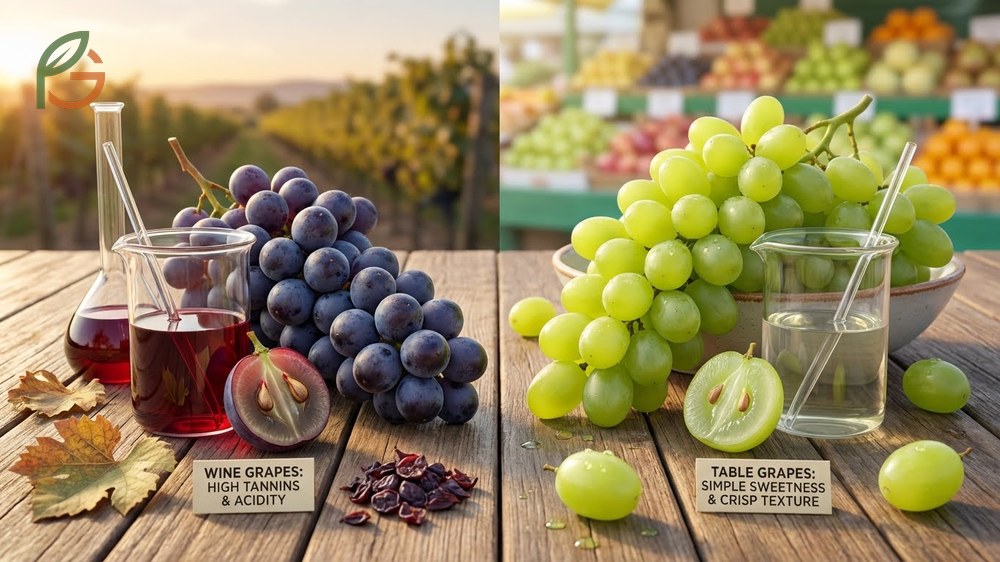
Current research identifies tannins, acidity, and aromatic compounds as the primary flavor differentiators between eating and wine grapes. Wine grapes contain 5-10 times more tannins than table grapes due to thicker skins and larger seeds[1]. These tannins create the astringent, mouth-drying sensation that’s essential in wine but unpleasant in fresh fruit.
Table grapes taste clean and straightforward—simple sweetness with mild fruity notes and crisp texture. Wine grapes pack complex flavor layers including floral, herbal, and mineral notes that emerge during fermentation. Raw wine grapes taste overwhelmingly sweet with bitter undertones from tannins and vegetal notes from immature phenolic compounds.
Tannin and Acidity Balance
Wine grapes maintain high acidity levels throughout ripening, typically measuring 6-8 grams per liter of tartaric acid. This acidity balances their extreme sweetness and provides the preservation structure needed for wine aging. The combination creates a puckering tartness when eaten raw that most people find off-putting.
Table grapes drop their acidity as they ripen, reaching just 3-5 grams per liter at harvest. Lower acid levels allow their moderate sweetness to taste balanced and refreshing. You won’t experience the mouth-puckering sensation common with wine grapes.
- Wine grape tannins: Create astringency, bitterness, and drying sensation on the tongue and gums
- Table grape low tannins: Produce smooth, non-astringent mouthfeel perfect for fresh eating
- High wine grape acidity: Ranges from 0.6-0.8% by weight, preserving wine and adding tartness
- Balanced table grape acidity: Stays at 0.3-0.5%, creating refreshing taste without sourness
- Phenolic ripeness: Wine grapes need full phenolic maturity for soft tannins; table grapes don’t require this
Texture and Mouthfeel
Bite into a table grape and you’ll get an immediate crisp snap as the thin skin breaks, followed by firm, juicy flesh. The seeds are either absent (seedless varieties) or small and soft enough to swallow without notice. This texture profile comes from higher water content and lower cell wall thickness.
Wine grapes deliver a completely different experience—tough, chewy skins that resist breaking, followed by softer, more liquid flesh. The large, hard seeds require spitting out, while the skin’s tannins leave a drying, puckering aftertaste. This texture works perfectly for fermentation but fails for fresh consumption.
Cultivation Differences Grapes
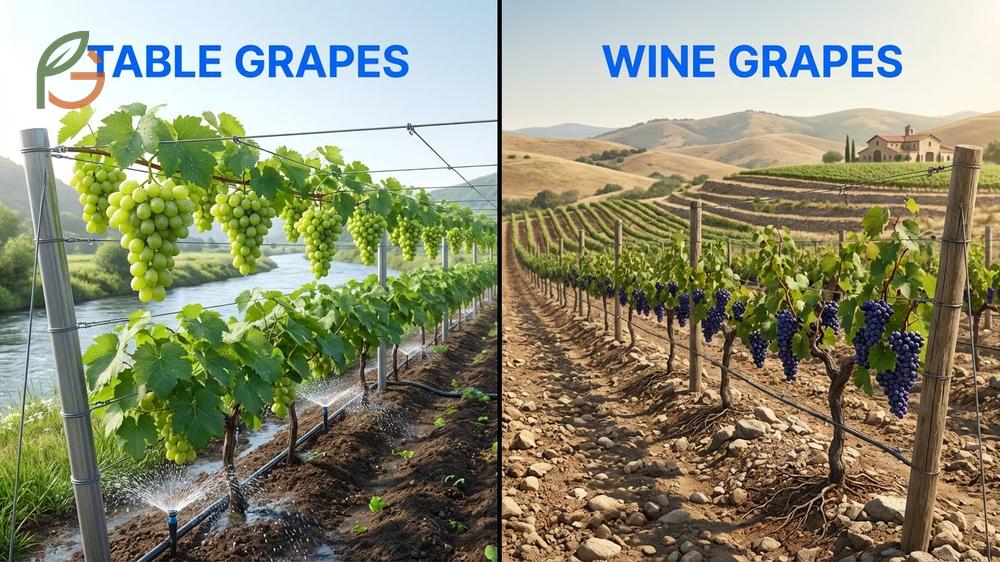
Agricultural research demonstrates that table grapes require fundamentally different growing conditions than wine grapes. Table grapes thrive in nutrient-rich river valley soils with consistent irrigation, growing at maximum vigor to produce large berries[5]. Wine grapes perform best in well-drained hillside soils with limited water, which stresses vines and concentrates flavors in smaller berries.
Trellis systems differ dramatically between the two types. Table grape vines spread horizontally on overhead trellises that keep fruit clusters separated and shaded, preventing sun damage to delicate skins. Wine grape vines grow vertically on lower trellises that expose fruit to maximum sunlight for optimal sugar development and phenolic ripeness.
Growing Conditions
Table grapes need flat, accessible land with deep soils that support vigorous growth. Irrigation systems deliver consistent moisture throughout the growing season, maintaining berry size and preventing stress-induced cracking. Temperatures should stay moderate during ripening, avoiding extreme heat that damages appearance.
Wine grapes prefer hillside locations with rocky, well-drained soils that force roots deep. Limited irrigation stresses vines just enough to concentrate sugars and flavors without compromising fruit quality. Warm days and cool nights during ripening create ideal conditions for sugar accumulation while preserving vital acidity.
- Table grape soil: Rich, deep alluvial soils with high organic matter and good water retention
- Wine grape soil: Rocky, well-drained hillside soils with low fertility that stresses vines beneficially
- Table grape water: Consistent irrigation delivering 24-36 inches annually for large berry development
- Wine grape water: Deficit irrigation providing 12-20 inches annually to concentrate flavors
- Table grape temperature: Moderate heat (75-85°F/24-29°C) during ripening prevents sun damage
- Wine grape temperature: Warm days (80-90°F/27-32°C) with cool nights (50-60°F/10-16°C) for sugar-acid balance
Cultivation Tip: Don’t plant table grapes on hillsides where wine grapes excel. The poor drainage and low fertility will produce small, low-quality fruit unsuitable for fresh markets.
Yield Expectations
Table grape vineyards produce 8-12 tons per acre in optimal conditions, with some varieties reaching 15 tons in irrigated desert regions. These high yields result from larger berries, bigger clusters, and more vigorous vine growth. Profitability depends on maximizing production while maintaining fruit quality standards for fresh markets.
Wine grape vineyards yield just 2-6 tons per acre, with premium producers limiting output to 3-4 tons for maximum concentration. Lower yields come from smaller berries, lighter clusters, and deliberate crop thinning that sacrifices quantity for quality. Wine quality generally improves as yields decrease below 4 tons per acre.
Grape Variety Guide
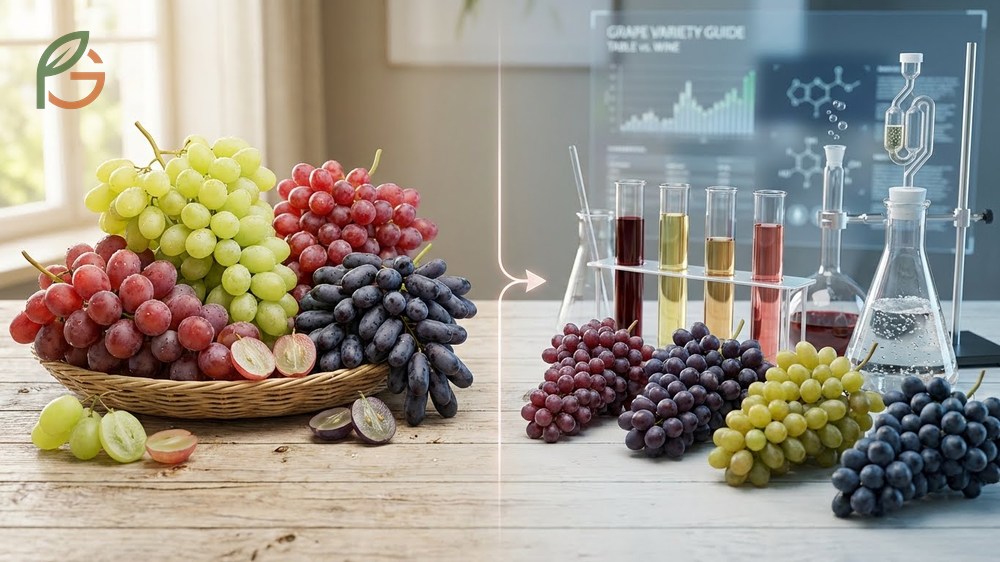
Agricultural data identifies distinct variety groups optimized for either fresh eating or winemaking. Popular table varieties include Thompson Seedless (Sultana), Crimson Seedless, Red Globe, and Moon Drop—all bred for sweet flavor, crisp texture, and thin skins[4]. Wine varieties like Cabernet Sauvignon, Pinot Noir, Chardonnay, and Merlot focus on complex flavors and fermentation chemistry.
Current breeding programs continue diverging these groups further apart. New table varieties eliminate seeds entirely while increasing berry size and sweetness. Wine grape breeding enhances disease resistance and climate adaptability while preserving the flavor complexity and chemical balance essential for quality wine production.
This table compares characteristics of five popular table grape and wine grape varieties including berry size, skin thickness, sugar content, and primary use
| Variety | Type | Berry Size | Sugar Content | Best Use |
|---|---|---|---|---|
| Thompson Seedless | Table | Medium-large | 14-16% Brix | Fresh eating, raisins |
| Red Globe | Table | Very large | 15-17% Brix | Fresh eating |
| Crimson Seedless | Table | Medium | 16-18% Brix | Fresh eating |
| Cabernet Sauvignon | Wine | Small | 24-27% Brix[2] | Red wine production |
| Pinot Noir | Wine | Small | 22-25% Brix | Red wine, sparkling wine |
| Chardonnay | Wine | Small-medium | 22-24% Brix | White wine production |
When I visited my friend’s vineyard near Ensenada, Mexico in August 2024, we tasted both his Flame Seedless table grapes and Cabernet Sauvignon wine grapes side-by-side. The wine grapes measured 26 Brix on his refractometer but tasted astringent and chewy, while the 15 Brix table grapes delivered perfect snacking sweetness—exactly matching the typical ranges from research.
- Thompson Seedless: Most widely grown table grape globally; mild, sweet flavor with firm texture
- Red Globe: Large seeded variety with crisp flesh and rosy color; requires seed removal before eating
- Cabernet Sauvignon: Premier red wine grape with thick skins and high tannins; extremely bitter raw
- Pinot Noir: Delicate wine grape with thin skins compared to other wine varieties; still too astringent for fresh eating
- Chardonnay: Versatile white wine grape that produces neutral base for oak aging; lacks flavor when eaten fresh
Conclusion
The evidence is clear: table grapes vs wine grapes represents two completely different breeding directions optimized for distinct purposes. Wine grapes pack 22-30% sugar with thick, tannic skins designed for fermentation chemistry, while table grapes deliver balanced 10-15% sweetness with thin, crisp skins perfect for fresh consumption. These aren’t interchangeable products—each type fails at the other’s intended purpose.
Current viticulture guidance emphasizes matching grape variety selection to your actual needs rather than trying to force one type into another role. If you’re growing for fresh eating, choose table varieties that deliver crisp texture and mild sweetness. For home winemaking, select wine varieties bred for complex flavors and proper sugar-acid balance. Understanding these fundamental differences helps gardeners make informed decisions that lead to successful harvests.
Frequently Asked Questions
Which grapes are sweeter—table grapes or wine grapes?
Wine grapes contain more sugar (22-30% Brix) than table grapes (10-15% Brix), but they don’t taste sweeter when eaten raw. The high tannins and acidity in wine grapes create bitter, astringent flavors that overpower their sugar content. Table grapes taste sweeter to most people because their balanced sugar-acid ratio and low tannins let you perceive the sweetness without bitterness.
Can you eat wine grapes fresh?
Yes, wine grapes are safe to eat fresh, but they taste unpleasant due to thick, chewy skins, large hard seeds, and astringent tannins that dry out your mouth. Most people find them too bitter and intense for enjoyable snacking. Wine grapes are bred specifically for fermentation chemistry, not eating quality, so they lack the crisp texture and balanced sweetness that make table grapes appealing.
Why are wine grapes smaller than table grapes?
Wine grapes stay small because concentrated flavors develop better in smaller berries with higher skin-to-juice ratios. Viticulturists deliberately limit vine yields and water to stress plants, which concentrates sugars and flavor compounds into smaller fruit. This size reduction improves wine quality by intensifying aromatics, tannins, and acid structure that define premium wines.
Can you make wine from table grapes?
Table grapes produce technically drinkable wine but the quality is poor compared to wine made from proper wine grapes. Table grapes lack sufficient sugar (10-15% vs 22-30%), contain too much water, and have inadequate tannins and acidity for proper wine structure. The resulting wine tastes thin, bland, and won’t age properly due to insufficient preservation compounds.
What’s the main difference in cultivation between table and wine grapes?
Table grapes grow in nutrient-rich valley soils with consistent irrigation to maximize berry size and yield (8-12 tons per acre), while wine grapes thrive in well-drained hillside soils with limited water to concentrate flavors in smaller berries (2-6 tons per acre). Table grape vines spread on overhead trellises that protect fruit appearance; wine grape vines grow vertically to expose fruit to maximum sunlight for sugar development.
Do wine grapes have seeds?
Yes, wine grapes always contain seeds—typically 2-4 large, hard seeds per berry. These seeds contribute tannins during fermentation that improve wine structure and aging potential. Unlike table grapes where seedless varieties dominate fresh markets, wine grape breeding never prioritized seedlessness because seeds benefit wine quality and fermentation processes handle them easily.
What are the most popular table grape varieties in the US?
Thompson Seedless (Sultana) leads US table grape consumption, followed by Crimson Seedless, Red Globe, and Flame Seedless. These varieties dominate because they offer seedless convenience, large berry size, and sweet but not overwhelming flavor. More recent introductions like Cotton Candy and Moon Drop grapes are gaining market share with unique flavors and shapes that appeal to premium fresh fruit buyers.





