
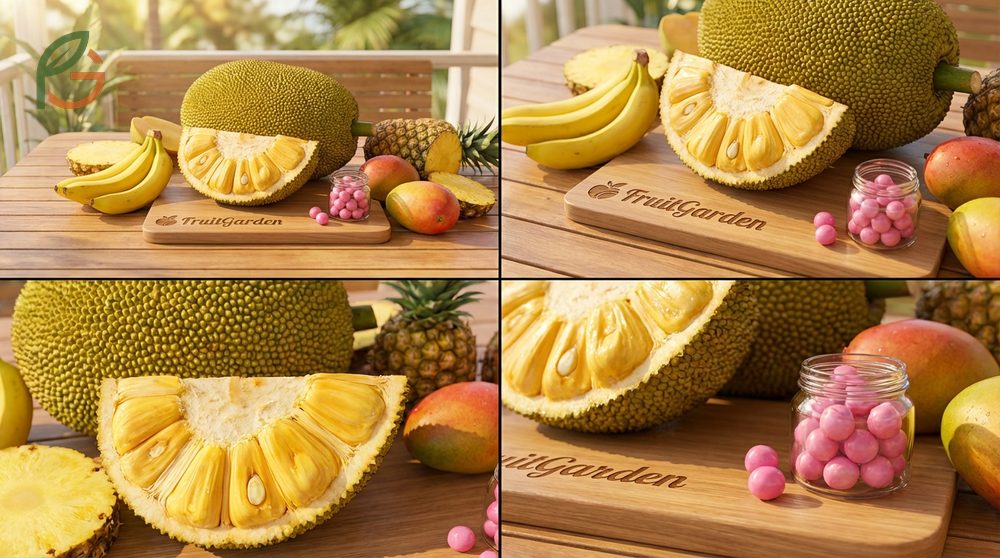
What does jackfruit taste like? Ripe jackfruit delivers a sweet tropical flavor combining banana, pineapple, mango, and a distinctive bubblegum note that’s earned it comparisons to Juicy Fruit gum[1]. Research shows this unique flavor comes from isoamyl acetate, the same compound used in bubblegum flavoring[1]. FruitGarden brings you the complete guide to understanding this versatile tropical fruit that’s transforming both fruit bowls and vegan kitchens across the United States.
Quick Answer
- Ripe jackfruit tastes like a sweet blend of banana, pineapple, and mango with bubblegum notes[1]
- Unripe jackfruit has a mild, neutral flavor perfect for absorbing savory seasonings[1]
- It’s the largest tree fruit in the world, weighing up to 80 pounds[2]
- Jackfruit’s smell is sweet and mild—not overpowering like durian[3]
What Does Jackfruit Taste Like
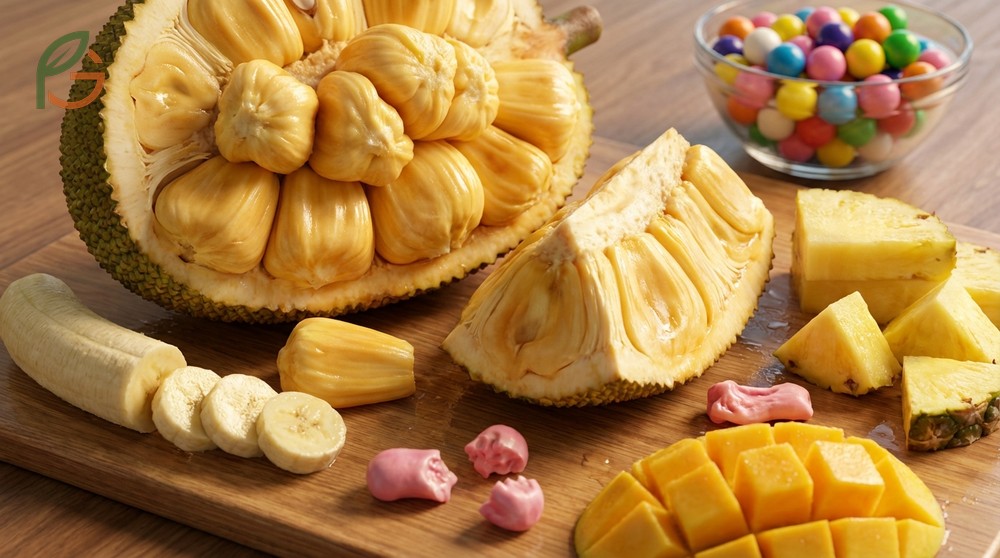
Jackfruit’s flavor profile changes dramatically depending on ripeness. When fully ripe, it delivers a complex tropical sweetness that food scientists describe as a natural fusion of banana, pineapple, and mango[2]. The texture is soft and fibrous, similar to how pineapple feels in your mouth[1].
What sets jackfruit apart from other tropical fruits is its signature bubblegum-like quality. Many people who try it for the first time are surprised by this candy-like note that makes ripe jackfruit taste almost like dessert. The fruit contains natural sugars that develop as it ripens, creating a sweet eating experience without any added sweeteners.
Unripe jackfruit tells a completely different story. It’s mild, almost bland, with a neutral taste that makes it perfect for savory cooking. This versatility is why you’ll find young jackfruit in both fruit salads and BBQ sandwiches across American restaurants.
Raw vs Cooked Jackfruit Flavor
Raw ripe jackfruit eaten fresh delivers the full tropical fruit experience. You’re getting intense sweetness with those characteristic banana-pineapple-mango notes in every bite. The natural sugars are at their peak, making it a perfect stand-alone snack or smoothie ingredient.
Cooked unripe jackfruit transforms into something entirely different. When you simmer it in BBQ sauce or curry, it absorbs those flavors like a sponge while maintaining its fibrous texture[4]. This absorption quality is what makes it work so well in savory dishes—it doesn’t fight the seasonings but instead becomes a vehicle for them.
Important Note: If you’re buying canned jackfruit, check the label carefully. Jackfruit packed in brine or water is meant for savory cooking, while jackfruit in syrup is for sweet applications. Using the wrong type can ruin your recipe.
Jackfruit Bubblegum Flavor Connection
The bubblegum flavor isn’t just your imagination. Research shows that jackfruit naturally contains isoamyl acetate, the same organic compound that flavoring companies use to create banana oil and Juicy Fruit gum’s signature taste[1]. This chemical gives ripe jackfruit that distinctive candy-like quality that surprises first-time tasters.
The concentration of isoamyl acetate increases as the fruit ripens. That’s why fully ripe jackfruit has a more pronounced bubblegum note compared to fruit that’s only partially ripe. Some jackfruit varieties emphasize this flavor more than others, with varieties like Cheena and Black Gold known for their particularly sweet, aromatic profiles.
What Is a Jackfruit
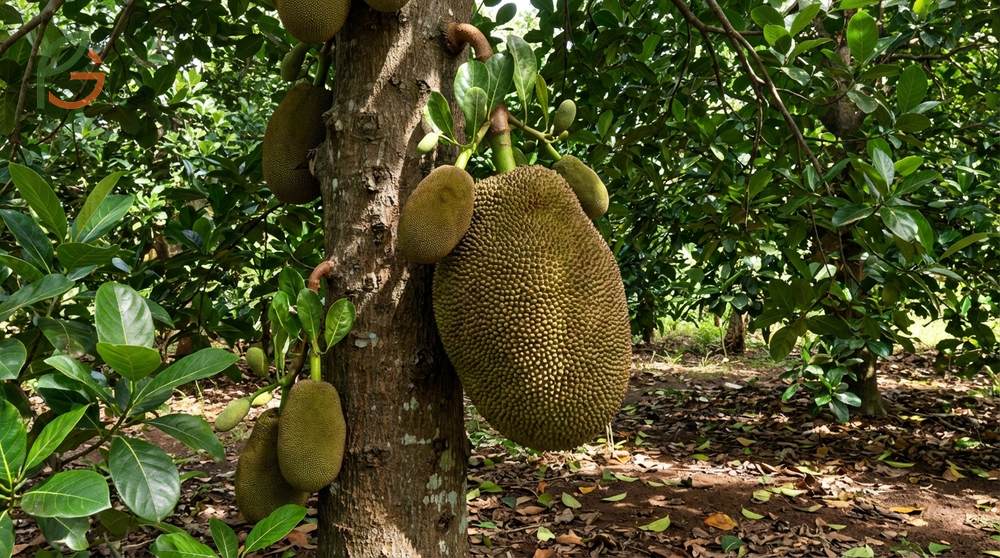
Jackfruit (Artocarpus heterophyllus) holds the title as the world’s largest tree fruit, and it’s not even close. Individual fruits commonly reach 10-25 pounds, but specimens up to 80 pounds have been documented[2]. This massive size means a single jackfruit can feed an entire family or provide ingredients for multiple meals.
The fruit comes from the fig and mulberry family, growing directly from the trunk and major branches of jackfruit trees—a growing pattern called cauliflory. In the United States, you’ll mostly find jackfruit in international markets, health food stores, and increasingly in mainstream grocery chains as plant-based eating gains popularity. Fresh whole jackfruit remains less common in U.S. stores due to its size and handling challenges, but canned young jackfruit has become widely available.
Nutritionally, jackfruit delivers more than just interesting flavors. One cup of raw jackfruit provides approximately 157 calories, 38 grams of carbohydrates, 2.5 grams of fiber, and 2.8 grams of protein[2]. It’s also rich in vitamin C (25% of your daily value), potassium (16% DV), and copper (14% DV)[2].
What Does Jackfruit Look Like
You won’t mistake jackfruit for anything else in the produce section. The exterior features thick, rough skin covered with short, blunt spikes that create a knobby appearance[2]. The color ranges from bright green when unripe to yellow-green or pale brown when fully ripe. The shape is typically oblong or oval, though some varieties grow more rounded.
Inside, you’ll find dozens of bright yellow or orange pods (called arils) embedded in a white, stringy core. Each pod contains a smooth brown seed surrounded by the sweet flesh that people eat. The interior structure looks almost geometric, with pods arranged in organized sections separated by inedible fibrous material. When you cut into a ripe jackfruit, you’ll notice the flesh is slightly sticky due to natural latex—a characteristic that requires oiling your knife and hands before cutting.
- Size: 10-80 pounds, typically 3 feet long by 1.5 feet wide
- Exterior: Green to yellow-green skin with blunt spikes
- Interior: Yellow-orange pods (arils) in white fibrous core
- Seeds: Smooth brown seeds inside each pod, also edible when cooked
- Latex content: Sticky white sap that requires oil when cutting fresh fruit
Where Does Jackfruit Grow
Jackfruit thrives in tropical and subtropical regions where temperatures stay consistently warm. The tree’s native home is Southwest India, where it’s been cultivated for thousands of years. Today, India dominates global production with 1.4 million metric tons annually, followed by Bangladesh at 926,000 metric tons[5].
The trees require specific growing conditions to produce fruit successfully. They need warm climates with temperatures between 77-95°F (25-35°C), high humidity, and well-drained soil. This is why you’ll find commercial jackfruit production concentrated in South and Southeast Asia, including Thailand, Indonesia, Vietnam, and the Philippines. In the United States, jackfruit trees grow successfully only in the warmest regions of Florida, Hawaii, and Southern California where frost rarely occurs.
Agricultural data shows that India’s state of Odisha alone produces over 312,000 metric tons of jackfruit annually[5]. Bangladesh has named jackfruit its national fruit, reflecting the crop’s cultural and economic importance. The trees are relatively low-maintenance and drought-resistant once established, making them a sustainable food source in regions where they grow naturally.
Jackfruit Texture for Pulled Pork
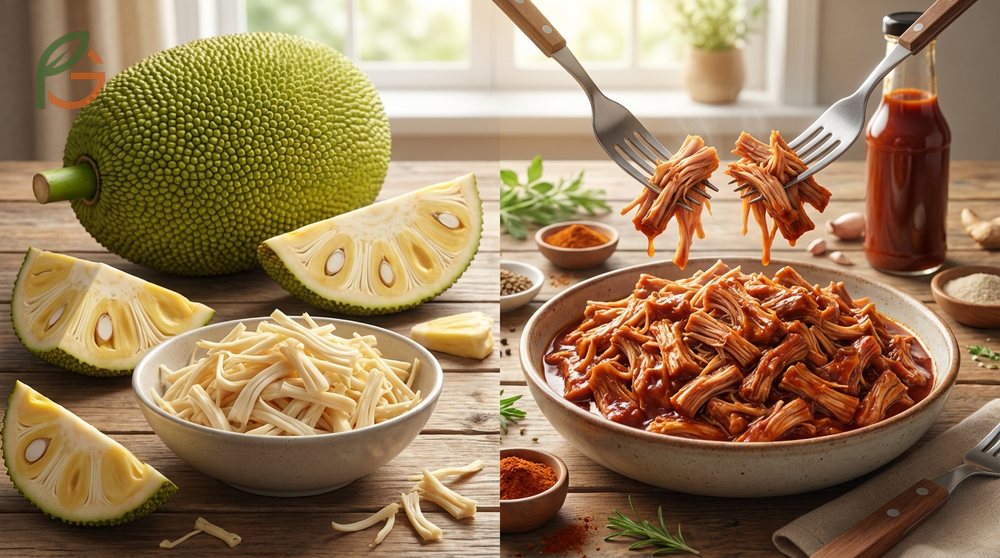
Unripe jackfruit’s texture is what launched it into vegan stardom. When cooked, young jackfruit becomes stringy and fibrous in a way that remarkably mimics shredded meat[4]. The flesh pulls apart into strands similar to slow-cooked pulled pork or shredded chicken, creating that satisfying bite texture that many plant-based proteins struggle to replicate.
The magic happens because unripe jackfruit has a dense, firm structure before cooking. As it simmers in liquid or bakes with seasonings, the flesh softens while maintaining its fibrous nature. You can literally shred it with a fork just like you would with braised pork shoulder. This texture isn’t mushy or crumbly—it holds together in strands that work perfectly in sandwiches, tacos, and bowls.
Compared to tofu or tempeh, jackfruit offers a less processed alternative that delivers on texture without requiring extensive preparation. You don’t need to press it, marinate it for hours, or worry about it falling apart during cooking. The neutral flavor of young jackfruit means it absorbs BBQ sauce, curry spices, or taco seasonings without competing with those flavors.
Why Jackfruit Is Popular for Vegans
The plant-based community embraced jackfruit for several practical reasons beyond just texture. It’s a whole food ingredient—just the fruit itself with no processing, additives, or laboratory work required[4]. This appeals to people seeking less processed meat alternatives compared to products made from isolated soy protein or other manufactured ingredients.
Allergy concerns also play a role. Unlike soy-based meat substitutes, jackfruit is naturally free from common allergens[4]. People with soy allergies, gluten sensitivities, or nut allergies can typically eat jackfruit without issues. The fruit is also fat-free and relatively low in calories, making it attractive for health-conscious eaters.
- Whole food ingredient with no processing or additives required
- Fibrous texture mimics pulled pork and shredded chicken
- Neutral flavor absorbs marinades and sauces effectively
- Naturally free from soy, gluten, and common allergens
- Fat-free and low calorie compared to many meat substitutes
- Sustainable crop with low environmental impact
- Widely available in canned form at affordable prices
Keep in Mind: While jackfruit excels at mimicking meat texture, it’s relatively low in protein compared to actual meat or soy-based substitutes. One cup of jackfruit contains only about 3 grams of protein, so vegans should pair it with protein-rich sides like beans, lentils, or quinoa for balanced nutrition.
Does Jackfruit Smell Bad
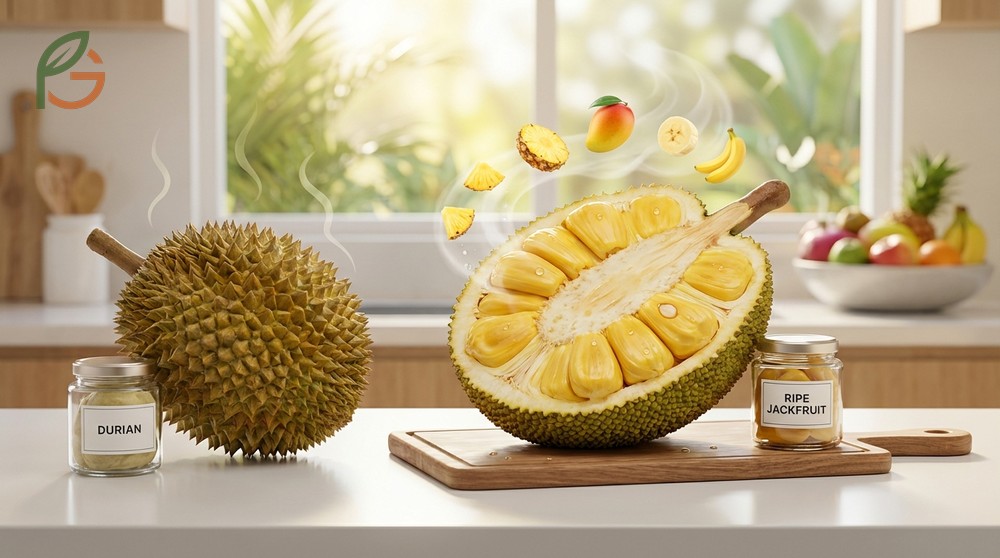
Jackfruit does not smell bad—this is one of the biggest misconceptions about the fruit. Fresh, ripe jackfruit has a sweet, mild, fruity aroma similar to a blend of pineapple, mango, and banana[1]. The smell is pleasant and inviting, not overpowering or offensive in any way. If you encounter jackfruit with a foul odor, it’s likely overripe or spoiled.
The confusion about jackfruit’s smell typically comes from people mixing it up with durian, a related tropical fruit with a notoriously pungent odor. While both fruits grow in Southeast Asia and have spiky exteriors, their aromas couldn’t be more different. Jackfruit’s scent is gentle enough that it’s welcome in homes, stores, and restaurants without issue.
Unripe jackfruit has even less scent—it’s nearly odorless when raw. This neutral aroma profile is another reason it works so well in savory cooking. You’re not fighting against a strong fruit smell when you’re trying to create a BBQ or curry flavor. The fruit simply accepts whatever aromatics and seasonings you add to the dish.
Some people detect a slightly musky quality to jackfruit’s smell, but it’s subtle and not unpleasant. The varieties bred for sweetness and flavor, like Cheena and Black Gold, are specifically selected for their attractive fragrance. These cultivars have scents that fruit growers describe as “beautiful” and “sweet,” making them popular choices for fresh eating.
Difference Between Jackfruit and Durian
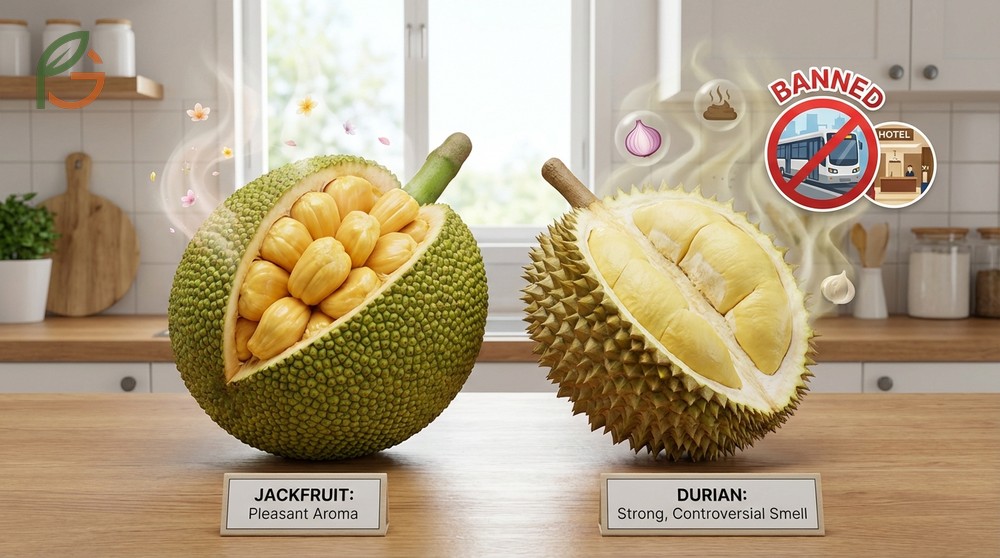
People constantly confuse jackfruit and durian, but they’re dramatically different fruits despite both coming from Southeast Asia. The most striking difference is smell—durian is infamous for its powerful, offensive odor that some describe as rotting onions, raw sewage, or turpentine[1]. This smell is so strong that durian is banned from hotels, public transportation, and many indoor spaces across Asia. Jackfruit, in contrast, has a mild, sweet, pleasant aroma that doesn’t cause any social restrictions.
The taste profiles diverge just as much. Durian delivers a rich, creamy, custard-like texture with complex flavors that people describe as sweet, savory, nutty, or even cheese-like[1]. Jackfruit tastes fruity and sweet when ripe, more like traditional tropical fruit. When unripe, jackfruit becomes neutral and meat-like, while unripe durian tastes bitter and is rarely eaten.
This table compares jackfruit and durian across five key characteristics including taste, smell, texture, nutritional profile, and cultural acceptance
| Characteristic | Jackfruit | Durian |
|---|---|---|
| Taste | Sweet, fruity (banana, pineapple, mango blend)[2] | Rich, creamy, custard-like with sweet-savory notes[1] |
| Smell | Mild, sweet, pleasant fruity aroma[3] | Strong, pungent (rotten onions, sewage-like)[1] |
| Texture | Soft and fibrous when ripe; firm and stringy when unripe[1] | Soft, creamy, custard-like consistency[1] |
| Nutrition | Lower fat, higher fiber, fewer calories[1] | Higher fat, higher calories, very rich |
| Public Acceptance | Widely accepted, no restrictions[1] | Banned in many hotels and public spaces[1] |
Size-wise, jackfruit dwarfs durian. Jackfruit regularly reaches 40-80 pounds, while durian typically weighs 2-7 pounds. Both have spiky exteriors, but durian’s spikes are sharper and more dangerous—you need gloves to handle durian safely, while jackfruit’s blunt spikes pose less risk. The texture difference means they’re used differently in cooking: jackfruit works in both sweet and savory applications, while durian is primarily used in desserts and sweet preparations.
Conclusion
What does jackfruit taste like? The answer depends entirely on ripeness—ripe jackfruit delivers sweet tropical notes of banana, pineapple, and mango with that signature bubblegum flavor, while unripe jackfruit provides a neutral canvas perfect for absorbing BBQ, curry, and taco seasonings. This versatility makes it unique among fruits, functioning equally well in fruit salads and vegan pulled pork sandwiches.
Current data shows jackfruit gaining momentum across U.S. markets as both a fresh exotic fruit and a plant-based protein option[4]. Whether you’re exploring new tropical flavors or seeking whole-food meat alternatives, jackfruit offers something genuinely different from what you’ll find in typical American grocery stores. FruitGarden encourages you to try both ripe and unripe preparations—the same fruit delivers two completely different culinary experiences that both deserve attention.
Frequently Asked Questions
How do you know when jackfruit is ripe?
Ripe jackfruit changes from green to yellow-brown and develops a strong sweet aroma. The spikes soften slightly and the fruit yields to gentle pressure. You’ll also hear a hollow sound when you tap it, and the stem may start to release a sweet smell. For canned jackfruit, ripe fruit is packed in syrup while unripe comes in brine or water.
Can you eat jackfruit seeds?
Yes, jackfruit seeds are edible and nutritious when cooked. You can boil, roast, or steam them—they taste similar to chestnuts with a starchy, slightly sweet flavor. The seeds contain more protein than the flesh, with about 5-7% protein content. Never eat jackfruit seeds raw as they contain compounds that need to be broken down by cooking.
Is jackfruit healthy for weight loss?
Jackfruit can support weight loss goals because it’s low in calories (about 95 calories per 100 grams) and fat-free while providing fiber that helps you feel full. However, it’s also high in carbohydrates and natural sugars, so portion control matters. It works best as part of a balanced diet rather than as a primary weight loss food.
How long does fresh jackfruit last?
Whole uncut jackfruit lasts about a week at room temperature. Once cut, store the pods in an airtight container in the refrigerator for 3-5 days or freeze them for up to 2 months. Canned jackfruit lasts 2-3 days in the fridge after opening. The flesh turns brown and develops an off smell when it’s gone bad.
What’s the best way to cut a jackfruit?
Oil your knife, cutting board, and hands first—jackfruit contains sticky latex that’s difficult to remove. Cut the fruit in half lengthwise, then into quarters. Remove the core and pull out the yellow pods with your hands. The pods contain seeds that you can remove before eating the flesh. Some people wear gloves to avoid the latex entirely.
Does jackfruit taste like meat?
Unripe jackfruit doesn’t taste like meat on its own—it’s actually quite bland. However, its fibrous texture mimics shredded meat remarkably well, and it absorbs marinades and sauces just like meat does. When properly seasoned with BBQ sauce, curry spices, or taco seasonings, it creates a meat-like eating experience that satisfies without actually tasting like animal protein.
Where can I buy jackfruit in the United States?
Canned young jackfruit is widely available at Trader Joe’s, Whole Foods, and most major grocery chains in the international or health food sections. Fresh whole jackfruit appears seasonally at Asian markets, particularly in cities with large immigrant populations. Online retailers like Amazon also sell both canned and occasionally fresh jackfruit with shipping to most U.S. locations.





