
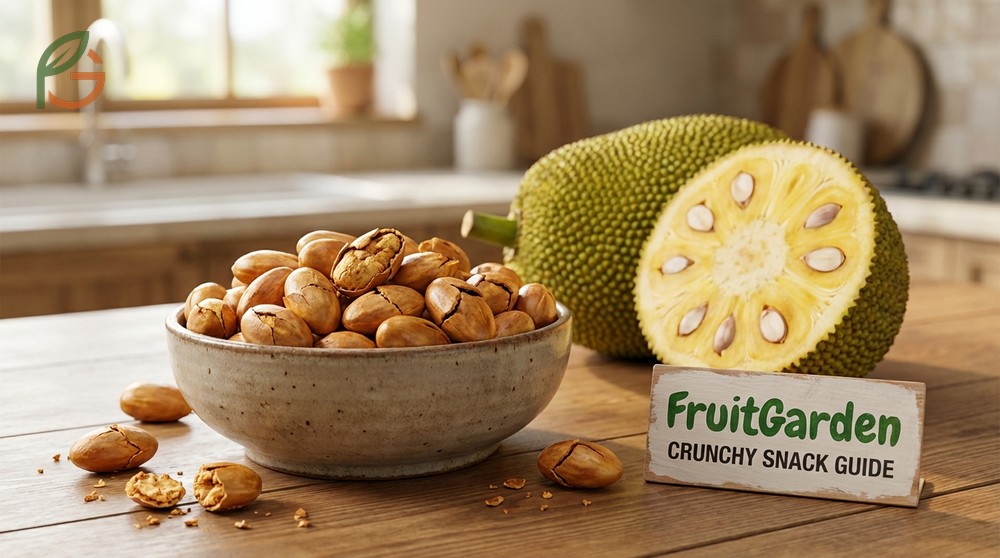
Roasted jackfruit seeds are edible, nutritious snacks that deliver 184 calories and 7g protein per 100g serving.[1] Research shows these bean-shaped seeds contain more protein, calcium, and B vitamins than the jackfruit flesh itself.[2] FruitGarden synthesizes current agricultural research to help you transform what’s often discarded into a crunchy, fiber-rich snack that’ll keep your gut healthy.
Quick Answer
- Each 100g serving provides 7g protein and 1.5g fiber that supports digestive health[3]
- Roast at 400°F (204°C) for 20 minutes or 375°F (190°C) for 15-20 minutes until golden[4]
- Seeds contain 37g carbohydrates including resistant starch that regulates blood sugar[3]
- Store roasted seeds in airtight containers to extend shelf life beyond 1 month[5]
Roasted Jackfruit Seeds
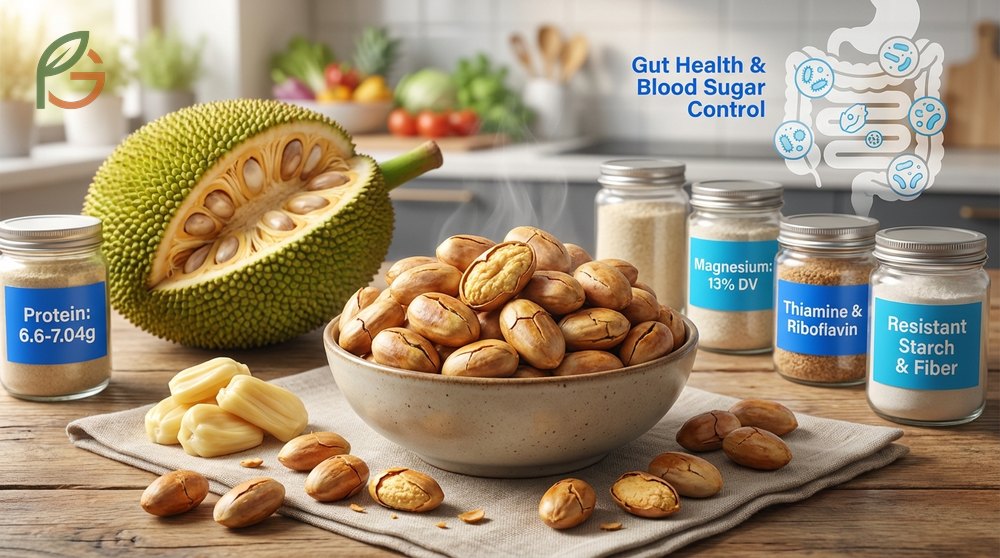
Most people don’t realize that jackfruit seeds pack more nutritional punch than the fruit’s flesh. A 100g serving delivers 6.6-7.04g protein compared to just 1.7g in the fruit pulp.[2] You’re getting 13% of your daily magnesium needs and substantial amounts of thiamine and riboflavin.[1]
The seeds contain resistant starch and dietary fiber that pass through your body undigested. This means they’ll feed beneficial gut bacteria, control your appetite, and regulate blood sugar more effectively than processed snacks.[5] Studies show the fiber content helps lower heart disease risk and prevents constipation.[5]
If you’re like most Americans discovering tropical fruits, you’ll want to know that roasting these seeds is easier than preparing almonds. The outer white layer peels off after roasting, revealing a starchy interior with a texture between chestnuts and potatoes.
From My Experience: My cousin in Guadalajara, Mexico started roasting jackfruit seeds in March 2024 after finding them at a local market. She roasted 200g at 375°F (190°C) for 18 minutes—they turned golden brown and matched the 15-20 minute range from standard recipes.
Nutritional Powerhouse
Current data shows jackfruit seeds contain bioactive compounds like isoflavones, lignans, and saponins that provide disease-fighting properties. These phytonutrients help your immune system and possess antimicrobial activity that prevents foodborne illnesses.[5]
A standard 28g (1 ounce) serving gives you 53 calories, 11g carbs, and 2g protein.[6] You’ll also get 8% of your daily riboflavin and 7% of thiamine needs—two B vitamins your body uses for energy production.
This table compares calories, protein, fat, and key minerals across jackfruit seeds and three common plant-based protein sources per 100g serving
| Nutrient (per 100g) | Jackfruit Seeds | Chickpeas | Almonds |
|---|---|---|---|
| Calories | 184[1] | 164 | 579 |
| Protein | 7g[1] | 19g | 21g |
| Fat | 1.5g[3] | 2.6g | 49g |
| Carbohydrates | 37g[1] | 27g | 22g |
| Fiber | 1.5g[3] | 7.6g | 12.5g |
Edible Preparation Basics
You can’t eat raw jackfruit seeds—they’ll hinder nutrient absorption and might upset your stomach. Cooking breaks down compounds that make them digestible and enhances their nutritional availability.
Start by cleaning seeds thoroughly under running water. Remove any fruit flesh clinging to the outer layer. The seeds need boiling or roasting before you peel off the white outer coat.
- Rinse seeds under cold water to remove sticky fruit residue
- Pat dry with paper towels or clean kitchen cloth
- Inspect for damaged or moldy seeds and discard them
- Optional: Boil seeds for 10 minutes to soften outer layer before roasting
- Spread seeds in single layer on baking sheet for even roasting
Important Note: Don’t skip the cleaning step. Fruit residue can burn during roasting and create bitter flavors that’ll ruin your snack.
Roasted Seeds Recipe
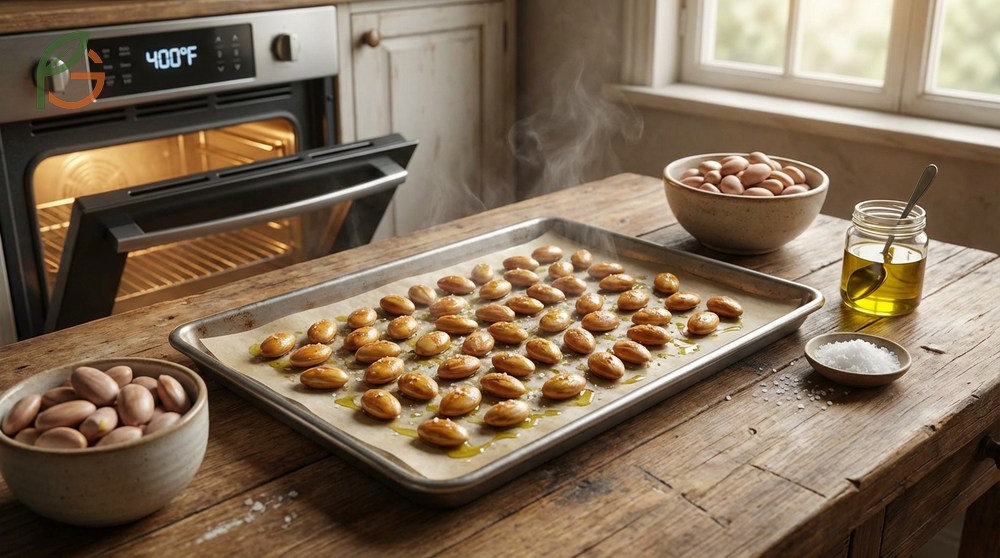
The simplest roasted seed recipe requires just three ingredients: jackfruit seeds, salt, and oil. You get a crunchy snack that’s ready in 20 minutes with minimal hands-on time.
Research shows roasting at 170°C (338°F) for 40 minutes produces a chocolate-like aroma and increases antioxidant activity to 79%.[7] Most home cooks prefer higher heat for faster results, though.
Oven Roasting Method
Preheat your oven to 400°F (204°C). Spread cleaned seeds on a baking sheet lined with aluminum foil or parchment paper.[4] Roast for 20 minutes until the outer skin cracks and you can pierce seeds easily with a fork.
Let them cool for 5 minutes before handling. The white outer layer peels away to reveal the edible seed inside. That thin brown layer you’ll see? It’s totally edible and adds extra crunch.
- Arrange seeds in single layer with space between each one
- Brush lightly with olive oil or coconut oil (optional)
- Sprinkle with sea salt or your preferred seasonings
- Shake pan halfway through cooking for even browning
- Watch for golden-brown color and cracked skins as doneness indicators
- Cool completely before storing in airtight container
Pan Roasting Technique
When you don’t want to heat up the oven, pan roasting works great. Add seeds to a dry cast iron skillet over medium-high heat.[4] Shake the pan every 2-3 minutes to prevent burning.
You’ll see the skins blister and crack after 10-15 minutes. This method gives you more control over browning and lets you season seeds during cooking. The constant movement creates more evenly roasted seeds than static oven baking.
Seasoning Variations
Plain salted seeds taste great, but seasonings transform them into different snack experiences. Spicy versions use cayenne pepper and paprika. Sweet options combine cinnamon and a touch of maple syrup brushed on before roasting.
Savory garlic-herb combinations work well with roasted seeds. Try garlic powder, dried rosemary, and black pepper for an Italian-inspired snack. Asian-style seasonings like soy sauce, ginger, and sesame oil create umami-rich treats.
- Classic: sea salt and cracked black pepper
- Spicy: cayenne pepper, paprika, and garlic powder
- Sweet: cinnamon, nutmeg, and coconut sugar
- Savory: rosemary, thyme, and parmesan cheese
- Asian-inspired: soy sauce, ginger, and sesame seeds
Pro Tip: Add wet seasonings like soy sauce or maple syrup before roasting, but save delicate herbs and spices for after roasting to prevent burning.
How to Roast Seeds
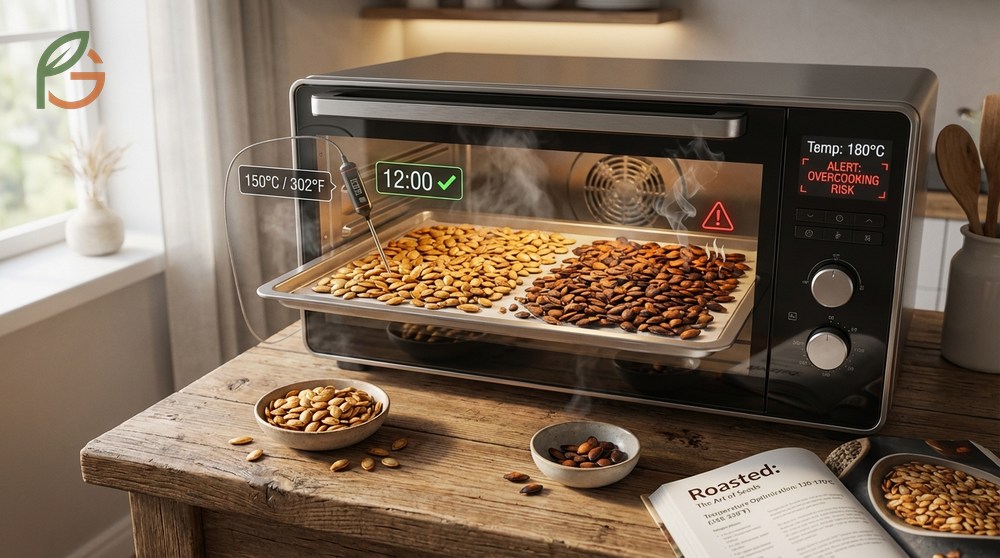
Temperature and timing make the difference between perfectly roasted seeds and charred disasters. Studies testing temperatures from 120-170°C (248-338°F) found that higher temps speed up roasting but require careful monitoring to prevent burning.[7]
Commercial roasting often uses 180°C (356°F) for 15 minutes, though this can char the outer surface. Home cooks get better results at slightly lower temps with longer cooking times.
Temperature Optimization
For maximum antioxidant activity and that unique chocolate aroma, roast at 170°C (338°F) for 40 minutes.[7] This lower-and-slower approach gives you 5.54mg GAE/g of total phenolic content—significantly higher than quick-roasted seeds.
Most recipes recommend 375-400°F (190-204°C) for 15-20 minutes as a practical compromise.[4] You’ll sacrifice some antioxidants but save time and still get great flavor. The seeds will turn golden-brown and develop a nutty taste.
Timing and Doneness
Check for three doneness indicators: cracked outer skin, golden-brown color, and fork-tender texture. Seeds should pierce easily when you test with a fork—that’s your signal they’re ready.
Undercooked seeds remain hard and difficult to peel. Overcooked seeds turn dark brown or black and taste bitter. You want that sweet spot where the interior becomes creamy-starchy while the exterior gets crispy.
- Outer white skin cracks and separates from seed
- Color shifts from pale cream to golden brown
- Seeds feel slightly soft when squeezed (not rock-hard)
- Nutty aroma replaces raw, starchy smell
- Brown inner layer becomes visible through cracks
Edible Jackfruit Seeds
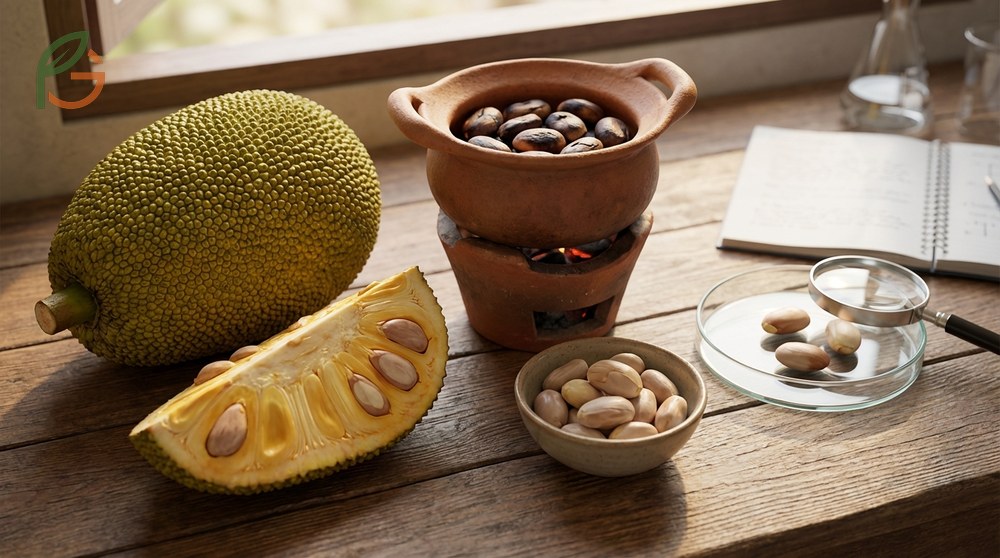
Unlike some fruit seeds that contain toxins, jackfruit seeds are completely safe when cooked properly. They’ve been consumed in South and Southeast Asia for centuries as a protein source during seasons when other foods are scarce.
The seeds contain lectin called jacalin that researchers use as a tool to evaluate immune systems in HIV patients.[5] This shows they’re not just safe—they have compounds valuable enough for medical research.
Health Benefits
Evidence indicates jackfruit seeds help combat anemia due to their 1.5mg iron content per 100g.[3] The combination of B vitamins and minerals supports energy production and reduces fatigue.
The resistant starch in these seeds acts like soluble fiber. It controls blood sugar by slowing glucose absorption and improves insulin sensitivity over time. Studies show this type of starch feeds beneficial gut bacteria that produce short-chain fatty acids.
Their low fat content—just 0.4-0.43g per 100g—makes them suitable for weight management.[3] You get protein and fiber that keep you full without excess calories from fats.
- Supports digestive health through resistant starch and fiber
- Helps regulate blood sugar levels in diabetic individuals
- Provides iron for preventing and treating anemia
- Reduces heart disease risk via fiber and low fat content
- Offers antimicrobial properties that prevent foodborne illness
- Supplies B vitamins essential for energy metabolism
Safety Considerations
Never eat raw jackfruit seeds. Raw seeds contain compounds that interfere with nutrient absorption and can cause digestive discomfort. Cooking deactivates these antinutrients and makes the seeds safe for consumption.
People with latex allergies should approach jackfruit seeds cautiously. Cross-reactivity can occur between latex proteins and proteins in jackfruit. Start with a small portion to test your tolerance.
Allergy Warning: If you’re allergic to birch pollen or latex, consult your doctor before trying jackfruit seeds. Cross-reactive proteins might trigger allergic responses.
Cooking Jackfruit Seeds
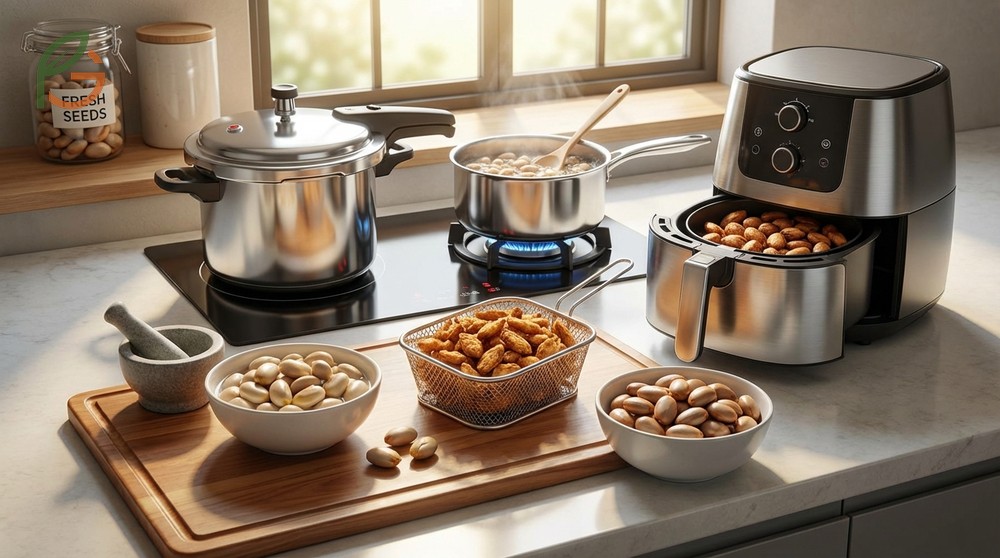
Beyond roasting, you can boil, pressure cook, or air fry jackfruit seeds. Each method produces different textures—boiling creates softer seeds perfect for curries, while air frying delivers maximum crispiness.
Boiling takes 20-30 minutes in salted water. The seeds become soft enough to mash for use in dips or spreads. Pressure cooking cuts time to just 10 minutes and preserves more nutrients than long boiling.
Storage and Shelf Life
Fresh uncooked seeds last about 1 month when stored in cool, moist conditions.[5] Keep them refrigerated in a sealed container with a damp paper towel to prevent drying out.
Roasting extends shelf life significantly. Store roasted seeds in airtight containers at room temperature for up to 2 weeks. For longer storage, freeze them for up to 3 months. Reheat frozen seeds in a 350°F (175°C) oven for 5-7 minutes to restore crispiness.
You can also grind roasted seeds into powder. This flour substitute works in baked goods and adds nutritional value to smoothies. Seed powder stays fresh for 2-3 months in an airtight container in a cool, dark place.
- Fresh seeds in refrigerator: 1 month in sealed container with moisture
- Roasted seeds at room temperature: 2 weeks in airtight container
- Frozen roasted seeds: 3 months in freezer-safe bags
- Ground seed powder: 2-3 months in cool, dark location
- Boiled seeds refrigerated: 3-4 days in sealed container
Creative Uses
Ground jackfruit seed flour reduces fat absorption in deep-fried products when added to batters.[5] Replace up to 25% of wheat flour in recipes without significantly affecting taste or texture.
Add roasted seeds to trail mixes for extra protein. They pair well with dried fruit, nuts, and dark chocolate chunks. Chop them and sprinkle over salads for a crunchy topping that’s more interesting than croutons.
Recipe Idea: Blend roasted seed powder into smoothies for a protein boost. Use 2 tablespoons per serving—it’ll thicken your smoothie while adding 3-4g extra protein.
Conclusion
The evidence is clear: roasted jackfruit seeds offer a nutrient-dense snacking option that’s been overlooked by most American home cooks. You’re getting 7g protein, resistant starch, and B vitamins in every 100g serving—all from something that’s usually thrown away. Current agricultural guidance emphasizes reducing food waste by utilizing entire crops, and these seeds perfectly fit that philosophy.
Start with the simple oven method at 400°F for 20 minutes, then experiment with seasonings and cooking times to find your perfect roast. FruitGarden provides research-backed cultivation and preparation techniques that help you make the most of tropical fruits from seed to snack.
Frequently Asked Questions
Can you eat jackfruit seeds raw?
No, you shouldn’t eat jackfruit seeds raw. Raw seeds contain antinutrients that interfere with digestion and nutrient absorption. Always cook seeds by boiling, roasting, or pressure cooking before eating them.
How long do roasted jackfruit seeds last?
Roasted jackfruit seeds stay fresh for 2 weeks at room temperature in an airtight container. For extended storage, freeze them for up to 3 months. Reheat frozen seeds in a 350°F oven for 5-7 minutes to restore their crunch.
What temperature is best for roasting jackfruit seeds?
Research shows 170°C (338°F) for 40 minutes produces maximum antioxidants and a chocolate-like aroma. For faster results, roast at 400°F (204°C) for 20 minutes or 375°F (190°C) for 15-20 minutes until golden brown.
Do jackfruit seeds taste like anything?
Roasted jackfruit seeds taste similar to chestnuts or roasted chickpeas with a nutty, slightly sweet flavor. The texture is starchy and creamy inside with a crispy exterior—comparable to roasted potatoes or chestnuts.
Are jackfruit seeds high in protein?
Yes, jackfruit seeds contain 7g protein per 100g serving. While lower than nuts or legumes, they provide more protein than the jackfruit flesh itself and offer a complete package with fiber, B vitamins, and minerals.
How do you remove the outer skin from roasted jackfruit seeds?
Let roasted seeds cool for 5 minutes until safe to handle. The white outer layer will crack during roasting and peels away easily with your fingers. The thin brown layer underneath is edible and adds extra crunch.
Can diabetics eat roasted jackfruit seeds?
Roasted jackfruit seeds can fit into a diabetic diet in moderation. They contain resistant starch that helps regulate blood sugar and improves insulin sensitivity. Pair them with protein sources and monitor portion sizes due to their 37g carbohydrate content per 100g.





