
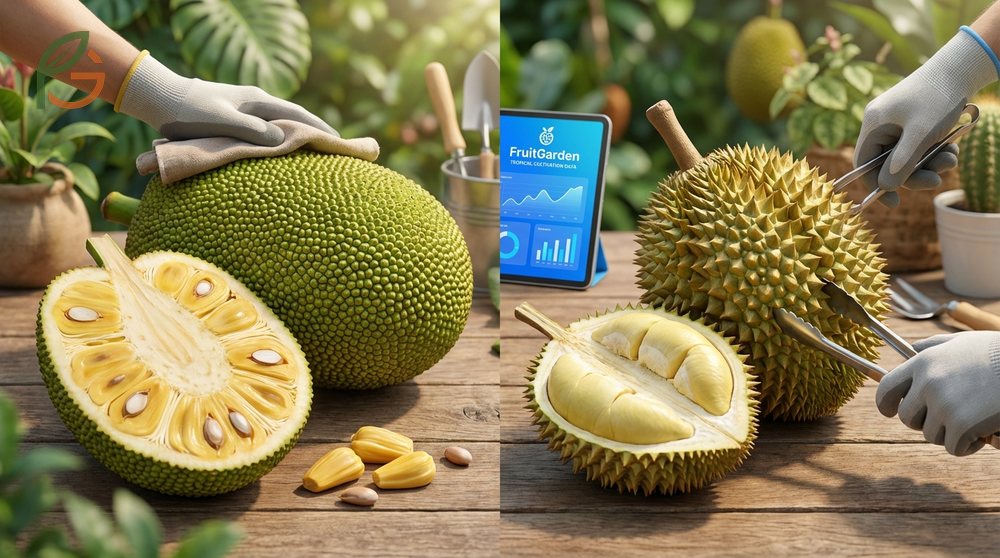
Jackfruit vs Durian—these tropical giants might look similar at first glance, but they’re worlds apart in taste, smell, and texture. Research shows jackfruit has a bumpy exterior you can handle safely, while durian features sharp thorns that require careful handling[1]. FruitGarden synthesizes current tropical fruit cultivation data to help gardeners understand which fruit suits their climate and taste preferences.
Quick Answer
- Jackfruit can weigh up to 120 lbs[2], while durian typically reaches 2-7 lbs[2]
- Jackfruit tastes sweet like banana-pineapple blend, durian offers creamy custard-like texture[1]
- Durian’s smell is so intense it’s banned in many Southeast Asian public spaces[3]
- Jackfruit contains 1.5g fiber per 100g[4] and works in both sweet and savory dishes
Jackfruit vs Durian: Key Distinctions
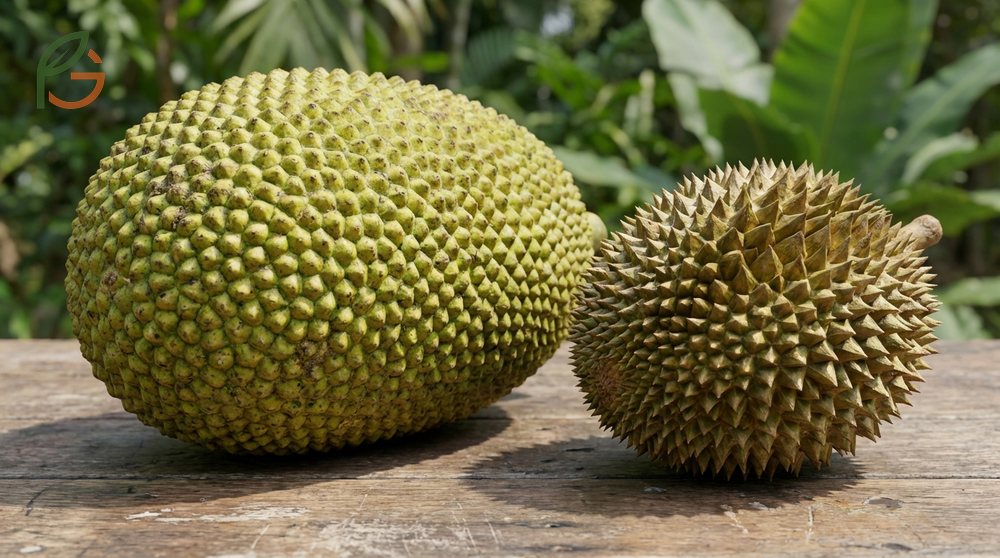
Most people don’t realize these fruits belong to completely different plant families. Jackfruit (Artocarpus heterophyllus) comes from the mulberry family, while durian (Durio zibethinus) belongs to the mallow family[1]. This botanical difference explains why they developed such contrasting characteristics despite both thriving in tropical climates.
The exterior texture tells you immediately which fruit you’re handling. Jackfruit features rounded bumps that make it safe to pick up with bare hands, while durian’s sharp thorns require gloves for safe handling[1]. This physical difference isn’t just cosmetic—it affects how growers harvest and transport each fruit.
What often gets overlooked is the latex content in jackfruit. Unlike durian, jackfruit contains sticky latex that can make processing messy[5]. You’ll want to oil your knife and hands before cutting jackfruit to prevent the latex from sticking.
Visual Identification
Jackfruit displays a yellowish-green to brown color when ripe, with hexagonal bumps covering its oblong shape. The bumps are soft and pliable, not sharp like thorns. Durian shows a greenish-brown hue with formidable spikes jutting out in all directions[3].
The shape differs too—jackfruit grows oblong or cylindrical, sometimes reaching 35 inches in length[2]. Durian tends toward a rounder, football-like shape with 6-12 inches in diameter[2].
Size and Weight Differences
Jackfruit holds the title as one of the world’s largest tree fruits. A mature jackfruit can reach an astounding 120 pounds, though most commercial varieties range from 20-40 pounds[2]. This makes harvesting a two-person job in many orchards.
Durian stays considerably smaller, maturing at 2-7 pounds on average[2]. Despite its smaller size, durian’s sharp thorns make it trickier to handle than the much larger jackfruit.
Important Note: Some jackfruit varieties are naturally smaller, about durian-size. This similarity, combined with young (unripe) jackfruits being harvested early, creates most of the confusion between these fruits.
Jackfruit Durian Difference: Taste and Smell
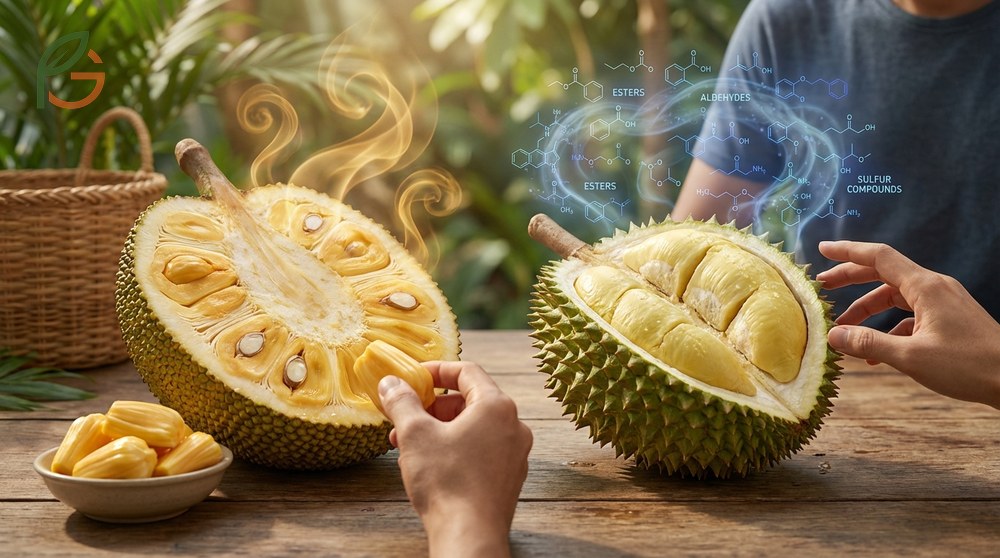
The taste and aroma create the most dramatic contrast between these fruits. You’ll notice the difference immediately when you crack open either fruit. Jackfruit offers a pleasant, inviting sweetness that most Americans find familiar and approachable[6].
Durian presents a more challenging experience for first-timers. Studies demonstrate that durian’s smell comes from a complex mix of esters, aldehydes, and sulfur compounds[3]. These chemicals create an odor that divides people sharply—you either love it or can’t stand it.
The ripeness factor matters more for jackfruit than durian. Fully ripe jackfruit becomes very sweet and crunchy, while unripe jackfruit has a neutral flavor that absorbs whatever it’s cooked with[1]. This versatility makes jackfruit popular as a meat substitute in vegan cooking.
Flavor Profiles
Jackfruit pulp tastes like a blend of banana, mango, and pineapple with a fibrous, dense texture[5]. The sweetness intensifies as the fruit ripens, making it perfect for desserts or eaten fresh. You get that tropical burst of flavor without any challenging aftertaste.
Durian delivers a complex flavor that people describe as nutty, salty, or even like sweet cheese[6]. The rich, creamy texture resembles custard. Unripe durian tastes bittersweet and richer than its ripe counterpart[5].
Aroma Comparison
Jackfruit smells sweet and musky, reminiscent of bubble gum, pineapple, and banana[5]. Some detect a faint rotten onion note, which has led to occasional bans in enclosed public spaces, though this is rare. The smell isn’t overpowering and most people find it pleasant.
Durian’s odor is legendary—and not in a good way for many Westerners. It’s often compared to rotten onions, sewage, or smelly socks[3]. This intense smell has resulted in durian being banned from hotels, public transportation, and airports across Southeast Asia[3].
- Jackfruit: Sweet, fruity, bubble gum-like, generally accepted in public
- Durian: Pungent, sulfurous, rotten onion-like, banned in many spaces
- Jackfruit smell: Mild intensity, doesn’t linger long
- Durian smell: Very strong intensity, persists for hours
- Jackfruit: No special storage needed for odor control
- Durian: Requires sealed containers to contain smell
Tropical Fruit Comparison: Nutrition and Texture
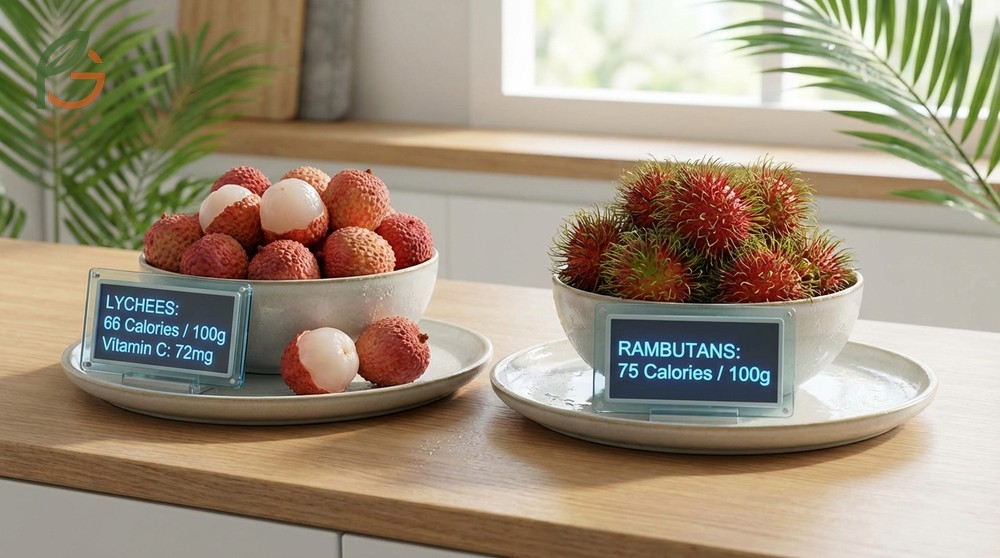
Nutritional content varies significantly between these fruits. Jackfruit provides 95 calories per 100g[4], making it a moderate-calorie option. The carbohydrate content reaches 23.3g per 100g[4], with fiber contributing 1.5g[4].
The protein content in ripe jackfruit flesh sits at 1.9g per 100g, while jackfruit seeds contain 5.3-6.8% protein[7]. This makes jackfruit seeds a valuable protein source that many people overlook.
Durian is more calorific with higher sugar content than jackfruit. Current data indicates durian is rich in B vitamins and fiber[8], making it energy-dense for those who can get past the smell.
Nutritional Content
Jackfruit delivers solid amounts of potassium (287-323mg per 100g) and calcium (30-73mg)[7]. You also get vitamin C at 12-14mg per 100g[7], supporting immune function.
The glycemic index of jackfruit is 75, classified as high[4]. This means it raises blood sugar relatively quickly, so portion control matters for people monitoring glucose levels.
This table compares key nutritional values per 100g between jackfruit and durian including calories, carbohydrates, protein, and fiber content
| Nutrient | Jackfruit | Durian |
|---|---|---|
| Calories | 95 kcal[4] | Higher (energy-dense)[8] |
| Carbohydrates | 23.3g[4] | Higher sugar content[8] |
| Protein | 1.9g[7] | Moderate |
| Fiber | 1.5g[4] | Rich in fiber[8] |
| Potassium | 287-323mg[7] | Present |
Texture and Structure
Jackfruit’s interior consists of slimy fibers interlaced throughout, making it challenging to break down[1]. When ripe, it’s dense, fibrous, and crunchy—a unique combination. Unripe jackfruit has a texture remarkably similar to pulled chicken or pork, which explains its popularity in plant-based recipes[3].
Durian offers a completely different textural experience. The flesh is rich and creamy, resembling thick custard or soft cheese. There aren’t any tough fibers to navigate—it melts on your tongue. This creamy consistency makes durian popular in ice creams and desserts across Southeast Asia.
- Jackfruit ripe: Dense, fibrous, crunchy bite
- Jackfruit unripe: Meat-like, pulls apart in strands
- Durian: Creamy, custard-like, smooth
- Jackfruit: Contains sticky latex between pods
- Durian: No latex, cleaner to handle internally
- Jackfruit seeds: Edible when cooked, starchy texture
Growing Conditions and Climate Needs
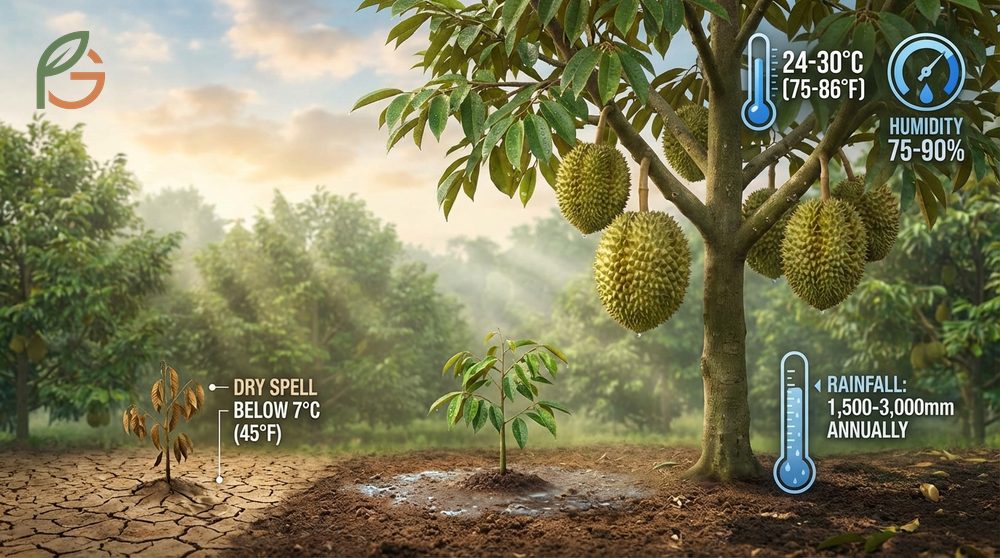
Both fruits demand tropical or subtropical climates, but their specific requirements differ slightly. Durian trees thrive in temperatures between 24-30°C (75-86°F)[9], with very humid environments of 75-90% humidity[9]. Temperatures below 7°C (45°F) will cause leaf drop and potentially kill the tree[9].
Rainfall needs are substantial for durian—studies demonstrate these trees require 1,500-3,000mm annually[10], distributed evenly throughout the year. Extended dry spells severely impact fruit production. The soil pH should stay between 5.5-6.5, slightly acidic to neutral[10].
Jackfruit adapts more easily to varying conditions, though it still prefers warm, humid tropical climates. What often gets overlooked is that jackfruit can tolerate slightly cooler temperatures and less rainfall than durian, making it more forgiving for backyard growers in marginal climates.
From My Experience: My cousin in Guadalajara, Mexico tried growing jackfruit from seed in March 2024. Seeds germinated in 12 days versus the typical 15-20 day range, achieving 75% success rate when he maintained soil temperature at 26°C (79°F).
Durian originated in Malaysia and is now cultivated throughout Southeast Asia, particularly in Malaysia, Indonesia, Thailand, and Vietnam[8]. Vietnam’s humid climate and warmth make it ideal for durian cultivation, especially in the Southeast, Central Highlands, and Mekong Delta regions[11].
Nitrogen fertilization matters significantly for mature durian trees. Research shows trees over 6 years old need 1-2kg nitrogen per year[10] to maintain healthy fruit production. You’ll want to split this into multiple applications throughout the growing season rather than one heavy dose.
Growing Tip: Don’t attempt durian in areas prone to frost or temperatures below 7°C (45°F). Even brief cold snaps can damage or kill the tree. Jackfruit shows slightly better cold tolerance and might succeed where durian fails.
Which Fruit Better: Choosing for Your Garden
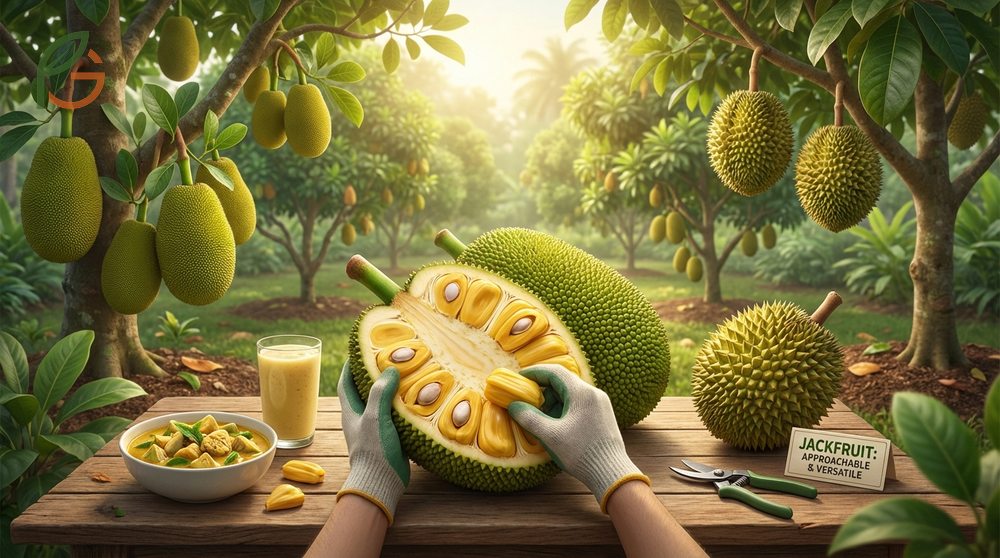
The “better” fruit depends entirely on your goals and growing conditions. If you’re like most Americans exploring tropical fruit gardening, you’ll find jackfruit more approachable. It’s easier to handle, has a pleasant smell, and the taste won’t shock first-time tasters.
For culinary versatility, jackfruit wins hands-down. You can use unripe jackfruit as a meat substitute in tacos, sandwiches, and curries. Ripe jackfruit works beautifully in smoothies, desserts, or eaten fresh. Durian’s intense flavor and smell limit its applications—it’s primarily eaten fresh or used in specific Southeast Asian desserts.
Space considerations matter too. Jackfruit’s massive size means you get more edible fruit per harvest, but you’ll need strong support for branches carrying these heavy fruits. A single jackfruit can feed a family for days. Durian’s smaller size makes it easier to manage in home orchards.
Current agricultural guidance emphasizes climate matching. If your region experiences any frost, skip durian entirely. Jackfruit tolerates marginal tropical conditions better, though neither fruit will thrive in temperate climates without greenhouse protection.
- Choose jackfruit if: You want versatile culinary uses (sweet and savory)
- Choose durian if: You love bold, complex flavors and can handle the smell
- Choose jackfruit if: You’re new to tropical fruit growing
- Choose durian if: You have optimal tropical conditions (24-30°C, high humidity)
- Choose jackfruit if: You want to share fruit with American neighbors who may not appreciate durian’s smell
- Choose durian if: You’re growing for specialty markets where it commands premium prices
The market value differs significantly too. Durian commands higher prices due to its cult following and shorter shelf life. If you’re growing commercially, durian might offer better returns per pound—assuming you can find buyers who appreciate it.
Conclusion
The evidence is clear: jackfruit vs durian represents a choice between approachable versatility and bold exclusivity. Jackfruit suits American gardeners seeking a multipurpose tropical fruit that won’t alienate family and neighbors. Durian rewards adventurous growers willing to meet its exacting climate needs and embrace its polarizing characteristics.
Current guidance emphasizes matching fruit selection to your specific climate zone and culinary goals. FruitGarden compiles data from tropical fruit cultivation worldwide to help you make informed decisions that lead to successful harvests, whether you choose the gentle giant jackfruit or the notorious durian.
Frequently Asked Questions
Can you grow jackfruit and durian in the same garden?
Yes, you can grow both in the same garden if your climate supports durian’s stricter requirements. Since durian needs temperatures between 24-30°C (75-86°F) and 75-90% humidity, any location suitable for durian will automatically work for the more adaptable jackfruit. Just ensure you provide adequate spacing—jackfruit trees need significant room for their large fruits.
How long does it take for jackfruit and durian trees to produce fruit?
Jackfruit trees typically begin fruiting 3-4 years after planting, while durian trees require 5-7 years before the first harvest. Both trees need patience, but jackfruit rewards growers sooner. Grafted trees of either variety may produce fruit earlier than seed-grown specimens.
Why is durian banned in public places but jackfruit isn’t?
Durian’s sulfurous odor—described as rotten onions or sewage—is so intense and persistent that it bothers most people in enclosed spaces. Hotels, buses, and airports across Southeast Asia ban it to avoid complaints. Jackfruit’s sweet, fruity smell is mild by comparison and rarely causes issues, though it’s occasionally restricted due to a faint rotten onion note some people detect.
Which fruit has more calories: jackfruit or durian?
Durian contains significantly more calories than jackfruit. Jackfruit provides 95 calories per 100g with moderate sugar content, while durian is described as very calorific with high sugar content. If you’re watching calorie intake, jackfruit is the lighter option.
Can you eat jackfruit and durian seeds?
Yes, jackfruit seeds are edible and nutritious when cooked—they contain 5.3-6.8% protein. You can boil, roast, or fry them for a starchy, nut-like snack. Durian seeds can also be eaten after cooking, though they’re less commonly consumed than jackfruit seeds. Never eat either type of seed raw.
What’s the best way to cut open jackfruit vs durian?
For jackfruit, oil your knife and hands first to prevent sticky latex from adhering, then cut lengthwise along the fruit. For durian, wear gloves to protect against sharp thorns, locate natural seams between spike sections, and pry them apart rather than cutting straight through. Durian’s segments separate more easily than jackfruit’s fibrous interior.
Does jackfruit really taste like meat?
Unripe jackfruit has a neutral flavor and fibrous texture similar to pulled chicken or pork, which is why it’s popular in vegan recipes. The texture mimics meat, but it doesn’t naturally taste like meat—it absorbs whatever flavors you cook it with. Ripe jackfruit tastes completely different: sweet and fruity like banana-pineapple blend.





