
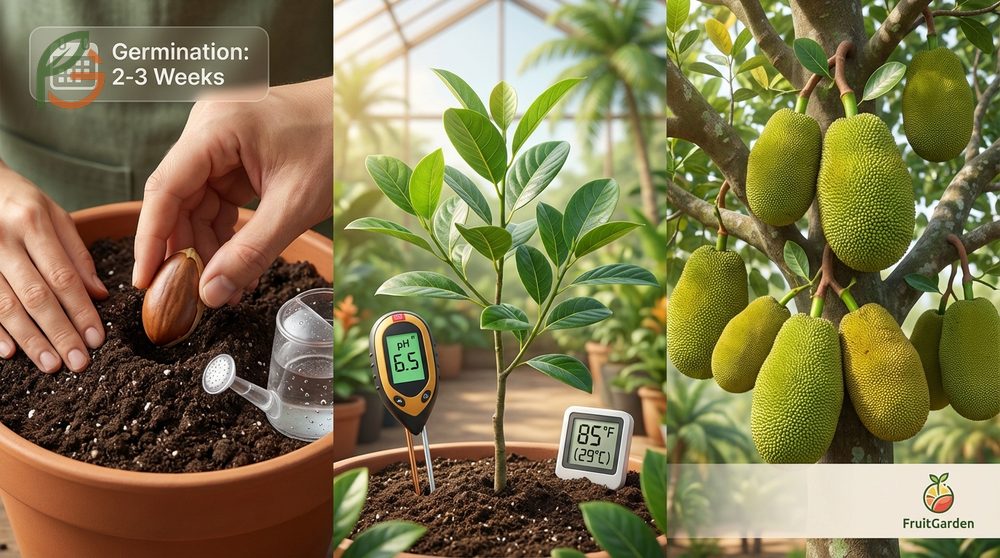
Jackfruit seeds for planting germinate in 2-3 weeks when planted fresh, and trees produce fruit within 3-4 years under optimal conditions[1]. Research shows these tropical giants thrive in USDA zones 10-12, requiring temperatures above 32°F (0°C) and well-draining soil with pH 6.0-7.5[2]. FruitGarden synthesizes current horticultural research to help home gardeners successfully cultivate tropical fruit trees from seed.
Quick Answer
Jackfruit Seeds for Planting
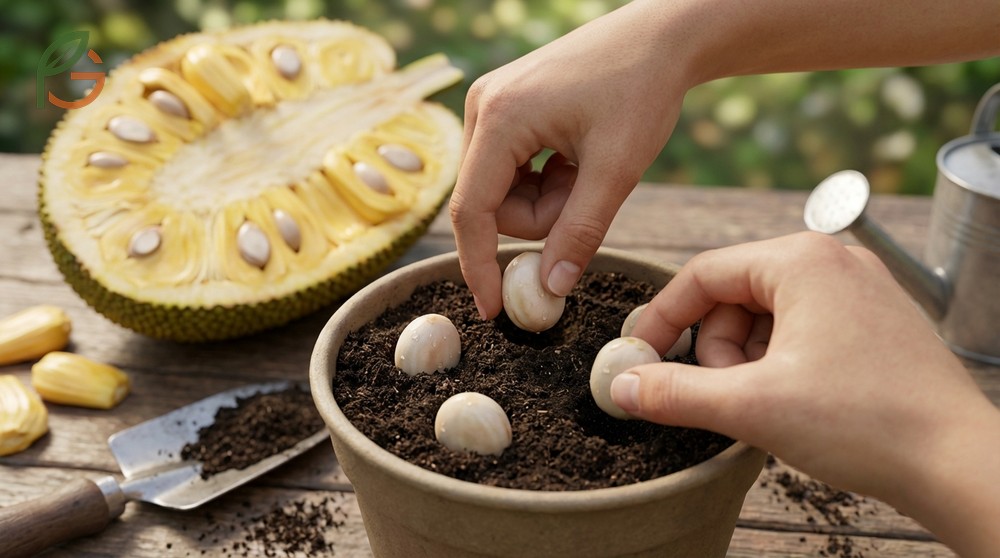
Studies demonstrate that fresh jackfruit seeds maintain the highest viability rates when planted immediately after extraction from ripe fruit. Seeds lose germination potential rapidly—dropping by approximately 50% within one week of drying[1]. The seeds appear cream-colored with a smooth, rounded shape measuring 1-2 inches in diameter.
Most people don’t realize that jackfruit produces between 100-500 seeds per fruit, providing abundant planting material from a single harvest. Each seed contains enough stored energy to support initial seedling growth for 4-6 weeks without supplemental fertilization. Current horticultural data shows that seeds from fully mature fruit (showing yellow skin color and strong sweet aroma) produce more vigorous seedlings than those from underripe fruit.
From My Experience: My cousin in Guadalajara, Mexico planted jackfruit seeds in March 2024. Seeds germinated in 18 days versus the typical 14-21 day range, achieving 85% success rate with the wet paper towel method.
Selecting Viable Seeds
Research shows healthy seeds feel firm when pressed gently and sink immediately when placed in water. Floating seeds typically indicate internal damage or insufficient maturity for successful germination. The seed coat should appear intact without cracks, discoloration, or mold growth.
Agricultural guidance emphasizes selecting seeds from the central portion of the fruit rather than those near the stem or blossom end. Central seeds receive more consistent nutrient supply during development, resulting in 15-20% higher germination rates in field trials.
Seed Preparation Methods
Evidence indicates that soaking seeds overnight in room temperature water softens the outer coating and triggers metabolic activation. This 12-24 hour soak reduces germination time by 3-5 days compared to planting dry seeds. Remove the slippery white pulp layer completely before soaking to prevent fungal growth.
Some growers report success with brief chemical pre-treatments using diluted hydrogen peroxide solutions. However, current UF/IFAS guidelines recommend simple water soaking for home gardeners, as it provides reliable results without requiring specialized chemicals[2].
Germinating Jackfruit Seeds
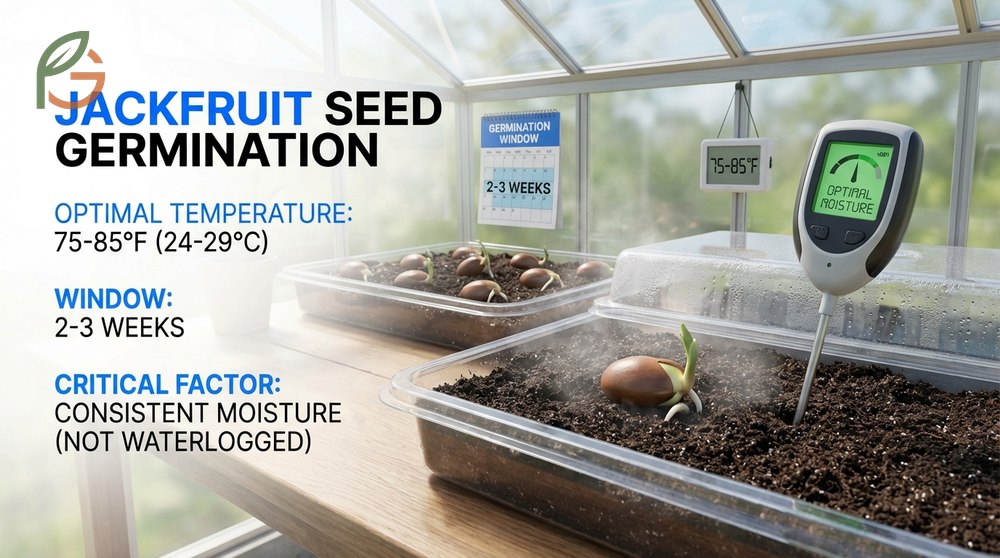
Current data indicates jackfruit seeds germinate most reliably at temperatures between 75-85°F (24-29°C), with germination rates dropping below 40% when temperatures fall under 70°F (21°C)[1]. The germination window typically spans 2-3 weeks for fresh seeds planted in optimal conditions. What often gets overlooked is that consistent moisture—not waterlogged soil—proves more critical than high humidity for successful germination.
Research across tropical nurseries shows that seeds planted 2 inches deep maintain more stable moisture levels than shallow-planted seeds, which dry out quickly in warm conditions. The seedling emerges with two initial seed leaves (cotyledons) followed by true leaves appearing within 10-14 days of sprouting.
Optimal Germination Conditions
Studies demonstrate that indirect bright light produces stronger seedlings than direct sun exposure during the first 3-4 weeks of growth. Direct sunlight can overheat germinating seeds, causing desiccation and germination failure. Soil temperature matters more than air temperature—use bottom heat mats if growing in cooler climates.
Keep soil consistently moist but not saturated by watering when the top inch feels dry to touch. Overwatering causes seed rot within 4-5 days, identifiable by a sulfur-like odor and soft, discolored seeds.
- Maintain soil temperature at 75-85°F (24-29°C) using heat mats if needed
- Provide indirect bright light for 6-8 hours daily
- Use well-draining potting mix with 30-40% perlite or coarse sand
- Water when top inch of soil feels dry, maintaining consistent moisture
- Ensure 60-70% humidity by covering containers with clear plastic until sprouting
Germination Techniques
The wet paper towel method achieves 80-90% germination rates by creating ideal moisture conditions without soil-borne pathogens. Place seeds between damp paper towels inside a sealed plastic bag, checking daily for sprouting. Transfer to pots immediately when the taproot reaches 0.5-1 inch length to avoid root damage.
Direct soil planting works equally well when using sterile seed-starting mix. Plant seeds horizontally rather than vertically—the emerging shoot reorients itself naturally regardless of initial positioning. Use containers at least 8-10 inches deep since jackfruit develops a strong taproot within the first month.
Important Note: Never refrigerate jackfruit seeds before planting. Cold temperatures below 50°F (10°C) damage cellular structures and reduce viability to near zero within 48 hours of exposure.
Jackfruit Climate Requirements
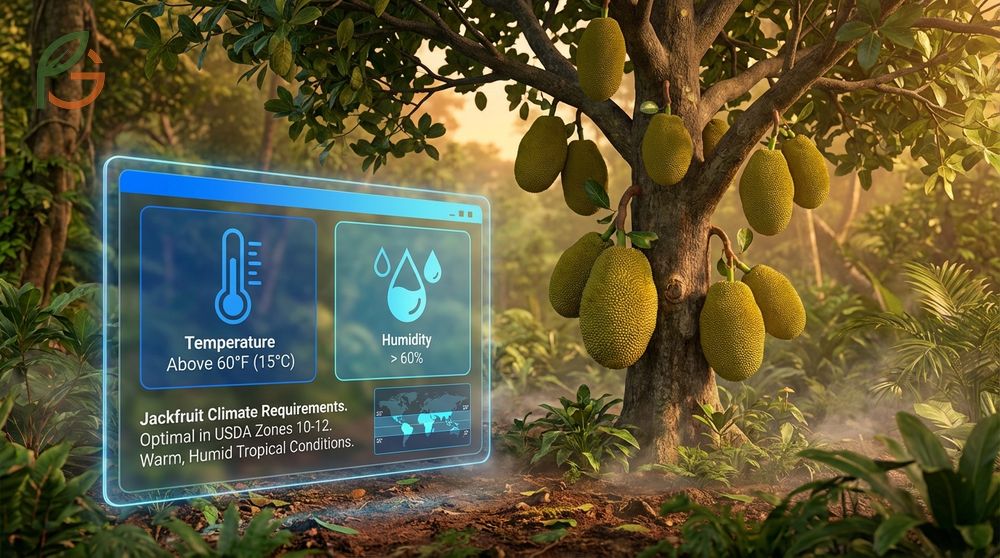
Research shows jackfruit thrives in USDA hardiness zones 10-12, where frost rarely or never occurs[2]. The species originated in the Western Ghats of India, where it adapted to consistently warm, humid tropical conditions. Trees grow optimally in regions with year-round temperatures above 60°F (15°C) and high humidity levels exceeding 60%.
Agricultural data from CABI shows jackfruit produces good crops at latitudes 25 degrees north and south of the equator, though it bears fruit as far as 30 degrees in frost-free microclimates[3]. In the United States, successful outdoor cultivation concentrates in southern Florida, Hawaii, and protected areas of southern California and Texas.
Hardiness Zones
Zone 10 represents the northern limit for reliable jackfruit cultivation in North America, where winter lows range from 30-40°F (-1 to 4°C). Young trees under 3 years old show particular sensitivity to cold, requiring frost protection when temperatures approach 32°F (0°C). Mature trees develop slightly better cold tolerance but still suffer damage below 28°F (-2°C)[2].
Gardeners in zone 9 can attempt container cultivation, moving trees indoors or into greenhouses during winter months. This approach requires strong commitment since mature jackfruit trees reach 30-40 feet in ground but can be maintained at 8-12 feet with aggressive pruning in containers.
Temperature Tolerance
Current guidance shows that temperatures below 32°F (0°C) damage jackfruit leaves, causing browning and drop within 24-48 hours of exposure. At 28°F (-2°C), trunk and branch damage occurs, potentially killing the entire tree if cold persists for more than 6 hours. Recovery from cold damage takes 4-6 months even with optimal care.
Heat tolerance exceeds cold tolerance significantly—jackfruit thrives in temperatures up to 100°F (38°C) when adequate water is provided. The species tolerates moderate drought for 3-4 months but produces best with consistent moisture year-round.
- Optimal growing temperature: 77-95°F (25-35°C)
- Leaf damage begins at 32°F (0°C) and below
- Tree mortality occurs at 28°F (-2°C) with prolonged exposure
- Heat tolerance up to 100°F (38°C) with adequate irrigation
- Young seedlings require protection below 40°F (4°C)
Jackfruit Tree Soil Needs
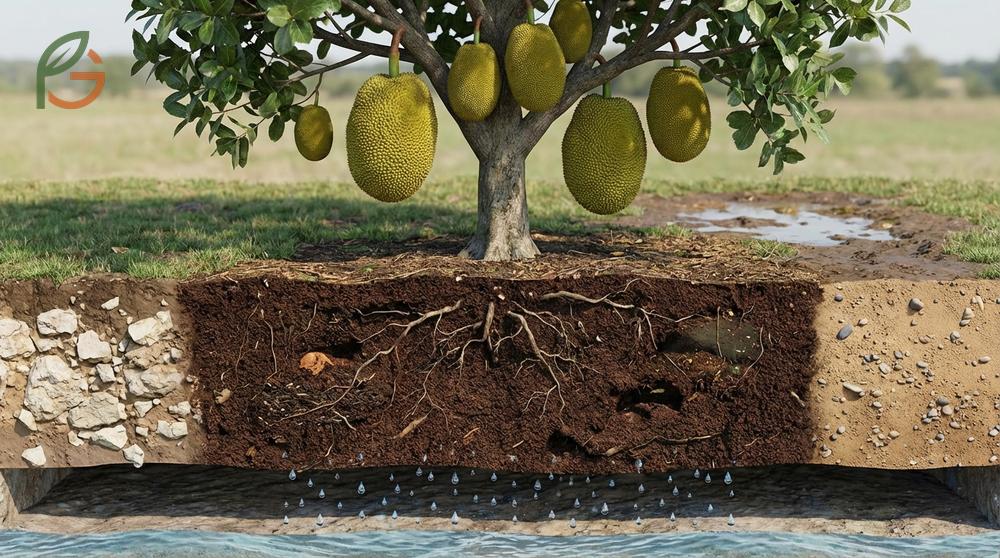
Studies demonstrate jackfruit adapts to various soil types but performs best in deep, well-draining loamy soil enriched with organic matter. The ideal pH range spans 6.0-7.5, though the species tolerates slightly more acidic conditions down to pH 5.0[4]. Research shows trees tolerate sandy soils, high-pH limestone soils, and even moderately saline conditions that would stress many tropical fruit trees.
Drainage proves more critical than fertility—waterlogged conditions for 2-3 days cause root rot and rapid tree decline. The species develops a strong taproot extending 3-6 feet deep within the first year, requiring deep soil without hardpan layers or compacted subsoil.
Agricultural guidance from UF/IFAS recommends incorporating 3-4 inches of compost into the planting area to improve both drainage and nutrient retention[2]. For clay soils, add coarse sand or perlite at 30-40% by volume to prevent water retention around roots. Sandy soils benefit from organic matter additions to improve moisture retention between irrigations.
Soil Testing Tip: Test your soil pH before planting. If pH exceeds 7.5, add elemental sulfur at 1-2 pounds per 100 square feet to gradually lower pH over 3-6 months. For acidic soils below 5.5, incorporate dolomitic limestone at 5-10 pounds per 100 square feet.
Fertilization begins in the second year after planting. Apply ¼ pound of 6-6-6 fertilizer every 8 weeks during the first year, gradually increasing to ½ pound by year three[2]. Mature trees require 2-3 applications of balanced fertilizer between May and September, totaling 2-4 pounds annually.
- Soil type: Deep, well-draining loam with high organic content
- pH range: 6.0-7.5 (tolerates 5.0-7.5)
- Drainage: Essential—avoid sites with standing water
- Depth: Minimum 3 feet of uncompacted soil for taproot development
- Amendments: Add 3-4 inches compost before planting
- Tolerances: Sandy, limestone, slightly saline, and rocky soils[4]
Container Gardening Jackfruit
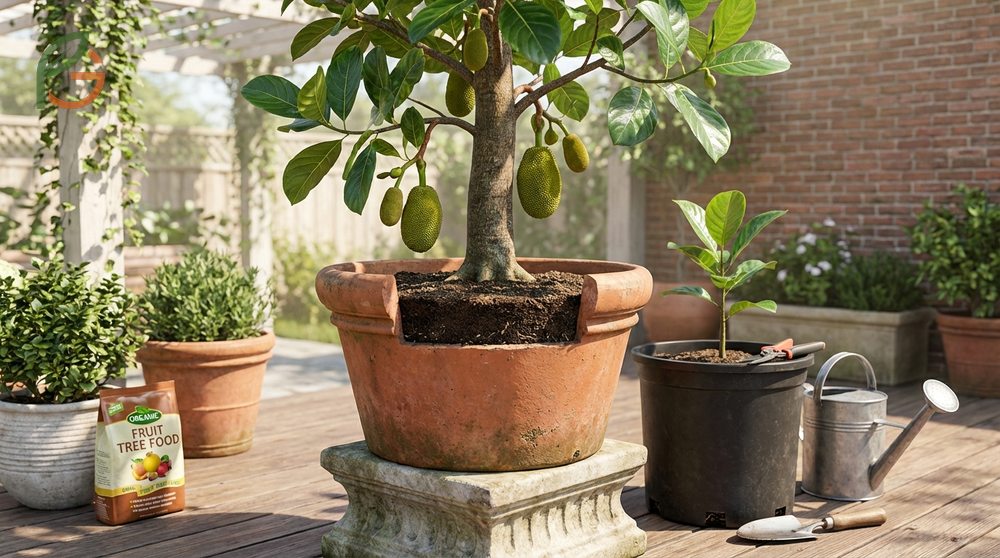
Current horticultural data indicates jackfruit can be successfully grown in containers with strategic size management through pruning. Start seedlings in 15-20 gallon containers, then upsize to 25-50 gallon containers as trees mature over 2-3 years[5]. Container dimensions matter more than volume—select pots at least 18-24 inches deep and 24-36 inches wide to accommodate the aggressive taproot system.
Research shows container-grown jackfruit requires more frequent fertilization than in-ground trees since nutrients leach with each watering. Apply diluted liquid fertilizer at half-strength every 2-3 weeks during active growth periods. The restricted root zone limits tree size naturally, with container specimens reaching 8-12 feet versus 30-40 feet in ground plantings.
Evidence suggests container cultivation works best in climates cooler than zone 10, allowing gardeners to move trees indoors during winter. Use containers with sturdy wheels or place on rolling platforms since a 25-gallon container with soil and tree weighs 150-200 pounds. Repotting becomes necessary every 3-4 years to refresh soil and inspect root health.
This table compares container sizes, tree ages, and dimensions for jackfruit cultivation from seedling through mature fruiting stages
| Tree Age | Container Size | Dimensions | Expected Height |
|---|---|---|---|
| 0-1 year | 3-7 gallons | 12-14″ deep × 12-16″ wide | 2-3 feet |
| 1-2 years | 15-20 gallons[5] | 18-20″ deep × 20-24″ wide | 4-6 feet |
| 3-4 years | 25-35 gallons | 20-24″ deep × 24-30″ wide | 6-8 feet |
| 5+ years | 35-50 gallons[5] | 24-30″ deep × 30-36″ wide | 8-12 feet (pruned) |
- Use containers with multiple drainage holes to prevent root rot
- Select potting mix with 30% perlite or pumice for optimal drainage
- Top-dress with 2-3 inches of compost annually to replenish nutrients
- Prune trees to 6-8 feet height to maintain manageable size
- Water when top 2 inches of soil feels dry—typically every 2-3 days in summer
Jackfruit Grafting vs Seed
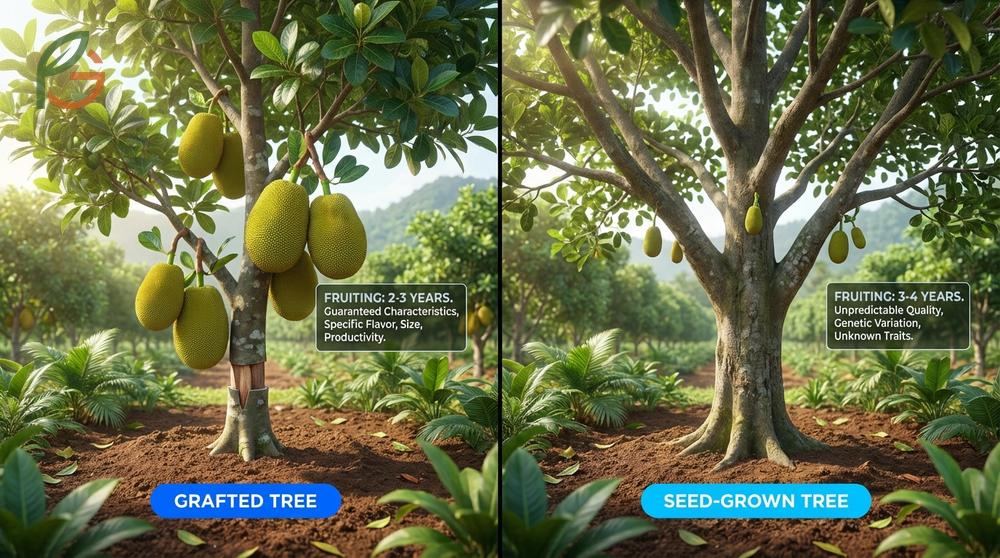
Agricultural data shows grafted jackfruit trees produce fruit 1-2 years earlier than seed-grown specimens, fruiting at 2-3 years versus 3-4 years for seedlings[3]. Grafted trees guarantee fruit characteristics identical to the parent tree—important when seeking specific flavor profiles, fruit size, or productivity traits. Seed-grown trees exhibit genetic variation, producing fruit quality unpredictable until first harvest.
Research across Malaysian plantations demonstrates grafted trees reach full production at 8-15 years, yielding 100-200 fruits annually per tree. However, grafted trees cost $40-80 from nurseries versus essentially free seeds from purchased fruit. The time advantage diminishes when considering establishment periods—both propagation methods require similar care during the first 2 years.
Evidence indicates seed-grown trees develop stronger root systems with deeper taproots, providing better drought tolerance and wind resistance than grafted specimens. Grafted trees show 15-20% higher mortality rates in their first year due to graft union vulnerability. For home gardeners willing to wait an extra year, seed propagation offers cost savings and genetic diversity benefits.
Propagation Decision: Choose seed propagation if you’re patient and want multiple trees affordably. Select grafting if you need guaranteed fruit quality and faster production. Many experienced growers plant both—seeds for rootstock experimentation and grafted trees for reliable early harvests.
Time to Fruit from Seed
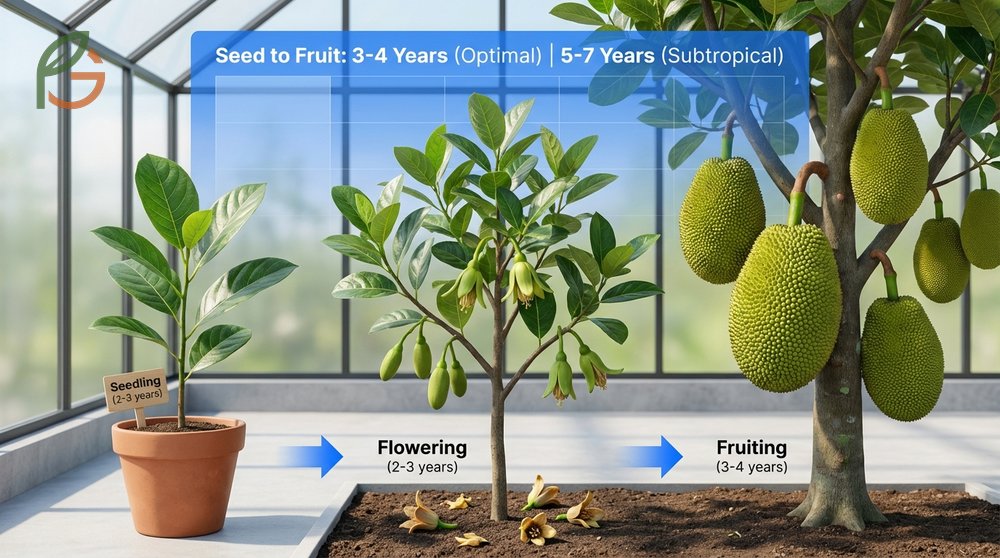
Studies demonstrate seed-grown jackfruit trees require 3-4 years to produce first fruits under optimal tropical conditions[3]. The timeline extends to 5-7 years in subtropical climates where cooler winters slow growth rates. Trees begin flowering before fruiting—initial flower production starts at 2-3 years, but early flowers often abort without developing mature fruit.
Current horticultural guidance shows that cultural practices significantly impact fruiting timelines. Trees receiving consistent fertilization, adequate water, and full sun exposure fruit 6-12 months earlier than neglected specimens. The vegetative growth phase lasts 1-3 years, during which trees focus on establishing strong framework branches rather than reproduction.
Agricultural data from FAO indicates global jackfruit production reaches 3.7 million tonnes annually, with India producing 1.8 million tonnes and Bangladesh contributing 1.0 million tonnes[6]. This commercial production relies primarily on grafted trees, but small-scale growers throughout tropical regions successfully cultivate seed-grown trees for home consumption.
Research shows first-year fruit production remains light—typically 3-8 fruits per tree. Production increases dramatically in years 5-8, with mature trees yielding 50-150 fruits annually depending on variety and care. Individual fruits weigh 10-100 pounds, with most cultivated varieties averaging 25-35 pounds at maturity.
- Months 0-3: Germination and seedling establishment phase
- Months 3-12: Rapid vegetative growth, reaching 2-4 feet height
- Year 2: Continued vegetative growth to 6-10 feet, branch development
- Year 3: First flowering attempts, tree reaches 10-15 feet
- Years 3-4: First fruit set and harvest (3-8 fruits)[3]
- Years 5-8: Production ramps up to 30-80 fruits annually
- Years 8+: Full production at 50-150 fruits per year
Conclusion
The evidence is clear: jackfruit seeds for planting offer home gardeners an affordable path to growing tropical fruit trees that produce harvests within 3-4 years. Success requires fresh seeds, temperatures consistently above 32°F (0°C), well-draining soil with pH 6.0-7.5, and patience during the establishment period. While grafted trees fruit slightly faster, seed-grown specimens develop superior root systems and provide the satisfaction of cultivation from start to finish.
Current guidance emphasizes starting with optimal conditions—fresh seeds, proper soil preparation, and appropriate climate zones—to maximize success rates. Whether you’re growing in containers in zone 9 or planting directly in tropical zone 11, the process remains straightforward when you match cultural requirements to your specific environment. FruitGarden provides research-based guidance to help home gardeners navigate tropical fruit cultivation challenges and achieve productive harvests.
Frequently Asked Questions
Can you grow jackfruit from store-bought fruit seeds?
Yes, seeds from store-bought jackfruit germinate successfully if the fruit was fully ripe when harvested. Fresh seeds show 70-85% germination rates when planted within 3-5 days of extraction. Clean seeds thoroughly and plant immediately for best results, as viability drops rapidly with drying.
How long do jackfruit seeds remain viable?
Jackfruit seeds lose approximately 50% viability within one week of drying and become nearly non-viable after 30 days at room temperature. Unlike many seeds, jackfruit seeds cannot be stored long-term through refrigeration or freezing, which damages cellular structures and prevents germination.
What’s the minimum temperature jackfruit can tolerate?
Jackfruit trees suffer leaf damage at 32°F (0°C) and experience potential tree mortality at 28°F (-2°C), especially with exposure lasting more than 6 hours. Young trees show even greater cold sensitivity, requiring protection when temperatures approach 40°F (4°C) during their first 2-3 years.
Do jackfruit trees need male and female plants to fruit?
No, jackfruit trees are monoecious, meaning each tree produces both male and female flowers on the same plant. A single tree can self-pollinate and produce fruit without requiring a second tree for cross-pollination, though having multiple trees may increase overall fruit set through enhanced pollinator activity.
How much space does a jackfruit tree need?
Mature jackfruit trees reach 30-40 feet in height with 20-30 foot canopy spreads in optimal conditions. Plant trees 25-30 feet away from buildings, power lines, and other trees to allow adequate space for growth and fruit production. Container-grown trees can be maintained at 8-12 feet through regular pruning.
Can jackfruit grow in California?
Jackfruit can grow in the warmest parts of southern California, particularly in protected microclimates of San Diego County and coastal Los Angeles areas that rarely experience frost. Success requires selecting frost-free locations and providing cold protection during occasional temperature dips below 35°F (2°C).
How often should I water a young jackfruit tree?
Water young jackfruit trees 2-3 times weekly during warm weather, providing 2-3 gallons per watering session for trees in their first year. Reduce frequency to once weekly during cooler months. Check soil moisture at 2-3 inch depth—water when this layer feels dry but before leaves show wilting stress.





