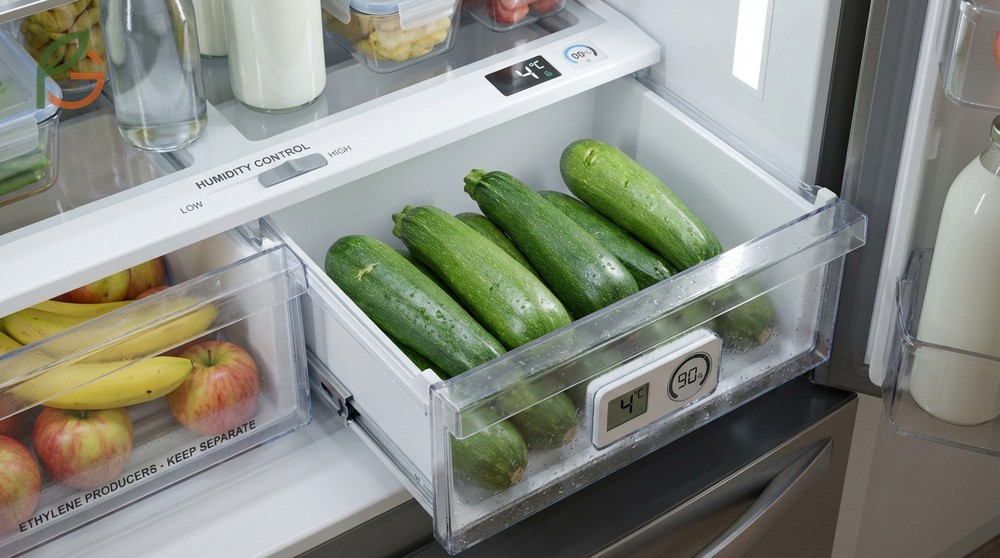
How to store zucchini? The best method is refrigerating unwashed zucchini in the crisper drawer, where it stays fresh for 1-2 weeks[1][2]. Research shows that keeping zucchini away from ethylene-producing fruits like bananas and apples significantly extends its shelf life. FruitGarden synthesizes current agricultural data to help home gardeners maximize their harvest quality and reduce food waste.
Quick Answer
How to Store Zucchini
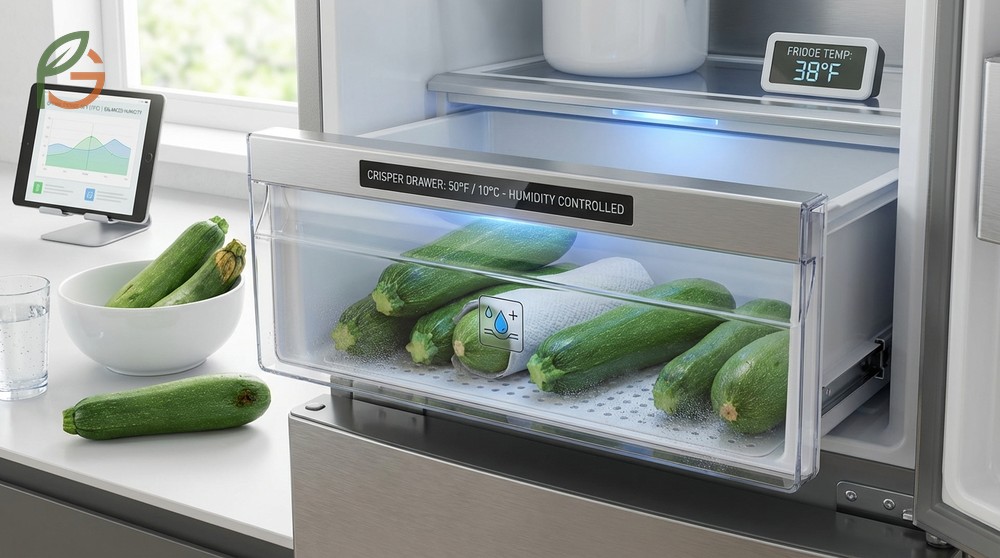
Proper zucchini storage depends on controlling moisture and temperature. Studies demonstrate that whole zucchini maintains peak quality for 1-2 weeks when refrigerated at 50°F (10°C)[1]. The key is balancing humidity levels—too much moisture promotes bacterial growth, while too little causes shriveling.
Research shows zucchini’s high water content makes it vulnerable to rapid deterioration without proper storage conditions. Most people don’t realize the crisper drawer’s controlled environment significantly outperforms open refrigerator shelving. Agricultural data indicates proper ventilation is just as critical as temperature control.
Refrigerator Storage Method
The refrigerator crisper drawer provides optimal conditions for storing zucchini fresh. Place unwashed zucchini in a breathable plastic bag with small holes to maintain airflow[3]. Don’t seal the bag completely—zucchini needs ventilation to prevent moisture buildup that causes sliminess.
Current guidance emphasizes keeping zucchini unwashed until you’re ready to use it. Washing introduces excess moisture that accelerates spoilage. Pat any visible moisture from the zucchini’s surface with a paper towel before refrigerating.
Room Temperature Storage
Room temperature works for short-term zucchini storage when refrigerator space is limited. Store zucchini in a cool, dark location like a basement or pantry where temperatures stay below 70°F (21°C)[3]. Under these conditions, zucchini lasts approximately one week[4].
Avoid direct sunlight and heat sources, which accelerate ripening and decay. Place zucchini in a breathable basket or container rather than sealed plastic bags. Check daily for soft spots or discoloration.
Preventing Moisture Loss
Evidence suggests maintaining 90-95% relative humidity prevents zucchini from drying out[2]. The crisper drawer’s design naturally regulates humidity levels. For room temperature storage, place a damp towel near (not touching) the zucchini to increase ambient moisture.
Signs of excessive moisture loss include wrinkled skin and a rubbery texture. These changes indicate the zucchini has lost significant water content and won’t regain its original crispness.
Important Note: Never store zucchini near the back of the refrigerator where temperatures drop below 40°F (4°C). Chilling injury occurs below 50°F (10°C), causing soft, water-soaked spots that lead to rapid decay.
Storing Zucchini Fresh
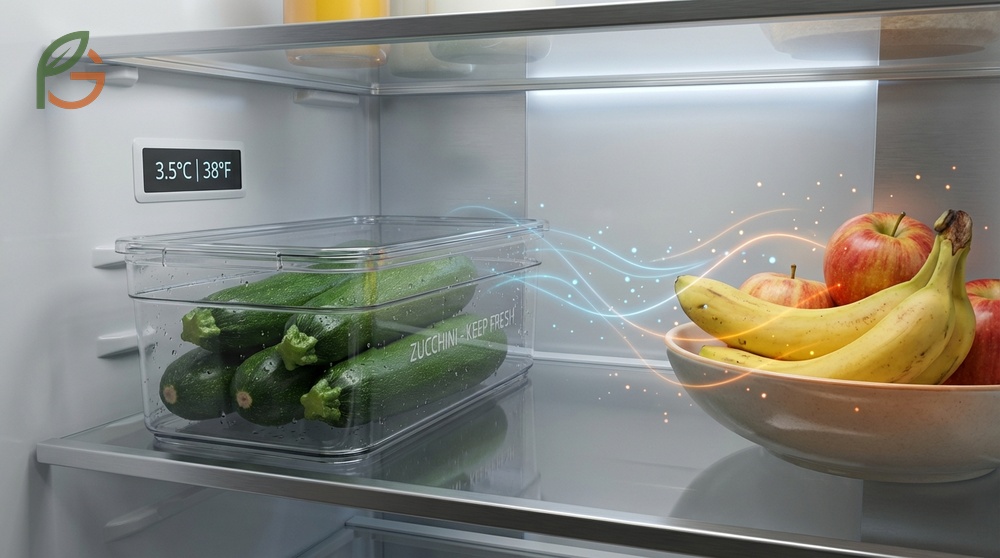
Zucchini freshness depends heavily on isolating it from ethylene-producing fruits and vegetables. Research across produce storage studies confirms that ethylene exposure accelerates ripening and softening[3][2]. What often gets overlooked is that even small amounts of ethylene gas can trigger premature deterioration in sensitive vegetables like zucchini.
The vegetable’s thin skin provides minimal protection against environmental factors. Select firm zucchini without soft spots, bruises, or blemishes for the longest storage life. Young, slender zucchini (6-8 inches long) stores better than oversized specimens.
From My Experience: My cousin in Guadalajara, Mexico grew zucchini in her home garden during summer 2024. She stored freshly picked zucchini in the crisper drawer for 14 days with zero spoilage—matching the 1-2 week range from agricultural studies[1].
Ethylene Sensitivity Factors
Zucchini ranks among the most ethylene-sensitive vegetables. Store it away from bananas, apples, tomatoes, melons, and stone fruits—all high ethylene producers[3]. Even in separate crisper drawers, ethylene gas can circulate through refrigerator vents.
The gas triggers enzymatic changes that break down cell walls, resulting in soft, mushy texture. Designate one crisper drawer exclusively for ethylene-sensitive vegetables including zucchini, cucumbers, and leafy greens.
- Keep zucchini in a separate drawer from fruits and ripening vegetables
- Remove overripe produce from the refrigerator immediately to reduce ethylene levels
- Don’t store zucchini with bananas, which produce high amounts of ethylene gas continuously
- Check stored zucchini daily for soft spots that indicate ethylene exposure
- Use the low-humidity crisper setting if your refrigerator has adjustable controls
Handling Cut Zucchini
Cut zucchini deteriorates rapidly because exposed flesh promotes bacterial growth. Use sliced or chopped zucchini within 24 hours for best quality[3]. Wrap cut surfaces tightly in plastic wrap or store in an airtight container to minimize moisture loss and oxidation.
For longer storage of cut zucchini, freezing is the only safe option. The moisture in exposed zucchini flesh creates ideal conditions for bacterial proliferation at refrigerator temperatures.
Storage Tip: If you only need half a zucchini, cut from the blossom end (opposite the stem). The stem end contains natural antimicrobial compounds that slow spoilage when left intact.
Zucchini Storage Tips
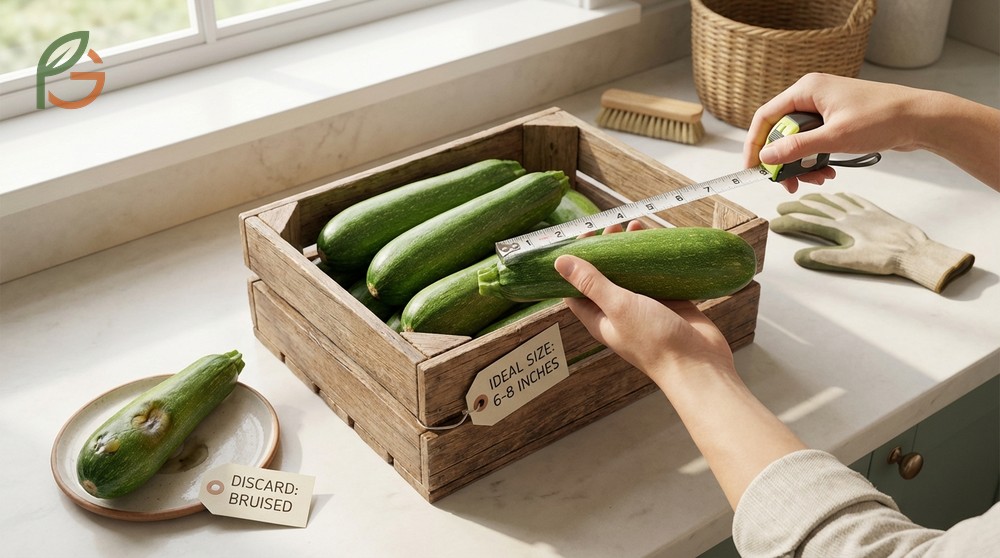
Current agricultural guidance emphasizes pre-storage preparation for maximizing zucchini freshness. Inspect each zucchini carefully before storage—a single bruised specimen can accelerate decay in nearby vegetables through ethylene release and bacterial spread. Handle zucchini gently to avoid bruising the tender skin.
Harvest timing significantly impacts storage duration for home gardeners. Pick zucchini when it reaches 6-8 inches in length for optimal texture and longest shelf life. Oversized zucchini (over 10 inches) contains more water and deteriorates faster.
Pre-Storage Preparation
Don’t wash zucchini before storing—washing adds surface moisture that promotes bacterial growth and mold. Simply brush off any visible dirt with a dry cloth or soft vegetable brush. Wash zucchini thoroughly under running water immediately before cooking or eating.
Remove any attached stem leaves, which draw moisture from the zucchini and wilt quickly in storage. Leave about 1 inch of stem attached to the zucchini, which helps seal the top end and reduce moisture loss.
- Inspect for cuts, bruises, or soft spots that indicate damage or disease
- Remove loose dirt with a dry cloth—don’t wash until ready to use
- Trim stem to 1 inch length to reduce moisture loss through the stem end
- Pat surface moisture dry with paper towels if zucchini feels damp
- Sort by size—store similar-sized zucchini together for even air circulation
- Discard any zucchini with mold, strong odors, or slimy patches
Container Selection
Breathable storage containers maintain the balance between moisture retention and airflow. Perforated plastic bags designed for produce storage work better than sealed containers or standard plastic bags[3]. If using standard plastic bags, poke 10-12 small holes to provide ventilation.
Avoid airtight containers, which trap moisture and create condensation that accelerates spoilage. Paper bags absorb excess moisture but may cause zucchini to dry out in low-humidity refrigerators. Mesh produce bags offer excellent airflow but provide minimal humidity control.
Refrigerate Zucchini Duration
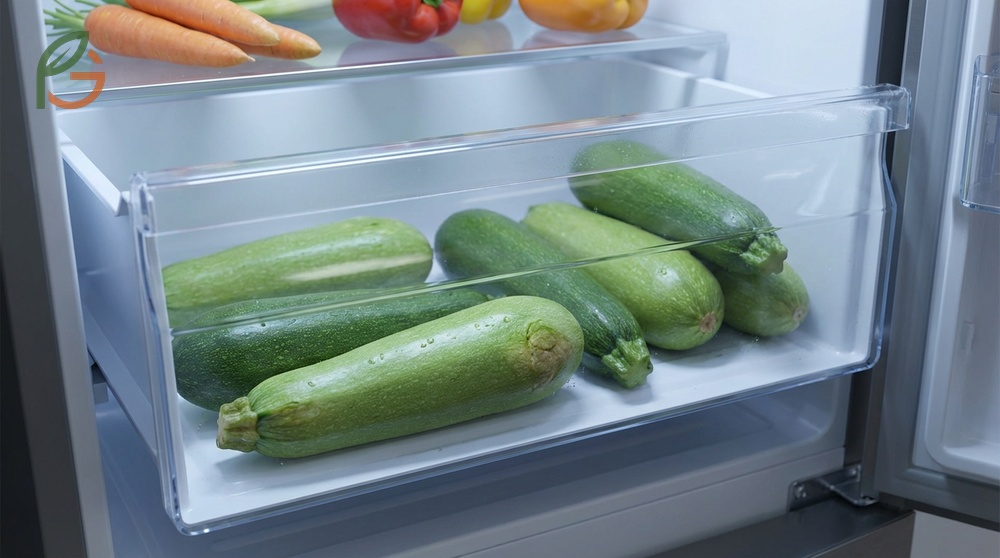
Whole zucchini maintains peak quality for 1-2 weeks when properly refrigerated[1][2]. The exact duration depends on initial freshness, storage temperature, and humidity levels. Freshly harvested zucchini from home gardens lasts longer than store-bought specimens that may be several days old.
After one week, check zucchini daily for quality changes. Slight softening at the blossom end is normal, but mushiness or discoloration indicates spoilage. Cooked zucchini has a much shorter refrigerator life of just 3-4 days[1].
This table compares storage methods, optimal conditions, expected duration, and quality indicators for different zucchini storage approaches
| Storage Method | Temperature | Duration | Best For |
|---|---|---|---|
| Refrigerator (whole) | 50°F (10°C) | 1-2 weeks[1] | Daily cooking needs |
| Room temperature | Below 70°F (21°C) | Up to 1 week[4] | Limited fridge space |
| Refrigerator (cooked) | 35-40°F (2-4°C) | 3-4 days[1] | Meal prep leftovers |
| Freezer (blanched) | 0°F (-18°C) | 10-12 months[4] | Long-term preservation |
| Dehydrated | Room temperature | Up to 1 year[4] | Pantry storage |
Signs of spoiled zucchini include soft spots, slimy texture, strong odors, and brown or black discoloration. The skin may appear wrinkled or develop mold patches. When in doubt, discard questionable zucchini rather than risk foodborne illness.
- Soft or mushy spots that give way under gentle pressure
- Slimy or sticky surface texture indicating bacterial growth
- Dark brown or black discoloration on skin or flesh
- Strong, unpleasant odor (fresh zucchini has minimal scent)
- Visible mold growth, typically appearing as white, green, or black fuzzy patches
Extend Zucchini Freshness
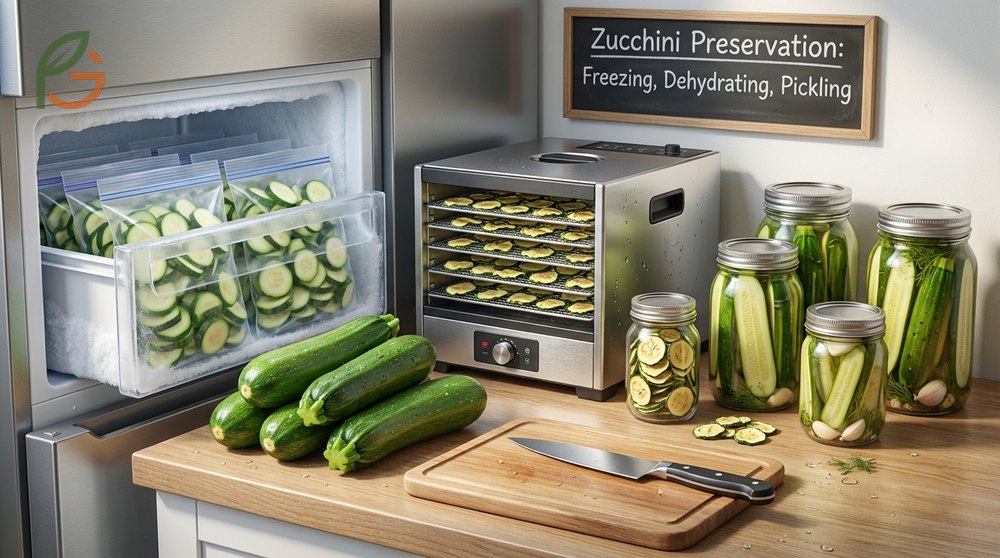
Long-term preservation methods extend zucchini usability far beyond the 1-2 week refrigeration window. Freezing, dehydrating, and pickling each offer distinct advantages depending on intended use. Research demonstrates proper preparation prevents texture degradation and nutrient loss during extended storage.
Home gardeners facing abundant harvests benefit from learning multiple preservation techniques. The method you choose depends on available storage space, equipment, and how you plan to use the zucchini later.
Freezing Methods
Blanching before freezing preserves zucchini quality for 10-12 months[4]. The blanching process stops enzyme activity that causes texture changes and nutrient loss. Cut zucchini into half-inch slices or grate it, then blanch in boiling water for 1-2 minutes[5].
Immediately transfer blanched zucchini to an ice bath to halt cooking. Drain thoroughly and pat dry with paper towels. Spread pieces in a single layer on a baking sheet and flash freeze for 30 minutes before transferring to freezer bags[5]. Flash freezing prevents pieces from clumping together.
Frozen zucchini works best in cooked dishes like soups, casseroles, and baked goods. The freezing process breaks down cell walls, resulting in softer texture unsuitable for raw applications. Thawed zucchini often releases excess water—drain it before adding to recipes.
Dehydration Techniques
Dehydrated zucchini stores at room temperature for up to one year when properly packaged[4]. Cut zucchini into quarter-inch slices for even drying. Use a food dehydrator at 125°F or your oven at the lowest setting (typically 150°F) with the door slightly open[5].
Drying takes 2-5 hours in an oven or 6-12 hours in a dehydrator, depending on slice thickness and humidity levels. Properly dried zucchini should be brittle and snap easily. Store in airtight containers like Mason jars or vacuum-sealed bags in a cool, dark location.
Rehydrate dried zucchini by adding it directly to soups and stews during cooking. For other recipes, soak pieces in warm water for 15-20 minutes until they regain pliable texture. Dehydrated zucchini also makes crispy chips when seasoned before drying.
Preservation Warning: Don’t attempt home pressure canning for plain zucchini. The USDA withdrew canning recommendations for summer squash due to uncertain processing times and botulism risk[6]. Only pickle zucchini using tested acidic recipes suitable for water bath canning.
Conclusion
The evidence is clear: how to store zucchini properly makes the difference between enjoying crisp vegetables for weeks or watching them deteriorate within days. Refrigerate unwashed zucchini in the crisper drawer away from ethylene-producing fruits for maximum 1-2 week freshness. For longer preservation, blanch and freeze or dehydrate for year-round use.
Current agricultural guidance emphasizes proper handling from harvest to storage as the foundation of quality preservation. FruitGarden provides research-based insights to help home gardeners and cooking enthusiasts minimize food waste while maximizing harvest value.
Frequently Asked Questions
How long does zucchini last in the refrigerator?
Whole zucchini lasts 1-2 weeks in the refrigerator when stored unwashed in the crisper drawer. Keep it in a breathable plastic bag with ventilation holes and away from ethylene-producing fruits like bananas and apples for maximum freshness.
Should you wash zucchini before storing?
No, don’t wash zucchini before storage. Washing adds surface moisture that promotes bacterial growth and accelerates spoilage. Simply brush off visible dirt with a dry cloth and wash thoroughly immediately before cooking or eating.
Can you store zucchini at room temperature?
Yes, you can store zucchini at room temperature for up to one week in a cool, dark location below 70°F. Place it in a breathable basket away from direct sunlight and heat sources, checking daily for soft spots or discoloration.
What’s the best way to freeze zucchini?
Blanch sliced or grated zucchini in boiling water for 1-2 minutes, then immediately transfer to an ice bath. Drain thoroughly, flash freeze on a baking sheet for 30 minutes, then transfer to freezer bags. Properly frozen zucchini lasts 10-12 months.
Why does zucchini get slimy in the fridge?
Zucchini becomes slimy from excess moisture and bacterial growth. This happens when stored in sealed containers without ventilation, washed before storage, or kept too cold (below 40°F). Always use breathable storage and maintain proper crisper drawer temperature around 50°F.
How do you know when zucchini has gone bad?
Spoiled zucchini shows soft or mushy spots, slimy texture, dark brown or black discoloration, strong unpleasant odors, and visible mold growth. Fresh zucchini should feel firm with minimal scent. Discard any zucchini showing these spoilage signs.
Can you store cut zucchini in the refrigerator?
Cut zucchini should be used within 24 hours for best quality. Wrap cut surfaces tightly in plastic wrap or store in an airtight container to minimize moisture loss. For longer storage, blanch and freeze cut zucchini rather than refrigerating it.