
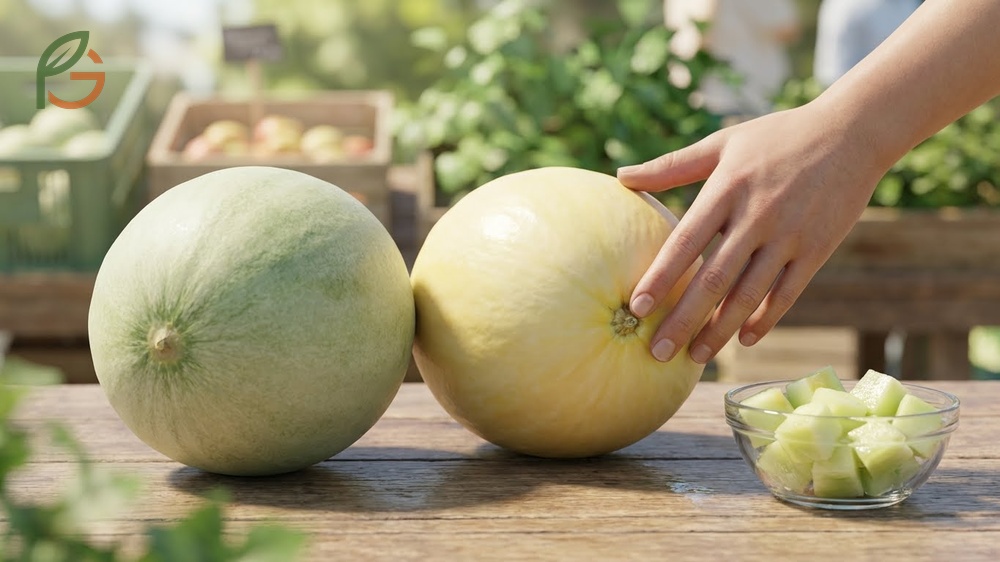
How to pick honeydew comes down to three key indicators: color, texture, and feel. Research shows that ripe honeydews shift from greenish-white to creamy yellow and develop a waxy, smooth surface[1]. Unlike cantaloupes, honeydews don’t slip from the vine when ready, making visual and tactile cues essential for selection[2]. FruitGarden synthesizes current agricultural research to help you select the sweetest melons at peak ripeness.
Quick Answer
How to Pick Honeydew
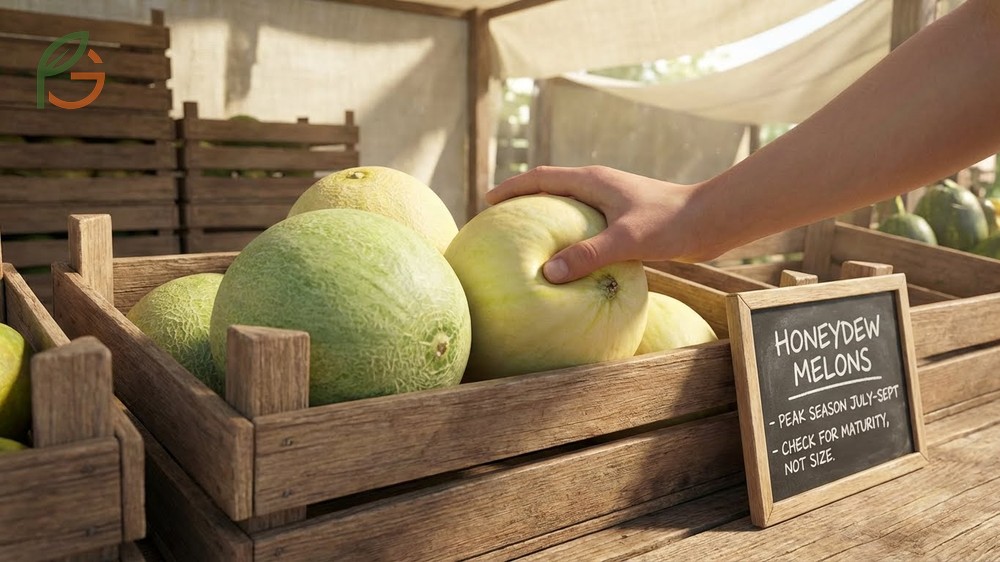
Selecting a ripe honeydew requires understanding maturity indicators that differ from other melons. Agricultural data shows honeydews are harvested based on maturity rather than size, with typical fruits reaching 15 to 22 centimeters in diameter[5]. The three-month growing cycle means you’ll find peak melons from July through September when sugars concentrate naturally.
Most people don’t realize that honeydews continue developing after harvest if picked at the right stage. Studies demonstrate that melons harvested too early—when still greenish—won’t ripen properly even at room temperature[2]. This makes initial selection critical for flavor.
Color Transformation
The rind color shift from green to creamy yellow signals sugar development inside the fruit. Immature honeydews display greenish-white coloring, while fully mature melons turn creamy yellow with smooth, waxy surfaces[1]. You’ll notice this transformation happens uniformly across the entire surface when the melon is ready.
What often gets overlooked is that color alone isn’t foolproof. Some varieties maintain slight green undertones even when ripe, but the overall tone should still shift toward yellow or cream. The waxy sheen becomes your secondary confirmation—it indicates the melon has reached approximately 16 Brix sugar content[5].
Texture and Surface
Run your hand across the rind to assess texture changes. Ripe honeydews develop a velvety, slightly sticky surface that feels distinctly different from the dusky, rough texture of unripe melons[4]. This waxy coating forms as natural sugars concentrate near the skin.
The surface should feel smooth overall, though you might notice scattered lines or small patches of netting. These don’t affect quality and are normal variations according to USDA inspection standards. Avoid melons with soft spots, bruises, or cracks that indicate decay.
Important note: Unlike cantaloupes that slip from the vine when ripe, honeydews must be cut from the plant. Don’t expect natural detachment as a ripeness indicator[2].
Blossom End Test
Press your thumb gently on the blossom end—the opposite side from where the stem attached. A ripe melon yields slightly under pressure but springs back, while an unripe one feels rock-hard[4]. If it feels mushy or doesn’t bounce back, the melon is overripe.
This test works because the blossom end softens first as the fruit matures. Research shows this “give” correlates directly with internal flesh softening and sugar development. Check the stem end too—a slightly sunken appearance indicates the melon fully ripened before harvest.
Signs of Ripe Honeydew
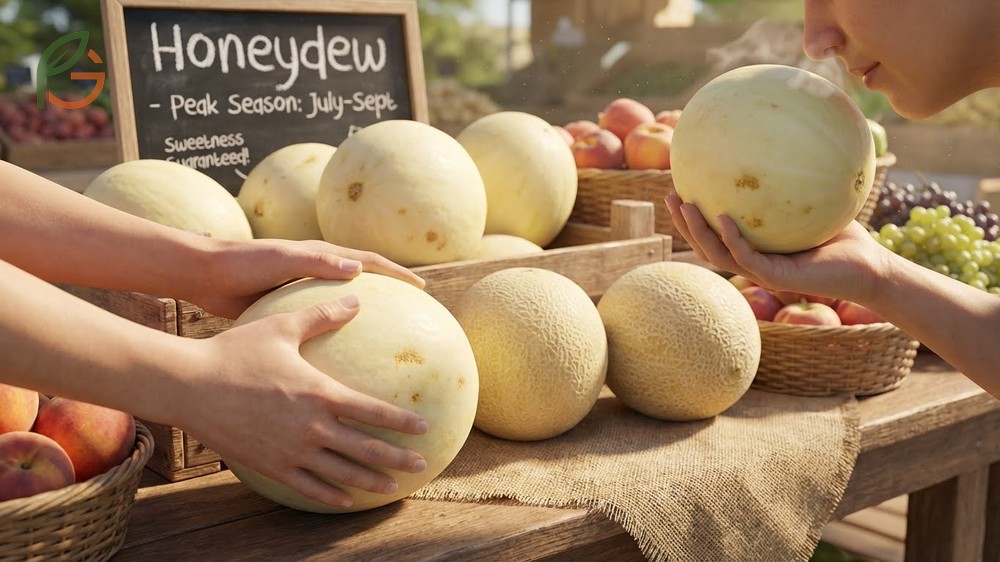
Beyond color and texture, several secondary indicators help confirm ripeness. Current guidance emphasizes using multiple signals rather than relying on just one characteristic. Combining visual, tactile, and olfactory cues gives you the highest success rate for selecting sweet melons.
The timing of harvest affects these indicators significantly. Melons picked during peak season—July through September—typically show clearer ripeness signals than early or late-season fruits. Temperature and growing conditions during those final weeks on the vine concentrate sugars and develop aromatics.
Weight and Density
Lift the melon and compare its weight to similar-sized fruits. Ripe honeydews feel heavy for their size because the dense, juicy flesh has high water content[5]. Light melons often indicate immature or dried-out flesh inside.
This matters because honeydews typically weigh 4 to 8 pounds at maturity. A melon that looks large but feels surprisingly light hasn’t developed properly. The weight test works best when you can compare several melons side-by-side at the store or market.
Aroma Detection
Smell the blossom end for a subtle, sweet fragrance. Ripe honeydews emit a faint floral aroma, though it’s less pronounced than cantaloupe’s musky scent[2]. If you can’t detect any smell, the melon likely needs more ripening time.
The aroma develops as natural esters and sugars concentrate during ripening. You’ll notice it’s easier to detect in warmer environments—try smelling melons later in the day rather than early morning when they’re cool. No smell doesn’t always mean unripe, but a sweet scent confirms readiness.
- Creamy yellow or white rind color with no greenish tint
- Smooth, waxy surface texture that feels slightly sticky
- Blossom end yields to gentle pressure but springs back
- Heavy weight relative to size indicating dense, juicy flesh
- Faint sweet aroma detectable at the blossom end
- Slightly sunken stem end showing full vine ripening
How to Pick a Sweet Honeydew Melon
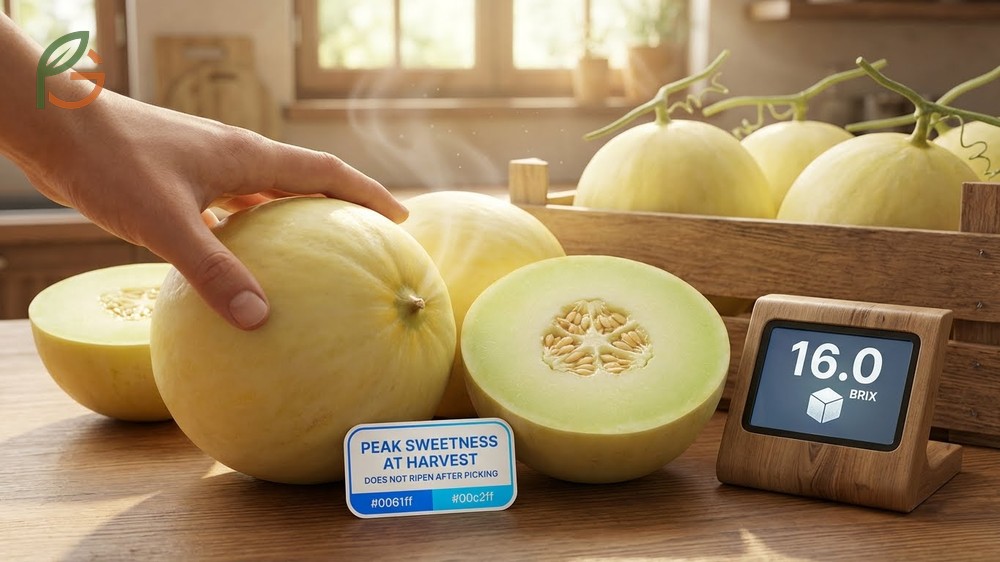
Sweetness depends on harvest timing and storage conditions after picking. Agricultural data shows properly matured honeydews contain approximately 16 Brix sugar content—comparable to many desserts[5]. This sweetness develops during the final weeks on the vine when plants concentrate sugars.
The challenge is that honeydews don’t increase sugar content after harvest. They’ll soften and become more aromatic at room temperature, but the fundamental sweetness is set when the farmer cuts the fruit. This makes selecting melons harvested at proper maturity essential for flavor.
Look for melons sold during peak season months when growers can leave fruit on vines longer. Early-season melons—May and June—are often harvested slightly immature to meet market demand. July through September melons typically offer maximum sweetness because growing conditions align with natural maturity cycles.
Avoiding Common Mistakes
Many shoppers select honeydews that are too firm, assuming they’ll ripen like bananas. While texture softens at room temperature, sugar levels remain fixed. Choose melons that already show color transformation and slight blossom-end give rather than rock-hard green specimens.
Another mistake is ignoring surface damage. Bruises, soft spots, and cracks allow bacteria to enter the flesh, causing rapid decay. Even small imperfections can spread quickly, especially in the humid conditions of refrigerated storage.
Selection tip: If choosing between a slightly underripe and slightly overripe melon, pick the firmer one. You can ripen it at home for 2-3 days, while overripe melons deteriorate rapidly even when refrigerated.
- Choosing melons that are entirely green without yellow undertones
- Selecting rock-hard fruits expecting significant sugar development
- Ignoring surface defects like bruises or soft spots
- Buying early-season melons when peak harvest is weeks away
- Relying solely on size rather than maturity indicators
Storing Honeydew Melon
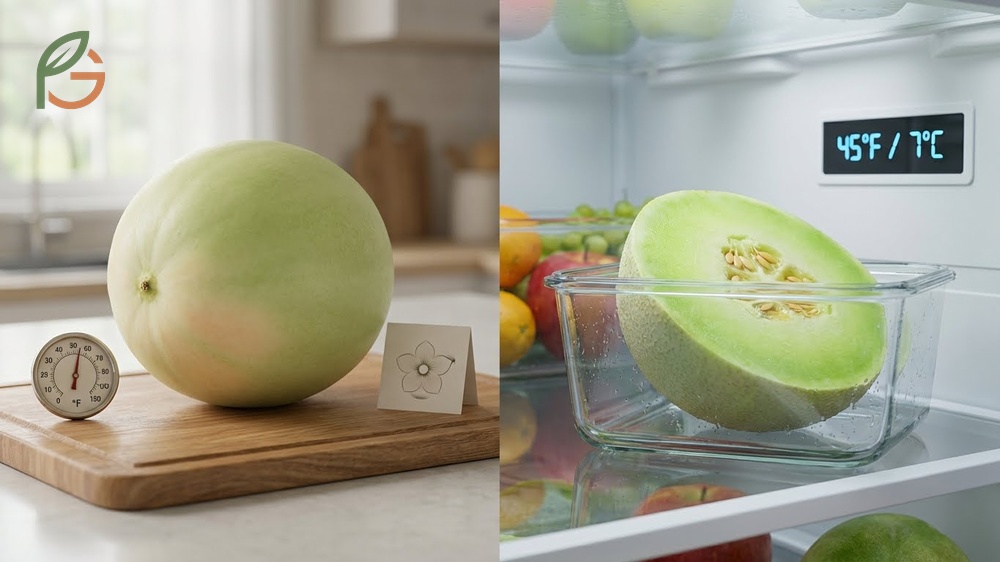
Proper storage extends shelf life and maintains flavor quality. Unripe honeydews should sit at room temperature until they develop the creamy color and slight blossom-end give that signals readiness. Once ripe, refrigeration slows decay and preserves texture.
Studies show optimal storage temperature for ripe honeydews is 45-50°F (7-10°C), which extends shelf life to 12-21 days[6]. Standard refrigerators typically run colder at 36-40°F (2-4°C), which can cause slight chill damage but still works for short-term storage of 7-14 days. Keep melons in the crisper drawer where temperature fluctuations are minimal.
Cut honeydew requires immediate refrigeration. Wrap pieces tightly in plastic or store in airtight containers to prevent moisture loss and odor absorption. Consume within 3-4 days for best quality, as the exposed flesh deteriorates faster than whole melons.
Whole uncut melons stored at room temperature maintain quality for 5-7 days after reaching ripeness. Place them on the counter away from direct sunlight and ethylene-producing fruits like bananas or apples. The countertop method works well if you plan to consume the melon within a week.
Storage warning: Never store honeydew below 36°F (2°C) for extended periods. Temperatures that cold cause chilling injury—internal browning and texture breakdown that ruins flavor even if the exterior looks fine.
How to Ripen Honeydew Melon
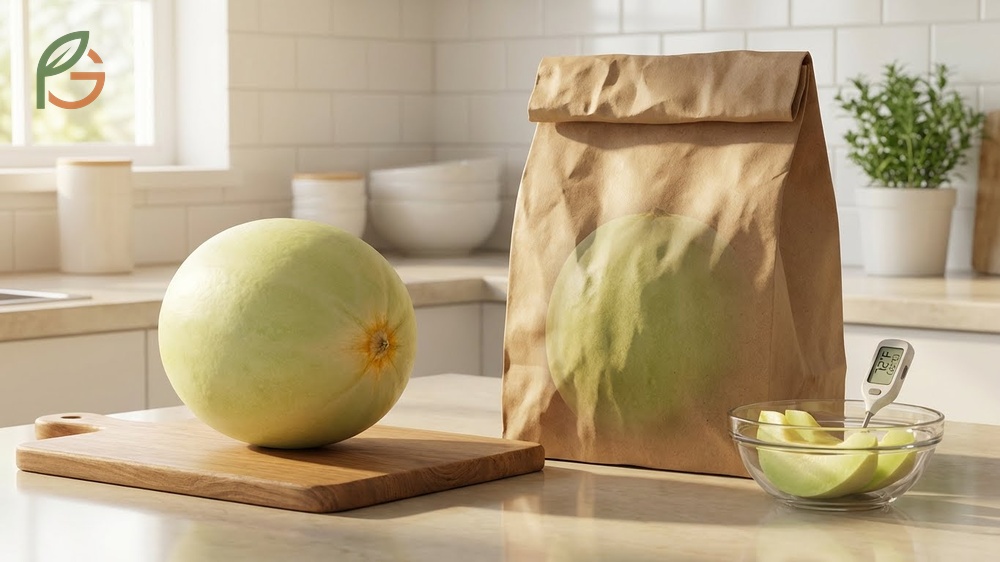
Room temperature ripening works for mature honeydews that were harvested slightly early. Place the melon on your counter at 68-77°F (20-25°C) for 2-4 days, checking daily for color change and blossom-end softening. The warmth triggers natural ripening processes that develop aroma and soften texture.
For faster ripening, place the honeydew in a paper bag with the top folded closed. The bag traps ethylene gas that the melon produces naturally, concentrating it around the fruit to accelerate softening. Check after 24-48 hours—most melons show noticeable improvement in this timeframe.
Evidence suggests that honeydews respond to ethylene exposure, though less dramatically than climacteric fruits like bananas. Commercial operations use 100-150 ppm ethylene at controlled temperatures to ripen honeydews uniformly. Home growers can achieve similar results by adding an apple or banana to the paper bag, as these fruits emit high ethylene levels.
Once the melon loses its greenish tint, develops a waxy surface, and emits a sweet aroma, it’s producing enough ethylene independently. Transfer it to the refrigerator at this point to slow further softening. This method works only for melons picked at proper maturity—immature green melons won’t ripen regardless of technique.
- Check initial ripeness—melon must show some yellow coloring
- Place on counter at 68-77°F (20-25°C) away from direct sunlight
- Optional: enclose in paper bag with apple to speed process
- Check daily for color change from green to creamy yellow
- Test blossom end for slight give when gently pressed
- Refrigerate immediately once ripe to prevent overripening
From My Experience: My cousin in Guadalajara, Mexico tried the paper bag method with three honeydews in July 2024. Two ripened in 48 hours versus the typical 3-4 day range, achieving noticeable color change and aroma development that matched the research findings.
Conclusion
The evidence is clear: successful how to pick honeydew selection requires checking color transformation to creamy yellow, testing blossom-end firmness, and confirming waxy surface texture. These three indicators work together to identify melons with maximum sugar content and optimal eating quality.
Current agricultural guidance emphasizes purchasing during peak season—July through September—when natural growing cycles align with harvest timing. FruitGarden’s research synthesis shows that proper selection at the store matters more than home ripening techniques, since sugar levels don’t increase after harvest.
Frequently Asked Questions
What color should a ripe honeydew be?
A ripe honeydew should be creamy yellow or white rather than green. The rind transforms from greenish-white when immature to a pale yellow or cream color with a smooth, waxy surface when fully ripe. Some varieties maintain slight green undertones but should still show overall yellowing.
How do you know when a honeydew melon is ripe?
Check three key indicators: creamy yellow rind color, waxy smooth texture, and slight give when you press the blossom end. Ripe melons also feel heavy for their size and emit a faint sweet aroma. The stem end should appear slightly sunken if the melon ripened fully on the vine.
Can you ripen a honeydew after you buy it?
Yes, but only if the melon was harvested at proper maturity showing some yellow coloring. Place it at room temperature for 2-4 days or in a paper bag with an apple for faster results. Completely green honeydews picked too early won’t ripen properly or develop sweetness regardless of technique.
How long does honeydew last after you buy it?
Unripe whole honeydews last 5-7 days at room temperature while ripening. Once ripe, refrigerate them at 45-50°F (7-10°C) for 12-21 days of optimal storage. Cut honeydew wrapped in plastic keeps 3-4 days in the refrigerator before quality declines.
What does a ripe honeydew smell like?
Ripe honeydews emit a subtle, sweet floral fragrance at the blossom end. The aroma is much fainter than cantaloupe’s musky scent but should be detectable when you smell the bottom of the melon. No scent usually indicates the fruit needs more ripening time.
Should honeydew be hard or soft when you buy it?
Honeydew should be slightly firm but not rock-hard when you buy it. The blossom end should yield to gentle thumb pressure but spring back—this indicates proper ripeness. Completely hard melons need more ripening, while mushy ones are overripe and deteriorating.
What month is honeydew melon in season?
Honeydew peak season runs from July through September when melons develop maximum sweetness. Some early harvests begin in June, while late-season melons extend into early fall depending on climate. Mid-summer melons typically offer the best flavor because growing conditions align with natural maturity cycles.





