
How to make buttermilk with lemon juice? Combine 1 tablespoon fresh lemon juice with 1 cup milk, stir briefly, and let it rest for 5 minutes until slightly curdled. Research shows this simple acid-milk reaction creates an effective buttermilk substitute that works perfectly in baking recipes requiring tangy, acidic liquid[1]. What many home bakers don’t realize is that this technique delivers the same chemical reaction as traditional cultured buttermilk—the acid curdles milk proteins and activates baking soda for fluffy pancakes and tender biscuits. FruitGarden synthesizes current culinary research and tested kitchen methods to help you master this essential cooking substitute.
Quick Answer
- Use 1 tablespoon lemon juice per 1 cup milk for standard buttermilk substitute[1]
- Let mixture sit for 5 minutes at room temperature until slightly curdled[2]
- Works with whole, low-fat, or skim milk—even dairy-free alternatives like almond or oat milk[3]
- Use immediately in recipes or store refrigerated for up to 3 days
How to Make Buttermilk with Lemon Juice
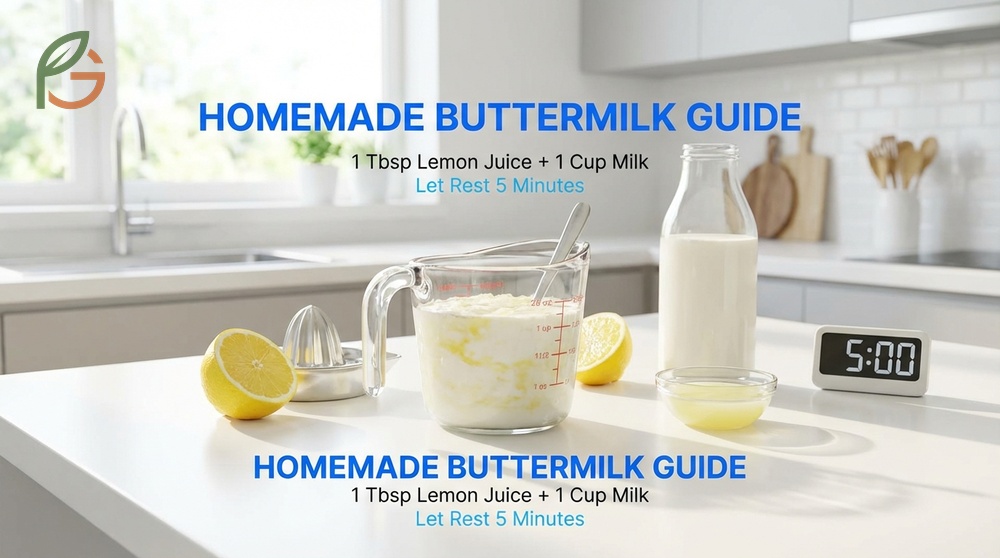
Making buttermilk with lemon juice requires just two ingredients and takes 5 minutes from start to finish. You’ll need fresh lemon juice and any type of milk—whole milk delivers the richest flavor, but low-fat or skim milk work equally well for the chemical reaction.
The acid in lemon juice (citric acid) lowers the milk’s pH, causing proteins to coagulate and create the tangy, slightly thick consistency characteristic of traditional buttermilk[4]. This curdling process isn’t spoilage—it’s a controlled chemical transformation that mimics the lactic acid fermentation in cultured buttermilk.
Most recipes calling for buttermilk rely on this acidity to activate baking soda, creating carbon dioxide bubbles that make baked goods rise. Without adequate acid, your pancakes will turn out flat and your biscuits will lack the characteristic fluffy texture.
From My Experience: My aunt in Guadalajara, Mexico swears by this method for her weekend pancake breakfasts. She found that letting the mixture sit for exactly 5 minutes—no more, no less—creates the perfect consistency that matches store-bought buttermilk texture.
Basic Recipe Method
Pour 1 tablespoon fresh lemon juice into a liquid measuring cup. Fill the cup with milk until it reaches the 1-cup mark, leaving the lemon juice already in the cup[1].
Stir the mixture gently with a spoon or fork for about 5 seconds. You don’t need to whisk vigorously—a brief stir distributes the acid throughout the milk.
Let the mixture rest at room temperature for 5 minutes. During this time, you’ll notice the milk becomes slightly lumpy or curdled—this is exactly what should happen.
- Measure 1 tablespoon fresh lemon juice into a 1-cup measuring cup
- Add milk to reach the 1-cup line (approximately 15 tablespoons or 240ml)
- Stir briefly to combine—about 5 seconds of gentle mixing
- Let stand 5 minutes at room temperature until slightly curdled
- Use immediately in your recipe or refrigerate for up to 3 days
Why Lemon Juice Works
Lemon juice contains citric acid with a pH around 2.0-2.5, which effectively mimics the lactic acid (pH 3.5-4.5) found in traditionally cultured buttermilk. When acid contacts milk proteins called casein, it disrupts their structure and causes them to clump together[4].
This curdling creates the tangy flavor and thicker consistency that recipes need. The acid also plays a crucial role in baking chemistry—it reacts with baking soda (sodium bicarbonate) to produce carbon dioxide gas bubbles that leaven baked goods.
Important Note: Don’t use bottled lemon juice concentrate if you can avoid it. Fresh lemon juice provides more consistent acidity and better flavor for baking applications.
How Much Lemon Juice to Make Buttermilk
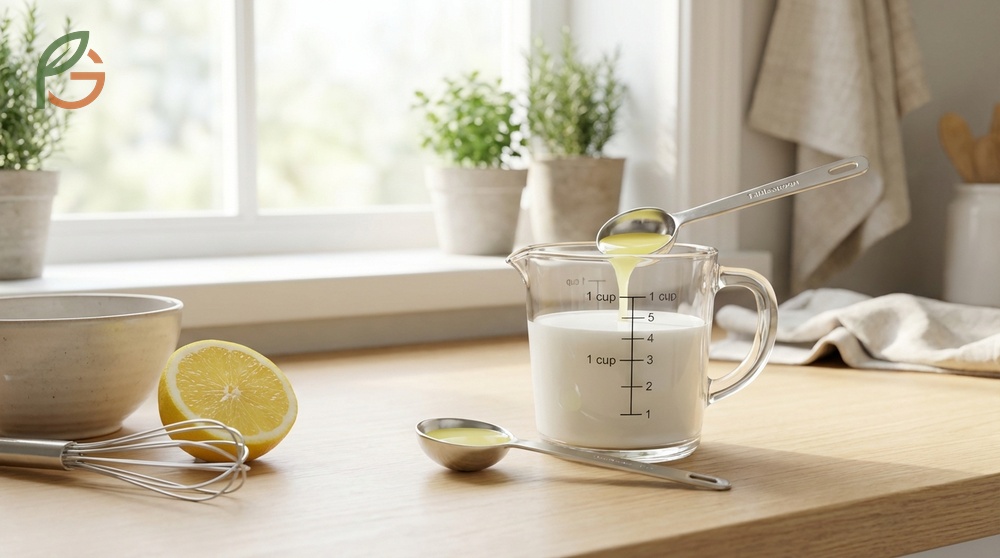
The standard ratio is 1 tablespoon lemon juice per 1 cup of milk[2]. This proportion provides sufficient acidity to curdle the milk and activate baking soda without making your baked goods taste overly sour.
Most bakers find this ratio works reliably across all recipes—from pancakes to quick breads to marinades. If you’re making smaller or larger quantities, the ratio scales proportionally.
Measurement Ratios
Different recipes call for varying amounts of buttermilk. Here’s how to scale the lemon juice accurately for any quantity you need.
This table shows the precise lemon juice to milk ratios for making different quantities of buttermilk substitute from one-half cup to four cups
| Amount Needed | Lemon Juice | Milk | Rest Time |
|---|---|---|---|
| 1/2 cup | 1½ teaspoons | 1/2 cup minus 1½ tsp | 5 minutes |
| 1 cup | 1 tablespoon | 1 cup minus 1 tbsp | 5 minutes |
| 1½ cups | 1½ tablespoons | 1½ cups minus 1½ tbsp | 5 minutes |
| 2 cups | 2 tablespoons | 2 cups minus 2 tbsp | 5 minutes |
| 4 cups | ¼ cup (4 tablespoons) | 4 cups minus ¼ cup | 5 minutes |
Scaling for Recipes
When a recipe calls for more than 1 cup buttermilk, don’t just double everything carelessly. The key is maintaining the 1:1 ratio of tablespoons of acid to cups of milk.
For 2 cups buttermilk, use 2 tablespoons lemon juice plus milk to reach 2 cups total volume. For half a cup, use 1½ teaspoons lemon juice (half a tablespoon) plus enough milk to reach the half-cup mark.
- Always measure acid first, then add milk to reach desired total volume
- Use liquid measuring cups for accuracy—dry measuring cups don’t work as well for liquids
- Slightly less acid (like 2½ teaspoons instead of 1 tablespoon) still works if you don’t need strong tang
- More acid than recommended can make baked goods taste sour—stick to the ratio
- Room temperature milk curdles faster than cold milk straight from the refrigerator
Pro Tip: If your recipe needs exactly 1 cup buttermilk and you’ve already added the lemon juice to your measuring cup, you only need to add milk until the total reaches 1 cup—not 1 cup of milk plus the lemon juice.
Vinegar vs Lemon Juice for Buttermilk
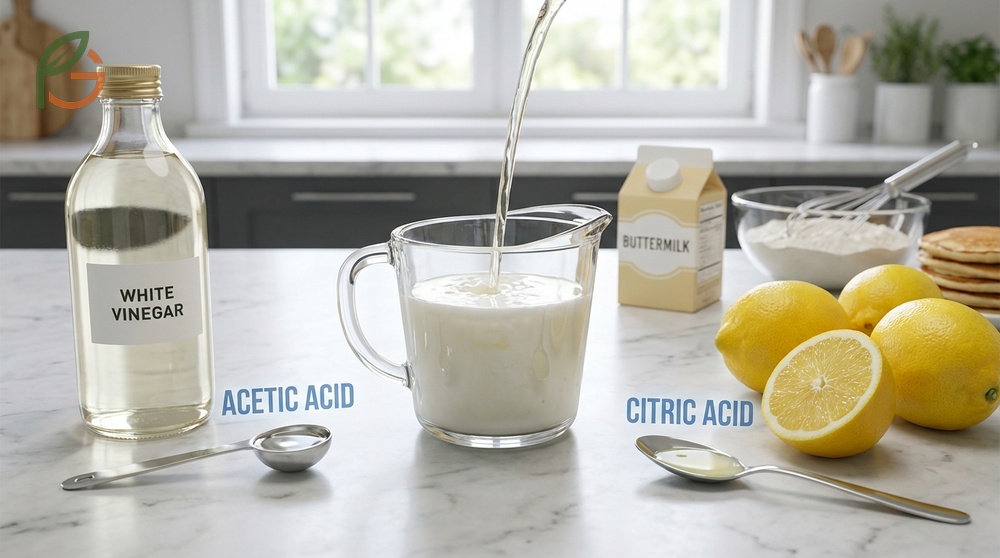
Both white vinegar and lemon juice create effective buttermilk substitutes, but they contain different acids with slightly different properties. White vinegar contains acetic acid, while lemon juice contains citric acid[2].
In most baking recipes, you won’t notice any flavor difference since you’re only using 1 tablespoon per cup. The small quantity means neither acid dominates the final taste of your pancakes or biscuits.
However, these acids behave differently in marinades and some savory applications. Acetic acid (vinegar) and citric acid (lemon juice) denature proteins at different rates—citric acid works more gently over longer marinating times.
- Flavor: Lemon juice adds subtle citrus notes; vinegar tastes more neutral in baked goods
- Availability: Most kitchens stock white vinegar year-round; fresh lemons require shopping
- Cost: Vinegar costs less per use than fresh lemons
- Convenience: Vinegar stores indefinitely; lemons must be juiced fresh each time
- Baking performance: Both activate baking soda equally well—no difference in rise or texture
- Marinades: Lemon juice works better for long marinades; vinegar can make meat mushy if used too long
For pancakes, biscuits, cakes, and quick breads, use whichever acid you have on hand. For marinades or applications where you’ll taste the acid more directly, lemon juice often delivers better results.
Storage Tip: Buttermilk made with vinegar lasts slightly longer in the refrigerator (up to 4 days) compared to lemon juice versions (up to 3 days) because acetic acid has stronger antimicrobial properties.
Buttermilk Substitute for Baking
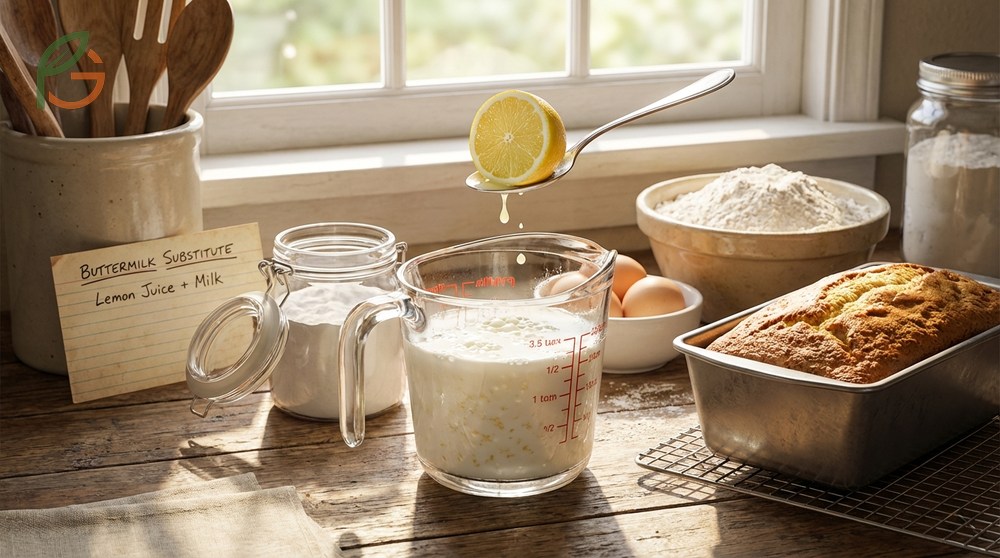
Lemon juice buttermilk works best in recipes that rely on acid-activated leavening—specifically baking soda. When baking soda (a base) meets acid, it creates carbon dioxide gas that forms bubbles and makes baked goods rise[4].
This substitute delivers nearly identical results to store-bought cultured buttermilk in most recipes. The acid content is comparable, and the slight curdling creates similar texture properties.
You’ll get the best results in quick breads, pancakes, waffles, biscuits, and cakes. These recipes don’t require the distinctive tangy flavor of true cultured buttermilk—they just need the acid for leavening and tenderness.
- Pancakes and waffles: Creates fluffy texture with perfect rise every time
- Biscuits: Produces tender, flaky layers without toughness
- Quick breads and muffins: Banana bread, cornbread, and blueberry muffins turn out moist
- Cakes: Chocolate cake, red velvet cake, and coffee cake develop fine crumb structure
- Fried chicken coating: Marinade tenderizes meat and helps breading adhere
- Ranch dressing base: Provides tang, though flavor differs slightly from cultured buttermilk
Some applications work less well with this substitute. Cold desserts like buttermilk pie or buttermilk panna cotta taste noticeably different because they rely on buttermilk’s fermented flavor as the star ingredient. In these recipes, the substitute’s thinner consistency and less complex flavor become obvious.
Baking Chemistry Note: Never substitute lemon juice buttermilk in recipes that use only baking powder (not baking soda). These recipes already contain their own acid and don’t need additional acidic liquid.
Dairy Free Buttermilk Substitute
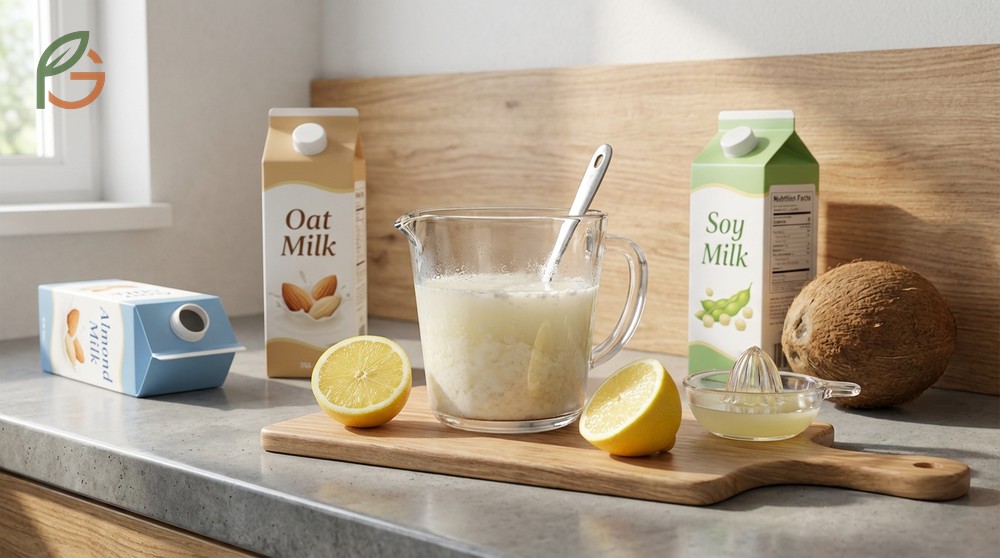
The same lemon juice method works perfectly with plant-based milks, creating effective vegan buttermilk for any recipe. Simply substitute almond milk, oat milk, soy milk, or coconut milk for dairy milk using the identical 1 tablespoon lemon juice per 1 cup ratio[3].
Research shows unsweetened varieties work best because added sugars can interfere with the curdling process. Choose plant milks with neutral flavors—vanilla or chocolate-flavored varieties will alter your recipe’s taste.
Oat milk and soy milk curdle most reliably because they contain more protein than other plant milks. Almond milk works well but produces a thinner consistency. Coconut milk (from a carton, not canned) creates rich, creamy vegan buttermilk ideal for baking.
- Oat milk: Curdles beautifully, neutral flavor, creates thick consistency similar to dairy buttermilk
- Soy milk: High protein content ensures good curdling, works in all baking recipes
- Almond milk: Most widely available, though produces thinner result than oat or soy
- Coconut milk: From cartons (not cans) adds richness, subtle coconut flavor complements many desserts
- Cashew milk: Creamy texture, neutral flavor, works well for pancakes and biscuits
Let dairy-free buttermilk rest for the full 5 minutes—plant milks sometimes take slightly longer to curdle visibly. Even if you don’t see obvious curdling, the acid has lowered the pH and the mixture will work in recipes.
Vegan Baking Tip: If your plant milk doesn’t curdle after 5 minutes, use it anyway. The chemical reaction has occurred even without visible curdling, and it’ll still activate baking soda properly.
Pancakes with Lemon Juice Buttermilk
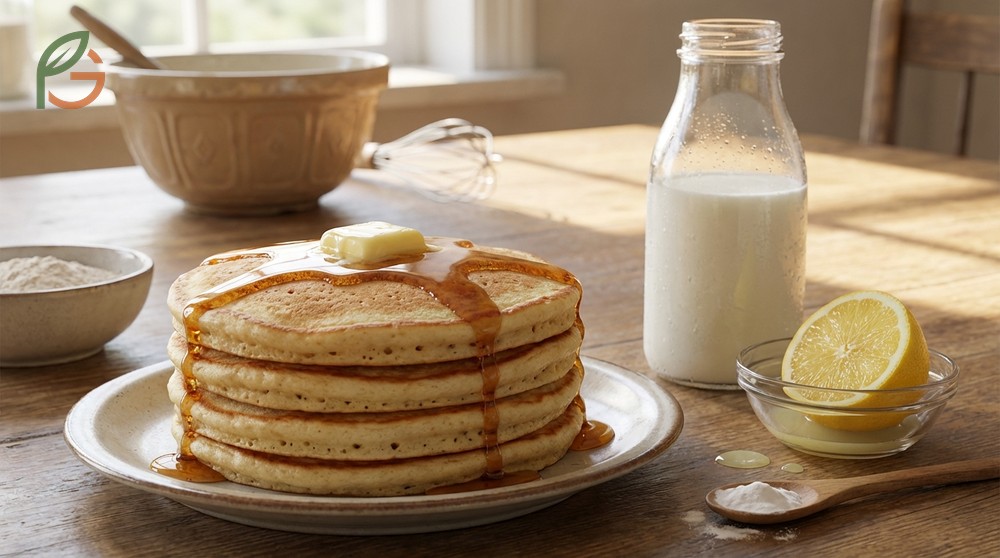
Pancakes showcase exactly why buttermilk matters in baking. The acid in lemon juice buttermilk reacts with baking soda to create countless tiny air bubbles, resulting in fluffy pancakes with perfect rise and tender texture.
Most pancake recipes include both baking powder and baking soda. The baking soda specifically needs acid to activate—that’s where your lemon juice buttermilk comes in. Without it, you’d get flat, dense pancakes instead of the light, airy texture everyone loves.
For best results, mix your lemon juice buttermilk first and let it sit while you measure dry ingredients. By the time you’re ready to combine wet and dry ingredients, your buttermilk substitute will be perfectly curdled and ready to use.
Here’s a simple ratio that works: For every 2 cups of flour, use 2 cups of lemon juice buttermilk (made with 2 tablespoons lemon juice plus milk to reach 2 cups). This creates enough batter for about 12-16 medium pancakes.
- Let pancake batter rest 5 minutes after mixing—this allows the acid to fully activate leavening
- Don’t overmix the batter—lumps are okay and lead to fluffier pancakes
- Cook on medium heat (about 350°F or 175°C) for even browning without burning
- Flip only when bubbles form on the surface and edges look set
- Add fresh lemon zest to batter for enhanced lemon flavor that complements the buttermilk tang
Many bakers add extra lemon flavor to capitalize on the lemon juice already in the buttermilk. Try adding ½ teaspoon lemon zest per cup of flour for bright, citrusy pancakes that taste amazing with maple syrup or fresh berries.
Troubleshooting: If your pancakes turn out flat, check that your baking soda isn’t expired. Baking soda loses potency over time, and old baking soda won’t react properly with the acid in your lemon juice buttermilk.
Conclusion
The evidence is clear: making buttermilk with lemon juice delivers professional baking results with just two ingredients and 5 minutes of your time. This reliable substitute works across countless recipes—from fluffy pancakes to tender biscuits to moist quick breads—providing the exact acid content needed to activate baking soda and create perfect texture.
Current culinary guidance emphasizes this method’s versatility, working equally well with dairy milk or plant-based alternatives for vegan baking. Whether you choose lemon juice or vinegar, the 1 tablespoon per 1 cup ratio remains your key to consistent results. FruitGarden encourages home bakers to master this simple technique—it eliminates last-minute grocery runs and ensures you always have buttermilk ready when recipes call for it.
Frequently Asked Questions
Can I use bottled lemon juice instead of fresh lemon juice?
Yes, bottled lemon juice works, but fresh lemon juice produces better results. Bottled versions often contain preservatives that can affect acidity levels slightly. If using bottled juice, stick to the same 1 tablespoon per cup ratio. Fresh lemon juice generally provides more consistent acidity and cleaner flavor in baked goods.
How long does homemade lemon juice buttermilk last?
Store lemon juice buttermilk in a sealed container in the refrigerator for up to 3 days. The mixture remains effective for baking during this time, though it may separate slightly—just stir before using. Vinegar-based buttermilk lasts about 4 days. Don’t freeze buttermilk substitutes as freezing changes the texture and curdling properties.
Why didn’t my milk curdle after adding lemon juice?
If you don’t see visible curdling after 5 minutes, use the mixture anyway—the chemical reaction has still occurred. Ultra-pasteurized milk and some low-fat milks curdle less visibly than regular milk, but they still work in recipes. Cold milk straight from the refrigerator also curdles more slowly than room temperature milk.
Can I make buttermilk with lime juice instead of lemon juice?
Yes, lime juice works identically to lemon juice since both contain similar levels of citric acid. Use the same 1 tablespoon per cup ratio. Lime juice adds a slightly different flavor note that works especially well in cornbread, Mexican-inspired recipes, and tropical-flavored baked goods.
What’s the difference between cultured buttermilk and lemon juice buttermilk?
Cultured buttermilk is fermented with lactic acid bacteria, creating complex tangy flavor and thicker consistency. Lemon juice buttermilk is a quick acid-milk mixture that mimics the pH and leavening properties but lacks the depth of flavor. For baking, they’re essentially interchangeable. For drinking or cold applications like buttermilk pie, cultured buttermilk tastes better.
Can I use lemon juice buttermilk for fried chicken?
Absolutely. Lemon juice buttermilk makes an excellent marinade for fried chicken. The citric acid tenderizes the meat while helping breading stick to the surface. Marinate chicken pieces for 2-4 hours (or overnight) before breading and frying. The acid breaks down proteins gently without creating the mushy texture that can occur with vinegar-based marinades.
Does the type of milk affect how well lemon juice buttermilk works?
Yes, but all types work effectively. Whole milk creates the richest, creamiest buttermilk with the most visible curdling. Low-fat and skim milk work fine but produce thinner consistency. For plant-based milks, oat milk and soy milk curdle most reliably due to higher protein content, while almond milk works but stays thinner.





