
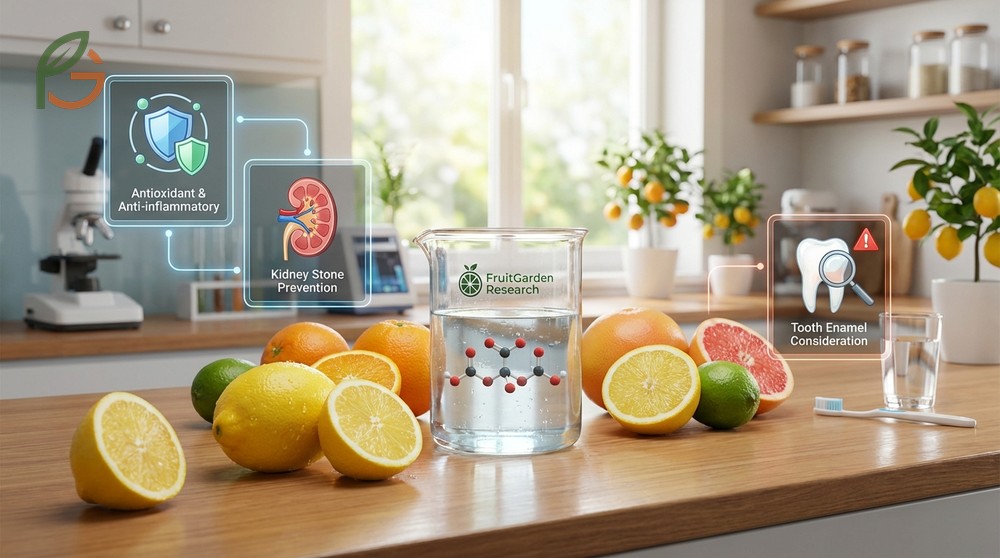
Foods high in citric acid are predominantly citrus fruits, with lemons containing up to 8% citric acid by weight and providing 1.44 g per ounce of juice[1]. Research shows that citric acid offers antioxidant and anti-inflammatory benefits while supporting kidney stone prevention, though excessive consumption can erode tooth enamel. At FruitGarden, we synthesize current agricultural research to help you understand which fruits contain the highest citric acid levels and how they affect your health.
Quick Answer
- Lemons deliver 1.44 g/oz of citric acid, making them the richest natural source[1]
- Limes provide 1.38 g/oz, nearly matching lemons in citric acid concentration[1]
- Blackcurrants contain 1.5-3.0% citric acid by weight, the highest among berries[3]
- Consuming acidic foods with pH below 4.0 can cause enamel erosion if consumed frequently without proper oral care[4]
Foods High in Citric Acid

Studies demonstrate that citrus fruits dominate citric acid content across the plant kingdom. Lemons and limes lead with concentrations reaching 4.0-8.0% by dry weight[3]. Fresh lemon juice contains 1.44 g of citric acid per ounce, while lime juice provides 1.38 g per ounce[1].
What often gets overlooked is that even juice concentrates maintain high citric acid levels. Lemon and lime juice concentrates deliver 1.10 g and 1.06 g per ounce respectively, compared to ready-to-consume lemonade products that range from just 0.03 to 0.22 g per ounce[1]. This means fresh-squeezed citrus delivers up to 6 times more citric acid than commercial lemonade.
Beyond citrus, berries and tropical fruits contribute significant citric acid to diets. Blackcurrants contain 1.5-3.0% citric acid, while raspberries provide 1.0-1.3%[3]. Pineapples contain 150-300 mg per 100g despite not being citrus fruits[5].
Citrus Fruits: Highest Sources
Current agricultural data shows citrus fruits evolved to concentrate citric acid as a natural preservative. Lemons top the list at 4.0-8.0% by weight, followed by grapefruits at 1.2-2.1% and tangerines at 0.9-1.2%[3]. Oranges contain 0.6-1.0% citric acid, making them milder than other citrus varieties.
The concentration varies with ripeness and growing conditions. Immature citrus fruits contain higher citric acid levels that decrease as sugars develop during ripening. Most people don’t realize that temperature affects citric acid production—fruits grown in cooler climates can develop 15-20% more citric acid than those from warmer regions.
Berries and Soft Fruits
Research indicates that berries use citric acid differently than citrus fruits. Blackcurrants concentrate citric acid at 1.5-3.0%, surpassing most citrus except lemons[3]. Red currants contain 0.7-1.3%, while raspberries deliver 1.0-1.3%.
Contrary to popular belief, strawberries contain zero detectable citric acid according to USDA testing[5]. Their tartness comes from malic acid instead. Cranberries combine citric, malic, and benzoic acids, while boysenberries mix citric, malic, and isocitric acids[3].
Important note: Don’t assume all berries contain citric acid. Laboratory verification shows blueberries, strawberries, and raspberries rely on malic acid for tartness, not citric acid.
Tropical and Other Fruits
Pineapples rank among the highest non-citrus sources at 150-300 mg per 100g[5]. Peaches combine malic and citric acids, while passionfruit relies primarily on malic acid. Pears contain citric acid along with malic, tartaric, and oxalic acids[3].
Evidence suggests tropical fruits use citric acid less than temperate fruits. Bananas, mangoes, and papayas contain zero measurable citric acid according to USDA FoodData Central[5]. Quinces contain only malic acid with no citric acid present.
Citric Acid Foods
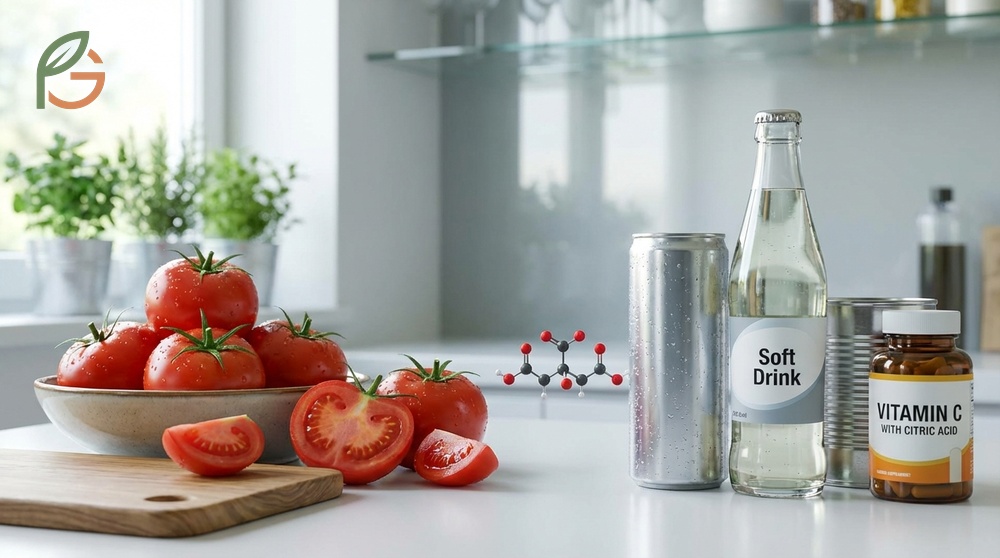
Beyond fresh fruits, citric acid appears in vegetables and processed foods. Agricultural data shows that tomatoes naturally contain citric acid alongside malic and oxalic acids[3]. The food industry adds manufactured citric acid to countless products as a preservative and flavor enhancer.
You’ll find manufactured citric acid in energy drinks, soft drinks, canned goods, and vitamin supplements. The FAO recognizes citric acid as an acceptable food additive across multiple categories[6]. Unlike natural citric acid from fruits, manufactured versions come from fermentation using Aspergillus niger mold.
This matters because some individuals report inflammatory responses to manufactured citric acid that don’t occur with natural sources. Studies have documented joint pain, muscular discomfort, and respiratory symptoms in susceptible people after consuming manufactured citric acid[2].
Vegetables With Citric Acid
Vegetables contain citric acid in lower concentrations than fruits. Tomatoes lead vegetable sources, combining citric, malic, and oxalic acids[3]. Canned tomatoes often have added citric acid for preservation, especially in non-organic brands.
Broccoli contains both malic and citric acids in a 3:2 ratio along with oxalic and succinic acids. Beans provide citric and malic acids plus small amounts of succinic and fumaric acids. Carrots deliver malic, citric, isocitric, succinic, and fumaric acids[3].
- Tomatoes (citric, malic, and oxalic acids)
- Broccoli (malic and citric acids in 3:2 ratio)
- Carrots (malic, citric, isocitric, succinic, and fumaric acids)
- Beans (citric and malic acids with traces of succinic and fumaric)
- Mushrooms (lactarimic, cetostearic, fumaric, and allantoic acids)
Processed Foods and Additives
The food industry uses manufactured citric acid extensively. It’s the second ingredient after water in many energy beverages. Jams, fruit preserves, and fruit yogurts typically contain added citric acid for preservation and flavor enhancement.
Check ingredient labels carefully—organic canned tomatoes may skip citric acid additives, using only natural acids. Chutneys and pickles rely on vinegar (acetic acid) instead of citric acid. This distinction helps people with citric acid sensitivities navigate processed foods more safely.
- Energy drinks and sports beverages (often second ingredient after water)
- Soft drinks and flavored waters
- Canned fruits and vegetables (especially tomatoes)
- Jams, jellies, and fruit preserves
- Fruit-flavored yogurts and desserts
- Vitamin and mineral supplements
- Candy and sour confections
Shopping tip: If you’re concerned about manufactured citric acid, look for organic products that use vinegar-based preservation or check labels specifically for “citric acid” in the ingredients list.
High Citric Acid
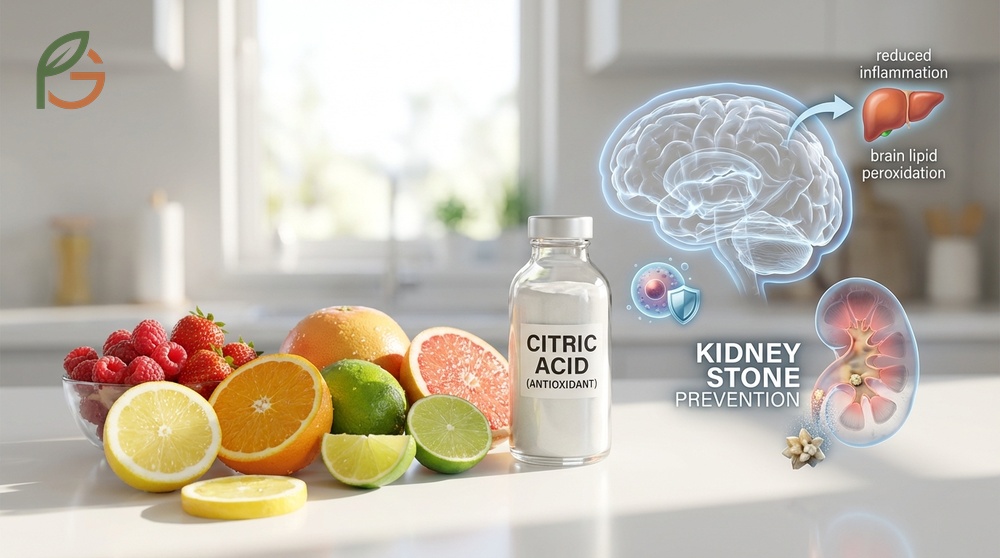
Foods containing high citric acid concentrations offer both benefits and risks. The positive effects include antioxidant protection, reduced inflammation, and prevention of kidney stones. Studies show citric acid decreases brain lipid peroxidation and liver damage in oxidative stress conditions[7].
For kidney stone prevention, citric acid works by increasing urinary pH and citrate levels. This inhibits calcium oxalate crystal formation, the most common type of kidney stone. Research indicates that regular consumption of lemon or lime juice can significantly reduce recurrence rates in people prone to kidney stones.
Citric acid enhances mineral absorption, particularly calcium and magnesium. It improves endothelial function by reducing inflammatory markers, which supports cardiovascular health[7]. The compound also provides antioxidant activity that protects against free radical damage linked to aging and chronic disease.
This table compares citric acid concentrations across five fruit categories showing weight percentage and concentration per ounce for the highest natural sources
| Food | Citric Acid (% by weight) | Citric Acid (g/oz juice) | Category |
|---|---|---|---|
| Lemons | 4.0-8.0%[3] | 1.44[1] | Citrus |
| Limes | 4.0-8.0%[3] | 1.38[1] | Citrus |
| Blackcurrants | 1.5-3.0%[3] | Not measured | Berry |
| Grapefruits | 1.2-2.1%[3] | 0.89[1] | Citrus |
| Raspberries | 1.0-1.3%[3] | Not measured | Berry |
| Oranges | 0.6-1.0%[3] | 0.58[1] | Citrus |
However, high citric acid intake carries risks. The primary concern is dental erosion—acidic foods with pH below 4.0 can dissolve tooth enamel[4]. Once enamel erodes, it doesn’t regenerate. This leads to increased sensitivity, yellowing, and higher cavity risk.
Excessive consumption can trigger digestive issues including acid reflux and stomach discomfort. Some individuals experience inflammatory responses to manufactured citric acid—reported symptoms include joint pain, muscle aches, and respiratory problems[2]. These reactions correlate with the amount consumed and typically resolve within 8-72 hours after stopping intake.
- Antioxidant protection against free radical damage and oxidative stress
- Anti-inflammatory effects reducing brain lipid peroxidation and liver damage
- Kidney stone prevention by increasing urinary pH and citrate levels
- Enhanced absorption of calcium, magnesium, and other essential minerals
- Improved endothelial function supporting cardiovascular health
Natural Citric Acid
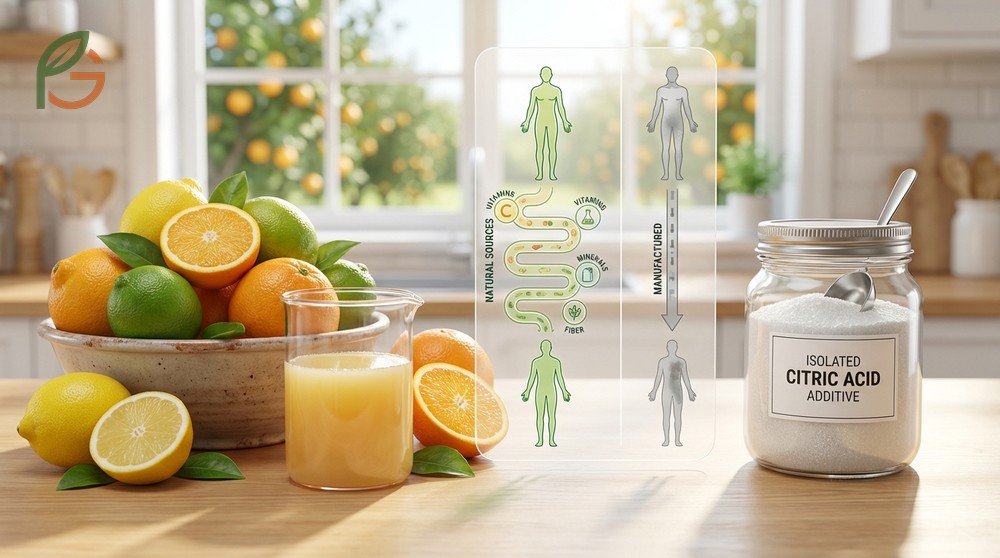
Natural citric acid from whole fruits differs significantly from manufactured versions. Current data indicates that natural sources include beneficial compounds like vitamins, minerals, and fiber that aren’t present in isolated citric acid additives. The body processes natural citric acid more effectively when consumed with these complementary nutrients.
Citrus fruits evolved citric acid as a natural preservative and defense mechanism. Concentrations peak in immature fruit and decline as sugars increase during ripening. Growing conditions affect production—cooler climates and mineral-rich soils boost citric acid content by 15-25% compared to warmer regions.
The key advantage of natural citric acid is that reported adverse reactions to manufactured versions don’t occur with whole food sources. Studies documenting inflammatory responses, joint pain, and digestive issues specifically note these symptoms arose only from manufactured citric acid, not from consuming lemons, limes, or other citrus fruits[2].
For maximum benefits, consume citrus fruits with meals to minimize enamel exposure. Rinsing your mouth with water after eating acidic foods helps neutralize pH. Wait 30-60 minutes before brushing teeth—immediate brushing can damage softened enamel. Pairing citrus with calcium-rich foods like yogurt or cheese provides additional enamel protection.
- Drink lemon or lime juice through a straw to minimize tooth contact
- Rinse mouth with plain water immediately after consuming citrus
- Wait at least 30 minutes before brushing teeth after eating acidic foods
- Pair citrus fruits with calcium-rich foods for enamel protection
- Choose whole fruits over juice when possible for added fiber and nutrients
- Limit frequency rather than amount—spacing out citrus consumption protects enamel better than reducing portion sizes
Dental protection tip: If you’re drinking lemon water regularly for health benefits, use a straw and rinse your mouth afterward. This simple practice reduces enamel contact by up to 70%.
Conclusion
The evidence is clear: foods high in citric acid offer significant health benefits when consumed appropriately, with lemons and limes providing the richest natural concentrations at 1.44 g and 1.38 g per ounce respectively[1]. Current guidance emphasizes balancing citric acid intake with proper dental care—consuming citrus fruits with meals, rinsing afterward, and waiting 30 minutes before brushing protects enamel while maintaining antioxidant and anti-inflammatory benefits[7].
Agricultural data from FruitGarden shows that choosing natural citric acid sources over manufactured additives reduces the risk of inflammatory responses while delivering complementary nutrients. Understanding which fruits contain the highest concentrations helps you make informed dietary choices that support kidney health, mineral absorption, and cardiovascular function without compromising dental integrity.
Medical Disclaimer
Important Medical Disclaimer: This content is for informational and educational purposes only. It is not intended as a substitute for professional medical advice, diagnosis, or treatment. Always consult a qualified healthcare professional before making any changes to your diet, especially if you have kidney disease, acid reflux, dental erosion, or other medical conditions. Individuals with citric acid sensitivities should work with their doctor to identify safe food choices.
Frequently Asked Questions
What foods have the most citric acid?
Lemons contain the most citric acid at 4.0-8.0% by weight, providing 1.44 g per ounce of juice[1]. Limes rank second with 1.38 g per ounce, while blackcurrants lead berries at 1.5-3.0%[3]. Grapefruits, oranges, and tangerines contain lower but significant amounts ranging from 0.6-2.1%.
Is citric acid bad for your teeth?
Yes, citric acid can erode tooth enamel when consumed frequently or without proper oral care. Foods with pH below 4.0 dissolve enamel, leading to sensitivity and increased cavity risk[4]. However, rinsing with water after eating citrus, waiting 30 minutes before brushing, and limiting frequency of consumption effectively protects dental health while allowing you to enjoy citric acid benefits.
What are the health benefits of citric acid?
Research shows citric acid provides antioxidant and anti-inflammatory effects, reducing brain lipid peroxidation and liver damage[7]. It prevents kidney stones by increasing urinary pH and citrate levels, enhances absorption of calcium and magnesium, and improves endothelial function supporting cardiovascular health. These benefits occur primarily with natural citric acid from whole fruits rather than manufactured additives.
Do all citrus fruits contain citric acid?
Yes, all citrus fruits contain citric acid, though concentrations vary significantly. Lemons and limes contain 4.0-8.0% by weight, grapefruits have 1.2-2.1%, tangerines contain 0.9-1.2%, and oranges range from 0.6-1.0%[3]. This variation explains why lemons taste much more sour than oranges despite both being citrus fruits.
Can you be allergic to citric acid?
True allergies to citric acid are extremely rare. However, some people experience sensitivities to manufactured citric acid, reporting joint pain, muscle aches, respiratory symptoms, and digestive discomfort within 2-12 hours of consumption[2]. These symptoms don’t occur with natural citric acid from fruits like lemons and limes, suggesting the reaction involves other compounds in manufactured versions rather than citric acid itself.
What vegetables contain citric acid?
Tomatoes are the primary vegetable source of citric acid, containing it along with malic and oxalic acids[3]. Broccoli contains malic and citric acids in a 3:2 ratio, while carrots provide citric acid alongside malic, isocitric, succinic, and fumaric acids. Beans contain citric and malic acids plus traces of succinic and fumaric acids. Vegetable citric acid concentrations remain much lower than citrus fruits.
Is manufactured citric acid different from natural citric acid?
Chemically, manufactured and natural citric acid are identical molecules. However, manufactured citric acid comes from Aspergillus niger mold fermentation and may contain trace contaminants from the production process. Studies document inflammatory responses, joint pain, and digestive issues with manufactured citric acid that don’t occur with natural fruit sources[2]. Whole fruits also provide vitamins, minerals, and fiber that enhance citric acid absorption and benefits.





