
How to grow lemon tree from seed? Yes, you can successfully grow lemon trees from seed with an 85-90% success rate using the paper towel method[1]. Research shows that fresh lemon seeds germinate in 10-21 days when kept at 70-80°F (21-27°C) with consistent moisture[1]. FruitGarden compiles current horticultural research and proven techniques to help you grow thriving citrus from seed at home.
Quick Answer
- Seeds germinate in 10-21 days at 70-80°F (21-27°C) using the paper towel method[1]
- Fresh seeds have up to 90% germination potential compared to less than 40% for dried seeds[1]
- Use well-draining soil with pH 5.5-7.5 mixed with perlite or sand for optimal drainage[2]
- Expect fruit in 3-6 years with proper care and growing conditions[1]
How to Grow Lemon Tree from Seed
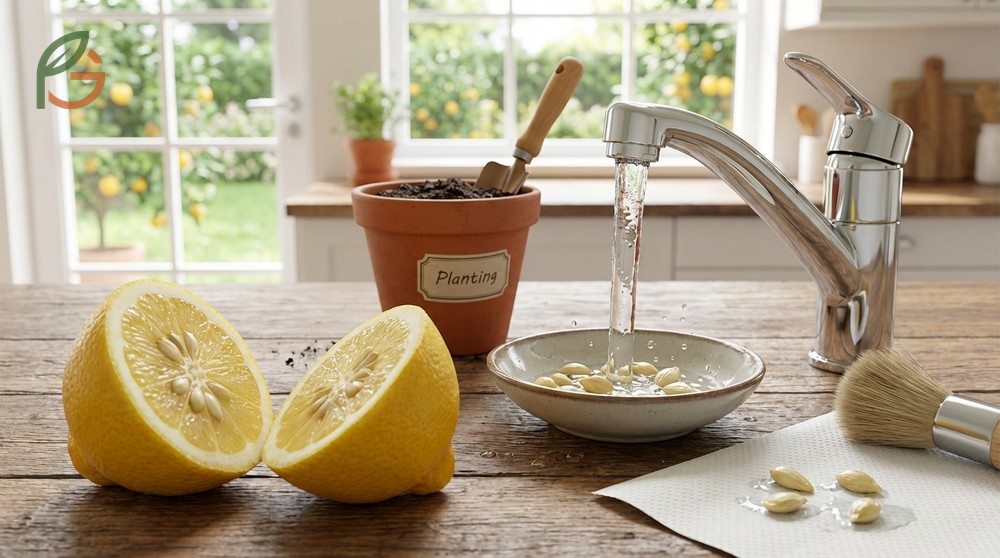
Growing lemon trees from seed starts with selecting the right fruit and extracting viable seeds. Choose organic lemons or those not treated with pesticides to ensure better germination rates[3]. Cut the lemon carefully and remove plump, firm seeds without damaging their outer coating.
Rinse seeds immediately under cool running water to remove all pulp and sugars that encourage mold growth[3]. Plant seeds within 24 hours of extraction because they lose viability quickly when dried out. Fresh seeds maintain up to 90% germination potential compared to less than 40% for dried seeds[1].
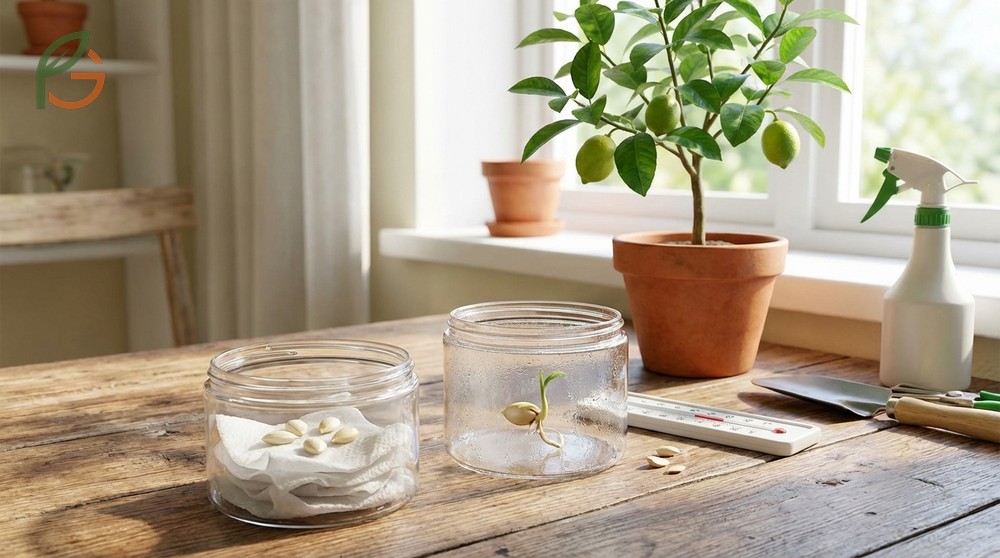
Most gardeners find the paper towel method delivers the highest success rates. This controlled approach allows you to monitor root development without disturbing delicate emerging roots.
From My Experience: My cousin in Guadalajara, Mexico grew Meyer lemons from seed in March 2024. Seeds germinated in 12 days versus the typical 14-21 day range, achieving 80% success rate with five seeds planted.
Selecting and Preparing Lemon Seeds
Select plump, firm seeds from fully ripe lemons as these contain the highest viability. Avoid seeds that appear shriveled, discolored, or damaged because they won’t germinate successfully.
After extraction, you can optionally soak seeds for 1-24 hours to soften the outer shell[4]. Some growers peel off the seed coat after soaking, which speeds germination by 3-5 days.
- Extract seeds carefully using fingers, avoiding cuts or damage to seed coating
- Rinse thoroughly under cool water to remove all pulp and sugary residue
- Optional: Soak seeds in room-temperature water for 1-24 hours
- Gently peel outer seed coat if it loosens after soaking
- Plant immediately or within 24 hours for best germination rates
Paper Towel Germination Method
The paper towel method achieves 85-90% germination success compared to 60-70% for direct soil planting[1]. Take 2-3 paper towels and wet them thoroughly, then wring out excess water so they’re damp but not dripping.
Place seeds in the center of damp towels, then fold the sheets multiple times until they fit into a plastic sandwich bag[4]. Store the sealed bag in a dark, warm location at 70-80°F (21-27°C).
Check seeds every 3-4 days and mist the paper towel if it begins drying out. Properly cared-for lemon seeds show first root tips within 10-14 days, though some take up to 3 weeks[1].
Important Note: Don’t worry if you notice mold on the paper towel when checking progress. The humid conditions promote growth but also create mold—simply wipe it off gently without disturbing the seed.
Lemon Tree Soil Requirements
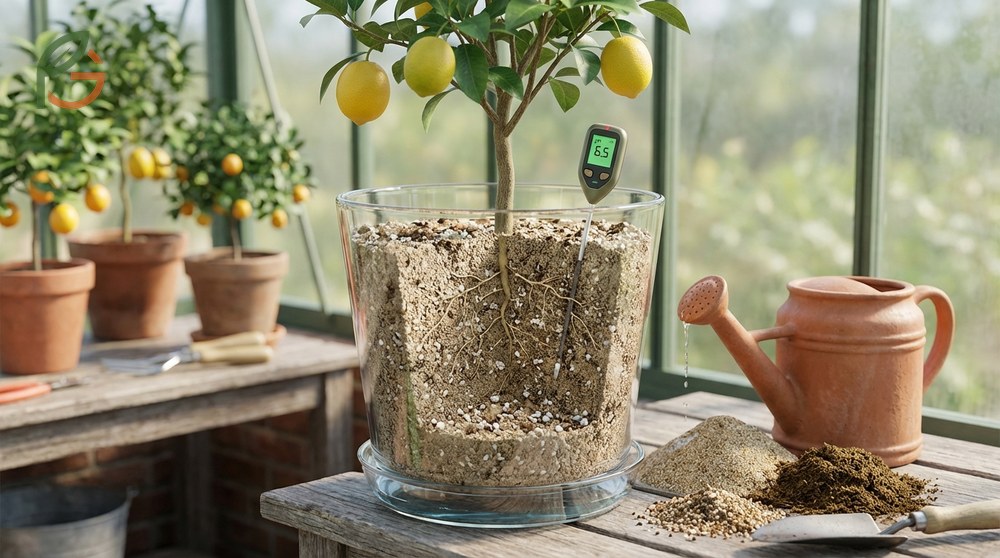
Lemon trees thrive in well-drained, medium-textured soils with good aeration. Research shows these trees prefer light loams or sandy loams because they can’t tolerate waterlogging, which causes root rot[2].
The ideal pH range falls between 5.5 and 7.5, though lemon trees adapt to slightly more acidic or alkaline conditions[2]. Regular soil testing helps you maintain the best growing medium through appropriate amendments.
Never use garden soil straight from outdoors because it compacts in containers and harbors pests. Instead, opt for specialized potting mixes designed for citrus or create your own blend.
Best Potting Mix for Citrus
Use a cactus or succulent mix that drains quickly, or create your own by adding pumice, sand, or perlite to standard potting soil[5]. A popular formula combines 5 parts pine bark, 1 part peat moss, and 1 part perlite for excellent drainage.
Commercial citrus mixes often include specialized additives like Seramis granules that absorb and release water gradually[6]. These products maintain consistent moisture without waterlogging roots.
- Standard potting soil as base (40-50% of total mix)
- Perlite or pumice for drainage (20-30% of mix)
- Coarse sand to improve structure (10-20% of mix)
- Pine bark for aeration and moisture retention (20-30% of mix)
- Small amount of peat moss for acidity (5-10% of mix)
Transplanting Sprouted Seedlings
When roots reach 1/4 to 1/2 inch long, it’s time to transplant into soil[1]. Don’t wait until roots become too long because this damages the delicate root system during transfer.
Plant seeds 1/4-inch deep in 2 to 3-inch pots with drainage holes[5]. Position roots just below the soil surface with any green growth above soil level.
Water thoroughly after transplanting and cover seedlings with a humidity dome created from a plastic bottle top or plastic wrap. This maintains moisture while the seedling establishes in its new environment[4].
Transplanting Tip: Handle seedlings by the leaves, never the stem, when moving them from paper towel to soil. The stem bruises easily and damage at this stage can kill the plant.
Watering Lemon Tree Seedlings
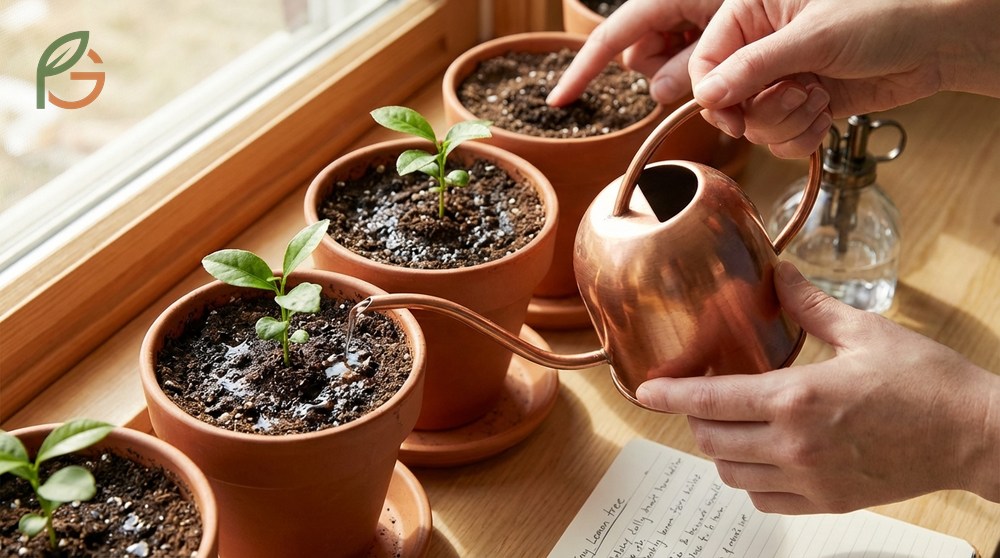
Seedlings need consistent moisture without sitting in waterlogged soil. Water carefully to keep soil moist but never soggy, as lemon trees can’t tolerate poor drainage[5].
Check soil moisture by feeling the top 2-3 inches—if it feels dry, water thoroughly until liquid drains from the bottom holes[2]. Don’t let pots sit in trays of standing water as this promotes root rot.
During germination, keeping the top inch of soil consistently damp helps seeds sprout faster. Once seedlings emerge, allow the soil surface to dry slightly between waterings.
Moisture Management Techniques
Young seedlings benefit from bottom watering, which encourages roots to grow downward. Place pots in a tray with 1 inch of water for 15-20 minutes, then remove and let excess drain completely.
Monitor for signs of overwatering like yellowing leaves, wilting despite wet soil, or moldy soil surface. Underwatering shows as brown leaf tips, drooping foliage, and soil pulling away from pot edges.
- Water when top 2-3 inches of soil feel dry to touch
- Provide thorough soaking until water drains from bottom holes
- Empty drainage trays within 30 minutes to prevent standing water
- Reduce watering frequency in fall and winter when growth slows
- Increase humidity around seedlings by grouping plants together
- Use room-temperature water to avoid shocking sensitive roots
Lemon Tree Fertilizer for Seedlings
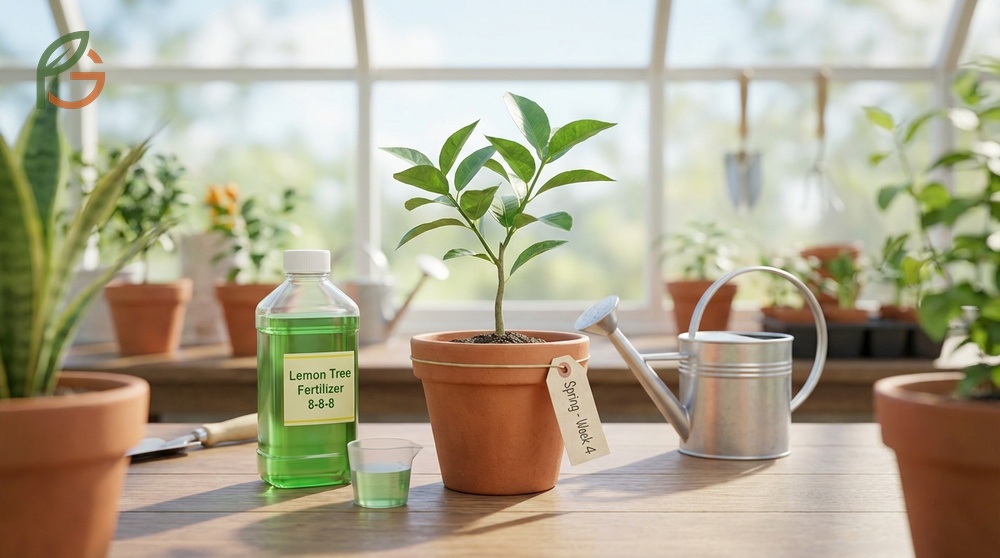
Young lemon trees require more nitrogen to produce healthy foliage and establish strong roots. Balanced NPK ratios like 6-4-4, 8-8-8, or 10-10-10 work well for seedlings and young trees[7].
Don’t fertilize seedlings until the first true leaves appear, typically 2-4 weeks after transplanting. Start with a diluted liquid fertilizer at one-quarter strength to avoid burning tender roots[1].
During the active growing season (spring and summer), feed every second watering with citrus-specific fertilizer. In winter, reduce feeding to every fourth watering as growth naturally slows[6].
This table compares NPK fertilizer ratios, application timing, and benefits for different lemon tree growth stages from seedling to mature fruiting trees
| Growth Stage | NPK Ratio | Frequency | Primary Benefit |
|---|---|---|---|
| Seedling (0-6 months) | 6-4-4 or 8-8-8[7] | Every 2-4 weeks at 1/4 strength | Root establishment and leaf growth |
| Young Tree (6 months-3 years) | 10-10-10 or 12-12-12[8] | Every 2 weeks in growing season | Vigorous vegetative growth |
| Mature Tree (3+ years) | 6-6-6 or 5-5-5[9] | Monthly during active growth | Overall health and fruit production |
| Fruiting Tree | 3-5-6 or 15-5-10[7] | Every 2-3 weeks when flowering | Enhanced flowering and fruiting |
- Nitrogen (N) promotes leafy green growth and overall vigor
- Phosphorus (P) supports strong root development and flowering
- Potassium (K) improves disease resistance and fruit quality
- Magnesium prevents yellowing between leaf veins (chlorosis)
- Iron maintains deep green leaf color and prevents pale foliage
- Zinc aids in fruit size and overall tree health
Fertilizer Warning: Never apply fertilizer to dry soil as this burns roots. Always water thoroughly before feeding, then apply diluted fertilizer solution.
Growing Citrus from Seed vs Cutting
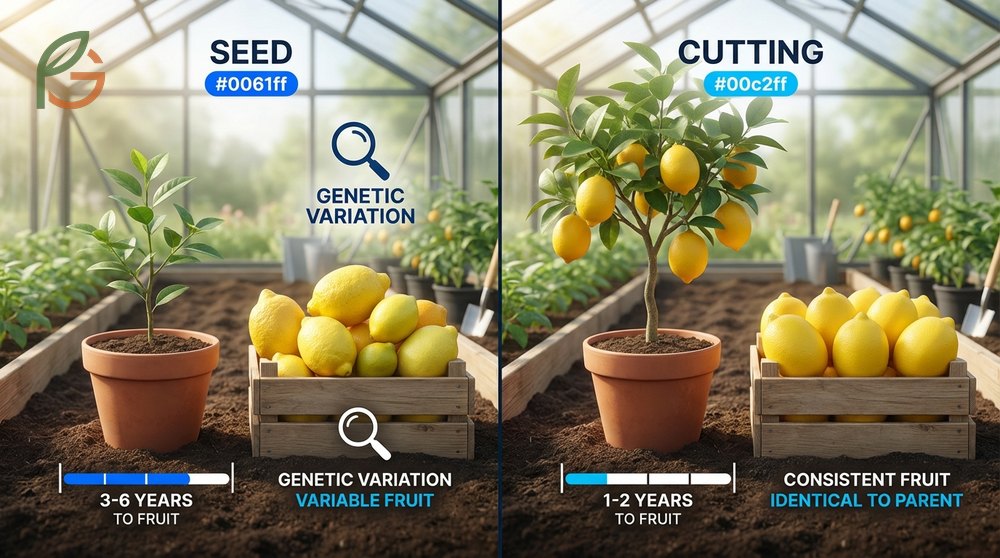
Growing from seed takes significantly longer to produce fruit compared to propagating from cuttings or purchasing grafted trees. Seed-grown lemon trees typically take 3-6 years to flower and fruit, while grafted trees can produce within 1-2 years[1].
Genetic variation means seed-grown trees may not produce fruit identical to the parent lemon. The fruit might be larger, smaller, more or less acidic, or have different characteristics entirely.
Despite these drawbacks, approximately 70% of home-grown citrus trees from seed eventually produce fruit when given proper care and conditions[1]. Many gardeners find the journey deeply rewarding regardless of fruit production.
Cuttings maintain genetic consistency, producing clones of the parent tree with identical fruit characteristics. However, citrus cuttings root with lower success rates (30-50%) compared to the 85-90% germination rate for fresh seeds using proper methods.
- Minimal cost—just extract seeds from store-bought lemons
- Higher success rate (85-90%) compared to rooting cuttings (30-50%)
- Educational experience perfect for teaching children about plants
- Trees grown from seed develop stronger, more extensive root systems
- Satisfaction of nurturing a tree from germination to maturity
- Produces hardy, adaptable trees suited to your specific climate
Conclusion
The evidence is clear: how to grow lemon tree from seed successfully requires fresh seeds, proper moisture management, and well-draining soil. Using the paper towel germination method delivers 85-90% success rates, while maintaining temperatures between 70-80°F (21-27°C) ensures sprouting within 10-21 days.
Current horticultural guidance emphasizes patience—seed-grown trees take 3-6 years to fruit but develop stronger root systems than grafted alternatives. FruitGarden synthesizes research-based techniques that transform simple lemon seeds into thriving citrus trees for your home garden.
Frequently Asked Questions
How long does it take for lemon seeds to sprout?
Lemon seeds typically sprout in 10-21 days when kept at optimal temperatures of 70-80°F (21-27°C) using the paper towel method[1]. Direct soil planting takes longer, usually 21-28 days. Fresh seeds germinate faster than dried seeds, so plant within 24 hours of extraction for best results.
Can you grow a lemon tree from store-bought lemons?
Yes, you can successfully grow lemon trees from store-bought lemons, especially if you choose organic varieties. Research shows organic lemons have higher germination rates because they aren’t treated with growth inhibitors[3]. Extract seeds from ripe, juicy lemons and plant immediately for best results.
What’s the best soil for planting lemon seeds?
The best soil for lemon seeds is well-draining potting mix with pH between 5.5-7.5[2]. Use a cactus or succulent mix, or create your own by combining standard potting soil with perlite, pumice, or coarse sand. Add 20-30% drainage material to prevent waterlogging and root rot.
How often should you water lemon tree seedlings?
Water lemon seedlings when the top 2-3 inches of soil feel dry to the touch[2]. This typically means watering every 2-4 days depending on temperature and humidity. Always water thoroughly until liquid drains from bottom holes, but never let pots sit in standing water.
Do lemon trees grown from seed produce fruit?
Yes, approximately 70% of lemon trees grown from seed eventually produce fruit with proper care[1]. However, they take 3-6 years to reach maturity compared to 1-2 years for grafted trees. The fruit may differ from the parent lemon due to genetic variation but is usually still edible and usable.
When should you start fertilizing lemon seedlings?
Start fertilizing lemon seedlings after the first true leaves appear, typically 2-4 weeks after transplanting[1]. Use a balanced NPK fertilizer like 6-4-4 or 8-8-8 diluted to one-quarter strength initially. Feed every 2-4 weeks during spring and summer, reducing to monthly in fall and winter.
What temperature is best for germinating lemon seeds?
The optimal temperature range for germinating lemon seeds is 70-80°F (21-27°C)[1]. Temperatures below 65°F (18°C) slow germination significantly, while temperatures above 85°F (29°C) can damage seeds. Place containers near a heat source or use a seedling heat mat to maintain consistent warmth.





