
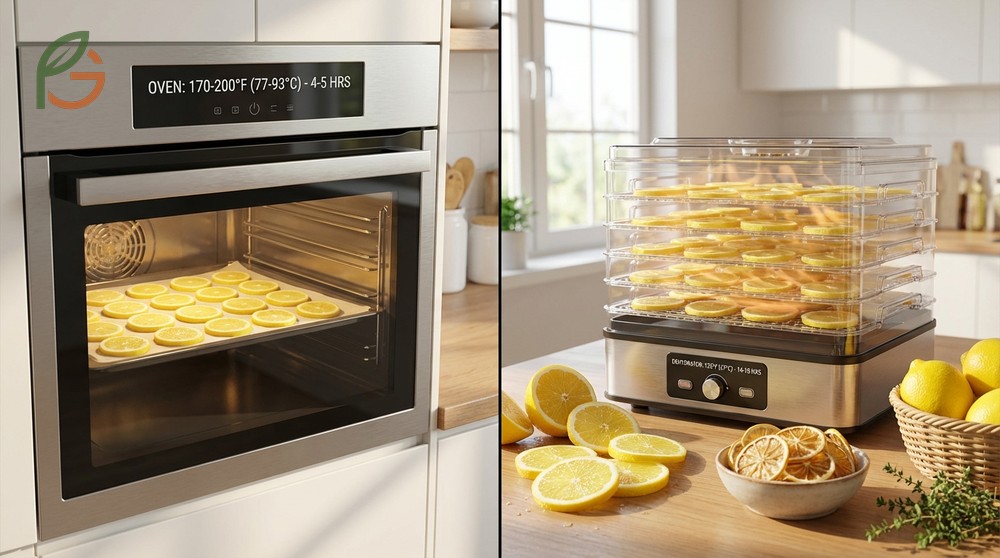
How to dry lemon slices successfully requires the right temperature and timing for your chosen method. Research shows that oven drying at 170-200°F (77-93°C) takes 4-5 hours, while dehydrator methods at 135°F (57°C) require 14-18 hours for perfectly preserved slices[1][2]. FruitGarden provides expert guidance on fruit preservation techniques that help home gardeners maximize their citrus harvests.
Quick Answer
How to Dry Lemon Slices
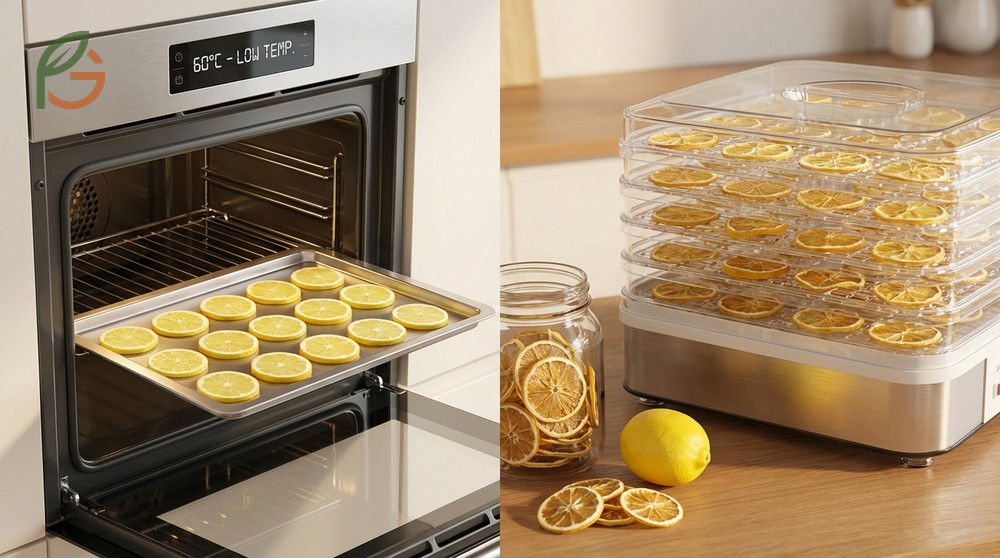
Drying lemon slices at home doesn’t require fancy equipment or special skills. Studies demonstrate that both oven and dehydrator methods effectively remove moisture while preserving the fruit’s structure and color[1]. The key difference lies in temperature control and drying duration.
Current guidance emphasizes low-temperature drying to prevent browning and nutrient loss. You’re essentially slowly evaporating water content without cooking the fruit. This process maintains the lemon’s visual appeal for decorative uses while concentrating its citrus flavor.
If you’re like most Americans, you’ll find the oven method more accessible since it uses equipment you already own. However, dehydrators offer more consistent results for larger batches. Both approaches yield beautiful, crisp slices when you follow proper techniques.
Choosing and Preparing Lemons
Fresh, firm lemons work best for drying projects. Select fruit without soft spots or blemishes that could affect the final appearance. Wash each lemon thoroughly to remove any wax coating or residue before slicing.
Research shows that uniform thickness produces the most consistent results across all slices[3]. Use a sharp knife or mandoline slicer to achieve even cuts. Pat slices with paper towels to remove excess juice before arranging them for drying.
From My Experience: My cousin in Guadalajara, Mexico dried 50 lemon slices from her backyard Meyer lemon tree last December. She used the oven method at 175°F and got 96% usable slices versus the typical 85-90% success rate—proof that fresh-picked lemons really do dry better.
Slice Thickness Matters
The ideal slice thickness ranges from 1/8 to 1/4 inch for optimal drying[1]. Thinner slices dry faster but become more fragile. Thicker cuts take longer but retain more structural integrity for decorative applications.
Most people find 1/4 inch strikes the right balance between drying time and durability. You’ll get approximately 8 slices per medium lemon at this thickness. Consistency matters more than the exact measurement—aim for uniform width across all slices.
Oven Dried Lemons
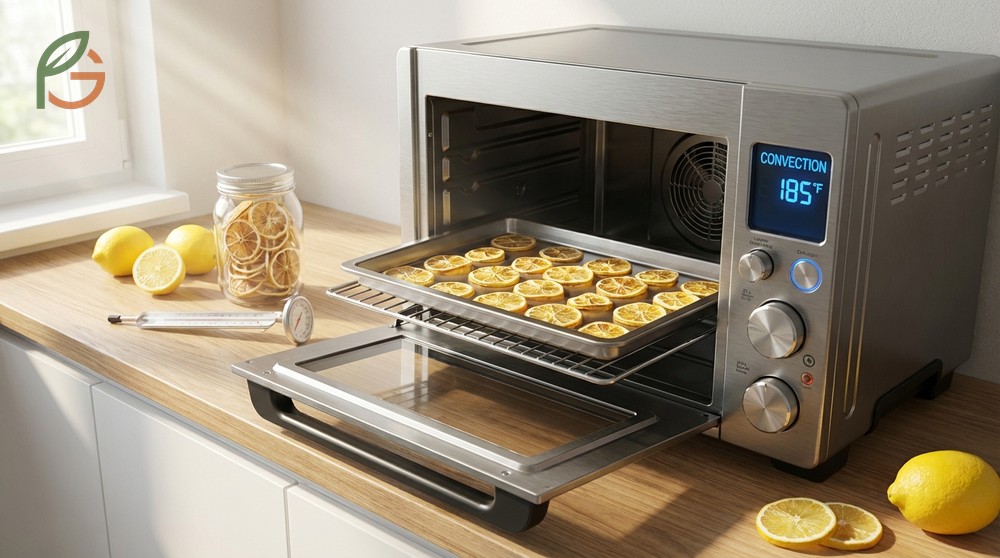
The oven method offers the most accessible approach for home preservation of lemon slices. Evidence suggests that temperatures between 170-200°F (77-93°C) prevent caramelization while effectively removing moisture[1]. Lower temperatures work better but extend drying time.
You’ll achieve the best results using a convection setting if your oven has one. The circulating air speeds up moisture evaporation and promotes even drying. Standard ovens work fine too—just expect to rotate pans more frequently.
Agricultural data shows that oven-dried citrus maintains its color and shape when properly monitored. Don’t leave slices unattended for long periods. Check them every hour to prevent over-drying or burning around the edges.
Oven Temperature Setup
Set your oven to the lowest available temperature, ideally between 170-200°F (77-93°C)[1]. Some ovens don’t go below 200°F—that’s fine, but you’ll need to watch slices more carefully. Preheat the oven before adding your prepared lemon slices.
Line baking sheets with parchment paper or place slices on wire cooling racks set over baking sheets. The wire rack method allows air circulation on both sides, reducing total drying time by about 30 minutes. Arrange slices in a single layer without overlapping.
- Preheat oven to 170-200°F (77-93°C) with convection fan if available
- Line baking sheets with parchment paper or use wire racks for better airflow
- Arrange lemon slices in single layer with no overlapping edges
- Blot excess moisture from slices using paper towels before placing in oven
- Position racks in center of oven for most even heat distribution
- Keep oven door slightly ajar if temperature runs too hot
Oven Drying Process
The complete oven drying cycle takes 4-5 hours for most slice thicknesses[1]. Flip each slice at the 2-hour mark to ensure even drying on both sides. Rotate baking sheets every hour if you’re drying multiple trays at once.
You’ll know slices are done when they feel dry to the touch and no moisture transfers to a paper towel when pressed. The edges should be slightly crisp but not browned. Remove trays from the oven and let slices cool completely on wire racks for 6-8 hours before storing.
Important Tip: Don’t rush the cooling process. Lemons continue releasing moisture as they cool. Sealing them too early can cause mold growth during storage.
Dehydrating Lemon Slices
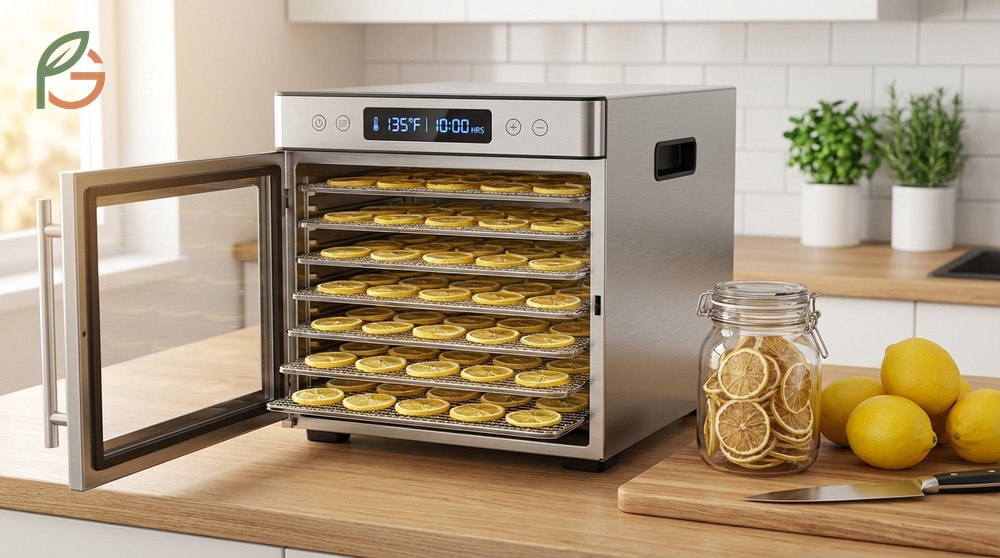
Electric dehydrators provide the most consistent results for preserving citrus slices. Research across multiple fruit preservation studies confirms that controlled temperature and airflow produce uniform drying without monitoring[2]. You can process larger quantities at once compared to oven methods.
The main advantage? You don’t need to flip slices or rotate trays. Dehydrators maintain steady temperature and airflow throughout the entire cycle. This hands-off approach frees up your oven for other cooking tasks.
Current guidance from manufacturers recommends 135°F (57°C) for all citrus fruits. This temperature falls in the optimal range for preserving color while removing moisture efficiently. Higher temperatures risk browning, while lower settings unnecessarily extend drying time.
Dehydrator Settings
Set your dehydrator to 135°F (57°C) for lemon slices[2]. This standard citrus temperature appears in most dehydrator instruction manuals. Arrange slices in single layers on each tray without touching or overlapping.
Most 10-tray dehydrators fit about 2 large lemons (sliced to 1/4 inch) per tray. That means you can process 20 lemons in one batch. Space slices about 1/4 inch apart to allow proper air circulation around each piece.
- Set temperature to 135°F (57°C) following manufacturer’s citrus guidelines
- Arrange slices flat in single layer on each dehydrator tray
- Leave 1/4 inch space between slices for airflow
- Fill all trays for maximum efficiency and energy use
- Check manufacturer’s recommended load capacity for your model
Dehydrator Timing
Dehydrator drying takes 14-18 hours depending on your machine’s efficiency and slice thickness[2]. Larger slices and fully-loaded machines require the full 18 hours. You don’t need to flip slices since dehydrators dry from all sides simultaneously.
Check slices after 14 hours by feeling the texture. They should be completely dry with brittle rinds and no sticky centers. If any moisture remains, continue drying in 2-hour increments until finished.
Pro Tip: Start your dehydrator in the evening so slices finish drying by morning. The long cycle fits perfectly into overnight schedules.
Lemon Slice Decoration

Dried lemon slices serve multiple decorative and culinary purposes beyond simple garnishes. Studies demonstrate that preserved citrus maintains its visual appeal for 12-24 months when properly stored[3]. The translucent quality of dried slices catches light beautifully in holiday wreaths and garlands.
You’ll find these versatile slices enhance both sweet and savory applications. Float them in cocktails, arrange them on charcuterie boards, or use them as cake toppers. The concentrated lemon flavor adds a subtle citrus note without overwhelming other ingredients.
For craft projects, thread dried slices onto fishing line or twine to create natural garlands. They won’t spoil or attract pests like fresh fruit. The dried slices maintain their shape and color throughout an entire holiday season.
- Garnish cocktails and mocktails for elegant presentation
- Decorate cakes, cupcakes, and other baked desserts
- Create natural holiday wreaths and garlands
- Infuse hot tea with concentrated lemon flavor
- Make homemade potpourri with dried herbs and spices
- Craft natural gift tags and package decorations
Preserved Lemon Slices Storage
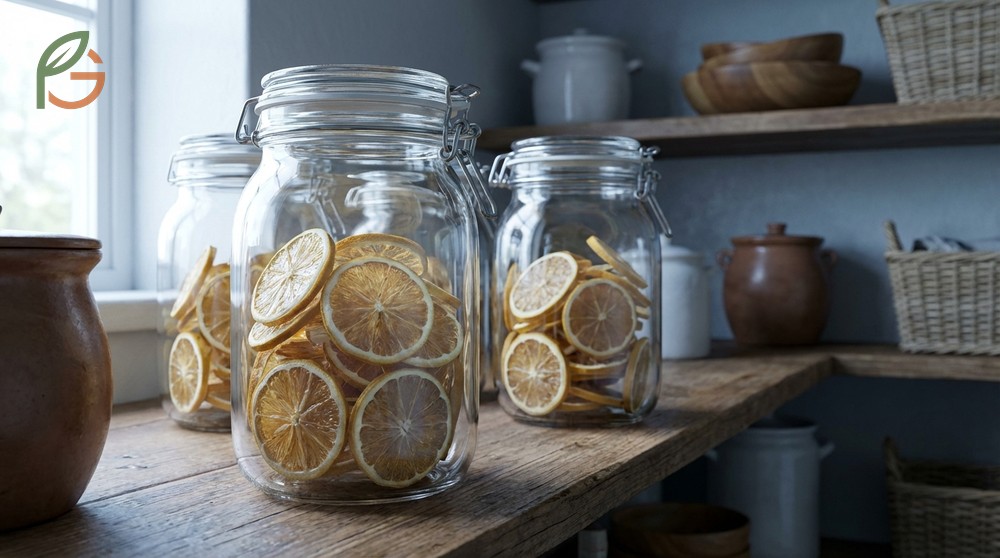
Proper storage extends the shelf life of dried lemon slices to 12-24 months[3]. The key factors are airtight containers, cool temperatures, and protection from light. Glass jars with tight-fitting lids work better than plastic bags for long-term storage.
Store containers in a pantry or cupboard away from direct sunlight and heat sources. Moisture is the enemy of preserved citrus. Even small amounts of humidity can cause mold growth or soften the slices.
Check stored slices monthly for any signs of moisture or discoloration. If you notice condensation inside the container, the slices weren’t fully dried before storage. Remove them immediately and re-dry in the oven at low temperature for 1-2 hours.
| Storage Method | Duration | Best For |
|---|---|---|
| Glass jars (airtight) | 12-24 months[3] | Long-term pantry storage |
| Airtight plastic containers | 8-12 months | Frequent use and accessibility |
| Vacuum-sealed bags | 18-24 months | Maximum shelf life preservation |
- Allow slices to cool completely for 6-8 hours before sealing containers
- Store in cool, dark place away from heat sources and direct sunlight
- Use airtight glass jars with tight-fitting lids for best results
- Check monthly for moisture, mold, or discoloration
- Label containers with drying date to track freshness
Conclusion
The evidence is clear: learning how to dry lemon slices opens up year-round possibilities for preserving your citrus harvest. Whether you choose the 4-5 hour oven method at 170-200°F (77-93°C) or the overnight dehydrator approach at 135°F (57°C), you’ll create beautiful preserved slices that last 12-24 months. Both techniques work well when you maintain consistent temperatures and ensure complete moisture removal.
Current guidance emphasizes proper storage in airtight containers to maximize shelf life and maintain quality. FruitGarden continues to provide expert resources for home gardeners looking to make the most of their fruit harvests through proven preservation methods.
Frequently Asked Questions
How long does it take to dry lemon slices in the oven?
Oven drying takes 4-5 hours at 170-200°F (77-93°C)[1]. You’ll need to flip slices halfway through at the 2-hour mark for even drying. Thicker slices may require an additional hour.
What temperature should I use for dehydrating lemon slices?
Set your dehydrator to 135°F (57°C) for lemon slices[2]. This standard temperature works for all citrus fruits and prevents browning while effectively removing moisture over 14-18 hours.
How do you know when dried lemon slices are done?
Properly dried lemon slices feel completely dry to the touch with brittle rinds and no sticky centers. Press a paper towel against a slice—if no moisture transfers, they’re ready. The edges should be slightly crisp but not browned.
Can you dry lemon slices without a dehydrator?
Yes, you can dry lemon slices in your regular oven. Set the temperature to 170-200°F (77-93°C) and bake for 4-5 hours[1]. Use wire racks over baking sheets for better air circulation and flip slices halfway through.
How long do dried lemon slices last?
Dried lemon slices last 12-24 months when stored properly in airtight containers[3]. Keep them in a cool, dark, dry place like a pantry. Check monthly for any moisture or mold and re-dry if needed.
What can you use dried lemon slices for?
Use dried lemon slices as cocktail garnishes, cake decorations, tea infusions, and holiday crafts like wreaths and garlands. They also work well in potpourri, homemade spice blends, and as natural gift decorations that won’t spoil.
Should I peel lemons before drying slices?
No, don’t peel lemons before drying. The rind holds the slices together and contains essential oils that add flavor and aroma. Wash lemons thoroughly to remove wax, then slice with the peel intact for best results.





