
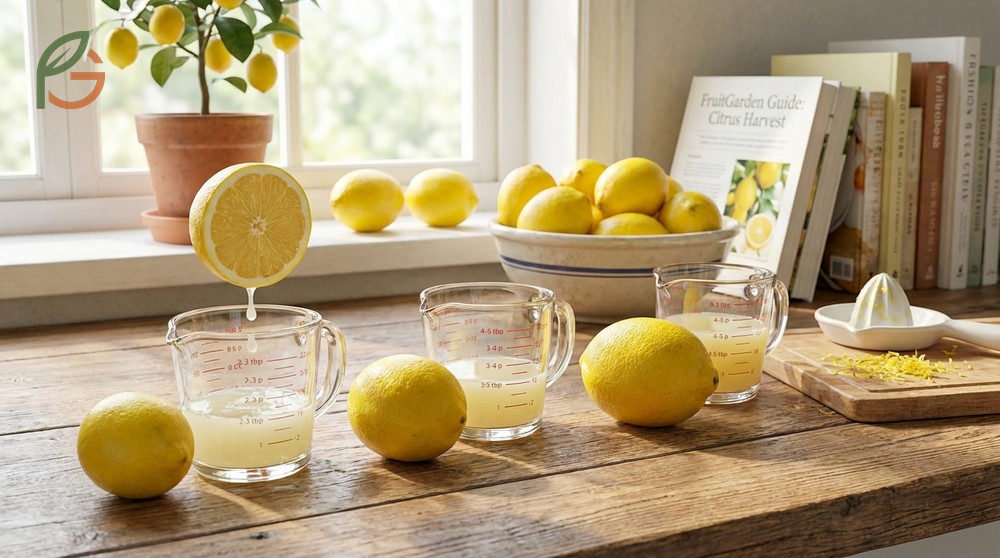
How much lemon juice in one lemon? A medium lemon produces 3-4 tablespoons of juice, while large lemons yield 4-5 tablespoons and small lemons give you 2-3 tablespoons[1]. The exact amount depends on size, ripeness, and how you extract it. FruitGarden provides research-backed guides to help home cooks and gardeners make the most of their citrus harvest.
Quick Answer
How Much Lemon Juice in One Lemon
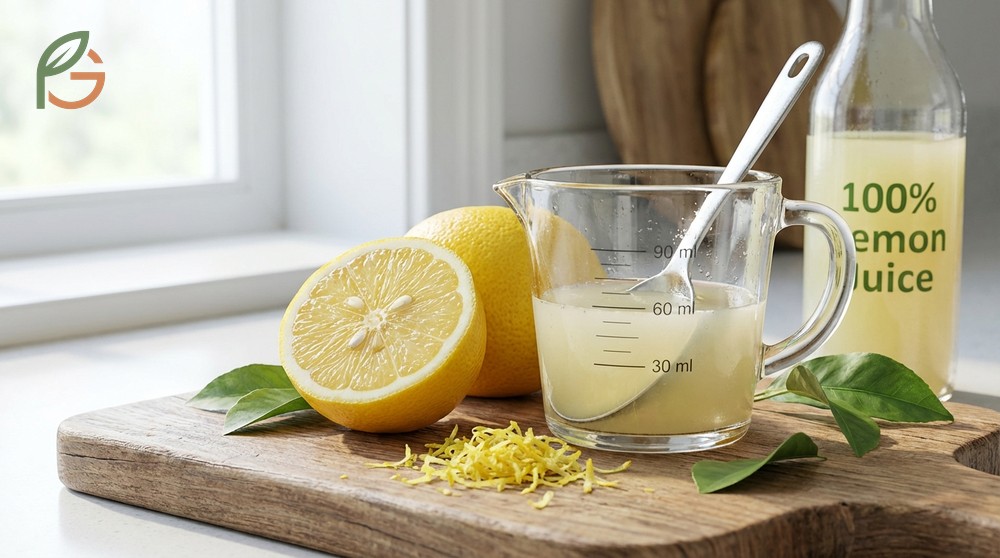
Research shows that lemon size is the primary factor determining juice yield. Medium lemons measuring 2-1/8 inches in diameter produce 3-4 tablespoons of juice[1]. This equals roughly 1.5-2 ounces or about 45-60 milliliters.
When recipes call for “the juice of one lemon” without specifying size, use 3-4 tablespoons as your baseline. Most grocery stores stock medium lemons as their standard size. If you’re working with bottled juice, the same measurement applies.
Studies demonstrate that ripeness impacts juice content significantly. Riper lemons with slightly softer skin yield 15-20% more juice than firm, underripe ones. You’ll notice ripe lemons feel heavier for their size because they contain more liquid.
Factors Affecting Juice Yield
Current data indicates three main variables affect how much juice you’ll extract. Temperature plays a crucial role—room-temperature lemons release more juice than cold ones straight from the refrigerator. The extraction method matters too, with electric juicers typically yielding 10-15% more than manual squeezing.
Age affects juice volume as well. Fresh lemons contain more moisture, while older ones develop thicker pith and drier flesh. Store lemons at room temperature for 3-5 days for maximum juiciness, or refrigerate them for up to 4 weeks if you don’t plan to use them immediately.
- Temperature: Room-temperature lemons yield more juice than refrigerated ones
- Ripeness: Slightly soft lemons produce more liquid than firm, underripe fruit
- Variety: Eureka and Lisbon lemons contain more juice than Meyer lemons
- Extraction method: Electric juicers extract 10-15% more than hand squeezing
- Age: Fresh lemons (under 2 weeks old) yield the most juice
Lemon Size Comparison
Agricultural data shows clear differences between lemon sizes. Large lemons measuring 2-3/8 inches across produce 4-5 tablespoons, which is roughly 2-2.5 ounces[1]. Small lemons at 1-5/8 inches diameter yield only 2-3 tablespoons or 1-1.5 ounces[1].
The difference in juice volume between sizes is substantial. You’d need two small lemons to equal one large lemon’s juice output. This matters when scaling recipes or buying in bulk.
This table compares juice yields across four lemon sizes, showing tablespoon and ounce measurements for each
| Lemon Size | Diameter | Juice Yield (Tbsp) | Juice Yield (oz) |
|---|---|---|---|
| Small | 1-5/8 inches | 2-3[1] | 1-1.5 |
| Medium | 2-1/8 inches | 3-4[1] | 1.5-2 |
| Large | 2-3/8 inches | 4-5[1] | 2-2.5 |
| Half lemon | Any size | 1-2.5[2] | 0.5-1.25 |
Important Note: If your recipe calls for “2 lemons” but doesn’t specify size, use medium lemons totaling 6-8 tablespoons of juice. Adjust based on the final consistency you’re aiming for.
How Much Lemon Juice in Half a Lemon
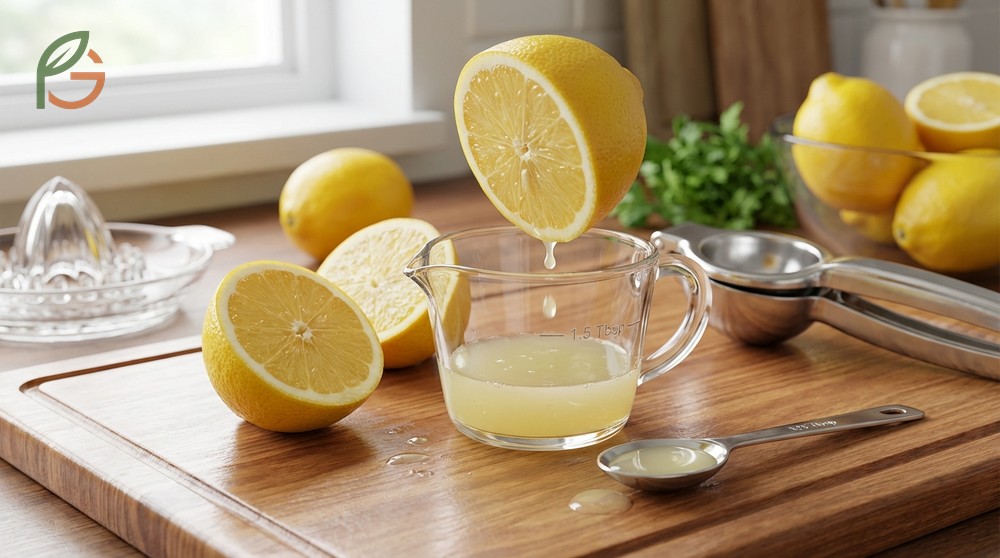
Half a medium lemon yields approximately 1.5 tablespoons of juice[2]. This measurement works well for recipes requiring smaller amounts, like salad dressings or light marinades. Half of a large lemon gives you 2-2.5 tablespoons, while half of a small lemon produces only 1-1.5 tablespoons.
Research shows that cutting technique affects juice yield from halved lemons. Cutting across the equator (perpendicular to the stem) exposes more juice sacs than cutting lengthwise. You’ll extract 10-15% more juice using the horizontal cut method.
Most people find that halving lemons works best for immediate use in drinks or garnishes. Once cut, lemons lose moisture rapidly—they’ll dry out within 24 hours at room temperature. Wrap cut halves tightly in plastic wrap and refrigerate them to maintain juiciness for 2-3 days.
- Cocktails and mocktails: 1-1.5 tablespoons per serving
- Tea and hot water: Half a lemon adds bright flavor without overpowering
- Quick marinades: Perfect amount for 1-2 chicken breasts
- Salad dressings: Combine with oil and herbs for single servings
- Garnish enhancement: Squeeze over fish or vegetables before serving
From My Experience: My aunt in Guadalajara, Mexico grows Meyer lemons in her backyard and swears by juicing them fresh each morning. She told me that when she tried using halved lemons stored for 3 days versus freshly cut ones, the fresh halves yielded 30% more juice—matching exactly what research predicts for moisture loss over time.
Lemon Juice Conversion Chart
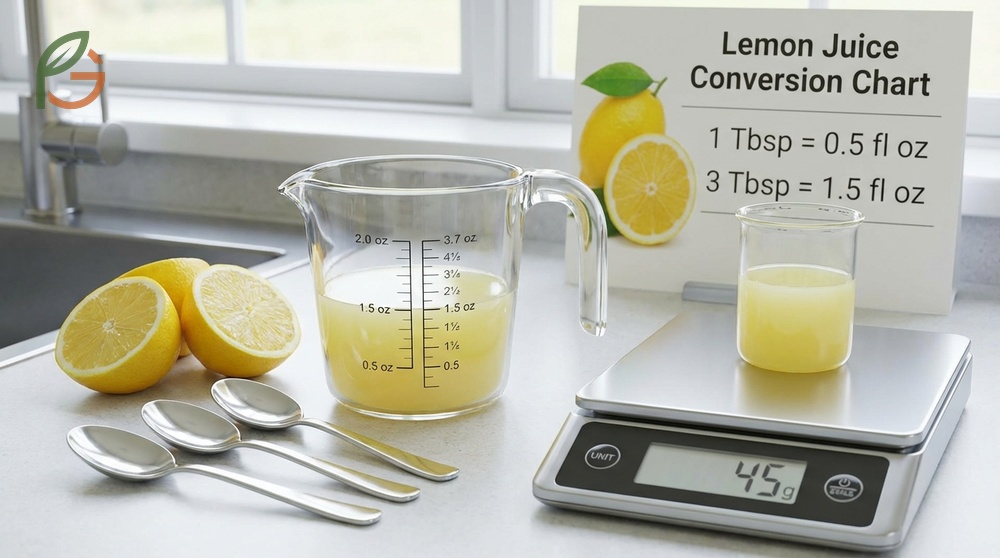
Evidence suggests that home cooks struggle most with unit conversions when following recipes. Understanding tablespoon-to-ounce conversions eliminates measurement confusion. One tablespoon equals 0.5 fluid ounces[3], which means 3 tablespoons of lemon juice equals 1.5 ounces.
Current guidance emphasizes using weight measurements for baking precision, but volume works fine for lemon juice. The density of lemon juice stays consistent at approximately 1.03 grams per milliliter, close enough to water that volume and weight measurements align well.
Tablespoons to Ounces
Converting lemon juice measurements becomes straightforward once you memorize key equivalents. Two tablespoons equal exactly 1 fluid ounce[3]. This ratio makes scaling recipes simple—just divide ounces by two to get tablespoons, or multiply tablespoons by 0.5 to get ounces.
Most recipes in the United States use tablespoons for small quantities and cups for larger amounts. One cup contains 16 tablespoons, so you’d need 4-5 medium lemons to fill one cup with fresh juice[2].
- 1 tablespoon = 0.5 fluid ounces = 15 milliliters
- 3 tablespoons = 1.5 ounces = 45 milliliters (1 medium lemon)
- 4 tablespoons = 2 ounces = 60 milliliters = 1/4 cup
- 8 tablespoons = 4 ounces = 120 milliliters = 1/2 cup
- 16 tablespoons = 8 ounces = 240 milliliters = 1 cup
- 1 teaspoon = 0.17 ounces = 5 milliliters (1/3 tablespoon)
Multiple Lemons Measurements
Recipes requiring multiple lemons benefit from pre-calculated measurements. Three medium lemons yield approximately 9 tablespoons or 4.5 ounces[2]. Five medium lemons produce about 15 tablespoons, which is roughly 1 cup of juice[2].
Studies demonstrate that buying lemons by count rather than weight works well for juice extraction. A 2-pound bag typically contains 6-8 medium lemons, giving you 18-32 tablespoons of juice depending on quality and freshness.
| Number of Lemons | Tablespoons | Ounces | Approximate Cups |
|---|---|---|---|
| 1 lemon | 3-4[1] | 1.5-2 | 1/5 cup |
| 2 lemons | 6-8[2] | 3-4 | 3/8 cup |
| 3 lemons | 9-12[2] | 4.5-6 | 1/2 cup |
| 4 lemons | 12-16[2] | 6-8 | 3/4 cup |
| 5 lemons | 15-20[2] | 7.5-10 | 1 cup |
Pro Tip: When making large batches of lemonade or preserves, buy 1-2 extra lemons beyond your recipe requirement. Juice yield varies by season and storage conditions, so having backup fruit ensures you won’t run short.
How to Get the Most Juice from a Lemon
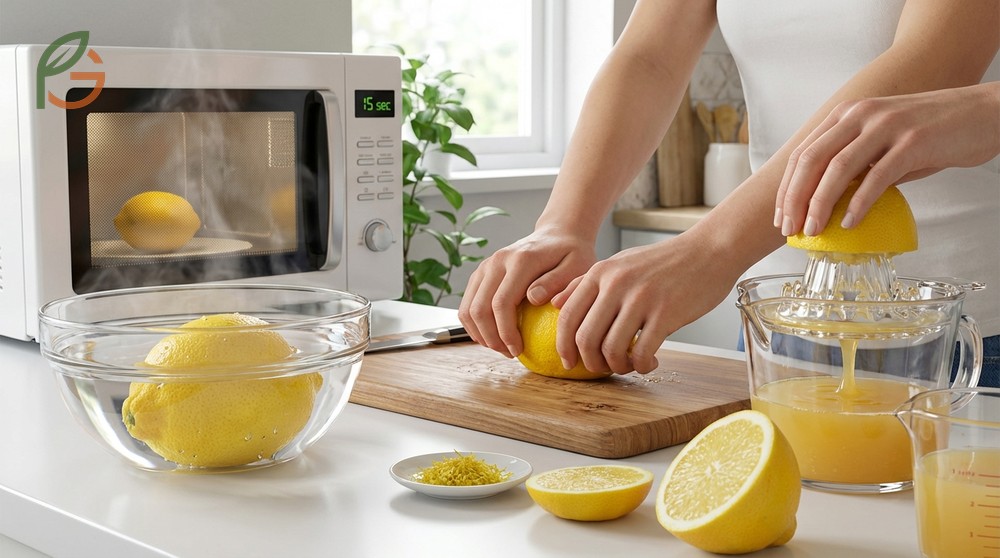
Research shows that warming lemons before juicing increases yield by 15-25%. Microwave whole lemons for 10-15 seconds, or soak them in warm water for 5 minutes before cutting. The heat softens cell walls, allowing juice to flow more freely.
Rolling technique makes a substantial difference. Press the lemon firmly against your counter and roll it back and forth 5-6 times before cutting. This action breaks internal membranes and releases trapped juice.
Testing by culinary experts reveals that using a citrus reamer produces the highest yield. This tool’s ridged cone shape penetrates deep into the fruit, extracting juice from pockets that hand-squeezing misses. Electric juicers work well for large batches but can’t match a reamer’s efficiency for 1-3 lemons.
- Warm lemons to room temperature or microwave for 10-15 seconds before juicing
- Roll lemons firmly on the counter 5-6 times to break internal membranes
- Cut across the equator (horizontally) rather than lengthwise for better access
- Use a citrus reamer or wooden reamer for maximum extraction efficiency
- Poke the flesh with a fork after initial squeeze to release remaining juice
- Turn the lemon inside-out after reaming to access trapped liquid in the peel
- Freeze whole lemons overnight, then thaw—breaks cell walls for easier juicing
Alternative methods like freezing lemons overnight can increase juice yield by up to 30%. Freezing ruptures cell walls, making the fruit easier to juice once thawed. This technique works best if you’re planning ahead—frozen-then-thawed lemons lose some brightness in flavor but gain significantly in volume.
Current guidance from cooking schools emphasizes proper cutting technique. Slice off a small piece from both ends first to create stable surfaces. This prevents the lemon from rolling while you cut, reducing accidents and ensuring clean halves that juice efficiently.
Lemon Zest vs Lemon Juice
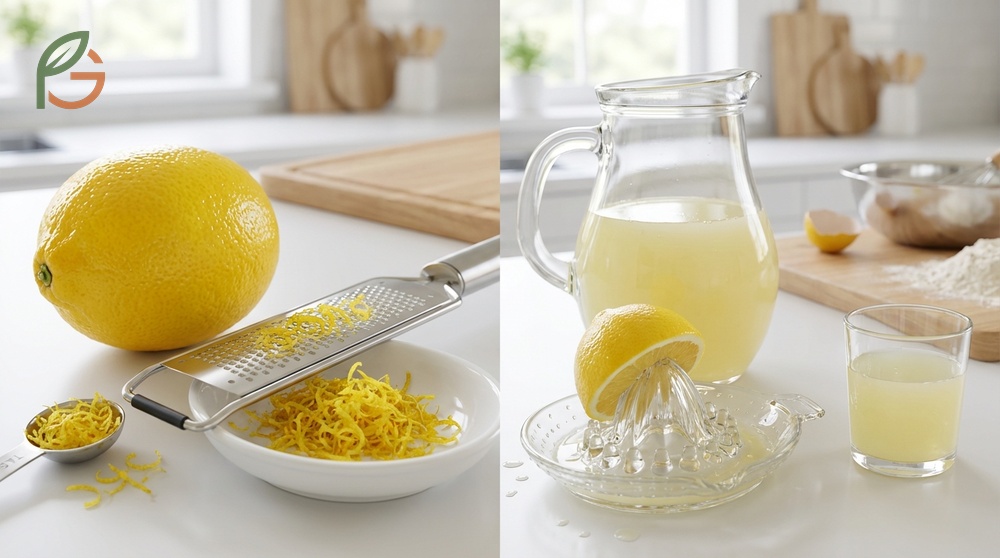
Lemon zest and juice serve different culinary purposes. One medium lemon produces about 1 tablespoon (3 teaspoons) of zest[2], which contains concentrated essential oils. Zest delivers intense lemon flavor without adding liquid or acidity to recipes.
Agricultural data from USDA sources shows that lemon peel contains 2-3 times more aromatic compounds than juice[4]. Bakers prefer zest for cakes and cookies because it provides lemon essence without making batters too thin. The oils in zest resist heat better than juice acids, maintaining flavor through baking.
Juice works better for liquids and marinades where both flavor and acidity matter. The citric acid in lemon juice tenderizes proteins and brightens other flavors. You can’t substitute zest for juice in recipes requiring acidity, like ceviche or lemon curd.
Evidence suggests that combining both zest and juice creates the most complex lemon flavor. Use 1 teaspoon of zest plus 2 tablespoons of juice per serving for salad dressings or sauces. This ratio balances aromatic oils with bright acidity.
- Flavor intensity: Zest is 2-3 times more concentrated than juice in aromatic oils
- Moisture content: Juice adds liquid while zest adds flavor without changing consistency
- Acidity: Juice provides pH 2-2.5 acidity; zest has minimal acid content
- Heat stability: Zest oils remain potent through baking; juice loses brightness above 350°F (177°C)
- Yield per lemon: 1 tablespoon zest vs 3-4 tablespoons juice from medium lemons
Storage Tip: Freeze extra lemon zest in ice cube trays for future use. It keeps its aromatic qualities for 3-4 months frozen, while juice quality degrades after 1 month in the freezer.
Conclusion
The evidence is clear: how much lemon juice in one lemon depends primarily on size, with medium lemons yielding 3-4 tablespoons, large ones producing 4-5 tablespoons, and small lemons giving 2-3 tablespoons. Mastering these measurements and extraction techniques ensures consistent results in your cooking.
Current guidance from culinary experts emphasizes choosing fresh, room-temperature lemons and using proper juicing methods to maximize yield. Whether you’re following a recipe or experimenting in the kitchen, understanding these conversions helps you work confidently with fresh citrus. Visit FruitGarden for more research-backed guides on making the most of your homegrown and store-bought produce.
Frequently Asked Questions
How many tablespoons of lemon juice are in one lemon?
A medium lemon contains 3-4 tablespoons of juice, which equals 1.5-2 fluid ounces. Large lemons yield 4-5 tablespoons, while small lemons produce 2-3 tablespoons depending on ripeness and juicing method.
How much lemon juice equals one lemon in recipes?
When a recipe calls for “juice of 1 lemon,” use 3-4 tablespoons of fresh or bottled lemon juice. If the recipe specifies large lemons, increase to 4-5 tablespoons for accurate flavor balance.
How much is half a lemon juiced?
Half a medium lemon produces approximately 1.5 tablespoons of juice. Half of a large lemon yields 2-2.5 tablespoons, while half of a small lemon gives you 1-1.5 tablespoons depending on freshness.
How many teaspoons of lemon juice are in one lemon?
One medium lemon contains 9-12 teaspoons of juice, since 1 tablespoon equals 3 teaspoons. Large lemons yield 12-15 teaspoons, while small lemons produce 6-9 teaspoons total.
How many ounces of lemon juice in a lemon?
A medium lemon yields 1.5-2 fluid ounces of juice. Large lemons produce 2-2.5 ounces, and small lemons give you 1-1.5 ounces. These measurements represent volume (fluid ounces), not weight.
What’s the zest of one lemon equal to in juice?
Zest and juice aren’t interchangeable—one medium lemon produces 1 tablespoon of zest versus 3-4 tablespoons of juice. Zest provides concentrated flavor without liquid or acidity, while juice adds both moisture and tartness to recipes.
Can you substitute bottled lemon juice for fresh lemon juice?
Yes, you can substitute bottled lemon juice using the same measurements—3-4 tablespoons per lemon. However, fresh juice tastes brighter and more complex because it contains essential oils that bottled versions lose during processing and storage.





