
How to make lemonade with lemon juice requires just three ingredients: fresh lemon juice, water, and a sweetener. Research shows that classic lemonade uses a 1:6 ratio of lemon juice to water, creating a perfectly balanced drink that’s neither too tart nor too sweet[1]. You’ll get the best flavor from fresh-squeezed lemons instead of bottled juice. FruitGarden brings you this expert guide with proven ratios and variations you can try at home.
Quick Answer
- Classic ratio: 1 cup lemon juice to 6 cups water[1]
- You need 6-8 medium lemons to yield 1 cup of fresh juice[2]
- Simple syrup dissolves better than granulated sugar—use ½ to 1 cup depending on sweetness preference[1]
- Fresh lemon juice contains significantly more vitamin C than bottled versions, which lose up to 50% during processing[3]
How to Make Lemonade with Lemon Juice
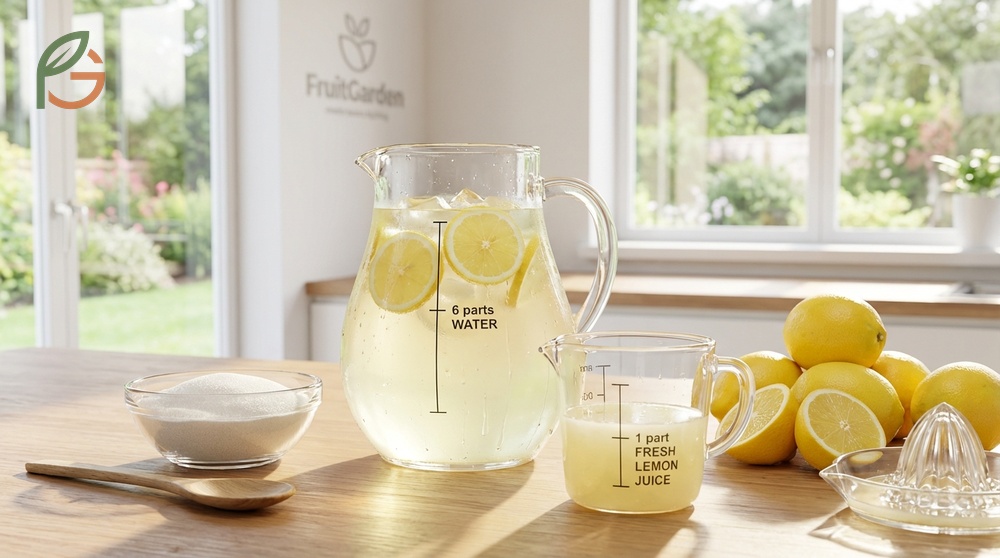
Making lemonade from scratch doesn’t require fancy equipment or complicated techniques. The process takes about 10 minutes from start to finish. You’re creating a drink that’s been enjoyed since the 1600s when lemonade first became popular in Paris.
Most people don’t realize that the secret to great lemonade isn’t just the ratio—it’s the order you mix the ingredients. Dissolving sugar in a small amount of warm water first creates a simple syrup that blends smoothly with cold water and lemon juice. This prevents that gritty texture you get when granulated sugar doesn’t fully dissolve.
Ingredients You Need
You’ll need three basic components for classic lemonade. Fresh lemons give you the brightest flavor and highest vitamin C content. The water dilutes the concentrated lemon juice to a drinkable strength.
Simple syrup sweetens the drink more evenly than regular sugar. You can substitute honey or agave nectar if you prefer natural sweeteners. Ice isn’t technically required but makes the lemonade much more refreshing.
- Fresh lemon juice: 1 cup from 6-8 medium lemons[2]
- Water: 6-8 cups cold water depending on desired strength
- Simple syrup: ½ to 1 cup based on sweetness preference[1]
- Ice: As needed for serving
- Optional garnishes: Lemon slices, fresh mint, or berries
Important note: Roll lemons on the counter with firm pressure before cutting. This breaks down the internal membranes and can increase juice yield by 20-30%.
Step-by-Step Instructions
Start by making your simple syrup if you haven’t prepared it ahead of time. Heat equal parts sugar and water until the sugar completely dissolves. Let it cool to room temperature before using.
Cut your lemons in half and juice them using a handheld juicer or reamer. Strain the juice through a fine-mesh sieve to remove seeds and pulp. Most people prefer smooth lemonade, though you can leave some pulp if you like texture.
Combine the lemon juice and simple syrup in a large pitcher. Add your cold water gradually while stirring. Taste as you go—you can always add more water if it’s too strong or more lemon if it’s too weak. Chill for at least 30 minutes before serving over ice.
From My Experience: My cousin in Guadalajara, Mexico grows Meyer lemons in her backyard and makes lemonade every summer. She discovered that letting the simple syrup cool completely before mixing prevents the lemon juice from losing its bright, fresh flavor—the batch stays vibrant for 5-6 days instead of the usual 3-4 days.
Lemon Juice to Water Ratio for Lemonade
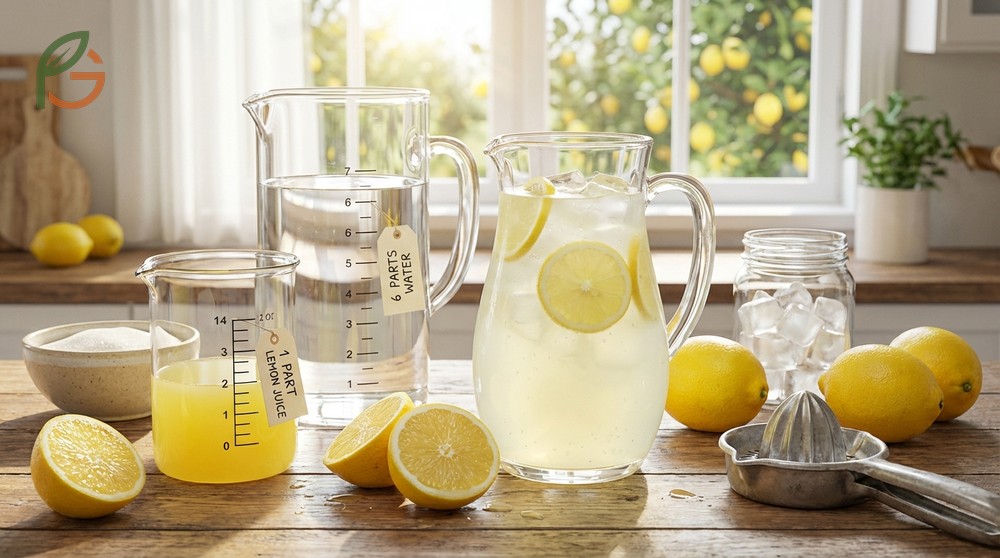
The standard ratio for balanced lemonade is 1 part lemon juice to 6 parts water. This creates a drink that’s tart enough to be refreshing but not so acidic that it makes your mouth pucker. Studies of traditional lemonade recipes consistently show this 1:6 ratio as the most popular[1].
Some recipes use a 1:5 ratio for stronger lemonade, while others stretch to 1:8 for a lighter drink. The key is understanding that lemon juice acidity varies by variety and ripeness. Meyer lemons are sweeter and less acidic than Eureka lemons, so you might need slightly more juice.
If you’re making lemonade by the glass rather than by the pitcher, use 2-3 tablespoons of lemon juice per 8-ounce glass. Add 1-2 tablespoons of simple syrup and fill with water. This single-serving approach lets everyone customize their own sweetness level.
This table compares three lemonade strength levels showing lemon juice amounts, water quantities, and resulting tartness for different taste preferences
| Strength Level | Lemon Juice | Water | Tartness |
|---|---|---|---|
| Strong | 1 cup | 5 cups | Very tart, bold lemon flavor |
| Classic | 1 cup | 6 cups[1] | Balanced, refreshing |
| Mild | 1 cup | 8 cups | Subtle, very light |
Adjusting for Taste Preferences
Everyone’s taste buds work differently, so don’t be afraid to adjust the ratio. Some people prefer sweeter lemonade with less tartness, while others want that mouth-puckering citrus punch. Start with the classic 1:6 ratio and adjust from there.
Temperature affects how we perceive sweetness and acidity. Lemonade tastes less sweet when it’s ice-cold, so you might need to add more simple syrup if you’re serving it over lots of ice. Warm lemonade tastes sweeter, which is why most recipes tell you to chill before the final taste test.
- Too tart: Add water in ¼ cup increments until balanced
- Too weak: Add lemon juice 1-2 tablespoons at a time
- Too sweet: Add more lemon juice or dilute with water
- Not sweet enough: Stir in simple syrup gradually
- Bitter aftertaste: You’ve extracted too much pith—strain more carefully next time
How to Make Lemonade with Bottled Lemon Juice
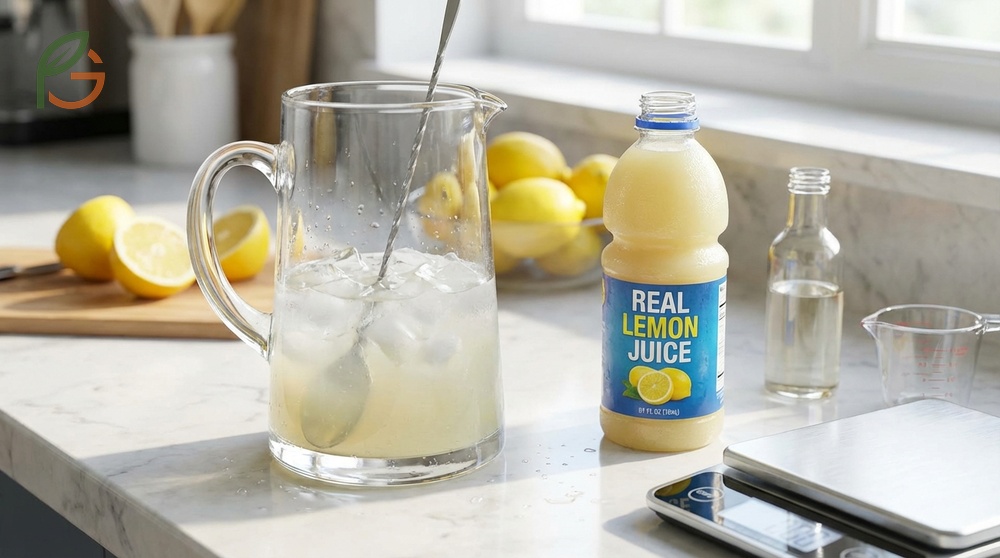
Bottled lemon juice works in a pinch when you don’t have fresh lemons available. The process is identical—just measure out your lemon juice, mix with simple syrup, and add water. However, you’re sacrificing significant nutritional value and flavor quality.
Studies show that bottled lemon juice loses up to 50% of its vitamin C during processing and storage[3]. The pasteurization process that extends shelf life also destroys heat-sensitive nutrients. Bottled juice often contains preservatives like sodium benzoate or sulphites, which some people are sensitive to.
The flavor difference is noticeable too. Bottled lemon juice tastes flatter and lacks the bright, zesty notes you get from fresh lemons. If you must use bottled juice, look for brands that say “not from concentrate” and don’t contain additives. Store opened bottles in the refrigerator and use within a week for best results.
Cost comparison: While bottled lemon juice seems cheaper upfront, you’re paying about $0.30-0.40 per ounce. Fresh lemons cost roughly $0.15-0.20 per ounce of juice when bought in season, and you get better flavor and nutrition.
- You’re making large batches for events (convenience matters more than perfection)
- Fresh lemons aren’t available in your area
- You’re on a tight timeline and can’t juice lemons
- The recipe includes other strong flavors that mask the difference
- You’re using it for cooking where heat will change the flavor anyway
Simple Syrup for Lemonade
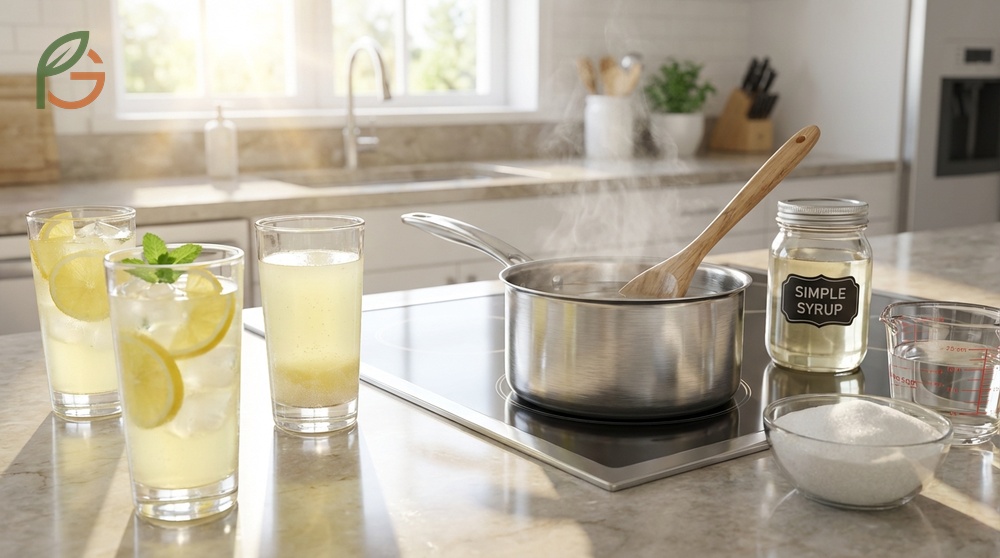
Simple syrup is just sugar dissolved in water, but it makes a huge difference in lemonade quality. Granulated sugar doesn’t dissolve well in cold liquids, leaving gritty sediment at the bottom of your glass. Simple syrup blends instantly and evenly throughout the drink.
The basic simple syrup recipe uses equal parts sugar and water by volume. Heat them together in a saucepan, stirring until the sugar completely dissolves[1]. You don’t need to boil it—just warm enough to dissolve the sugar. Let it cool before adding to your lemonade.
One batch of simple syrup lasts about a month in the refrigerator when stored in an airtight container. You can make it ahead in bulk and use it for multiple batches of lemonade. The slightly thicker consistency helps the sweetness coat your tongue more evenly than undissolved sugar crystals.
- Classic simple syrup: 1 cup sugar + 1 cup water (1:1 ratio)
- Rich simple syrup: 2 cups sugar + 1 cup water (2:1 ratio for sweeter drinks)
- Honey syrup: Replace sugar with honey for floral notes
- Herb-infused syrup: Add mint, basil, or lavender while heating
- Fruit syrup: Simmer with berries or stone fruit for flavored sweetener
For sugar-free options, you can make simple syrup with alternative sweeteners. Stevia liquid drops work but have a distinct aftertaste that not everyone enjoys. Monk fruit sweetener dissolves well and doesn’t spike blood sugar. Erythritol-based sweeteners provide bulk similar to sugar but can cause digestive issues for some people.
Lemonade Variations
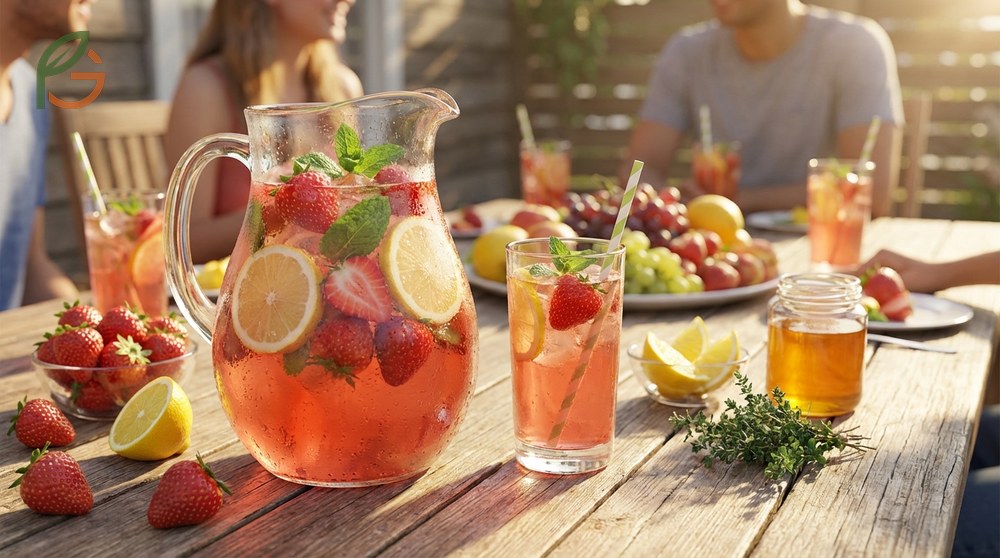
Once you’ve mastered basic lemonade, dozens of variations open up. The foundation stays the same—lemon juice, water, and sweetener—but you can add fruits, herbs, or carbonation for different flavors. These variations work well for parties or when you want something more interesting than plain lemonade.
Strawberry Lemonade Recipe
Strawberry lemonade combines berry sweetness with lemon tartness for a balanced summer drink. Research shows that strawberries provide 444% of your daily vitamin C per pound, complementing the vitamin C already in lemon juice[2]. The natural sweetness of ripe strawberries means you can reduce added sugar by about 25%.
Hull and puree ½ pound of fresh strawberries in a blender. Strain through a fine-mesh sieve to remove seeds if you want smooth lemonade. Mix the strawberry puree with 1½ cups lemon juice, 1½ cups simple syrup, and 4-5 cups water[2]. Adjust water to taste.
Frozen strawberries work too, especially outside of strawberry season. Thaw them completely and drain excess liquid before pureeing. The flavor won’t be quite as bright as fresh berries, but you’ll still get good results.
Sugar Free Lemonade Options
Sugar-free lemonade uses alternative sweeteners to reduce calories and keep blood sugar stable. The challenge is finding sweeteners that don’t leave an artificial aftertaste. Natural fruit-based sweeteners work better than most artificial options for maintaining that classic lemonade flavor[4].
Pineapple juice provides natural sweetness without added sugar. Use ¼ cup pineapple juice in place of simple syrup for a tropical twist. Apple juice concentrate is another option that works well—2-3 tablespoons per glass adds sweetness without refined sugar[5].
If you prefer zero-calorie sweeteners, liquid stevia drops give you the most control over sweetness levels. Start with 5-10 drops per glass and adjust. Monk fruit sweetener is another natural option that doesn’t affect blood sugar.
Sparkling and Mint Lemonade
Sparkling lemonade adds carbonation for a fizzy, sophisticated drink similar to Italian limonata. Replace half the water with club soda or unsweetened sparkling water[6]. Add the sparkling water right before serving—don’t mix it in advance or you’ll lose the carbonation.
Mint lemonade is incredibly refreshing on hot days. Make a mint-infused simple syrup by heating 1 cup fresh mint leaves with your sugar and water. Let it steep for 20-30 minutes off the heat, then strain out the wilted mint[6]. Use this mint syrup in place of regular simple syrup.
You can combine both variations for sparkling mint lemonade. The mint adds complexity while the bubbles make it feel celebratory. This version works great as a mocktail for parties or as a refreshing afternoon pick-me-up.
- Lavender lemonade: Steep 2 tablespoons dried lavender in simple syrup
- Cucumber lemonade: Muddle ½ cucumber with lemon juice before adding water
- Ginger lemonade: Add 1-2 tablespoons fresh grated ginger to simple syrup
- Blueberry lemonade: Puree ½ cup blueberries and strain into lemonade
- Basil lemonade: Infuse simple syrup with fresh basil for herbal notes
Conclusion
The evidence is clear: making perfect lemonade comes down to using fresh ingredients and the right ratios. How to make lemonade with lemon juice isn’t complicated—you just need 1 cup of fresh lemon juice, 6 cups of water, and ½ to 1 cup of simple syrup. Fresh lemons deliver superior flavor and nutrition compared to bottled juice, with significantly higher vitamin C content and no artificial preservatives.
Current culinary guidance emphasizes homemade simple syrup over granulated sugar for smoother texture and better flavor distribution. Whether you’re making classic lemonade or trying variations like strawberry or mint, the foundation remains the same. FruitGarden encourages you to experiment with different ratios and natural sweeteners until you find your perfect balance.
Frequently Asked Questions
How much lemon juice do I need for one gallon of lemonade?
You’ll need approximately 1⅓ cups of lemon juice for one gallon of lemonade using the classic 1:6 ratio. This translates to about 8-10 medium lemons. Add 1-1½ cups of simple syrup depending on your sweetness preference.
Can I make lemonade ahead of time?
Yes, homemade lemonade lasts about 5-7 days when stored in an airtight container in the refrigerator. The flavor is best within the first 3 days. Don’t add ice until you’re ready to serve—dilution will weaken the flavor.
What’s the best type of lemon for making lemonade?
Eureka and Lisbon lemons are the most common varieties for lemonade—they’re tart and acidic with high juice content. Meyer lemons work if you prefer sweeter, less acidic lemonade, but you’ll need about 20% more juice to achieve the same tartness level.
How do I make lemonade less sour?
Add more simple syrup or water to reduce sourness. Start by adding ¼ cup of simple syrup at a time, tasting between additions. If it’s still too tart after adding sweetener, dilute with an extra cup of water.
Is homemade lemonade healthier than store-bought?
Homemade lemonade is significantly healthier because you control the sugar content and avoid artificial preservatives, colors, and flavors found in most commercial versions. Fresh lemon juice also provides more vitamin C and antioxidants than processed alternatives.
Can I freeze lemonade?
Yes, you can freeze lemonade for up to 3 months. Leave about 1 inch of headspace in the container since liquids expand when frozen. Thaw in the refrigerator overnight and stir well before serving—the ingredients may separate during freezing.
What’s the difference between lemonade and lemon water?
Lemonade is sweetened with sugar or simple syrup and uses a higher concentration of lemon juice (1:6 ratio). Lemon water is unsweetened and much more diluted—typically just a few slices or a tablespoon of juice per glass of water.





