
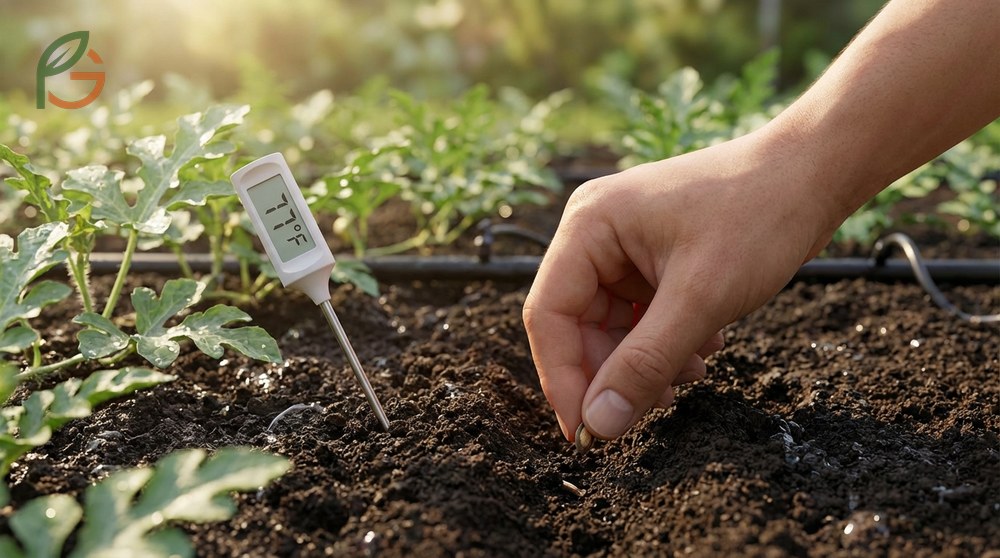
How to Grow Watermelon? Research shows that watermelons thrive when seeds are planted 1 inch deep in soil temperatures between 68-95°F (20-35°C), with optimal germination occurring at 77°F (25°C)[1]. Plants need 6.0-6.8 pH soil, consistent watering, and 4-foot spacing to produce sweet melons in 70-85 days. FruitGarden synthesizes current agricultural research and climate data to help growers achieve maximum yields through evidence-based cultivation methods.
Quick Answer
How to Grow Watermelon
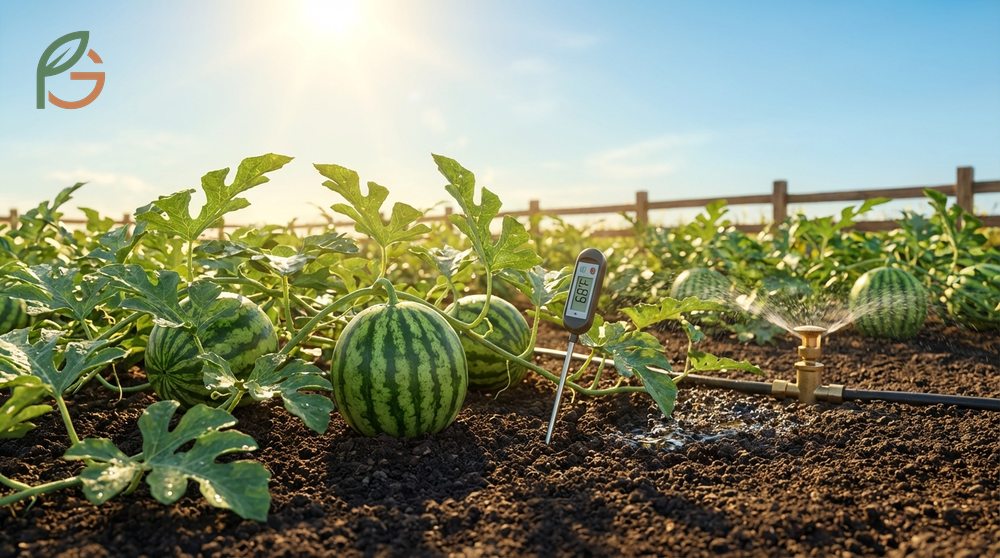
Research shows that watermelons require warm soil, full sun exposure, and consistent moisture throughout their 70-85 day growing season[3]. Seed germination won’t occur below 60°F (16°C), making spring planting essential after the last frost date[2]. What most growers don’t realize is that soil temperature matters more than air temperature—cold soil delays germination by weeks even when daytime temps feel warm.
Successful watermelon cultivation depends on selecting the right location with at least 8 hours of direct sunlight daily. Sandy loam soils with excellent drainage provide ideal conditions, preventing root rot while allowing roots to penetrate deeply[2]. Heavy clay soils slow plant development and reduce fruit size significantly.
The growing season varies by region, with southern areas starting in late March and northern zones waiting until mid-April. Transplants take 3-5 weeks to reach field-ready size, giving northern gardeners a head start on the short season[1].
From My Experience: My cousin in Guadalajara, Mexico started watermelon seeds indoors in March 2024. Seeds germinated in 4 days at 78°F (26°C) versus the typical 5-7 day range, achieving 90% success rate with the heated seed mat.
Soil Preparation and Site Selection
Studies demonstrate that soil pH between 6.0-6.8 optimizes nutrient absorption, though watermelons tolerate slightly acidic conditions down to 5.5[2]. Test your soil 3-4 weeks before planting to allow time for pH adjustments with lime or sulfur. Add 4 inches of organic matter mixed into the top 6 inches of soil to improve both drainage and water retention.
Creating raised mounds or hills improves drainage dramatically in areas with heavy rainfall. Dig holes 12 inches deep and 24 inches wide, filling them with compost, aged manure, and sand before mounding the remaining soil[4]. This technique warms the soil faster and prevents waterlogged roots during wet periods.
- Test soil pH 3-4 weeks before planting and adjust to 6.0-6.8 range
- Mix 4 inches of compost or aged manure into top 6 inches of soil
- Create raised mounds 12 inches high for improved drainage
- Ensure site receives minimum 8 hours direct sunlight daily
- Select locations with sandy loam texture over heavy clay
- Rotate planting areas on 3-4 year cycle to reduce disease pressure
Optimal Planting Conditions
Evidence indicates that watermelon seeds germinate best when soil temperatures reach 77°F (25°C), producing seedlings in approximately 5 days[1]. Below 70°F (21°C), germination becomes very slow and erratic. Use a soil thermometer inserted 2 inches deep to check morning temperatures before planting—waiting an extra week for warm soil beats replanting failed seeds.
Timing depends on your USDA hardiness zone and frost-free dates. Plant 2 weeks after the last spring frost when soil has warmed adequately. Short-season areas benefit from starting transplants indoors 3-4 weeks early, while long-season regions can direct-sow successfully.
Important Planting Timing: Don’t rush spring planting based on calendar dates alone. Cold soil below 60°F (16°C) causes seed rot and fungal diseases. Wait until soil temperatures stabilize above 65°F (18°C) for at least 3 consecutive days before sowing.
How to Plant Watermelon Seeds
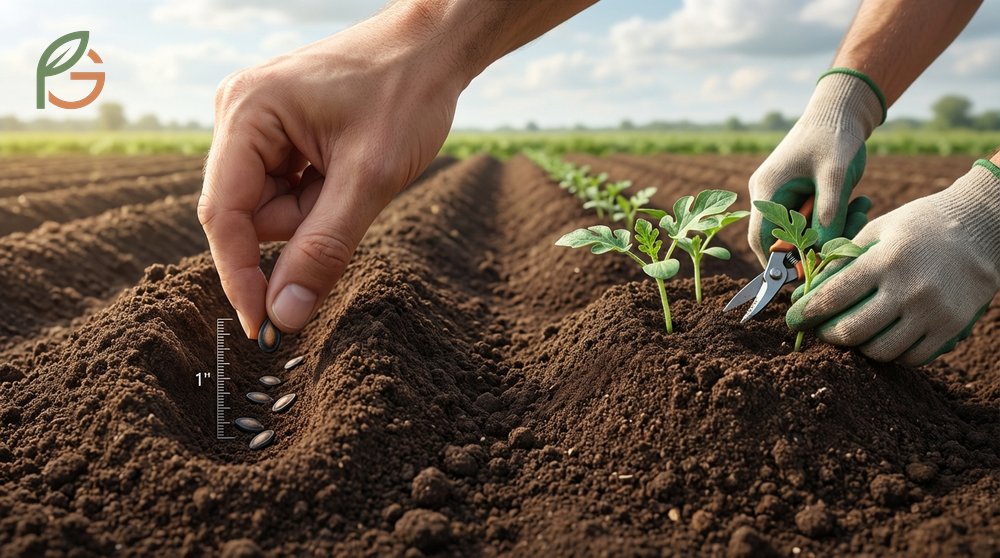
Current agricultural data shows that planting depth and spacing directly affect germination rates and final yields. Seeds should be planted approximately 1 inch deep in prepared mounds or hills[1]. Planting too deep delays emergence, while shallow planting dries out seeds before they can sprout.
The standard practice involves sowing 4-6 seeds per hill to ensure adequate stand establishment[4]. After seedlings develop 3-4 true leaves, thin to the strongest 2-3 plants by cutting unwanted seedlings at soil level with scissors—pulling them damages neighboring roots. This approach accounts for variable germination rates typically ranging from 85-90%.
Precision matters with expensive hybrid seeds. Many commercial growers now use precision seeding equipment or transplants to reduce seed waste and eliminate thinning labor. Home gardeners can achieve similar results by starting seeds in 4-inch pots indoors and transplanting the strongest seedlings.
Seed Depth and Spacing
Research across multiple growing regions confirms that plant spacing significantly impacts melon size and total yield. Standard spacing calls for hills placed 4 feet apart with 6 feet between rows[2]. Closer spacing produces more melons per acre but reduces individual fruit size—critical for growers targeting specific market sizes.
High-density plantings using 9-18 square feet per plant increase total yields but require adjusted fertility and pest management. Vines intertwine more quickly, providing wind protection but reducing air circulation. Choose your spacing based on your market—farmers’ markets prefer larger melons, while small “personal” watermelons suit closer spacing.
This table compares planting density, expected fruit size, plants per acre, and recommended applications across four watermelon spacing configurations from high-density to wide spacing
| Spacing Configuration | Square Feet per Plant | Expected Fruit Size | Best Application |
|---|---|---|---|
| High Density | 9 sq ft | Small (8-12 lbs) | Personal melons, limited space |
| Medium Density | 12 sq ft | Medium (12-18 lbs) | Grocery store sizes |
| Standard Spacing | 18-24 sq ft[2] | Large (18-25 lbs) | Farmers’ market, home gardens |
| Wide Spacing | 36+ sq ft | Extra Large (25-40 lbs) | Competition melons, giant varieties |
Transplanting Seedlings
Agricultural guidance emphasizes that transplants reduce the growing season by 2-3 weeks compared to direct seeding. Start seeds indoors 3-5 weeks before the transplant date using individual 4-inch containers[1]. Watermelons don’t transplant well once roots become pot-bound, so timing matters.
Harden off seedlings gradually over 7-10 days before planting outdoors. Reduce watering slightly and expose plants to outdoor conditions for increasing periods daily. Transplant on a cloudy afternoon or evening to minimize transplant shock, and water immediately with a starter fertilizer solution.
- Start seeds in 4-inch pots 3-5 weeks before outdoor planting date
- Maintain soil temperature at 70-75°F (21-24°C) for optimal germination
- Harden off seedlings over 7-10 days before transplanting
- Transplant when seedlings have 2-3 true leaves and strong stems
- Set transplants at same depth they grew in containers
- Water immediately with diluted starter fertilizer solution
- Protect from wind and cold nights with row covers for first week
Best Fertilizer for Watermelon Plants
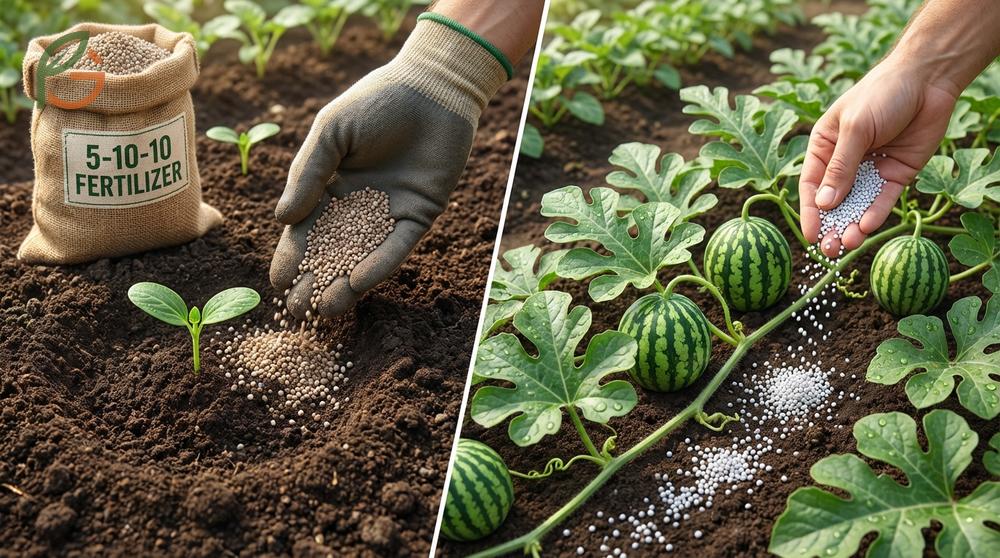
Studies demonstrate that watermelons have distinct nutrient requirements at different growth stages. Initial soil preparation should include 5-10-10 fertilizer applied at 15 pounds per 500 square feet, worked into the soil 2-3 weeks before planting. This provides adequate phosphorus for root development while preventing nitrogen excess that promotes foliage over fruit.
Side-dress applications become critical when vines begin running. Apply nitrogen-rich fertilizer 6-8 inches from the main stem when vines reach 12-18 inches long, then again when fruits set. Switch to low-nitrogen, high-potassium fertilizers during fruit development to improve sugar content and flavor. Excessive nitrogen during fruiting produces large vines but small, poorly-flavored melons.
Organic growers achieve excellent results with compost tea applications every 2-3 weeks and aged manure worked into planting mounds. These slow-release nutrients support steady growth without the boom-bust cycle of synthetic fertilizers. Fish emulsion provides quick nitrogen boosts when vines show yellowing leaves.
Fertilization Warning: Avoid high-nitrogen fertilizers after fruits reach baseball size. Excess nitrogen at this stage reduces sugar accumulation and produces bland, watery melons. Switch to 0-0-60 or similar high-potassium formulas to maximize sweetness.
- Pre-planting: 5-10-10 fertilizer at 15 lbs per 500 sq ft, 2-3 weeks before planting
- Vine growth stage: Side-dress with 10-10-10 when vines reach 12-18 inches
- Early fruiting: Apply balanced fertilizer when first fruits appear
- Fruit development: Switch to high-potassium (0-0-60) formula for sweetness
- Organic option: Compost tea every 2-3 weeks plus aged manure in mounds
Pollinating Watermelon Flowers
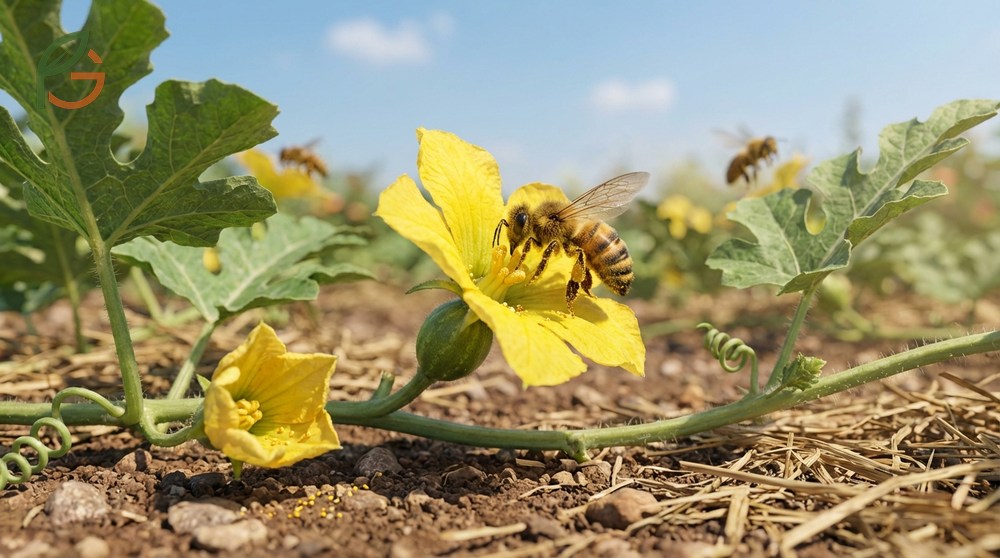
Current research shows that effective watermelon pollination requires 500-1,000 pollen grains per female flower, demanding a minimum of 8 bee visits for proper fertilization[5]. Watermelons produce separate male and female flowers on the same plant, with male flowers appearing 7-14 days before females. This timing gap creates pollination challenges if bee populations are insufficient during the critical female flowering period.
Honeybees and native bees carry sticky pollen on their fuzzy bodies as they collect nectar, transferring it between flowers. Each bee can pollinate hundreds of flowers daily when conditions are favorable[6]. Poor pollination results in misshapen fruits, hollow centers, or premature fruit drop—problems often mistaken for nutrient deficiencies.
Hand pollination provides insurance when bee activity is low due to weather or pesticide use. Identify female flowers by the small swelling at the base resembling a tiny watermelon. Remove a fresh male flower in the morning, peel back petals, and gently brush the pollen-covered anther against the female stigma. One male flower can pollinate 2-3 females.
- Female flowers require 500-1,000 pollen grains for complete fertilization[5]
- Each flower needs minimum 8 honeybee visits for adequate pollination
- Flowers open for only one day, closing by afternoon
- Avoid pesticide applications during morning flowering hours (6-10 AM)
- Plant pollinator-attracting flowers nearby to increase bee populations
- Hand-pollinate in cool, rainy weather when bee activity drops
Pollination Timing: Watermelon flowers open early morning and close by noon. Pollination must occur during this narrow window when both pollen is viable and stigmas are receptive. Plan hand pollination for 7-9 AM on calm, sunny mornings.
How to Prune Watermelon Plants
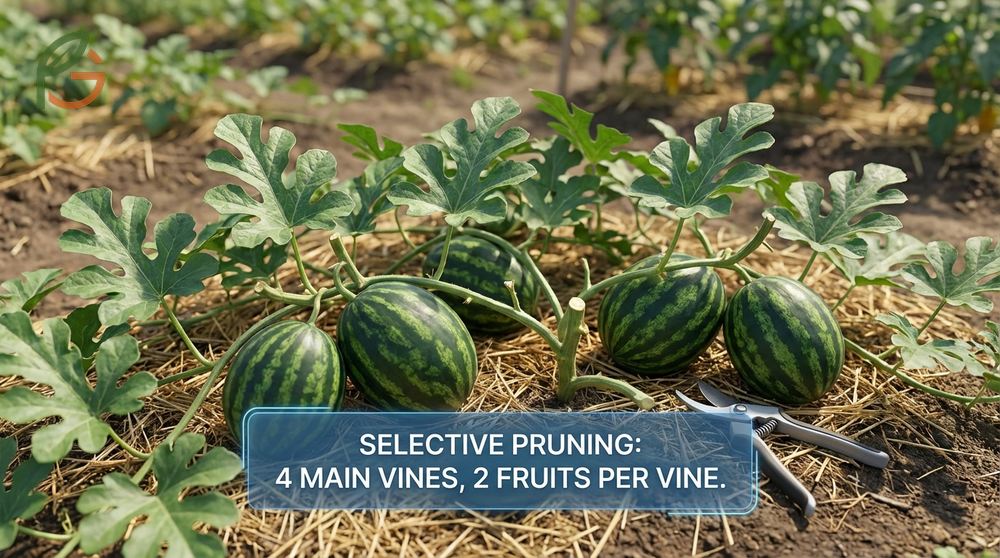
Research demonstrates that selective pruning increases individual fruit size and improves overall plant health. Studies show that pruning watermelons to four main vines with two fruits per vine produced the highest number of quality fruits per plant[7]. This technique redirects energy from excessive foliage into fruit development, producing larger, sweeter melons.
Pruning isn’t strictly necessary for watermelon success, but it helps manage plant size and focuses resources. Remove secondary vines that aren’t producing blooms or look weak and spindly. Cut diseased, yellowing, or pest-damaged leaves at the joint where they connect to the main stem. Always use sharp, sanitized shears and prune during dry conditions—wet foliage spreads diseases rapidly.
Fruit thinning complements vine pruning by ensuring remaining melons reach full size before frost. Leave 2-5 fruits per plant for large varieties or 3-6 for small types. Remove irregular, damaged, or late-setting fruits that won’t mature in time. This practice becomes essential in short-season areas where early frost threatens late-developing fruits.
- Prune to 4 main vines with 2 fruits per vine for maximum quality[7]
- Remove diseased, yellowing, or damaged leaves at stem junction
- Cut off weak secondary vines not producing flowers
- Thin fruits to 2-5 per plant (large varieties) or 3-6 (small varieties)
- Prune only during dry weather to prevent disease spread
- Sanitize pruning shears between plants with 10% bleach solution
- Stop all pruning 2-3 weeks before harvest to avoid shocking plants
Companion Planting Watermelon
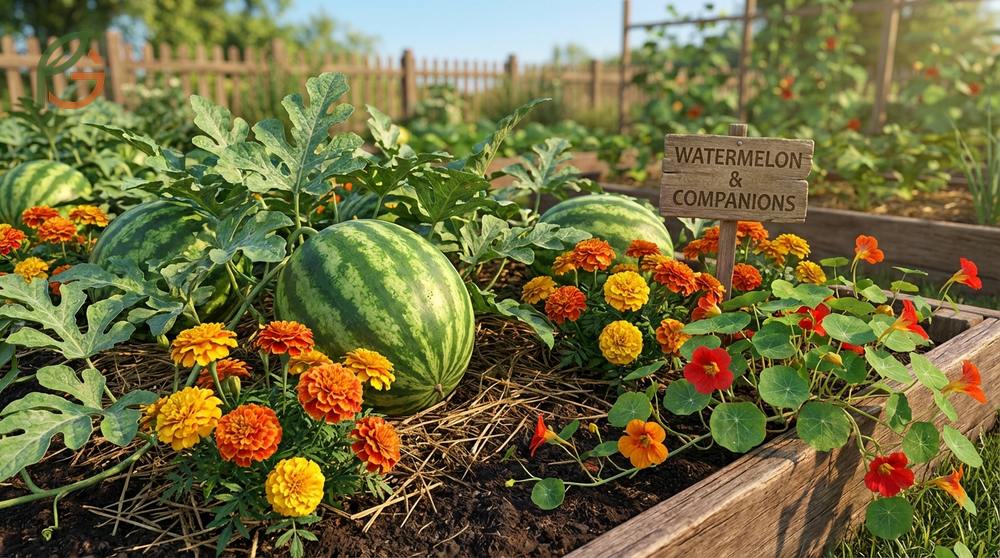
Agricultural data shows that strategic companion planting reduces pest pressure naturally while improving overall garden health. Marigolds excel as watermelon companions by repelling nematodes—microscopic soil worms that attack roots—and deterring squash bugs through root exudates[8]. Plant marigolds 6-8 inches apart around watermelon hills or between rows.
Nasturtiums function as trap crops, attracting aphids, whiteflies, and cucumber beetles away from watermelon vines. Their pungent scent repels many pests while simultaneously attracting beneficial insects like ladybugs and lacewings that prey on harmful species. Sow nasturtium seeds 1 inch deep and 12 inches apart around the perimeter of watermelon patches.
Herbs including basil, oregano, dill, and sage offer dual benefits—pest deterrence and pollinator attraction. These shallow-rooted plants don’t compete with watermelon roots for nutrients. Sage specifically repels flea beetles and cabbage loopers, both occasional watermelon pests. Space herbs 12-18 inches from watermelon stems to allow vine spread.
| Companion Plant | Primary Benefit | Planting Distance |
|---|---|---|
| Marigolds | Repels nematodes, squash bugs, aphids[8] | 6-8 inches apart |
| Nasturtiums | Trap crop for aphids, cucumber beetles | 12 inches apart |
| Basil | Attracts pollinators, repels thrips | 12-18 inches from vines |
| Radishes | Repels cucumber beetles, quick harvest | 4-6 inches apart |
Companion Planting Caution: Avoid planting watermelons near cucumbers, squash, or pumpkins. These close relatives share pest and disease susceptibilities, creating concentrated attack zones. Cross-pollination between species can also reduce fruit quality in some varieties.
Conclusion
The evidence is clear: How to Grow Watermelon successfully comes down to proper soil temperature (68-95°F), optimal pH (6.0-6.8), adequate spacing (4 feet), and consistent care through the 70-85 day growing season. Start with warm soil, maintain steady moisture without waterlogging, and ensure sufficient pollination for well-formed fruits.
Current agricultural guidance emphasizes soil preparation and pollinator support as the foundation for maximum yields. FruitGarden continues to synthesize the latest cultivation research to help growers achieve sweet, abundant harvests through evidence-based methods adapted to regional conditions.
Frequently Asked Questions
How Deep to Plant Watermelon Seeds?
Plant watermelon seeds approximately 1 inch deep in prepared soil[1]. Deeper planting delays emergence, while shallower depth risks drying out before germination. Firm soil gently over seeds and water thoroughly to ensure good seed-to-soil contact.
How Many Watermelon Seeds per Hole?
Sow 4-6 watermelon seeds per hill to account for typical 85-90% germination rates[4]. After seedlings develop 3-4 true leaves, thin to the strongest 2-3 plants by cutting unwanted seedlings at soil level with scissors. This prevents disturbing roots of remaining plants.
How Much Water Does a Watermelon Plant Need?
Watermelon plants need 1-2 inches of water per week, delivered through deep, infrequent watering rather than daily sprinkles. Drip irrigation works best, maintaining consistent soil moisture while keeping foliage dry to prevent diseases. Reduce watering as fruits near maturity to concentrate sugars and improve flavor.
What Is the Soil pH for Watermelon?
Watermelons grow best in soil with pH between 6.0-6.8, though they tolerate slightly acidic conditions down to 5.5[2]. Test soil 3-4 weeks before planting and apply lime if pH falls below 5.5. This range optimizes nutrient availability, particularly phosphorus and micronutrients essential for fruit development.
What Is the Spacing for Watermelon Plants?
Standard spacing calls for hills 4 feet apart with 6 feet between rows[2]. This provides 24 square feet per plant for optimal fruit size. Closer spacing increases total yield but reduces individual melon size, while wider spacing produces fewer but larger fruits suitable for farmers’ markets.
How Do You Know When Watermelon Is Ready to Harvest?
The most reliable indicator is when the tendril closest to the fruit turns brown and dies back, combined with the ground spot changing from greenish-white to buttery yellow[9]. Harvest timing varies by variety but typically occurs 70-85 days after planting. Leave 2 inches of stem attached when cutting fruits from vines.
Can You Plant Watermelon Seeds From a Watermelon?
Yes, you can plant seeds from open-pollinated watermelon varieties with reliable results. However, seeds from hybrid watermelons won’t produce fruits matching the parent—they may revert to inferior characteristics or produce no viable seeds. Rinse seeds thoroughly, dry them for 1-2 weeks, and store in a cool, dry place until spring planting.





