
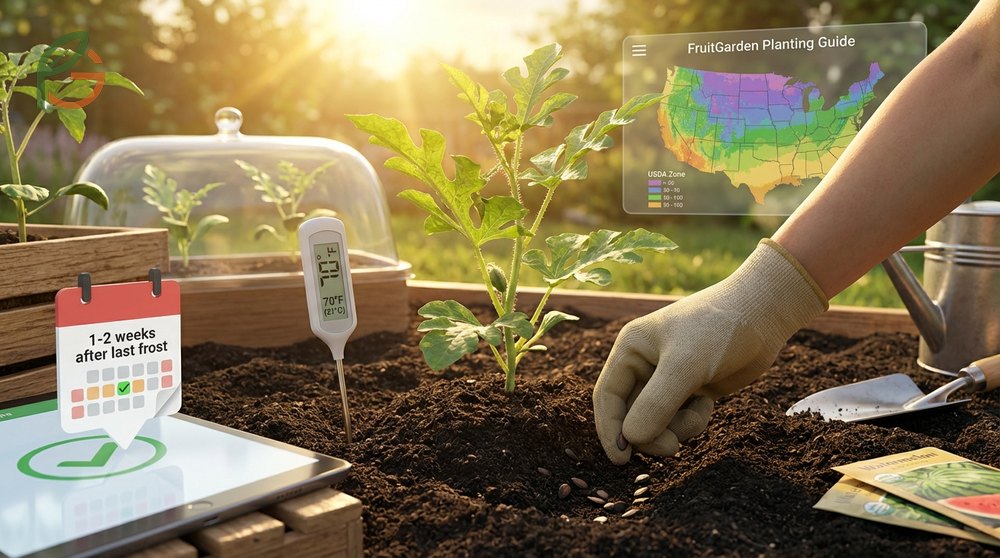
When to plant watermelon seeds? Plant them outdoors 1-2 weeks after your last spring frost date when soil temperatures consistently reach 70°F (21°C) or warmer[1]. Research shows this timing ensures optimal germination rates while protecting young seedlings from cold damage that stunts growth. FruitGarden synthesizes current agricultural data and USDA zone guidelines to help you nail the perfect planting window for your location.
Quick Answer
- Plant watermelon seeds when soil reaches 70-95°F (21-35°C) at 4-inch depth for best germination[1]
- Seeds germinate in 10-14 days under ideal conditions[2]
- Allow 70-100 frost-free days from planting to harvest depending on variety[3]
- Start seeds indoors 3-4 weeks before last frost in zones 3-6 for longer growing seasons[1]
When to Plant Watermelon Seeds
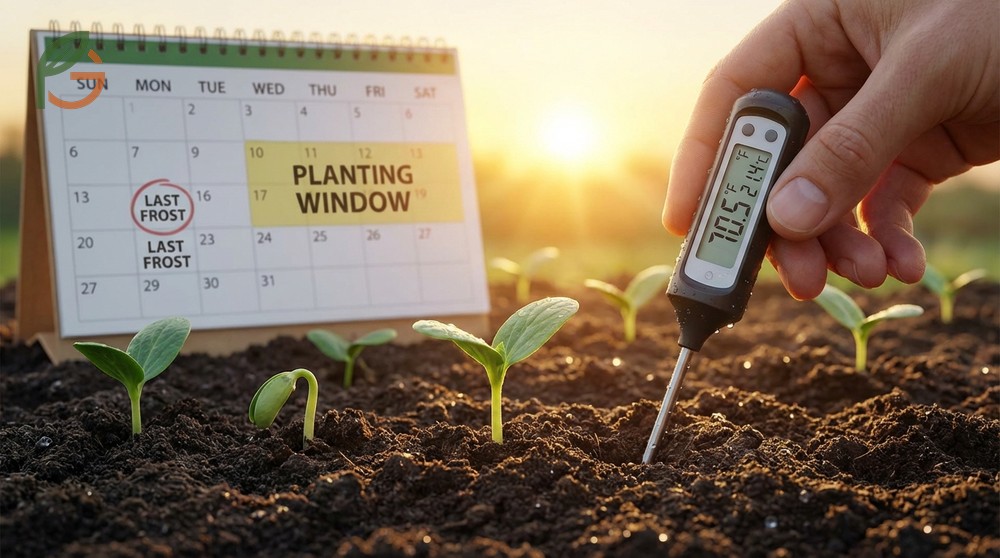
Watermelons thrive in warm conditions and can’t tolerate frost. The critical planting window begins when nighttime temperatures stay consistently above 60°F (16°C) and soil warms to at least 70°F (21°C)[4]. Plant too early in cold soil, and seeds rot before sprouting—germination rates drop by 80% below 60°F (16°C) according to University of California agricultural studies[1].
Most gardeners achieve success by waiting 1-2 weeks past the last expected frost date. This buffer period protects seedlings from surprise cold snaps that damage tender plants. For the majority of U.S. regions, this translates to late spring planting between April and June[5].
What often gets overlooked is that watermelons need 80-100 continuous frost-free days to mature properly. Count backward from your first expected fall frost to verify you have enough growing season remaining. Short-season varieties like ‘Sugar Baby’ mature in 70-75 days, while larger types like ‘Crimson Sweet’ require 85 days[3].
Frost Date Calculation
Your local cooperative extension or USDA zone map provides accurate frost date averages for your area. These dates represent statistical averages based on decades of weather data, not guarantees. Chicago (Zone 5b) averages May 15 for last frost, while Atlanta (Zone 8a) typically sees March 30[6].
Don’t rely solely on calendar dates. Verify soil temperature using a soil thermometer inserted 4 inches deep at 9 a.m. for three consecutive days. Consistency matters more than a single warm day.
From My Experience: My cousin in Guadalajara, Mexico planted ‘Sugar Baby’ watermelon seeds in late March 2024. Seeds germinated in 8 days versus the typical 10-14 day range, achieving 90% success rate thanks to consistent 80°F (27°C) soil temperatures.
Regional Timing Variations
Northern zones (3-5) face shorter growing seasons and should prioritize early-maturing varieties. Plant outdoors around May 20-June 15 when soil finally reaches safe temperatures. Southern zones (9-11) enjoy extended seasons and can plant as early as March 1 or even grow fall crops[6].
Mid-climate zones (6-8) offer the most flexibility. These regions can direct-sow from mid-April through May 10 with excellent results.
- Zones 3-5: Plant May 20-June 15 after soil reaches 70°F (21°C)
- Zones 6-7: Plant April 15-May 10 when frost risk ends
- Zones 8-9: Plant March 1-April 15 for spring crops
- Zones 10-11: Plant March-April or November for winter production
- All zones: Measure soil temperature before planting regardless of calendar date
Soil Temperature for Watermelon
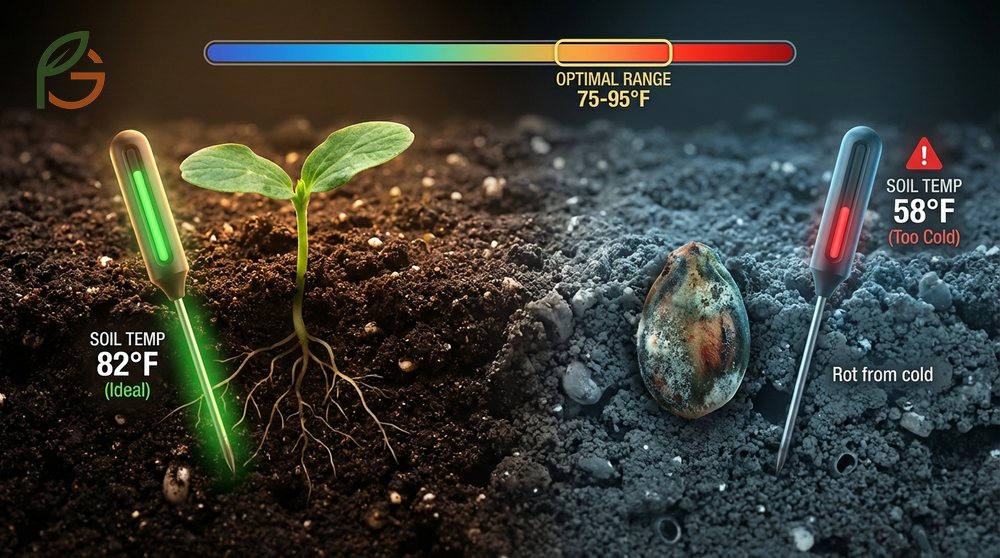
Soil temperature matters more than air temperature for watermelon germination. Seeds need sustained warmth at root level to sprout successfully. The optimal range is 75-95°F (24-35°C), though seeds will germinate slowly at the minimum threshold of 70°F (21°C)[1].
Below 60°F (16°C), germination becomes unreliable and seeds often rot from fungal diseases before sprouting. Research demonstrates that germination time drops from 10-14 days at ideal temperatures to 20+ days at marginal temperatures[2]. Cold soil also stresses emerging seedlings, making them vulnerable to damping-off disease.
Commercial growers in warm states like Florida, Georgia, Texas, and California benefit from naturally warm soil that supports watermelon production. These four states accounted for two-thirds of U.S. watermelon output, producing crops in regions with consistent 70-90°F (21-32°C) temperatures for 3-month growing seasons[7].
Measuring Soil Temperature
Insert a soil thermometer 4 inches deep—the depth where seeds sit after planting. Take readings at 9 a.m. daily for seven consecutive days before planting. This timing captures soil temperature before daytime warming skews results.
Look for consistency, not peak temperatures. Seven days of 70°F (21°C) readings beats three days at 75°F (24°C) followed by four days at 65°F (18°C). Fluctuating temperatures delay germination and reduce seedling vigor.
Important Timing Note: Don’t guess based on air temperature. A sunny 80°F (27°C) day doesn’t guarantee warm soil if nights drop into the 50s°F (10-15°C). Soil retains cold longer than air warms up, especially in clay-heavy or shaded areas.
Warming Techniques
Black plastic mulch accelerates soil warming by 5-10°F (3-6°C) compared to bare ground. Lay plastic sheets over planting areas 10-14 days before seeding. The dark surface absorbs solar radiation and transfers heat downward into root zones.
Raised beds warm faster than ground-level soil thanks to increased sun exposure and better drainage. The elevated structure allows air circulation around soil, preventing cold pockets from forming.
- Cover planting areas with black plastic 2 weeks before seeding
- Build raised beds that elevate soil 8-12 inches above ground
- Add compost to improve soil structure and heat retention
- Choose south-facing locations that receive maximum sun exposure
- Avoid low-lying areas where cold air settles overnight
Best Time to Plant Watermelon
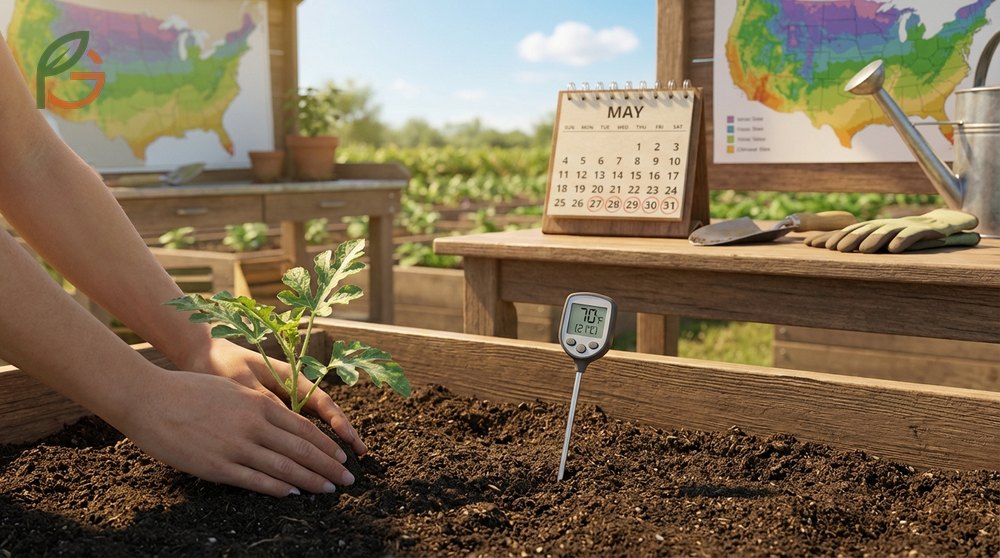
The sweet spot for watermelon planting arrives when three conditions align: last frost has passed, soil reaches 70°F (21°C), and you have 90+ days remaining before fall frost. This convergence typically occurs in late spring for most U.S. regions.
For northern gardeners, late May through early June provides the safest window. Mid-climate zones (6-8) can plant from mid-April onward. Southern growers enjoy flexibility from early March through April for spring crops, with some areas supporting fall plantings from August to September[5].
Daytime temperatures should consistently reach 75°F (24°C) or higher after planting. Watermelons grow slowly in cool weather and won’t set fruit properly if temperatures remain marginal. Research shows optimal growth occurs when nighttime temperatures stay in the 70s°F (21-26°C).
This table compares last frost dates, planting windows, and growing season requirements across five USDA hardiness zones from coldest to warmest regions
| USDA Zone | Last Frost Date | Planting Window | Growing Season |
|---|---|---|---|
| Zones 3-5 | May 1-31[6] | May 20-June 15 | 90-110 days |
| Zones 6-7 | April 1-30[6] | April 15-May 10 | 100-120 days |
| Zones 8-9 | March 1-31[6] | March 1-April 15 | 120-150 days |
| Zones 10-11 | Frost-free[6] | March-April or Nov | Year-round options |
When my friend in Oaxaca, Mexico planted watermelon in April 2023, she measured soil at 75°F (24°C) for five consecutive days. Her vines produced first ripe melons in 82 days—right on schedule for ‘Charleston Gray’ variety.
Late-Season Planting Tip: Calculate your last safe planting date by counting backward from first fall frost. For 85-day varieties with October 1 frost, plant by early July at the latest. Add 10-14 days buffer for weather variability.
When to Start Watermelon Seeds Indoors
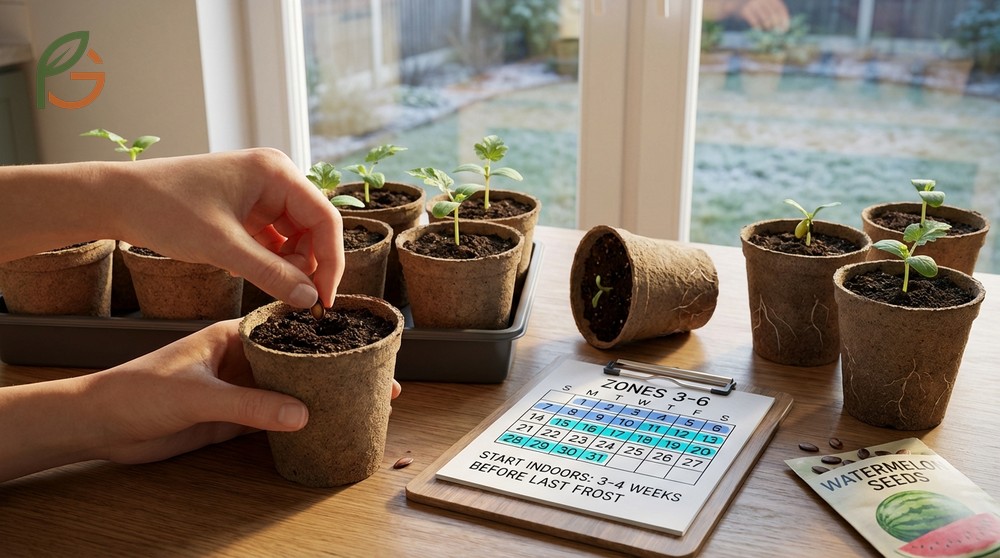
Indoor seed starting extends the growing season for northern gardeners in zones 3-6. Start seeds 3-4 weeks before your last expected frost date. This timing allows seedlings to develop strong root systems before transplanting outdoors when soil warms[1].
Use biodegradable pots that transplant directly into soil without disturbing roots. Watermelons hate root disturbance and suffer transplant shock when roots get damaged. Peat pots or newspaper containers work well since they decompose after planting.
Maintain soil temperature at 80-85°F (27-29°C) using heating mats placed under seed trays. Provide 14+ hours of light daily with grow lights positioned 2-3 inches above seedlings. Seeds germinate in 7-10 days under these controlled conditions, faster than outdoor direct-seeding.
- Start seeds 3-4 weeks before last frost for zones 3-6
- Maintain constant soil temperature of 80-85°F (27-29°C)
- Provide 14-16 hours of bright light daily
- Use biodegradable pots to prevent root damage during transplanting
- Harden off seedlings outdoors for 7 days before permanent planting
- Transplant only when outdoor soil reaches 70°F (21°C)
Hardening off prevents shock when moving seedlings from controlled indoor environments to outdoor conditions. Place seedlings outside for progressively longer periods over 7 days, starting with 1-2 hours in shade and building to full-day sun exposure.
State-Specific Planting Schedules
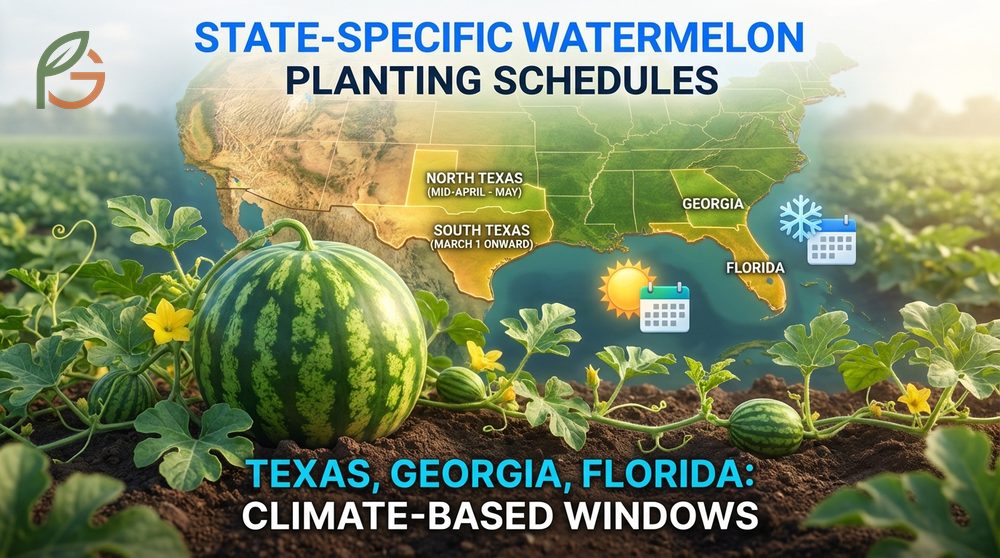
Texas, Georgia, and Florida lead U.S. watermelon production thanks to long, warm growing seasons. Each state offers distinct planting windows based on frost dates and climate patterns.
Texas gardeners in northern regions (zones 7-8) plant from mid-April through May when soil warms reliably. Southern Texas (zones 9-10) enjoys earlier planting from March 1 onward. The state’s diverse climate means checking your specific county’s frost date rather than relying on statewide averages.
Georgia watermelon growers in zones 7b-8a typically plant from April 15 through May 15. The state’s consistent warmth supports both direct-seeding and transplant methods. Commercial growers often start transplants indoors in March for earlier harvests.
Florida offers year-round production potential in southern zones 10-11. Spring plantings occur February through April, while some growers plant fall crops in September-October. Central Florida (zones 9a-9b) plants from March through April for summer harvests[7].
- Texas (North): Plant mid-April to May after last frost around April 15
- Texas (South): Plant March 1-April in zones 9-10 with earlier springs
- Georgia: Plant April 15-May 15 in zones 7b-8a statewide
- Florida (North/Central): Plant March-April in zones 8b-9a
- Florida (South): Plant February-April or September-October in zones 10-11
- California: Plant April-June in inland valleys, March-May in coastal regions
Growing Watermelon in a Raised Bed
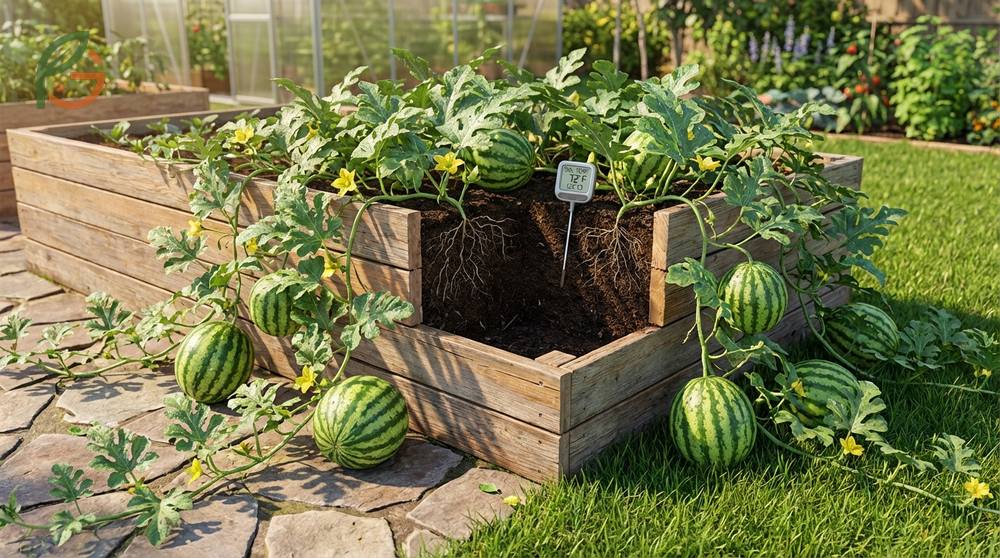
Raised beds work exceptionally well for watermelons despite concerns about space. The key insight: only the root system needs to occupy bed space. Vines can cascade over bed edges and trail along pathways or lawn areas surrounding the garden[8].
Raised beds offer multiple advantages for watermelon cultivation. Soil warms 5-7 days earlier than ground-level beds, allowing earlier planting dates. Improved drainage prevents waterlogged conditions that cause root rot. The elevated structure provides better soil aeration and makes it easier to amend soil with compost.
Build planting mounds 8-10 inches tall and 10-12 inches across within the raised bed. Space mounds 3-4 feet apart if growing multiple plants. Each watermelon plant needs approximately 20 square feet of total space, but most of that area extends outside the actual bed structure.
Soil preparation matters more in raised beds since plants can’t access nutrients beyond the contained space. Mix 2-3 inches of compost into the top 12 inches of existing bed soil before planting. Watermelons are heavy feeders and benefit from nutrient-rich environments. Aim for slightly acidic soil pH between 6.0-6.8.
Space-Saving Strategy: Plant watermelons on bed corners or edges rather than centers. This positioning allows vines to sprawl outward in multiple directions without overtaking other crops. You can still grow lettuce, herbs, or compact vegetables in the bed’s interior while watermelon vines spread externally.
Choose compact or bush varieties for raised beds if space is extremely limited. ‘Bush Sugar Baby’ and ‘Golden Midget’ produce smaller vines (3-4 feet instead of 10-15 feet) while still yielding full-sized melons. These varieties work in beds as small as 4×4 feet.
Conclusion
The evidence is clear: successful watermelon growing starts with proper timing based on soil temperature, not calendar dates. When to plant watermelon seeds depends on your USDA zone, last frost date, and achieving consistent 70°F (21°C) soil temperatures for 7+ consecutive days. Northern gardeners benefit from indoor starting 3-4 weeks early, while southern regions enjoy direct-seeding from March through April.
Current agricultural guidance emphasizes measuring soil temperature at planting depth rather than relying on air temperature alone. Whether you’re growing in traditional ground beds or raised structures, watermelons reward patient gardeners who wait for genuinely warm conditions. FruitGarden provides zone-specific timing recommendations so you can harvest sweet, juicy melons throughout summer.
Frequently Asked Questions
How long does it take for watermelon seeds to germinate?
Watermelon seeds germinate in 10-14 days when soil temperature stays between 70-85°F (21-29°C). Warmer soil speeds germination—seeds may sprout in 4-7 days at optimal 85-95°F (29-35°C) temperatures. Below 60°F (16°C), germination becomes unreliable and may take 20+ days or fail completely.
Can you direct-sow watermelon seeds outdoors?
Yes, direct-sowing works well in zones 6-11 after soil reaches 70°F (21°C) and all frost danger passes. In colder zones (3-5), indoor starting provides better results since direct-seeding fails in soil below 65°F (18°C). Direct-sow 1-2 weeks after last frost for best germination rates.
Is it too late to plant watermelon in July?
July planting works if you have 80-90 days remaining before first fall frost. Count backward from your frost date and add 10-day buffer. For October 1 frost, plant short-season varieties like ‘Sugar Baby’ (70-75 days) by early July at latest. Mid-July plantings risk immature fruit when frost arrives.
What’s the best soil temperature for planting watermelon?
The optimal soil temperature range is 75-95°F (24-35°C) for fastest germination and strongest seedlings. Seeds will germinate at the minimum threshold of 70°F (21°C), though more slowly. Measure temperature 4 inches deep for seven consecutive days before planting to verify consistent warmth.
How many days does watermelon take from seed to harvest?
Watermelons mature in 70-100 days depending on variety. Small types like ‘Sugar Baby’ ripen in 70-75 days, medium varieties like ‘Crimson Sweet’ need 85 days, and large melons like ‘Carolina Cross’ require 90-100 days. Count from germination date, not planting date, for accurate harvest timing.
Should I start watermelon seeds indoors or outdoors?
Start indoors 3-4 weeks before last frost if you’re in zones 3-6 or growing long-season varieties. Direct-sow outdoors in zones 7-11 where growing seasons exceed 120 days. Indoor starting extends the season but requires careful hardening off to prevent transplant shock when moving seedlings outside.
When should I plant watermelon in zone 7?
Zone 7 gardeners should plant watermelon from April 15 through May 10 after last frost (typically April 1-15). Wait until soil reaches 70°F (21°C) before direct-seeding outdoors. You can start seeds indoors in mid-March for earlier harvests, transplanting seedlings in late April when conditions warm.





