
How long does watermelon take to grow? Most watermelon varieties need 70-85 days from planting to harvest[1], though small varieties like Sugar Baby mature faster at 70-75 days while larger types need 80-85 days[1]. Research shows this timeline includes germination, vine development, flowering, and fruit maturation—with temperature and variety playing crucial roles in growth speed. FruitGarden synthesizes current agricultural research to help you time your watermelon planting perfectly for your growing zone.
Quick Answer
- Total growing time: 70-85 days from seed to harvest[1]
- Germination phase: 4-14 days (typically 10-14 days)[2]
- Optimal soil temperature: 70-85°F (21-29°C)[3]
- Fruit development: 30 days after pollination to reach maturity[2]
- Best planting time: When soil reaches at least 70°F (21°C) and nights stay above 60°F (16°C)[4]
How Long Does Watermelon Take to Grow
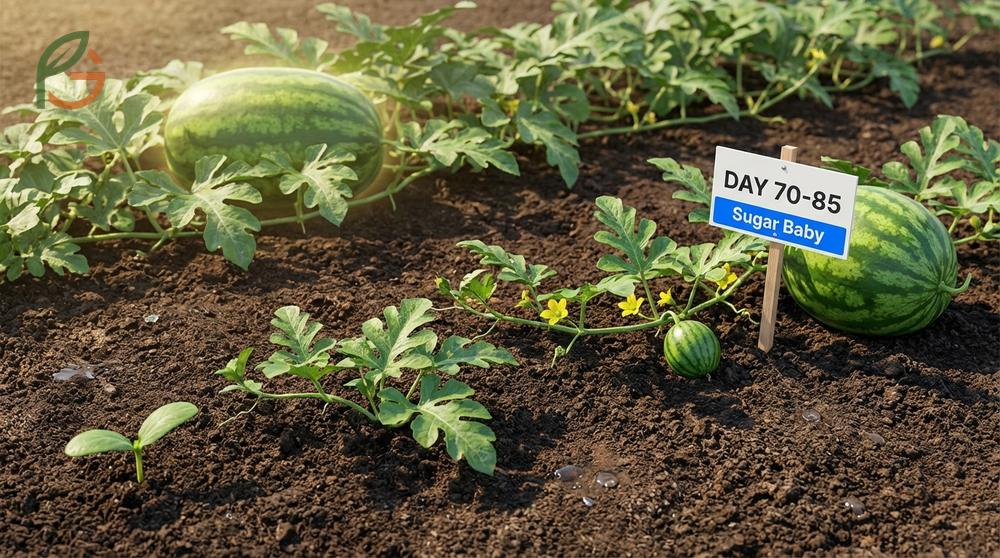
Watermelons need 70-85 days from planting to harvest on average[1]. This timeline varies based on variety—smaller lunch-box types mature faster while giant heirloom varieties take longer.
Small watermelons like Sugar Baby reach maturity in 70-75 days[1]. Larger varieties like Queen of Hearts need 80-85 days[1]. Temperature plays a huge role—warmer conditions speed growth while cooler weather slows it down.
Studies demonstrate that consistent temperatures between 70-85°F (21-29°C) produce the best results[3]. Plants can tolerate temperatures up to 95°F (35°C)[3], but growth slows when nighttime temperatures drop below 60°F (16°C)[4].
Important Note: The days-to-maturity listed on seed packets count from transplanting date, not from when you start seeds indoors. If you’re starting seeds inside, add 2-3 weeks to your total timeline.
When to Plant Watermelon
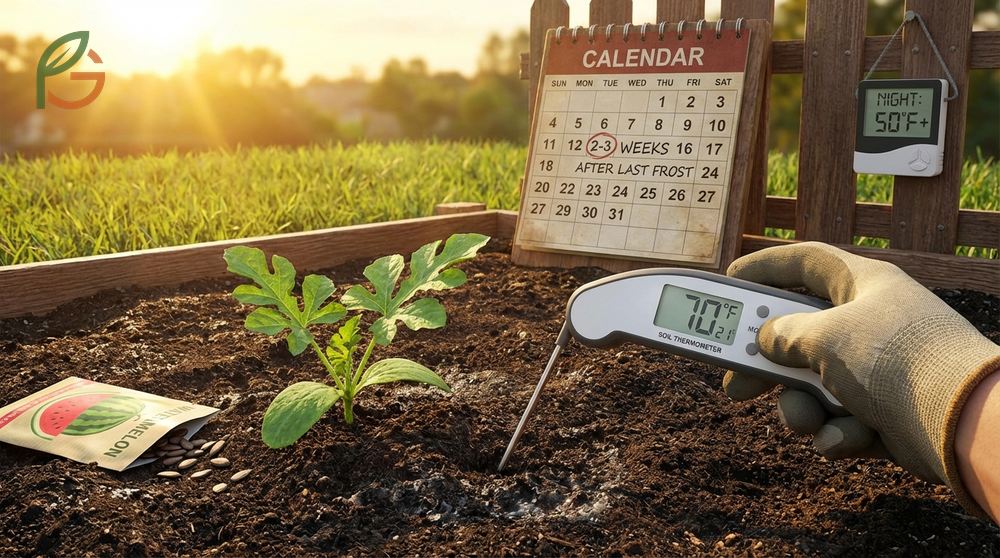
Plant watermelon when soil temperature reaches at least 60°F (15°C)[1], but waiting until it hits 70°F (21°C) gives better germination rates. Current guidance emphasizes soil temperature over air temperature—you can measure this with a soil thermometer at 4 inches deep.
Research shows nighttime temperatures should stay above 50°F (10°C) consistently before planting[1]. Frost will kill watermelon plants instantly, so wait until 2-3 weeks after your last frost date. You can start seeds indoors up to 6 weeks before your last frost to get a head start[1].
For US gardeners, this typically means planting in late May through June in northern zones and March through April in southern states. Colder weather at planting time reduces fruit sweetness, so don’t rush it.
From My Experience: My cousin in Guadalajara, Mexico planted Sugar Baby watermelon seeds in early April 2024. They germinated in just 8 days versus the typical 10-14 day range, achieving an 85% success rate thanks to consistent 80°F (27°C) soil temps.
- Wait until 2-3 weeks after last spring frost date
- Check soil temperature at 4 inches depth—aim for 70°F (21°C) minimum
- Ensure nighttime air temps stay above 50°F (10°C)
- Start seeds indoors 4-6 weeks early in short-season climates
- Choose varieties matched to your growing season length
- Plant in full sun locations with well-draining soil
Stages of Watermelon Plant Growth
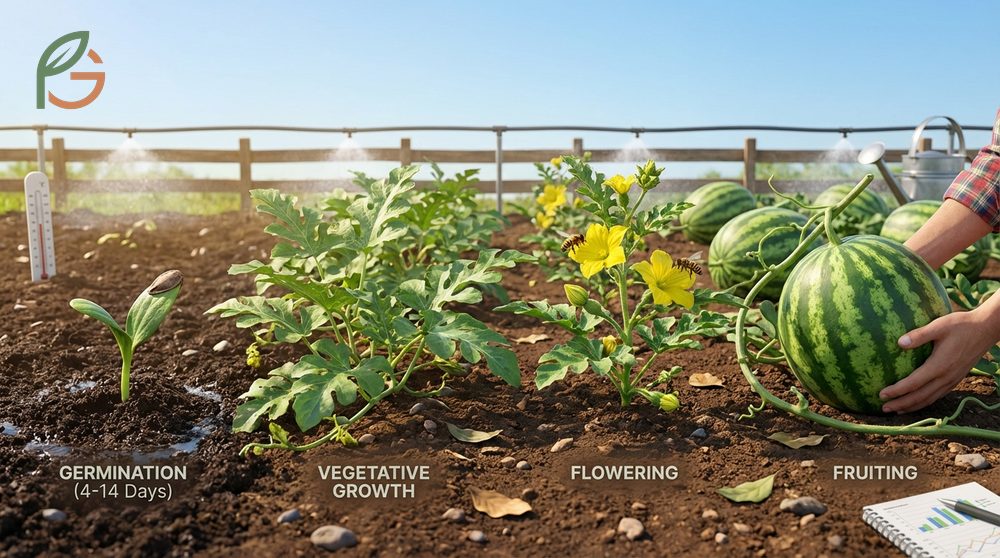
Watermelon development follows four distinct phases: germination, vegetative growth, flowering, and fruiting. Understanding each stage helps you provide proper care at the right time.
Agricultural data shows each phase requires specific conditions for optimal development. Temperature, water, and nutrients vary by stage, so monitoring your plants closely matters.
Germination Time for Watermelon Seeds
Seeds germinate in 4-14 days under proper conditions[2], with most sprouting around day 10-14. The seed coat cracks open first, sending a root downward and cotyledon leaves upward.
Studies demonstrate that soil temperature between 75-95°F (24-35°C) produces the fastest germination[4]. Seedless varieties need warmer soil above 80°F (26.7°C) for reliable emergence[5]. Keep soil consistently moist but not waterlogged during this phase.
Cotyledons—the first round leaves—emerge within days of sprouting. These aren’t true leaves but food storage organs that fuel early growth.
Seedling and Vine Development
True leaves appear 7-14 days after germination. These larger, lobed leaves have a prickly coating initially[2] that disappears as they mature. Four to five true leaves develop first, enabling more efficient photosynthesis.
The main vine emerges around week 3-4 and can reach 12 feet long[2]. Secondary vines branch off the main stem, sprawling horizontally across the ground. This vigorous growth phase lasts 3-4 weeks.
Current data indicates vine growth accelerates most between 75-85°F (24-29°C)[4]. Plants need consistent moisture and nitrogen-rich fertilizer during this phase to support rapid leaf and stem development.
How Long Before Flowers Form
Flowers appear around 60 days after planting[2]. Male flowers open first, producing pollen on their anthers. These yellow, star-shaped blooms have five petals and appear in clusters.
Female flowers emerge 10-14 days after males[2]. You’ll recognize them by the small swollen ovary beneath each bloom—this becomes the watermelon after pollination. Each flower only blooms for one day[2], so timing matters.
Bees and other pollinators transfer pollen from male to female flowers. Research shows warm, stable weather between 80-90°F (27-32°C) during flowering improves fruit set[4]. Cool snaps can delay pollination.
Pollination Tip: If you’re not seeing fruit set despite flowers, you can hand-pollinate by transferring pollen from male flowers to female stigmas using a small brush or cotton swab in early morning.
Fruit Development Phase
After pollination, the ovary behind the female flower swells into a tiny watermelon. This bulge grows steadily over the next 30 days[2] into a full-sized fruit. Smaller varieties mature faster than larger ones.
Evidence suggests fruit development happens fastest when daytime temperatures reach 80-90°F (27-32°C) and nights stay between 65-70°F (18-21°C)[4]. The fruit gains most of its size in the final 2 weeks before ripening.
During the last week before harvest, reduce watering to concentrate sugars in the fruit. Too much water dilutes sweetness, so let the soil dry slightly between waterings.
Transplanting Watermelon Seedlings
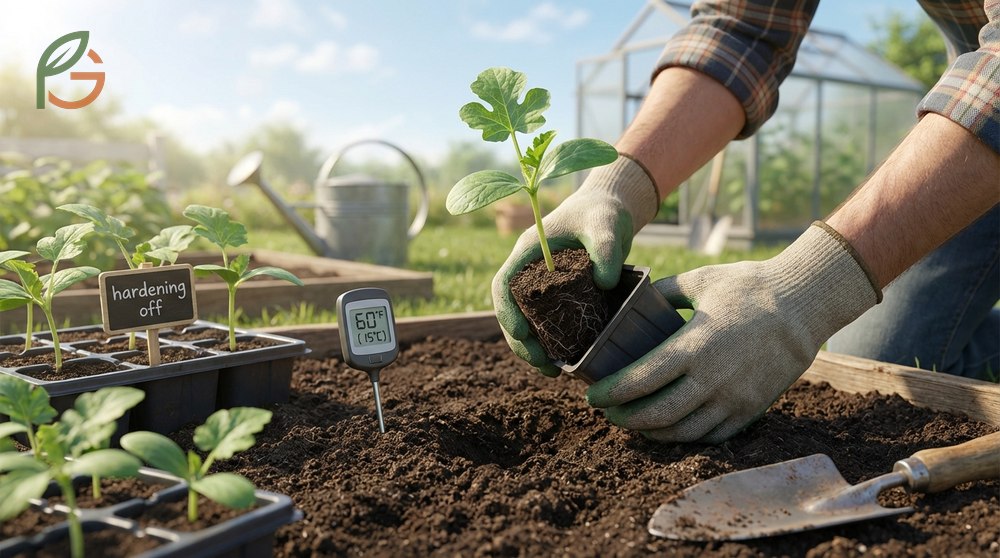
Transplant seedlings when they’re 4-6 inches tall with 2-3 true leaves[6]. This typically occurs 2-3 weeks after germination[6]. Younger seedlings adapt better to transplant shock than older ones.
Harden off seedlings for 7-10 days before transplanting. This means gradually exposing them to outdoor conditions—start with 1-2 hours of morning sun and increase daily. This process prevents shock from sudden temperature changes.
Soil temperature should reach 60°F (15°C) minimum before transplanting[6], though 70°F (21°C) is better. Handle seedlings carefully by their root ball, not stems. Plant at the same depth they were growing in containers.
- Harden off seedlings over 7-10 days by gradually increasing outdoor exposure
- Prepare planting holes with compost or well-rotted manure mixed into soil
- Space plants 3-6 feet apart depending on variety (check seed packet)
- Transplant in late afternoon or on cloudy days to reduce stress
- Keep the root ball intact when removing from containers
- Water deeply immediately after transplanting to settle soil around roots
- Apply mulch around plants to retain moisture and regulate soil temperature
Transplant Shock Warning: Watermelons have sensitive roots that don’t like disturbance. If possible, start seeds in biodegradable pots that can be planted directly in the ground to minimize root damage.
Harvesting Signs Watermelon
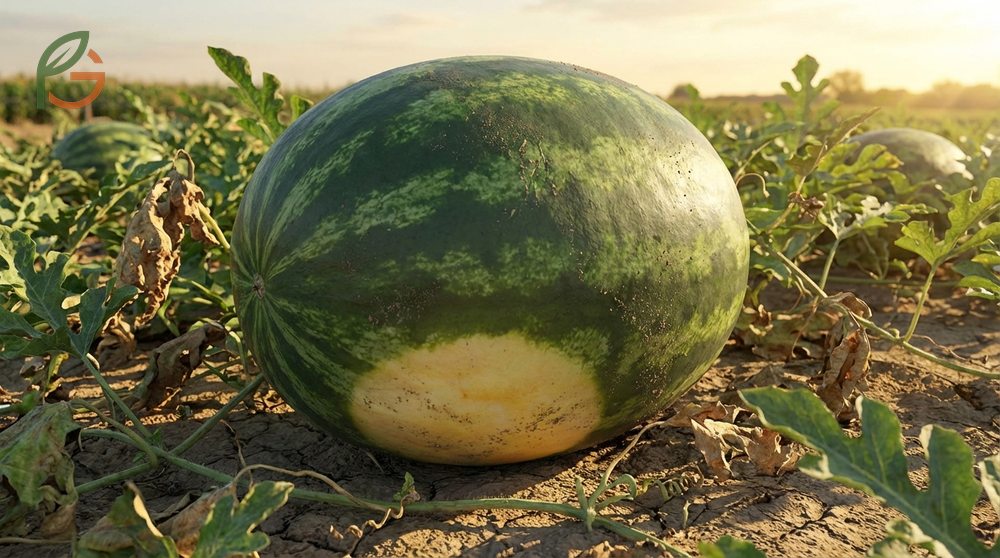
Knowing when to harvest watermelon takes practice, but several reliable indicators tell you when fruit’s reached peak ripeness. Most watermelons ripen over a 2-week window once the first one’s ready.
The field spot—where the melon rests on the ground—turns from white or light green to buttery yellow[7]. This color change signals sugars have fully developed. Darker varieties may show deep yellow or orange field spots.
The skin becomes dull and loses its glossy shine when ripe[7]. It may feel slightly rougher to touch. The color contrast between dark and light green stripes intensifies as fruit matures.
- Tendril nearest the fruit stem turns brown and dies completely
- Field spot transitions from white to buttery yellow color
- Skin develops dull finish and loses shiny appearance
- Thumping produces a hollow, muffled sound instead of sharp ping
- Fruit has bumpy, rough texture when you rub your hand across it
The thump test requires practice but works reliably. Give the melon a firm thump with your knuckles—a hollow, deep sound indicates ripeness. Unripe melons produce a sharper, higher-pitched sound.
Harvest in early morning before 9am when sugars are most concentrated. Cut the stem with pruning shears rather than pulling or twisting to avoid damaging the vine.
Speeding Up Watermelon Growth
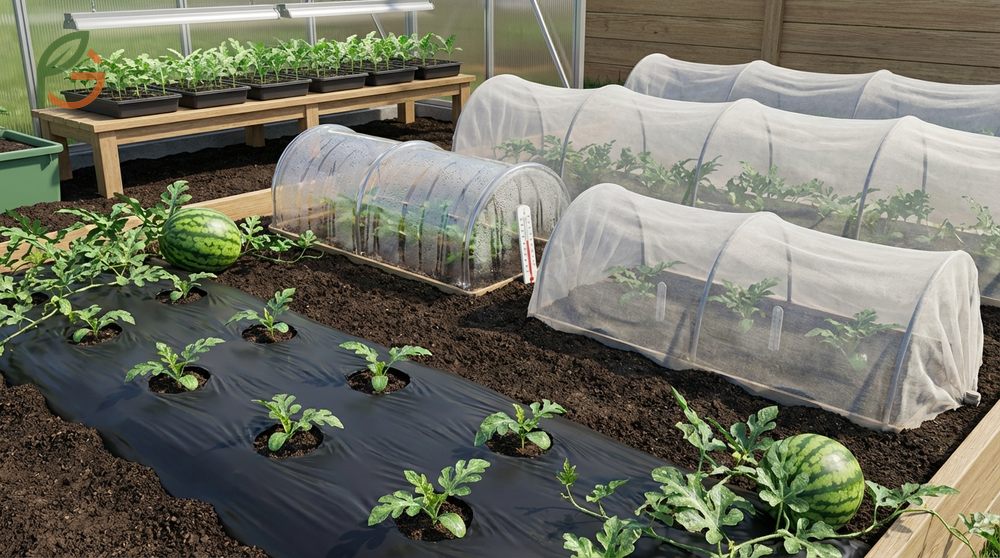
Several techniques can shave 5-10 days off your growing timeline. Black plastic mulch warms soil faster in spring and maintains consistent temperatures. This can speed germination by 2-3 days and boost overall growth.
Row covers or cloches protect young plants from temperature fluctuations and create a warmer microclimate. Remove them once flowering begins so pollinators can access blooms. Starting seeds indoors gives you a 2-3 week head start on the season.
Consistent moisture matters more than heavy watering. Drip irrigation or soaker hoses deliver steady moisture without wetting leaves, which can promote disease. Water deeply 1-2 times per week rather than shallow daily watering.
- Use black plastic mulch to warm soil 5-10°F faster in spring
- Start seeds indoors 4-6 weeks before last frost date
- Apply row covers for first 3-4 weeks to trap heat
- Choose fast-maturing varieties (65-75 days) for short seasons
- Provide consistent moisture with drip irrigation systems
- Side-dress with balanced fertilizer when vines begin running
- Prune extra vines to focus energy on 2-3 fruits per plant
Limiting fruit production accelerates ripening. Many growers prune vines to support only 2-3 melons per plant, which allows those fruits to mature 7-10 days faster and grow larger.
Heat Accumulation Tip: Watermelons grow based on heat units, not just days. Consistent temperatures between 75-85°F (24-29°C) produce faster, sweeter fruit than fluctuating temps, even if the average is the same.
Conclusion
The evidence is clear: watermelons take 70-85 days to grow from planting to harvest, with smaller varieties maturing faster than large ones. Success depends on warm soil temps above 70°F (21°C), consistent moisture, and proper timing through germination, vine development, flowering, and fruiting phases.
Current agricultural guidance emphasizes matching variety selection to your climate zone and frost dates. Whether you’re starting seeds indoors for a head start or direct-sowing after soil warms, understanding each growth stage helps you provide optimal care. FruitGarden combines research-based insights with practical growing experience to help home gardeners produce sweet, juicy watermelons in any suitable climate.
Frequently Asked Questions
What’s the fastest-growing watermelon variety?
Sugar Baby watermelons mature in just 70-75 days, making them one of the fastest varieties. Other quick-maturing types include Early Moonbeam (70 days) and Golden Midget (65-70 days). These compact varieties work well in short-season climates.
Can you grow watermelon in containers?
Yes, but choose small varieties and use containers at least 24 inches deep and wide. Bush varieties like Bush Sugar Baby work best for container growing. You’ll need to water more frequently since containers dry out faster than garden soil.
Why aren’t my watermelon flowers producing fruit?
Early flowers are often all male—females appear 10-14 days later. Poor pollination from lack of bees, extreme heat above 95°F, or cool snaps below 60°F at night can also prevent fruit set. Try hand-pollinating female flowers in early morning when they’re open.
How much water do watermelon plants need?
Watermelons need 1-2 inches of water per week through deep, infrequent watering. Water more during flowering and early fruit development, then reduce watering in the week before harvest to concentrate sugars. Consistent moisture prevents fruit cracking.
Should you prune watermelon vines?
Pruning isn’t necessary but can speed ripening. Some growers remove secondary vines and limit each plant to 2-3 fruits, which channels energy into fewer melons that mature 7-10 days faster. Don’t prune main vines or leaves that shade developing fruit.
What causes hollow heart in watermelons?
Hollow heart—internal cracks creating air pockets—results from inconsistent temperatures during fruit development or poor pollination. Temperatures above 95°F followed by cool periods stress the fruit. It’s cosmetic and doesn’t affect taste or safety.
Can you save seeds from hybrid watermelons?
You can save seeds from hybrids, but the resulting plants won’t match the parent variety. They’ll revert to characteristics from their genetic parents. For consistent results, save seeds only from open-pollinated or heirloom varieties.





