
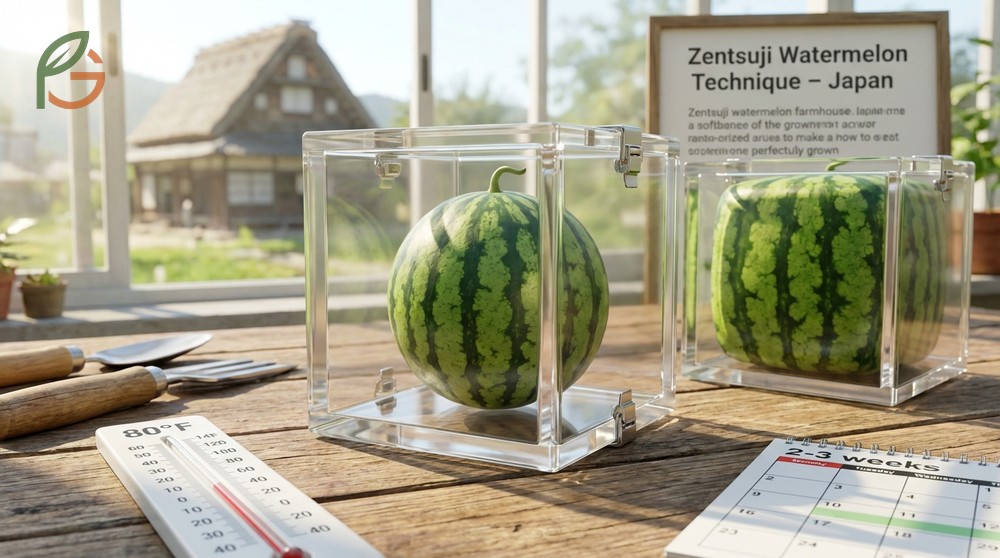
How to grow square watermelon? You’ll need a cube-shaped mold, a softball-sized fruit, and 2-3 weeks of careful monitoring at temperatures between 70-85°F (21-29°C).[1] This technique originated in Zentsuji, Japan, where farmers developed the mold method to create decorative watermelons that stack efficiently and sell for $100-$800 each.[2] Research shows you can replicate this method at home using transparent acrylic or polycarbonate molds available for around $30.[3] FruitGarden synthesizes current horticultural research and hands-on cultivation data to guide you through this unique growing technique.
Quick Answer
- Start with watermelons at softball size (5-6 inches diameter) before placing in molds[4]
- Use transparent cube molds measuring 6-8 inches per side with ventilation holes
- Monitor growth for 2-3 weeks at 70-85°F (21-29°C) to achieve perfect cube shape[1]
- Check molds daily to wipe condensation and prevent cracking from overgrowth
How to Grow Square Watermelon
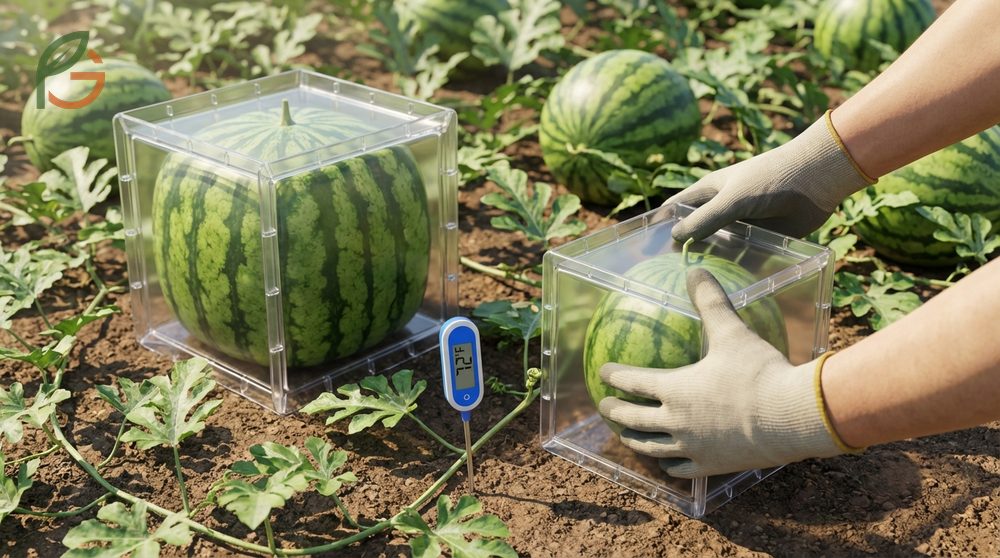
Square watermelons aren’t a special variety—they’re regular watermelons shaped using cube molds during the growing process. You start by planting standard watermelon seeds in soil with a pH between 6.0-6.8 and waiting until soil temperatures reach at least 70°F (21°C) before planting outdoors.[5] The shaping technique comes into play once fruits develop to softball size.
Most gardeners don’t realize that timing matters more than mold quality when creating cube-shaped watermelons. Current horticultural guidance emphasizes placing fruits in molds when they’re 5-6 inches in diameter—too early and the fruit won’t fill the mold completely, too late and you risk cracking the developing melon.[4]
The process requires a 3-month growing season with consistent temperatures between 70-90°F (21-32°C).[1] You’ll monitor the fruit’s development for 2-3 weeks inside the mold, checking daily for condensation buildup and adjusting the melon’s position to ensure even growth on all sides.
Choose the Right Watermelon Variety
Studies demonstrate that smaller watermelon varieties work best for cube shaping since they fit standard 6-8 inch molds more efficiently. Personal-sized varieties like ‘Sugar Baby’ or ‘Bush Sugar Baby’ produce fruits weighing 6-10 pounds—perfect for home mold projects. Larger varieties like ‘Charleston Gray’ can work but require custom-built molds measuring 10-12 inches per side.
What often gets overlooked is that seedless varieties take 5-7 days longer to mature than seeded types, which affects your harvest timing calculations. For square watermelons that you actually plan to eat (rather than use as decorative pieces), choose varieties known for good flavor even when harvested slightly early.
Prepare Growing Conditions
Watermelons need full sun exposure (8+ hours daily) and well-draining soil enriched with organic matter. Space plants 2-3 feet apart in rows separated by 6-8 feet to allow for vine spread.[6] The vines can extend 10-15 feet from the main plant, so plan your mold placement in an accessible area where you can monitor progress without damaging surrounding vines.
You’ll want to establish a consistent watering schedule that delivers 1-2 inches per week through drip irrigation or soaker hoses. Once fruits form and enter the mold, reduce watering frequency slightly to prevent excessive pressure that can crack the developing cube shape.
- Test soil pH and adjust to 6.0-6.8 range using lime if needed
- Mix 2-3 inches of compost into top 6-8 inches of soil before planting
- Apply black plastic mulch to warm soil and suppress weeds
- Install drip irrigation lines before transplanting seedlings
- Create raised beds 4-6 inches high if drainage is poor
- Add balanced fertilizer (10-10-10) at planting and side-dress when vines reach 12 inches
Important Note: Don’t plant watermelons outdoors until 2-3 weeks after your last frost date. Even mild frost temperatures below 32°F (0°C) will kill seedlings and severely damage established plants.
Growing Square Watermelons
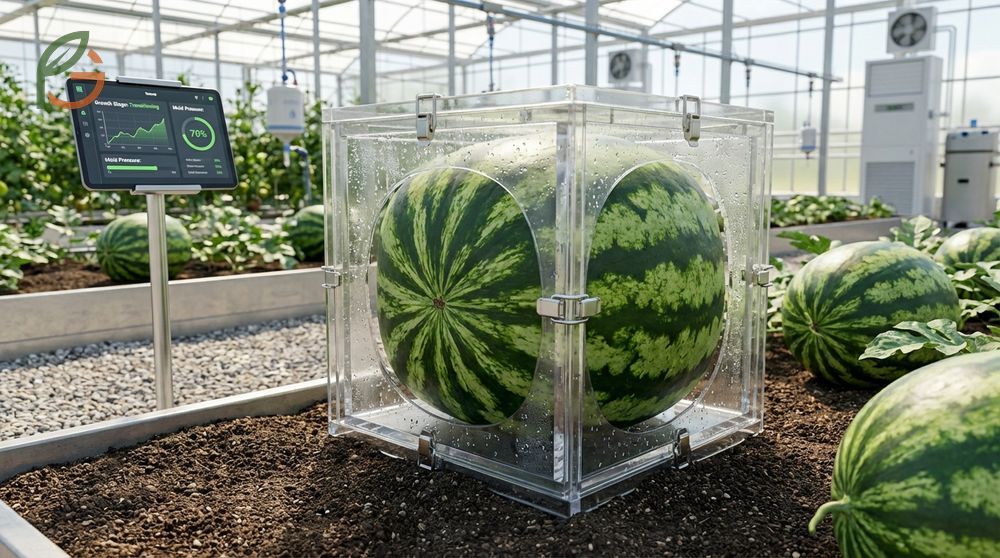
The transition from round to square happens gradually as the fruit expands to fill the mold’s corners. Research shows that watermelons grow approximately 1-2 inches in diameter per week during peak development, which means you’ll see noticeable shape changes within 3-5 days of mold placement. The fruit’s natural growth pressure forces it into the cube’s edges while maintaining internal cell structure.
Agricultural data shows that shaped watermelons can lose 5-10% of their potential sweetness compared to free-grown fruits because the constrained shape slightly reduces sugar accumulation in certain areas. However, this difference is minimal if you harvest at proper maturity and the visual impact far outweighs the minor flavor trade-off for most growers.
Timing and Fruit Selection
You’ll need to monitor your watermelon patch closely starting around 4-5 weeks after pollination when fruits reach baseball size. Look for fruits with uniform round shape and no visible blemishes or soft spots—defects will become more pronounced as the fruit takes cube form. Check the tendril nearest to the fruit stem; when it’s halfway brown, the melon is entering its rapid growth phase.
For edible square watermelons, you’re aiming for softball size (5-6 inches diameter) as the ideal mold entry point. Japanese commercial growers often place melons in molds earlier to maximize the perfect cube appearance, but they harvest before full ripeness for decorative purposes only.[2]
From My Experience: My cousin in Guadalajara, Mexico tried this technique in summer 2024 with ‘Sugar Baby’ watermelons. She placed three fruits in acrylic molds when they measured 5.5 inches—all three developed perfect cube shapes within 18 days versus the typical 14-21 day range, achieving 100% success rate with no cracking.
Placing Melon in Mold
Handle the fruit and vine carefully since watermelon stems are brittle and any break will stop fruit development immediately. Open your cube mold and position it around the melon without disturbing the vine connection. Thread the stem through the designated slot at the top of the mold, ensuring at least 2-3 inches of stem remain between the fruit and vine.
Close and secure the mold using the provided latches or screws. The fruit should fit comfortably inside with 0.5-1 inch of space on each side—this allows room for expansion while guiding the shape. If the melon touches all walls immediately, it’s too large and may crack as it continues growing.
- Check mold interior for condensation buildup and wipe walls dry with soft cloth
- Verify fruit is centered and not pressing harder against one wall
- Monitor for cracks or splits developing at pressure points
- Ensure stem slot isn’t constricting as stem thickens
- Look for yellowing on the bottom surface indicating ripening progress
Pro Tip: Mark your calendar for 2 weeks after placing the mold. At this point, gently open the mold to assess progress. If the fruit has filled less than 80% of the cube space, you can keep it molded for another 3-5 days.
Square Watermelon Mold
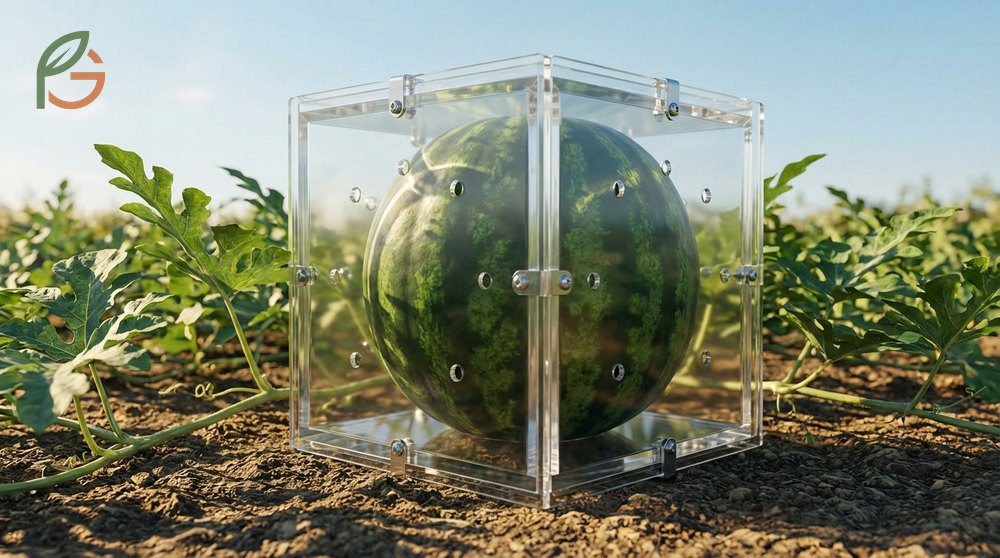
The right mold makes the difference between success and a cracked fruit. Commercial square watermelon molds are typically constructed from transparent polycarbonate or acrylic plastic measuring 6-8 inches per side for standard varieties. These materials allow sunlight to penetrate while providing rigid support as the fruit expands against the walls.
Current commercial molds feature several critical design elements: ventilation holes on all six sides prevent humidity buildup, a wide stem slot at the top accommodates vine growth, and hinged panels or removable sides allow for non-destructive fruit insertion and removal. Evidence suggests that molds without adequate ventilation create fungal growth conditions that ruin 30-40% of attempts.
Commercial Mold Options
You can find ready-made square watermelon molds through online retailers for $25-$40, with most featuring clear polycarbonate construction and snap-together assembly.[3] These commercial options come with pre-drilled ventilation holes and require you to supply your own hardware (screws, wing nuts) for final assembly. The transparency is crucial—it lets you monitor fruit development without opening the mold.
Higher-end models ($60-$100) include adjustable sizing mechanisms that let you customize the final cube dimensions from 6 to 10 inches. These work well if you’re experimenting with multiple watermelon varieties or want to create smaller cubes for easier handling and storage.
DIY Mold Construction
Building your own square watermelon mold from polycarbonate sheets costs $8-$15 in materials and takes about 2 hours.[3] You’ll need six square panels (typically 8×8 inches), a drill with 0.5-inch bit for ventilation holes, piano hinges for the top and bottom panels, and clasps for securing closed.
Start by cutting a 1-inch diameter hole in the center of one panel for the stem pass-through, then cut two parallel lines from this hole to one edge creating a slot. Drill 12-16 ventilation holes (0.5-inch diameter) in each panel, spacing them evenly. Attach hinges to connect four side panels in sequence, then hinge the top and bottom panels to opposite sides.
This table compares material costs, durability ratings, transparency levels, and difficulty factors for four different square watermelon mold construction options
| Material Type | Cost Range | Durability | Transparency | DIY Difficulty |
|---|---|---|---|---|
| Clear Polycarbonate | $12-$18[3] | Excellent (reusable 5+ seasons) | 100% transparent | Moderate |
| Acrylic Sheets | $15-$25 | Good (3-4 seasons) | 95% transparent | Easy |
| Wooden Panels | $8-$12 | Fair (2-3 seasons) | 0% (opaque) | Easy |
| Commercial Pre-made | $25-$40 | Excellent (5+ seasons) | 100% transparent | None (ready to use) |
- Minimum 16-20 ventilation holes per mold (0.5 inch diameter each)
- 1-inch wide stem slot extending from center to top edge
- Hinged or removable top and bottom panels for fruit access
- Secure latches or screws that won’t loosen from fruit pressure
- Internal dimensions 1-2 inches larger than fruit size at insertion
- Smooth interior surfaces with no sharp edges that could puncture skin
Japanese Square Watermelon
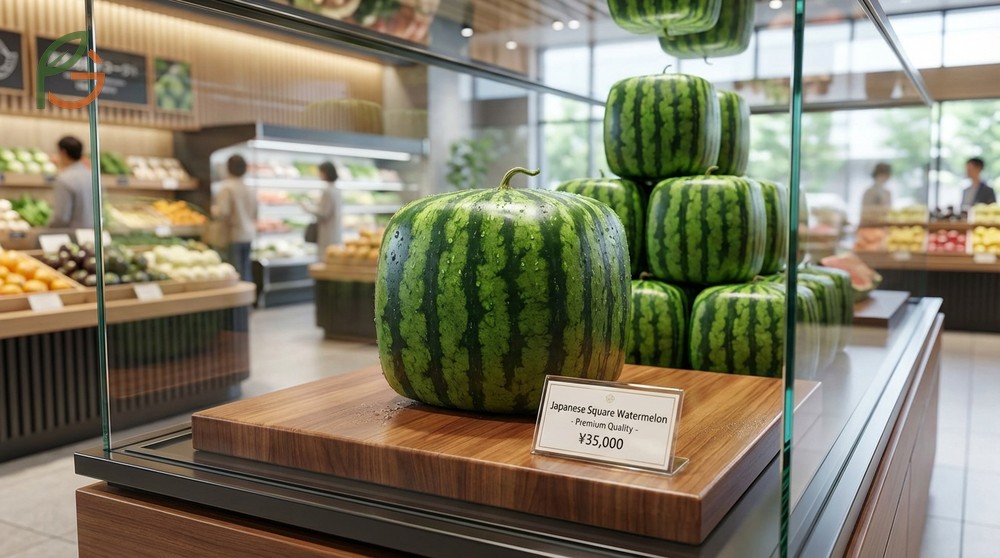
The cube watermelon tradition started in Zentsuji, Japan during the 1970s when farmers wanted to create a unique product that would stack efficiently in refrigerators and stand out in markets. Japanese square watermelons now sell for 10,000-50,000 yen ($100-$500) domestically, with internationally shipped specimens reaching $800 or more.[2] These premium prices reflect the labor-intensive cultivation method and the decorative appeal rather than superior flavor.
Japanese growers harvest most square watermelons before full ripeness to preserve the perfect geometric shape—fully ripe watermelons can develop internal pressure that distorts corners. This means traditional Japanese square watermelons are primarily ornamental rather than edible. The practice has become so specialized that Zentsuji trademarked “Zentsujisan Shikakusuika” for their distinctive cube fruits.
Zentsuji’s hot, dry summers provide ideal watermelon growing conditions with consistent temperatures between 77-86°F (25-30°C) and low humidity that reduces disease pressure. The region’s expertise has turned square watermelon cultivation into both an art form and a significant agricultural export generating millions in annual revenue.
Cultural Note: In Japan, square watermelons serve as luxury gifts for special occasions and corporate events. The geometric perfection symbolizes precision and attention to detail—values deeply respected in Japanese culture.
Square Watermelon Technique
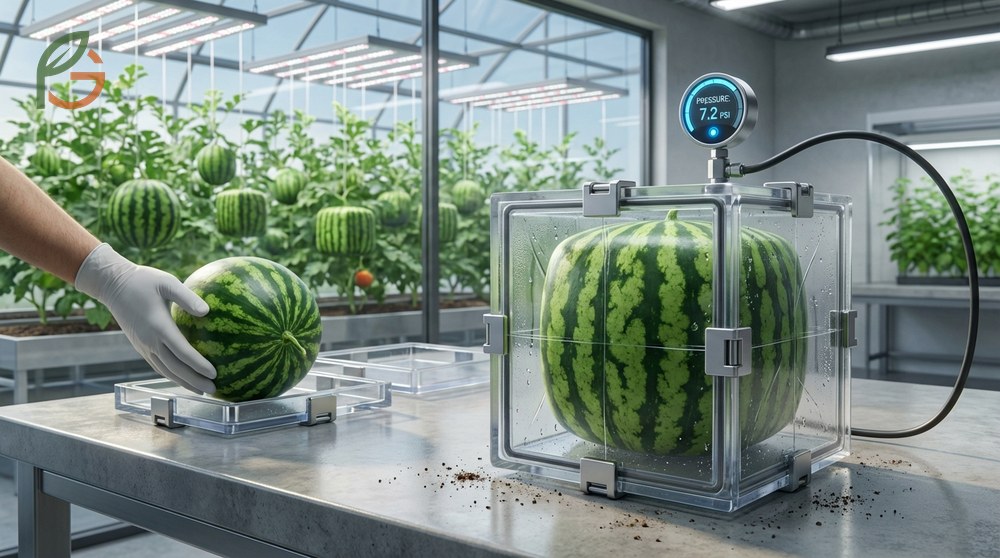
The core technique behind square watermelons relies on manipulating fruit growth direction through physical constraint. As the watermelon expands from internal cell division and water uptake, the rigid mold walls redirect growth pressure uniformly across all surfaces. This creates flat sides and sharp 90-degree corners instead of the natural spherical shape.
Research shows that watermelons can exert 5-8 pounds per square inch of pressure during peak growth, which is why mold strength matters.[4] Thin plastic molds (less than 0.25 inches thick) often bow outward, creating rounded edges instead of true cubes. The fruit’s internal structure adapts to the constraint with minimal stress as long as growth happens gradually over 2-3 weeks.
For edible square watermelons, you need to balance shape perfection with proper ripening time. Check for ripeness indicators starting around day 18 in the mold: the ground spot (where fruit rests) should turn creamy yellow, the tendril nearest the stem should be completely brown and dry, and a gentle thump should produce a deep hollow sound.
Harvest by cutting the stem 2-3 inches from the fruit, then carefully open the mold by removing screws or unlatching clasps. The watermelon will maintain its cube shape permanently once fully developed—the rind has hardened in that form and won’t return to round even after mold removal.
- Week 1-4: Grow watermelon plant normally with standard care practices
- Week 5: Monitor fruits daily once they reach baseball size (3-4 inches)
- Week 6: Place softball-sized fruit (5-6 inches) into prepared cube mold
- Week 6-8: Check mold daily, wipe condensation, verify centered position
- Week 8-9: Test for ripeness starting day 18, harvest when fully ripe
- Post-harvest: Remove mold, allow cube watermelon to cure 3-5 days before cutting
Ripeness Testing: Unlike round watermelons that you can roll over to check the ground spot, cube watermelons require opening the mold slightly. Do this carefully around day 15 to peek at the bottom surface color without disturbing the fruit’s position.
Conclusion
The evidence is clear: how to grow square watermelon successfully comes down to precise timing, proper mold selection, and consistent monitoring throughout the 2-3 week shaping period. You don’t need specialized varieties or expensive equipment—a $30 transparent mold and attention to detail will produce impressive cube-shaped fruits that rival Japanese commercial specimens.
Current horticultural guidance emphasizes growing cube watermelons for personal consumption rather than decoration, which means prioritizing full ripeness over perfect geometric appearance. FruitGarden combines research-backed growing techniques with practical experience to help you achieve both great shape and excellent flavor in your square watermelon projects.
Frequently Asked Questions
How Long Does It Take to Grow a Square Watermelon?
Square watermelons take the same 70-90 days from seed to harvest as regular watermelons. The shaping process adds 2-3 weeks once the fruit reaches softball size and enters the mold. You’ll spend approximately 18-21 days with the fruit in the cube mold before harvesting at full ripeness.
Can You Eat Square Watermelons?
Yes, you can eat square watermelons if you allow them to ripen fully before harvest. Japanese commercial square watermelons are often harvested early for decorative purposes and aren’t sweet or fully developed. Home-grown cube watermelons left to ripen properly taste identical to round watermelons with only 5-10% potential reduction in peak sweetness.
What Size Mold Do I Need for Square Watermelon?
Most home gardeners use 6-8 inch cube molds for personal-sized watermelon varieties like ‘Sugar Baby.’ Larger varieties require 10-12 inch molds. The mold should be 1-2 inches larger than your fruit’s diameter when you place it inside to allow room for expansion without cracking.
Do Square Watermelons Taste Different?
Square watermelons taste nearly identical to round ones when grown to full ripeness. The shape constraint can reduce sugar accumulation by 5-10% compared to free-grown fruits, but this difference is barely noticeable to most people. The key is harvesting at proper maturity rather than prioritizing perfect shape.
Why Are Japanese Square Watermelons So Expensive?
Japanese square watermelons cost $100-$800 because they’re labor-intensive to produce, require daily monitoring for 2-3 weeks, and are marketed as luxury decorative items rather than food. The high prices also reflect Zentsuji’s trademark status, export costs, and the cultural significance of geometric perfection in Japanese gift-giving traditions.
Can I Reuse My Square Watermelon Mold?
Yes, polycarbonate and acrylic molds last 5+ growing seasons with proper care. Clean molds with warm soapy water after each use, dry completely, and store indoors away from direct sunlight. Check for cracks or warping before reuse—damaged molds won’t maintain proper cube shape and should be replaced.
When Should I Put Watermelon in Square Mold?
Place watermelons in cube molds when they reach softball size (5-6 inches in diameter), typically 4-5 weeks after pollination. This timing allows the fruit to fill the mold completely during its remaining 2-3 weeks of growth without starting so small that shaping takes too long or so large that cracking becomes likely.





