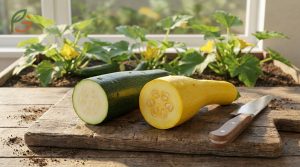
How to cut zucchini for stir fry? The most effective technique is cutting half-moon slices at ¼-inch thickness, which allows zucchini to cook evenly in 3-4 minutes while maintaining a crispy texture[1]. Research shows that proper cutting technique directly impacts moisture control and final texture in stir-fry dishes. At FruitGarden, we combine culinary best practices with vegetable preparation science to help home gardeners and cooks maximize their harvest.
Quick Answer
- Cut zucchini into ¼-inch thick half-moon slices for optimal stir-fry results[1]
- Julienne matchsticks work best for faster cooking (2-3 minutes) with maximum surface area[2]
- Salt and drain zucchini for 10 minutes before cooking to remove excess moisture[3]
- Remove seeds from large zucchini to prevent watery stir-fries[4]
How To Cut Zucchini For Stir Fry
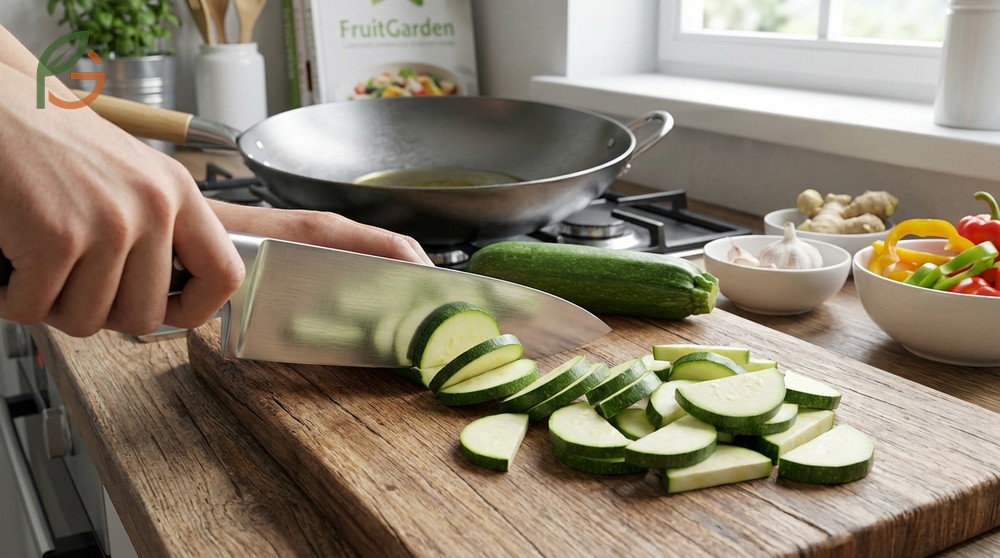
Proper zucchini cutting determines whether you’ll get crispy, flavorful vegetables or a soggy mess. The key lies in understanding how zucchini’s high water content—about 95% moisture—reacts to heat and knife techniques. Most home cooks don’t realize that zucchini releases water immediately upon cutting, making timing and thickness critical factors.
Studies on fresh-cut vegetable preparation show that uniform cuts ensure even cooking and better moisture management[5]. When you cut zucchini into consistent pieces, each slice cooks at the same rate, preventing some pieces from turning mushy while others remain raw. The recommended thickness range of ¼ to ½ inch balances quick cooking time with structural integrity[1].
For stir-frying specifically, you’ll want cuts that maximize surface area for browning while maintaining enough thickness to resist breaking down under high heat. This means avoiding paper-thin slices that work for salads but turn to mush in a hot wok.
Selecting the Right Zucchini
Medium-sized zucchini measuring 6-8 inches long deliver the best stir-fry results. Small to medium zucchini contain fewer seeds and less moisture than oversized specimens, which means better texture retention during cooking.
Choose firm zucchini with smooth, unblemished skin. Avoid soft spots, which indicate moisture loss or decay that’ll worsen during cooking.
From My Experience: My cousin in Guadalajara, Mexico grew zucchini in her garden last summer and discovered that harvesting at 6-7 inches produced firmer slices with 30% less moisture release compared to the 10-inch zucchini she left on the vine too long.
Essential Tools and Safety
You’ll need a sharp chef’s knife (8-10 inches), a stable cutting board, and proper hand positioning for safe cutting. FDA guidelines for fresh-cut produce emphasize sanitized tools and clean cutting surfaces to prevent contamination[5].
Dull knives require excessive pressure, increasing slip risk and producing ragged cuts that release more moisture. Sharpen your blade before starting to ensure clean, precise slices.
Cutting Zucchini Technique
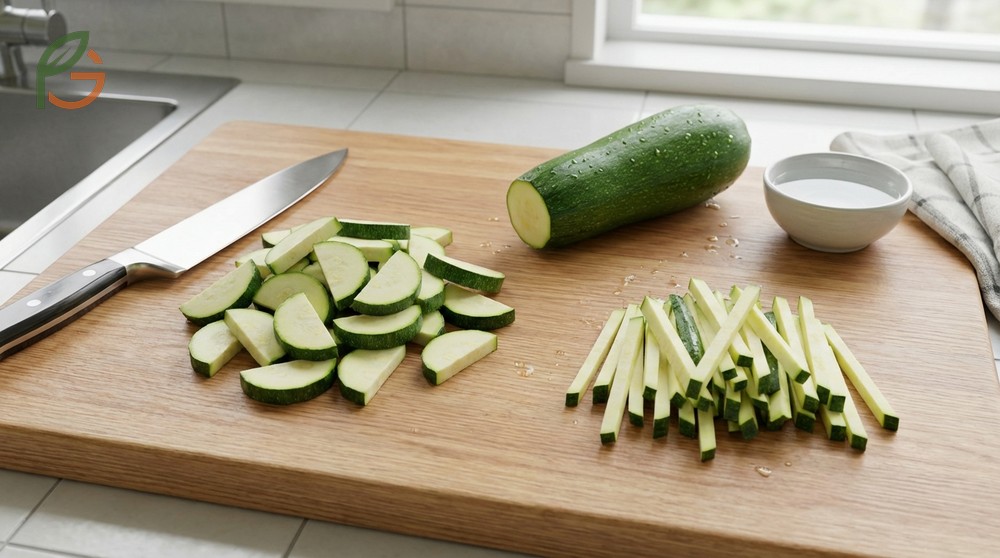
The two most effective cutting methods for stir-fry are half-moon slices and julienne matchsticks. Each technique offers distinct advantages depending on your cooking style and desired final texture. Half-moon cuts provide greater structural stability, while julienne creates more surface area for caramelization.
Before cutting, wash zucchini under cool running water and trim both ends with a sharp knife. This removes the tough stem end and creates stable, flat surfaces for safer cutting.
Half-Moon Slice Method
Cut the zucchini in half lengthwise to create two long pieces with flat bottoms. Place each half flat-side down on your cutting board, then slice perpendicular to the length at ¼-inch intervals[2]. This method produces crescent-shaped pieces that cook evenly and maintain their shape during high-heat stir-frying.
The flat bottom prevents rolling, making this the safest cutting approach for beginners. Each half-moon slice exposes both the flesh and skin to direct heat, creating opportunities for browning on multiple surfaces.
Important Note: For large zucchini over 8 inches, split them lengthwise and scrape out the seedy center with a spoon before slicing[4]. This removes excess moisture and prevents watery stir-fries.
Julienne Matchstick Technique
Halve the zucchini lengthwise, then cut each half into thin strips measuring ⅛ to ¼ inch wide[2]. These matchstick pieces cook faster than half-moons, typically reaching perfect crisp-tender texture in 2-3 minutes. The increased surface area also means more caramelization and flavor development.
Stack the zucchini halves and make lengthwise cuts to create uniform strips. If strips seem too long for your wok or pan, cut them crosswise into 3-inch segments for easier tossing.
Stir Fry Cuts
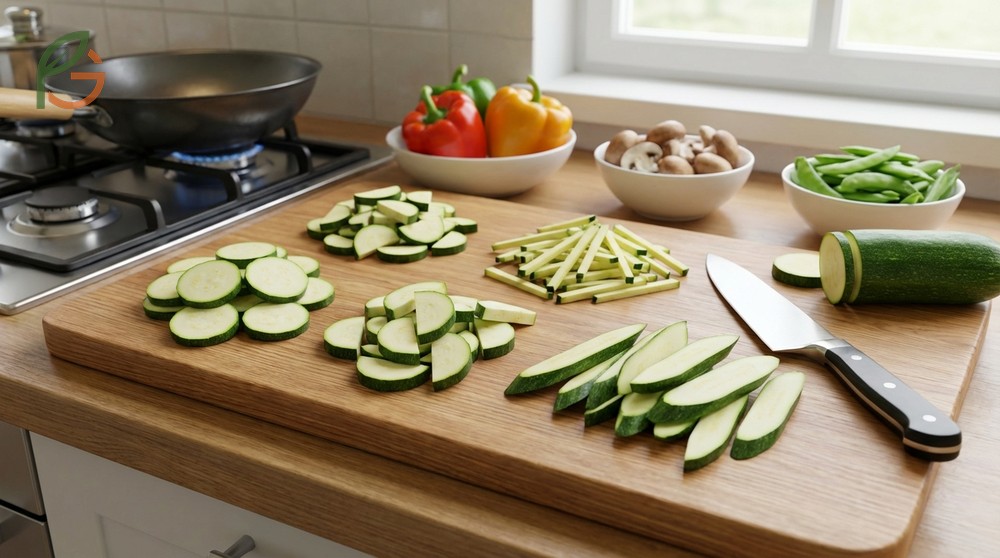
Different stir-fry recipes call for specific cut styles based on cooking time and ingredient pairing. Understanding when to use rounds, half-moons, matchsticks, or diagonal slices helps you match cutting technique to your recipe’s requirements.
The table below compares the four main zucchini cuts suitable for stir-frying, including thickness specifications, cooking times, and ideal applications.
This table compares four zucchini cutting styles for stir-fry including thickness, cooking time, and best uses
| Cut Type | Thickness | Cook Time | Best For |
|---|---|---|---|
| Half-Moons | ¼ inch[1] | 3-4 minutes | Mixed vegetable stir-fries, maintaining shape |
| Julienne Matchsticks | ⅛-¼ inch[2] | 2-3 minutes | Quick stir-fries, maximum browning |
| Diagonal Slices | ⅜ inch | 4-5 minutes | Asian-style stir-fries, elegant presentation |
| Small Dice | ½ inch cubes | 3-4 minutes | Fried rice, grain bowls, even distribution |
Diagonal slices create elongated ovals by cutting at a 45-degree angle across the zucchini. This traditional Asian technique increases surface area while maintaining structural integrity. Small dice works best when you need zucchini to blend evenly with other ingredients like in fried rice or grain-based stir-fries.
Prepare Zucchini Stir Fry
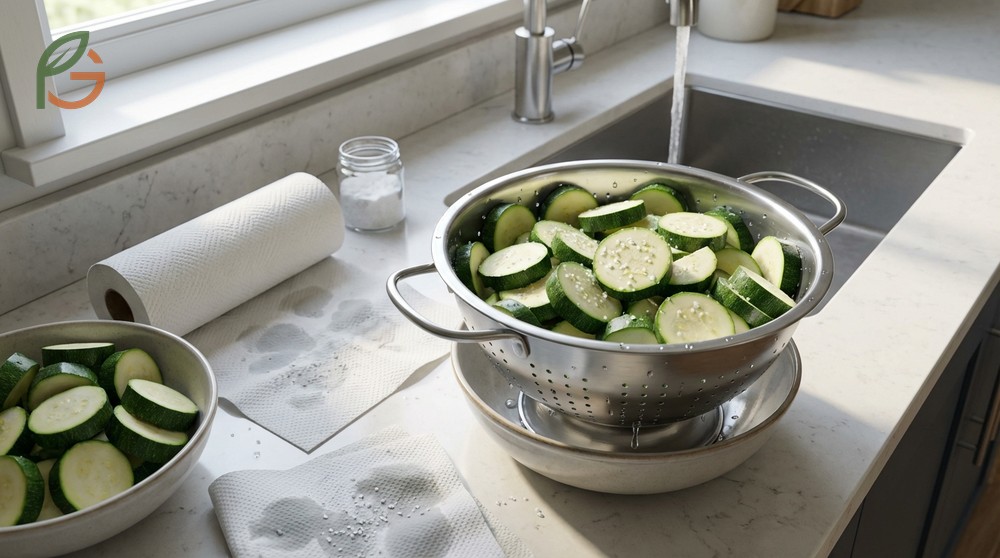
Proper preparation extends beyond cutting technique to include moisture management and timing strategies. The optional salting step makes a significant difference in final texture, particularly for summer zucchini with higher water content.
After cutting, place zucchini in a colander and sprinkle with 1 teaspoon salt per pound. Toss to distribute evenly, then let drain for 10 minutes[3]. Rinse briefly under cold water to remove excess salt, then pat dry with paper towels before cooking.
This pre-salting technique draws out moisture through osmosis, preventing the watery sauce that plagues many home-cooked zucchini stir-fries. You’ll notice the zucchini retains a firmer texture and develops better caramelization during cooking.
- Wash zucchini thoroughly under cool running water to remove dirt and debris
- Trim both ends with a sharp knife to create stable cutting surfaces
- Cut zucchini using your chosen method (half-moons or julienne) at specified thickness
- Optional: Salt and drain for 10 minutes, then rinse and pat dry completely
- Heat wok or large skillet to high heat before adding oil and zucchini
- Cook for 2-4 minutes depending on cut size, tossing frequently for even browning
- Remove from heat when zucchini reaches crisp-tender texture with light browning
Pro Tip: Don’t crowd the pan. Cook zucchini in batches if needed, ensuring pieces have space for moisture evaporation. Overcrowding steams vegetables instead of stir-frying them, resulting in mushy texture.
Zucchini Cutting Tips
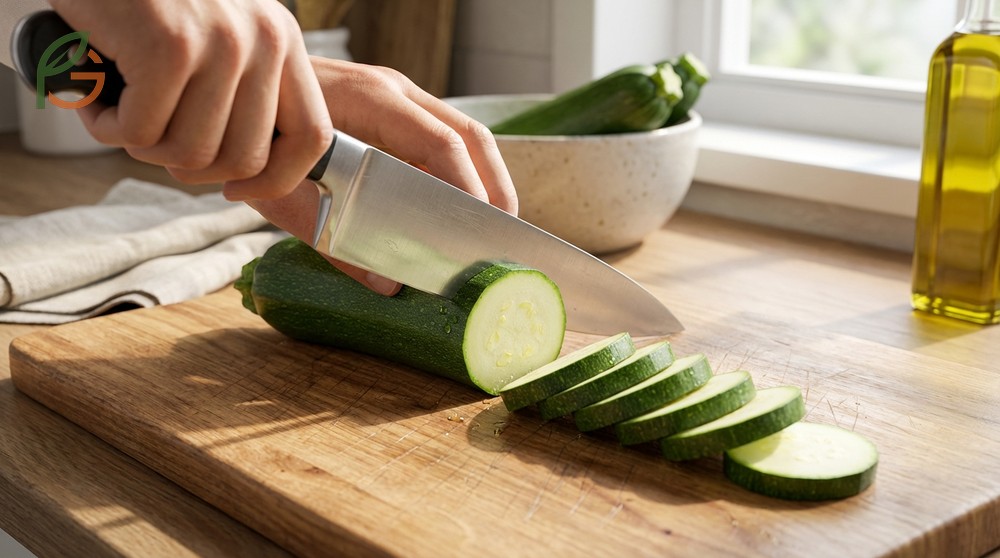
Mastering a few advanced techniques elevates your zucchini cutting from functional to exceptional. These tips address common problems like inconsistent thickness, excessive moisture, and pieces that break apart during cooking.
Use a rocking motion with your chef’s knife rather than pressing straight down. Place the knife tip on the board as a pivot point, then rock the blade through the zucchini using smooth, controlled movements. This technique produces cleaner cuts with less cellular damage, reducing moisture loss.
- Keep your knife sharp—test by slicing through a tomato skin without pressure
- Use the “claw grip” with your non-knife hand, tucking fingertips under knuckles for safety
- Cut zucchini just before cooking to minimize moisture release from exposed surfaces
- For uniform thickness, mark the first few cuts as visual guides at your target measurement
- Anchor round zucchini by trimming a thin slice to create a flat base before halving
- Store cut zucchini between paper towels in the refrigerator if you must prep ahead
- Adjust thickness based on other stir-fry ingredients—match similar cooking times
When stir-frying zucchini with slower-cooking vegetables like carrots or broccoli, cut the zucchini slightly thicker (closer to ½ inch) or add it 2 minutes after the harder vegetables. This prevents overcooking while ensuring all ingredients finish simultaneously. Temperature control matters too—maintain high heat throughout cooking to achieve proper caramelization without steaming.
Consider the season when selecting cutting thickness. Late-summer zucchini from mature plants tends to be larger with more moisture, requiring thicker cuts and the seed-removal technique. Spring and early-summer zucchini stays firmer with standard ¼-inch cuts.
Conclusion
The evidence is clear: successful stir-fry starts with how to cut zucchini for stir fry using proper thickness (¼ inch for half-moons, ⅛-¼ inch for julienne), moisture management through optional salting, and attention to uniform sizing. Current culinary guidance emphasizes matching cut style to cooking method and ingredient pairing for optimal results.
Apply these cutting techniques from FruitGarden during your next stir-fry session, and you’ll notice immediately how proper preparation transforms texture and flavor. Whether you’re cooking a quick weeknight dinner or showcasing garden-fresh zucchini, these methods ensure crispy, perfectly cooked results every time.
Frequently Asked Questions
What’s the best thickness for cutting zucchini for stir fry?
The optimal thickness is ¼ inch for half-moon slices and ⅛ to ¼ inch for julienne matchsticks. This thickness allows zucchini to cook in 3-4 minutes while developing light caramelization without turning mushy. Thicker cuts (up to ½ inch) work when stir-frying alongside slower-cooking vegetables like carrots.
Should I peel zucchini before cutting it for stir fry?
No, don’t peel zucchini for stir-frying. The skin contains nutrients including vitamin A and provides structural support during high-heat cooking. The tender skin becomes perfectly edible when cooked and adds appealing color contrast to your dish. Only remove skin if it’s damaged or excessively thick on oversized zucchini.
How do I prevent zucchini from getting soggy in stir fry?
Salt the cut zucchini and let it drain in a colander for 10 minutes before cooking. Rinse off excess salt and pat completely dry with paper towels. Cook over high heat without crowding the pan, which allows moisture to evaporate quickly instead of steaming the vegetables. Remove seeds from large zucchini to reduce water content further.
Can I cut zucchini ahead of time for stir fry?
You can cut zucchini up to 4 hours ahead, but you’ll get better results cutting just before cooking. If you must prep ahead, place cut pieces between layers of paper towels in an airtight container and refrigerate. The paper towels absorb moisture released from the cut surfaces, maintaining firmer texture.
What’s the difference between julienne and matchstick cuts for zucchini?
Julienne and matchstick refer to the same cutting technique—thin strips measuring ⅛ to ¼ inch wide and 2-3 inches long. These cuts cook faster than half-moons (2-3 minutes versus 3-4 minutes) and provide maximum surface area for browning. The increased exposed area also means more flavor development through caramelization.
How do I cut zucchini safely without it rolling?
First, trim a thin slice from one side to create a flat base. Place the flat side down on your cutting board, which prevents rolling during cutting. Use the “claw grip” with your non-knife hand, keeping fingertips curled under your knuckles and guiding the knife with your knuckles rather than fingertips.
Which zucchini cutting method works best for quick cooking?
Julienne matchstick cuts cook fastest at 2-3 minutes due to their thin profile and high surface area. For even quicker cooking, use a mandoline or julienne peeler to create ultra-thin ribbons that cook in 60-90 seconds. However, these very thin cuts sacrifice some structural integrity and don’t develop the same caramelization as thicker pieces.