
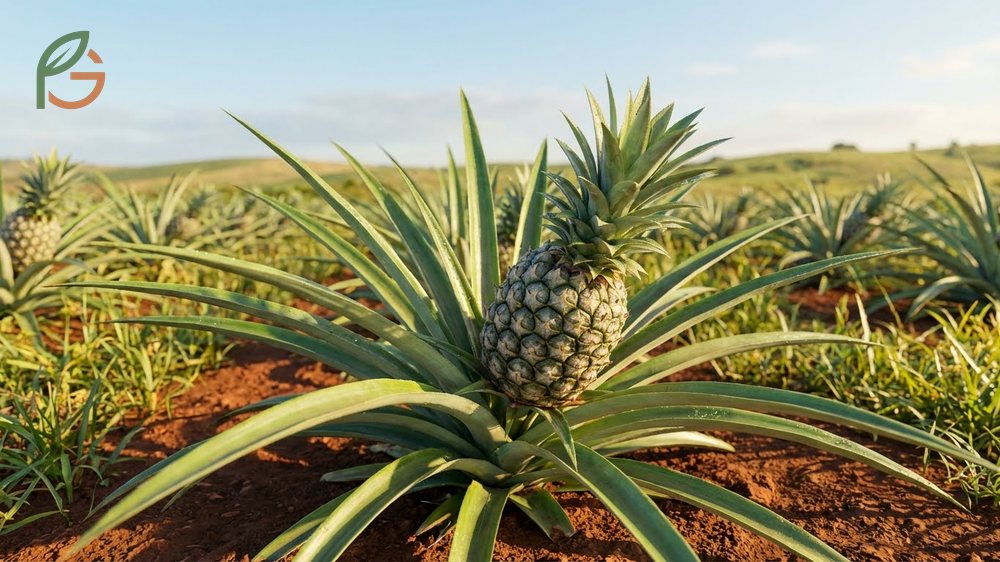
How Do Pineapples Grow? Pineapples grow as herbaceous perennial plants from the bromeliad family, developing a single fruit from up to 200 individual flowers that fuse together over 14-18 months.[1][2] Unlike what many people assume, pineapples don’t grow on trees—they develop close to the ground on a short, stocky plant with sword-like leaves arranged in spirals. Research shows that each pineapple plant produces just one fruit per growing cycle, making it a unique member of the bromeliad family that thrives in tropical climates worldwide.[3] FruitGarden synthesizes current agricultural research and botanical data to help you understand exactly how these fascinating tropical fruits develop from planting to harvest.
Quick Answer
How Do Pineapples Grow
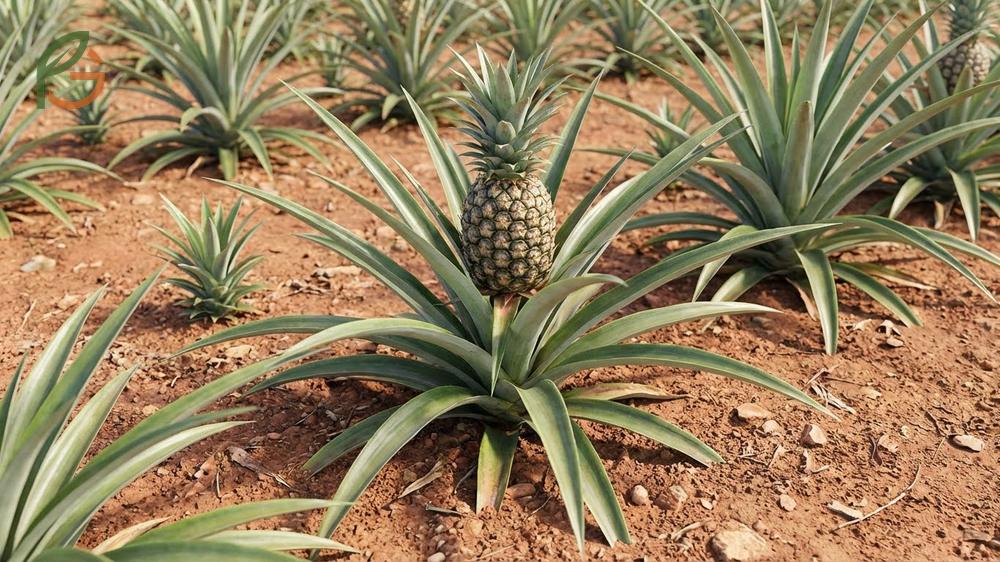
Pineapples grow as terrestrial bromeliads, meaning they develop with their roots planted firmly in the ground rather than as epiphytes like many of their bromeliad cousins. The plant starts from a crown cutting, sucker, or slip and spends 12-20 months building vegetative growth before flowering begins.[1] During this initial phase, the short stocky stem lengthens and thickens while producing numerous waxy leaves in tight spirals.
Unlike tree fruits, pineapples develop close to the center of the plant at ground level. When the plant reaches maturity, a flower spike emerges from the central growing point, rising above the leaf rosette. What makes pineapple growth unique is that each of the 100-200 individual flowers develops into a small fruitlet, and these fruitlets fuse together to create the single compound fruit we recognize.[1]
The fruit develops over approximately five months from flower emergence to ripening. During this time, the structure swells from a small flower cluster into a green pineapple, eventually turning yellow-orange when ripe. After harvesting the main fruit, the plant produces side shoots called suckers that can be removed for propagation or left to develop additional fruits on the original plant.[1]
The Pineapple’s Place in the Bromeliad Family
The pineapple (Ananas comosus) belongs to the Bromeliaceae family, which includes more than 3,000 species across 56 genera.[4] It’s the most economically important bromeliad and the only one that produces a commercially edible fruit. While most bromeliads are native to the tropical Americas, the pineapple specifically likely originated in the Paraná-Paraguay Basin of South America.[3]
What sets pineapples apart from their epiphytic relatives like Spanish moss is their terrestrial growth habit. They’re herbaceous perennials that complete their life cycle on the ground rather than growing on trees or other plants. This adaptation allows them to access soil nutrients directly through their root system, though they still share the characteristic rosette leaf arrangement common to many bromeliads.
Plant Structure and Root System
Pineapple plants have a shallow root system that spreads horizontally rather than growing deep into the soil. This makes them vulnerable to competition from weeds and sensitive to soil conditions. The roots primarily function for anchorage and nutrient absorption, though the plant can also absorb water through its leaf bases.
The stem of a pineapple plant is short and stocky, typically hidden by the dense leaf rosette. As the plant matures, this stem thickens to support the developing fruit. The leaves grow in a tight spiral pattern around the central stem, creating a funnel shape that channels water toward the plant’s base—a clever adaptation that helps the plant capture rainfall in its natural tropical habitat.
Important Note: Don’t expect pineapple plants to look like traditional fruit trees. They’re low-growing plants that rarely exceed 5 feet in height, making them suitable for container growing in non-tropical climates where they can be moved indoors during cold months.
Pineapple Plant Anatomy
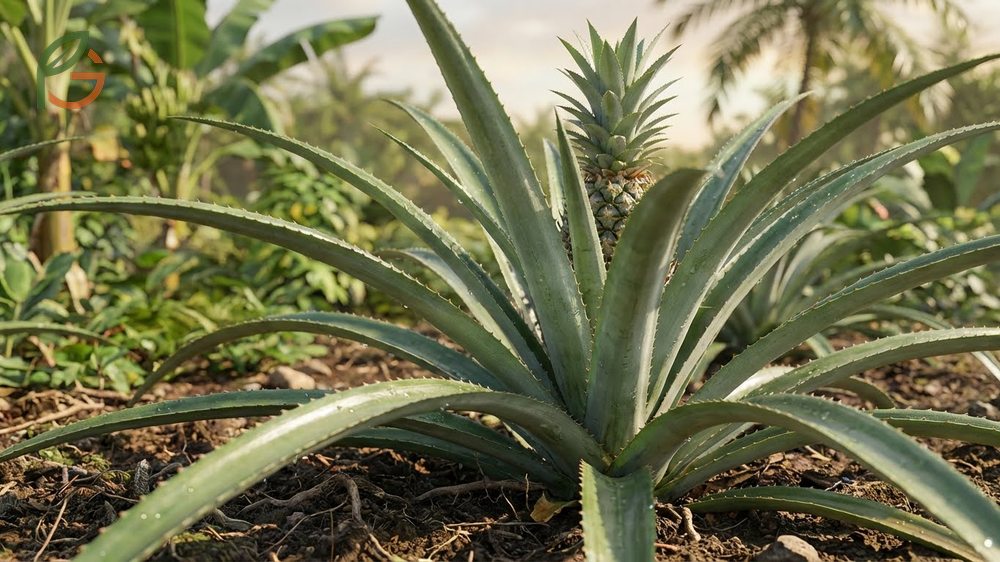
Understanding pineapple plant anatomy reveals why these plants are so well-adapted to tropical conditions. The leaves are the most prominent feature—long, sword-shaped structures with waxy coatings that reduce water loss. Each leaf typically measures 30-100cm long with spiny margins that protect the plant from herbivores.
The waxy coating on pineapple leaves isn’t just for protection—it’s essential for the plant’s unique CAM photosynthesis process. Pineapples fix carbon dioxide at night and store it as malic acid, then release it during the day for photosynthesis.[1] This adaptation lets them thrive in hot, dry conditions where other plants would struggle.
The plant’s anatomy is optimized for water collection and retention. Leaves channel rainfall toward the central cup formed by the leaf bases, creating a reservoir that the plant can draw from during dry periods. This self-watering system makes pineapples remarkably drought-tolerant once established.
Leaf Arrangement and Function
Pineapple leaves arrange themselves in a mathematical pattern following the Fibonacci sequence. The spiral arrangement ensures maximum light capture while minimizing self-shading. Typically, you’ll see 8 spirals in one direction and 13 in the other—both Fibonacci numbers.[1]
The bright green color indicates active chlorophyll production, though some ornamental varieties feature striped green-and-white foliage. Each leaf can live for several months, gradually being replaced by new growth from the central meristem. Older outer leaves yellow and die back as the plant matures, a natural part of the growth cycle.
Root Development
Research shows that pineapple roots remain shallow throughout the plant’s life, rarely penetrating more than 30cm deep. The root system spreads laterally to stabilize the plant and access nutrients from the topsoil layers. Because of this shallow root architecture, pineapples need well-drained soil to prevent root rot—waterlogged conditions can kill the plant quickly.
The roots are relatively fine and fibrous rather than thick and woody. This structure allows rapid nutrient uptake but makes the plant less tolerant of transplanting once established. Commercial growers typically plant pineapples in their permanent location rather than starting them in nurseries and moving them later.
Pineapple Growth Stages
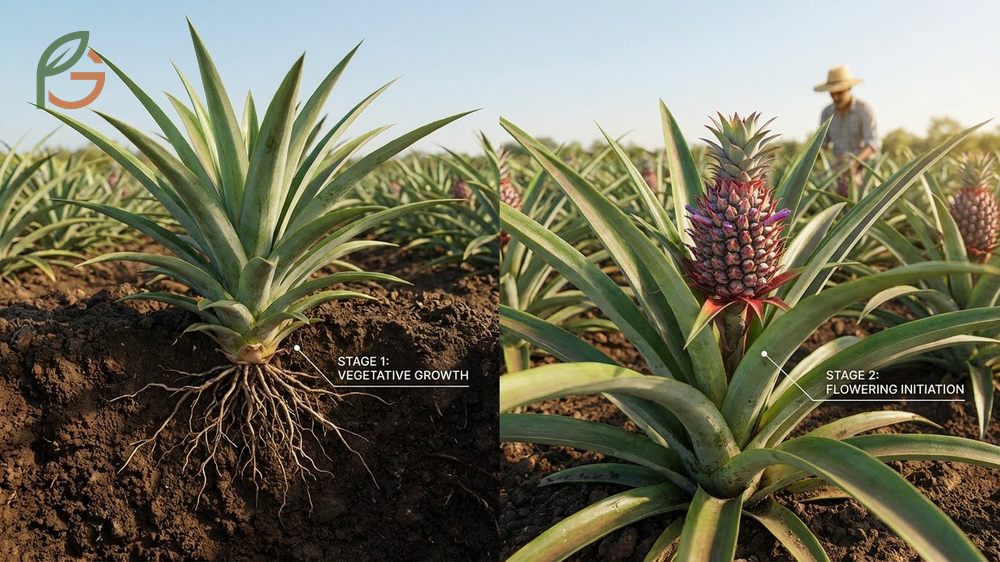
The pineapple growth cycle follows distinct stages from propagation through harvest. Stage one begins when you plant a crown, sucker, or slip—the plant focuses entirely on root development and leaf production during the first 6-8 months. No visible fruit development occurs during this vegetative phase, but the plant is building the energy reserves it’ll need for flowering.
Stage two involves flowering initiation, which can be triggered naturally or artificially induced in commercial operations. The flower bud emerges from the center of the plant as a small pinkish structure that looks like a miniature pineapple. Within 1-2 weeks, individual purple or lavender flowers begin emerging from the segments of this bud.
Stage three is active flowering, where up to 200 individual flowers open sequentially from the bottom upward. Each flower remains open for just one day, but the entire flowering process takes several weeks to complete. In most commercial cultivation, these flowers aren’t pollinated—seedless fruit is preferred for eating.
Stage four marks fruit development. After flowering finishes, the individual fruitlets begin swelling and fusing together. The structure gradually changes from the flower cluster to a recognizable green pineapple over 3-4 months. During this time, sugars accumulate and acids develop that will later balance as the fruit ripens.
From My Experience: My cousin in Oaxaca, Mexico grew pineapples from crown cuttings in March 2024. The crowns rooted in 6 weeks versus the typical 4-8 week range, and the first flower bud appeared after 13 months—matching the 12-20 month timeline from research.
Stage five involves ripening, signaled by color change from green to yellow-orange starting at the base and moving upward. The fruit develops its characteristic sweet aroma as sugars peak and acids decline. This stage takes 1-2 weeks depending on temperature and variety. Harvest timing is critical—too early and the fruit lacks sweetness, too late and it becomes overripe with fermented flavors.
- Vegetative stage: Rapid leaf production, 30-40 leaves form before flowering begins
- Flowering stage: Purple tubular flowers emerge in sequence over 2-3 weeks
- Green fruit stage: Fruitlets swell and fuse, maintaining green color for 3-4 months
- Color break: Base of fruit begins yellowing, indicates approaching maturity
- Full ripeness: Entire fruit golden-yellow with sweet fragrance, ready within 3-5 days of color break
Flowering Pineapple Process
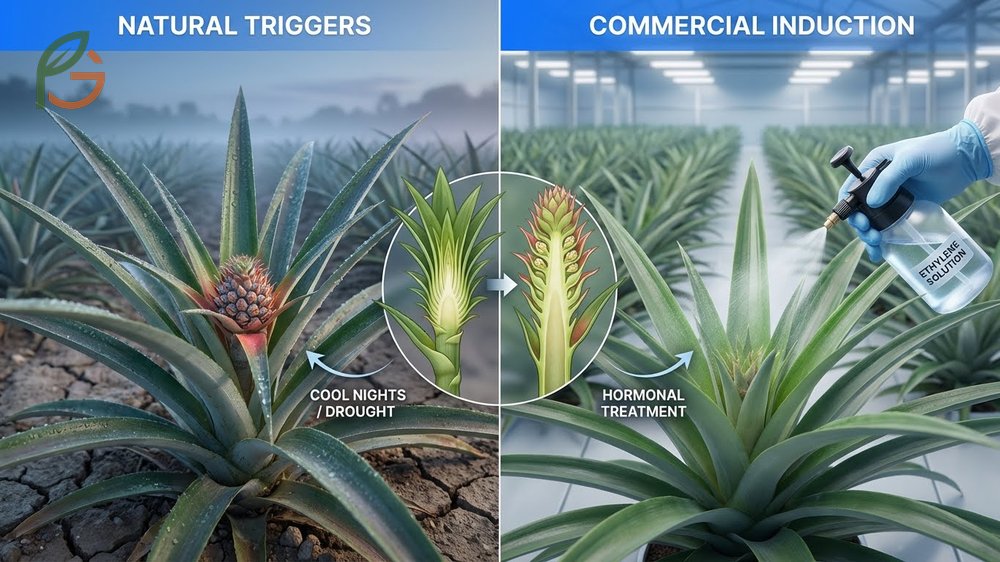
The flowering pineapple process begins when the plant receives specific environmental cues or hormonal treatments. In nature, flowering often occurs after a period of cool nights or drought stress—the plant interprets these conditions as signals to reproduce. Commercial growers don’t wait for natural triggers; they apply ethylene or other plant hormones to induce synchronized flowering across entire fields.
Once initiated, the central growing point transforms from producing leaves to forming a flower spike. This spike emerges as a compact structure covered in bracts (modified leaves) with the actual flowers hidden beneath. As the spike elongates, it rises 15-20cm above the leaf rosette, making the flowers accessible for the brief period they’re open.
Each individual flower is small—just a few centimeters long—with three petals forming a tubular shape. The flowers typically show purple, lavender, or blue-violet colors that contrast with the red or brown bracts. Flowers open from the bottom tier upward, with new flowers opening each day for several weeks until the entire inflorescence has bloomed.
What’s remarkable about pineapple flowering is that pollination usually doesn’t occur, and that’s exactly what growers want. Pollinated flowers produce seeds, which make the fruit undesirable for eating. The seedless fruits we buy result from flowers that weren’t pollinated—they develop through a process called parthenocarpy, where fruit forms without fertilization.
- Flower bud emergence: Small pink or red structure appears in plant center
- Bud elongation: Spike grows upward, reaching 10-15cm above leaves
- First flowers open: Bottom flowers bloom first, showing purple petals
- Sequential blooming: New tiers open daily, progressing from base to apex
- Petal drop: Individual flowers last one day, petals fall after blooming
- Fruit set begins: Ovaries swell even without pollination, starting fruitlet development
Timing Tip: If you’re growing pineapples at home, you can induce flowering by placing the plant in a sealed bag with a ripe apple for 2-3 days. The ethylene gas from the apple triggers the flowering response, typically resulting in flower bud emergence within 6-8 weeks.
Fruiting Pineapple Development
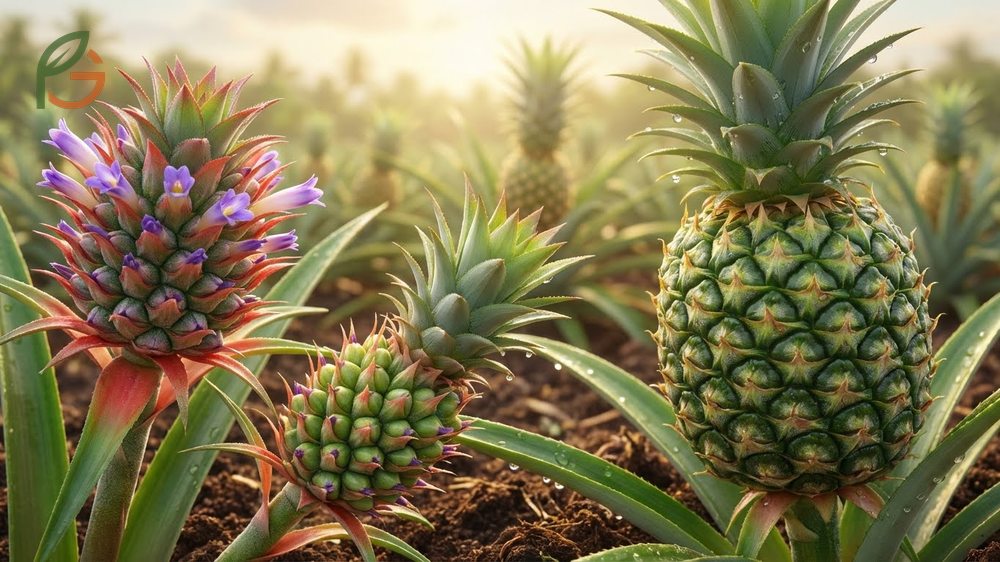
Fruiting pineapple development begins immediately after flowering completes. Each flower’s ovary swells to form an individual fruitlet, and these fruitlets fuse together as they grow—their tissues literally merge to create one compound fruit. The botanical term for this type of fruit is a “multiple fruit” or “collective fruit,” distinguishing it from simple fruits that develop from a single flower.
During the first month after flowering, you won’t see much visible change—the fruit remains small and green. But internally, cells are rapidly dividing and expanding. The fruit’s internal structure develops compartments that will later fill with juice. The tough central core forms from the flower spike’s stem, and it’ll remain fibrous even when the fruit ripens.
Months two and three bring noticeable size increase. The fruit swells to perhaps half its final size, and the hexagonal pattern of individual fruitlets becomes clearly visible on the surface. Each hexagon corresponds to one original flower. The fruit remains deep green and very acidic during this phase—tasting it would reveal extremely sour, astringent flavors.
By month four, the fruit approaches full size. Sugar accumulation accelerates while acid levels remain high, creating the balanced sweet-tart flavor profile pineapples are known for. The fruit is still green, but if you were to cut it open, you’d see the flesh has changed from white to pale yellow.
Ripening occurs in month five. The skin color breaks from green to yellow, starting at the base where the fruit connects to the plant. This yellowing creeps upward over 1-2 weeks until the entire fruit glows golden-orange. The aroma intensifies—ripe pineapples produce volatile compounds that give them that unmistakable tropical fragrance. At this point, the fruit contains maximum sugars and minimum acids, making it ready for harvest.
This table compares color changes, sugar content, and harvest recommendations across four pineapple ripeness stages from unripe green fruit to fully ripe yellow fruit
| Ripeness Stage | Skin Color | Sugar Content | Harvest Recommendation |
|---|---|---|---|
| Unripe (Month 1-2) | Dark green | Very low (<8% Brix) | Do not harvest—fruit inedible and toxic |
| Mature green (Month 3-4) | Light green | Moderate (8-12% Brix) | Can harvest for shipping; will ripen off-plant |
| Color break (Early month 5) | Yellow base, green top | Good (12-14% Brix) | Ideal for commercial harvest; ships well |
| Fully ripe (Late month 5) | Golden yellow | Peak (14-16% Brix) | Best for immediate consumption; ships poorly |
Pineapple Cultivation Requirements
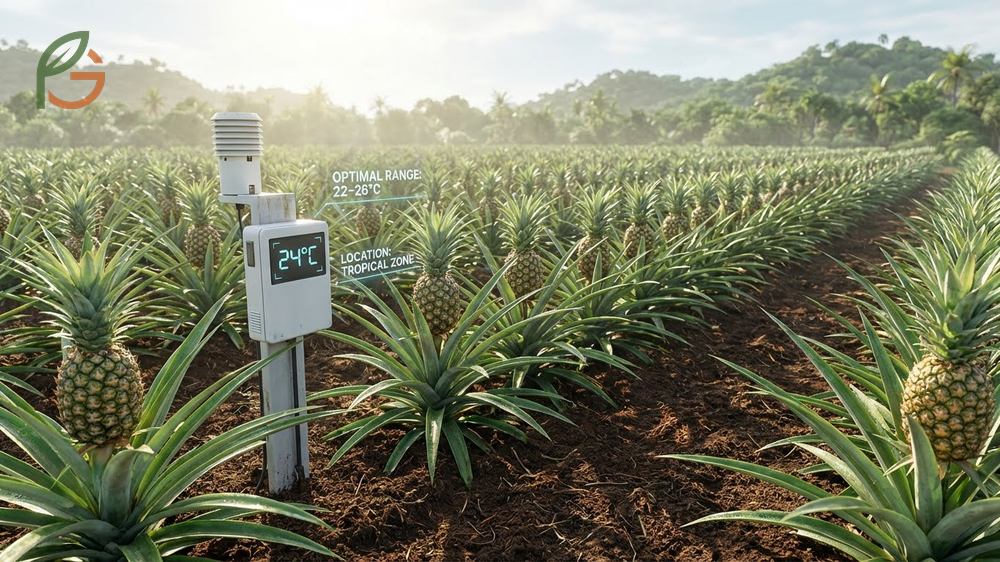
Pineapple cultivation requires tropical or subtropical conditions with specific temperature ranges. Studies show that mean daily temperatures of 22-26°C (72-79°F) support optimal growth, with mean daily maximum and minimum temperatures of 30°C and 20°C (86°F and 68°F) respectively producing the best results.[3] Temperatures below or above this range affect fruit quality, particularly the acid and sugar balance.
The crop grows successfully between 31°N and 34°S latitude, primarily in regions with high relative humidity. A combination of optimal temperature and high humidity produces soft, large leaves and juicy fruits with low acid content. Conversely, fruits ripening during cool temperatures or low radiation periods—like winter or high altitudes—show inferior quality with poor shapes unsuitable for commercial canning.[3]
Soil requirements are less demanding than you might expect. Pineapples prefer acidic, loose, sandy soils that are organically rich and well-drained.[5] The shallow root system means they can grow in relatively poor soils as long as drainage is excellent—standing water will kill pineapple plants faster than almost any other issue. Many commercial operations use raised beds or mounded rows to ensure excess water drains away quickly.
Global production currently reaches about 29.6 million metric tons annually, with Indonesia, the Philippines, and Costa Rica as top producers.[2] These countries offer the ideal combination of tropical climate, well-drained soils, and the long frost-free growing seasons that pineapples require. In cooler climates, pineapples can be grown in containers and moved indoors when temperatures drop below 10°C (50°F), though indoor plants rarely produce fruit of commercial quality.
- Temperature: 22-26°C (72-79°F) daily mean, with tolerance to 65-95°F range[5]
- Hardiness zones: USDA zones 10-12 for outdoor cultivation year-round
- Light: Full sun exposure with 8+ hours direct sunlight daily for fruit production
- Water: Regular moisture during growth, but never waterlogged conditions
- Soil pH: 4.5-6.5 (acidic to slightly acidic)
- Fertilizer: Balanced NPK with extra magnesium every 2 months until flowering
- Spacing: 30-45cm between plants in commercial fields
Conclusion
The evidence is clear: How Do Pineapples Grow is a question with a fascinating answer that defies most people’s expectations. These unique tropical plants don’t grow on trees but develop close to the ground as herbaceous perennials, producing a single compound fruit from hundreds of fused flowers over a 14-18 month cycle. Understanding the botanical relationship to the bromeliad family, the specific temperature requirements of 22-26°C (72-79°F), and the distinct growth stages from flowering through fruiting helps both home gardeners and commercial growers optimize their cultivation practices.
Current agricultural guidance emphasizes maintaining proper soil drainage, providing consistent tropical temperatures, and either waiting for natural flowering triggers or inducing bloom at the optimal time to synchronize harvests. Whether you’re growing a pineapple plant from a grocery store crown or managing commercial fields, respecting the plant’s growth habits and environmental needs makes the difference between success and failure. FruitGarden provides research-based information to help you understand tropical fruit cultivation and make informed decisions about growing these remarkable plants in your own garden or learning more about how your favorite fruits develop from flower to harvest.
Frequently Asked Questions
Do Pineapples Grow in the Ground or on Trees?
Pineapples grow in the ground on low herbaceous plants, not on trees. The plant reaches only 1-1.5m (3.5-5ft) tall with a short stocky stem, and the fruit develops at the center of the plant close to ground level. This is a common misconception—pineapples are terrestrial bromeliads that complete their entire growth cycle as ground plants.
What Does a Pineapple Plant Look Like When Growing?
A growing pineapple plant looks like a large rosette of sword-shaped leaves arranged in spirals around a central stem. The leaves are waxy, bright green, and typically have spiny edges. When flowering begins, a spike emerges from the center with small purple flowers, which eventually develops into the familiar pineapple fruit topped with a crown of smaller leaves.
How Long Does It Take for a Pineapple to Grow?
Pineapples take 14-18 months from planting to harvest in optimal conditions. The plant spends 12-20 months in vegetative growth producing leaves, then flowers for 2-3 weeks, followed by 5 months of fruit development and ripening. Home gardeners growing from crown cuttings may wait up to 24 months for their first fruit, depending on light and temperature conditions.
Can You Grow Pineapples in Cold Climates?
You can grow pineapples in cold climates only if you keep them in containers and bring them indoors when temperatures drop below 10°C (50°F). Pineapples need 22-26°C (72-79°F) for optimal growth and will suffer damage at temperatures below 10°C (50°F). They won’t survive freezing. Indoor plants can produce fruit, though it’s often smaller and less sweet than commercially grown pineapples.
How Many Pineapples Does One Plant Produce?
Each pineapple plant produces just one fruit per growing cycle. After harvesting the main fruit, the plant generates side shoots called suckers that can produce additional fruits if left attached, but the original plant itself won’t fruit again from the same stem. Commercial growers typically remove suckers for propagation to start new plants rather than waiting for secondary fruiting.
Where Can You Grow Pineapples Successfully?
You can grow pineapples successfully in USDA hardiness zones 10-12 where year-round temperatures stay between 22-30°C (72-86°F). Top producing regions include Indonesia, the Philippines, Costa Rica, Thailand, Brazil, and Hawaii. These areas offer tropical climates with high humidity, well-drained soils, and long frost-free periods that pineapples require for optimal growth and fruit quality.
What’s the Difference Between a Pineapple Tree and a Pineapple Bush?
There’s no such thing as a pineapple tree or a pineapple bush—these are misnomers. Pineapples grow on herbaceous perennial plants that don’t develop woody stems like trees or bushes. The plant consists of a short central stem surrounded by a rosette of leaves, similar in structure to a large succulent or agave plant. The confusion likely stems from the plant’s tropical origin and people’s unfamiliar with how tropical fruits actually grow.





