
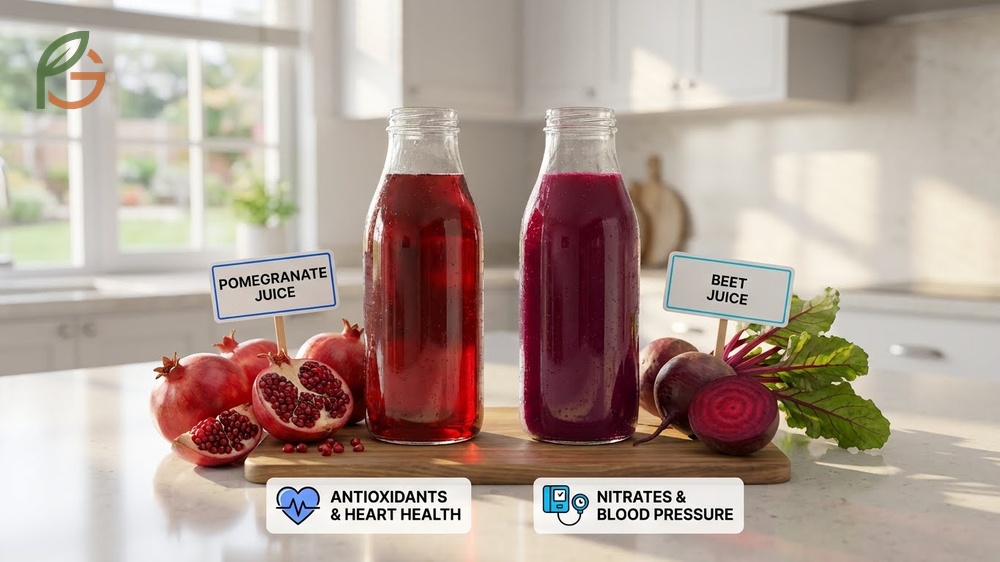
Pomegranate Juice Vs Beet Juice: Both deliver powerful nutrients, but they work differently in your body. Research shows beet juice excels at delivering dietary nitrates (250-300mg per 8 oz serving)[1], which convert to nitric oxide and support blood pressure regulation[2]. Pomegranate juice counters with superior antioxidant capacity—primarily from punicalagins—that protects cells and supports heart health through different pathways[3]. FruitGarden synthesizes current nutritional research to help you understand which juice fits your health goals.
Quick Answer
- Beet juice provides 250-300mg nitrates[1] per 8 oz that lower blood pressure by 3.55/1.32 mm Hg[2]
- Pomegranate juice contains 20x higher antioxidant activity[3] than arils alone, driven by punicalagins
- Beet juice wins for athletic performance and nitric oxide production, pomegranate for cellular protection
- Pomegranate has 64% more potassium (533mg vs 317mg per 8 oz) but also 2x the calories
Pomegranate Juice Vs Beet Juice
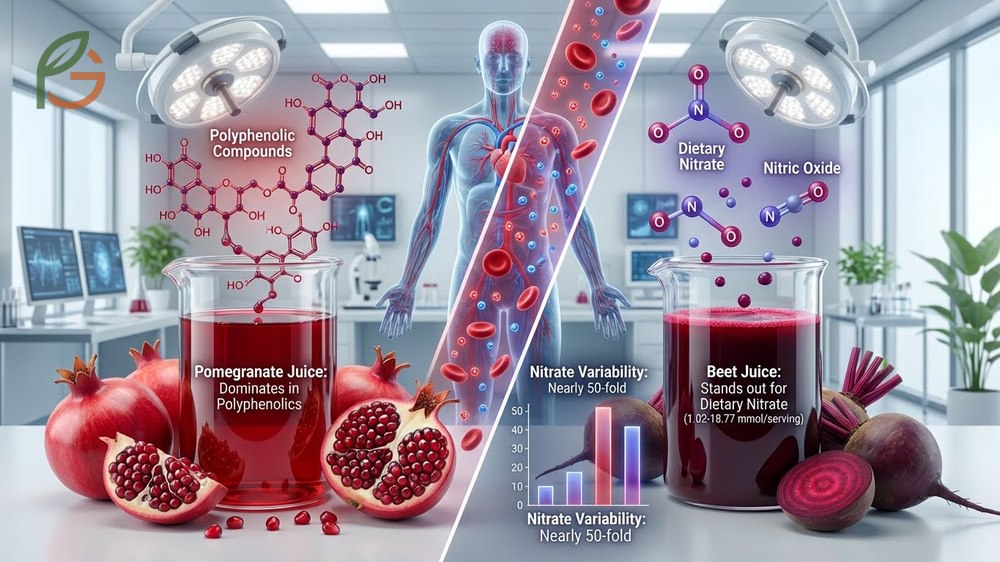
Studies demonstrate that beet juice stands out for its dietary nitrate concentration while pomegranate juice dominates in polyphenolic compounds. The critical difference isn’t just what each contains—it’s how those compounds function once they enter your bloodstream.
Beet juice products tested by researchers contained 1.02 to 18.77 mmol of nitrate per serving[1], with quality varying nearly 50-fold between brands. Most commercial beet juices deliver 250-300mg nitrate per 8 oz serving, while concentrated shots pack up to 500mg[1].
Pomegranate juice provides minimal nitrate but compensates with punicalagins—hydrolyzable tannins that produce approximately 20-fold higher antioxidant activity in whole fruit preparations compared to arils alone[3]. This matters because the two juices address different physiological needs through distinct biochemical pathways.
Nitrate Content Comparison
Current data indicates beet juice contains significantly higher nitrate levels than pomegranate products. Analysis revealed pomegranate powder contains less than 0.001 mmol nitrate per 1,000mg[5]—essentially negligible for nitric oxide production.
The nitrate concentration in beetroot products varies by form. Powders averaged 174 μmol/g, concentrates 70 μmol/ml, mixed drinks 13 μmol/ml, and bulk juices 18 μmol/ml[1].
Important Note: Only five of 24 tested beetroot products consistently provided ≥5 mmol nitrate per serving—the minimum dose research suggests enhances performance in most people[1]. Brand quality matters significantly.
How Nitrates Work in Your Body
Dietary nitrates follow the enterosalivary pathway. Your body converts nitrate to nitrite, then nitrite to nitric oxide—a signaling molecule that relaxes blood vessels and improves blood flow[2].
Evidence suggests this conversion peaks 2-3 hours after consuming nitrate-rich foods. Regular consumption of 250ml beet juice led to average reductions of 3.55 mm Hg systolic and 1.32 mm Hg diastolic blood pressure[2]—modest but clinically meaningful for stroke risk reduction.
Which Juice Is Healthier
The answer depends on your specific health priorities rather than an absolute winner. Research shows each juice delivers distinct nutritional profiles that serve different purposes.
Current guidance emphasizes matching juice selection to health outcomes you’re targeting. If you’re managing blood pressure or seeking pre-workout performance enhancement, beet juice’s nitrate content provides measurable benefits within hours[2].
Nutritional Profiles
Agricultural data shows significant nutritional differences between the two juices. Per 8 oz serving, pomegranate juice provides 134 calories with 533mg potassium (11% daily value)[4]. Beet juice contains just 62 calories with 317mg potassium (6.7% daily value)[4].
The potassium advantage matters for individuals monitoring blood pressure through multiple dietary pathways. Pomegranate delivers 64% more potassium per serving, supporting sodium balance alongside its polyphenol content.
This table compares calories, carbohydrates, sugar, fiber, and potassium content between pomegranate and beet juice per 8 oz serving
| Nutrient | Pomegranate Juice | Beet Juice |
|---|---|---|
| Calories | 134[4] | 62[4] |
| Carbohydrates | 32.6g[4] | 14.6g[4] |
| Sugar | 31.4g[4] | 12g[4] |
| Fiber | 0.25g[4] | 2.72g[4] |
| Potassium | 533mg (11% DV)[4] | 317mg (6.7% DV)[4] |
Calorie and Sugar Comparison
Most people don’t realize beet juice contains less than half the calories of pomegranate juice. The 72-calorie difference per serving adds up quickly if you’re drinking juice daily.
Sugar content shows an even larger gap. Pomegranate juice contains 31.4g sugar versus 12g in beet juice[4]—a 2.6x difference that matters for blood sugar management. Beet juice also provides 10x more fiber (2.72g vs 0.25g)[4], helping slow sugar absorption.
Antioxidant Levels Comparison
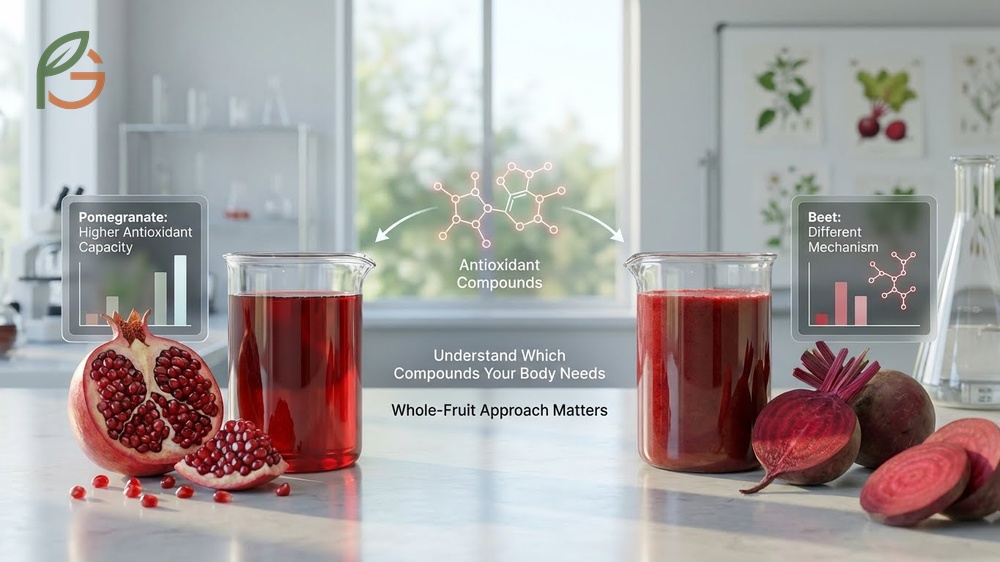
Studies demonstrate pomegranate juice delivers substantially higher antioxidant capacity than beet juice, though the two operate through different mechanisms. This isn’t about one being “better”—it’s about understanding which antioxidant compounds your body needs.
What often gets overlooked is that antioxidant activity correlates directly with specific compound concentrations. The whole-fruit approach matters more than you’d think.
Pomegranate’s Polyphenol Power
Research shows pomegranate juice derives its antioxidant capacity primarily from hydrolyzable tannins, especially punicalagins. Testing revealed that homogenates from whole fruit exhibited approximately 20-fold higher antioxidant activity than aril juice alone[3].
Current data indicates punicalagins—not anthocyanins—drive this exceptional activity. The antioxidant level in whole-fruit preparations correlated significantly with punicalagin content, while no correlation existed with anthocyanin levels[3].
Evidence suggests these polyphenols work by activating the Akt/endothelial nitric oxide synthase pathway. Animal studies showed 200mg punicalagins daily prevented hyperlipemia-induced coronary dysfunction and reduced oxidative stress markers[6].
Beet’s Betalain Benefits
Beet juice provides antioxidants through betalains—pigment compounds unique to beets that deliver cellular protection and anti-inflammatory effects[4]. While less potent than pomegranate’s punicalagins gram-for-gram, betalains offer advantages in specific contexts.
Agricultural research indicates betalains work synergistically with dietary nitrates in ways that isolated supplements don’t replicate. Studies comparing beetroot juice to equivalent sodium nitrate doses showed juice produced greater blood pressure reductions—suggesting whole-food compounds enhance nitrate metabolism.
Key Distinction: Pomegranate antioxidants primarily prevent oxidative damage, while beet’s betalains support nitric oxide pathways. Don’t choose based solely on “antioxidant content”—consider your specific health objectives.
Health Benefits Comparison
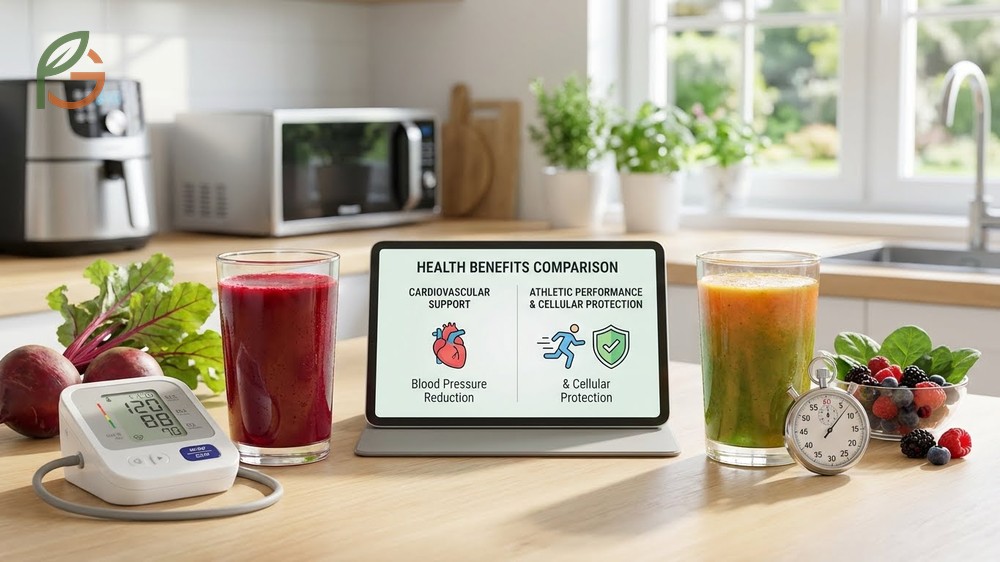
Evidence indicates both juices deliver measurable health improvements, but through distinct biological mechanisms. Your optimal choice depends on whether you’re targeting cardiovascular support, athletic performance, or cellular protection.
Beet juice consistently demonstrates blood pressure reduction in controlled trials. Consuming 200-800mg dietary nitrates from beetroot juice lowered systolic pressure by 4-7.46 mm Hg after 90 days[7]. Benefits typically appear within 2-3 hours and persist with regular intake.
Pomegranate juice supports heart health through different pathways. Clinical data shows its polyphenols reduce cholesterol oxidation and slow atherosclerosis progression[8]. The punicalagin content also lowers blood pressure—not through nitric oxide production, but via endothelial function improvements.
- Enhances exercise performance by improving muscle contractile efficiency and oxygen utilization
- Reduces blood pressure via nitric oxide-mediated vessel dilation
- Provides 16% daily folate requirement per cup—essential for DNA synthesis and red blood cell production[4]
- Supports athletic performance with improved power output during high-intensity exercise
- Benefits older adults by reshaping oral microbiome to enhance nitrate metabolism[9]
- Delivers 27% daily vitamin C requirement per 8 oz serving[4]
- Protects cells from oxidative stress through exceptional polyphenol concentration
- Slows cholesterol oxidation and atherosclerosis development through punicalagin activity
- Provides cardiovascular protection independent of nitric oxide pathways
- Supports immune function with high vitamin C and antioxidant content
Conclusion
The evidence is clear: Pomegranate Juice Vs Beet Juice isn’t about declaring an absolute winner—it’s about matching juice properties to your health priorities. Beet juice dominates for blood pressure management and athletic performance through its exceptional nitrate content (250-300mg per serving), while pomegranate provides superior cellular protection via 20x higher antioxidant activity from punicalagins.
Current guidance emphasizes that both juices deliver measurable benefits through independent pathways. If you’re managing hypertension or seeking pre-workout enhancement, beet juice’s documented 3.55/1.32 mm Hg pressure reduction within hours makes it the evidence-based choice. For cellular protection and long-term cardiovascular health through polyphenol pathways, pomegranate’s punicalagin content offers advantages beet juice can’t replicate. FruitGarden recommends consulting nutritional research and considering your specific health metrics before selecting either juice for daily consumption.
Medical Disclaimer
Important Medical Disclaimer: This content is for informational and educational purposes only. It is not intended as a substitute for professional medical advice, diagnosis, or treatment. Always consult a qualified healthcare professional before making any changes to your diet, medication, or health routine, especially if you have hypertension, diabetes, cardiovascular conditions, or other medical concerns. Individual responses to dietary changes vary significantly based on genetics, medications, and existing health conditions.
Frequently Asked Questions
Which juice is better for lowering blood pressure?
Research shows beet juice works more effectively for blood pressure reduction through its dietary nitrate content. Studies document average reductions of 3.55 mm Hg systolic and 1.32 mm Hg diastolic pressure with regular consumption of 250ml daily. Effects typically appear within 2-3 hours as your body converts nitrates to nitric oxide, which relaxes blood vessels.
Can I mix pomegranate and beet juice together?
Yes, you can combine both juices, though research indicates this may not provide additive benefits. Studies testing beetroot juice with pomegranate powder found similar plasma nitrate and nitrite levels compared to beet juice alone—suggesting pomegranate doesn’t enhance nitrate metabolism. However, you’ll still get the distinct antioxidant benefits from each juice’s unique compounds.
How much nitrate do I need for health benefits?
Current data indicates 5-8 mmol nitrate (approximately 310-500mg) represents the minimum effective dose for most people. This translates to 8-10 oz of quality beet juice or 1-2 concentrated beetroot shots. Only five of 24 commercial products tested consistently met this threshold, making brand selection critical for achieving documented benefits.
Which juice has fewer calories and less sugar?
Beet juice contains significantly fewer calories (62 vs 134) and less sugar (12g vs 31.4g) per 8 oz serving compared to pomegranate juice. Beet juice also provides 10x more fiber (2.72g vs 0.25g), helping moderate blood sugar response. If you’re managing weight or blood glucose, beet juice offers clear advantages in these metrics.
When should I drink beet juice for best results?
Evidence suggests consuming beet juice 2-3 hours before activity produces optimal effects, as plasma nitrite levels peak during this window. For blood pressure management, morning consumption allows benefits to extend through daytime hours when pressure typically runs higher. Consistent daily intake matters more than precise timing for long-term cardiovascular benefits.
What are punicalagins and why do they matter?
Punicalagins are hydrolyzable tannins unique to pomegranates that deliver potent antioxidant activity—approximately 20x higher than pomegranate arils alone. Studies show these compounds prevent cholesterol oxidation, reduce atherosclerosis progression, and activate pathways that protect endothelial function. They work independently from nitrate-based mechanisms, offering cardiovascular benefits through cellular protection rather than blood vessel dilation.
Do both juices work for athletes?
Research demonstrates beet juice enhances athletic performance through improved muscle contractile efficiency, oxygen utilization, and power output during high-intensity exercise. The nitrate-to-nitric-oxide pathway provides measurable ergogenic effects within 2-3 hours. Pomegranate juice offers antioxidant support for recovery but lacks the documented performance enhancement that dietary nitrates deliver. Athletes seeking pre-workout benefits should prioritize beet juice.





