
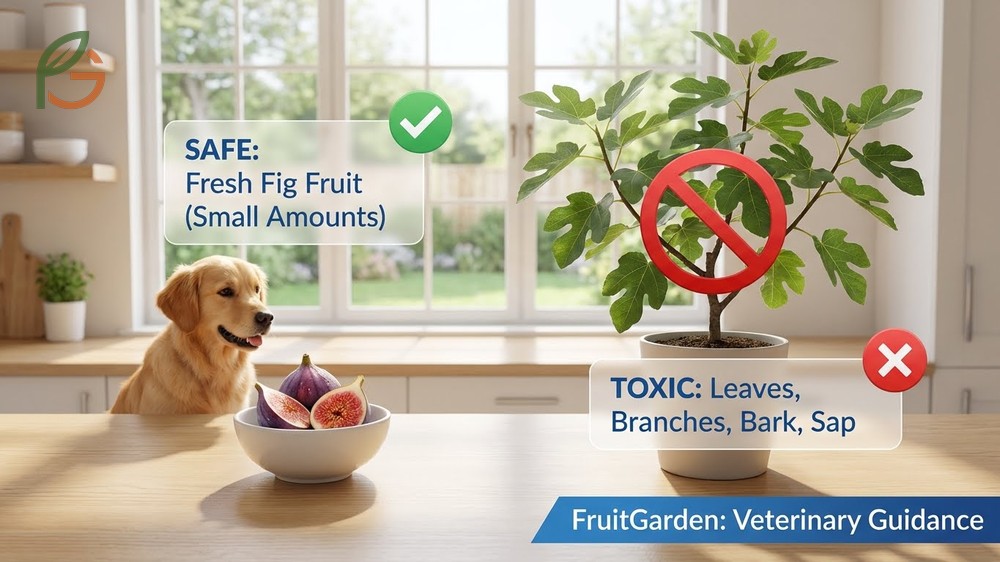
Can dogs eat figs? Yes, dogs can safely eat fresh fig fruit in small amounts as an occasional treat. However, all parts of the fig tree—including leaves, branches, bark, and sap—are toxic to both dogs and cats due to compounds called ficin and ficusin[1]. Research shows that while the fruit itself provides fiber and potassium, the plant poses serious health risks that every pet owner should understand. FruitGarden combines veterinary guidance with nutritional data to help you make informed decisions about your dog’s diet.
Quick Answer
- Fresh fig fruit is safe for dogs in moderation—30 calories and 1.2g fiber per small fig[2]
- Fig trees (Ficus species) are toxic to dogs and cats due to ficin enzyme and ficusin compound[1]
- Never feed dried figs—high sugar content and choking hazard
- Symptoms of fig tree poisoning include skin rashes, drooling, vomiting, and diarrhea[3]
Can Dogs Eat Figs

Fresh figs are not toxic to dogs when given as occasional treats. The fruit contains beneficial nutrients like fiber, potassium, and magnesium that can support your dog’s digestive health.
Studies demonstrate that moderation is critical. One small fresh fig contains approximately 30 calories and 7.7g of carbohydrates[2]. Most veterinarians recommend limiting figs to no more than one or two small pieces per week for medium-sized dogs.
The distinction between fig fruit and fig plant is crucial. While the fruit flesh itself won’t harm your dog, any contact with leaves, branches, or sap from the fig tree can cause serious reactions[3]. Always wash fresh figs thoroughly and remove any stems or leaf remnants before offering them to your pet.
Nutritional Benefits of Figs
Figs offer several nutritional advantages for dogs when fed appropriately. Each small fig provides potassium, which supports heart and muscle function, along with dietary fiber that aids digestion.
Current data shows that figs contain natural sugars balanced by fiber content. A 40g fig delivers 1.2g of fiber and 93mg of potassium[2]. This combination can help regulate bowel movements in dogs experiencing mild constipation.
- Dietary fiber supports healthy digestion and gut bacteria
- Potassium aids muscle contraction and nerve signal transmission
- Magnesium contributes to bone health and energy metabolism
- Natural sugars provide quick energy for active dogs
- Low fat content makes figs suitable for weight management
Safe Serving Guidelines
Veterinarians recommend introducing figs gradually to monitor for allergic reactions. Start with a quarter of a small fig and observe your dog for 24 hours before offering more.
Proper preparation prevents choking hazards. Cut fresh figs into bite-sized pieces appropriate for your dog’s size—smaller dogs need smaller portions. Remove the stem and wash the fruit thoroughly to eliminate pesticide residues.
Important Note: Never exceed 10% of your dog’s daily caloric intake from treats, including figs. For a 30-pound dog consuming roughly 800 calories daily, this means no more than 80 calories from treats—equivalent to about 2-3 small figs maximum per day.
Are Fig Trees Poisonous to Dogs

The ASPCA classifies fig trees (Ficus benjamina and related species) as toxic to dogs, cats, and horses[1]. This toxicity extends to all parts of the plant except the ripened fruit itself. Weeping figs, rubber plants, and fiddle-leaf figs all contain the same dangerous compounds.
Evidence indicates that even brief contact can trigger reactions. The milky white sap that oozes from broken stems or leaves contains the highest concentration of toxins. Dogs don’t need to ingest large amounts—touching or chewing on a single leaf can cause symptoms.
Fig tree poisoning represents a common household pet emergency. Many homeowners keep ornamental Ficus species indoors without realizing the danger. If you have both fig plants and pets in your home, keep plants completely out of reach or consider replacing them with pet-safe alternatives.
Toxic Compounds in Fig Plants
Two primary substances make fig trees dangerous for pets. Ficin is a proteolytic enzyme that breaks down proteins in your dog’s tissues. Ficusin is a psoralen compound that causes photosensitivity and severe skin reactions[4].
Research shows these compounds work through different mechanisms. Ficin damages the mucous membranes in your dog’s mouth and digestive tract on contact. Ficusin makes skin hypersensitive to sunlight, causing blistering and burns even with minimal sun exposure after contact.
- Ficin enzyme destroys protein structures in living tissue
- Ficusin compound triggers photosensitivity reactions
- Milky sap contains concentrated levels of both toxins
- Leaves and bark hold moderate toxin concentrations
- Fresh sap from cut branches poses highest exposure risk
Symptoms of Fig Poisoning in Dogs
Clinical signs typically appear within 2-12 hours of exposure. The severity depends on the amount ingested and whether your dog touched or ate the plant material[3].
Oral exposure causes immediate local reactions. You’ll notice excessive drooling, pawing at the mouth, and visible redness around the lips and gums. Skin contact produces rashes, blisters, and intense itching that worsens with sun exposure.
This table categorizes fig poisoning symptoms in dogs by severity level and affected body system with typical onset timeframe
| Severity | Symptoms | Onset Time | Action Required |
|---|---|---|---|
| Mild | Drooling, mouth irritation, mild skin redness | 2-4 hours | Monitor closely, call vet |
| Moderate | Vomiting, diarrhea, facial swelling, rashes | 4-8 hours | Veterinary visit same day |
| Severe | Blistering skin, difficulty swallowing, lethargy | 8-12 hours | Emergency vet immediately |
| Critical | Breathing difficulty, collapse, photosensitivity burns | 12+ hours | Emergency treatment required |
Emergency Response: If your dog chews on fig tree leaves or contacts sap, rinse their mouth with cool water immediately. Don’t wait for symptoms to appear—contact your veterinarian or Pet Poison Helpline (855-764-7661) right away for guidance[5].
Can Dogs Have Dried Figs

Veterinary experts advise against feeding dried figs to dogs. The dehydration process concentrates sugars dramatically—six dried figs contain approximately 24g of sugar compared to 6.5g in a single fresh fig[6].
The dense, chewy texture creates multiple hazards. Dried figs can lodge in your dog’s throat or stick to the roof of their mouth, causing choking or discomfort. Dogs who gulp food without chewing thoroughly face the highest risk.
Excess sugar consumption leads to several health problems. Weight gain, dental cavities, and blood sugar spikes affect dogs similarly to humans. Dogs with diabetes or pancreatitis should never receive dried figs due to their concentrated carbohydrate content.
- Sugar concentration increases 3-4 times compared to fresh figs
- Dense texture poses significant choking hazard
- Sticky consistency adheres to teeth promoting decay
- High calorie density contributes to obesity
- Commercial dried figs may contain added sulfites or preservatives
Are Fig Trees Toxic to Cats

Cats face the same dangers from fig trees as dogs. The ASPCA confirms that Ficus species are toxic to cats through the same ficin and ficusin compounds[1]. Cats may actually face higher risk because they’re more likely to chew on houseplants out of curiosity or boredom.
Feline symptoms mirror those in dogs but can progress faster. Cats typically show oral irritation, excessive drooling, and gastrointestinal distress within 2-6 hours. Their grooming behavior spreads the toxic sap across their fur and skin, potentially causing widespread dermatitis.
Prevention requires the same vigilance for cats. Keep all Ficus plants completely inaccessible, including weeping figs, rubber trees, and fiddle-leaf figs. Consider that cats can jump to high shelves, so simply elevating plants won’t ensure safety.
Safe Fruits for Dogs

Many fruits offer safer alternatives to figs with similar nutritional benefits. Current veterinary guidance supports feeding various fruits in moderation as healthy treats[7].
Proper preparation matters for all fruits. Always remove seeds, pits, and stems that could contain toxins or create choking hazards. Wash all fruits thoroughly to eliminate pesticides and cut them into appropriate sizes for your dog’s breed.
- Blueberries provide antioxidants without choking risk—serve whole or frozen
- Watermelon offers hydration and vitamins when seedless and rind-free
- Apples supply fiber and vitamin C after removing core and seeds
- Strawberries deliver vitamin C but limit to 2-3 berries due to sugar
- Bananas provide potassium like figs with easier digestion—limit to half banana for medium dogs
- Cantaloupe offers vitamins A and C when deseeded and cut into cubes
Certain fruits require complete avoidance. Never feed dogs grapes, raisins, cherries, or avocados—these can cause kidney failure, cyanide poisoning, or pancreatitis respectively. When in doubt, consult your veterinarian before introducing any new food.
Conclusion
The evidence is clear: can dogs eat figs safely depends entirely on which part you’re discussing. Fresh fig fruit poses no toxicity risk in small, occasional servings, while fig trees and plants are dangerous to both dogs and cats. The key lies in understanding this critical distinction and taking appropriate precautions.
Current veterinary guidance emphasizes that moderation, proper preparation, and vigilant plant management protect your pets. If you choose to share fresh figs with your dog, limit portions to one or two small pieces weekly, remove all stems, and ensure no contact with tree parts. For pet owners with fig trees in their homes or gardens, FruitGarden recommends considering safer alternatives or implementing strict physical barriers to prevent any plant access.
Medical Disclaimer
Important Veterinary Disclaimer: This content is for informational and educational purposes only. It is not intended as a substitute for professional veterinary advice, diagnosis, or treatment. Always consult a qualified veterinarian before making any changes to your pet’s diet or if you suspect your dog or cat has been exposed to toxic plants. In case of emergency, contact your veterinarian, emergency animal hospital, or Pet Poison Helpline (855-764-7661) immediately.
Frequently Asked Questions
Can Dogs Eat Fig Skin?
Yes, dogs can eat fig skin safely. The outer skin of ripe figs contains fiber and nutrients without toxic compounds. However, always wash figs thoroughly to remove pesticides, and ensure no stem or leaf material remains attached, as those parts of the fig plant are toxic.
What Should I Do if My Dog Ate Fig Tree Leaves?
Contact your veterinarian or Pet Poison Helpline immediately. Rinse your dog’s mouth with cool water, monitor for symptoms like drooling, vomiting, or skin irritation, and don’t wait for signs to appear before seeking professional advice. Keep your dog indoors away from direct sunlight to prevent photosensitivity reactions.
Are Fresh Figs Better Than Dried Figs for Dogs?
Fresh figs are significantly safer for dogs. Dried figs contain 3-4 times more concentrated sugar, pose choking hazards due to their dense texture, and can stick to teeth causing decay. If you want to share figs with your dog, always choose fresh, ripe figs cut into small pieces.
How Many Figs Can a Dog Eat Safely?
Most veterinarians recommend no more than 1-2 small fresh figs per week for medium-sized dogs. Treats should never exceed 10% of your dog’s daily caloric intake. Smaller dogs need proportionally smaller amounts—perhaps half a fig weekly—while larger breeds can handle slightly more.
Do Fig Trees Cause Allergic Reactions in Dogs?
Yes, fig tree sap contains ficin and ficusin that trigger both allergic reactions and toxic responses. Dogs may develop contact dermatitis, rashes, blistering, and photosensitivity after touching leaves or sap. These aren’t typical allergies but rather toxic reactions requiring veterinary treatment.
Can Cats Eat Figs Like Dogs Can?
While fresh fig fruit isn’t toxic to cats either, most veterinarians don’t recommend figs for cats. Cats are obligate carnivores with limited ability to digest fruits, and they gain minimal nutritional benefit. Focus on species-appropriate treats instead, and keep all fig plants away from cats due to toxicity.
What Are Signs of Ficain Enzyme Poisoning?
Ficain enzyme poisoning causes protein destruction in tissues. Look for excessive drooling, mouth pain, pawing at face, vomiting, diarrhea, and visible oral irritation within 2-12 hours. Severe cases show difficulty swallowing and blistering. This requires immediate veterinary attention as ficain damages digestive tract tissues.





