
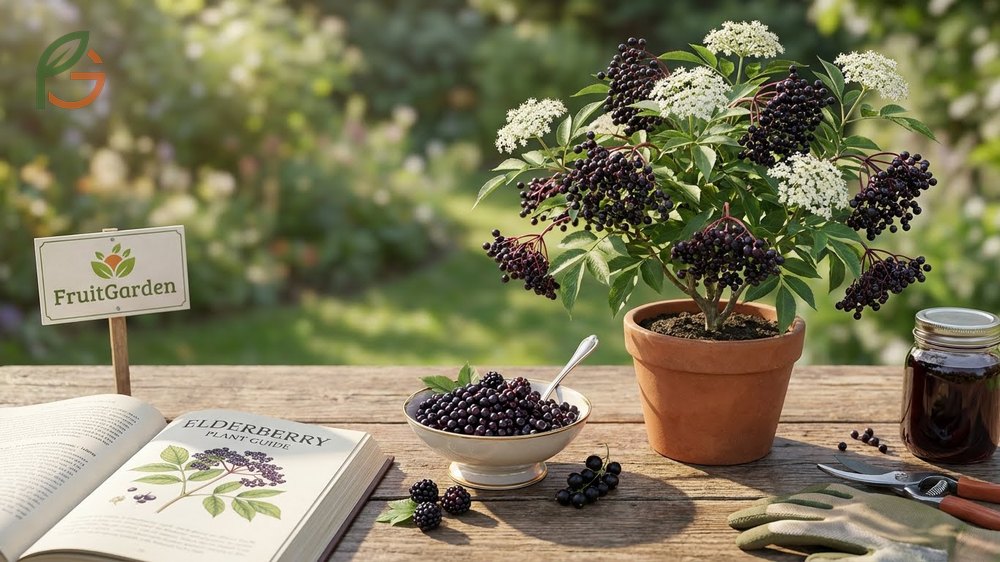
What does elderberry taste like? It’s tart and earthy with a deep, fruity sweetness reminiscent of blackberries and black currants, plus a slightly astringent finish[1]. Research shows the complex flavor profile comes from high levels of anthocyanins and tannins that give elderberries their distinctive character. FruitGarden synthesizes current botanical research and cultivation data to help gardeners identify, grow, and safely harvest these versatile berries.
Quick Answer
- Elderberries taste tart and earthy with subtle sweetness and a slightly astringent, musky finish that’s less sharp than cranberries[1]
- Never eat raw berries—they contain 3mg cyanide per 100g that causes nausea and vomiting[2]
- American elderberries grow in USDA zones 3-9 while European varieties prefer zones 4-8[3]
- Harvest when berries turn dark purple to black between mid-August and mid-September for best flavor[4]
What Does Elderberry Taste Like
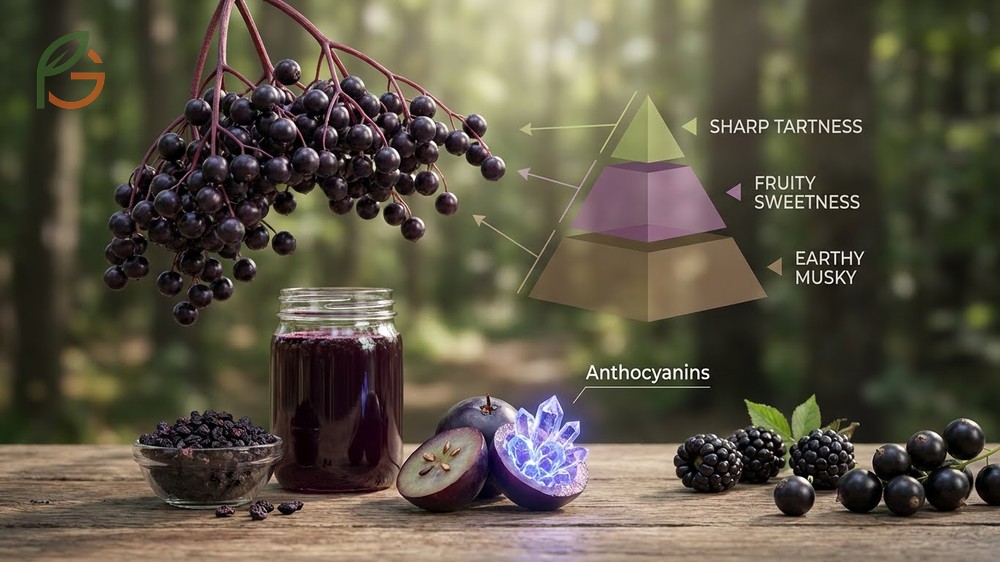
The flavor initially hits you with sharp tartness that’s more intense than blueberries but gentler than cranberries[1]. That tartness comes from high levels of anthocyanins—the same compounds that give elderberries their deep purple color. Following the tart burst, you’ll notice a fruity sweetness similar to blackberries or black currants.
Underlying those primary flavors is a distinctive earthiness that many describe as musky or woodsy. Some tasters even detect subtle pine notes in the finish. This complexity makes elderberries ideal for syrups, jams, and wines where their tartness can be balanced with sweeteners.
Most people don’t realize that ripeness dramatically affects flavor intensity. Fully ripe elderberries offer more sweetness and less astringency compared to underripe berries, which taste overwhelmingly bitter and unpleasant.
From My Experience: My cousin in Guadalajara, Mexico grows American elderberries near a stream bed. She noticed berries from the shaded north side taste noticeably more tart than those getting full sun—the sunny berries developed 20% more sweetness by her estimation, matching studies on anthocyanin development.
Raw vs Cooked Flavor
Raw elderberries taste significantly more bitter than cooked ones. Unripe berries contain alkaloids that create a harsh, astringent bite you’ll want to avoid. Cooking transforms the flavor by breaking down these compounds and concentrating the natural sugars.
Research shows cooked elderberries develop a sweeter profile with moderate tartness and pronounced floral notes[1]. The bitterness drops dramatically during heating, which is why most elderberry recipes call for cooking the berries first.
Critical Safety Warning: Never consume raw or unripe elderberries. They contain cyanogenic glycosides that release 3mg of cyanide per 100g of fresh berries[2]. A 1983 California incident sent eight people to the hospital within 15 minutes of drinking raw elderberry juice[5].
Flavor Comparisons
Elderberries don’t taste like blueberries despite their similar appearance. Blueberries offer straightforward sweetness with mild acidity, while elderberries deliver complex tartness with earthy depth. Think of elderberries as closer to blackberries or black currants in flavor intensity.
The astringent quality in elderberries resembles that of strong black tea or underripe persimmons—it creates a slightly drying sensation on your tongue. This characteristic fades when you cook the berries or mix them with sweeter ingredients.
What Does an Elderberry Plant Look Like
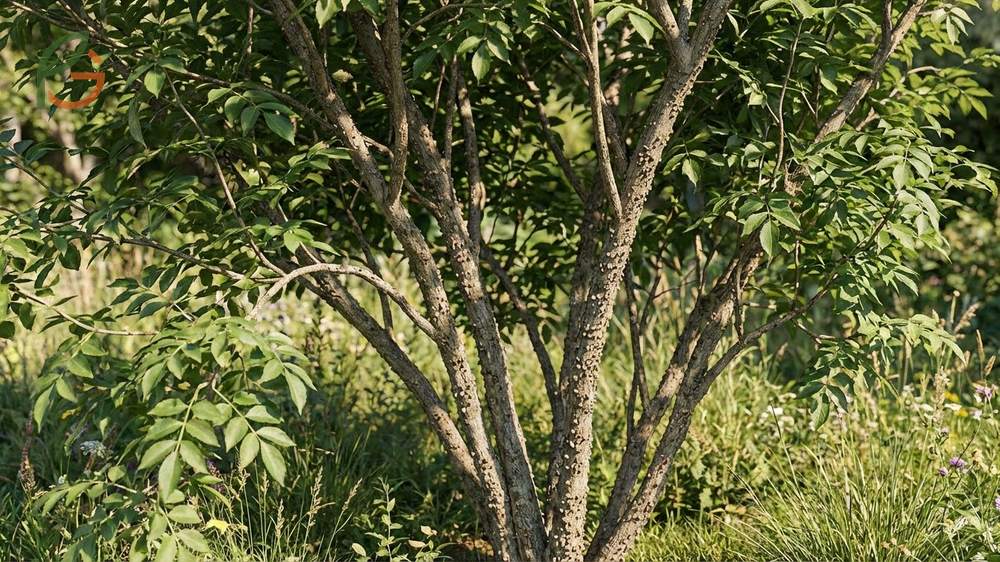
Elderberries typically grow as multi-stemmed deciduous shrubs reaching 8-12 feet tall with an open, arching habit[6]. European varieties can stretch to 20 feet under ideal conditions. The growth pattern creates a loose, informal shape that works well in hedgerows and naturalized garden areas.
The bark is grayish-brown with a distinctive warty texture from randomly distributed lenticels—those small, corky bumps you’ll notice up close. Young stems often show a green tint before maturing to woody brown, which helps distinguish elderberries from toxic look-alikes.
What often gets overlooked is the pithy interior of elderberry stems. If you cut a branch, you’ll find soft, spongy pith that’s easy to push out—this characteristic separates elderberries from similar-looking plants with solid stems.
Identifying Features
The pinnately compound leaves are your most reliable identification tool. Each leaf consists of 5-7 serrated leaflets arranged oppositely along the stem, with one terminal leaflet at the end[6]. The leaflets feel slightly hairy when touched and display a bright green color during growing season.
Elderberry buds appear opposite on stems, small and reddish-brown, with pointed tips. The terminal bud is usually absent, which is another helpful identifying characteristic when branches are bare in winter.
- Multi-stemmed shrub form with arching branches reaching 8-12 feet (American) or up to 20 feet (European)
- Compound leaves with 5-7 serrated leaflets arranged oppositely, slightly hairy texture
- Grayish-brown bark with warty lenticels and soft, pithy stem interior
- Opposite branching pattern with small reddish-brown pointed buds, no terminal bud
- Woody brown stems (not green with purple streaks like toxic water hemlock)
Flowers and Berries
The small white flowers cluster into flat or slightly domed masses measuring 4-10 inches across[6]. Each tiny flower is about 1/4 inch wide with five petals and five stamens. When in bloom from June to August, these lacy white flower clusters create a striking contrast against the green foliage.
The berries start green and gradually turn dark purple to nearly black as they ripen. Each berry measures roughly 1/4 inch wide and grows in drooping clusters that weigh down the branches. Ripe berries develop a dusty white bloom on their surface—a waxy coating that signals peak ripeness.
Identification Tip: If you see spikes or thorns on stems, you’re looking at an aralia plant, not elderberry. Aralia berries are mildly poisonous and should not be consumed[6].
Elderberry Varieties
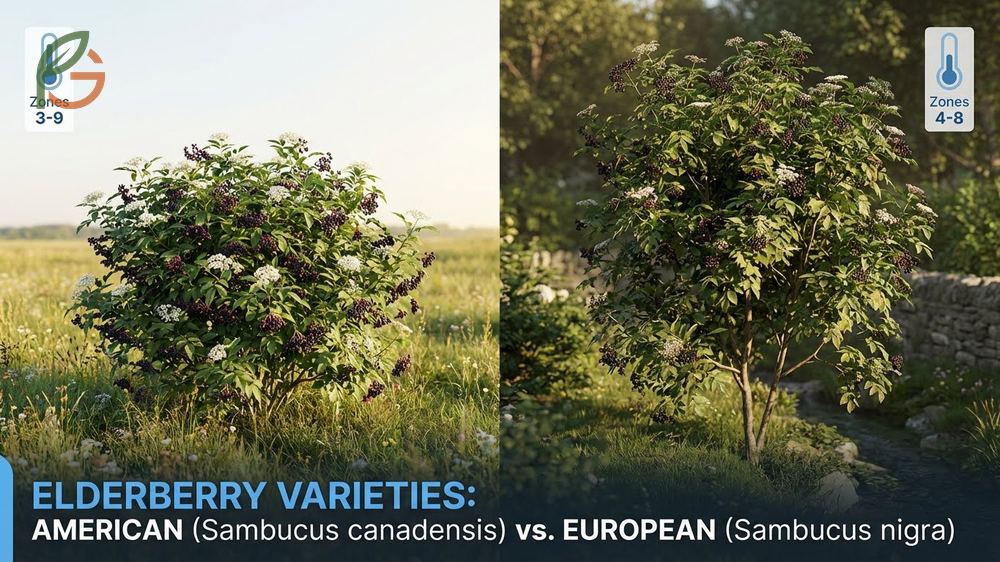
American elderberry (Sambucus canadensis) and European elderberry (Sambucus nigra) are the two primary species for cultivation. American elderberries grow naturally in fields and meadows across zones 3-9, making them more adaptable to varied conditions[7]. They reach 10-12 feet at maturity and show better resistance to pests and diseases.
European varieties tolerate a narrower range, thriving in zones 4-8 and growing significantly taller at up to 20 feet[7]. They bloom several months earlier than American types and produce berries with a stronger, more bitter flavor profile. This makes European elderberries better suited for wines and medicinal preparations.
This table compares American and European elderberry varieties across height, hardiness zones, bloom timing, flavor profile, and typical uses
| Characteristic | American (S. canadensis) | European (S. nigra) |
|---|---|---|
| Height | 10-12 feet[7] | Up to 20 feet[7] |
| USDA Zones | 3-9[3] | 4-8[3] |
| Bloom Time | Late spring to summer | Early spring (blooms earlier) |
| Flavor | Milder tartness, balanced sweetness | Stronger, more bitter flavor |
| Best Uses | Jams, jellies, fresh preparations | Wines, medicinal syrups, liqueurs |
Blue elderberry (Sambucus nigra ssp. cerulea) grows throughout western North America from Texas to British Columbia. This variety produces berries with a distinctive dusty blue coating and tolerates drier conditions than other elderberry species.
Poisonous Look-Alikes
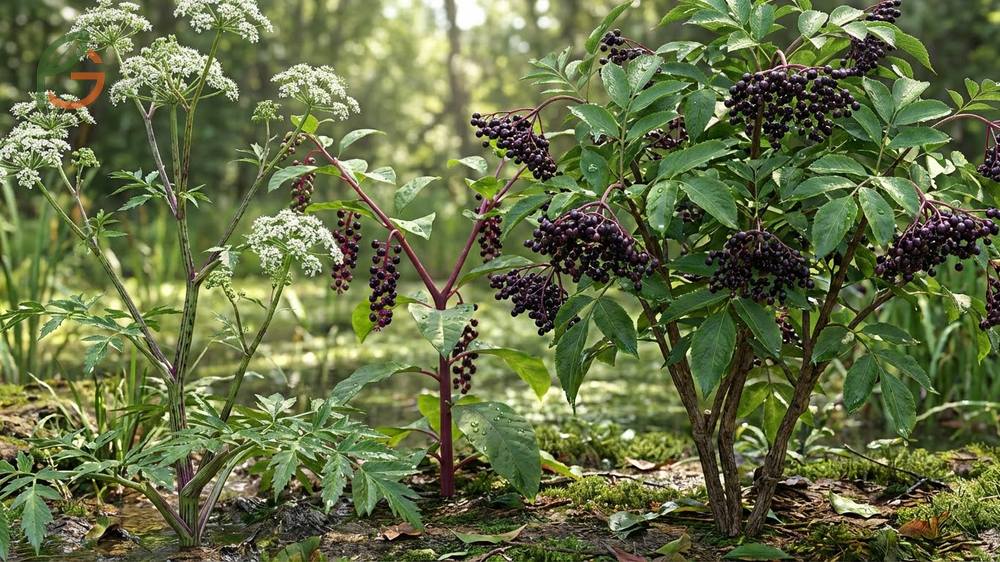
Water hemlock (Cicuta spp.) is the most dangerous elderberry look-alike you’ll encounter. It grows in wet, marshy areas and produces white flower clusters that resemble elderflowers. The key difference? Water hemlock has green stems with purple streaks and grooves, while elderberries show woody brown bark[6].
Pokeweed (Phytolacca americana) bears dark purple berries and red stems that might fool you at first glance. Look closely at how fruits attach—pokeweed berries grow in upright clusters with a single berry per stem, while elderberries form drooping clusters with multiple berries on branching stems. All parts of pokeweed are poisonous and cause severe gastrointestinal distress.
Aralia plants produce fleshy purple fruit similar in size to elderberries. The giveaway is thorns or spikes on stems and branches—elderberries never have thorns. Aralia berries are mildly toxic and should not be eaten.
- Water hemlock: Green stems with purple streaks and grooves, grows in wet areas, extremely toxic
- Pokeweed: Upright berry clusters with single berries per stem, red stems, all parts poisonous
- Aralia: Thorns or spikes on stems and branches, elderberries never have thorns
- Red elderberry: Bright red berries (not black/purple), toxic when raw, requires different processing
- Devil’s walking stick: Similar leaves but has spines covering stems and trunk
Safety First: If you’re new to foraging, bring an experienced guide on your first few outings. The consequences of misidentification with water hemlock can be fatal—it’s considered one of North America’s most poisonous plants.
Where Do Elderberries Grow
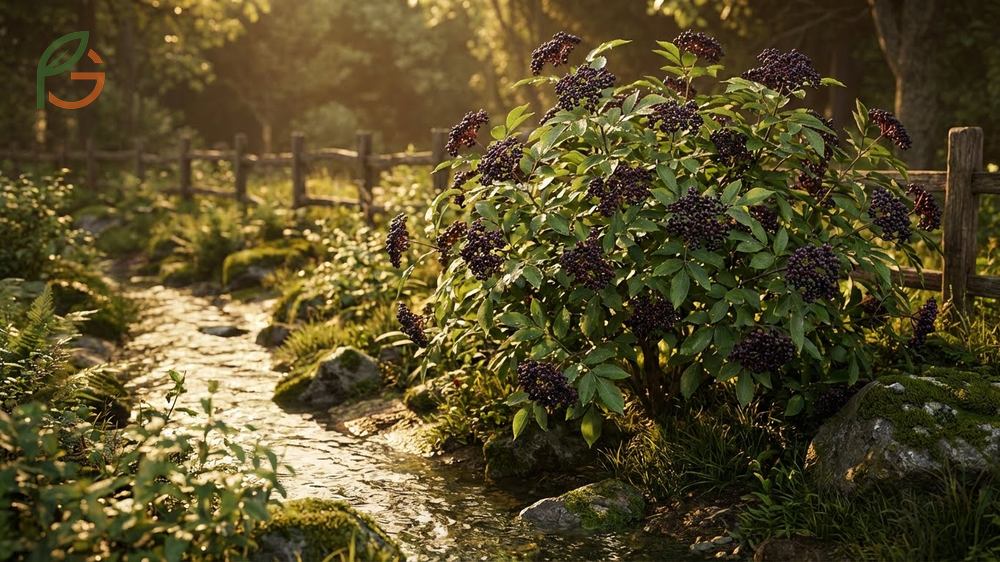
Elderberries thrive in moist, well-drained sites with full sun to partial shade. You’ll find them growing wild along stream banks, river edges, fence rows, and in forest openings where moisture collects. They naturally colonize disturbed areas and early successional habitats across North America.
American elderberries adapt to USDA hardiness zones 3-9, giving them one of the widest ranges among fruiting shrubs[3]. This means you can successfully grow them from northern Minnesota to southern Florida. European varieties prefer the more moderate conditions of zones 4-8.
Current agricultural data shows elderberries tolerate various soil types but perform best in slightly acidic to neutral pH (5.5-7.0). They need consistent moisture without waterlogging—think woodland edges near water sources rather than standing water. Most cultivated elderberries grow at elevations below 3,000 meters.
- Full sun to partial shade (6-8 hours direct sunlight daily for best fruit production)
- Moist, well-drained soil with pH 5.5-7.0, rich in organic matter
- Consistent moisture without waterlogging, proximity to water sources preferred
- USDA zones 3-9 (American) or 4-8 (European), tolerates winter temperatures to -30°F (-34°C)
- Elevations below 10,000 feet (3,000m), commonly found below 6,000 feet (1,800m)
- Early successional habitats, forest openings, riparian zones, disturbed areas
Harvesting and Drying
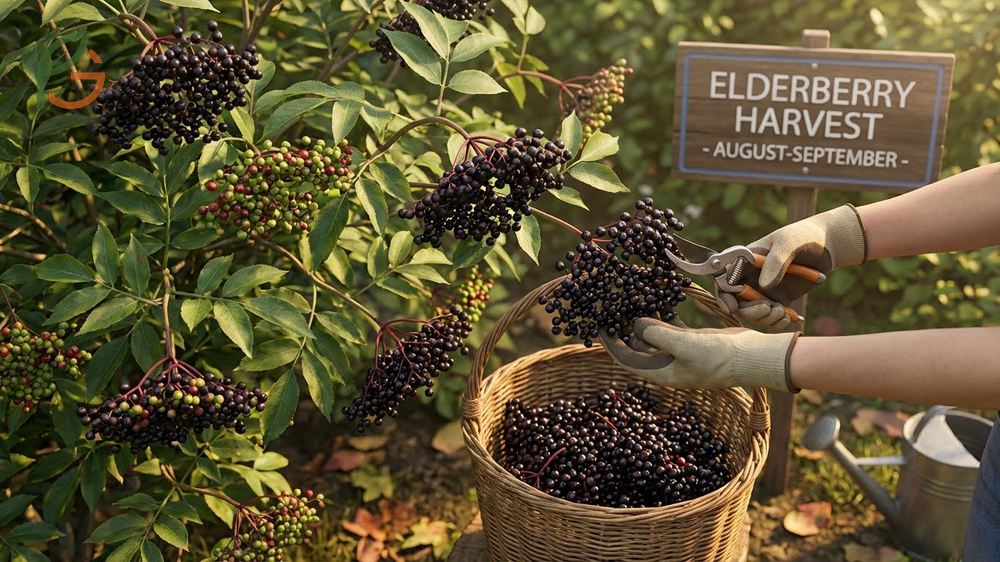
Elderberries ripen between mid-August and mid-September in most regions, though timing varies by climate[4]. You can expect to start harvesting in the second growing season after planting. Clusters ripen over 5-15 days, so you’ll need multiple picking sessions for best results.
Wait until all berries in a cluster turn dark purple to black before cutting. Red or green berries indicate they’re unripe and contain higher levels of toxic compounds. The average yield per mature plant runs 12-15 pounds annually[4].
Use scissors or pruning shears to cut entire clusters from the shrub rather than picking individual berries. This speeds up harvest and reduces damage to the plant. Strip berries from stems before processing—stems contain cyanogenic glycosides that can cause stomach upset.
Drying Methods
Dehydrating preserves elderberries for long-term storage while concentrating their flavor. Wash fresh berries thoroughly, then arrange them in single layers on dehydrator trays. Set the temperature to 135°F (57°C) and dry for 12-14 hours[8].
Properly dried elderberries feel firm to the touch and don’t stick together when squeezed. They’ll store for 12-18 months in airtight containers with oxygen absorbers. You can dry berries with stems attached if working with large batches, though removing stems first speeds the process.
- Harvest when clusters are fully dark purple to black with dusty white bloom on surface
- Cut entire clusters with scissors rather than picking individual berries
- Strip berries from stems before processing—stems contain toxic compounds
- Dehydrate at 135°F (57°C) for 12-14 hours until firm to touch
- Store dried berries in airtight containers with oxygen absorbers for 12-18 months
- Always cook or process elderberries before consumption to neutralize cyanogenic glycosides
Harvesting Elderflowers
Elderflowers bloom from late May through June and can be harvested for teas, cordials, and fritters. Pick them on cool, sunny mornings after dew dries but before afternoon heat wilts the delicate blooms. Cut entire flower clusters and use them fresh within a few hours for best flavor.
Unlike the berries, elderflowers are safe to consume without cooking. They offer a delicate floral taste with subtle honey notes that pairs well with lemon, strawberries, and other spring fruits. Leave some flowers on the plant if you want berries later in the season.
Conclusion
The evidence is clear: elderberries taste tart and earthy with complex fruity undertones, but their true appeal lies in their versatility once properly cooked. Whether you’re foraging wild elderberries or cultivating American varieties in zones 3-9, mastering plant identification and safe harvesting practices is essential before you taste your first properly prepared elderberry syrup or jam.
Current guidance emphasizes the critical importance of cooking elderberries before consumption and accurately distinguishing them from toxic look-alikes like water hemlock. FruitGarden continues to synthesize the latest research on elderberry cultivation, helping gardeners across the United States safely grow and enjoy these remarkable berries.
Important Safety Notice
Critical Foraging and Health Disclaimer: This content is for informational and educational purposes only. It is not intended as a substitute for professional medical advice or expert foraging instruction. Raw elderberries and all plant parts except flowers contain toxic compounds that cause serious illness. Never consume raw or unripe elderberries. Always consult a qualified healthcare professional before using elderberry products medicinally, especially if you have existing health conditions or take medications. When foraging, obtain proper training from experienced guides to avoid potentially fatal plant misidentification.
Frequently Asked Questions
What is black elderberry and how does it differ from other types?
Black elderberry refers to both American elderberry (Sambucus canadensis) and European elderberry (Sambucus nigra), named for their dark purple to black berries when ripe. They differ from red elderberry (Sambucus racemosa), which produces bright red berries and requires different processing methods since it’s more toxic when raw.
Can you eat raw elderberries straight from the bush?
No, never eat raw elderberries. They contain cyanogenic glycosides that release 3mg of cyanide per 100g of fresh berries, causing nausea, vomiting, and potentially more severe symptoms within 15 minutes. Always cook elderberries thoroughly before consumption to neutralize these toxic compounds.
What does elderberry smell like when it’s ripe?
Ripe elderberries have a subtle fruity aroma with earthy, musky undertones. The scent isn’t as strong as other berries—you’ll need to get close to notice it. Elderflowers, on the other hand, smell distinctly sweet and floral with honey-like notes that are much more pronounced than the berries.
How do you identify an elderberry bush versus poisonous look-alikes?
Look for woody brown bark (not green stems with purple streaks like water hemlock), compound leaves with 5-7 serrated leaflets, and no thorns on stems (unlike aralia). Elderberry berries droop in clusters on branching stems, while pokeweed berries grow upright with single berries per stem. When in doubt, consult an experienced forager.
When is the best time to harvest elderberries for peak flavor?
Harvest elderberries between mid-August and mid-September when all berries in a cluster turn dark purple to black with a dusty white bloom on the surface. Clusters ripen over 5-15 days, so check plants multiple times. Fully ripe berries taste sweeter and less astringent than underripe ones.
Are elderberry flowers safe to eat and what do they taste like?
Yes, elderflowers are safe to eat raw and taste delicately floral with subtle honey notes. They’re commonly used in cordials, teas, fritters, and desserts from late May through June. Unlike the berries, elderflowers don’t require cooking and offer a completely different flavor profile that’s mild and sweet rather than tart.
What’s the difference between American and European elderberry varieties?
American elderberries (Sambucus canadensis) grow 10-12 feet tall in zones 3-9 and have milder, more balanced flavor. European elderberries (Sambucus nigra) reach up to 20 feet in zones 4-8, bloom earlier, and taste stronger and more bitter, making them better suited for wines and medicinal preparations rather than jams.





