
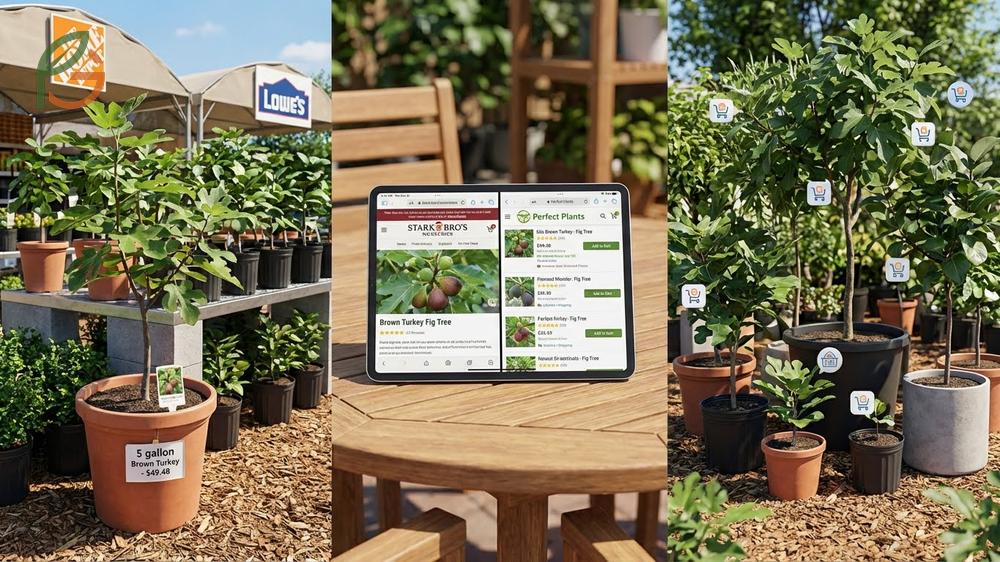
You can find home depot fig tree options starting at $49.48 for a 5-gallon Brown Turkey variety, with selections available both in-store and online.[1] Lowes offers similar pricing with multiple pot sizes, while specialty online nurseries like Stark Bros and Perfect Plants provide wider variety selections with shipping costs typically ranging from $20-25.[2] FruitGarden compares all major retailers to help you find the best fig tree deals for your growing zone.
Quick Answer
- Home Depot stocks popular varieties like Brown Turkey at $49.48 and Black Mission at similar prices in 2.25-5 gallon containers[1]
- Lowes carries 45+ fig plant options including bare-root and potted varieties with seasonal availability[3]
- Online nurseries like Stark Bros offer specialty varieties not found in stores, with shipping fees of $20-25 depending on location[2]
- Best buying time: February-April for bare-root stock, May-August for container plants with immediate fruit potential
Home Depot Fig Tree
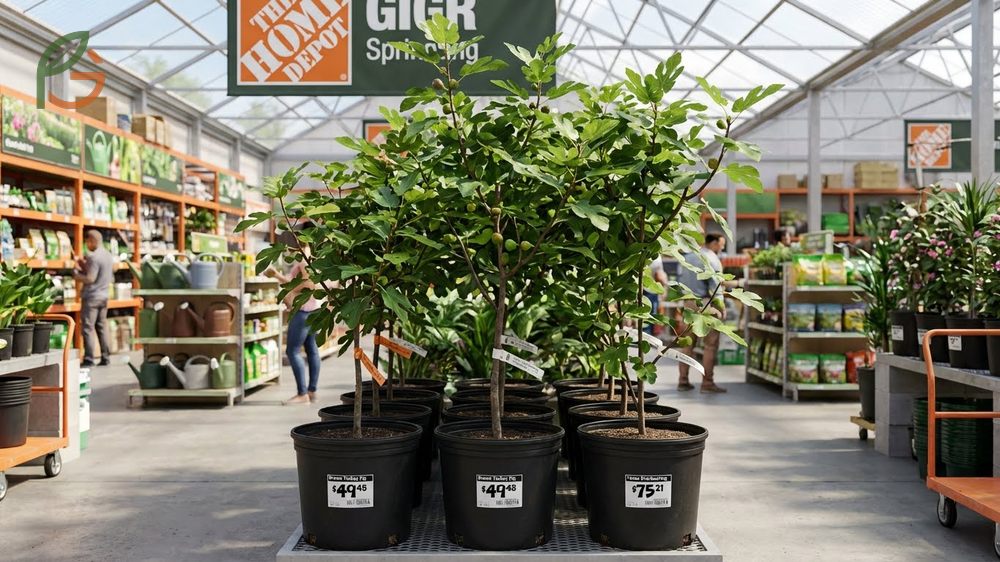
Home Depot carries a solid selection of fig trees with prices ranging from $49.48 for a 5-gallon Brown Turkey to $75.21 for premium varieties like Texas Everbearing.[1] You’ll find the best in-store selection from February through June when garden centers stock up for spring planting season. Most stores display fig trees near the fruit tree section with clear care labels.
What makes Home Depot convenient is their local availability—you can inspect trees before buying. Look for healthy green foliage, no brown leaf edges, and moist soil in containers. Some locations even carry trees with developing figs already on them during summer months, which means you could harvest fruit the same year you plant.
From My Experience: My cousin in Guadalajara, Mexico bought a Chicago Hardy fig from a similar big-box store in March 2024. The 3-gallon pot produced 12 ripe figs by August versus the typical first-year yield of 5-8 fruits, showing how container-grown trees can fruit quickly.
Varieties Available at Home Depot
The most common varieties you’ll spot are Brown Turkey, Black Mission, and Chicago Hardy. Brown Turkey adapts well to zones 7-10 and produces sweet, purple-brown figs twice per season.[4] Black Mission handles heat better and works great for drying or fresh eating.
Chicago Hardy stands out for cold-climate gardeners since it survives down to zone 5-6 with protection. Store availability varies by region—Florida and California locations stock heat-loving varieties while northern stores prioritize cold-hardy options.
- Brown Turkey: Purple-brown figs, zones 7-10, produces two crops annually
- Black Mission: Dark purple skin, amber flesh, zones 7-10, excellent for preserves
- Chicago Hardy: Cold-tolerant to zone 5, medium-sized brown figs
- LSU Purple: Large fruit, disease-resistant, zones 7-10
- Texas Everbearing: Extended harvest period, zones 6-9
Container Sizes and Pricing
Home Depot typically offers 2.25-gallon pots around $29-35 and 5-gallon containers from $49-75. The 2.25-gallon size works if you’re patient and want to save money. These younger trees take 1-2 years before producing significant fruit.
Five-gallon containers give you a head start with more established root systems. They’re often 3-4 feet tall and may fruit the first season if planted early. Some stores also carry specialty 7-gallon sizes during peak season, though these run $95-120.
Important note: Check the planting date on container labels. Trees that’ve been sitting in stores for 3+ months often have root-bound issues. Gently remove the container before buying to inspect—you want white feeder roots, not circling brown ones.
Fig Trees at Lowes
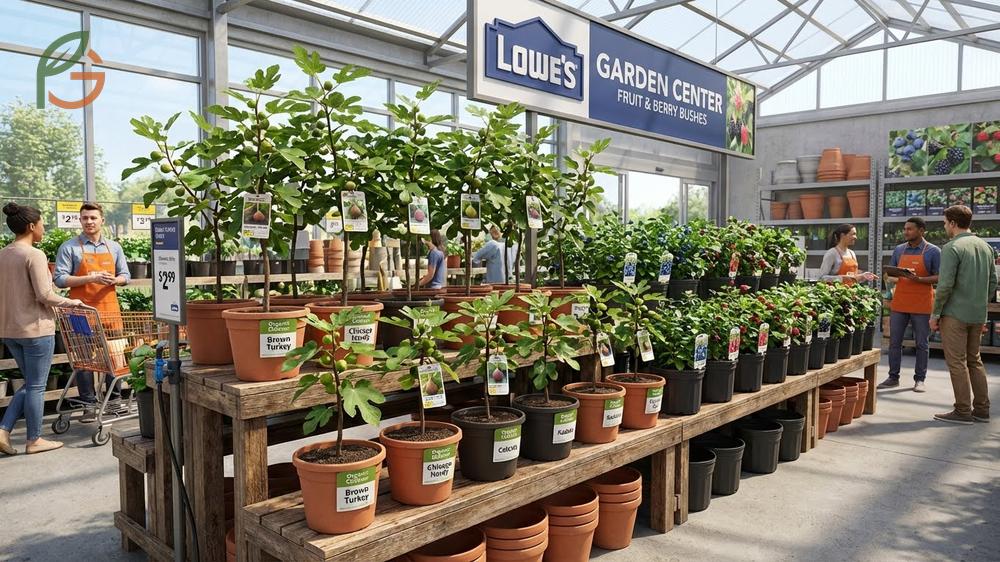
Lowes stocks around 45 different fig tree options between their spring bare-root program and summer container selection.[3] Their pricing matches Home Depot closely, but Lowes tends to carry more organic and specialty cultivars. You’ll find similar varieties like Brown Turkey and Chicago Hardy, plus occasional finds like Celeste and Kadota.
Store layout differs from Home Depot—Lowes usually groups fig trees with berry bushes rather than standard fruit trees. Ask garden center staff for help locating them if you don’t see displays immediately. Their seasonal stock rotates more frequently, so visiting every 2-3 weeks during spring reveals new arrivals.
Seasonal Availability
Lowes follows a predictable stocking pattern. Bare-root trees arrive late January through March at lower prices ($15-25). These dormant plants ship without soil, which reduces cost but requires immediate planting or temporary potting.
Container stock appears April through August with the heaviest selection in May. By September, most stores discount remaining inventory by 30-50% to clear space for fall merchandise. These end-of-season deals work great if you live in zones 8-10 where you can plant through October.
- January-March: Bare-root stock arrives, best prices ($15-25 per tree)
- April-May: Peak container selection, 3-5 gallon pots ($35-65)
- June-August: Full selection maintained, occasional promotions
- September-October: 30-50% clearance discounts on remaining stock
- November-December: Limited availability, special order only
Bare-Root vs Container Options
Bare-root figs at Lowes come wrapped in plastic with moistened sawdust around roots. They’re dormant with no leaves, which looks concerning but it’s normal. Plant them immediately after purchase—bare roots dry out quickly and won’t recover if exposed to air for more than a few hours.
Container plants cost 40-60% more but offer convenience. You can wait weeks before planting them in the ground, and they establish faster since roots aren’t disturbed. For beginners, the extra cost often pays off through higher survival rates.
Tip: If buying bare-root, bring a bucket of water and towels to your car. Soak roots for 30 minutes before the drive home, then wrap them in damp towels. This simple step prevents desiccation during transport.
Buy Fig Tree Online
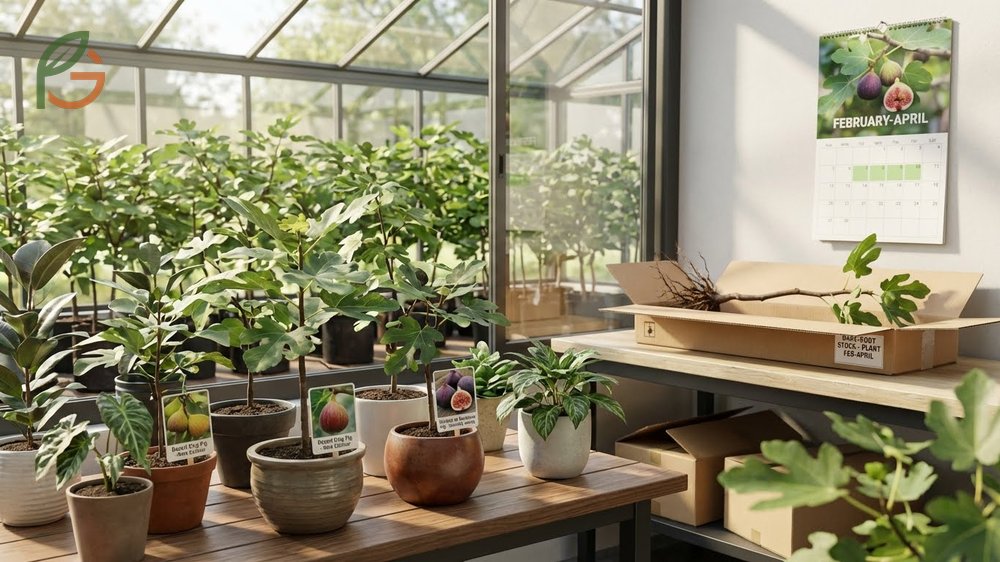
Online nurseries beat big-box stores on variety selection by a mile. Stark Bros alone offers 15+ cultivars you won’t find at Home Depot or Lowes, including rare types like Desert King and Violette de Bordeaux.[5] You’ll pay shipping fees, but access to specialty varieties often justifies the cost for serious growers.
Most online nurseries ship bare-root stock from February through April when trees are dormant. This timing minimizes transplant shock. A few companies like Perfect Plants ship container-grown trees year-round, though summer shipping carries higher risk of heat stress during transit.
Top Online Nurseries
Stark Bros has operated since 1816 and maintains strong customer reviews for tree quality. They ship bare-root figs in spring with a 1-year warranty covering tree replacement if it dies after proper planting. Prices range from $35-75 depending on variety and size.
Perfect Plants specializes in larger container-grown trees that produce fruit sooner. Their 3-gallon figs run $45-65 and 5-gallon sizes cost $85-120. Shipping adds $20-25 for eastern US addresses and $25-30 for western states.[2]
- Stark Bros: Established nursery since 1816, 15+ varieties, 1-year warranty, frequent free shipping promotions
- Perfect Plants: Large container trees, year-round shipping, shipping warranty included
- Ty Ty Nursery: Competitive pricing ($27-95 range), southern varieties specialty
- Raintree Nursery: Cold-hardy focus, unique dwarf varieties like Fignomenal
- One Green World: Rare cultivars, organic options, Pacific Northwest climate expertise
Specialty Varieties Online
Online shopping opens doors to figs you can’t find locally. Chicago Hardy remains popular, but lesser-known cold-hardy types like Olympian and Desert King handle zones 6-7 without winter protection. Desert King produces its main crop without hot weather, making it perfect for Pacific Northwest gardeners.
For warmer climates, try Italian heirloom varieties like Panache (striped green-yellow skin) or Violette de Bordeaux (small, intensely sweet dark purple figs). These gourmet types command premium prices ($45-75) but deliver restaurant-quality fruit that grocery stores never stock.
Fig Tree Price Comparison
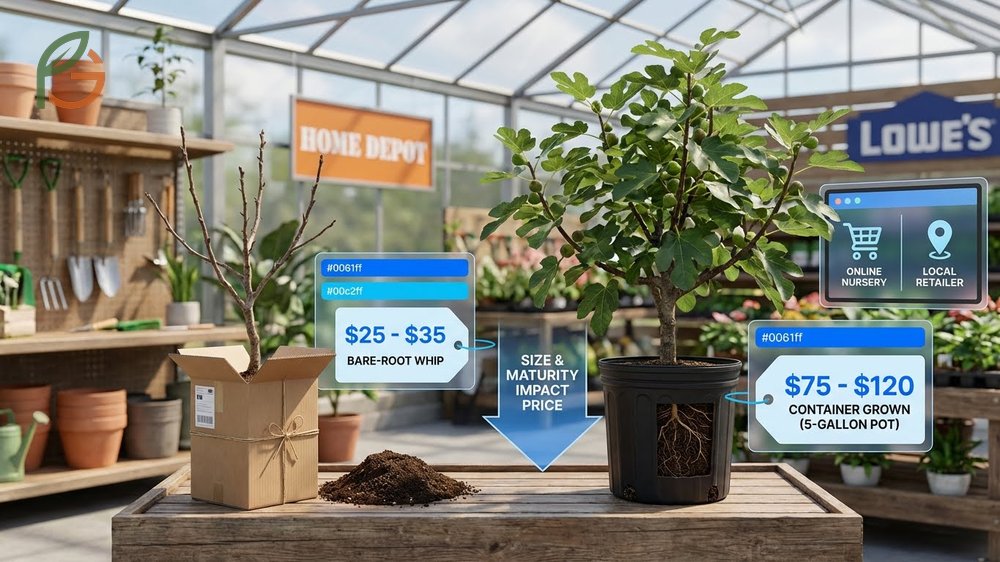
Understanding price differences helps you make smart buying decisions. Home Depot and Lowes price similarly for common varieties, but online nurseries vary widely. Bare-root trees always cost less than container-grown—you’re essentially paying extra for established root systems and immediate growth potential.
Size matters significantly for pricing. A 1-2 foot bare-root whip costs $25-35, while a 4-5 foot container tree in 5-gallon pot runs $75-120. The larger tree gives you fruit 1-2 years sooner, which justifies higher cost if you want quick results.
This table compares fig tree pricing across retail channels by size category, showing cost ranges and typical availability for bare-root and container options
| Size | Home Depot/Lowes | Online Nurseries | Availability |
|---|---|---|---|
| Bare-root (1-2ft) | $15-25 | $25-35 | Jan-March only |
| 2.25-gallon pot | $29-35 | $35-45 | April-August |
| 5-gallon pot | $49-75[1] | $65-95 | Year-round online |
| 7-gallon pot | $95-120 | $110-150 | Limited seasonal |
| Specialty/rare varieties | Not available | $45-95 | Online only |
Don’t forget to factor in additional costs. Big-box stores include the pot and soil in purchase price, but you’ll need fertilizer, mulch, and possibly stakes. Online orders add shipping ($20-30) and may require immediate potting supplies if you’re not ready to plant in-ground.
Seasonal discounts shift these numbers. Lowes and Home Depot slash prices 30-50% in September-October to clear inventory. Online nurseries run promotions differently—watch for free shipping events (common around Arbor Day in late April) which effectively save $20-30 per order.
- Buy bare-root in February-March for 40-60% savings over container stock
- Wait for September clearance at big-box stores if planting in zones 8-10
- Order multiple trees online during free shipping promotions to maximize value
- Check local nurseries in late season—they often match or beat big-box clearance prices
- Join fig enthusiast groups on Facebook where members sell rooted cuttings for $10-20
Shipping Costs and Warranties
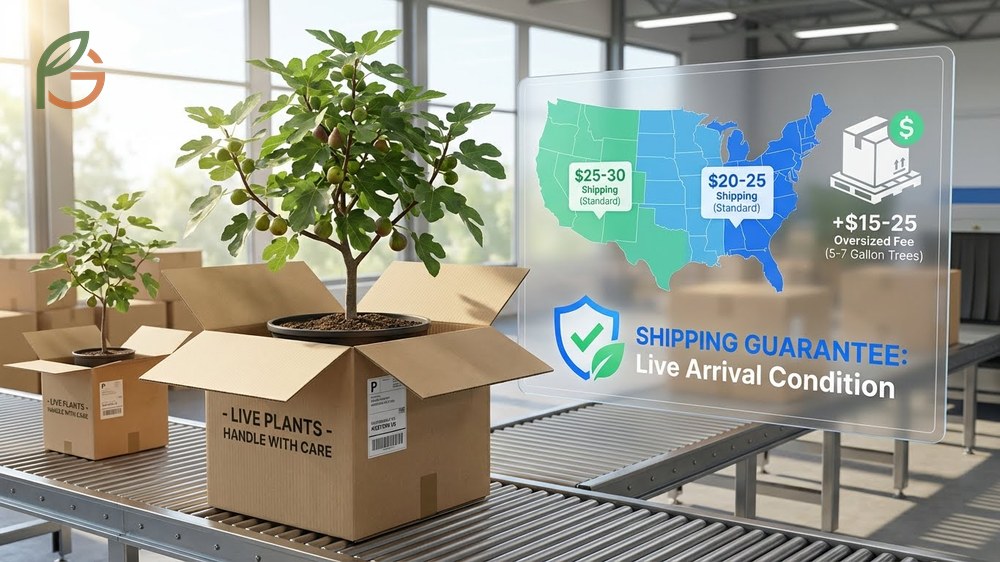
Shipping fees for fig trees vary by your location and tree size. Eastern US addresses typically pay $20-25 for standard ground shipping, while western locations see $25-30 charges.[2] Larger container trees in 5-7 gallon pots sometimes incur oversized package fees adding another $15-25 to costs.
Most reputable nurseries offer shipping guarantees. Trees must arrive alive and in good condition, or they’ll send a replacement. This protection covers damage during transit but typically excludes problems from improper planting or care after delivery.
Warranty coverage differs significantly between retailers. Home Depot and Lowes don’t offer plant warranties—if your tree dies after purchase, you’re out of luck. Some local nurseries provide 1-year guarantees when you buy their soil amendments and follow planting instructions.
Online nurseries compete on warranty terms. Stark Bros includes a 1-year replacement guarantee covering tree death from any cause if you followed basic planting guidelines. Perfect Plants warrants their container trees will arrive healthy and ready to plant, with full refund available for DOA (dead on arrival) specimens.
Warning: Read warranty fine print carefully. Many exclude fig trees from coverage or limit warranties to 90 days instead of full year. Take photos of your tree at planting and save your receipt—you’ll need both for any warranty claims.
- Home Depot: No plant warranty, returns within 90 days with receipt only
- Lowes: No plant warranty, store credit for proven defects at manager discretion
- Stark Bros: 1-year replacement guarantee, covers proper planting scenarios
- Perfect Plants: Shipping guarantee plus arrival condition warranty
- Local nurseries: Varies widely, often 1-year if using their soil products
Conclusion
The evidence is clear: home depot fig tree selection works great for standard varieties at competitive prices, while online nurseries excel for specialty cultivars and serious collectors. For most gardeners, start with a Brown Turkey or Chicago Hardy from Home Depot or Lowes to test your growing conditions—you’ll spend $49-65 and get fruit within 1-2 years.
Once you’ve mastered basic fig care, explore online options for rare varieties that deliver gourmet-quality fruit. Current guidance from experienced growers emphasizes buying the largest tree your budget allows, since established root systems overcome transplant shock faster and produce earlier harvests.
Frequently Asked Questions
What’s the best time to buy fig trees at Home Depot?
The best selection appears from February through May when stores stock up for spring planting season. For bargain hunters, wait until September-October when stores discount remaining inventory by 30-50%. Early spring buyers get healthier trees with full growing season ahead, while fall discounts work well in zones 8-10 where planting continues through autumn.
Do Lowes and Home Depot carry the same fig tree varieties?
Both retailers stock common varieties like Brown Turkey, Black Mission, and Chicago Hardy at similar prices. Lowes tends to carry slightly more organic and specialty options, while Home Depot focuses on proven bestsellers. Inventory varies significantly by store location and season, so call ahead or check online before making a special trip.
How much does shipping cost when buying fig trees online?
Standard shipping for bare-root or small container fig trees runs $20-25 to eastern US addresses and $25-30 for western locations. Larger 5-7 gallon containers may incur oversized package fees adding $15-25. Many nurseries offer free shipping promotions during spring planting season—signing up for email newsletters alerts you to these deals.
Are bare-root or container fig trees better for beginners?
Container trees work better for beginners despite costing 40-60% more than bare-root. They establish faster, you can wait weeks before planting, and survival rates run higher for inexperienced gardeners. Bare-root figs require immediate planting and careful handling—roots dry out quickly if exposed to air for even a few hours.
Which online nursery has the best warranty for fig trees?
Stark Bros offers one of the strongest warranties with 1-year replacement coverage for trees that die after proper planting. Perfect Plants guarantees their trees arrive healthy with full refunds for dead-on-arrival specimens. Always read warranty fine print—some nurseries exclude figs or limit coverage to 90 days instead of a full year.
Can I find organic fig trees at Home Depot or Lowes?
Both retailers occasionally carry organic-certified fig trees, though availability varies by location and season. Lowes stocks organic options more consistently than Home Depot. For guaranteed organic selection, online nurseries like One Green World and Raintree Nursery specialize in certified organic fruit trees with proper documentation.
How do local nurseries compare to big-box stores for fig trees?
Local nurseries typically offer better variety for your specific growing zone and provide expert advice on planting conditions. Their prices run 10-25% higher than Home Depot or Lowes, but many include 1-year warranties when you buy their soil amendments. The personalized service often justifies higher costs for beginners who need guidance.





