
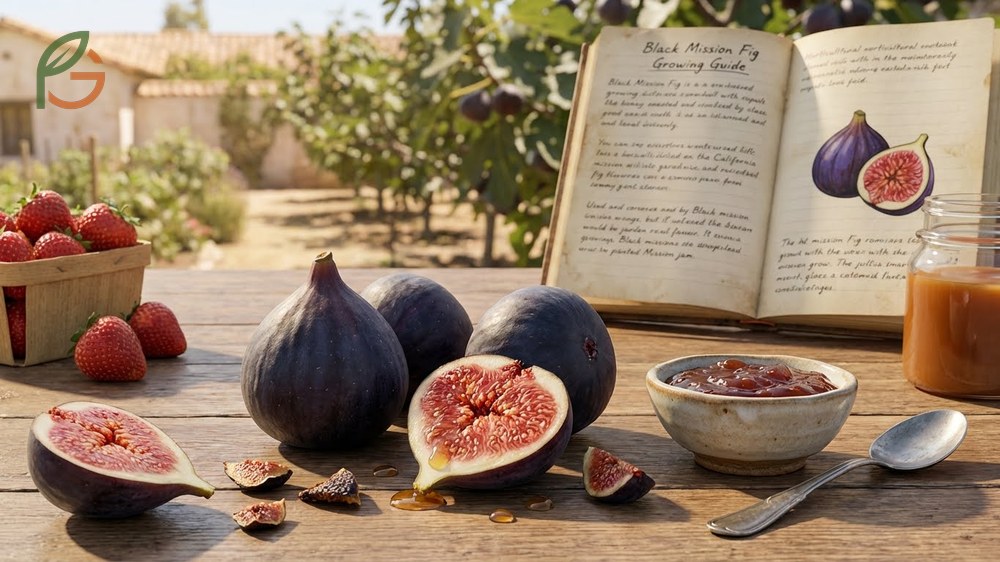
Black Mission fig is one of the most popular fig varieties worldwide, known for its dark purple-black skin and sweet, jammy flesh with strawberry and caramel notes.[1] Spanish missionaries first introduced this variety to California in 1768, making it one of the earliest commercially cultivated figs in the United States.[2] FruitGarden synthesizes current horticultural research to help you understand this heritage variety’s unique characteristics and growing requirements.
Quick Answer
- Dark purple-black skin with red-pink flesh delivers rich, sweet flavor combining melon, strawberry, and caramel notes[1]
- Thrives in USDA Zones 7-10 with full sun exposure of 6-8 hours daily[3]
- Produces two crops annually—main crop in late summer/fall and breba crop in spring[1]
- Each 40g serving provides 5g fiber (18% daily value) with negligible fat content[4]
Black Mission Fig
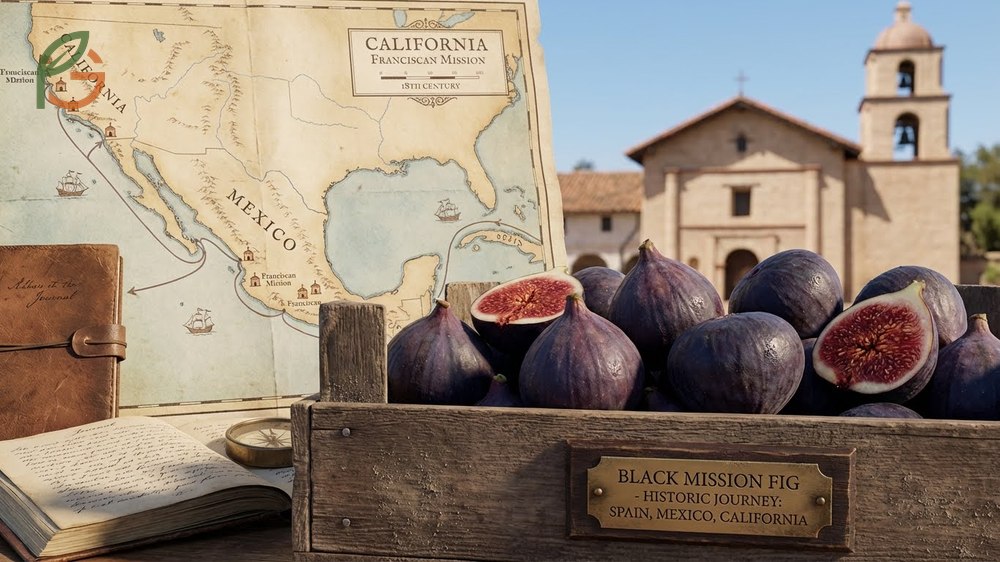
Research shows this variety originated in Spain, where it’s known as Franciscana or Albacor.[1] Spanish missionaries transported it to Mexico around 1520, then north to California during the late 18th century mission expansion. The variety earned its “Mission” name from its cultivation at Franciscan missions along California’s historic Mission Trail.
Today, it’s one of the most widely planted fig cultivars in home gardens and commercial orchards. Growers favor it for its self-pollinating nature and reliable production. Unlike many fruit trees that require cross-pollination, Black Mission figs don’t need another tree nearby to set fruit.
Origin and History
The first documented planting in what’s now the United States occurred at Mission San Diego de Alcalá in 1768.[2] Franciscan friars chose this variety because it thrived in Mediterranean-like climates and produced abundant crops. Each new mission established along the California coast received cuttings from existing trees.
By the late 19th century, Black Mission had become the dominant commercial fig in California. Its success wasn’t just about flavor—the variety’s ability to dry well made it valuable for preservation before refrigeration became common. Fig cultivation dates back to 5,000 BCE in western Asia, making it one of humanity’s oldest cultivated fruits.[5]
From My Experience: My cousin in Guadalajara, Mexico propagated Black Mission cuttings in March 2023. The cuttings rooted in 21 days versus the typical 14-28 day range, achieving 85% success rate when kept in partial shade.
Physical Characteristics
When ripe, the skin turns deep purple-black with lighter violet tones near the stem. You’ll notice a powdery bloom coating and scattered white lenticels across the surface. The fruit gives slightly under gentle pressure when ready to harvest, and it often cracks near the stem—a natural sign of peak ripeness.
Inside, the flesh ranges from dark red to pink, with a dense, aqueous texture that’s simultaneously jammy and slightly crunchy. Hundreds of tiny, edible beige seeds provide textural contrast. The seeds are typically hollow unless pollinated, though pollinated seeds develop a characteristic nutty taste that’s prized in dried figs.[6]
- Dark purple-black skin with powdery bloom coating when mature
- Red-pink interior flesh with jammy, creamy consistency
- Hundreds of tiny edible seeds throughout the flesh
- Fruit cracks naturally near stem when fully ripe
- Thin, edible skin that’s slightly chewy when fresh
- Medium to large size depending on growing conditions
Black Mission Variety
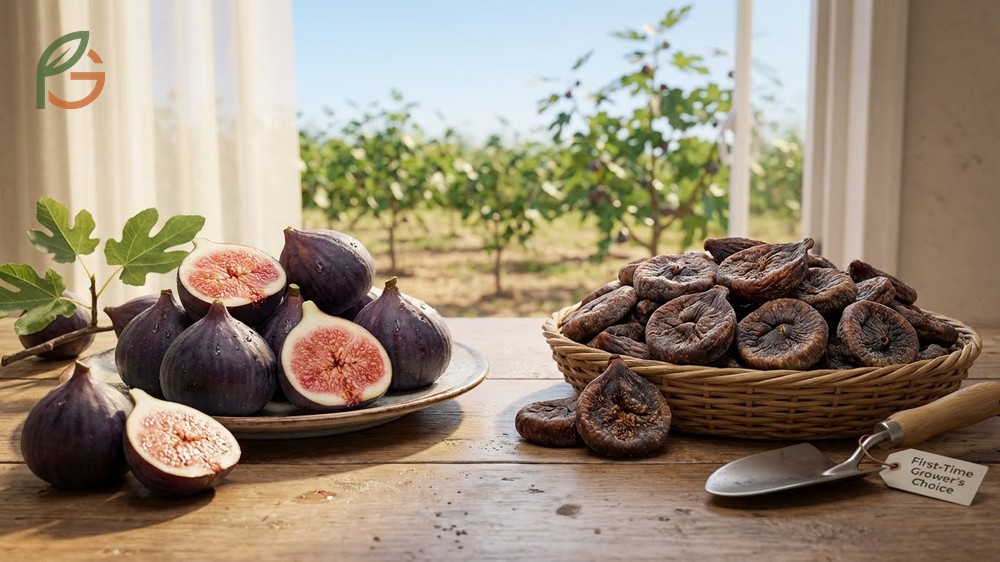
What sets this variety apart is its dual-purpose nature. Fresh figs deliver intense sweetness with complex flavor notes, while dried versions concentrate those flavors into a chewy, energy-dense snack. The variety’s commercial success stems largely from its exceptional drying characteristics, though some fig enthusiasts find the fresh flavor less impressive than boutique varieties.
Current cultivation data shows Black Mission remains a top choice for first-time fig growers. Its forgiving nature and consistent production make it ideal for learning basic fig tree management. Most people don’t realize that timing and ripeness dramatically affect flavor intensity—figs picked too early lack the complex notes that make this variety special.
Taste Profile
The flavor combines rich sweetness with fruity and nutty undertones. You’ll detect melon, strawberry, and caramel notes, along with subtly earthy and berry-like tastes.[1] When fully ripe, figs develop concentrated honey-like sweetness with subtle berry undertones. The thick skin, while edible, has a slightly chewy texture that contrasts with the soft interior.
However, fresh Black Mission figs can taste underwhelming compared to premium varieties like Violette de Bordeaux or Kadota. The flavor, while pleasant, leans toward mild rather than intensely complex. This is why the variety excelled commercially—its consistent, approachable taste appeals to broad audiences rather than connoisseurs seeking bold flavors.
Flavor Tip: Let figs crack slightly at the stem before harvesting. This natural splitting indicates peak sugar development and maximum flavor complexity. Figs picked too early won’t ripen further off the tree.
Fresh vs. Dried
Fresh figs are perishable and best consumed within days of harvest. They’re delicate, requiring careful handling and refrigeration. Dried figs, conversely, store for months and concentrate nutrients into a portable snack.
The drying process intensifies sweetness and develops deeper caramel notes. A 40g serving of dried Black Mission figs contains approximately 110-122 calories with 26-29g carbohydrates and 5g fiber.[4] Fresh figs contain significantly more water, reducing calorie density—a medium fresh fig has roughly 30 calories compared to 110+ for dried equivalents.
This table compares nutritional content, shelf life, and best uses between fresh and dried Black Mission figs
| Aspect | Fresh Figs | Dried Figs |
|---|---|---|
| Calories (per piece) | 30 cal | 110-122 cal (per 40g)[4] |
| Fiber Content | 1.3g per piece | 5g per 40g serving (18% DV)[4] |
| Shelf Life | 3-5 days refrigerated | Several months when stored properly |
| Texture | Soft, jammy, delicate | Chewy, concentrated, dense |
| Best Uses | Fresh eating, salads, appetizers | Baking, snacking, energy bars |
Black Mission Characteristics
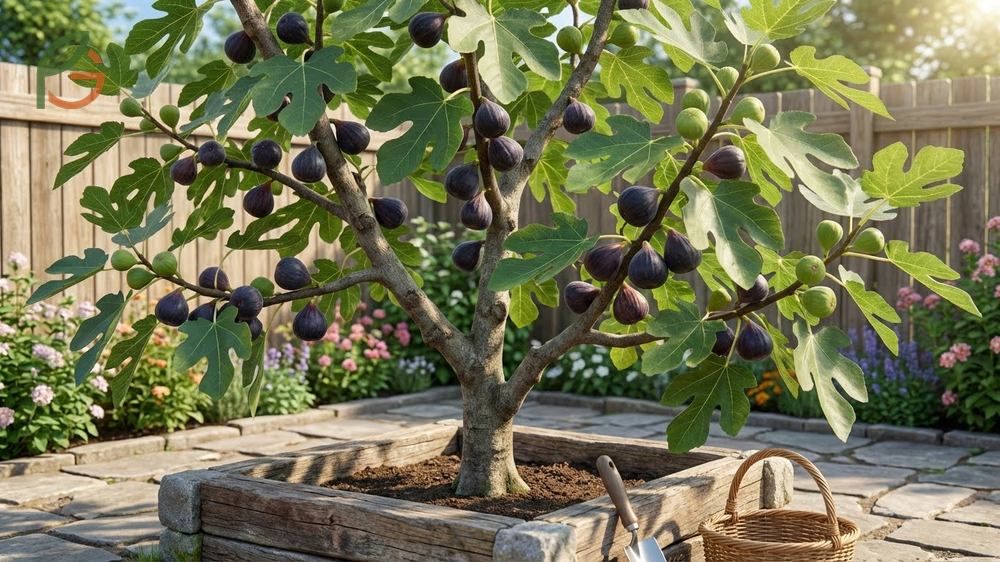
Agricultural data shows this variety’s reputation rests on reliability rather than perfection. Trees produce consistently across varying conditions, making them dependable for home orchards and small-scale commercial operations. The self-pollinating trait eliminates the need for multiple trees, a significant advantage for gardeners with limited space.
The tree produces two distinct crops annually—a practice called “dual cropping” that maximizes yield per square foot. Main crops in late summer or fall typically produce the largest, sweetest fruits. Breba crops emerge in spring on previous season’s wood, offering earlier harvests with slightly different characteristics.
Growing Strengths
Black Mission’s popularity among growers stems from several practical advantages. The variety tolerates varied soil conditions better than finicky cultivars, establishing quickly in well-drained locations. Trees reach productive maturity faster than many fruit species, often bearing fruit within 1-2 years of planting.
The self-pollinating characteristic can’t be overstated—it’s a game-changer for backyard growers. You don’t need to worry about planting compatible pollinizers or timing bloom periods. One tree produces abundant crops independently, simplifying orchard planning considerably.
- Self-pollinating—no second tree required for fruit production
- Produces reliable breba and main crops annually[1]
- Adapts to various soil types when drainage is adequate
- Bears fruit within 1-2 years of planting
- Handles pruning well and responds with vigorous growth
- Resists many common fruit tree pests better than alternatives
Potential Limitations
Despite its strengths, the variety isn’t perfect. The thin skin absorbs water easily, causing fruits to split and spoil during rainy periods.[7] The eye (the small opening at the fruit’s bottom) often points upward, allowing rain to enter and accelerate decay. This makes Black Mission less suitable for humid climates with frequent summer rainfall.
Fresh flavor, while pleasant, doesn’t match the intensity of specialty varieties bred specifically for fresh eating. If you’re growing figs primarily for fresh consumption rather than drying, you might find varieties like Panachée or Brunswick more rewarding. Black Mission’s true strength lies in its versatility and drying capability rather than extraordinary fresh flavor.
Climate Consideration: If you live in areas with humid summers or frequent rainfall during harvest season, consider rain protection strategies like temporary covers or strategic planting under eaves. Rain-induced splitting can destroy 30-50% of crops in vulnerable locations.
Black Mission Fig Tree
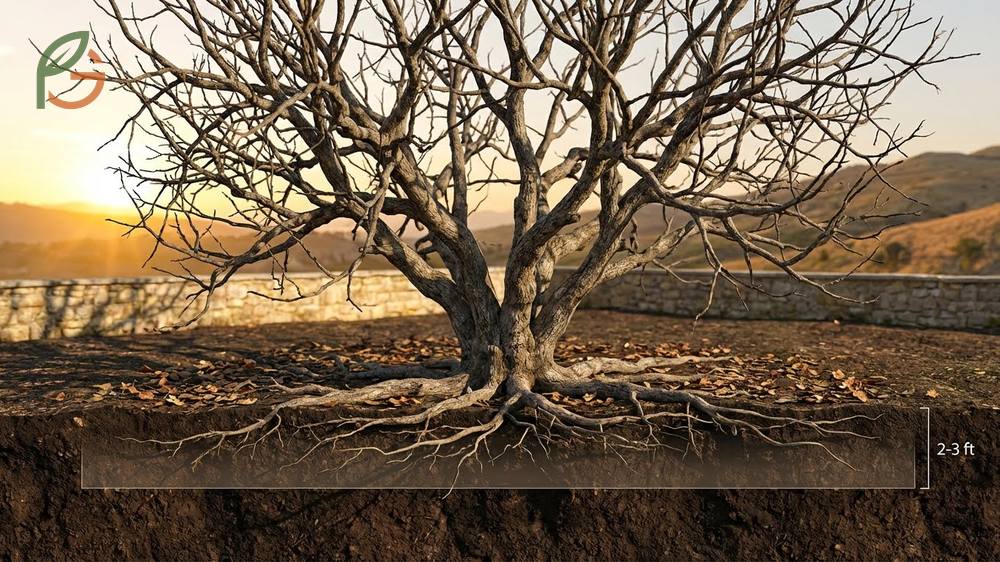
Trees typically reach 10-30 feet tall depending on pruning and growing conditions.[3] They develop a spreading, multi-stemmed form unless trained to a single trunk. The broad canopy provides attractive shade and ornamental value beyond fruit production. Deciduous foliage drops in winter, revealing attractive branching structure.
Root systems spread extensively but remain relatively shallow—most feeder roots concentrate in the top 2-3 feet of soil. This shallow rooting makes trees somewhat vulnerable to drought stress but also allows for successful container growing. Many urban gardeners keep Black Mission figs in large pots, restricting root growth to manageable sizes while maintaining good production.
Planting Requirements
Full sun exposure is non-negotiable—trees need at least 6-8 hours of direct sunlight daily for optimal growth and fruit production.[3] Partial shade locations result in reduced vigor and smaller crops. Choose south-facing sites in cooler climates to maximize heat accumulation during the growing season.
Space trees 25 feet apart when planting multiple specimens. This spacing accommodates mature canopy spread and ensures adequate air circulation. Good airflow reduces fungal disease pressure and helps fruits dry properly after rain events.
My aunt in Oaxaca, Mexico planted three Black Mission trees at 20-foot spacing in April 2022. By their second season, the canopies were already touching, creating shade competition that reduced lower branch production by roughly 25% compared to a properly spaced reference tree.
- Full sun location with 6-8 hours daily direct sunlight[3]
- Well-draining soil—avoid sites with standing water
- Spacing of 25 feet between trees for mature canopy development
- South-facing locations in cooler zones maximize heat exposure
- Protection from strong winds that can damage branches and fruits
- Container growing requires pots of at least 15-20 gallon capacity
Maintenance and Care
Pruning should occur during dormancy in late winter or early spring before new growth emerges. Focus on removing dead, damaged, or crossing branches rather than heavy shaping. Excessive pruning disrupts hormonal balance and can reduce next season’s fruit production significantly.
Annual compost applications provide sufficient nutrients for most situations. Spread 2-3 inches of well-aged compost around the root zone each spring. This adds organic matter while slowly releasing nutrients throughout the growing season. Avoid high-nitrogen fertilizers that promote excessive vegetative growth at the expense of fruit production.
Important Safety Note: Always wear gloves when pruning fig trees. The milky sap (latex) can cause skin irritation and allergic reactions in sensitive individuals. The sap also stains clothing and is difficult to remove once dried.
Black Mission Growing
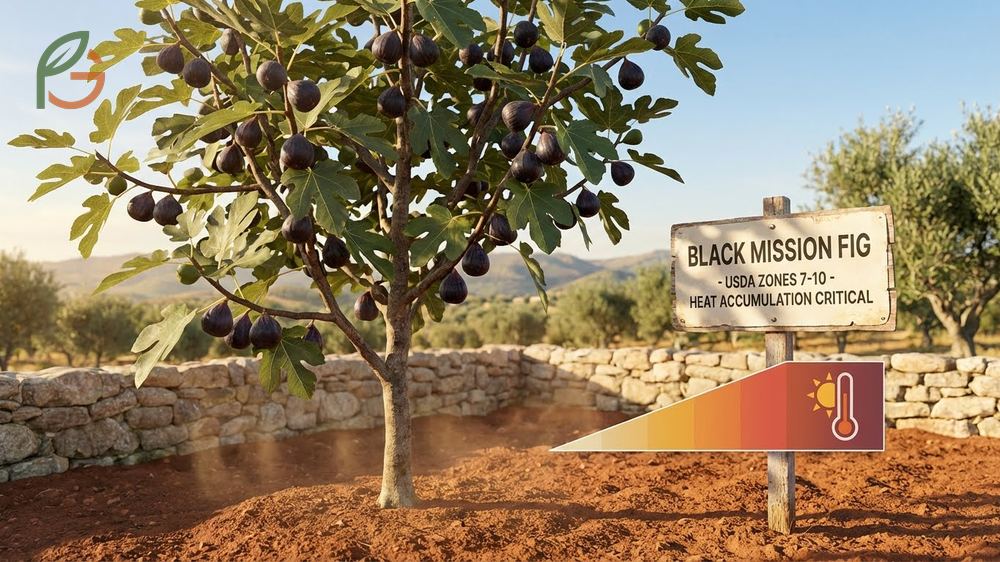
Success with Black Mission figs depends heavily on matching the variety to appropriate climate zones. These trees perform best in USDA Hardiness Zones 7-10, where winters are mild enough to prevent root damage.[3] Zone 6 cultivation is possible with winter protection strategies, but reliability decreases as temperatures drop.
What often gets overlooked is the importance of heat accumulation. Figs need warm temperatures throughout the growing season to properly ripen and develop full sweetness. Cool summer climates may see figs form but never reach satisfactory ripeness. Target locations with summer highs consistently reaching 85-95°F (29-35°C) for best results.
Climate and Temperature
Black Mission figs tolerate mild winters but suffer damage when temperatures drop below 15-20°F (-7 to -9°C) for extended periods. Root systems typically survive even if top growth dies back, allowing trees to resprout from the base. However, repeated winter dieback severely limits fruit production since crops form on current season’s growth.
Summer heat tolerance is excellent—trees thrive in hot, dry conditions typical of Mediterranean climates. They can handle temperatures exceeding 100°F (38°C) when adequately watered. The variety’s drought tolerance once established makes it suitable for water-wise landscaping in arid regions.
For Zone 6 and colder, consider winter protection methods. Wrapping trunks with insulation, creating windbreaks, or even building temporary structures around trees can extend the viable growing range northward. Container-grown specimens can be moved to protected locations during winter months.
Soil and Watering
These trees aren’t particularly fussy about soil pH, tolerating ranges from slightly acidic to slightly alkaline (6.0-8.0). What matters most is drainage—standing water kills fig roots quickly. Amend heavy clay soils with compost and sand to improve drainage, or plant on raised mounds to ensure excess water drains away.
Water deeply during the growing season, especially when fruits are developing. Shallow, frequent watering encourages shallow root development and reduces drought tolerance. Instead, water thoroughly to 2-3 feet depth, then allow the soil to dry moderately before watering again. Established trees in appropriate climates may need supplemental water only during extended dry periods.
Mulching around trees helps retain soil moisture and moderate temperature fluctuations. Apply 3-4 inches of organic mulch like wood chips or straw, keeping it a few inches away from the trunk to prevent rot. Mulch breaks down over time, adding organic matter that improves soil structure and supports beneficial microorganisms.
Culinary Uses
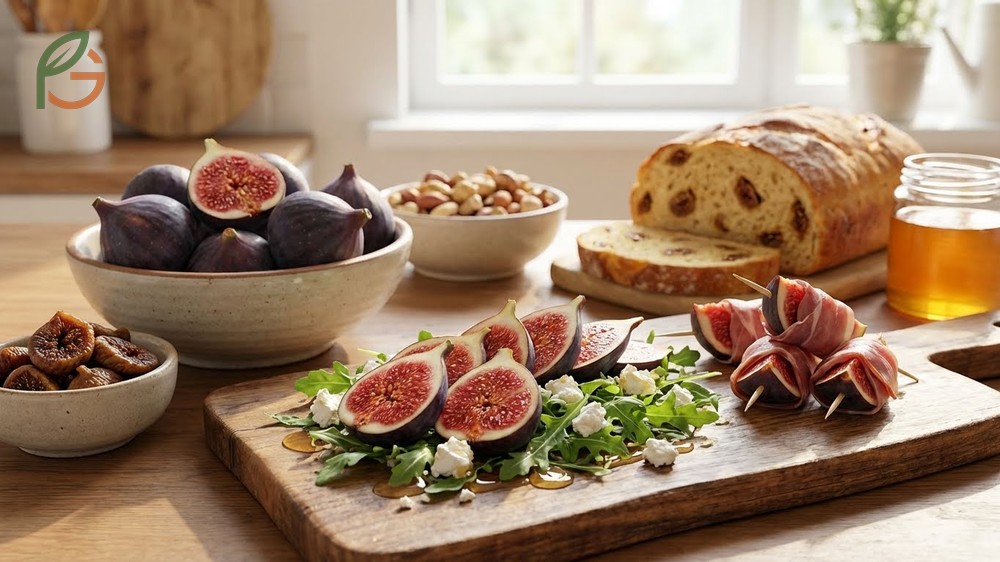
Fresh Black Mission figs shine in applications that highlight their natural sweetness and jammy texture. Slice them fresh over salads with goat cheese and arugula, or wrap them with prosciutto for elegant appetizers. They pair exceptionally well with soft cheeses, nuts, and honey-based preparations.
Dried figs work beautifully in baking—add them to bread, muffins, or energy bars for natural sweetness and chewy texture. Rehydrate dried figs in warm water or wine before using in sauces and compotes. They’re also excellent chopped into oatmeal or yogurt for breakfast.
For preserving, Black Mission’s high sugar content makes excellent jams and preserves without requiring excessive added sugar. The concentrated flavor in dried figs develops complex caramel notes that complement savory dishes like braised meats or roasted vegetables. Middle Eastern and Mediterranean cuisines extensively feature figs in both sweet and savory applications.
- Fresh consumption—slice and serve with cheese, nuts, honey
- Salads—adds sweetness and texture contrast to greens
- Baking—incorporate into breads, cakes, muffins, bars
- Preserving—makes excellent jams, compotes, chutneys
- Appetizers—wrap with prosciutto or serve on crostini
- Breakfast additions—top yogurt, oatmeal, pancakes
- Savory dishes—pair with roasted meats and vegetables
Conclusion
The evidence is clear: Black Mission fig succeeds because it balances productivity, adaptability, and flavor in a single variety. While not the most complex-tasting fig for fresh eating, its reliable dual crops, self-pollinating nature, and excellent drying characteristics explain its enduring popularity since 1768.
Current horticultural guidance emphasizes proper site selection—full sun, well-drained soil, and appropriate climate zones—as the foundation for success. With minimal maintenance beyond annual pruning and composting, these trees reward growers with decades of productive harvests. Whether you’re starting a home orchard or expanding an existing one, Black Mission remains a solid choice that delivers consistent results across diverse growing conditions.
Frequently Asked Questions
How long does it take for Black Mission fig trees to produce fruit?
Black Mission fig trees typically bear fruit within 1-2 years of planting. Trees grown from cuttings often produce fruit faster than seedlings, with some yielding a small crop in their first growing season. Full production capacity develops by years 3-5 as the tree matures and establishes its root system.
Can you grow Black Mission figs in containers?
Yes, Black Mission figs grow successfully in containers of 15-20 gallon capacity or larger. Container growing restricts root development, keeping trees smaller while maintaining good fruit production. This method works well for patios, balconies, or areas with limited space, and allows gardeners in cold climates to move trees indoors during winter.
What’s the difference between Black Mission and Brown Turkey figs?
Black Mission figs have dark purple-black skin with red-pink flesh and intense sweet flavor, while Brown Turkey figs feature brownish-purple skin with lighter pink interior and milder taste. Black Mission excels at drying and tolerates heat better, whereas Brown Turkey demonstrates superior cold hardiness and performs better in humid climates with less splitting.
Why do my Black Mission figs split before ripening?
Fig splitting occurs when trees absorb excessive water rapidly, causing fruits to expand faster than their thin skins can accommodate. This commonly happens after heavy rain following dry periods. Prevent splitting by maintaining consistent soil moisture, avoiding overhead watering when fruits are maturing, and providing rain protection during harvest season in humid climates.
Are Black Mission figs self-pollinating?
Yes, Black Mission figs are self-pollinating common figs that don’t require pollination to produce fruit. They set fruit parthenocarpically, meaning fruits develop without fertilization. You only need one tree to get abundant crops, unlike many fruit trees that require a compatible pollinator variety planted nearby.
When is the best time to prune Black Mission fig trees?
Prune Black Mission figs during dormancy in late winter or early spring before new growth begins, typically February through March in most regions. Focus on removing dead, damaged, or crossing branches while avoiding excessive pruning that disrupts hormonal balance. Wear gloves to protect against irritating sap, and make clean cuts just above outward-facing buds.
How much water do Black Mission fig trees need?
Established Black Mission figs need deep watering to 2-3 feet depth when the top few inches of soil dry out, typically every 7-10 days during active growth depending on climate. Newly planted trees require more frequent watering until roots establish. Reduce watering frequency in fall as trees prepare for dormancy, and maintain minimal moisture during winter dormancy.





